
Canals
History of canals
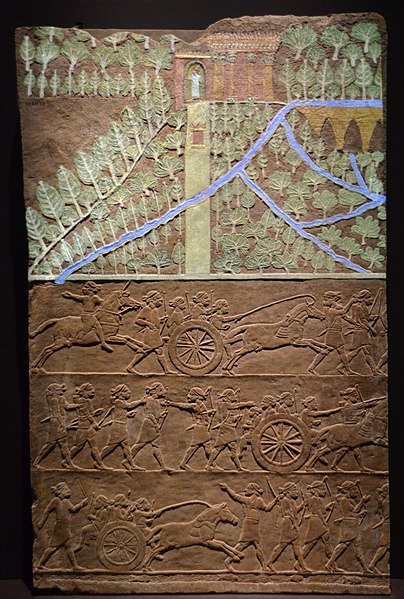
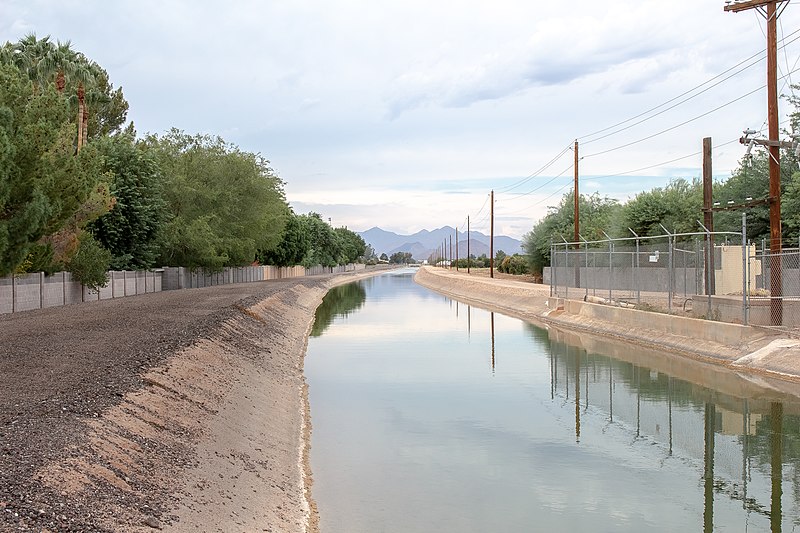
The oldest known canals were irrigation channels built in Mesopotamia (in present-day Iraq) in around 4000 BC. Irrigation systems were also a feature of other early civilizations, including ancient Egypt, the Indus Valley and the Hohokam culture of the American Southwest in around 1300 AD. The first true canal was built in the 7th century BC by the Assyrian king Sennacherib. An 80-kilometre (50-mile), stone-lined waterway, 20 metres (66 feet) wide, brought fresh water from to his capital at Nineveh. A dam with sluice gates controlled the flow of water.
Grand Canal
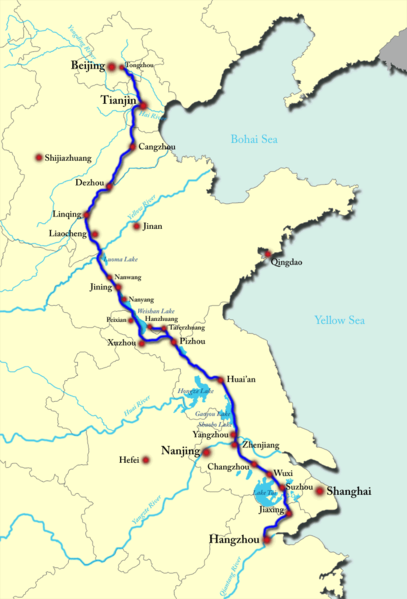
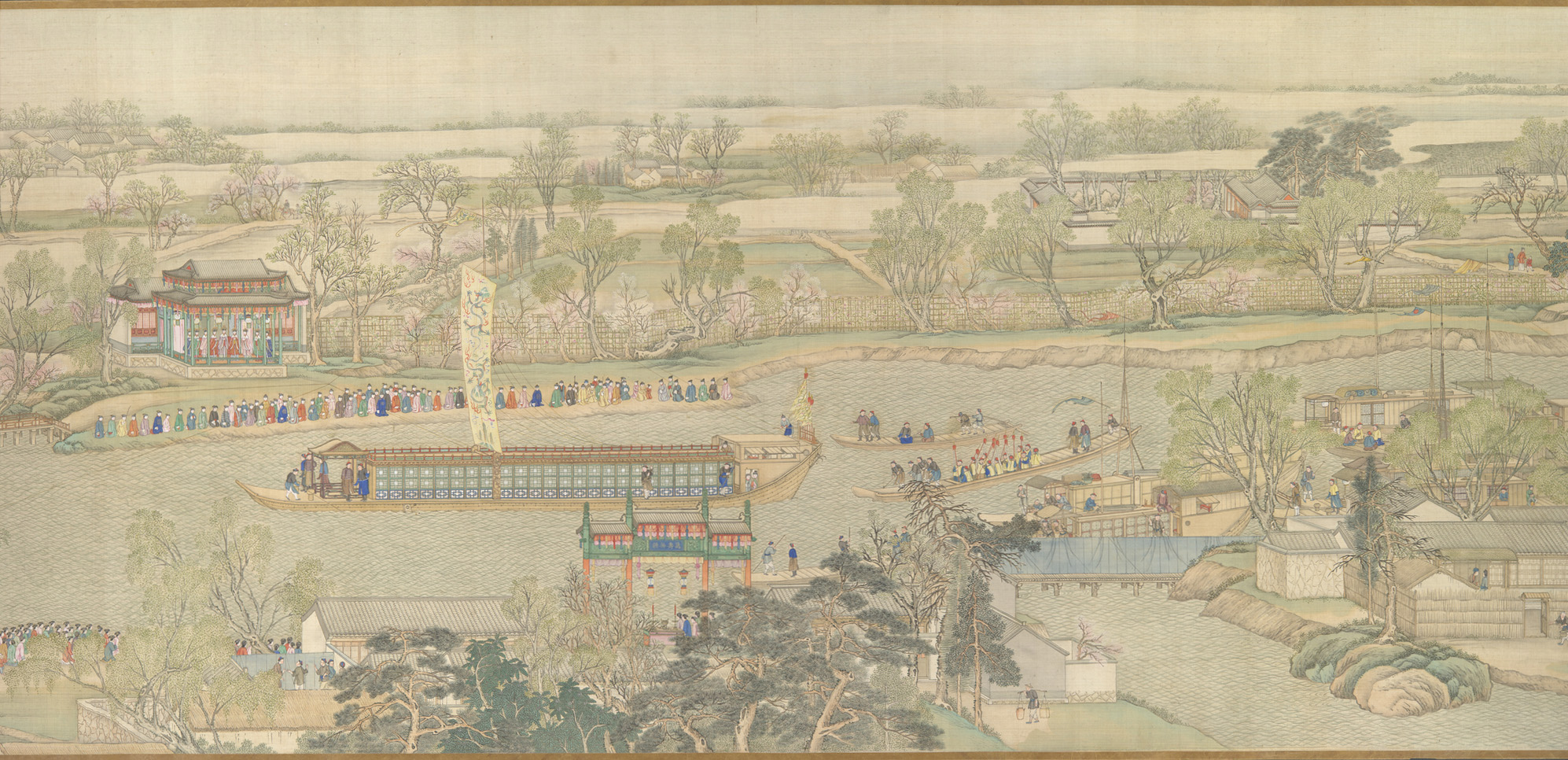
Large canals for river transport were first built in China during Spring and Autumn Period (8th–5th centuries BC). The Grand Canal of China, 1794 kilometres (1115 miles) long and still the longest canal in the world today, was completed by Emperor Yang Guang in the year 609 AD. It is also the oldest canal still in use. Linking Zhuodu (Beijing) and Yuhang (Hangzhou), the Grand Canal combined stretches of older canals, with one section dating back to at least 486 BC. Even where it passes through urban areas, it is rarely less than 30 metres (98 feet) wide.
Europe
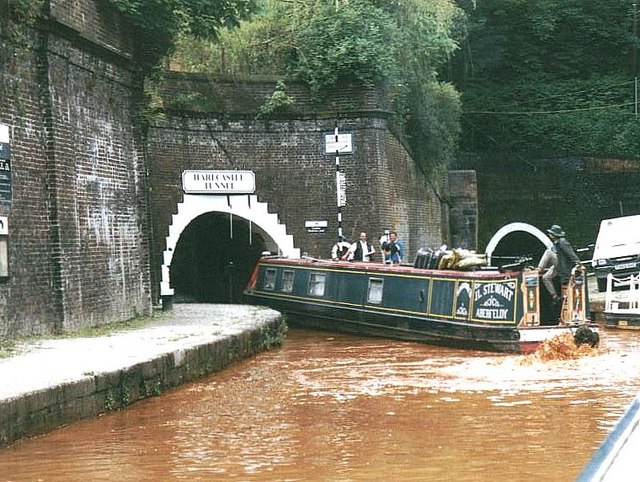
Canals were built in medieval Europe to transport bulky materials such as building stone or grain. In the Netherlands and Flanders (northern Belgium and a part of northern France), many canals were built to drain the polders as well as provide navigable waterways. The first canal built to cross a river basin divide using pound locks was the Briare Canal, linking the Loire and Seine in 1642.

Canal du Midi
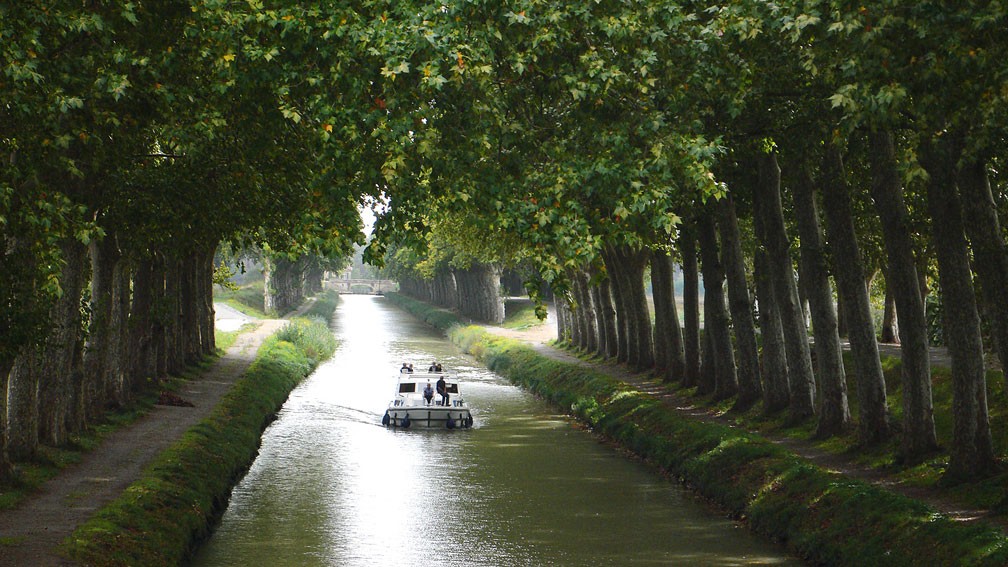
The Canal du Midi is a 241-kilometre (150-mile) canal in southwestern France, a region known to the French as le Midi. It was one of the greatest construction works of its time—and is still in use today. The canal was built to connect the River Garonne (which flows into the Atlantic Ocean) with the Mediterranean Sea. It would mean that merchant vessels did not have to pass through the Strait of Gibraltar, then under the control of Spain. Wheat, wine and cloth from the Languedoc region near the Mediterranean could be shipped overseas from the Port de la Lune in Bordeaux more easily.
Under the supervision of Pierre-Paul Riquet (1609–80), the construction took place between 1666 and 1681, during the reign of Louis XIV. Riquet solved the problem of building a waterway over high ground between two valleys by bringing water from the nearby mountains to feed into the newly-built channel. It involved the construction of a staircase of eight locks, three major aqueducts and the 157-metre (515-foot) Malpas Tunnel, the first canal tunnel ever built. Vital to the canal's engineering were women labourers who came from nearby Pyrenean villages. They understood how Roman aqueducts worked, and helped to perfect the water supply to canal, and decide where and how to build locks.

Bridgewater Canal
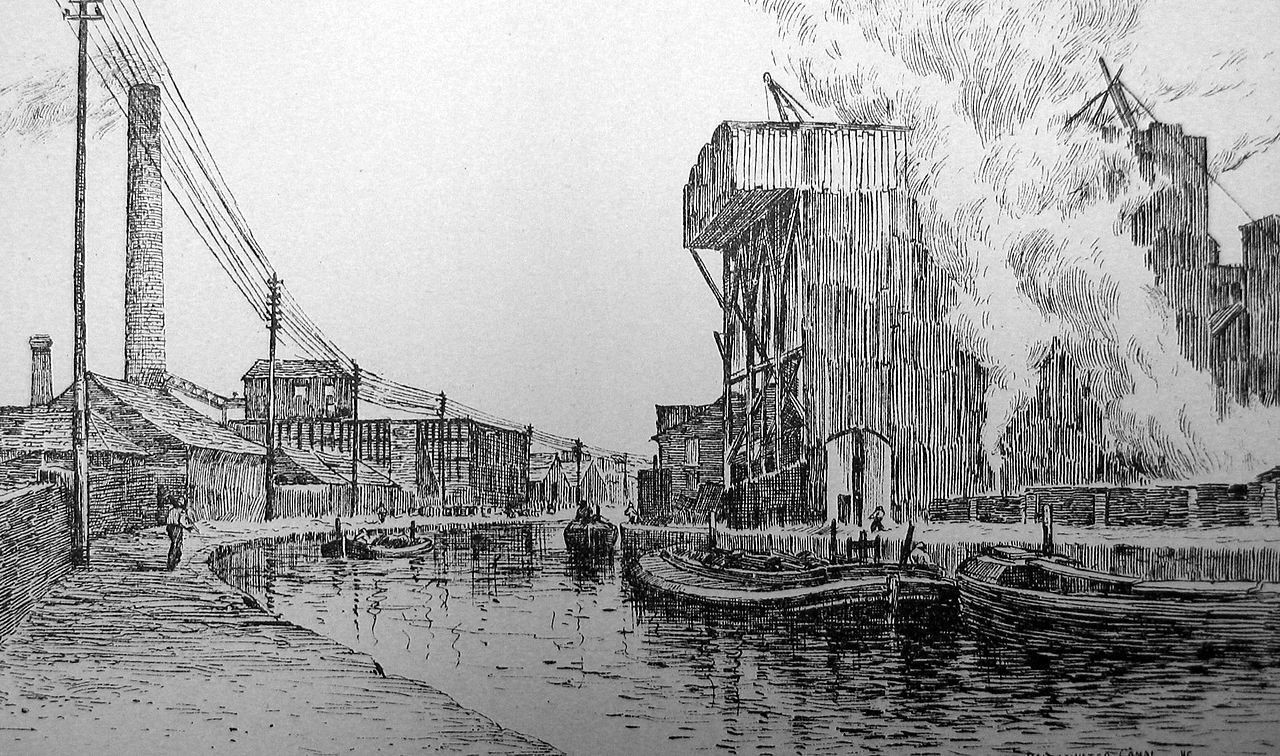
The modern canal system was mainly created in the 18th century and early 19th century as the Industrial Revolution, which began in Britain, spread across Europe and North America. Canals provided the way to transport large quantities of goods and raw materials from one place to another. The most important canals built in the first half of the 19th century combined long stretches of navigable rivers with a canal built to to cross the river basin divide and connect with another navigable river.
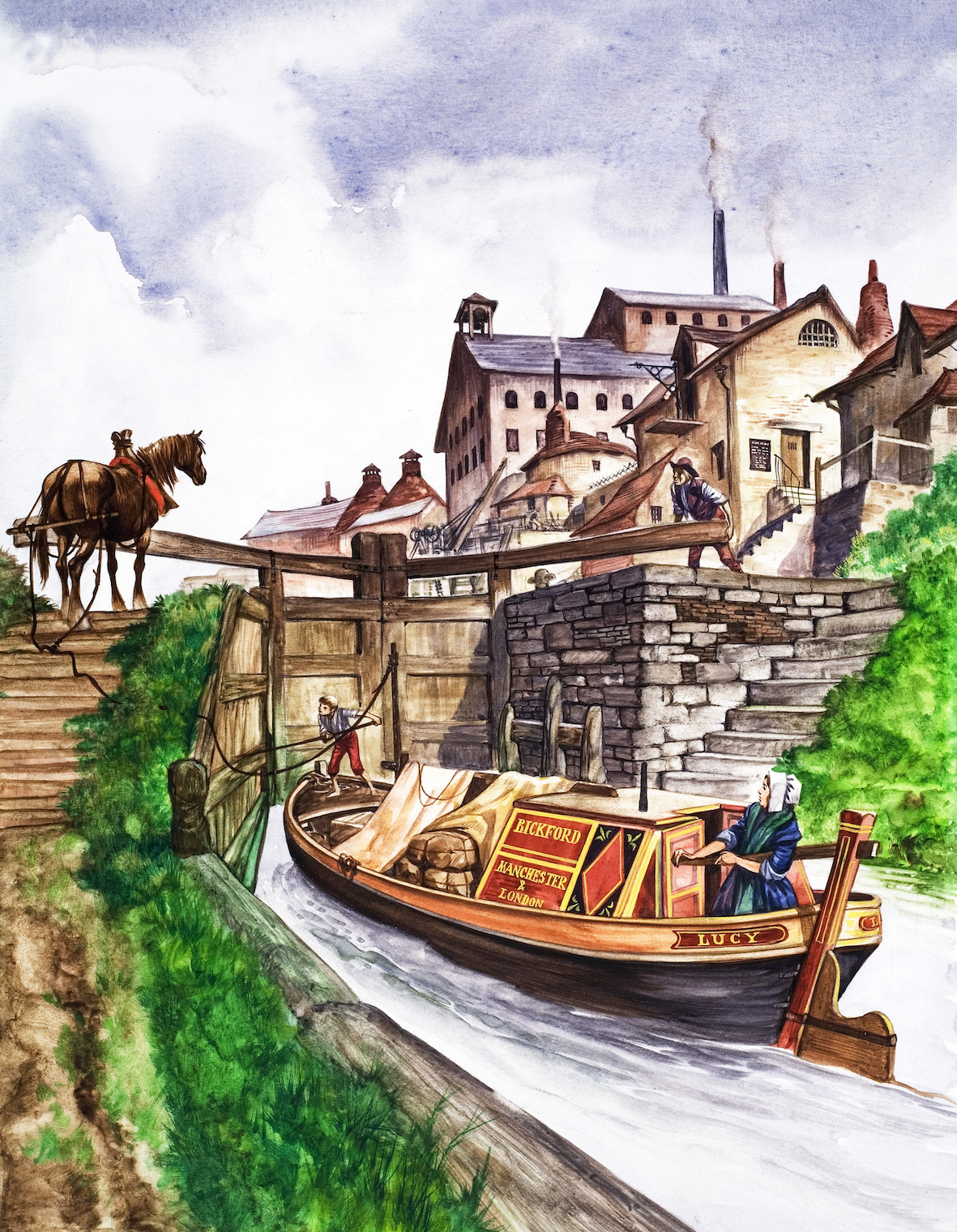
The first "pure" major canal (one that did not involve the canalization of an existing river like the earlier Sankey Canal) was the Bridgewater Canal, which opened in 1761. It was commisioned by Francis Egerton, 3rd Duke of Bridgewater, who wanted to transport coal from his mines in Worsley to the rapidly industrializing city of Manchester, a distance of 13 kilometres (8 miles). Engineer James Brindley was hired for the task, which involved building an aqueduct over the River Irwell. The boats on the canal were pulled by horses from a towpath running alongside the canal. Only one horse was needed to pull a boat carrying 30 tons—more than 10 times the amount that was possible using a horse-drawn cart. In 1776, the Bridgewater Canal was extended by 48 kilometres (30 miles) from Manchester to Liverpool.

Canal mania
The highly successful Bridgewater Canal started a period between the 1770s and the 1830s called the Golden Age of British canals. During this period of "canal mania", Britain's waterway network expanded rapidly to more than 6400 kilometres (4000 miles) in length. In the Staffordshire Potteries, for example, the potter Josiah Wedgwood saw canals as an opportunity both to bring bulky supplies of clay to his factories and to transport the fragile finished goods to market in Manchester, Birmingham and elsewhere.
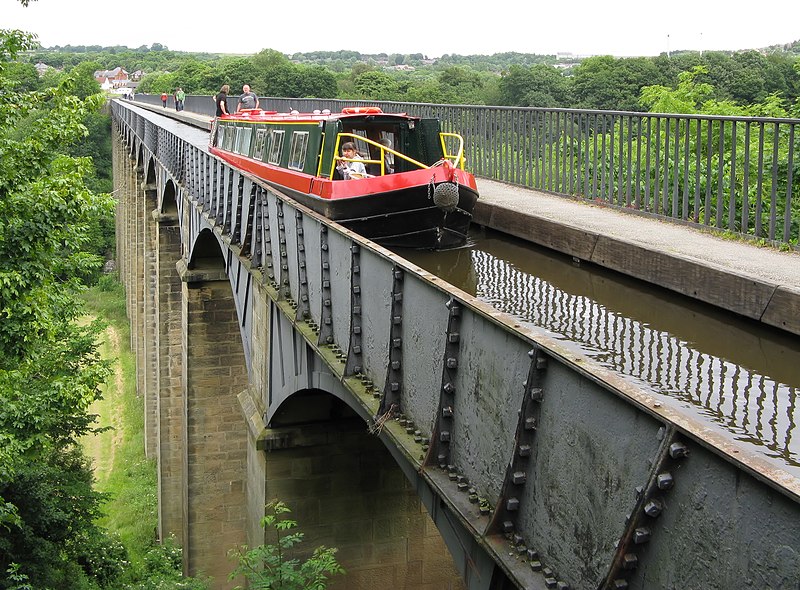
New canal technology saw a lock staircase built at Bingley, on the Leeds and Liverpool Canal. At Ketley in Shropshire, inclined planes hauled tugs from one level to another. Vertical lifts were used on the Grand Western Canal.
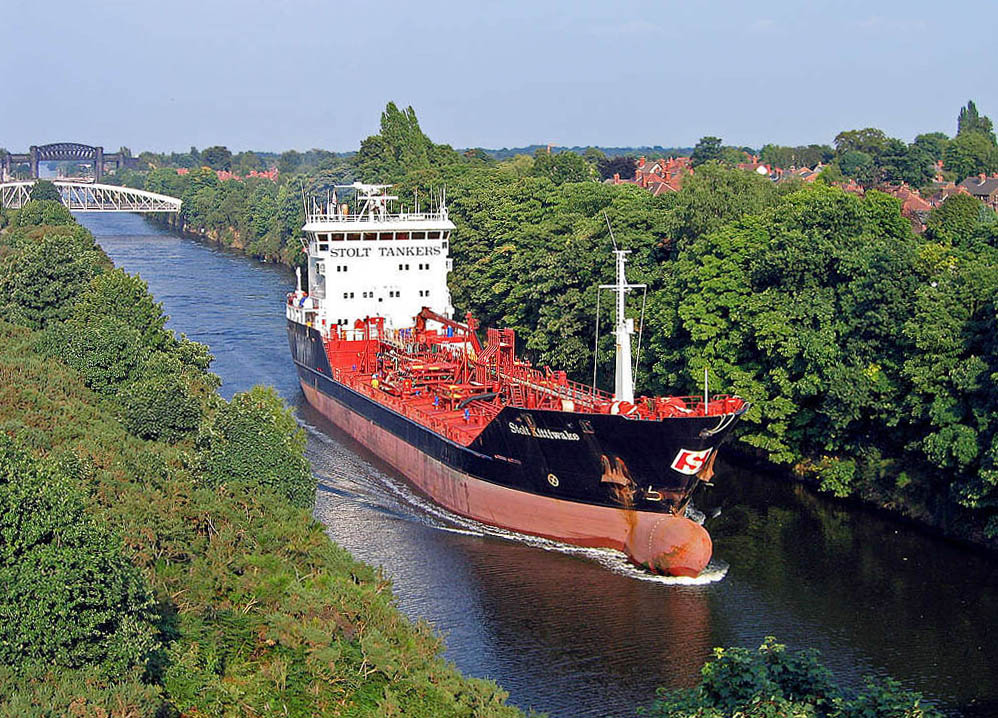
When the railway era dawned in the 1830s, the competition saw the swift decline of canals in Britain. Railways could more easily link up to ports, coalmines and factories, while canals were more expensive to build and were liable to freeze over in winter. Canal vessels were also slower than trains and less popular with passengers. And so most British canals fell into decay. An exception was the Manchester Ship Canal, built in the 1890s using the existing River Irwell and River Mersey, to take ocean-going ships into the centre of Manchester.

Erie Canal
In America, the era of canal-building was just beginning. The Erie Canal runs about 584 kilometres (363 miles) across New York State from Albany on the Hudson River to Buffalo on the shore of Lake Erie. When it opened in 1825 it completed a navigable water route from the port of New York City on the Atlantic Ocean to the Great Lakes. The new canal, which contains 36 locks, enabled the cheap transportation of produce grown in the midwest of the US to the rest of the world. The Erie Canal project started a canal-building boom in the US that lasted until about 1850.
Power canals
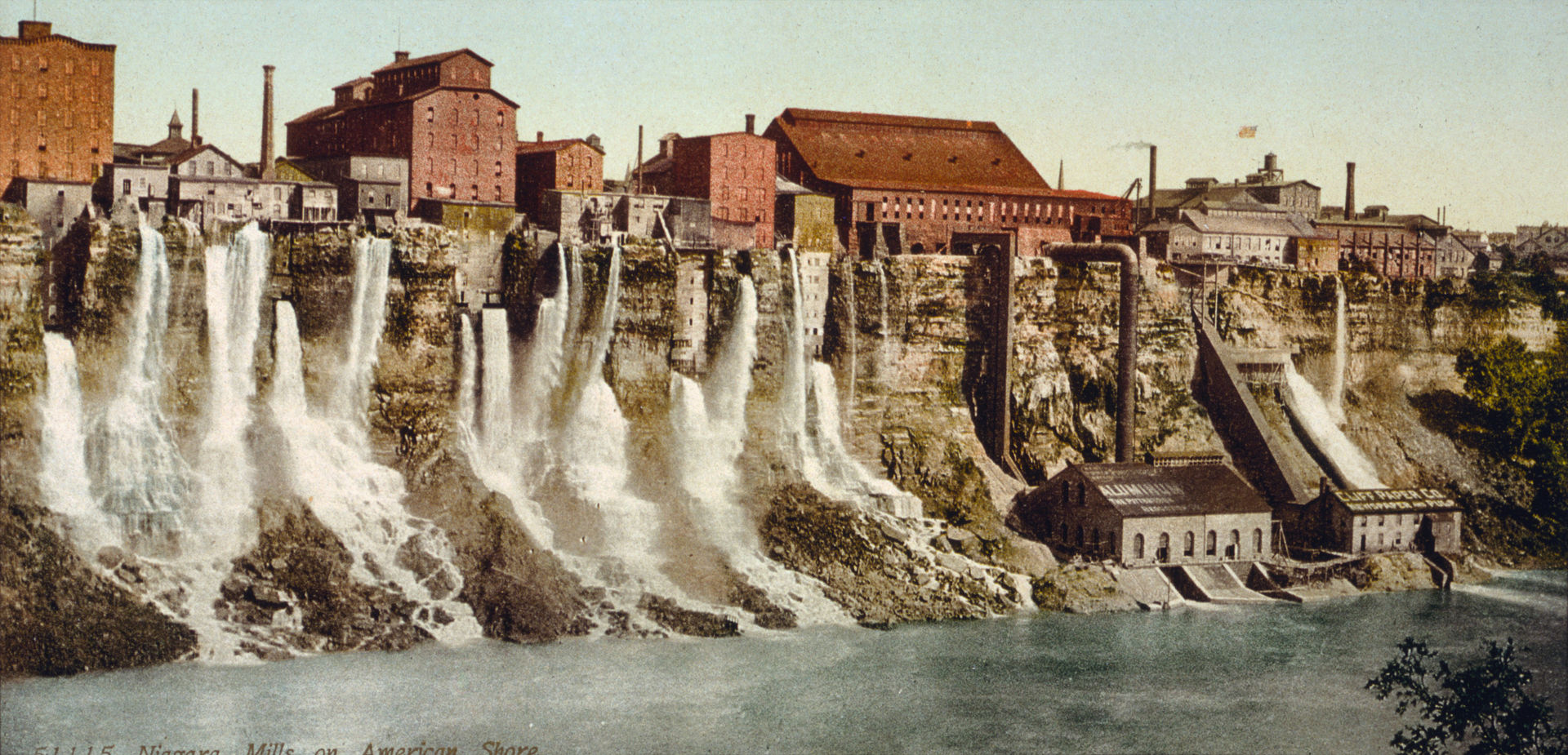
A power canal is one used for hydro-electric power generation rather than for transport. Fast-flowing rivers in the northeastern US were the primary means of powering textile mills in the period of rapid industrialization that followed the Civil War. The most notable power canal was built in 1862 for the Niagara Falls Hydraulic Power and Manufacturing Company.
19th century
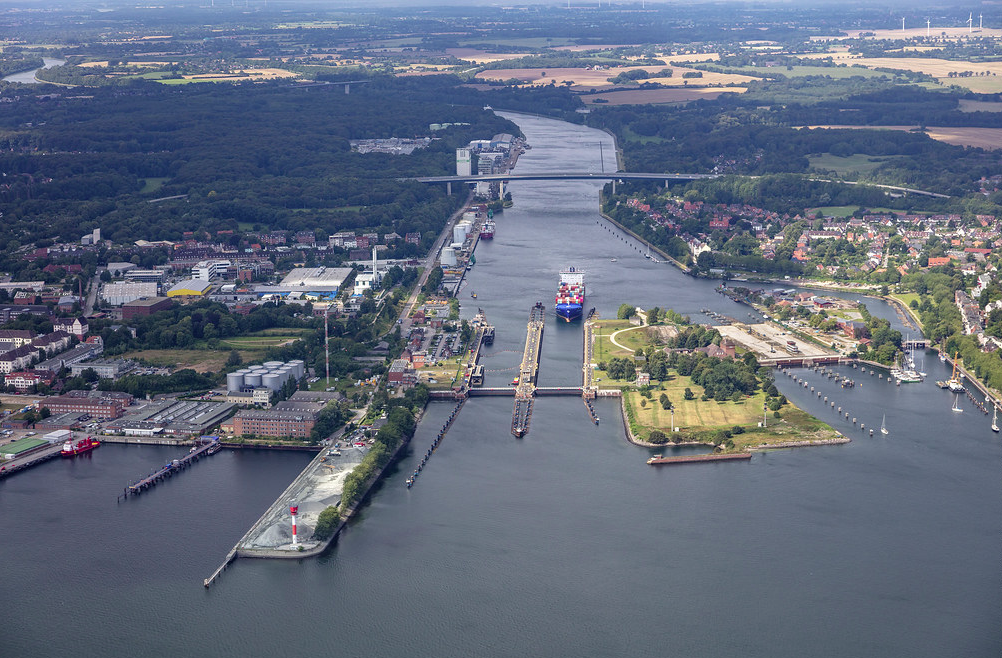
In other countries, canals continued to be be built as industrialization advanced in the 19th and early 20th centuries. In France the river systems of the Rhine, Rhône, Saône and Seine were linked by new canals. Many of the great ship canals were completed in this period, starting with the Suez Canal (1869), the Kiel Canal in northern Germany (1897) and the Panama Canal in 1914.

Suez Canal
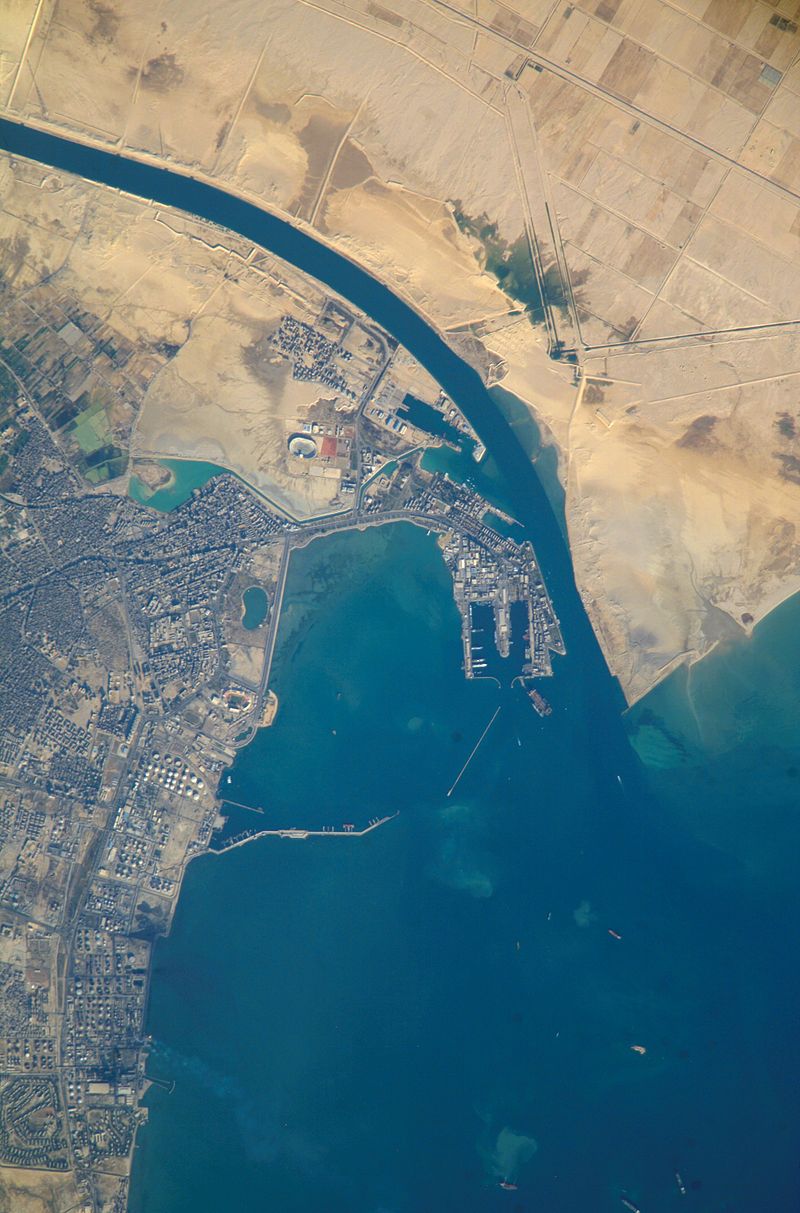
The Suez Canal in Egypt, connects the Mediterranean Sea to the Red Sea through the Isthmus of Suez, marking the boundary between Africa and Asia. Construction of the 193-kilometre (120-mile) canal, carried out by the Suez Canal Company under Frenchman Ferdinand de Lesseps, took place between 1859 to 1869. The new canal offered vessels a direct route between the Indian Ocean and Atlantic Ocean avoiding the need to go round the southern tip of Africa. This meant the journey distance from India to London was reduced by approximately 5500 miles (8900 kilometres) or between 8 and 10 days' travel at normal speed. In 2020, more than 18,500 vessels at an average of 51.5 per day sailed through it.

The original canal featured a single-lane waterway, with passing locations in the Ballah Bypass and the Great Bitter Lake. Free of locks, seawater flowed through the canal. In 2014–15, the Egyptian government widened the Ballah Bypass from 61 to 312 metres (200 to 1024 feet) wide. Called the "New Suez Canal", the project was designed to raise the capacity of the canal from 49 to 97 ships per day.
Panama Canal
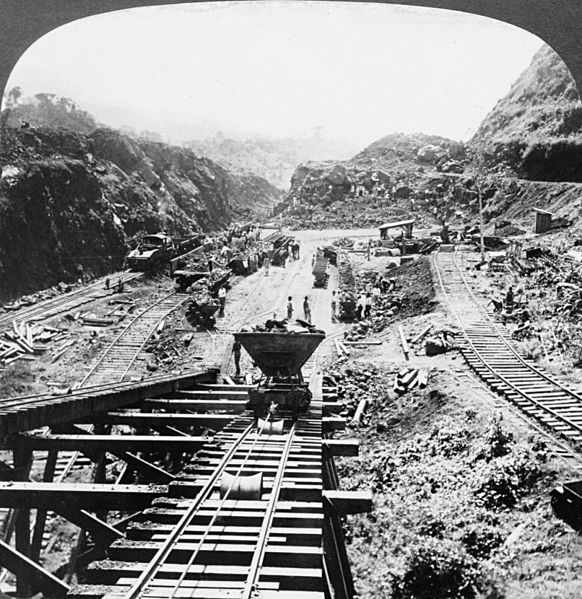
The idea to build a canal through narrow Central America, allowing ships to pass from the Pacific to the Atlantic Ocean without having to travel all the way around the stormy tip of South America, emerged in the second half of the 19th century. The original proposal was for a sea-level canal through what is today Nicaragua, taking in Lake Nicaragua as part of its middle section. A canal through the isthmus of Panama was a second choice. The De Lesseps company, which managed the Suez Canal, first attempted to build a canal through Panama in the 1880s. But the difficult terrain and torrential rain held up engineering works, causing the company to go bankrupt. The United States stepped in to revive the project at the beginning of the 20th century. A 16-kilometre wide (10-mile) US military zone was established in the middle of Panama, and the canal was built.
Since it was opened in 1914, the 77-kilometre (48-mile) Panama Canal has become one of the world’s most important waterways. The biggest users of the canal today are the United States and China—much of the traffic is made up of container ships carrying goods between the two countries. The queue for the Panama Canal can be as many as 24 ships, or a waiting time of 7 days. Small locomotives guide ocean-going ships through the locks in the canal.

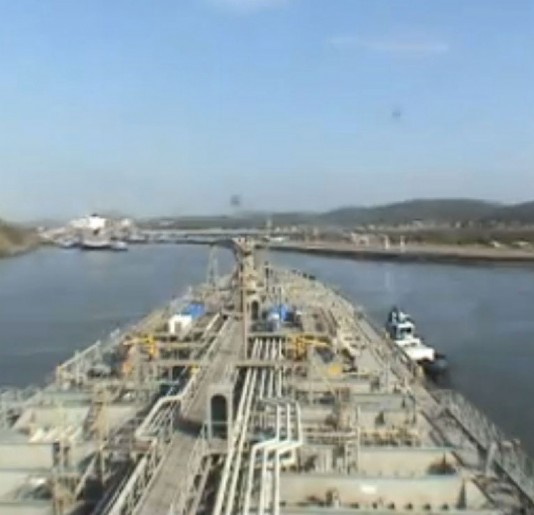
Panamax is the term given for the size limit of ships travelling through the Panama Canal. The ships’ sizes are limited by the width and length of the locks, the depth of water in the canal and the height of the Bridge of the Americas, a road bridge that spans the Pacific entrance to the canal. But many container ships built in recent years tend to be either close to the maximum size—requiring more time to pass through the locks—or actually larger than the Panamax specification.
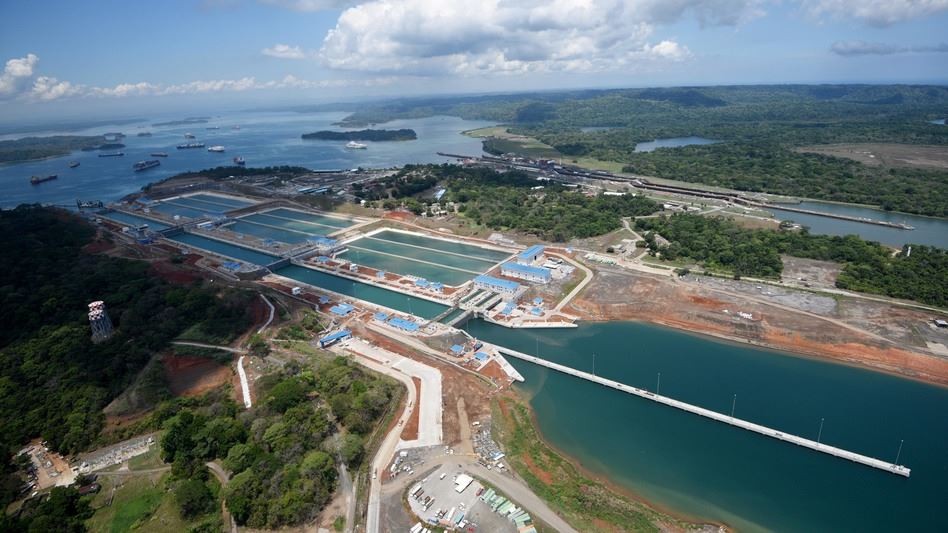
In response, improvements have been made to the Panama Canal. Completed in 2016, these included the building of two new, wider sets of locks, the widening of some approach channels and the deepening of the Gatun Lake, which forms part of the canal.
Intracoastal Waterway
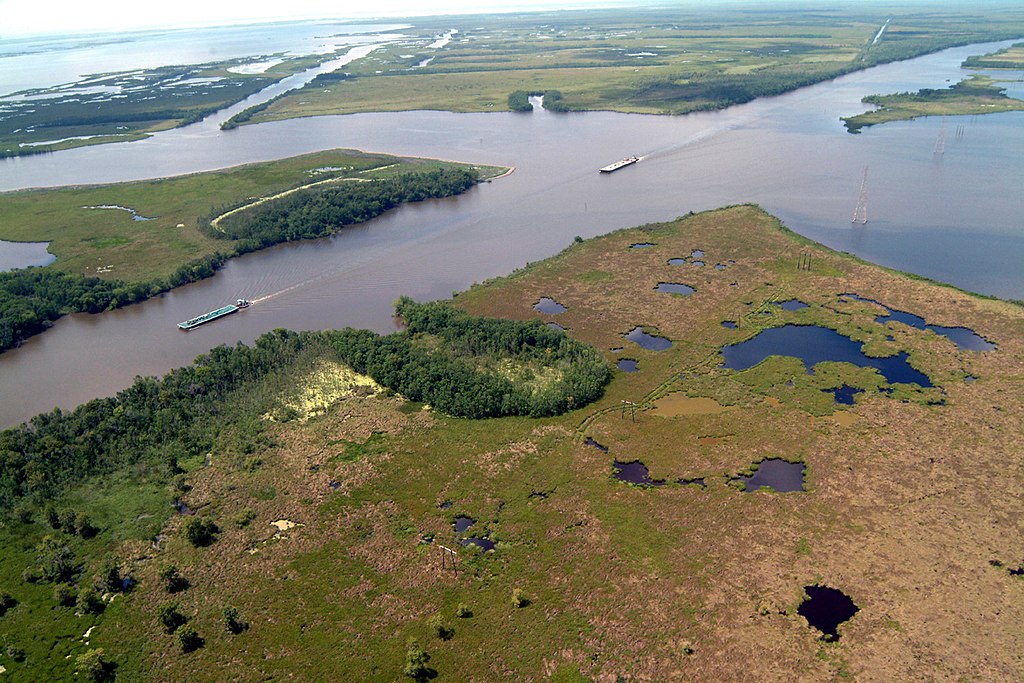
The Intracoastal Waterway (ICW) is a 4800-km (3000-mile) inland waterway along the Atlantic and Gulf of Mexico coasts of the United States. It provides a navigable route along its length avoiding the open sea. It runs from Boston, Massachusetts, southwards along the Atlantic Seaboard, round the southern tip of Florida, then follows the Gulf Coast to Brownsville, Texas. Constructed in stages between 1909 and 1949, some sections of the waterway consist of natural inlets, rivers and bays, while others are canals, such as the Cape Cod Canal, the Chesapeake and Delaware Canal and Okeechobee Waterway.
Great Loop
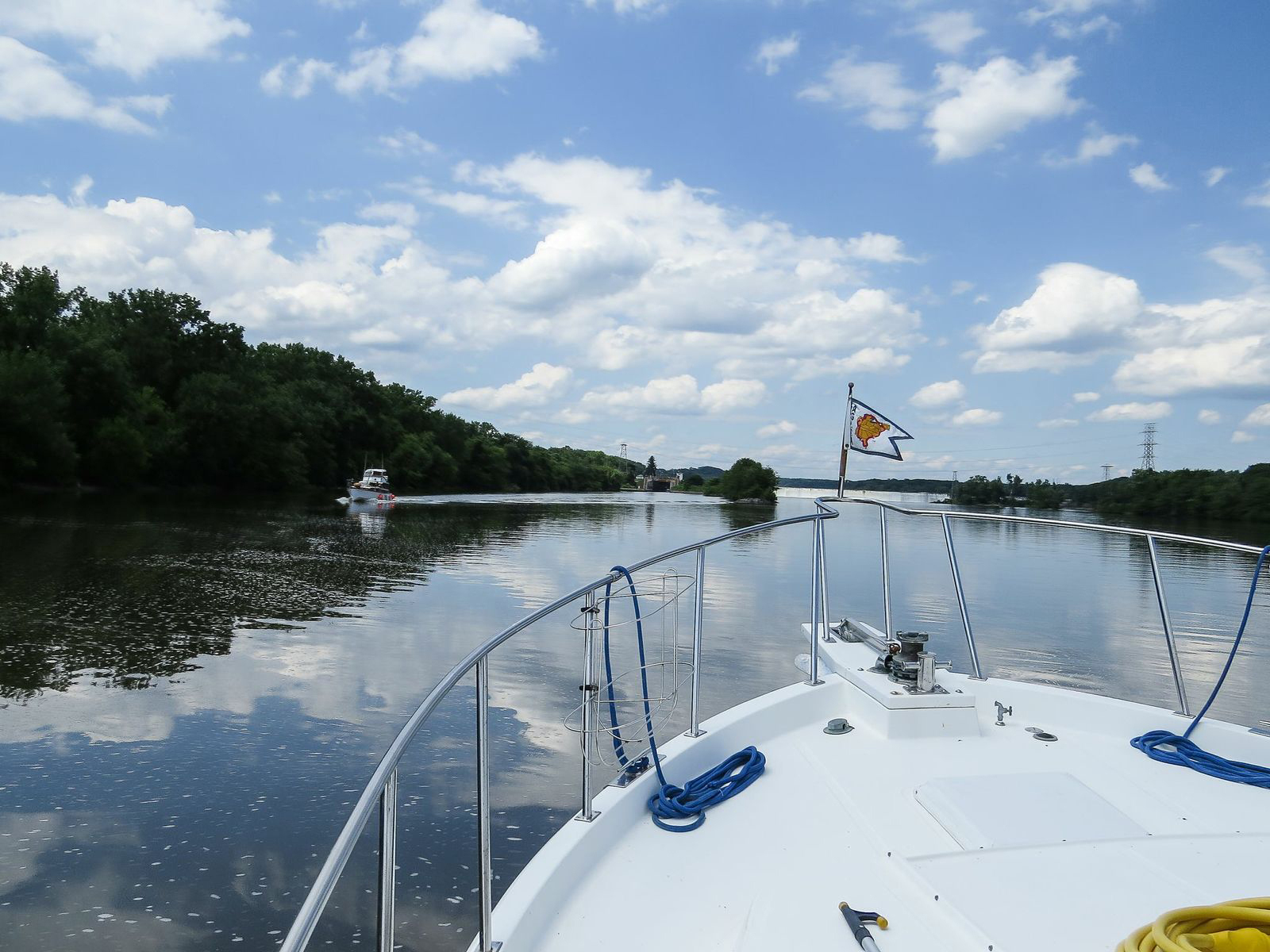
The ICW forms the eastern and southern sections of what is known as the Great Loop, a continuous series of waterways that winds around the eastern United States and part of Canada. It is made up of both natural and manmade waterways. Apart from the ICW, it includes the Great Lakes, the Rideau Canal and the Mississippi River and Tennessee-Tombigbee Waterway. The entire loop stretches about 9700 kilometres (6000 miles (9700 km). Boaters who travel the route are known as "Loopers". Those who are currently on the Loop fly a white pennant, while those who have completed it fly a gold one.