
Romans
Gladiators
Gladiators were slaves or criminals who were trained to fight one another—often to the death—as the crowds looked on. Gladiatorial contests, called munera, were held in stadiums known as amphitheatres and often attracted huge crowds. An oval-shaped area covered in sand, the arena (from the Latin harena) was surrounded by rows of seats rising around it. Gladiators fought with swords and shields, or with tridents and nets. Different types of gladiators were distinguished by the type of armour or weapons they had.

The amphitheatre
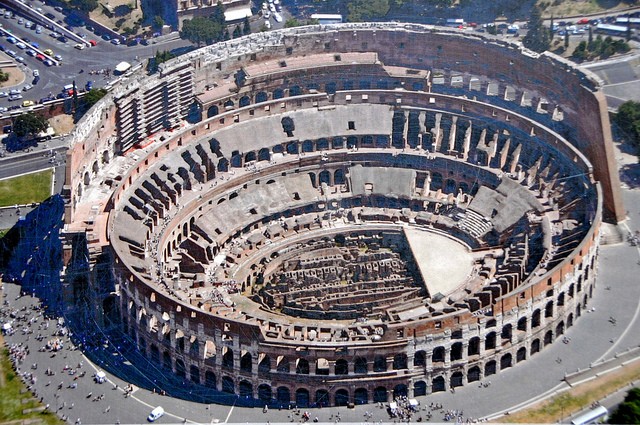

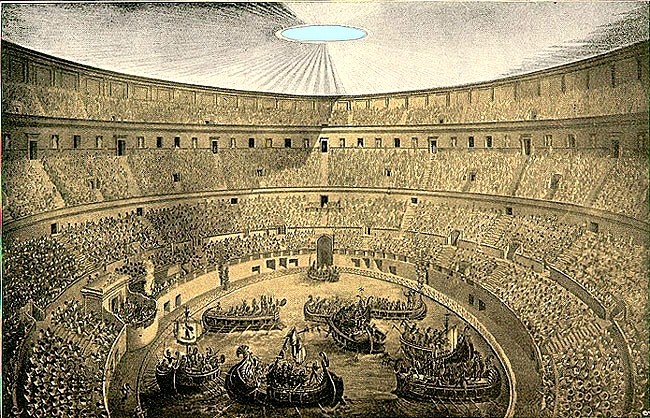
The amphitheatre was the place where the games were held. Most large Roman towns had one. It was a large stone-built stadium with an oval arena in the middle. The largest was the Colosseum in Rome itself. It could hold up to 50,000 people. Built nearly 2000 years ago, much of the building still stands today.
Audience
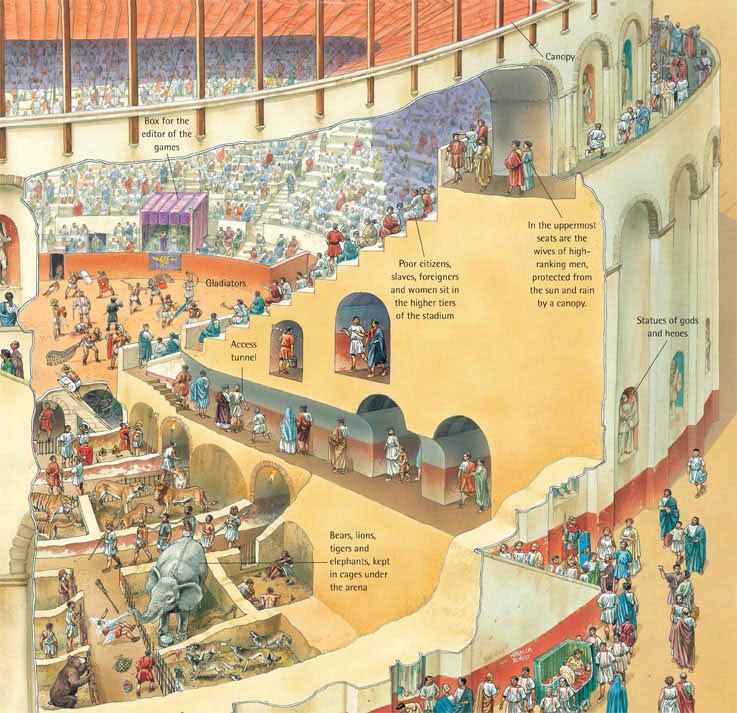
The games were very popular and entry was free, but tickets were required. These were given out several days in advance. Anyone could attend the games, but they had to sit in the correct seats. The lowest seats, closest to the action, were reserved for the most important citizens. Rich Roman men sat in the middle tiers, while above them sat poorer citizens, slaves, foreigners and women. At the very top sat the wives of the highest-ranking men, protected from sun and rain by a canopy.
Who were the gladiators?
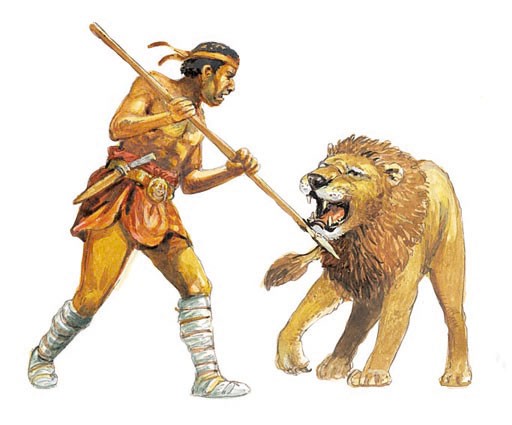
Some gladiators were volunteers who agreed to fight for prize money. But many were slaves, condemned criminals or prisoners of war. They were forced to undergo training as gladiators and were treated harshly. Like the animals they sometimes fought, these men were kept in cages before their contests began. Sometimes, criminals were dragged into the arena to face hungry lions or bears unarmed.
Gladiators did not always fight to the death, and if they fought well enough they might be given their freedom. Some gladiators made great careers for themselves, becoming celebrities, like footballers today.

Types of gladiators
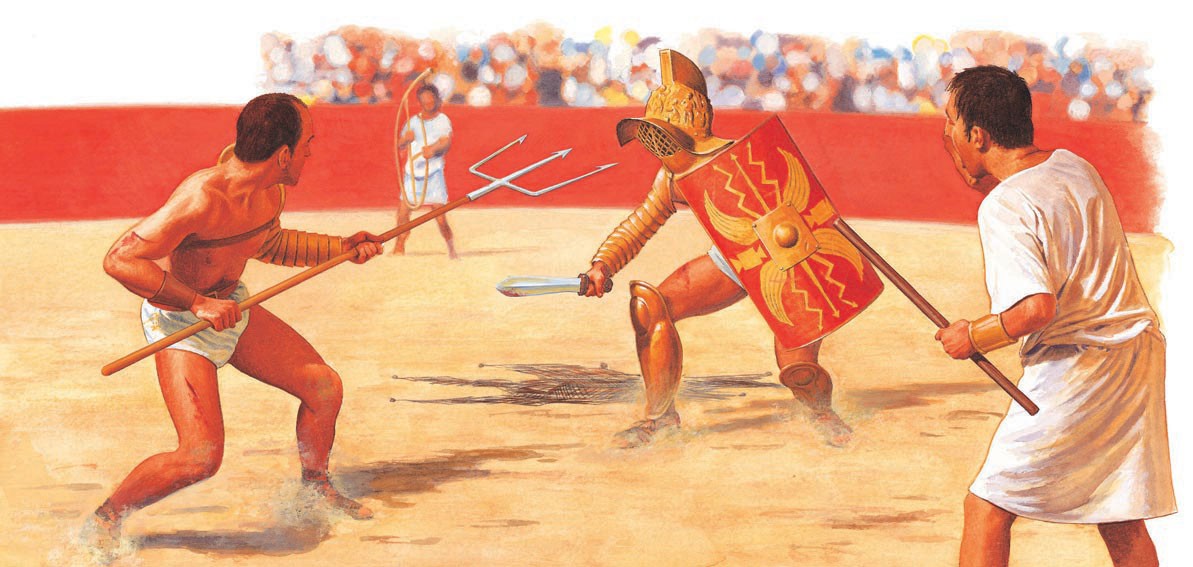
Each gladiator had his own speciality. A gladiator who fought animals was a Bestiarius. A lightly armed fighter who chased his opponent was called a Secutor. He wore a smooth, rounded helmet that protected him from the blow of the trident (three-pronged spear), but made it difficult for him to keep his opponent in his line of vision.
The Thracian and Samnite were dressed up as Barbarians, peoples the Romans had defeated. The Thracian had a curved dagger and a small shield, while a Samnite carried a sword and a large shield, and wore a helmet with a visor. The Hoplomachus, in the uniform of a Greek soldier, also represented a defeated people.
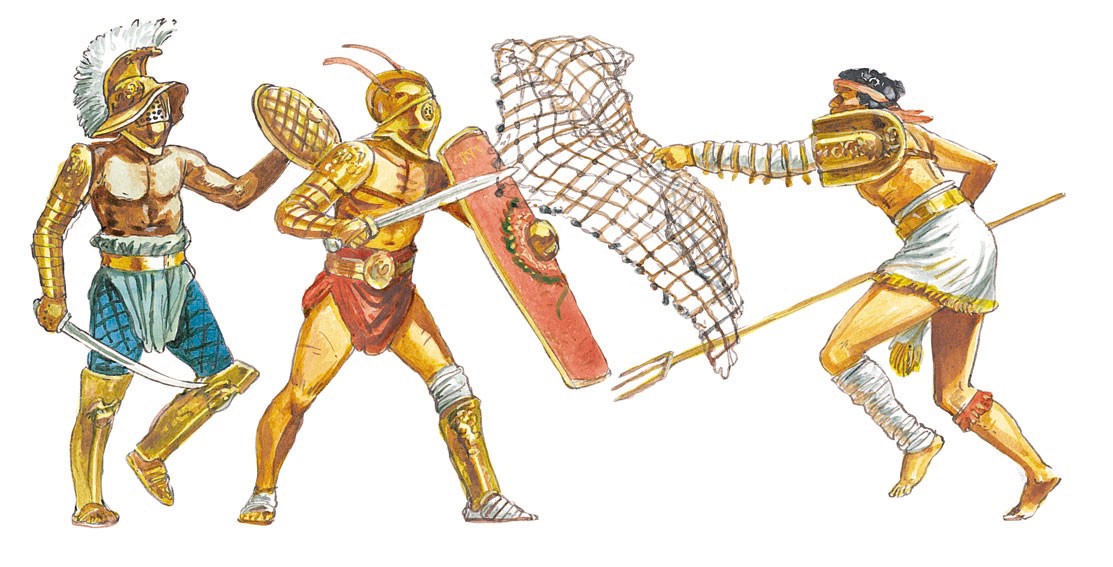

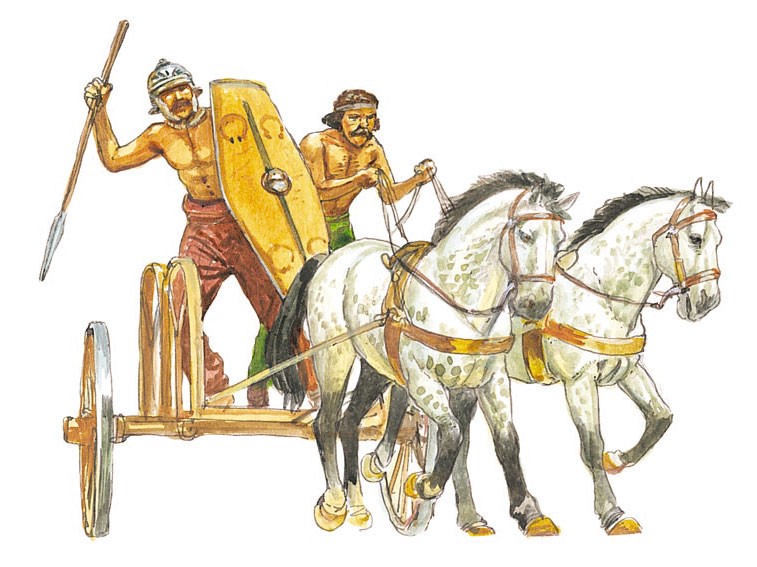
The Myrmillo (or Murmillo), with his crested helmet and heavy armour, was a mythical “fish-man”. The Dimaecherus fought with two swords, but no shield, while the Retiarius, helmet-less and almost without any defensive armour, had a trident as a weapon and a net which he used to trap his opponent. The Essedarius went into battle on a chariot.
The day's events at the games
Gladiatorial games began with a procession (pompa) of the gladiators. This also included animals and entertainers such as jugglers, musicians and dancers. It was led by the sponsor of the games, known as the editor. In Rome, this was usually the emperor himself. In other towns and provinces it might be the governor, a senator or other important person.
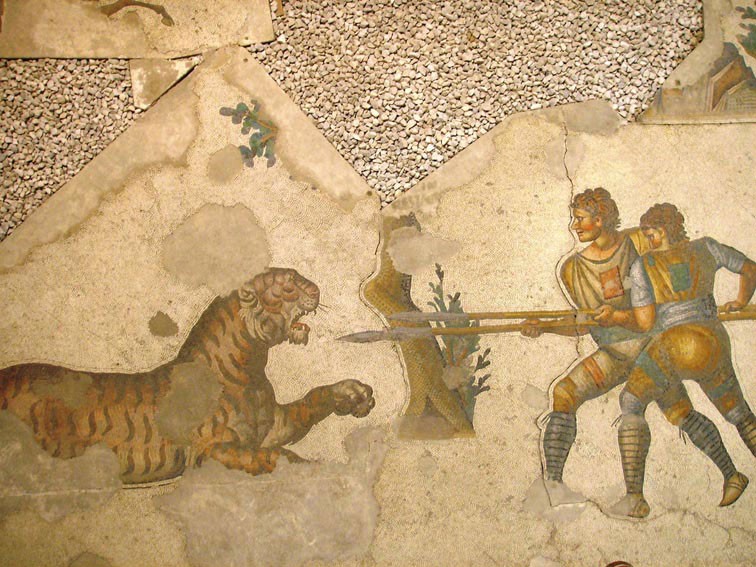
During the course of the morning, mock fights were followed by animal hunts in which wild animals, such as tigers, leopards, lions, elephants and rhinoceroses, were pitted against one other, or were killed by a Bestiarius.

After the morning’s events came the execution of criminals. These, according to the Romans, included Christians. Sometimes, they were forced to perform in mock mythological plays which ended in the real death of the leading “actor”. Other times, in a particularly cruel act, the condemned were thrown into the arena along with dangerous animals without any means of defending themselves. On occasions, the arena was flooded and a full-scale naval battle, known as a naumachia, complete with ships, was staged.
The high point of the games came in the afternoon: combats (paria) between individual gladiators. These were usually fights between different types of gladiators, refereed by a lanista, the manager of a gladiatorial school.
Judgment
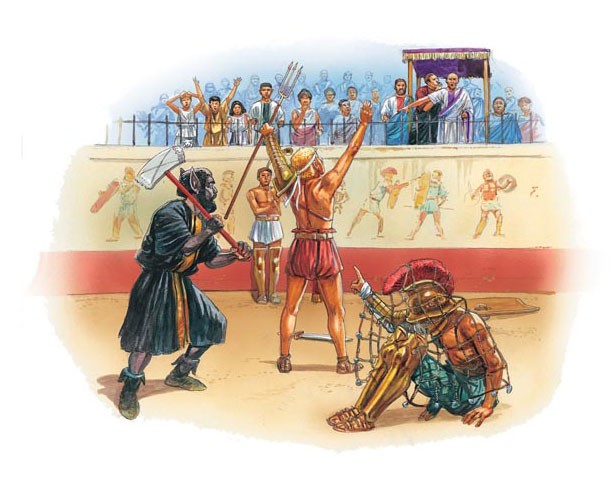
When a gladiator was wounded and conceded defeat, he would hold up his left index finger. According to popular belief, the crowd would indicate with a “thumbs up” if they wished him to be spared, or with a “thumbs down" if he was to be killed. However, there is no evidence to support this belief. It was the decision of the games' sponsor whether the defeated gladiator would be given a reprieve (missio). A gladiator condemned was not to plead for mercy. If a gladiator was killed, a man dressed as Charon, the ferryman of Hades, would strike his head with a mallet to make sure he was dead.
Animal tricks
Exotic animals from all over the empire were brought to Rome for the games. Not all of them were there to fight: some were trained to do circus tricks to thrill the crowd. For example, elephants might be trained to write Latin words in the sand with their trunks, or to kneel before the emperor. Sometimes a lion might release a live hare from its mouth after catching it. In some arenas, wild animals were kept in tunnels under the floor and winched up to the arena in specially designed cages.
Spartacus
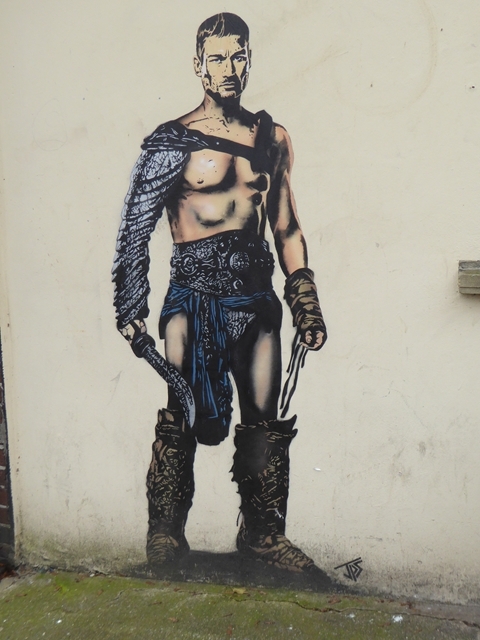
Spartacus (c.111–71 BC) was Thracian gladiator who became leader of a slave revolt. He is thought to have been born in what is today southwestern Bulgaria. He was sold into slavery and trained at the gladiatorial school in Capua, north of Naples, as a Myrmillo. Spartacus escaped in 73 BC and took refuge on nearby Mount Vesuvius, where many other escaped gladiators joined him. Along with the Gauls Crixus and Oenomaus, Spartacus was elected leader. The uprising came to be known as the Third Servile War. Leading an army that later swelled to as many as 100,000 runaway slaves, Spartacus scored a series of victories over the Roman army conducting what in modern times is known as guerrilla warfare.
In the spring of 72 BC, Spartacus and his rebel army marched north towards Gaul, before heading south once more to Rhegium, (now Reggio di Calabria) near the Strait of Messina, the narrow sea crossing to Sicily. There in 71 BC a Roman army consisting of eight legions made up of about 40,000 men led by Marcus Licinius Crassus managed to trap Spartacus's men.
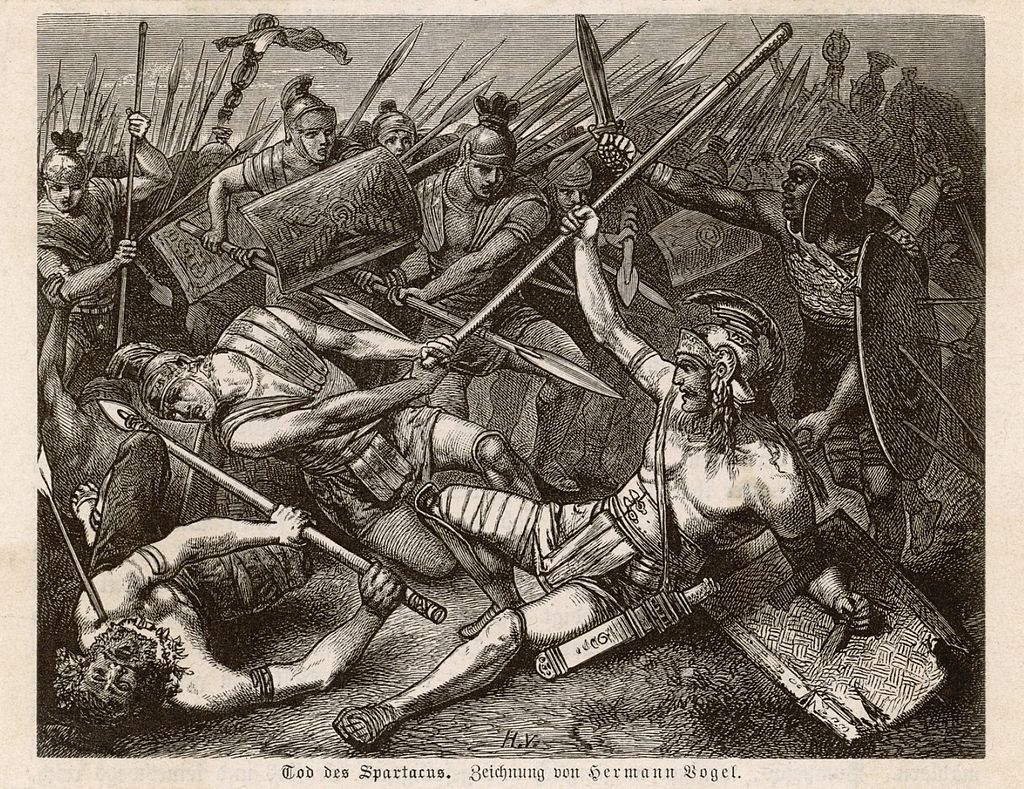
In the battle that followed, Spartacus was probably killed along with many of the rebels. Around 6000 of his followers were captured and crucified lining the Appian Way (Via Appia) from Rome to Capua. Thousands more perished later at the hands of the army of the Roman general Pompey, who claimed the credit for suppressing the rebellion.
Consultant: Philip Parker