
Fish
Extraordinary fish
Many ocean creatures may look extraordinary to us, but the colours, shapes or other distinctive features they have are there to help them to best adapt to their ocean environment. Their sharp spines or powerful venom, for example, may give them protection against predators—or equip the animals to be dangerous predators themselves.

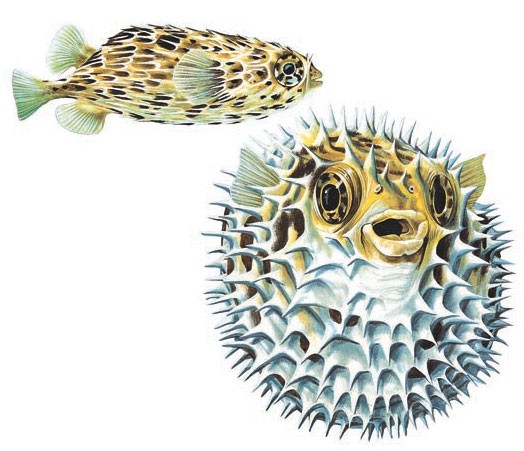
Porcupinefish
The porcupinefish is a medium-sized fish, named after the porcupine, a rodent with a coat of sharp spines that help protect it from predators. Sometimes called the blowfish, it has three lines of defence. First of all, when threatened, it will swallow water to swell its body to more than double its usual size. Secondly, this swelling puffs out sharp spines all over the fish's body. Thirdly, the porcupinefish is also deadly poisonous if eaten.
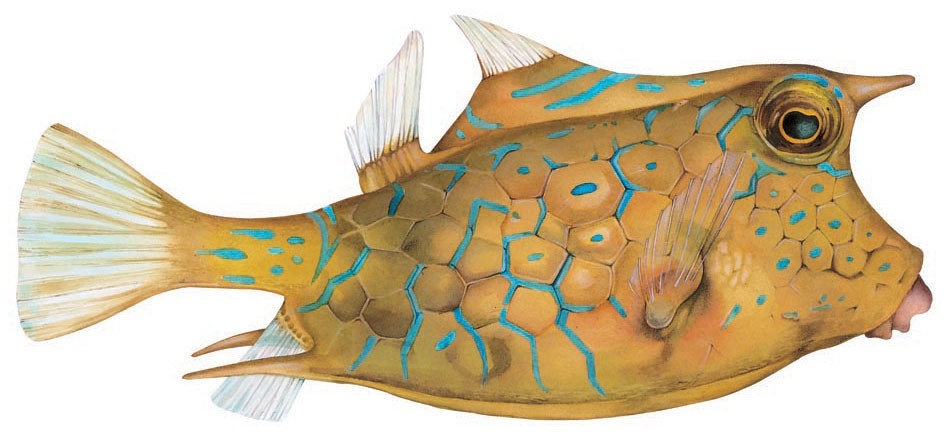
Cowfish
The cowfish, also known as the boxfish, is protected by a hard armour of stiff plates that are very difficult to bite into. It also has sharp horns, or spines, on its head and tail. In case this was not enough to deter hungry predators, the cowfish's skin produces a deadly venom, strong enough to kill most attackers.
Flyingfish
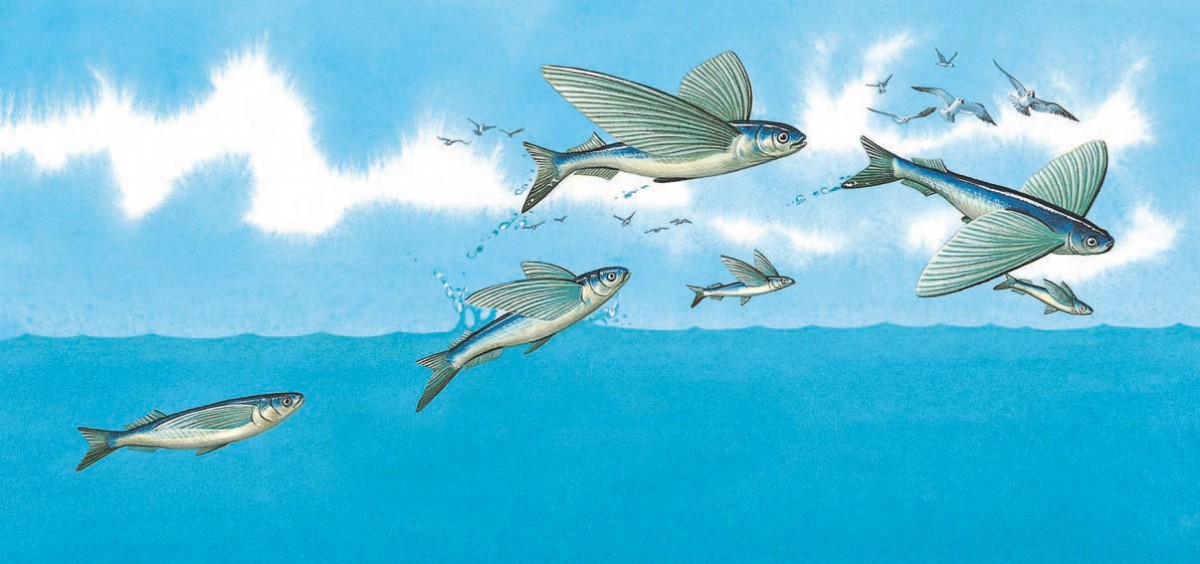
Flyingfish have large, wing-like fins. These allow them to swim fast and leap from the water to escape from predators. They can glide for distances of up to 100 metres (more than 300 feet) above the waves. Their pursuers, normally swordfish or tuna, are usually left behind, but the fish then become vulnerable to sea birds swooping down from above.

Mudskipper
The mudskipper lives in mangrove swamps. Between tides it breathes using water stored in its head near its gills. At high tide it burrows underground, but it can also climb trees to avoid predators. When out of the water, the mudskipper fish uses its fins to "walk" across the mud and even climb trees.
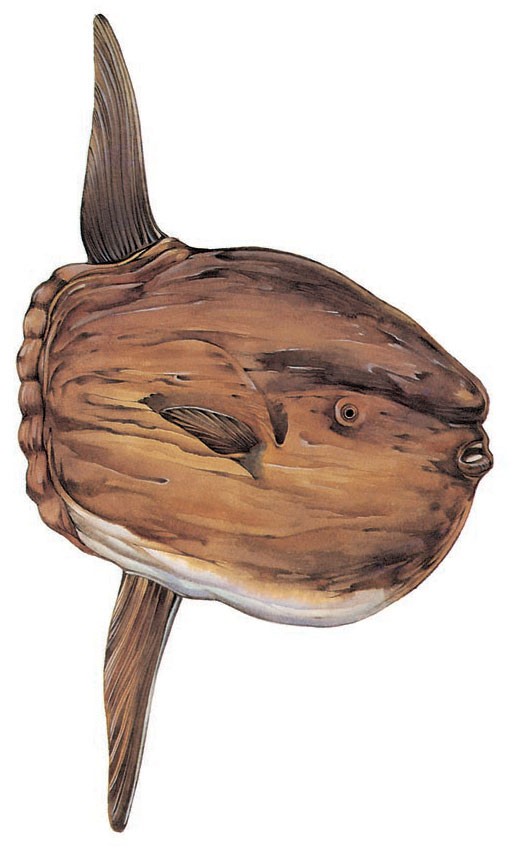
Ocean sunfish
The ocean sunfish, or mola mola (mola is Latin for "millstone"), is the heaviest-known bony fish in the world. Averaging 1.8 metres (6 feet long), it weighs up to 1050 kilograms (2300 pounds). Its huge, round, flattened body makes it look a little like a gigantic fish head with a tail. Using its fins as oars to pull itself through the water, it feeds mainly on jellyfish, but also squid, crustaceans and small fish. The sunfish is so-called because of its habit of basking in the sun at the water's surface. When it swims near the surface, its tall dorsal fin sticks out of the water, like that of a shark.
Oarfish

The oarfish has a long, ribbon-like body with a bright red fin that runs all the way along its back. It has that name either because of the shape of its body, or because it was once (mistakenly) thought to use its thin, elongated pelvic fins to "row" itself through the water. It swims in warm waters at depths of between 300 and 600 metres (1000–2000 feet), feeding on tiny zooplankton. Ancient tales of sailors told legends of huge sea serpents with red manes. With its 7-metre (23-foot), ribbon-like body and red “mane”, the oarfish could well be the sea monster they were describing.
Consultant: Chris Jarvis