
Natural history of the British Isles
Sea birds of the British Isles A-Z
Avocet
Recurvirostra avosetta
This striking, black-and-white wading bird has a long, curved beak for probing under the mud in search of tiny crabs and worms. Avocets live in coastal estuaries and lagoons along the southern and eastern coasts of England. They have a peeping call. Length: 42–45 cm (16.5–17.5 inches). Eats: insects, worms, crustaceans.

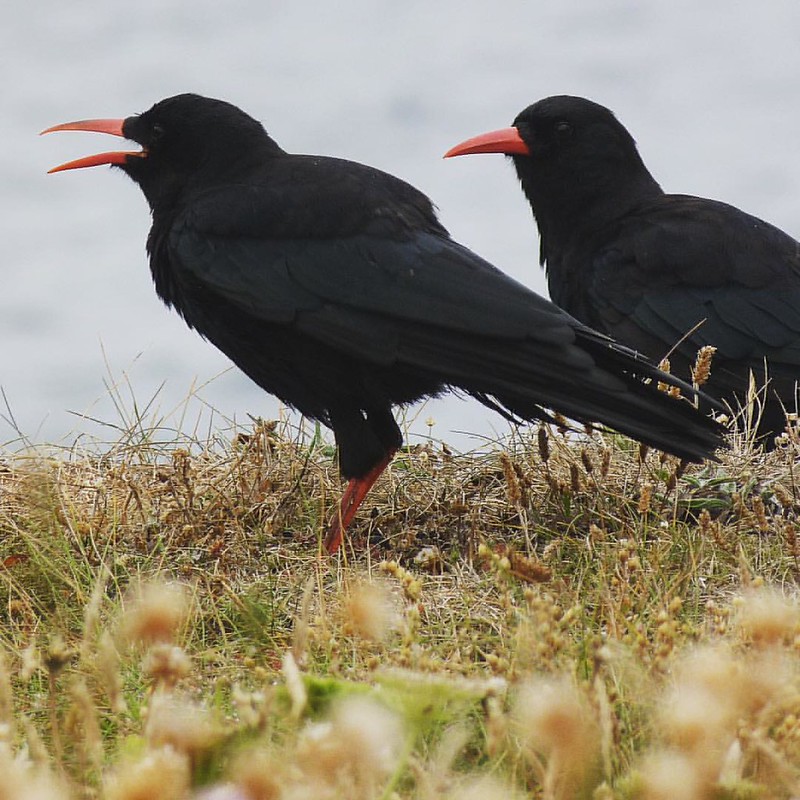
Chough
Pyrrhocorax pyrrhocorax
Choughs belong to the crow family. They have black feathers, and bright red beaks and legs. Choughs can usually be seen in pairs or small flocks, diving and twisting in the air as they fly. In the British Isles, they live only along the west coasts of Ireland and Wales, and on parts of the coast of Cornwall. Length: 40 cm (16 inches). Eats: insects, larvae (grubs).
Cormorant
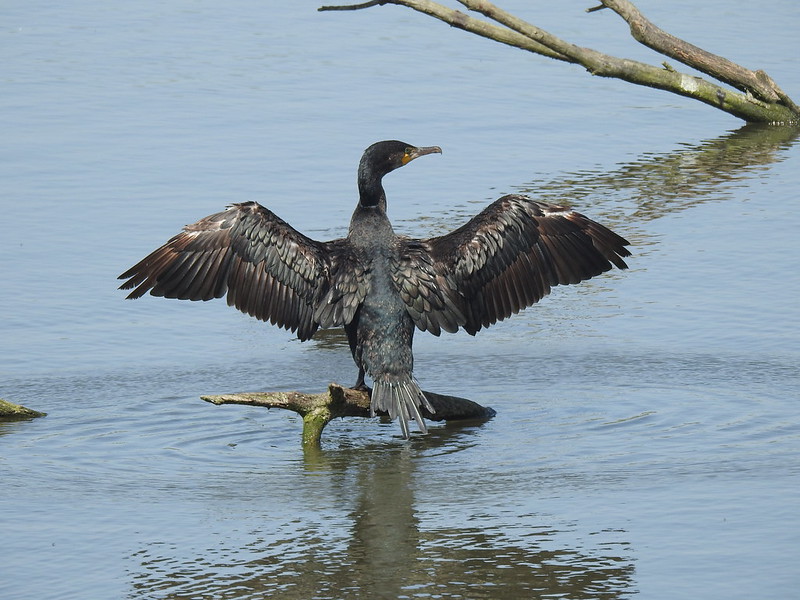
Phalacrocorax carbo
Cormorants are large black birds commonly found in coastal and inland waters. Their sleek bodies make them excellent divers, and they can dive to depths of more than 40 metres (131 feet) to catch fish. Cormorants’ shiny feathers are not waterproof, so when they resurface from a dive, they must hold them outstretched to dry in the sun. Length: 80–100 cm (32–40 inches). Eats: fish, eels.
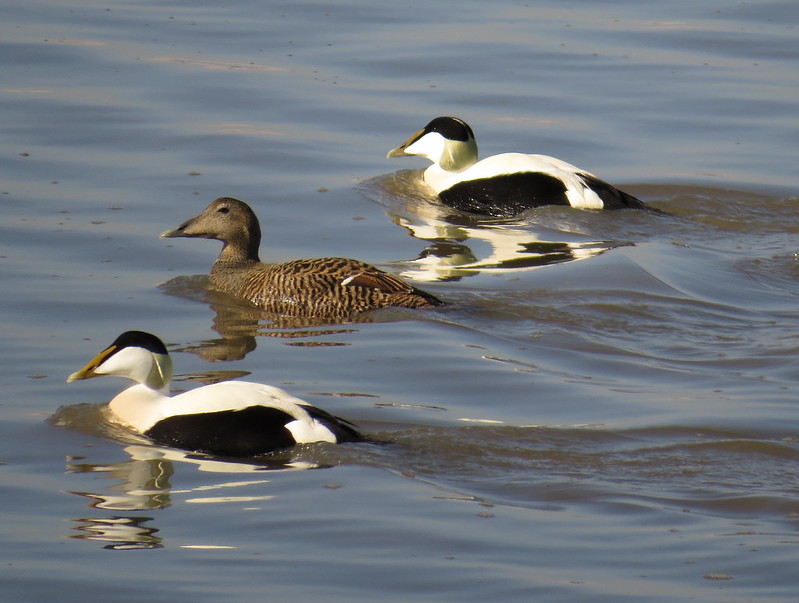
Eider
Somateria mollissima
Eiders are large sea ducks. They breed in Scottish coastal waters, but can be seen further south in summer. Eiders’ favourite food are mussels, a type of shellfish. They dive underwater to find them, and swallow them whole—the shells are crushed in a part of the duck's stomach called the gizzard. Length: 55–60 cm (22–24 inches). Eats: shellfish.

Fulmar
Fulmarus glacialis
With their grey wings and white bodies, fulmars look like part of the gull family, but instead they are a type of petrel, related to albatrosses. Fulmars spend nearly the whole year out at sea, and only return to land to breed. They make their nests in large, noisy colonies on high sea cliffs. Length: 45–50 cm (18–20 inches). Eats: fish, crustaceans, squid, carrion (dead animals).
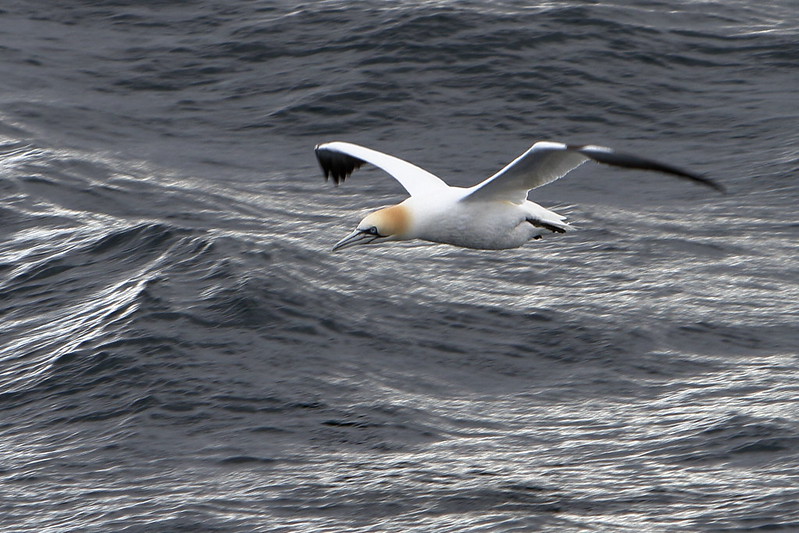
Gannet
Morus bassanus
This large sea bird has pure white feathers, a yellow head and pointed, black-tipped wings. Gannets hunt out at sea, flapping and then gliding over the water as they follow shoals of fish. When they strike, they fold their wings and plunge into the sea to spear their catch with their sharp beaks. Length: 85–100 cm (35–40 inches). Eats: fish.
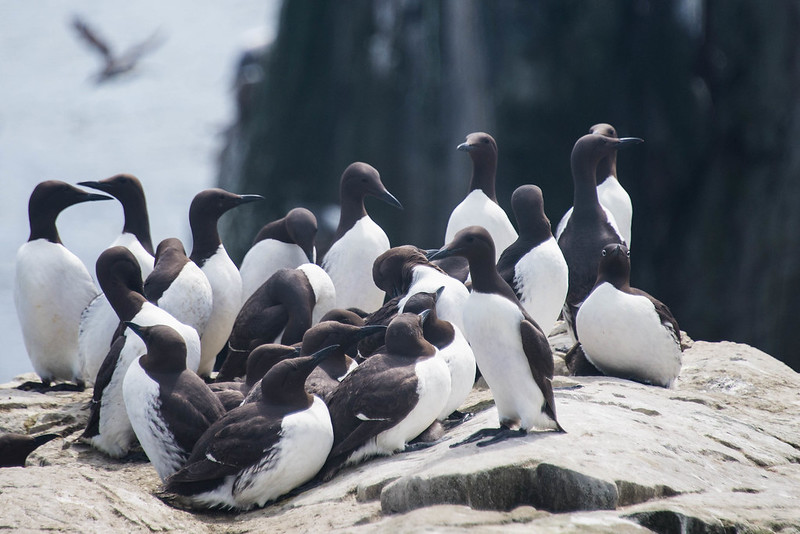
Guillemots
Cepphus grylle (Black guillemot), Uria aalge (Guillemot)
Guillemots are small brown sea birds with white underbellies. They nest in huge, noisy colonies on sea cliffs, usually crowding together with other birds such as razorbills. Black guillemots are smaller, with black and white feathers and bright red feet. They live in pairs rather than big groups, mostly on the Scottish and Irish coasts. Length, guillemot: 38–45 cm (15–18 inches); black guillemot: 30–32 cm (12–13 inches). Eats: fish, crustaceans.
Gulls
Chroicocephalus ridibundus (Black-headed gull), Larus canus (Common gull), Larus marinus (Great black-backed gull), Larus argentatus (Herring gull), Rissa tridactyla (Kittiwake)
Black-headed gulls are the most common gull in the British Isles. They live almost everywhere and can be found inland as well as at the coast. Normally white with red beaks and legs and black wing-tips, during the summer their heads turn a dark colour, giving them their name. Length: 35–38 cm (14–15 inches). Eats: insects, fish, seeds, worms, scraps, carrion

The largest gull is the Great black-backed gull, with a wingspan of more than 1.5 metres (5 feet). Its large size and black wing-feathers make it easy to tell apart from other gulls. It chases smaller birds to steal their food. Length: 64–78 cm (25–30 inches). Eats: birds, shellfish, carrion.
Lesser black-backed gulls are smaller, and have lighter grey wings. They live in huge colonies around the coast, and are scavengers, eating whatever they can find. Length: 52–64 cm. Eats: fish, insects, small mammals, chicks, eggs, carrion, scraps.

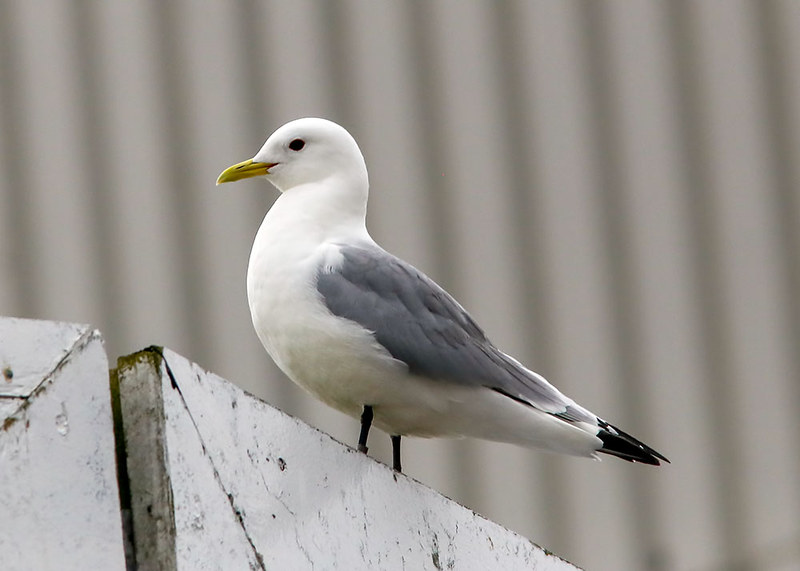
Kittiwakes look similar to herring gulls, but their eyes and legs are dark and their beaks are plain yellow, without a red spot. They only live at the coast, where they can be seen during the breeding season in spring and summer—they spend winters out on the Atlantic Ocean. Kittiwakes are named after the sound of their call. Length: 38–40 cm (15–16 inches). Eats: fish, sand eels, shrimps, worms
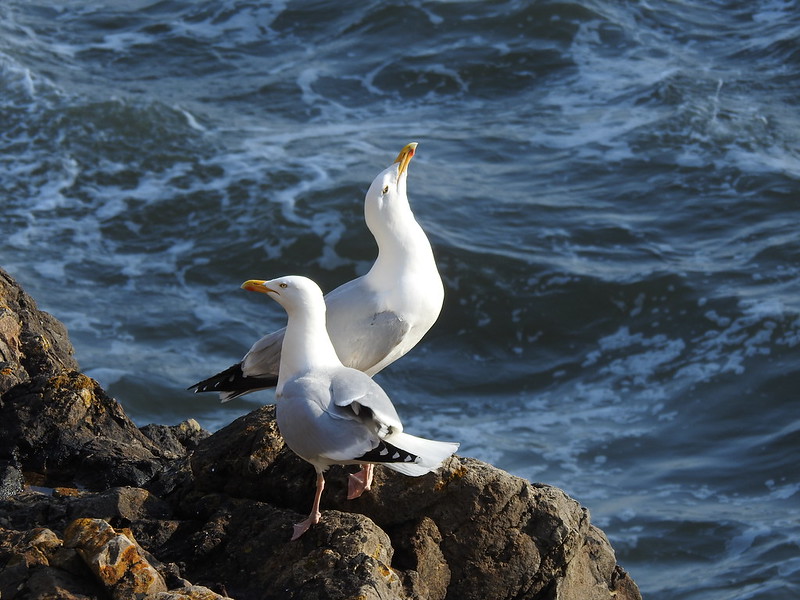
Herring gulls are noisy, medium-sized gulls. Their beaks are yellow with a red spot at the tip, and they have pale yellow eyes. Juvenile birds are mainly brown with darker streaks and have a dark beak and eyes. Most often seen at the coast, herring gulls are also commonly found inland in towns and cities, at lakes, rubbish dumps and on farmland, especially in winter. Length: 54–60 cm (21–24 inches). Eats: fish, insects, small mammals, chicks, eggs, carrion, scraps.
Common gulls look similar to herring gulls, but are smaller, with green-yellow legs and plain yellow beaks that are shorter and thinner. They are common scavengers in towns and cities. Length: 40–42 cm (16–17 inches). Eats: fish, worms, insects, scraps.
Oystercatcher
Haematopus ostralegus
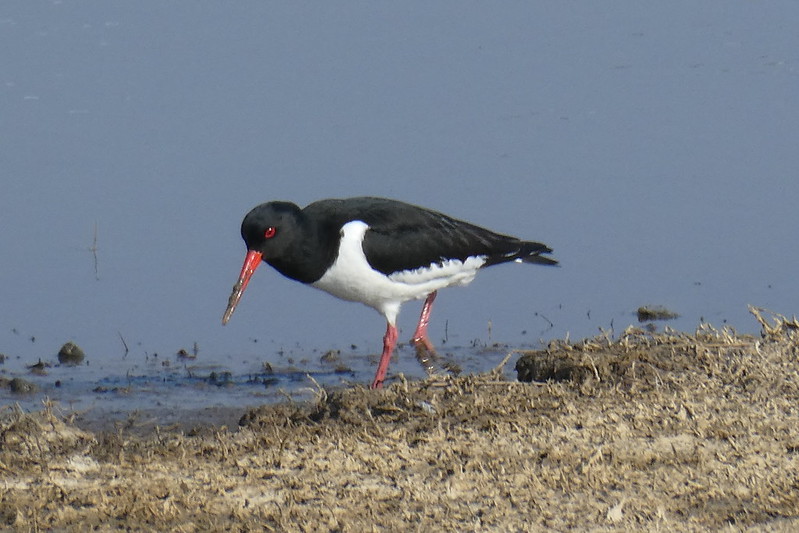
Oystercatchers are medium-sized black and white wading birds with long, bright red beaks and legs. They are a common sight along the shoreline and in estuaries all over the British Isles and near rivers in Scotland and northern England. Oystercatchers use their strong beaks to open the shells of mussels and other shellfish. The shape of their beaks helps them to poke into the soft mud to look for worms at low tide. They have a loud, piping call. Length: 40–45 cm (16–18 inches). Eats: shellfish (cockles and mussels), worms.
Petrels
Hydrobates pelagicus (Storm petrel), Oceanodroma leucorhoa (Leach’s petrel)
Storm petrels are small black birds with white patches near their tails. They can be seen in small flocks out at sea, often following fishing boats. They come ashore only at night. Leach’s petrels also spend nearly all their time at sea, and are even more difficult to spot, as they breed on remote islands off the north and west coasts of Scotland. They look very similar to storm petrels, but have forked tails. Length, Leach's petrel: 19–22 cm (8–9 inches); storm petrel: 14–18 cm (6–7 inches). Eats: fish, crustaceans.


Plovers
Pluvialis squatarola (Grey plover), Charadrius hiaticula (Ringed plover)
Grey plovers are small wading birds from the Arctic that migrate to spend winter in British estuaries. In its winter plumage it has a spotted, white and silvery-grey back, with a pale grey and white belly. In summer, it has a black face and belly. Plovers look for food in the mud when the tide is out. Length: 26–29 cm (10–11.5 inches). Eats: crustaceans, worms.
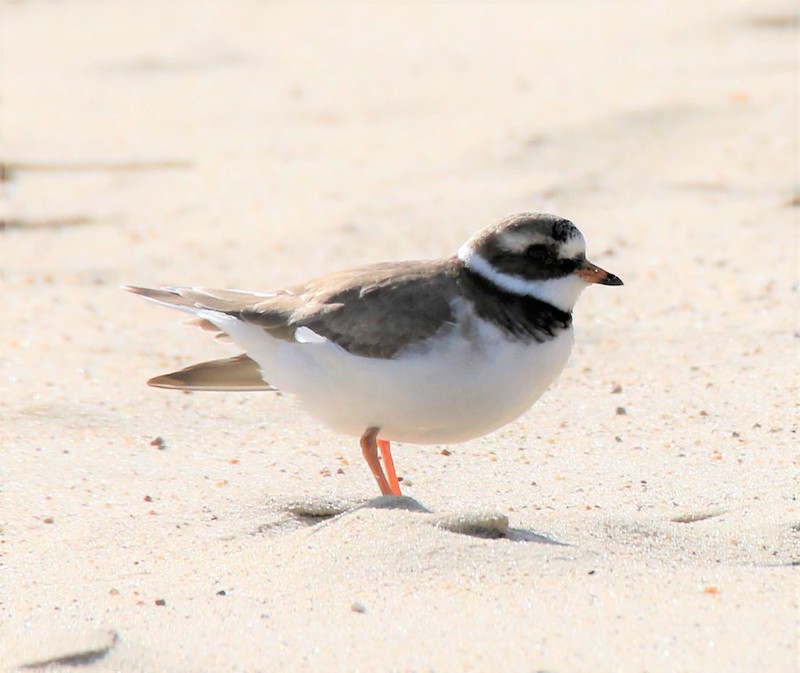
Ringed plovers live in the British Isles all year round, on beaches and estuaries. Smaller than grey plovers, they are brown and white with a black ring pattern around their chest and across their eyes. Length: 18–20 cm (7–8 inches) (Ringed plover). Eats: crustaceans, worms, insects, flies.
Puffin
Fratercula arctica
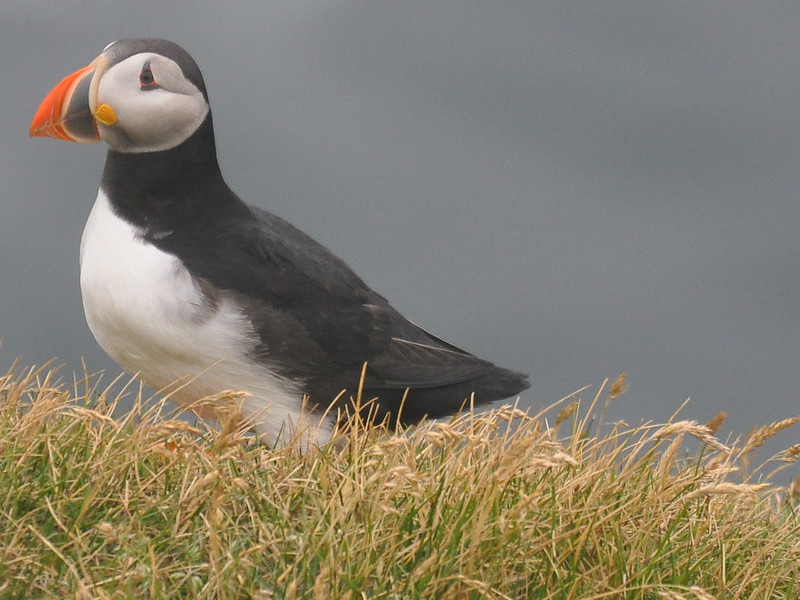
These small, squat sea birds are easy to recognize with their colourful parrot-like beaks, black and white feathers, and bright yellow feet. Puffins breed only at a few locations on the coast of Scotland, northern and southwest England, Wales and Ireland. They often use empty rabbit holes as burrows. Once the breeding season (April–July) is over, puffins shed their bright outer beaks. Length: 26–29 cm (10–12 inches). Eats: fish, sand eels.
Razorbill
Alca torda
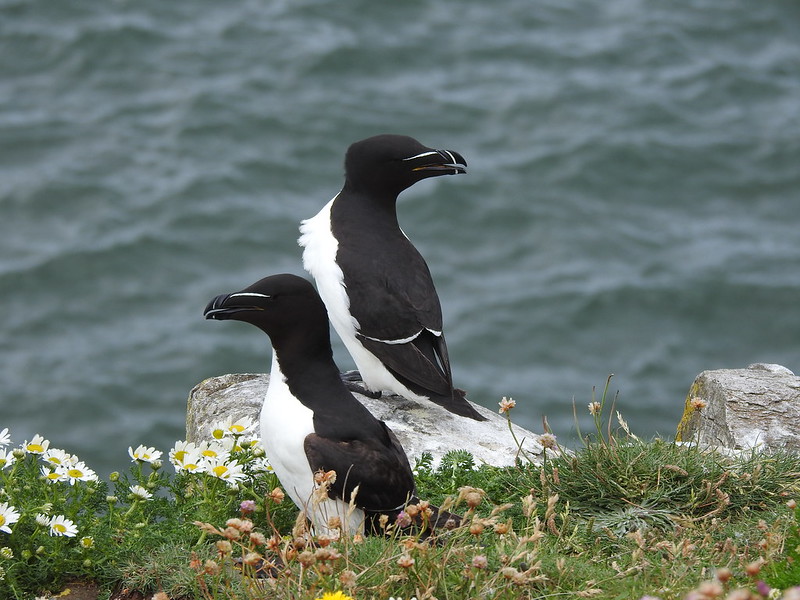
Razorbills are medium-sized sea birds with black feathers and white bellies. They are a type of auk, related to puffins and guillemots. They get their name from their large, blunt-tipped beaks, which have rows of razor-sharp “hooks” inside them. The hooks help the birds to grip on to the fish they catch. Razorbills breed in large colonies on cliffs, often sharing space with other nesting birds such as guillemots. They spend only the summer in the British Isles; the rest of the year they spend out on the chilly North Atlantic Ocean. Length: 39–43 cm (15–17 inches). Eats: fish, sand eels.
Shag
Phalacrocorax aristotelis
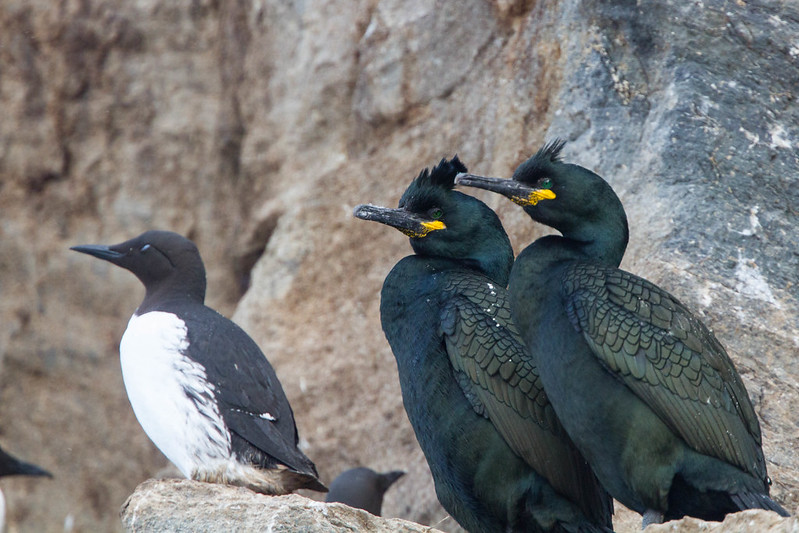
Shags are medium-sized sea birds with glossy, dark green feathers and long necks. Related to cormorants, like them they can be seen on rocks after diving for fish, hanging their wings out to dry. They can be told apart from cormorants by their steeper foreheads and all-over dark colouring. The bird is named after the tuft of feathers seen on the top of its head during the breeding season ("shag" is an old name for “tuft”). Length: 65–80 cm (25–30 inches). Eats: fish, crustaceans.
Shearwaters
Puffinus puffinus (Manx shearwater), Puffinus griseus (sooty shearwater).
Manx shearwaters are small, slim sea birds with white bellies and long, black wings. They fly close to the water, rolling (or "shearing") like aeroplanes to dodge in and out of waves. They breed at only a few sites in the British Isles, mainly on the Irish and Welsh coasts. During the winter they migrate thousands of kilometres to South America.
Length: 30–38 cm (12–15 inches). Eats: fish

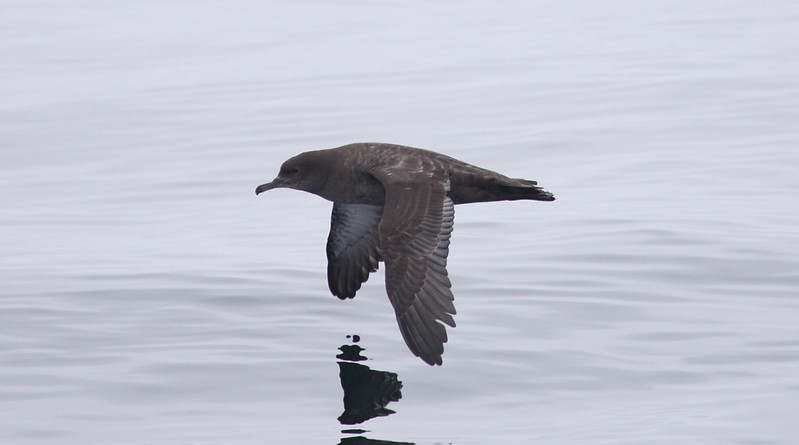
Sooty shearwaters are much larger birds, with dark greyish-brown feathers all over. Also known as muttonbirds, they can be seen in the British Isles in the late summer, as they pass through on their way from northern Norway to their breeding grounds on the Falkland Islands in the South Atlantic Ocean. Length: 40–51 cm (16–20 inches). Eats: fish, squid, crustaceans.
Skuas
Stercorarius parasiticus (Arctic skua), Stercorarius skua (great skua),
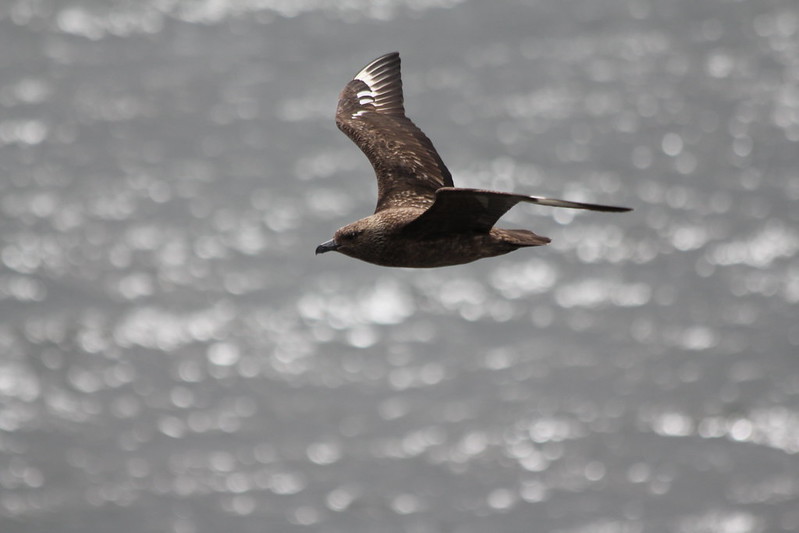
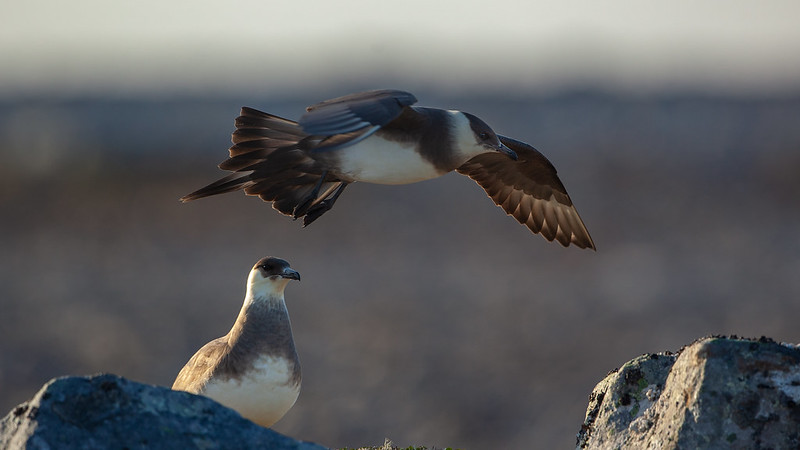
Skuas are fierce pirate-like birds. They feed by attacking other birds and stealing their food. Great skuas breed on the northern coasts of Ireland and Scotland. They are large, dark sea birds with flashes of white on their wings. The Arctic skua lives even further north. It has a dark cap, dark grey wings and a white belly. Arctic skuas chase terns to force them to drop their food, and even scavenge chicks and eggs from other birds’ nests. Length: 41–46 cm (16–18 inches). Eats: fish, carrion, eggs and chicks.

Terns
Sterna paradisaea (Arctic tern), Sterna hirundo (Common tern), Sterna dougallii (Roseate tern), Sternula albifrons (Little tern)
Terns are a family of small sea birds with white bodies, grey wings and black caps. Common terns, nicknamed “sea swallows”, have long, forked tails. They breed at the coast, but can sometimes also be found inland. Arctic terns look very similar to common terns. They breed in Scotland and Ireland in summer and migrate to the Antarctic in time for winter. Length: 31–35 cm (12–14 inches). Eats: fish, crustaceans, insects.
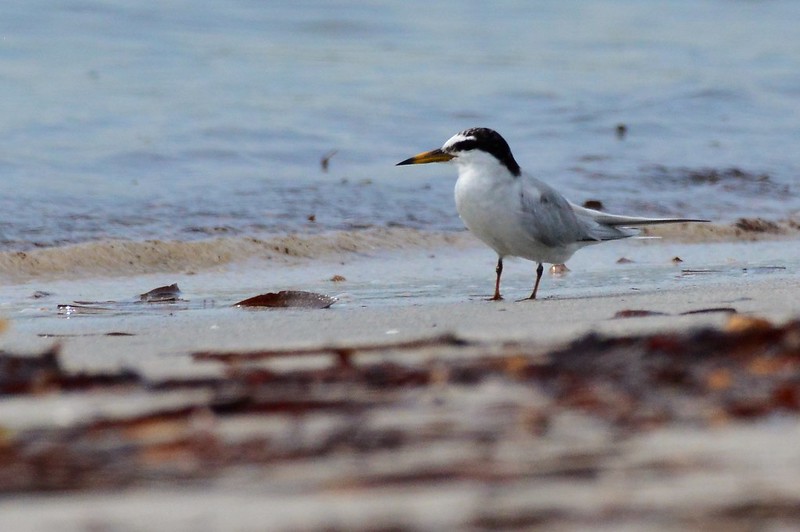
Roseate terns are some of the rarest sea birds in the British Isles, and are found mainly along the east coast. They turn a pale pinkish colour in summer. Little terns are the smallest terns, and live only at the coast. They have bright yellow legs and beaks and make chattering, chirping calls like house sparrows. Length: Roseate tern: 33–38 cm (13–15 inches). Little tern: 22–24 cm (9–10 inches). Eats: fish
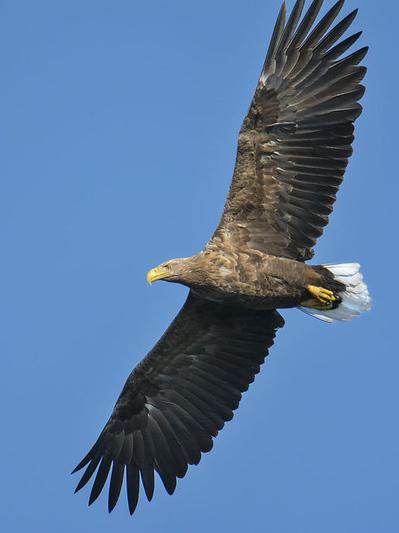
White-tailed eagle
Haliaeetus albicilla
The white-tailed eagle, also known as the sea eagle, is the largest bird in the British Isles. This huge bird of prey has a wingspan of up to 2.4 metres (8 feet)—larger than the outstretched arms of a human adult. White-tailed eagles' feathers are dark brown, while their heads are pale-coloured. They have bright yellow beaks and talons. Expert fishers, they fly low over the water and snatch their prey with their talons. They are also known to steal food from other birds, and scavenge carrion. Once found all over the British Isles, today they are confined to the west coast of Scotland. They have been recently introduced to the Isle of Wight in southern England. Length: 70–90 cm (30–35 inches). Eats: fish, small mammals, carrion.
Consultant: Chris Jarvis