
Chemistry
What makes some drinks fizzy?
The fizz in a drink is caused by a mass of tiny bubbles rising up through the liquid. These bubbles contain gas that was dissolved in the liquid, but is now escaping. The gas is carbon dioxide (CO2)—which is why these drinks are also called carbonated drinks. As you drink, the carbon dioxide produces a tingling sensation on your tongue and in your throat. Soft drink manufacturers force carbon dioxide and water into the drink at high pressure. The hissing sound you hear when you open a can or bottle (or the loud pop made by opening a bottle of champagne) is produced by millions of carbon dioxide molecules bursting out of the liquid—the result of a rapid loss of pressure. An unopened drink is bubble-free because the pressure inside the can or bottle keeps the carbon dioxide dissolved in the liquid.
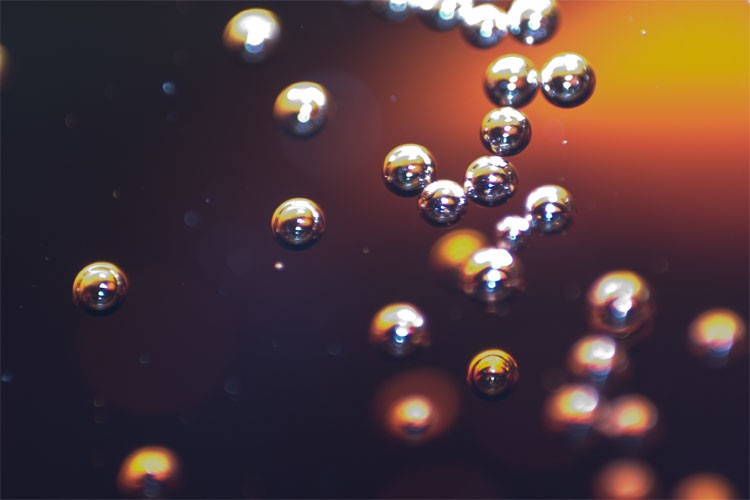
Manufacturers force CO2 into water at high pressure until it is supersaturated—more CO2 dissolved in it that would be normally be possible. The molecules of water H2O form weak bonds with the CO2 molecules, preventing them from escaping. The water is now carbonated. Syrup and flavourings are added and the mixture poured into a bottle or can, which is then sealed. This keeps the pressure high inside, so that the CO2 stays dissolved until the bottle or can is opened.
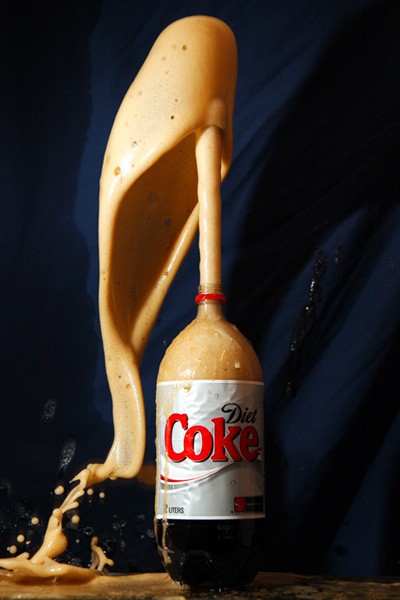
A Diet Coke and Mentos eruption (left) is a reaction between the carbonated drink Diet Coke and Mentos mints that causes the liquid to spray out of its bottle. The gas released when the mints are dropped into the drink forces all the liquid out of the bottle in a huge explosion. The surface of a Mentos mint is rough, covered with many small holes, which cause carbon dioxide bubbles to form rapidly—much more so than if the bottle were to be opened normally. Other substances dropped into other carbonated drinks have the same, but not quite so spectacular, effect.
Consultant: Mike Goldsmith
Other Q-&-As to explore:
For a full list of all our Q&As, please click here.
If you have a question that you would like to see answered on Q-files, please send us an email to info@Q-files.com or use the contact us page.