
British kings and queens
Elizabeth II
Elizabeth II (1952–2022) was born on 21st April 1926, and acceded to the throne on the death of her father in 1952. She also became Queen of the United Kingdom, Canada, Australia and New Zealand (and later to a number of countries that became independent since her accession) as well as Head of the Commonwealth. In 1947, she married Philip, Duke of Edinburgh, with whom she had four children: Charles, Anne, Andrew and Edward. Elizabeth celebrated her Silver, Golden and Diamond jubilees in 1977, 2002 and 2012 respectively. In 2015, she surpassed the reign of her great-great-grandmother, Queen Victoria, to become the longest-reigning British monarch—and the longest-reigning queen in world history. She occasionally faced criticism of the royal family, most notably after the death of Diana, Princess of Wales, in 1997, but support for the monarchy, along with her personal popularity, remained strong throughout her reign. In June 2022 the Platinum Jubilee of Elizabeth II was celebrated to mark the 70th anniversary of her accession. It was the first time a British monarch achieved this milestone.


Early life
Elizabeth was born on 21st April 1926, the daughter of George V’s second son, Albert, Duke of York, and his wife Elizabeth. Albert did not expect to be king since his elder brother David was first in line. David, who acceded to the throne as Edward VIII after his father’s death in 1936, abdicated only a few months into his reign. As a result, his younger brother became king, taking the name George VI. Elizabeth was now heir to the throne.
The young princess, known as “Lilibet” to her family, began to undertake public duties during World War II, which had broken out in 1939. In 1940, aged 14, she made a radio broadcast to the children of Britain. She served in the Auxiliary Territorial Service. On VE day at the end of the war in Europe in 1945, Elizabeth persuaded her parents to let her and her sister Margaret to join the celebrations, mingling anonymously with the crowds.


Marriage
Elizabeth had been exchanging letters with Philip Mountbatten (1921–2021) since July 1939, when she was 13. From the House of Glücksburg, Philip was a member of both the Greek and Danish royal families. He was born in Greece but his family was exiled from that country while he was still an infant. He joined the Royal Navy in 1939. Philip became a British subject, adopting the surname “Mountbatten” from his maternal grandparents. He also gave up his Greek and Danish titles and changed his religion from the Greek Orthodox Church into which he had been baptized. Elizabeth and Philip were married on 20th November 1947. Just before the wedding, King George VI gave him the title, Duke of Edinburgh.
Coronation

King George VI died while Elizabeth and Philip were touring Kenya in 1952. The coronation, held on 2nd June 1953, was a huge public spectacle and the first to be televised. An audience estimated at more than 20 million people watched the coronation on television. News that Edmund Hillary had conquered Mount Everest arrived in Britain on the same day, adding to the jubilant mood.
Times of change
During Elizabeth’s reign, Britain underwent enormous changes. It lost its empire and in 1973 joined its European neighbours in an economic and political union, the European Union. Power was devolved (handed over) to Scotland and Wales. The Queen also had to learn how to manage enormous press and media interest in her life and the lives of her family.
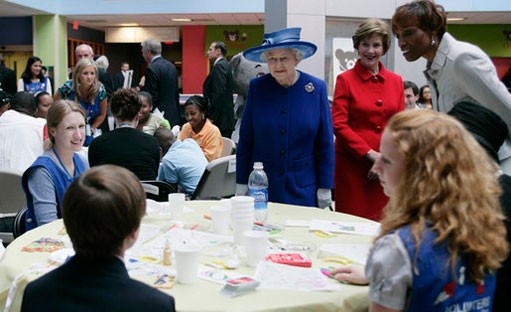

In 1970, Elizabeth introduced the royal “walkabout”, a way of meeting local people face-to-face on her tours of Britain and the world. This has since become a royal tradition. In 1977, at a time when Britain was rocked by riots and unrest, there was a national celebration of her Silver Jubilee (25 years on the throne). Two events in the early 1980s raised concerns over her security. In 1981, a man fired six shots at the Queen while she was riding down The Mall—which turned out to be blanks. In 1982, another man managed to break into the Queen’s bedroom at Buckingham Palace.
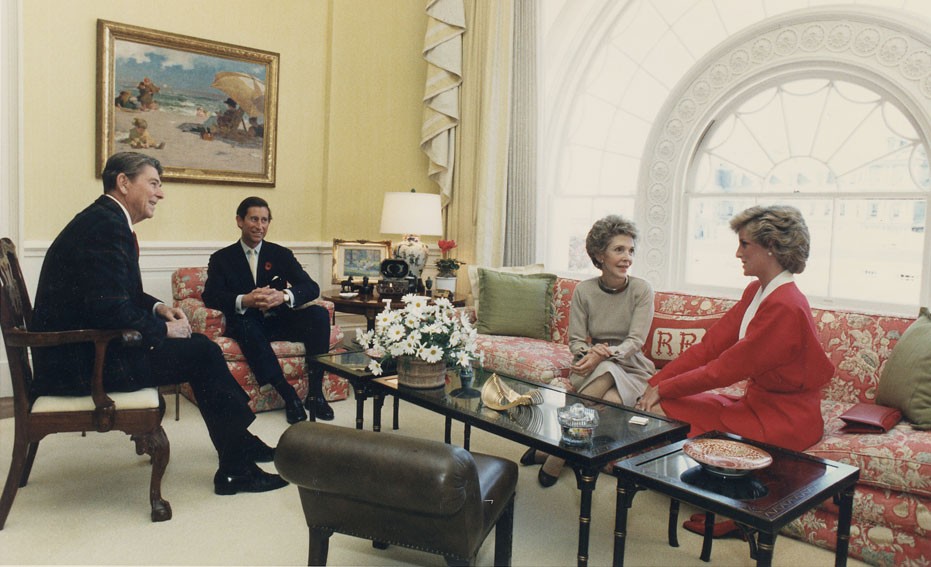
Queen Elizabeth called 1992 her “Annus horribilis” (a horrible year) because of a series of setbacks that took place that year: the breakdown of the marriages of two of her children, Anne and Andrew; the publication of a book revealing the collapsing marriage of Charles and his wife Diana; the outbreak of a damaging fire at Windsor Castle, her private home.

Last years
In 2012, Queen Elizabeth celebrated her Diamond Jubilee, only the second achieved by a British monarch (the other was Victoria). Later that year, she joined the Olympic opening ceremony, even appearing in a James Bond spoof. In 2013, the law was changed so the monarch’s eldest born child, either boy or girl, now has the right to the throne, rather than the eldest boy. On 9th September 2015, Elizabeth overtook Victoria to become Britain’s longest reigning monarch. A total of 15 prime ministers, from Winston Churchill to Liz Truss, held office during her reign.
Her husband, Prince Philip, died in 2021. Queen Elizabeth II died at her Scottish residence, Balmoral, on 8th September 2022 at the age of 96. She was succeeded by her son, King Charles III.
Consultant: Philip Parker