
Exploration

CITE
We have made every effort to follow citation style rules, but there may be some minor differences. If in doubt, please refer to the appropriate citation style manual.
Marco Polo. (2025). In Q-files Encyclopedia, History, Exploration. Retrieved from
https://www.q-files.com/history/exploration/marco-polo
"Marco Polo." History, Exploration, Q-files Encyclopedia, 26 Sep. 2025.
https://www.q-files.com/history/exploration/marco-polo.
Accessed 6 Aug. 2026.
Marco Polo 2025. History, Exploration. Retrieved 6 August 2026, from
https://www.q-files.com/history/exploration/marco-polo
History, Exploration, s.v. "Marco Polo," accessed August 6, 2026.
https://www.q-files.com/history/exploration/marco-polo


Marco Polo
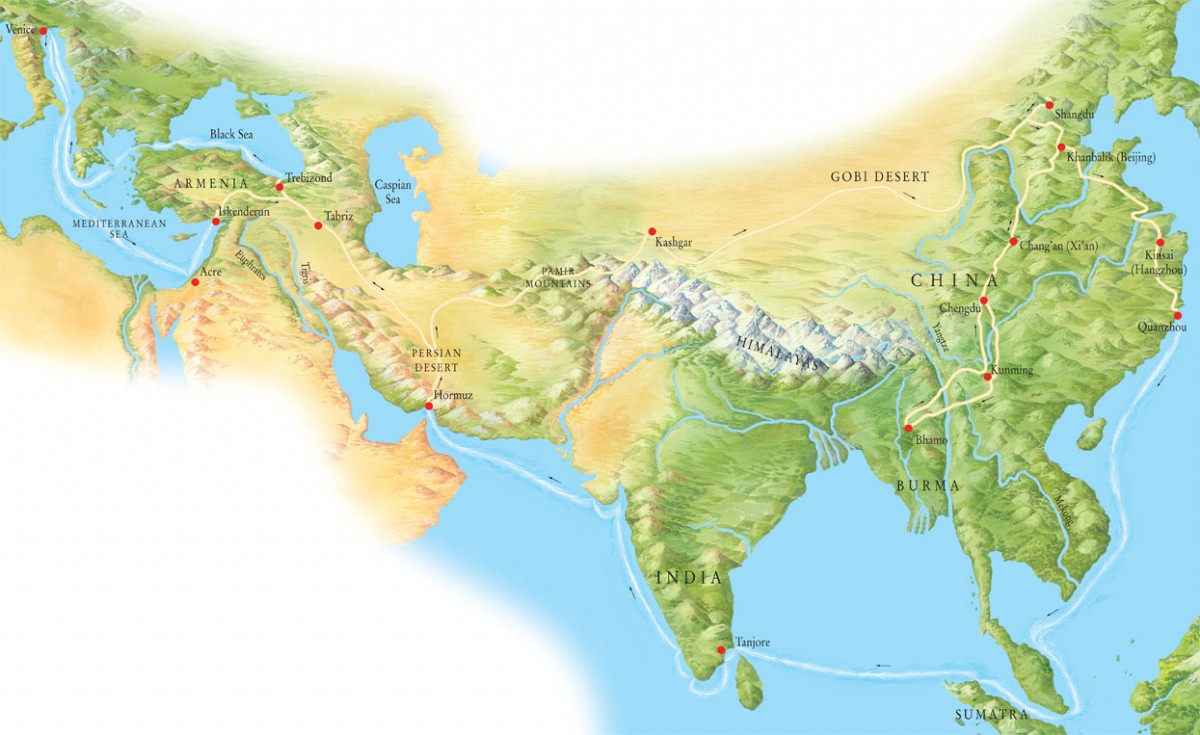
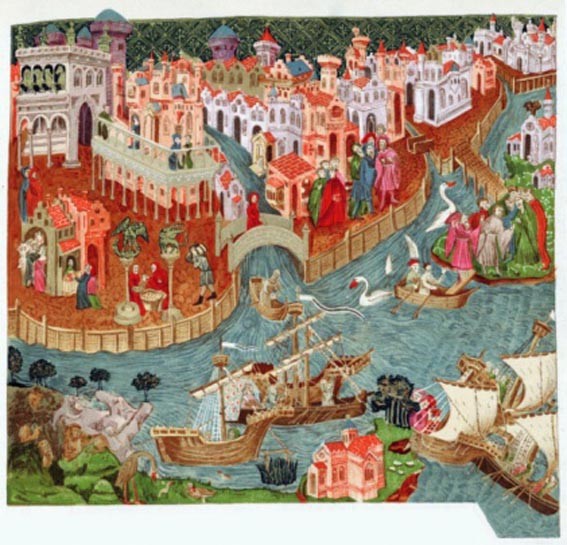
Marco Polo’s father Niccolò and uncle Maffeo were Venetian merchants, who had already travelled to Asia before Marco was born. In 1271, they set out from Venice on another journey to China, then under the rule of the Mongol Yuan dynasty. This time, 17-year-old Marco accompanied them. The journey across Asia took more than three years. The great Mongol emperor Kublai Khan, ruler of China, greeted the travellers warmly. Marco Polo made a good impression on him and became his loyal servant. For the next 17 years, Marco travelled around the Mongol Empire, reporting back on what he saw. In 1292, the Polos left for Venice, escorting a Mongol princess as far as Hormuz. On his return home, Marco Polo wrote an account of his experiences in Asia—although almost no one believed him.


From Persia to Pamirs
In 1271, the Polos sailed from Venice to Acre (Akko, in modern-day Israel) and on to Jerusalem. On their first visit to Kublai Khan's court, the Khan had asked the Polo brothers to bring him oil from the Holy Sepulchre in Jerusalem. So the Polos went to the Holy City to buy it.
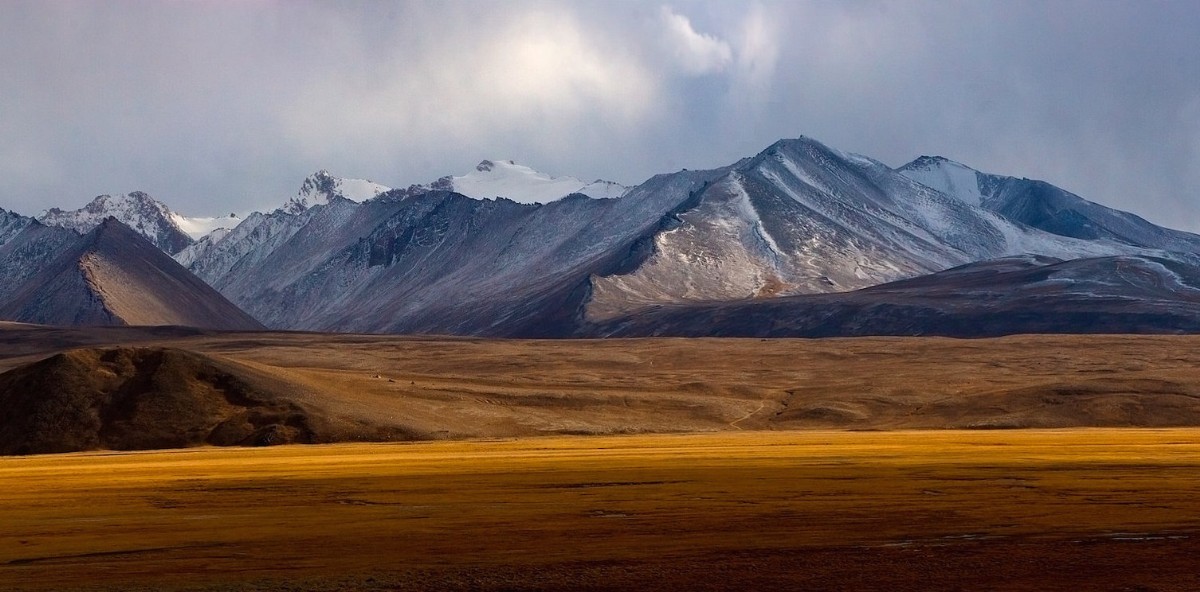
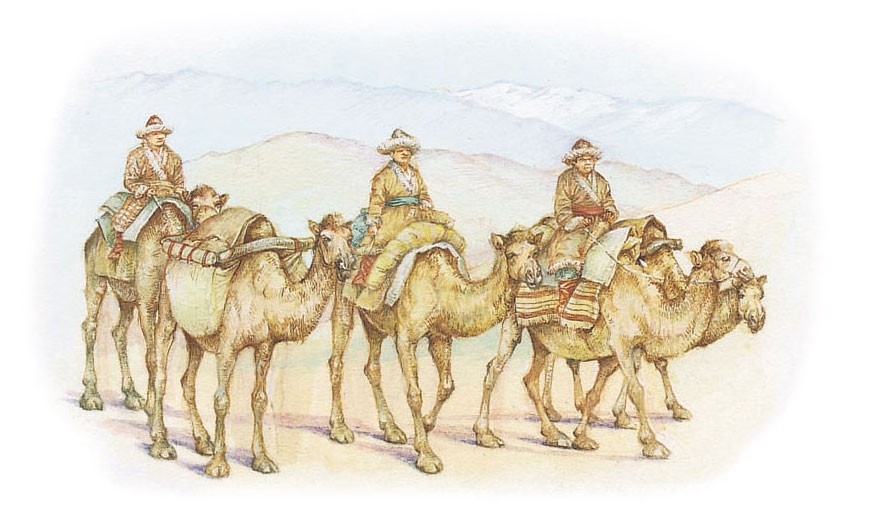
The Polos then journeyed by camel to Hormuz (in modern-day Iran). The boats they saw there looked too flimsy for travel by sea, so they continued their journey overland. They followed the Silk Road through the Persian Desert. It took them 40 days to cross the Pamir Mountains in Central Asia, during which time they hardly any other people.
Gobi Desert
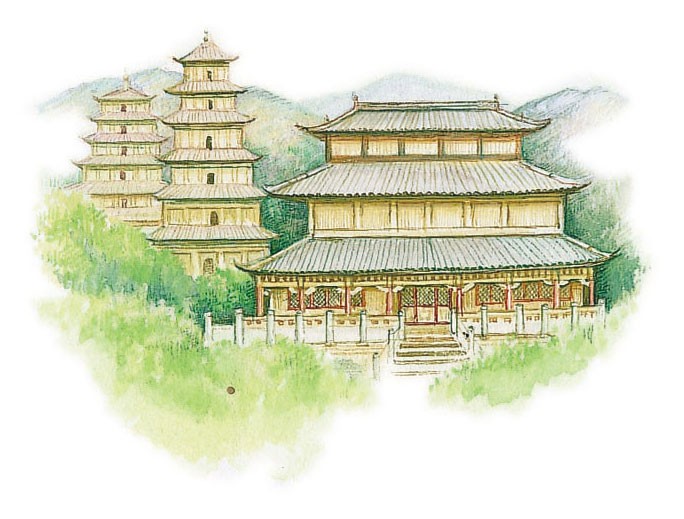
Crossing the Gobi Desert, a cold, arid region, made up almost entirely of bare rock, took about a month. It was the toughest part of the journey. Some travellers said the desert was haunted. The Polos were very glad to reach Cathay, the name they knew China by.
Travels in China
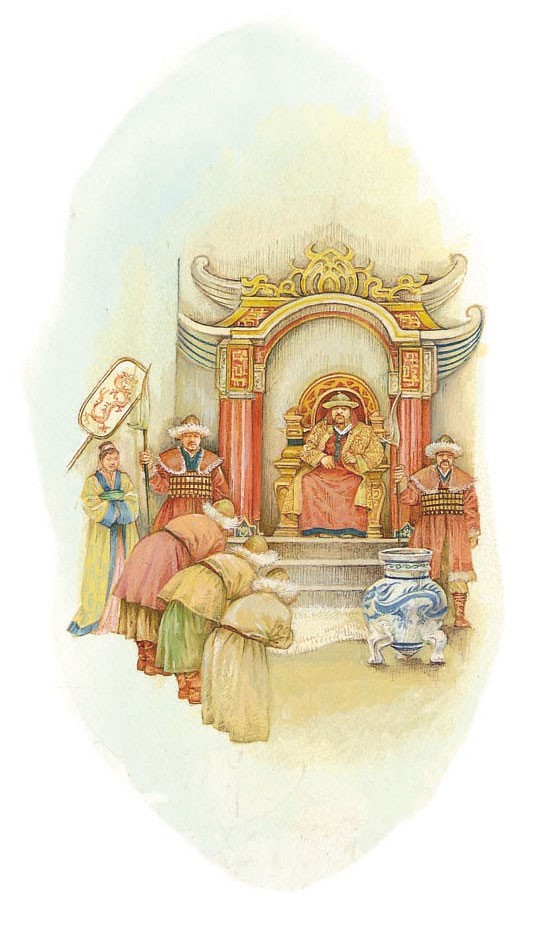
In May 1275, the Polos arrived at Kublai Khan’s summer palace in Shangdu (Xanadu). He welcomed them and invited Marco to work for him as an emissary (a representative of the court).
During Marco's travels around Kublai Khan’s Yuan Empire—all over China to Myanmar (Burma)—the young man saw many wonders. He was very impressed by Kinsai (Hangzhou), “the City of Heaven”, a place of about 1.5 million people or about 15 times the size of Venice, then one of Europe's largest cities. He remarked on the city's many canals and bridges. Marco was amazed that the Chinese used paper money, which did not exist in Europe at that time.
Marco carried with him at all times a "paiza", a tablet used by officials as a kind of passport. This would ensure he would not be harmed.
On one trip, Marco encountered Khutulun, daughter of Kublai Khan’s cousin, Kaidu, who was ruler of the Chagatai Khanate, another division of the Mongol Empire. A great warrior, she issued a challenge that any man who could overpower her in a wrestling contest would win her hand in marriage. However, if she won the bout the loser would have to surrender to her all his horses. No one ever beat Khutulun and she acquired more than 10,000 horses.


Return to Venice
After a stay lasting around 17 years, the three Polos wanted to return home. At first Kublai Khan refused their request to leave his service. But he changed his mind in 1292, in return for their agreement to escort the Mongol princess Kokechin to Persia, where she was to marry.
The Polos left China with a fleet of 14 ships bound for Sumatra, an island of Indonesia. Here they were held up for some five months by monsoons. Once the winds changed, they set sail for Ceylon (Sri Lanka), then on to India. By the time they reached Khorasan (present-day Iran), Kokechin’s betrothed had died, so she married his son instead. The Polos finally made it home to Venice in 1295.
The Book of the Marvels of the World
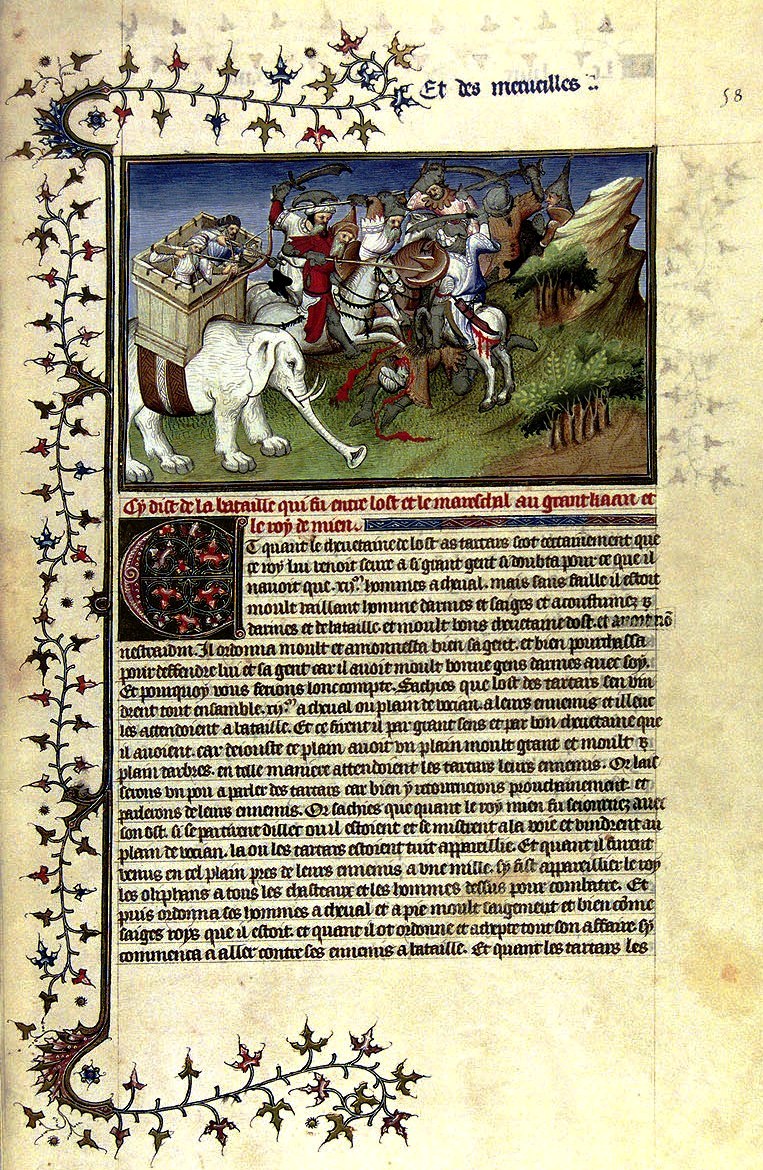
!n 1296, Marco Polo was arrested for commanding a galley in a war between Venice and its arch-rival Genoa. During his captivity, he told tales of his travels through Asia to his fellow prisoners and the guards. His cellmate, a writer named Rustichello da Pisa, wrote them down in a book entitled The Book of the Marvels of the World (later, simply The Travels of Marco Polo). Even in the days before the invention of the printing press, it became a bestseller and was transcribed by hand into a number of European languages.
Many readers simply could not believe Marco Polo's account of his travels to be true. He (and his book) became widely known as Il Milione (“The Million”), for the million lies people accused him of telling in his stories. What readers found most shocking were not the more fantastical legends, but the descriptions of civilizations and peoples in distant parts of Asia that he revealed were more advanced than those in Europe.

Having married Donato Badoèr in 1300 and fathered three daughters, Marco Polo lived the rest of his life uneventfully.
As he lay on his deathbed in January 1324, his friends begged him to admit that the stories he had told in his book were lies. He replied: “I have only told the half of what I saw, for I knew I would not be believed.”
Consultant: Philip Parker
pics


Without in any way limiting Q-files Ltd’s exclusive rights under copyright, any use of this publication to “train” generative artificial intelligence (AI) technologies to generate text is expressly prohibited. Q-files Ltd reserves all rights to license use of this work for generative AI training and development of machine learning language models.