
Slavery
History of slavery
Slavery was widespread throughout the ancient world. The Code of Ur-Nammu (a collection of laws), written around 2100–2050 BC during the Third Dynasty of Ur in Sumerian Mesopotamia, included laws relating to slaves. They included setting the price of reward for returning an escaped slave to his or her owner. In ancient Babylon, the Code of Hammurabi (c.1760 BC) prescribed death for anyone who helped a slave escape or who sheltered a runaway). Rulers of the Egyptian New Kingdom (1552–1069 BC) brought in large numbers of slaves as prisoners of war from lands farther up the Nile valley and used them for labour.

Ancient Greece
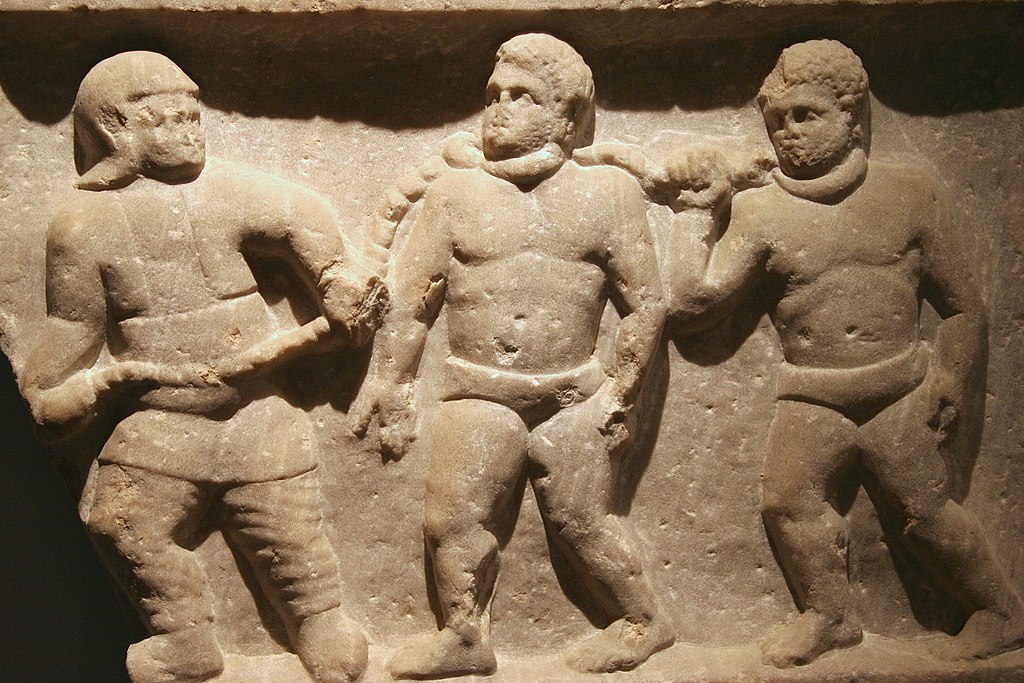
Slavery in ancient Greece begin in the Mycenaean era in around 1550 BC. Many enslaved people were children of these enslaved people born in captivity became slaves themselves. Historians estimates there may have been as many as 80,000 slaves in Athens during its Golden Age in the 5th-4th centuries BC.
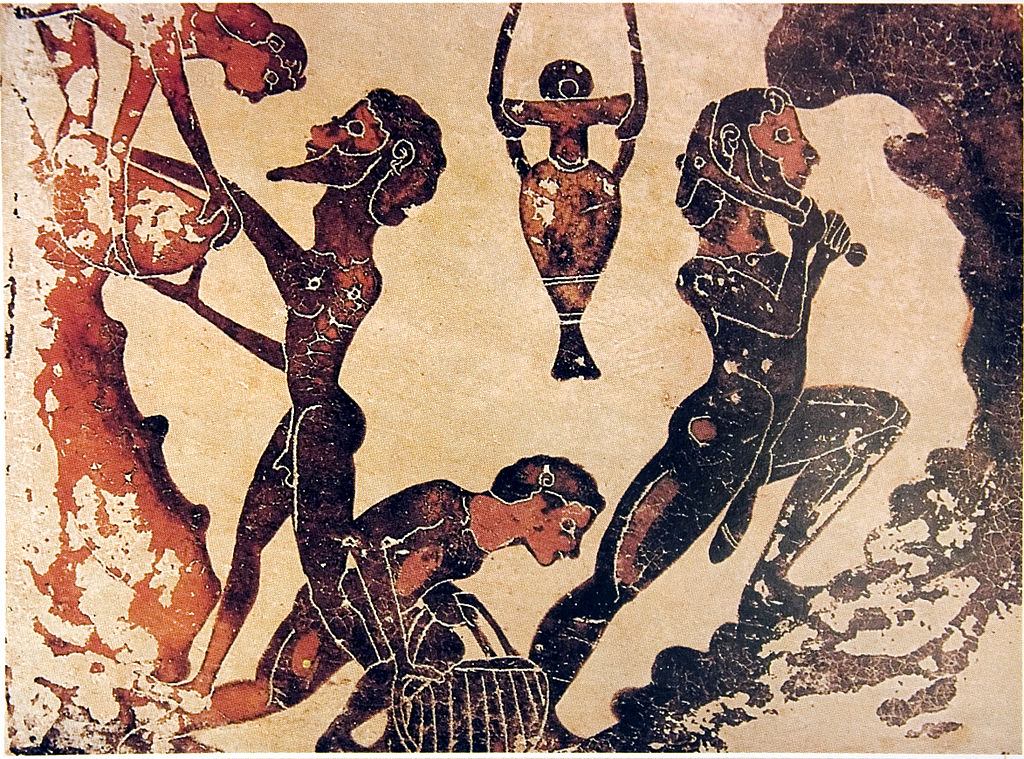
While denied civil rights, Athenian slaves were permitted some personal freedoms: they could follow their own religion and it was forbidden for their master to strike them. Some were chattel slaves, considered the property of private individuals, while others were public slaves, called demosioi, who were owned by the state. They were made to work in both manual tasks, such as construction or mining, or non-manual roles, such as being a clerk, shopworker or banker.
Public slaves from Sparta were known as helots. Far more numerous than the native Spartans themselves, many became quite prosperous as farmers. Every autumn, some helots were slaughtered in order to maintain the Spartans' dominance.

Slavery in the Roman Empire

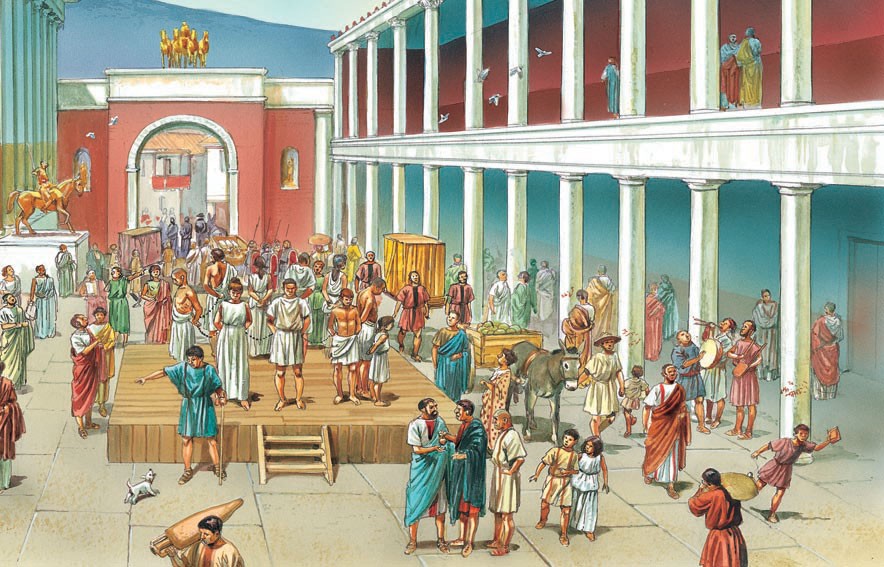
The Roman Empire was hugely dependent on forced labour. Entire populations across Europe and the Mediterranean were enslaved by the Romans. Some were forced to work in farming, mining, construction and domestic service, while others were trained to fight as gladiators. Some wealthy Romans would often seek out educated slaves from Greece to serve as tutors for their children. Slave markets were found in every Roman town or city. The city of Leptis Magna (or Lepcis) in Roman Libya established a slave market to buy and sell slaves shipped across the Sahara from West or Central Africa.
The brutal oppression of slaves led to revolts, known as the Servile Wars. The Third Servile War (73–71 BC) was fought by the Romans against rebel slaves under the runaway gladiator, Spartacus. He was killed in battle, but the 6000 slaves who had followed him were crucified, their bodies strung up along the Appian Way as a warning to others.
Barbary corsairs
Medieval Spain and Portugal saw almost constant raiding expeditions by Muslim rulers from Andalusia—then part of the Islamic Empire—to bring back booty and slaves. In a raid against Lisbon in 1189, the Almohad caliph Yaqub al-Mansur took 3000 female and child captives.

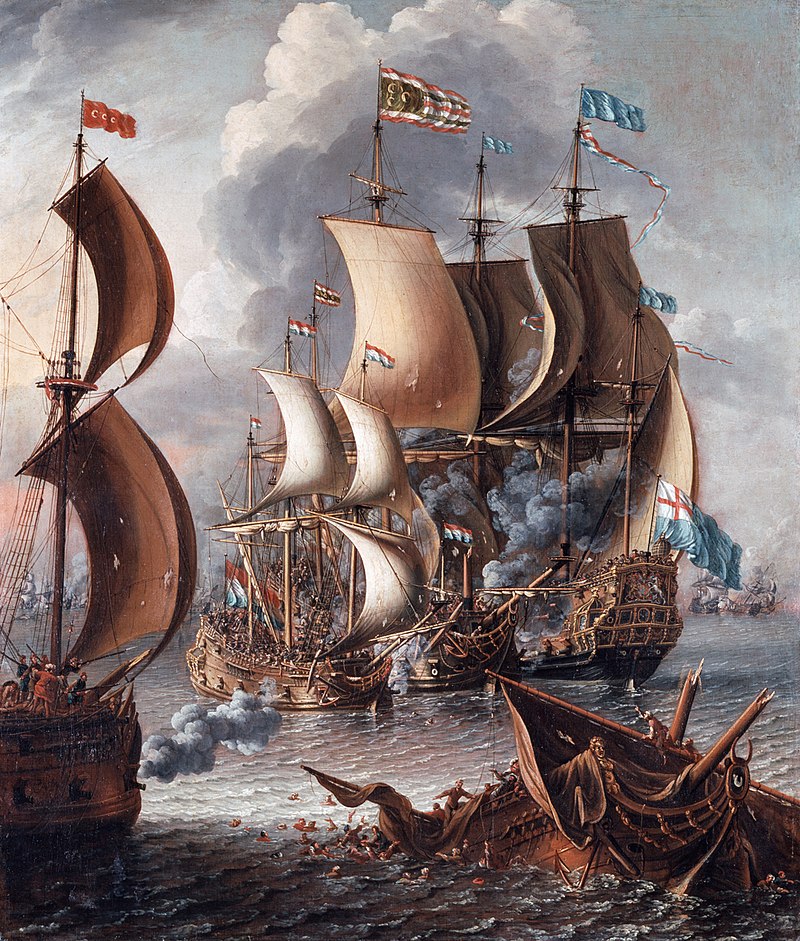
Between the 11th to the 19th centuries, pirates from the Barbary Coast of North Africa (a reference to the Berbers, the native population) attacked European ports to capture Christian slaves to sell at slave markets in places such as Algeria and Morocco. The Barbary corsairs, as they were known, raided the coasts mainly of Italy, France, Spain and Portugal, but they also ventured as far north as the British Isles, the Netherlands and even Iceland. Their attacks may have led to the enslavement of more than a million Europeans between the 16th and 19th centuries.
Ottoman Empire
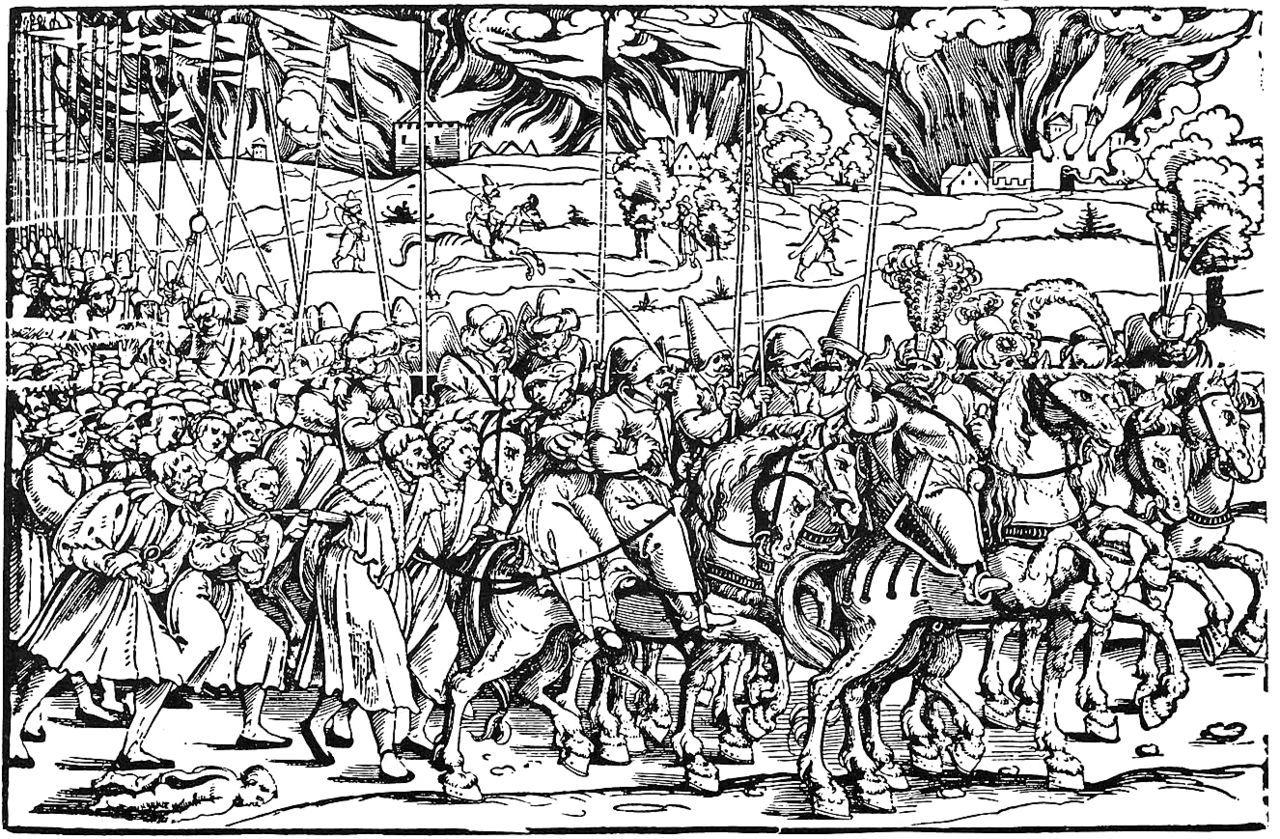
Following its conquest by the Ottomans in 1453, Constantinople became a major centre of the slave trade. At the height of the trade, around a fifth of the city's population consisted of slaves. Some were purchased from slave traders from Europe and Africa, but most were provided by Tatar horsemen from the Crimean Khanate, who carried out raids in southern Russia, Poland-Lithuania, Moldavia, Wallachia and Circassia. Prisoners of war or failed rebellions were also a source of slaves for the Ottomans.
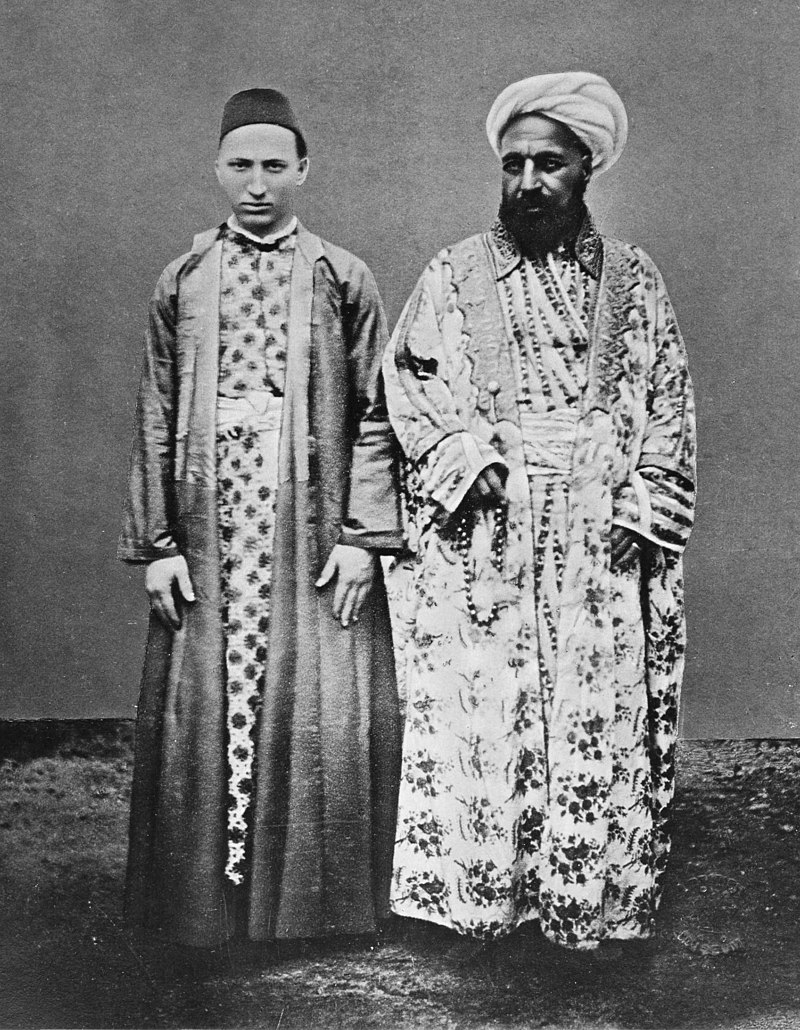
Until the Crimean Khanate was conquered by the Russian Empire in 1783, about 2 million mostly Christian slaves worked in the Ottoman Empire. Thousands of Circassians, a people of the North Caucasus, who were persecuted by the Russian Empire, were imported between 1800 and 1909.
East and South Asia
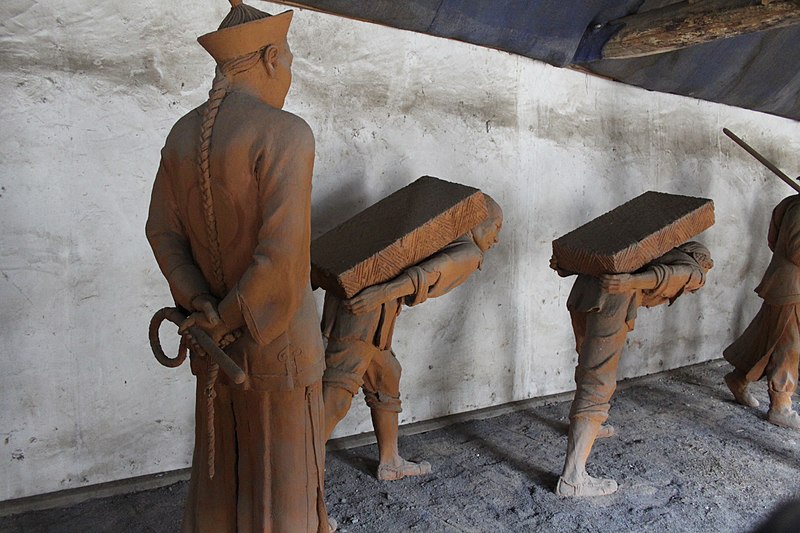
In ancient China, slaves were war captives or criminals. Later, during the Tang dynasty (618–907 AD), Chinese traders purchased Western slaves from merchants. Tang soldiers and pirates enslaved people from all over Asia, with the greatest number from peoples living in regions to the south of the Chinese heartland.
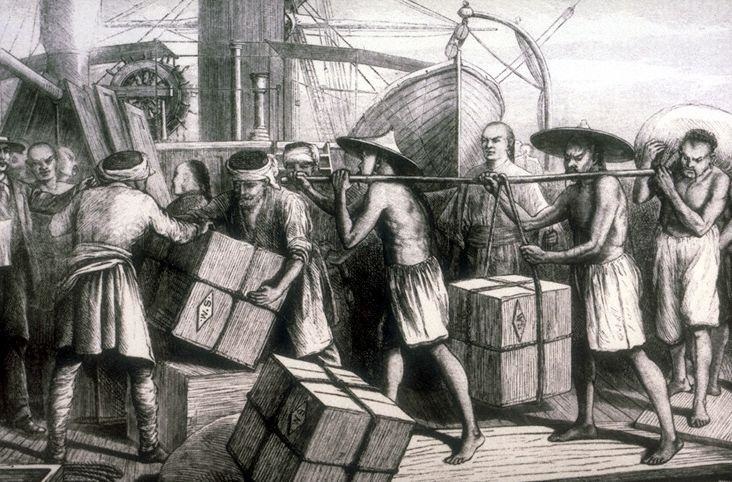
In the 19th century, after the Atlantic slave trade was abolished, large numbers of Chinese labourers, known as coolies, were exported to many parts of the world, incuding territories of the British Empire, the United States, Australia and Latin America, to replace slave labour. They worked under conditions nearly identical to those of the former African slaves.
Slavery in India was widespread by the 6th century BC and intensified during the Muslim domination of northern India after the 11th century, when Hindus were taken as slaves. Many slaves from the Horn of Africa were also imported into India to serve in wealthy households or the armies of the Deccan sultanates and Mughal Empire. After slavery was abolished in the mid-19th century, more than a million indentured Indian labourers, known as girmitiyas, were recruited for labour in European colonies in Africa, the Indian Ocean, Asia and the Americas over the following century.

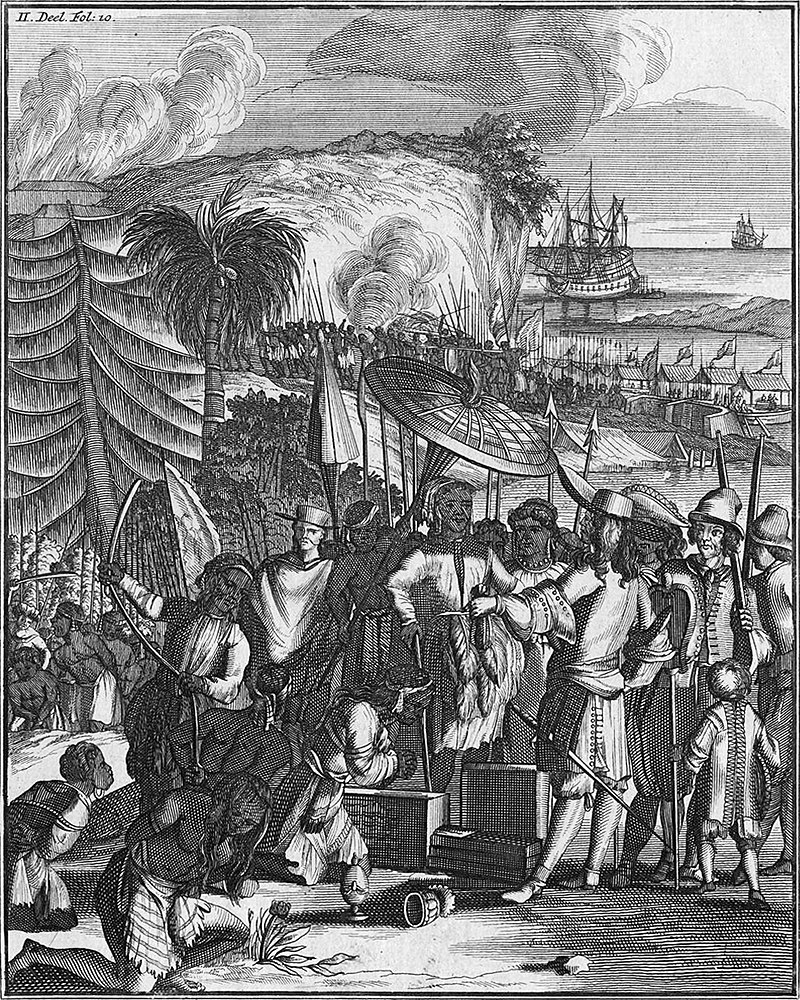
In Indonesia in the early 1600s, the first years of rule by Dutch East India Company (VOC), Indian and Arakanese slaves provided the main labour force for the Company. Later, as it expanded operations into Ceylon and Malacca (modern-day Sri Lanka and Malaysia), the VOC imported thousands of slaves into its new territories.
Africa
More than any other continent, Africa's history has been tainted by slavery. As a result of the slave trade, perhaps as many as 30 million Africans—no one knows the exact number—were sold into slavery over the centuries. Africans were transported across the Sahara, shipped from Red Sea or East African ports to the Middle East or across the Indian Ocean, or taken across the Atlantic Ocean to the Americas.
Begun in Roman times, the trans-Saharan slave trade continued after the Muslim conquest of North Africa in the 7th and 8th centuries. Arab traders, assisted by Berbers, transported black African slaves across the Sahara to sell them in the towns and cities of the Mediterranean and Middle East. Meanwhile, Zanzibar became the main slave port in East Africa for the shipping of enslaved Africans by Arab traders to markets in Arabia and Asia
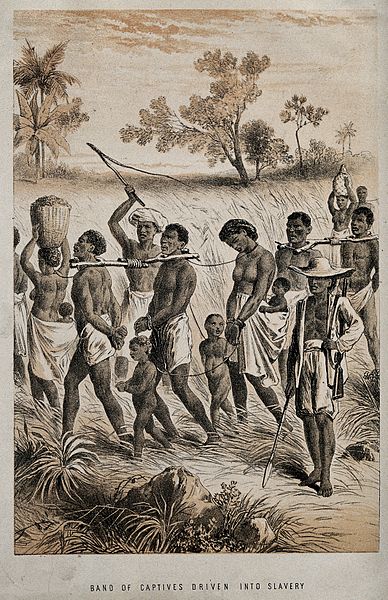

The majority of enslaved Africans were forced on to ships making the long journey in wretched conditions across the Atlantic Ocean to the Americas. There they were put to work on plantations or in mines by Europeans in their new colonies. Starting in the early 16th century with Spanish and Portuguese traders, by the 17th century other colonial powers such as France, the Netherlands and England had joined the Atlantic slave trade. The Thirteen Colonies, Britain's possessions in North America, also imported enslaved Africans.
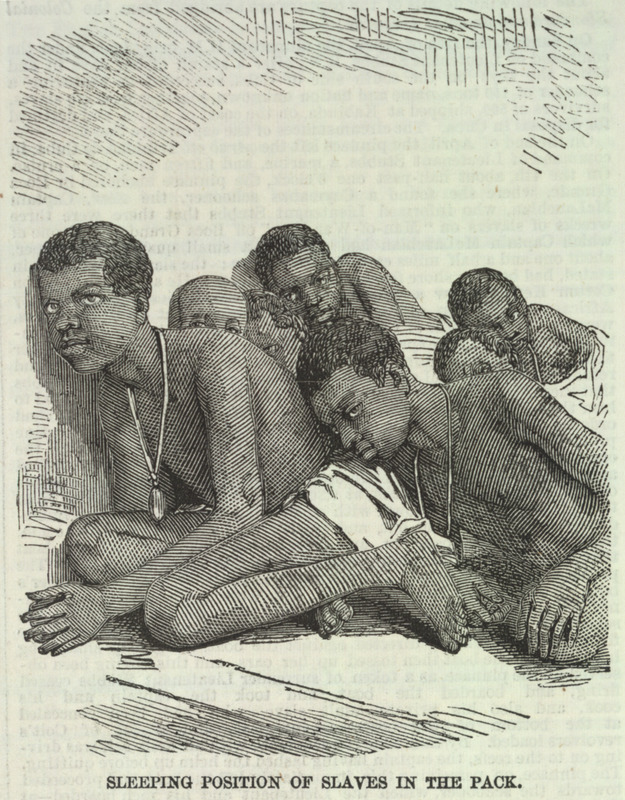
A "slave triangle" became established: ships sailed to West Africa from Europe loaded with goods to exchange for slaves. Captives were then transported across the Atlantic on what known as the Middle Passage. In the Caribbean islands and North American colonies, the captives were sold and the money used to buy cotton, sugar, rum and tobacco, which was then shipped back to Europe.
The Atlantic slave trade persisted until the 19th century when the colonial countries involved in it, one by one, abolished it—although slavery itself continued on into the second half of the century in the US, Brazil and Cuba.
Slavery in the 20th century

Between 1930 and 1960, originally on the orders of of Stalin, the Soviet Union set up slave labour camps called the gulag. Prisoners in these camps were worked to death by brutality, lack of medical care, hunger and harsh conditions. Hundreds of thousands of people—perhaps millions—perished there. Aleksandr Solzhenitsyn, who survived eight years of imprisonment in the gulag after World War II, provided a first-hand account of life in the labour camps with the publication of The Gulag Archipelago in 1973.
During World War II, Nazi Germany enslaved about 12 million people in labour camps. They were forced to work in munitions factories, to repair bombed railroads and bridges or to work on farms. Many died as a direct result of forced labour. About two thirds came from Central Europe and Eastern Europe. Millions of Jews were forced labourers before they were shipped off to extermination camps.
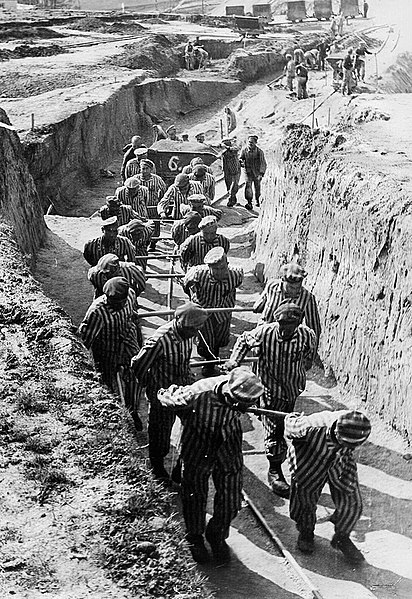

On 10th December 1948, the United Nations General Assembly adopted the Universal Declaration of Human Rights, which declared freedom from slavery is an internationally recognized human right. Article 4 of the Universal Declaration of Human Rights states: "No one shall be held in slavery or servitude; slavery and the slave trade shall be prohibited in all their forms."
Consultant: Philip Parker