
Natural history of the British Isles
Birds of the British Isles A-Z
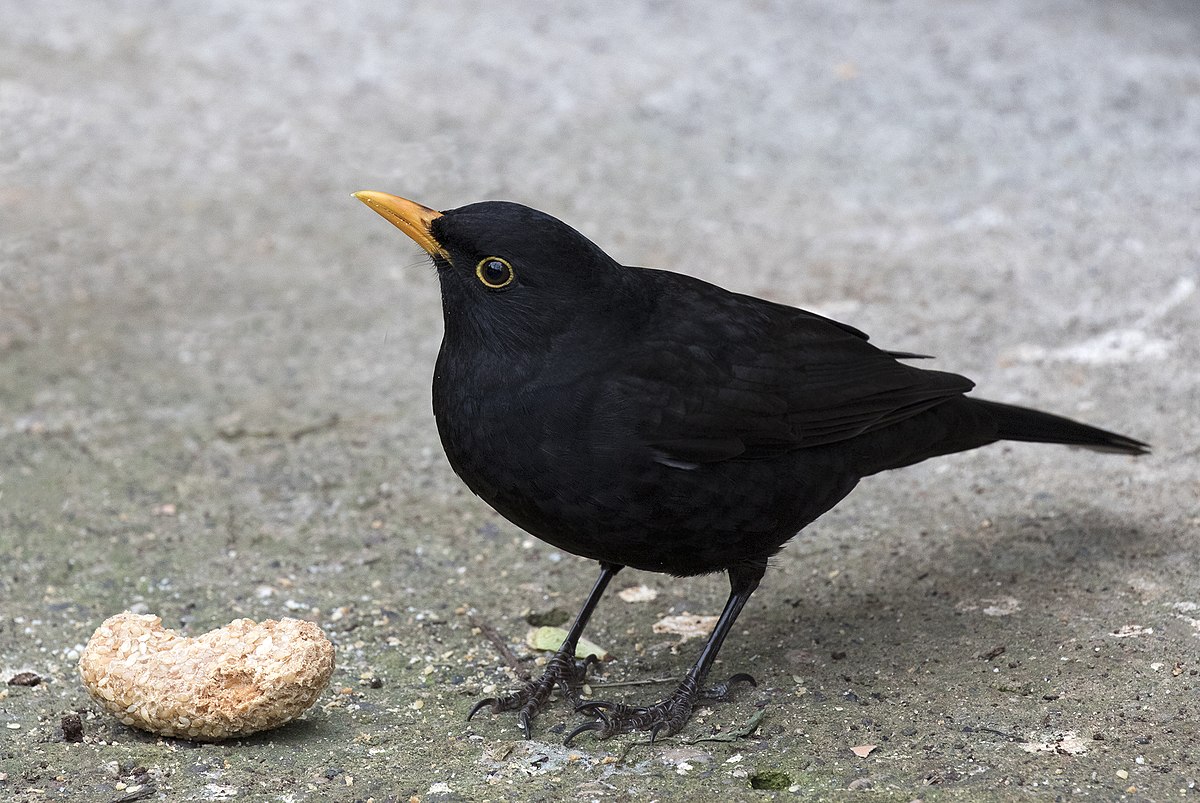
Blackbird
Turdus merula
One of the most common songbirds, blackbirds are found in gardens and countryside all over the British Isles. Blackbirds belong to the thrush family, and are closely related to song thrushes and fieldfares. They have a loud, tuneful song. Males are black with a bright yellow beak, while females are brown. Length 25 cm (10 inches). Eats: insects, berries, worms.
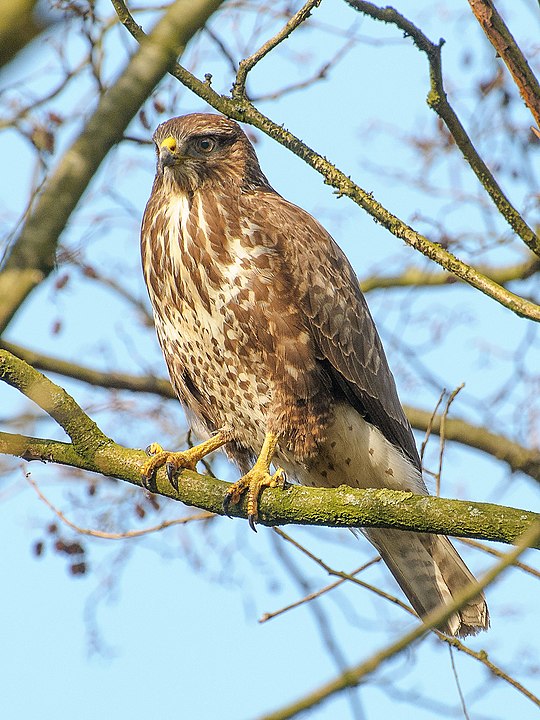
Buzzard
Buteo buteo
The British Isles’ most common bird of prey, the buzzard is a large brown bird with a wingspan (combined wing length) of just over a metre. It can be found hunting for its prey in nearly every type of habitat, including woodland, moorland, scrubland, farmland and even towns and cities. Length: 51–57 cm (20–23 inches). Eats: rabbits and other small mammals, young birds, carrion.
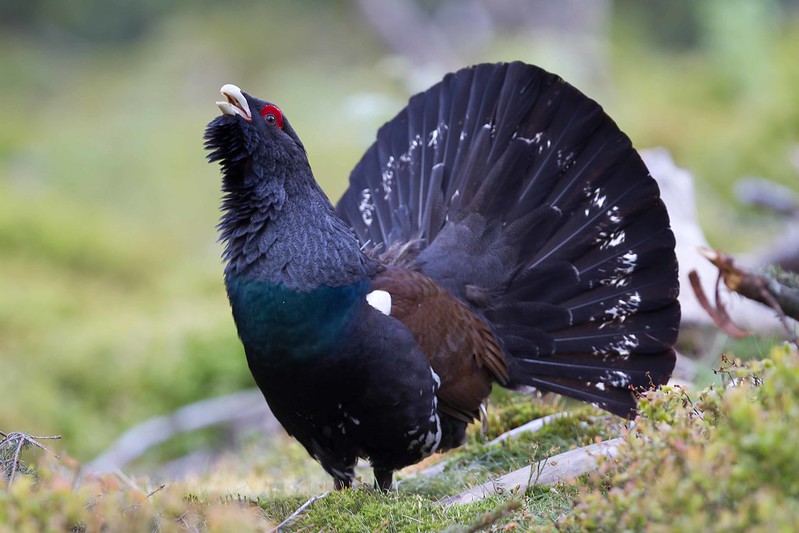
Capercaillie
Tetrao urogallus
Native to northern Scotland’s pine forests, this large grouse lives on the forest floor, scratching for berries and shoots. The male has striking plumage: blue-black and brown with dark green breast feathers and red eye markings. It makes a low clucking call. The capercaillie's forest habitat is threatened and only 700 or so individuals remain in the wild. Length: 60–87 cm (24–34 inches). Eats: shoots and buds, occasionally berries
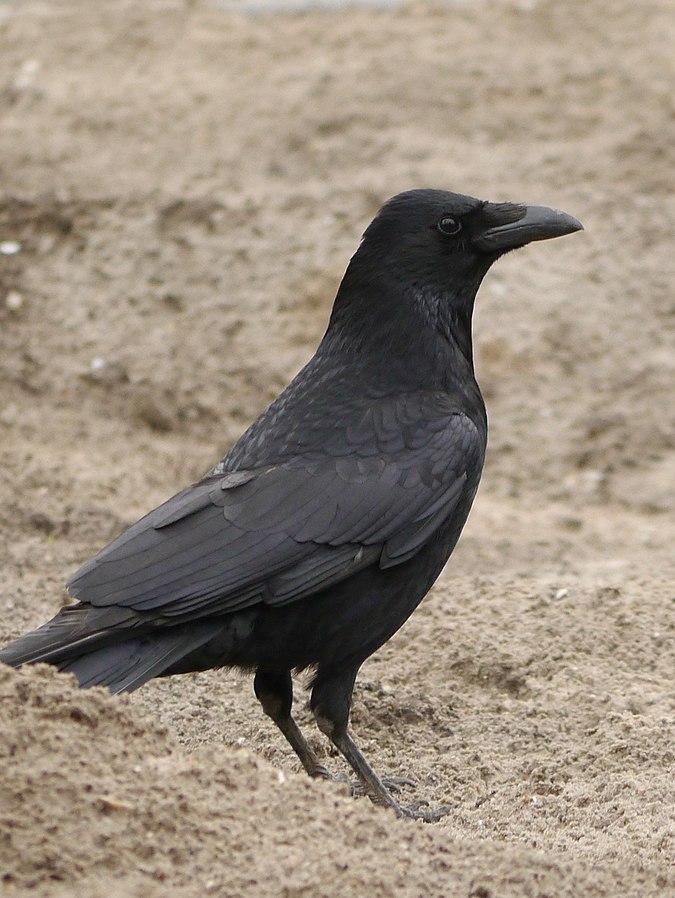
Carrion crow
Corvus corone
Crows are medium-sized black perching birds with large beaks. Their cawing calls can be heard everywhere in the British Isles, and they are as common a sight in towns and cities as they are in the countryside. Crows are scavengers, eating carrion, insects and even chicks from other birds’ nests. Unlike their close relations, rooks, they are solitary birds, preferring to live alone or in pairs. Crows are some of the most intelligent birds in the world. They have been observed solving puzzles and making tools to reach their food. Length: 47 cm (18.5 inches). Eats: carrion, scraps.
Cuckoo
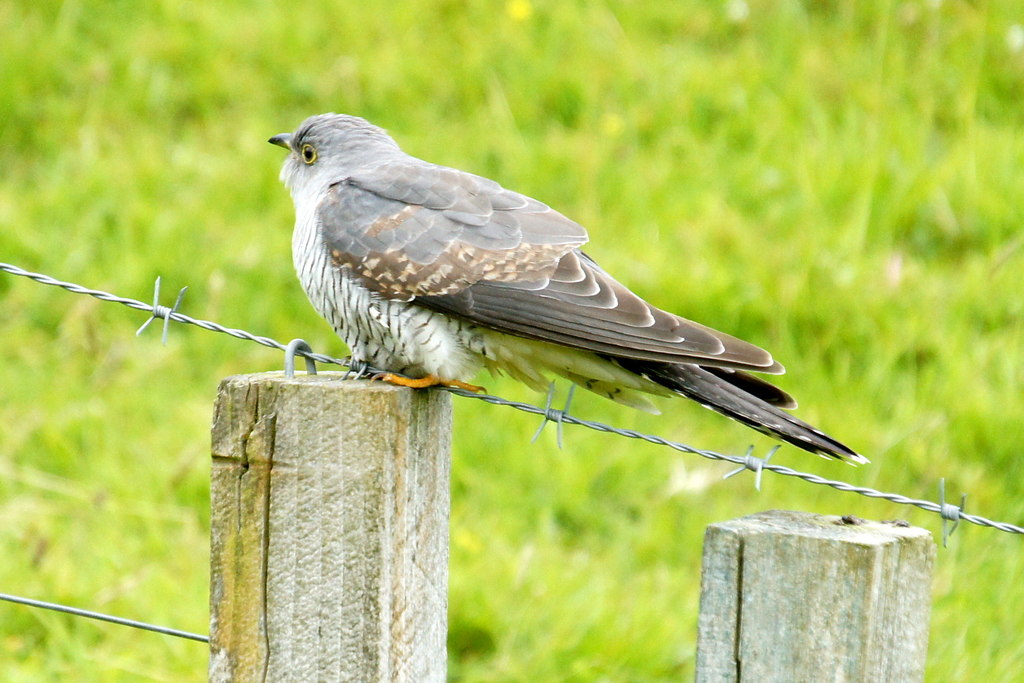
Cuculus canorus
A cuckoo is a summer visitor to Britain, arriving from Africa in late March and April. Its call, which sounds just like its name, "cuck-oo", is an early sign of spring. It is commonly heard in woodlands and meadows across the British Isles. Adult cuckoos have blue-grey backs and heads, long tails and striped, dark grey and white bellies. Cuckoos are known for laying their eggs in other birds’ nests, fooling them into raising their young. Dunnocks are common victims of this practice. Young cuckoo chicks grow much bigger than their host parents and demand more food than the host's own chicks. They will often push other eggs or chicks out of the nest. Length: 33 cm (13 inches). Eats: Insects, especially hairy caterpillars.
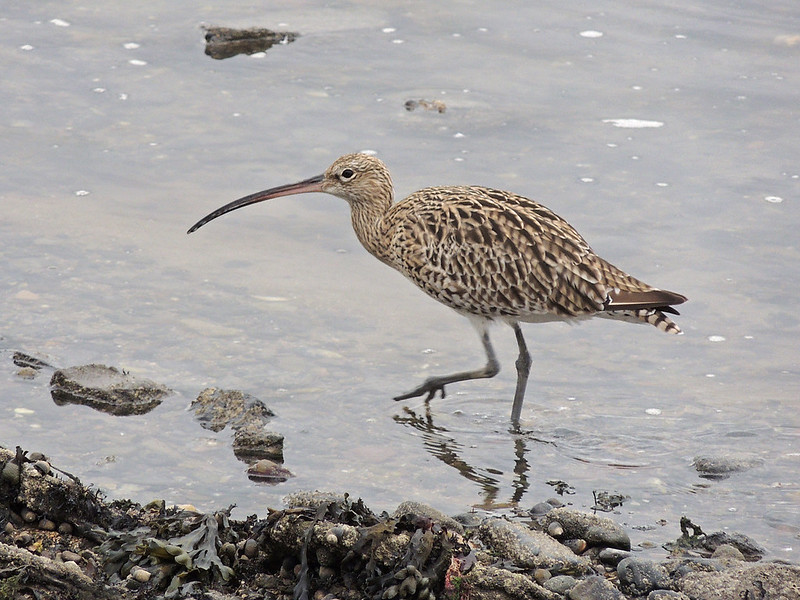
Curlew
Numenius arquata
The curlew is a large wading bird with speckled plumage and a piping, whistling call. It lives in wetlands and estuaries as well as on moorlands. Curlews have long legs for wading, and their long, downward-curving beaks are perfectly shaped for poking into the mud to reach worms and shellfish. Length: 50–60 cm (20–24 inches). Eats: worms, shellfish, shrimp.
Ducks
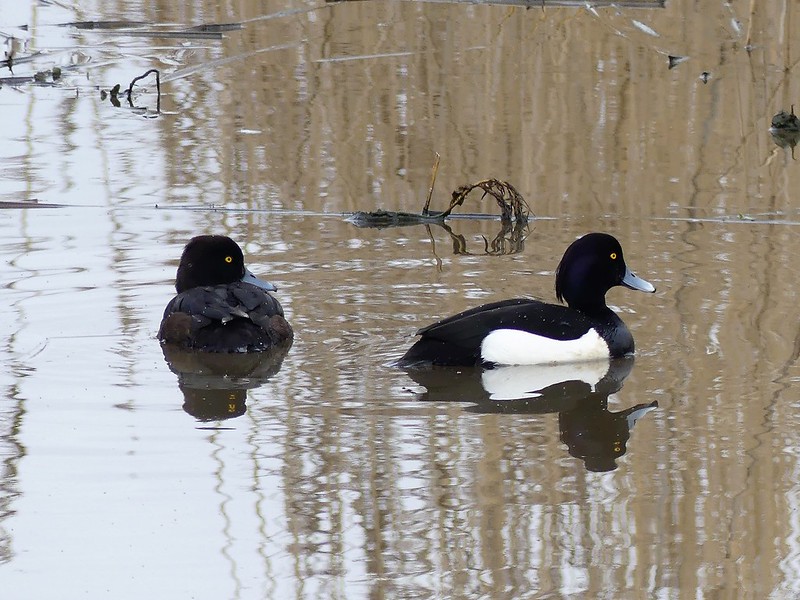
Mergus merganser (goosander), Anas platyrhynchos (mallard), Anas crecca (teal) Aythya fuligula (tufted duck)
The British Isles are home to around 20 species of duck, small water birds that live on rivers, lakes, reservoirs and estuaries. Dabbling ducks, such as mallards and teal, feed on water plants and algae at the water's surface, occasionally dipping under the water. Diving ducks, such as tufted ducks and goosanders, dive for fish or shellfish.
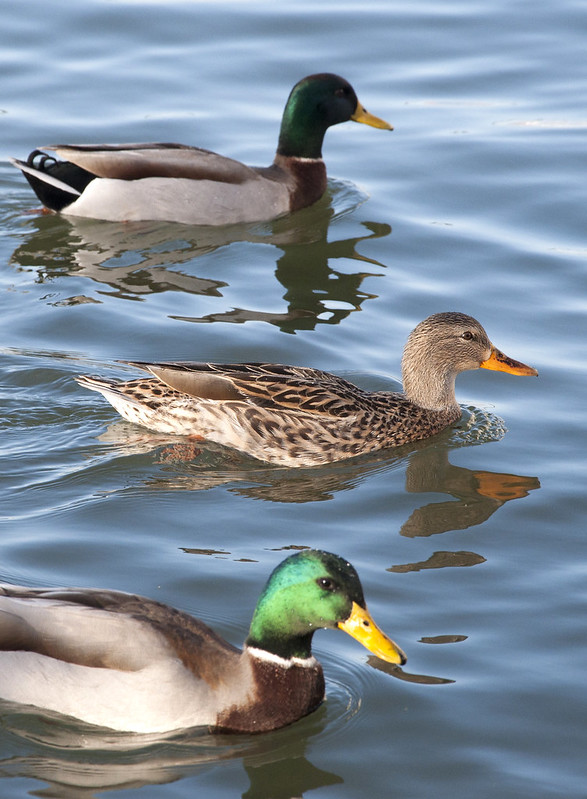
The mallard is a familiar sight on British and Irish rivers, ponds and lakes. The male, or drake, is colourful, with a dark-green head and bright yellow beak, while the female, or hen, is speckled brown with an orange beak. Mallards are sociable ducks that prefer to live in groups. Length: 60 cm (24 inches). Eats: water plants, seeds, berries, insects.
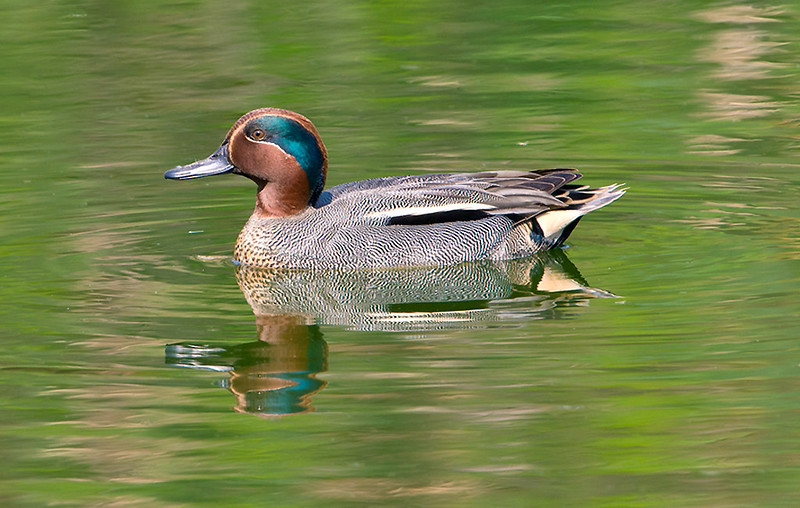
The British Isles' smallest duck is the teal, which can be spotted on wetlands throughout the British Isles in winter. Male teals have a glossy brown head and green eyepatch, while females are speckled brown. In flight, both show a flash of green on their wings. Teals make a whistling call.
Length: 34–38 cm (13–15 inches). Eats: seeds, invertebrates.
The tufted duck's gentle call sounds a little like a crow's. It is mostly black, with a tuft of feathers on its head. Males have white patches on their sides. Tufted ducks can be seen all year round in England, where they live on lowland waters such as lakes and reservoirs. They are much less common in Scotland, Wales and Ireland. Length: 40–47 cm (15–20 inches). Eats: molluscs, water plants.
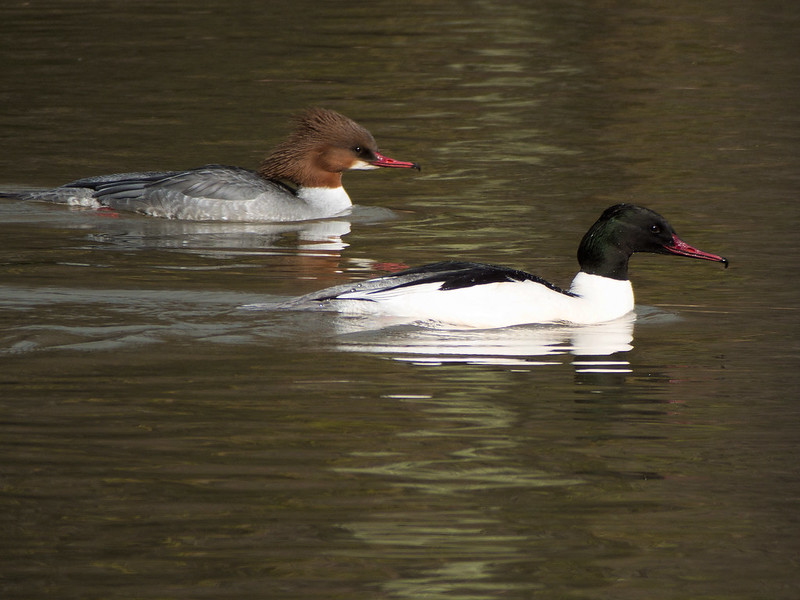
Goosanders live on fast-flowing rivers, where they dive for fish, catching them in their long, serrated (toothed) bills. In summer they breed in upland areas of the British Isles, and move to lower-lying, calmer waters such as lakes in winter. Their call is a creaking sound. Length: 58–65 cm (20–25 inches) Eats: fish.
Dunnock

Prunella modularis
Dunnocks are small, brown-and-grey perching birds with thin beaks (bills). They are common in gardens, parks, hedgerows, scrubland and along woodland edges in nearly all parts of the British Isles. Although sometimes called a "hedge sparrow" and similar in appearance to the tree sparrow, they are not part of the sparrow family. Dunnocks are shy, solitary birds, although males can be aggressive towards one another when they meet. Length: 14 cm (5.5 inches). Eats: insects, spiders, worms and seeds.
Fieldfare
Turdus pilaris
The fieldfare is a type of thrush with dark brown feathers, dark-speckled breast and a pale grey head and rump. A winter visitor to the British Isles, it can be seen in large flocks over open fields, or perching on branches. During the summer it flies north, returning to breeding grounds in Scandinavia and Siberia. Length: 25 cm (9 inches). Eats: insects, worms, berries.

Finches
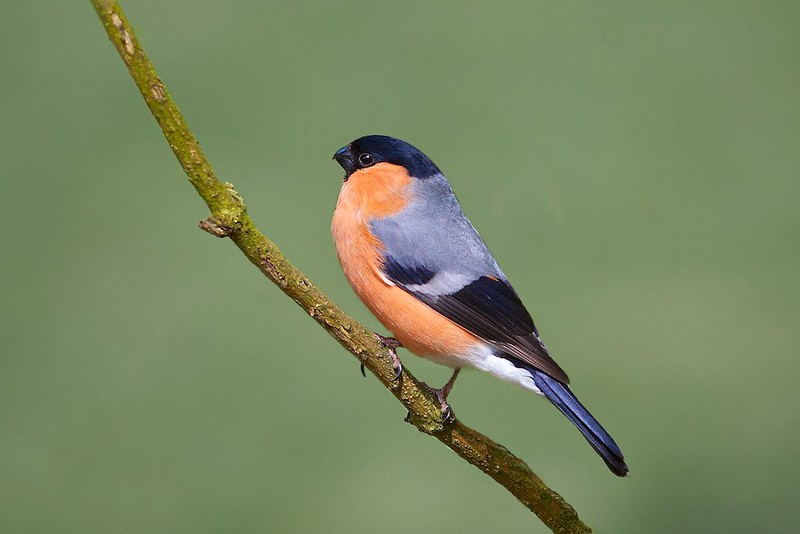
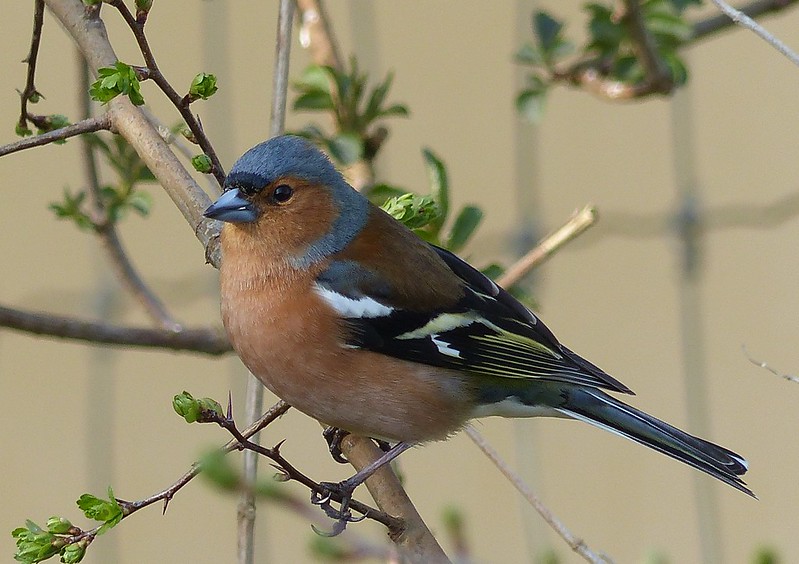
Pyrrhula pyrrhula (bullfinch), Fringilla coelebs (chaffinch), Carduelis carduelis (goldfinch), Carduelis chloris (greenfinch), Carduelis spinus (siskin)
The male bullfinch has a pinkish-red breast and black cap, while the female has a pinkish-grey breast. It has a low, piping call and is known for eating the flower buds of fruit trees. They are often found living at the edges of woodlands or in hedgerows. Length: 15–16 cm (6–6.5 inches). Eats: seeds, buds, insects.
The chaffinch is one of the British Isles’ most common garden birds. The male's red breast and pale grey crest make it easy to recognise. Both male and female chaffinches have patterned wings, which help them to blend in with their surroundings when searching on the ground for insects and seeds to eat. Length: 14.5 cm (6 inches). Eats: seeds, insects.
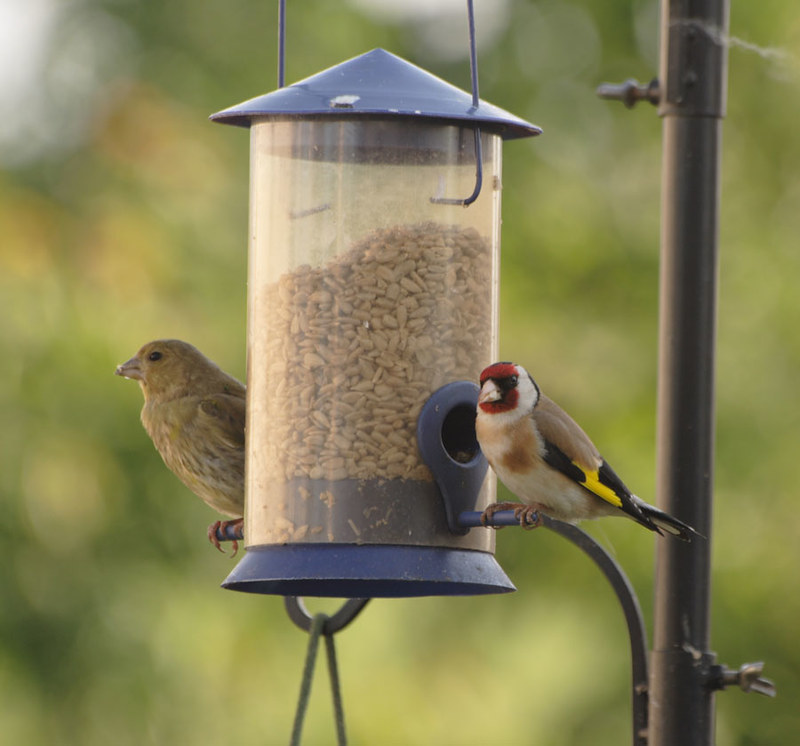
Goldfinches have red and white patches on their cheeks, and bright yellow and black wing feathers. Their long beaks help them to pick tiny seeds out of spiky plants, such as teasels. Length: 12–14 cm (5–5.5 inches). Eats: seeds, insects.
Greenfinches are small, yellow-green finches. They live in gardens and countryside all over the British Isles, where they make their homes in trees and bushes. Length: 12–14 cm (5–5.5 inches). Eats: seeds, insects.
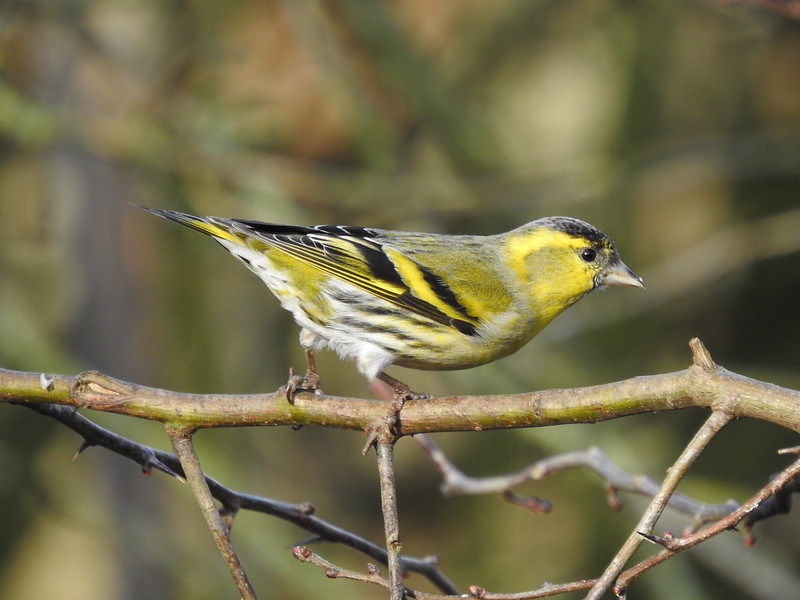
Siskins have similar colouring to greenfinches but they are much smaller, and their feathers are striped yellow and black. The male has a black cap. In the British Isles, siskins are found in largest numbers in Scotland and Wales. Length: 12 cm (5 inches). Eats: seeds, insects.
Geese
Branta bernicla (brent goose), Branta canadensis (Canada goose), Anser anser (greylag goose)
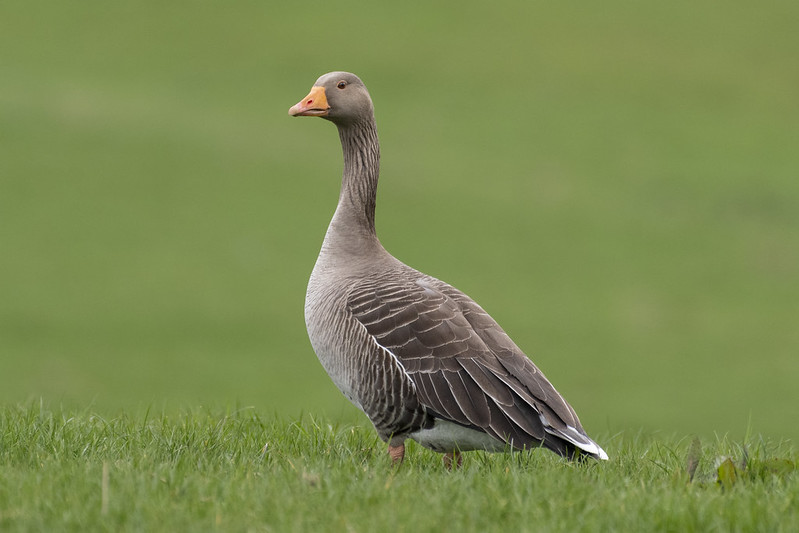
Geese are large, long-necked water birds. Some are winter visitors, while others can be seen all year round. Greylag geese are a common sight at lakes, reservoirs and estuaries around the British Isles. Most have been reared by humans and introduced, but large numbers of wild greylags live in Scotland, along with winter visitors from Iceland.
Length: 75–90 cm (30–35 inches). Eats: grass, roots, cereals.
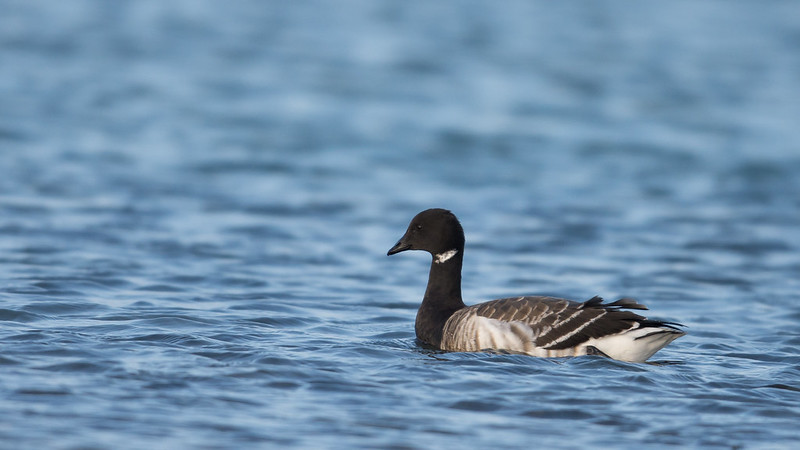
Brent geese are the British Isles' smallest geese. They live in estuaries and salt marshes, where they live on water plants such as eel grass. They have a black head and breast, and dark wing-feathers. Irish brent geese have pale bellies, and migrate to Greenland and Canada in summer. Dark-bellied brent geese live in southern and eastern England in summer, and spend winters in Russia. Length: 56–61 cm (20–25 inches). Eats: water plants and vegetation.
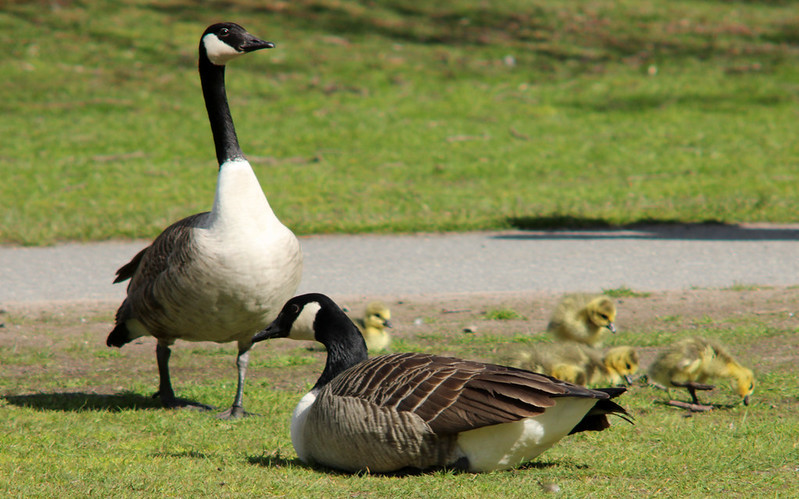
Canada geese were introduced to the British Isles from North America in the 17th century. These large geese have since become a common sight in parks and the countryside, where they live close to rivers, ponds and lakes. Although some Canada geese migrate north in the spring, most of the British Isles' population stay in their breeding grounds all year round. Length: 55–100 cm (20–40 inches) Eats: grass, roots, cereals.
Goldcrest
Regulus regulus
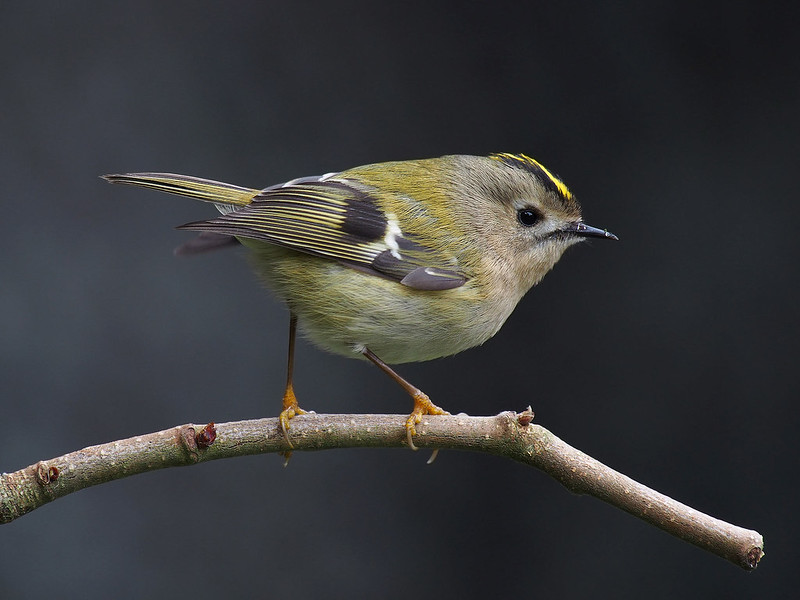
Britain’s smallest bird, the tiny goldcrest lives in woodlands and countryside all over the British Isles, and is easily recognized by its striped black and golden crest. Males have a fiery orange crest, while the female's crest is yellow. Length: 9 cm (3.5 inches). Eats: small insects.
Golden eagle
Aquila chrysaetos
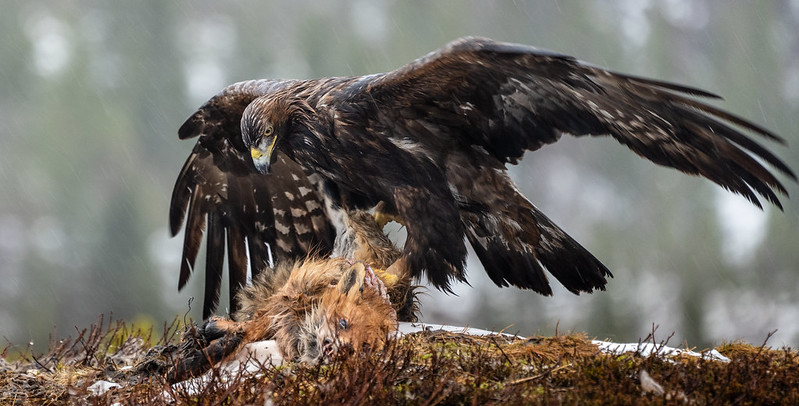
This enormous bird of prey lives in the Scottish Highlands and remote parts of Northern Ireland. Its vast 2.1-metre (7-foot) wingspan makes the golden eagle Britain’s second-largest bird—only the white-tailed eagle is larger. Golden eagles can live for up to 30 years. During mating season in early spring, they put on displays in mid-air to attract a mate, looping and diving to show off their skills in flight. Length: 75–85 cm (30–34 inches). Eats: birds, small mammals, carrion.
Goshawk
Accipiter gentilis
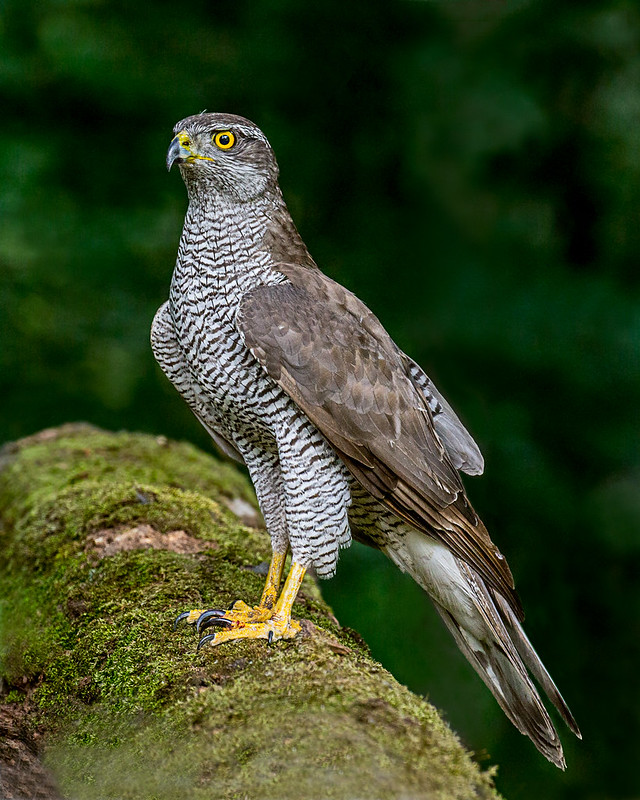
The goshawk is a large bird of prey found in wooded, wild areas of countryside, especially in Wales and northern England. Its wing feathers are a steely grey, while its breast is covered by a dense pattern of narrow grey and white stripes. A woodland hunter with incredible manoeuvrability through thick tree cover, the goshawk preys on other birds such as pigeons, crows and game birds, as well as small mammals such as squirrels. Using its sharp talons, it plucks its prey from the ground. Length: 48–62 cm (19–24 inches). Eats: medium-sized birds and small mammals.
Grey heron
Ardea cinerea
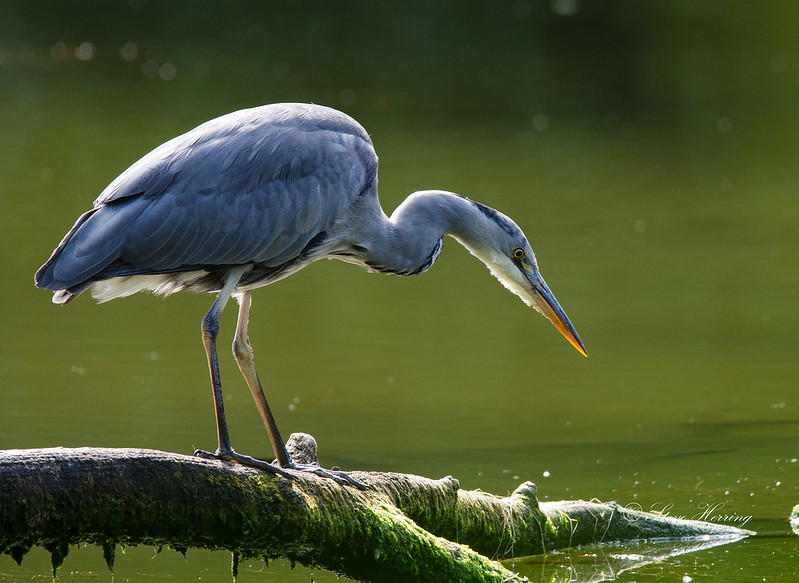
Grey herons are large birds that live by lakes, rivers, ponds and estuaries all over the British isles. They have grey feathers, long necks, and long, pointed beaks. While hunting, a grey heron stays completely still, either taking up a position on the river bank or standing in the shallows, keeping a lookout for fish. When it sees one, it moves quickly and snatches it up from the water. Length: 90–98 cm (35–39 inches). Eats: chicks of ground- nesting and water birds, reptiles, amphibians and large insects.
Grey partridge
Perdix perdix
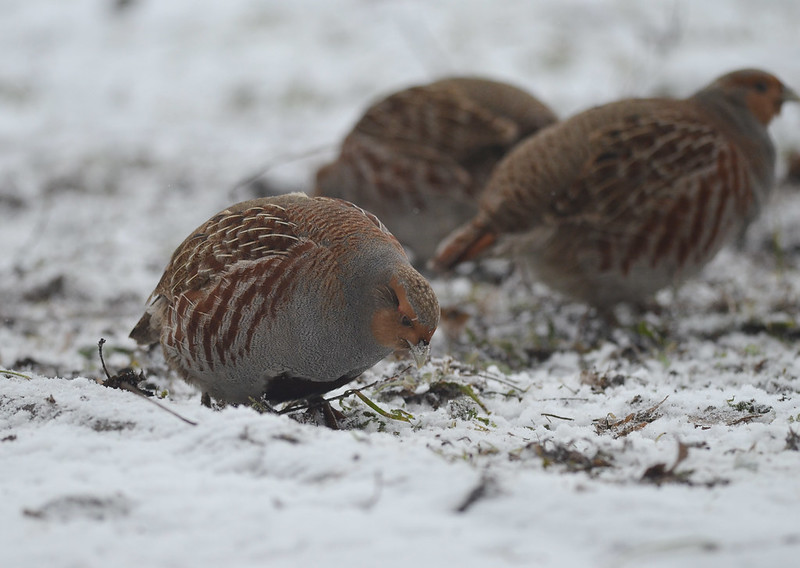
Grey partridges were once a common sight in the British Isles but today they are rare. These rounded game birds have mostly grey feathers, patterned with red and brown markings. Grey partridges live in groups of 6 to 15 birds in lowland areas such as farmland, where they make their nests alongside fields of cereal crops. They are mainly found in eastern parts of the British Isles. Length: 30 cm (9 inches). Eats: insects, seeds, leaves.
Hen harrier
Circus cyaneus
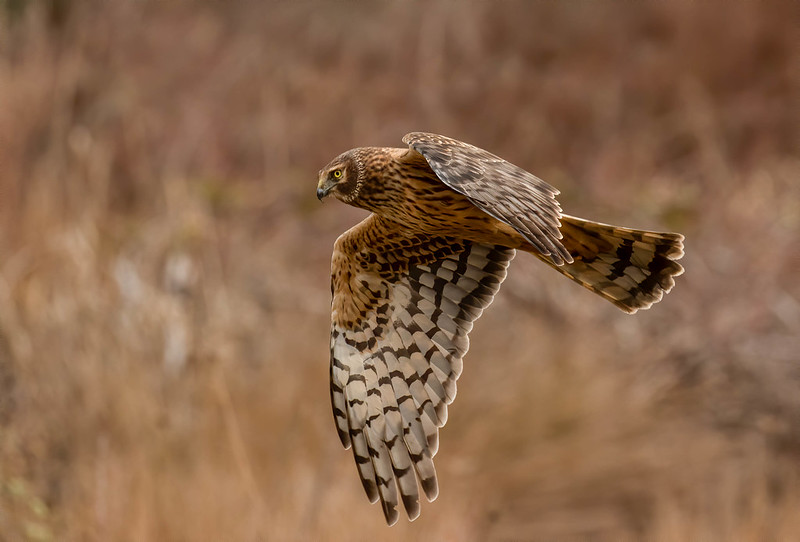
Hen harriers are one of the British Isles’ rarest birds of prey. They have been hunted almost to extinction since the 1800s, targeted because they kill grouse that have been raised for shoots. Today, it is illegal to shoot or trap hen harriers but they are still under threat from gamekeepers on large estates, who poison them. The largest population of hen harriers lives in Scotland, on rugged moorland. During the mating season, the birds put on impressive displays in the air. Length: 44–52 cm (17–20 inches). Eats: birds, small mammals.
House martin
Delichon urbicum
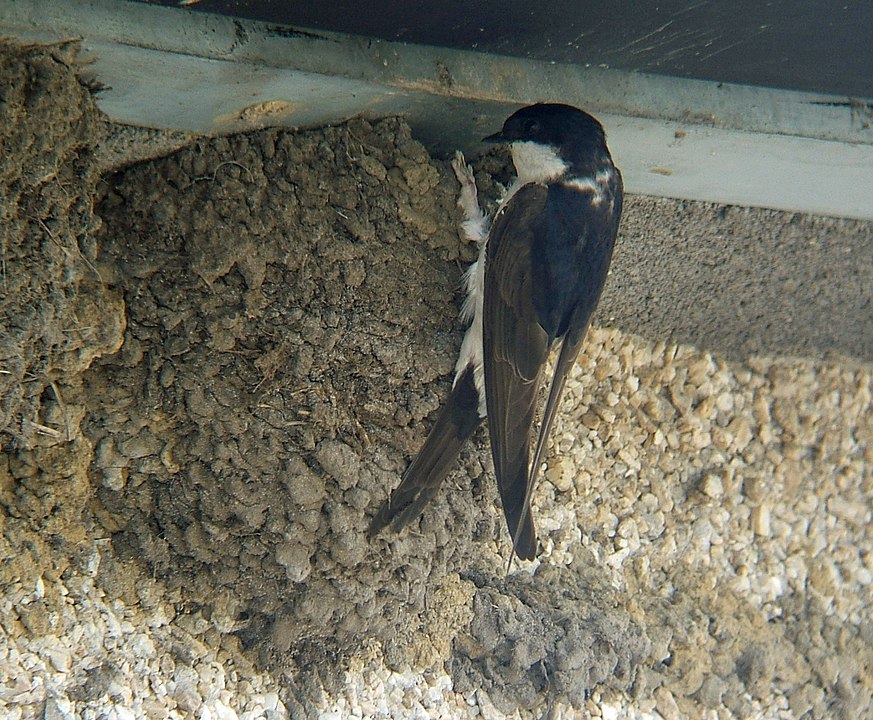
House martins are small blue-black birds with white breasts and rumps and forked tails. They belong to the same family as swallows (which are distinguishable by their long tail streamers). House martins arrive in the British Isles in spring to breed. They collect mud in their beaks to build their nests in the eaves (overhanging parts of the roof) of houses and barns. While they build, they defend their nests from house sparrows and make sure that the finished entrance is too small for the sparrows to get in. As the weather cools in autumn, house martins fly south to Sub-Saharan Africa. Length: 12 cm (5 inches). Eats: insects.
Jackdaw
Corvus monedula
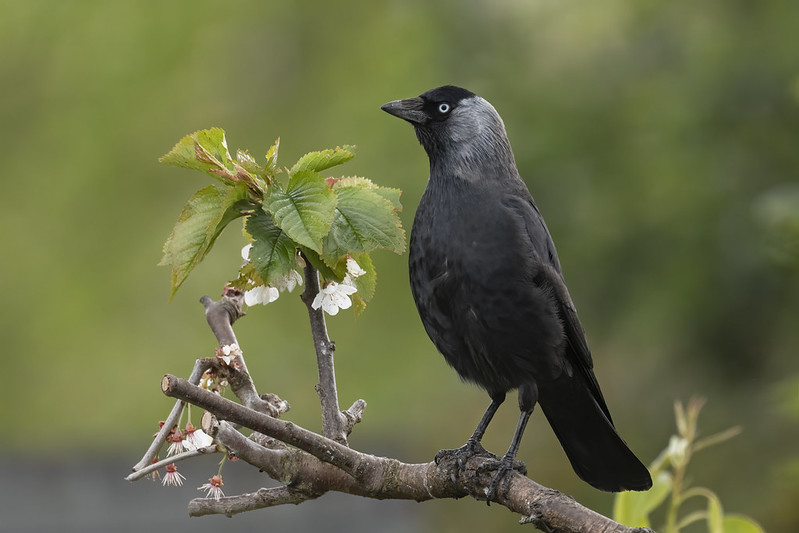
The jackdaw is the British Isles' smallest crow. It has black feathers, a silver-grey head, black "cap" and short beak. Jackdaws make short, sharp chattering sounds, which sound like "jack"—giving them their name. They are found nearly everywhere in the British Isles, and live happily in towns and cities where they build their nests in chimneys or crevices (gaps) in roofs. In winter, jackdaws often roost together in enormous flocks with rooks and carrion crows. Length: 34 cm (13 inches). Eats: insects, invertebrates, fruit, seeds, occasionally chicks and eggs.
Jay
Garrulus glandarius
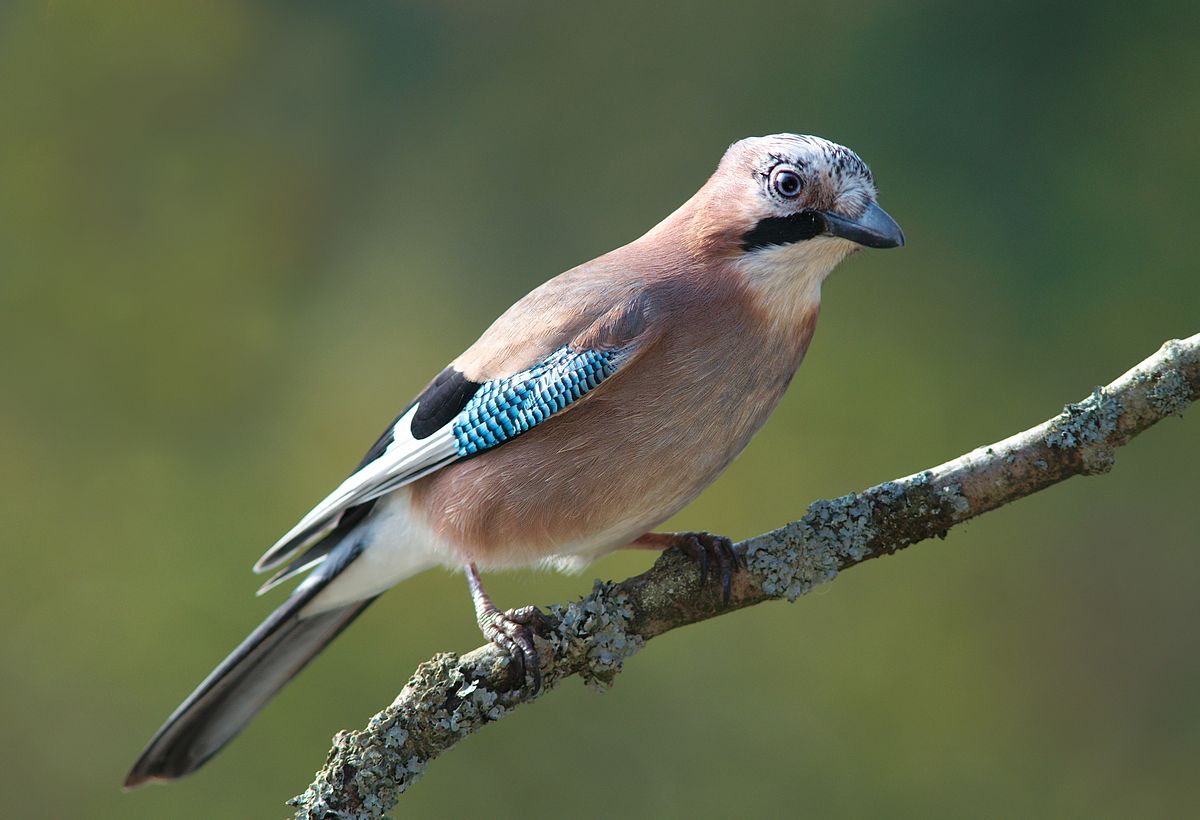
Jays are part of the crow family, but they look quite different from the other members. They have pale pink feathers with bright black-and-white tails and a flash of bright blue on their wings. Jays usually live in woodland, but their screeching call can often be heard in town and city gardens. They love to eat acorns—like squirrels, they find places to bury them so they can dig them up later. Length: 35 cm (14 inches). Eats: acorns, insects, seeds, fruits.
Kestrel
Falco tinnunculus
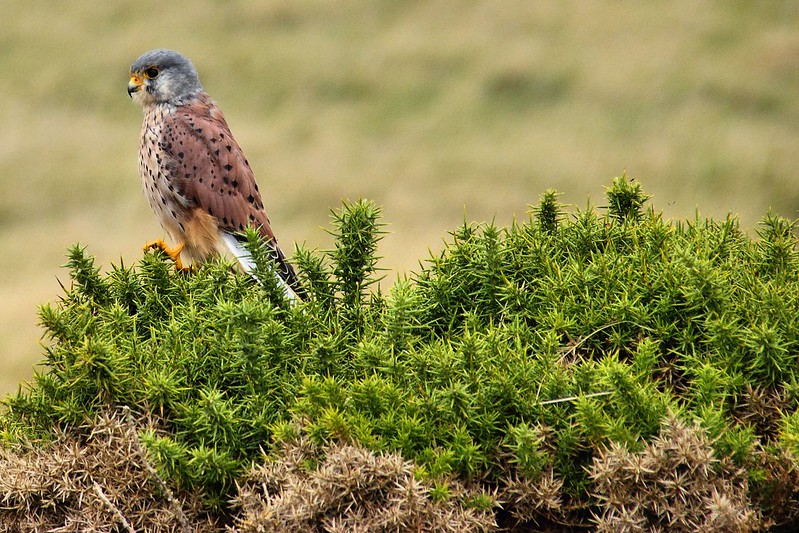
Kestrels are small falcons with reddish-brown feathers and bright yellow beaks. These birds of prey live almost everywhere in the British Isles except open, treeless areas such as moorlands. Kestrels can be seen in cities and alongside motorways, where they perch on telegraph poles to keep a lookout for small animals frightened by the traffic noise. They hover while tracking their prey, keeping a completely still position even in high winds. Length: 32–35 cm (13–14 inches). Eats: small mammals, birds, worms.

Kingfisher
Alcedo atthis
Kingfishers are river birds, easily recognized by their bright blue and orange plumage. They can be seen flying quickly over the water’s surface, or sitting on a waterside perch to look out for fish. Having spotted its prey, the kingfisher swoops down to snatch it from the water with its long beak. Kingfishers live alongside rivers and lakes in lowland areas of England, Wales and Ireland. Length: 16 cm (6 inches). Eats: insects, fish.
Lapwing
Vanellus vanellus
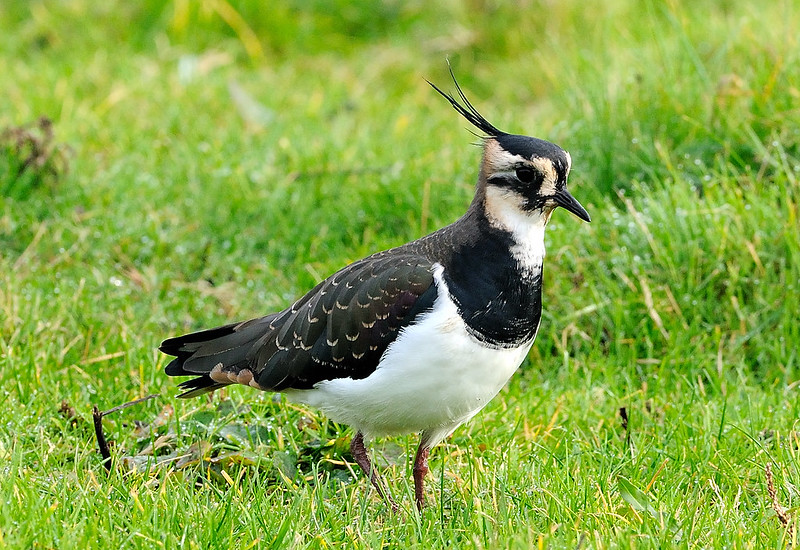
Lapwings live on open farmland all over the British Isles. They move to upland areas in summer, then down to the lowlands in winter, where they can be seen flocking across bare fields. These black-and-white birds have tall, black crests and broad, rounded wingtips. They are nicknamed “peewits” after the sound of their call. Length: 30 cm (12 inches). Eats: worms and insects.
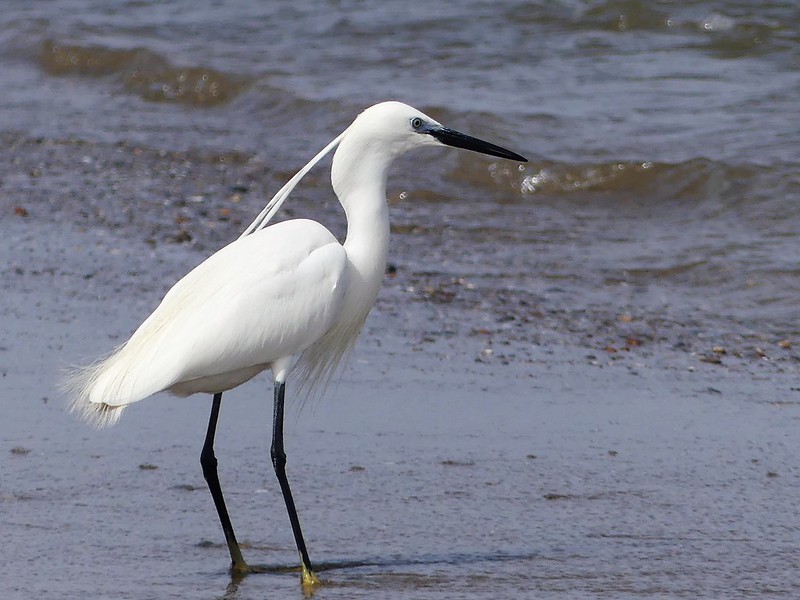
Little egret
Egretta garzetta
A little egret is a type of small heron with pure white feathers, black beak and legs, and bright yellow feet. During the breeding season it grows a plume of white feathers on its head. Little egrets only arrived in the British Isles at the end of the 1980s—before that they were a rare sight and lived mostly in warmer parts of continental Europe. Now they breed in large numbers on the south coast of England, where they live in wetlands and estuaries. Length: 60 cm (24 inches). Eats: fish, crustaceans.
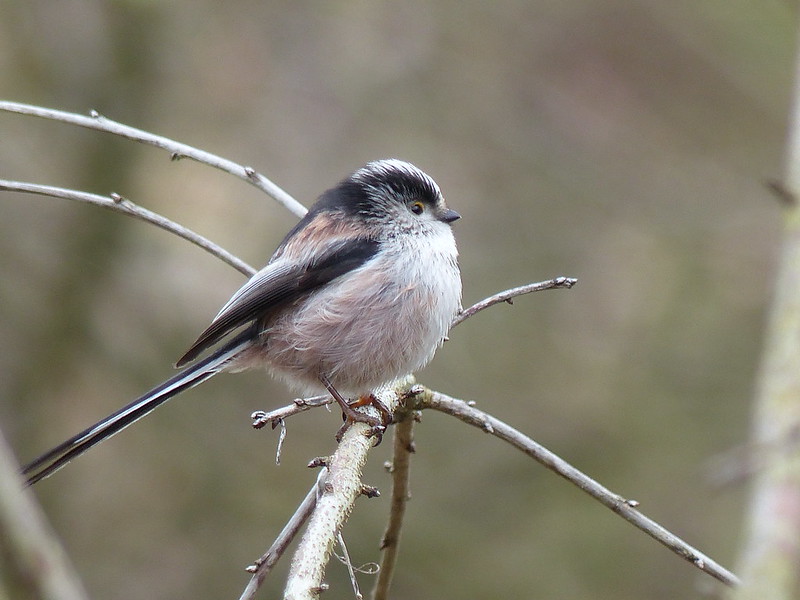
Long-tailed tit
Aegithalos caudatus
Long-tailed tits often flock together with tits, such as blue tits and coal tits, but despite their name they are not closely related to them—their closest relatives live in Asia. They have small, rounded bodies, long tails and a pink, black and white colouring. Length: 14 cm (5.5 inches). Eats: insects, seeds.
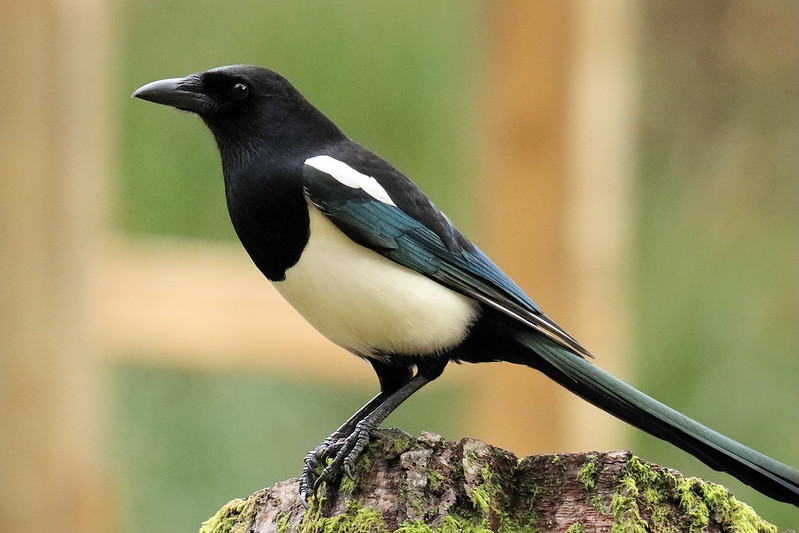
Magpie
Pica pica
With their striking black-and-white plumage, magpies are easy to spot. They live all over lowland areas the British Isles, where they are often seen in small flocks, scavenging for food or harassing other birds. Magpies are members of the crow family. They have a loud, chattering call. Length: 44–46 cm (17–18 inches). Eats: scraps, insects, berries, seeds, chicks of other birds.
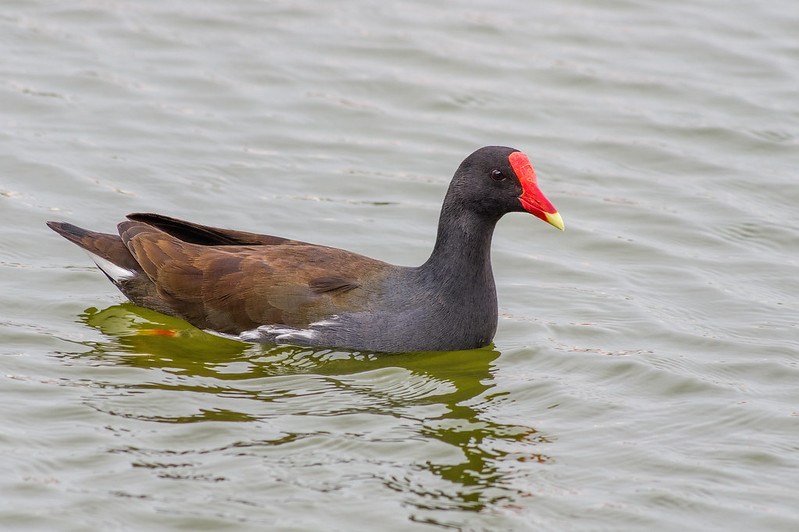
Moorhen
Gallinula chloropus
Moorhens—sometimes also known as "marsh hens"—live in rivers, lakes and wetlands all over low-lying areas of the British Isles. A moorhen has bluish-black feathers and a bright red beak with a yellow tip. Its close relation, the coot, has a white beak. When mating, the male swims towards the female with its bill in the water. Both birds build their nest out of twigs in vegetation at the water's edge. Length: 35 cm (14 inches). Eats: water plants, seeds, berries, insects, snails, small fish.
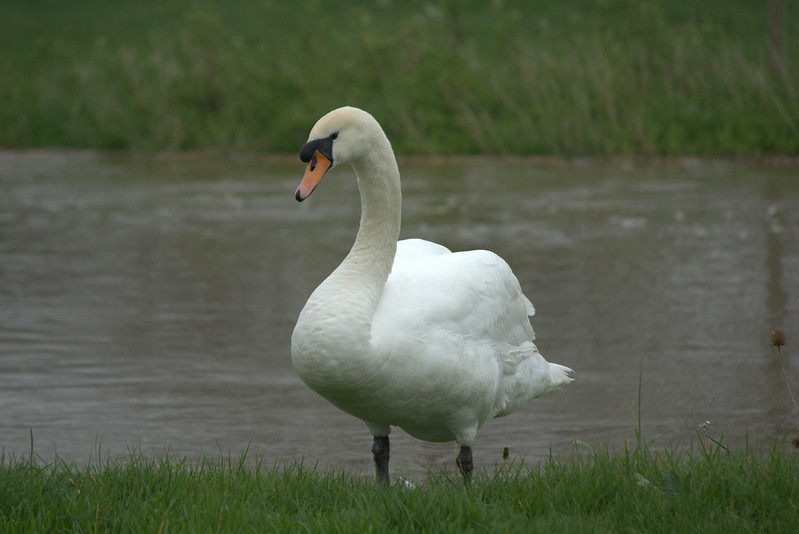
Mute swan
Cygnus olor
The mute swan is a large white bird with a long neck and orange-and-black beak, found on inland waters all over the British Isles. Despite their name, mute swans are not silent: they can hiss, and make short, grunting calls. Mute swans pair with a mate for life. They build large nests at the water’s edge that look like mounds of sticks. Each pair usually has a territory which they fiercely defend. Length: 125–170 cm (49–66 inches). Eats: snails, water plants, insects.
Nightingale
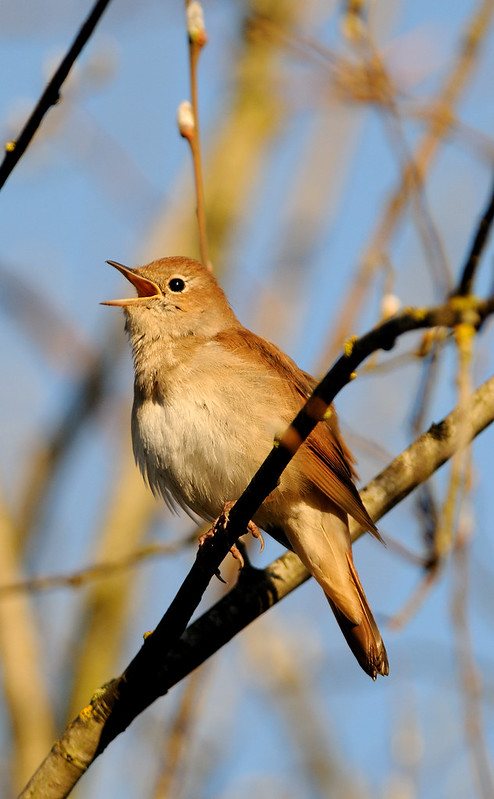
Luscinia megarhynchos
The nightingale is best-known for the beautiful, complicated song sung by the male. Nightingales can sing a huge range of notes and make around 1000 different sounds—10 times as many as a blackbird. In the British lsles, they live in southeast England and East Anglia (they are far commoner in mainland Europe). Plain brown in appearance, nightingales are shy and often difficult to spot because they make their nests in dense woodland. Length: 15–17 cm (6–7 inches). Eats: insects.
Owls
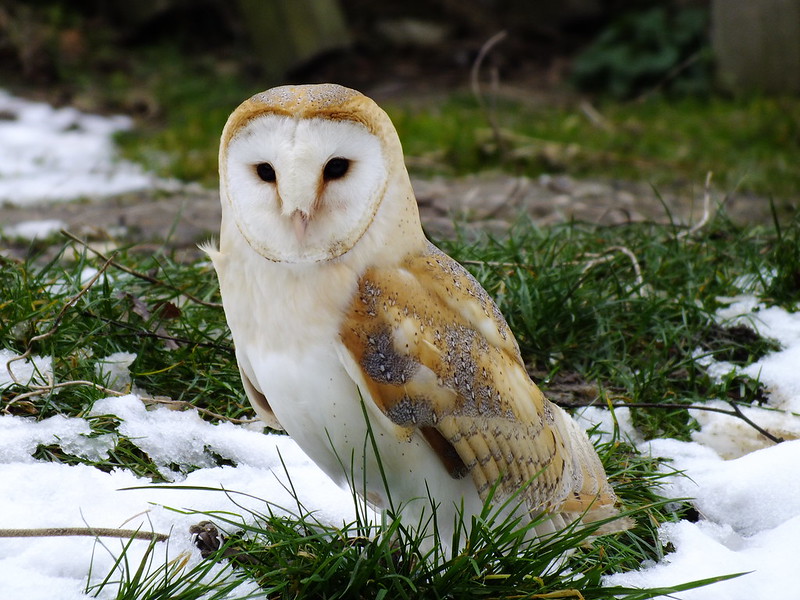
Tyto alba (barn owl), Strix aluco (tawny owl), Athene noctua (little owl) Asio flammeus (short-eared owl)
The barn owl has pale brown wings, a pure white breast and heart-shaped face. These owls live all over the British Isles. They hunt at night, looking for small mammals and have a low, screeching call. Length: 33-39 cm (13-15.4 inches). Eats: mice, voles, shrews.
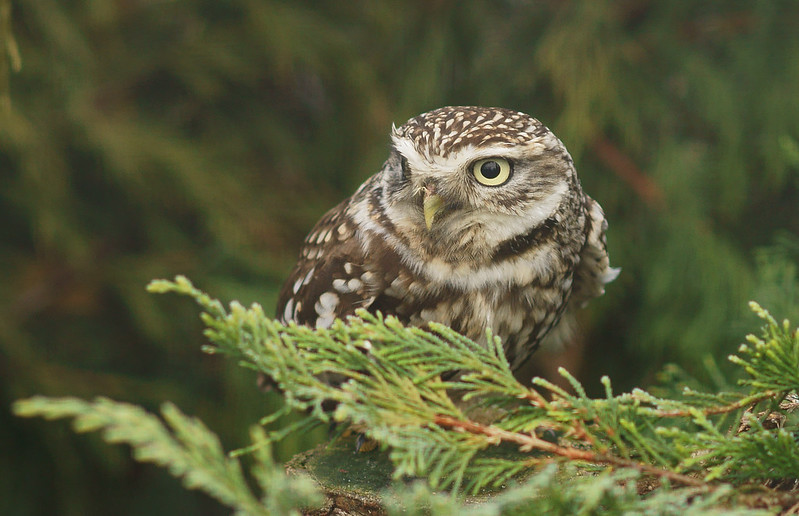
Little owls are small and speckled brown-and-white. They are native to Europe and Asia, and were only introduced to southern Britain at the end of the 19th century. Length: 21–23 cm (8–9 inches). Eats: mostly insects and earthworms, but also small mammals and sometimes small birds.
Short-eared owls live in marshy areas. They are most commonly seen in winter, when large numbers migrate south from Scandinavia. They are medium-sized, with patterned brown feathers and yellow eyes. Length: 34–42 cm (13–17 inches). Eats: mice, voles, shrews.

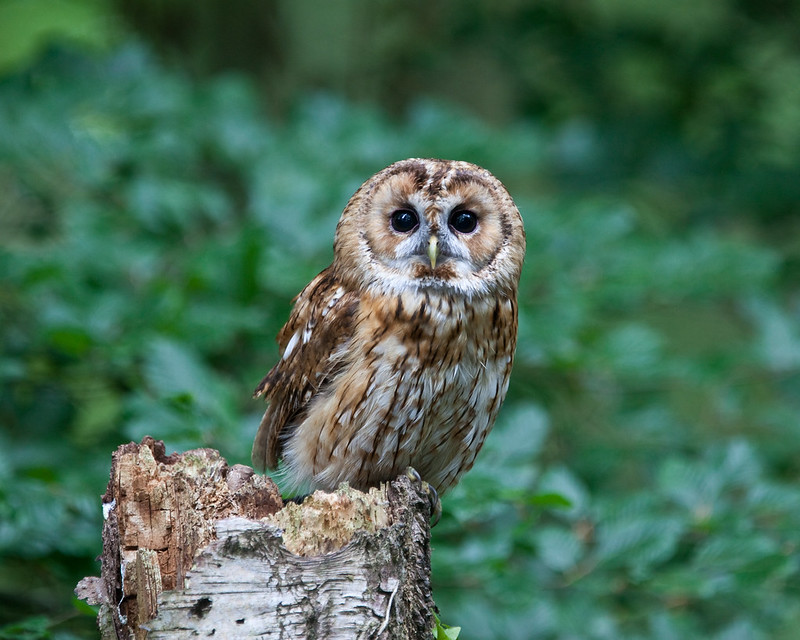
Tawny owls are medium-sized, rounded brown owls found in England, Scotland and Wales, but not Ireland. Their call has a piping “twhoo” sound. Using their highly developed sense of hearing, they swoop down noiselessly to seize their prey—usually small mammals, but sometimes other birds, frogs and even fish—which they then swallow whole. Tawny owls nest in tree hollows, where their eggs and young are protected from predators. Length: 38 cm (15 inches). Eats: small mammals, frogs, worms, beetles.
Peregrine falcon
Falco peregrinus
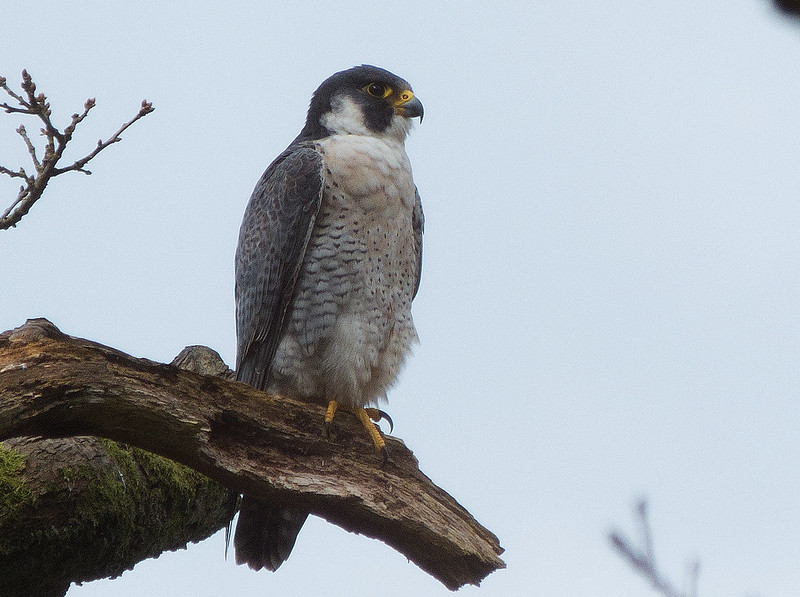
The peregrine falcon is the fastest living creature in the world. Flying and diving at high speed, it can reach speeds of 320 km/h (200 mph). This bluish-grey bird of prey has small, pointed wings and a short, fan-shaped tail. Peregrine falcons hunt on sea cliffs along the coast as well as in hilly areas inland. Some also live in cities, swooping from the tops of high buildings to catch prey—often pigeons—in flight. Length: 39–50 cm (15–20 inches). Eats: medium-sized birds such as pigeons, jackdaws and gulls.
Pheasant

Phasianus colchicus
The common pheasant lives in countryside all over the British Isles, except for the most northern parts of Scotland. Male pheasants have a glossy green head with a bright red patch around the eyes, a white neck ring and long, stripy tail feathers. Females are quite different: they are smaller and have light brown, patterned feathers. Introduced from their native Asia and Caucasus, pheasants are game birds, which means people breed them for shooting and hunting. Around 47 million are bred each year and released into the wild for shooting. This threatens the wellbeing of other birds—and ecosystems in general—since the pheasants eat a huge amount of the available food. Length: 53–89 cm (20–35 inches). Eats: seeds, insects, grain, small plants.
Pied wagtail
Motacilla alba
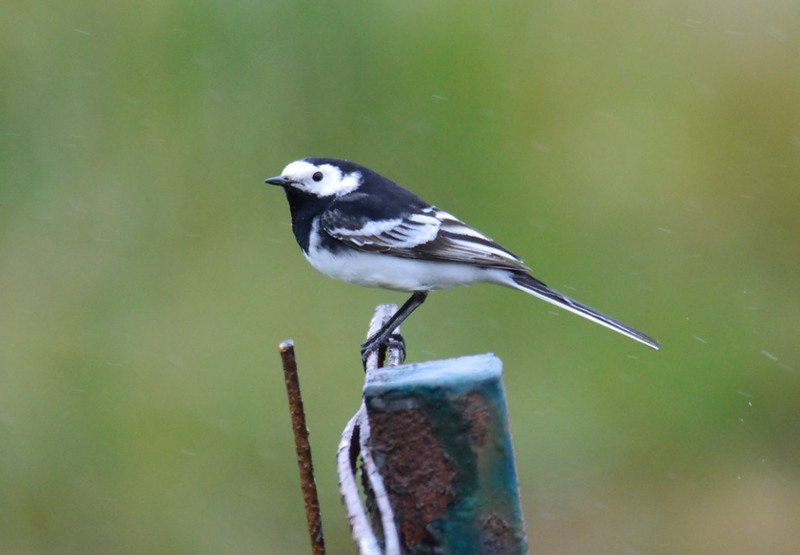
Pied wagtails (a subspecies of the white wagtail) are small black-and-white perching birds with long tails, found everywhere in the British Isles from town centres to mountains and open countryside—but often near water. They can often be seen hopping along pavements or lanes, bobbing their tails up and down, chasing insects. Length: 18 cm (7 inches). Eats: insects.
Pigeons
Columba livia (rock dove), Columba palumbus (wood pigeon), Streptopelia decaocto (collared dove)
The pigeons that flock in towns and cities are descended from the wild rock dove, a medium-sized bird that can be any number of shades of grey, white, black and brown. Wild rock doves are only found today on the far northern coasts of Scotland and Northern Ireland. Everywhere else, they are known as domestic or “feral” pigeons: the escaped descendants of wild rock doves that were captured and bred for their meat. Length: 31–34 cm (12–13 inches). Eats: seeds, cereals, scraps.
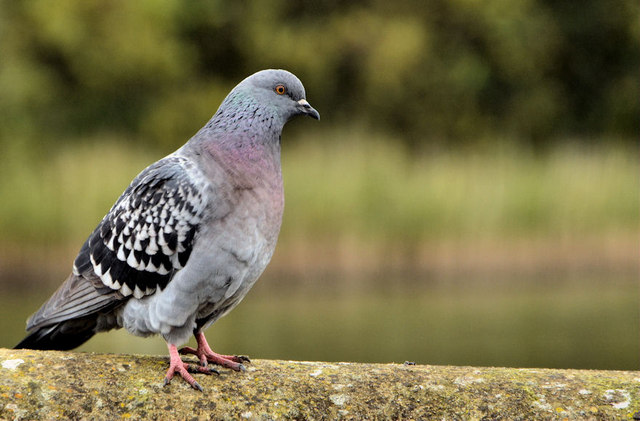
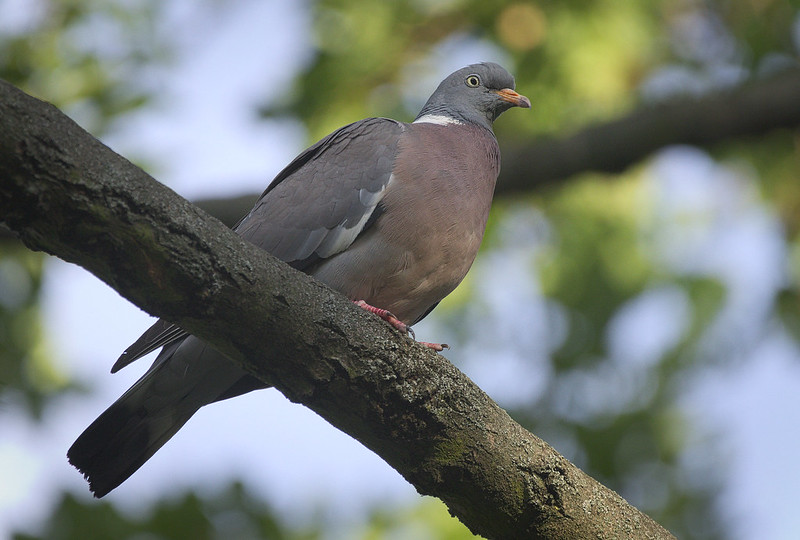
Wood pigeons are large birds commonly seen all over the British Isles. Larger than feral city pigeons, they live on farmland and in woodlands, as well as in parks and gardens. They make loose nests in trees with bundles of thin twigs. Length: 40–42 cm (16–16.5 inches). Eats: seeds, cereals, scraps.
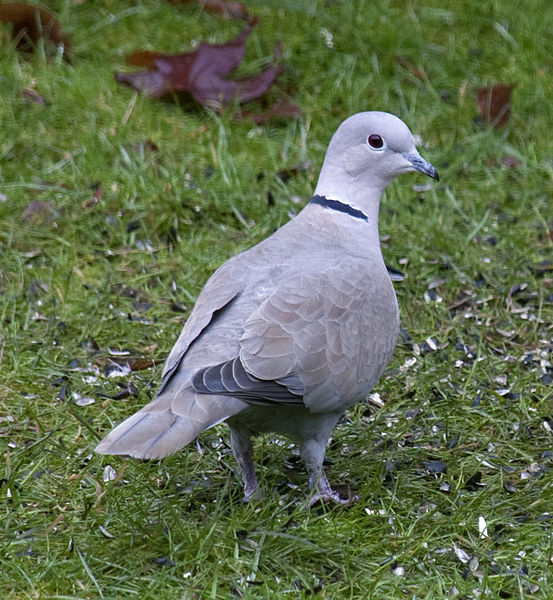
Collared doves are a pale pinkish-brown colour, with a partial black band around their necks and deep red eyes. They make monotonous "cooing" calls. Originally native to subtropical Asia, they gradually colonized lands further north, reaching the British Isles in the 1950s. Length: 31–33 cm (12–13 inches). Eats: seeds, cereals, buds.
Ptarmigan
Lagopus muta
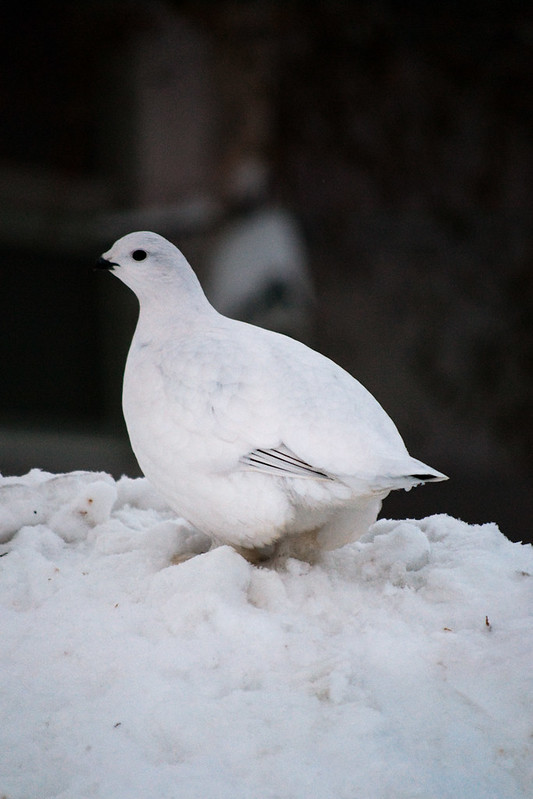
The ptarmigan belongs to the grouse family. It is an Arctic bird that lives on the rocky, bare landscape of Scotland’s highest mountains. In spring and summer, it has pale brown feathers, but in winter, its plumage changes to a bright white to camouflage it against the snow. Length: 35 cm (14 inches). Eats: berries, shoots, leaves, insects.

Raven
Corvus corax
The common raven is the largest member of the crow family. Like the carrion crow, its feathers are black all over, but it can be told apart by its large, chunky beak. Ravens live mainly in the western and northern British Isles, especially in upland areas. Pairs mate for life. Length: 60–68 cm (24–27 inches). Eats: carrion, small mammals, other birds, eggs, insects.
Red kite
Milvus milvus
Red kites are large birds of prey with reddish-brown feathers. They can be easily identified in flight by the “V” shape of their forked tails. In medieval times people thought of red kites as pests, and by the beginning of the 20th century they had been hunted almost to extinction. They were re-introduced to southern England in the 1990s. Kites swoop and twist gracefully in the air as they fly, behaviour which lent their name to the toy kite. Length: 60–66 cm (24–26 inches). Eats: carrion, worms, small mammals.

Ring-necked parakeet
Psittacula krameri
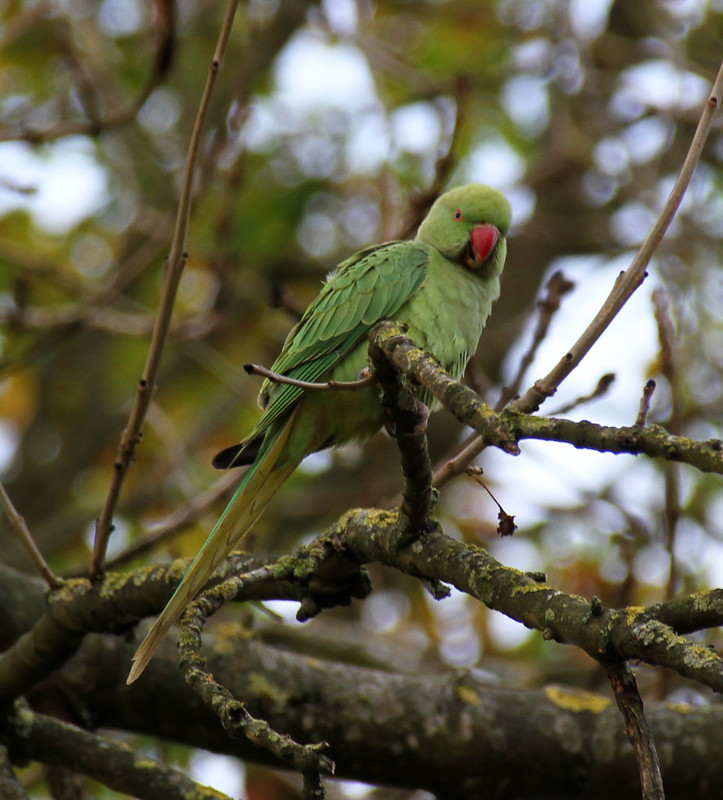
This bright green, long-tailed bird is Britain’s only parrot. In the 19th century it became a popular pet, and the first British parakeets probably escaped from people’s homes or were released into the wild. Today, flocks of these colourful birds, known for their high-pitched squawks, can be seen all over Greater London and southeast England. Length: 40 cm (16 inches). Eats: seeds, nuts, fruit.
Robin
Erithacus rubecula
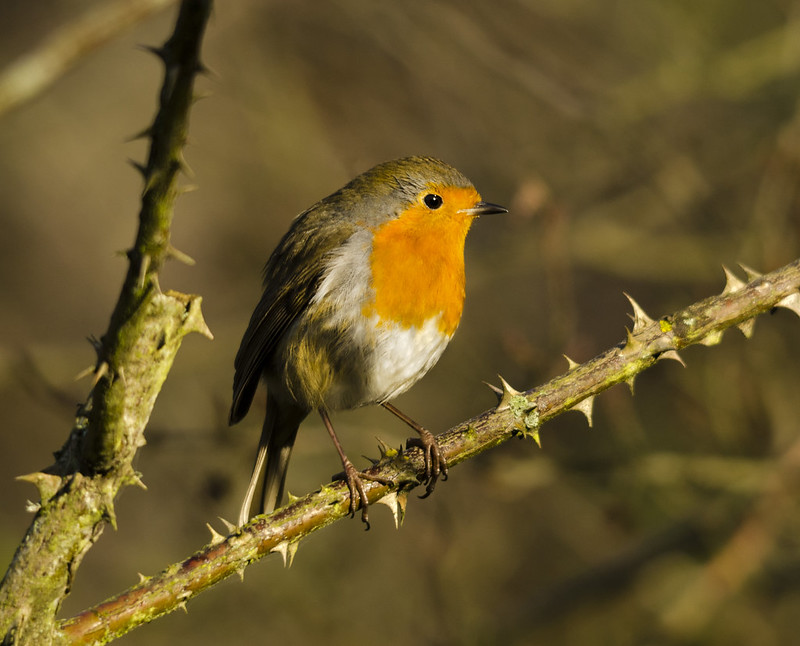
The robin is a common garden bird, known for its bright red breast and its friendly, inquisitive behaviour. Robins live everywhere in the British Isles except on the highest mountains. They are territorial—they fiercely guard the area where they make their homes. Their song can be heard all year round, sometimes even at night. Length: 14 cm (5.5 inches). Eats: seeds, fruit, worms, insects.
Rook
Corvus frugilegus
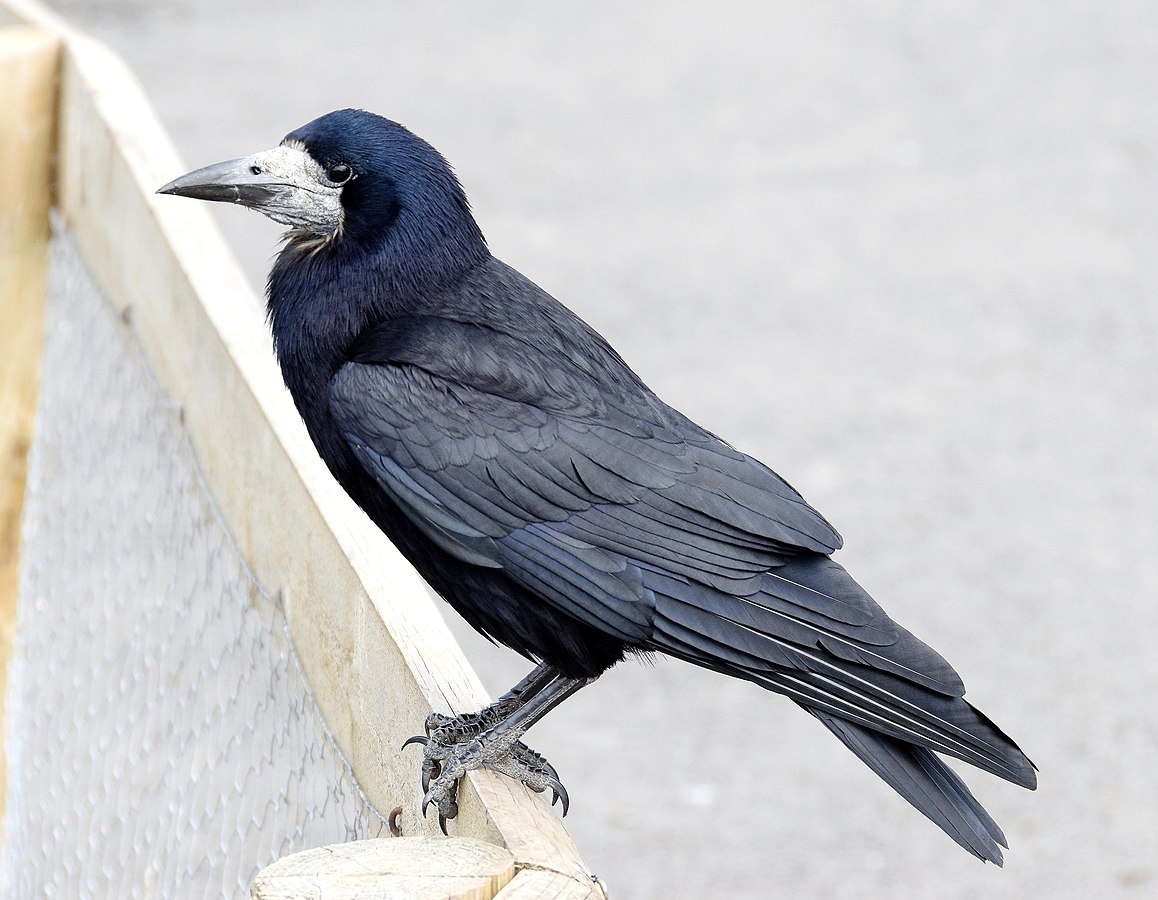
Rooks belong to the crow family. They look similar to carrion crows, but have thinner, pale grey beaks. Rooks spend all their time in flocks, sometimes mixing with jackdaws. They live everywhere in the British Isles except the highest areas. Length: 44–46 cm (17–18 inches). Eats: carrion, small mammals, birds, eggs, insects, grain, nuts, scraps.
Skylark
Alauda arvensis
This tiny brown, crested bird lives in open areas of countryside, where it makes its nest on the ground. Skylarks are known for their vertical display flights, in which the male rises into the sky high up above the nest and hovers, singing a warbling, tuneful song. Length: 18–19 cm (7–7.5 inches). Eats: seeds, insects.

Sparrows
Passer domesticus (house sparrow), Passer montanus (tree sparrow)
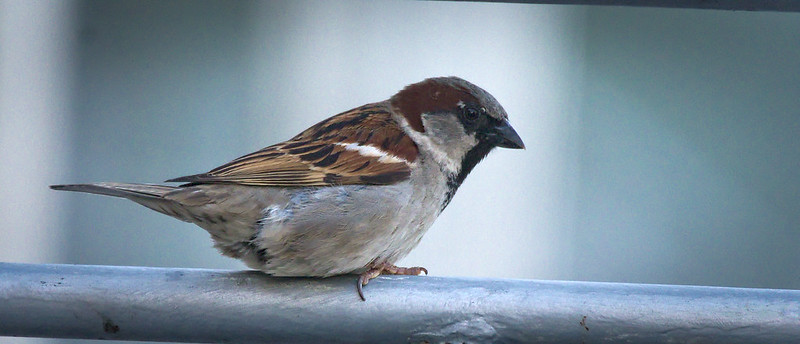
A house sparrow is a small brown perching bird. It has a black “bib” on its chest and a strong, sturdy beak for cracking open seeds. House sparrows often live near people, feeding on scraps and crumbs from bird tables. Length: 15 cm (6 inches). Eats: seeds, insects, scraps.
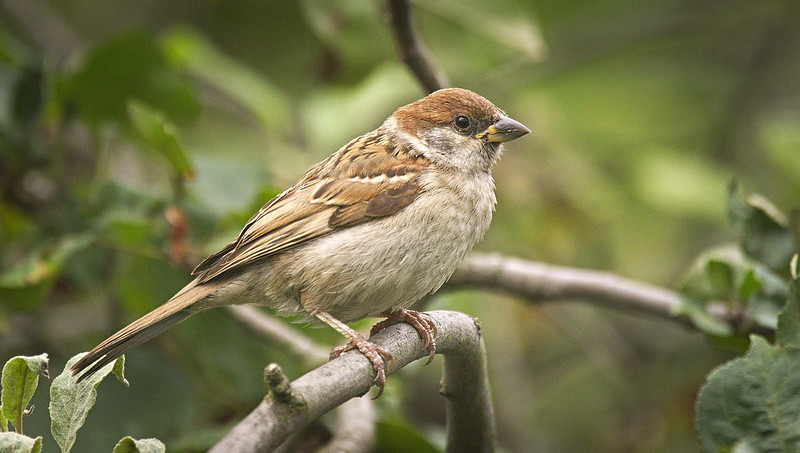
Tree sparrows live in woodlands, and are a little smaller and shier than house sparrows. They are also rarer. Tree sparrows have a brown, rather than grey, cap on their heads and black cheek spots. Length: 14 cm (5.5 inches) Eats: seeds, insects.
Sparrowhawk
Accipiter nisus
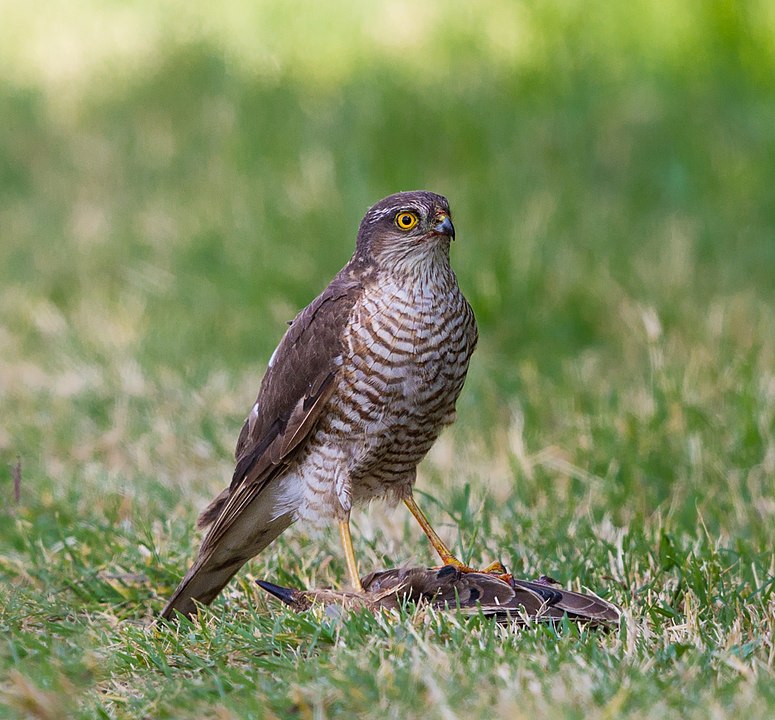
Sparrowhawks live in woodlands and open countryside, but can sometimes be seen in gardens, where they prey on garden birds. Females—larger than males—can catch large birds, even heavy pigeons. Males have bluish-black feathers, while females are mostly brown. They can be told apart from other hawks by their bright yellow eyes. Length: 28–38 cm (11–15 inches). Eats: birds.
Starling
Sturnus vulgaris
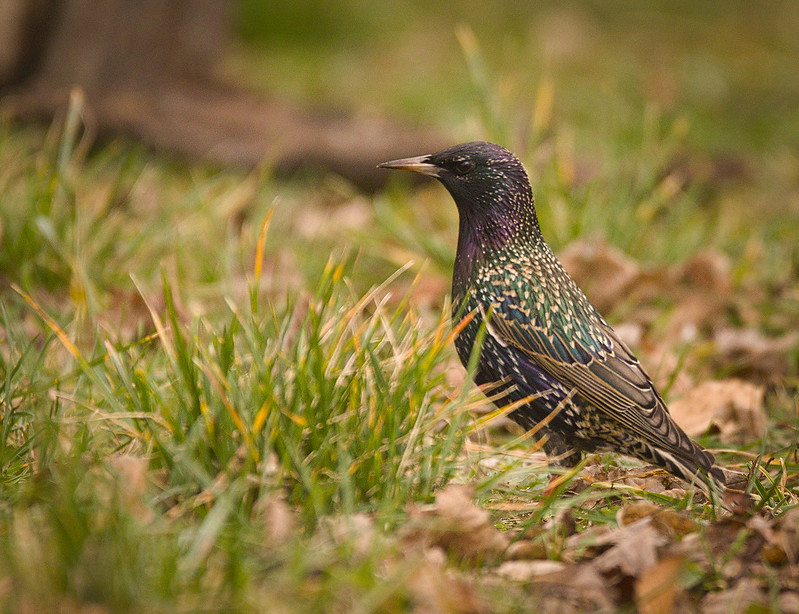
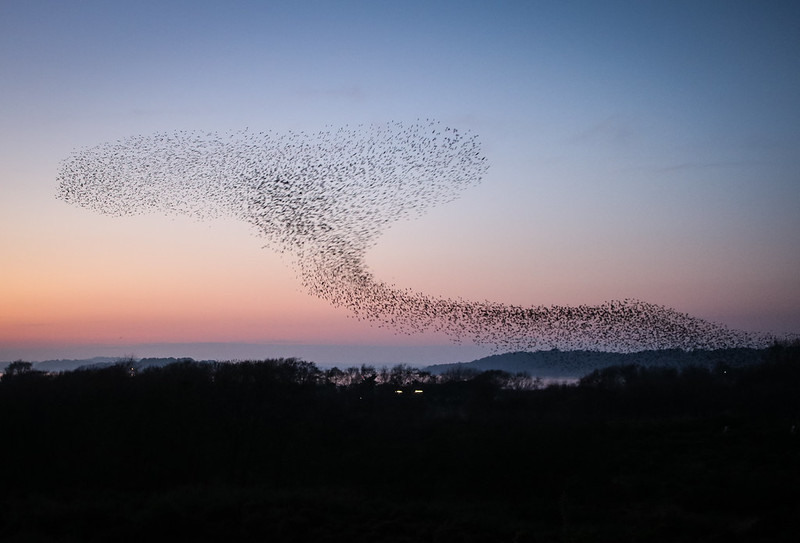
Starlings look similar to blackbirds from a distance, but up close they are smaller, with more pointed wings. Their feathers are glossy black, speckled with flecks of shiny green and purple. Starlings flock together in huge clouds of thousands of birds in display flights, which take place in the evening before roosting. These displays are called murmurations. Starlings are perching birds. They live everywhere in the British Isles except for the Scottish Highlands, and are commonly seen in gardens. Length: 21 cm (8 inches). Eats: insects, worms, fruit.
Swallow
Hirundo rustica
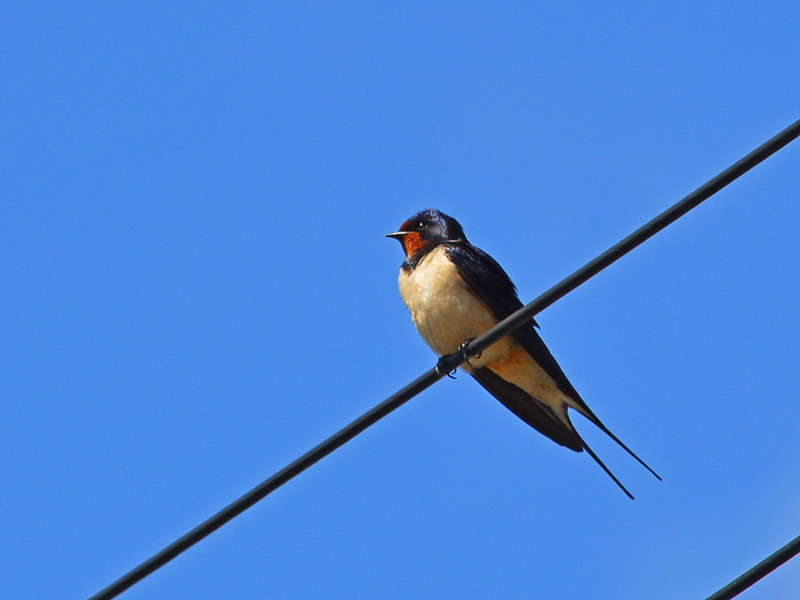
Swallows are small, dark blue birds with white underbellies and red throats. They breed in the British Isles in summer and migrate south to warmer climates in the winter. They collect mud with their beaks, which they use to build their nests, tucked away in the roofs of barns or underneath bridges. Swallows swoop and dive to catch insects in flight. When not nesting they roost each night, sometimes in enormous numbers—hundreds of thousands, for example, gather in reed beds in Africa for protection from birds of prey. Swallows can be told apart from swifts by their colouring and the shape of their tail: a swallow’s is split into two long streamers, while a swift’s is short and forked in a “V” shape. Length: 17–19 cm (7–7.5 inches). Eats: insects and small invertebrates.
Swift
Apus apus
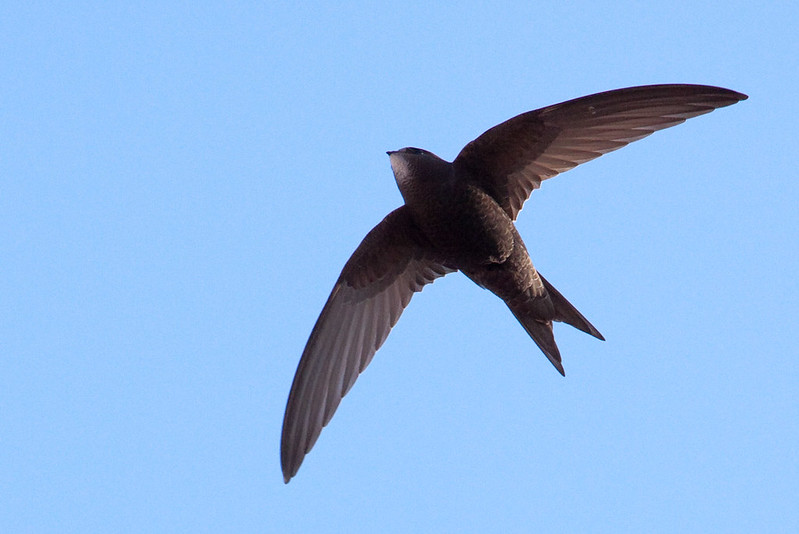
Swifts are small, dark brown birds with pale colouring around their throats. They are expert, rapid fliers, and live their whole lives on the wing, catching insects—even sleeping while in the air. Swifts nest in holes, rather than building their own nests. They never perch on wires or branches as their feet are not adapted for walking or gripping. Like swallows, they migrate south to warmer climates in winter. Length: 16–17 cm (6–7 inches). Eats: insects, spiders.

Thrushes
Turdus philomelos (song thrush), Turdus viscivorus (mistle thrush)
Song thrushes are brown with black-and-white speckled breasts. They are known for their sweet song, which often repeats phrases. Their favourite food is snails, and they can be seen hitting the shells against a stone with their beaks to break them open. Length: 23 cm (9 inches). Eats: snails, insects, worms.
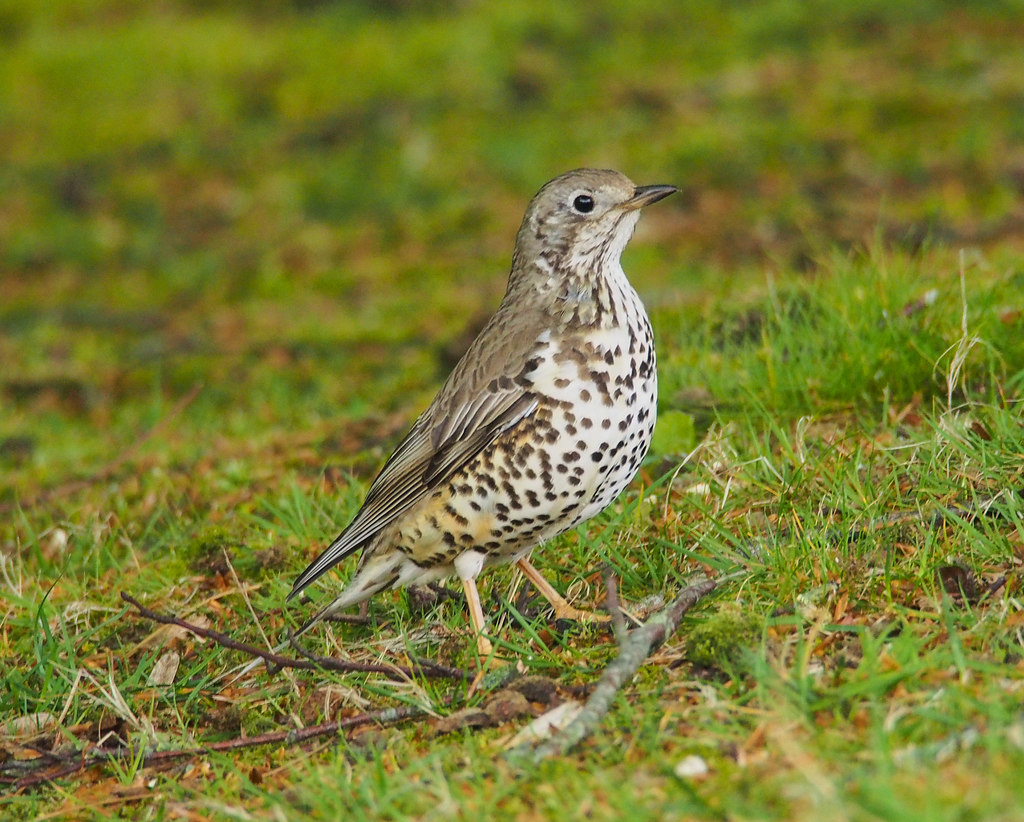
The mistle thrush probably gets its name from its fondness for sticky mistletoe berries (it often defends a mistletoe-laden tree from other birds). Like the song thrush, its white belly is covered in black spots, but it is larger and greyer than its relative. Length: 27 cm (10.5 inches). Eats: worms, slugs, insects and berries.
Tits
Cyanistes caeruleus (blue tit), Periparus ater (coal tit), Parus major (great tit), Poecile palustris (marsh tit), Poecile montanus (willow tit)
Tits are small perching birds that live in woodlands, gardens and hedgerows all over the British Isles. They often join up into small flocks to search for food in gardens, especially in winter. All tits have black “bib” markings on their heads and chests. Colourful blue tits have blue, green and yellow plumage. Length: 12 cm (4.7 inches). Eats: insects, caterpillars, seeds and nuts.
The largest tit, the great tit has green and yellow colouring, with a black cap. It has a distinctive two-note call ("ti-choo, ti-choo"). Length: 14 cm (5.5 inches). Eats: insects, seeds, nuts.
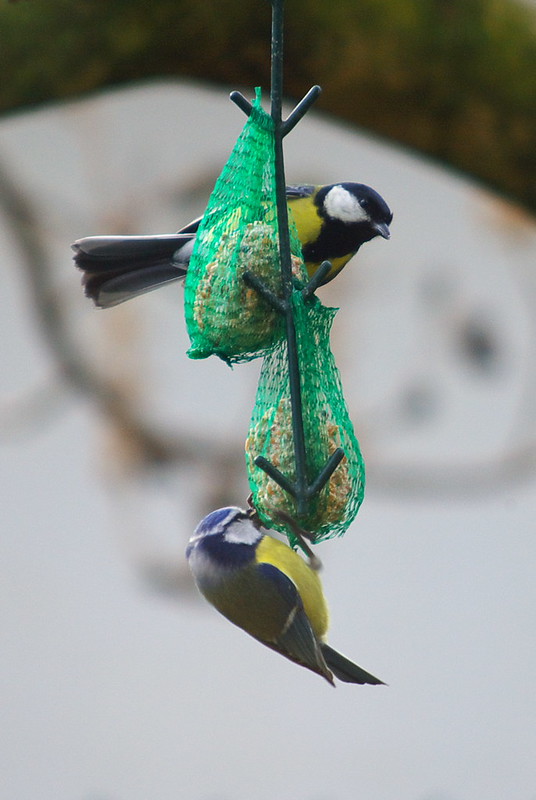

The tiny coal tit has grey feathers and a black cap, while similarly-sized marsh tits have the same black cap, but are mostly brown. Marsh tits have good memories, and can hide seeds to find again later on. Willow tits are very similar to marsh tits, but have pale areas on their wings not found in marsh tits. Despite their name, they tend to prefer coniferous woodland habitats. Length (all three species): 11.5 cm (4.5 inches). Eats: insects, seeds (willow tits also eat berries).
Treecreeper
Certhia familiaris
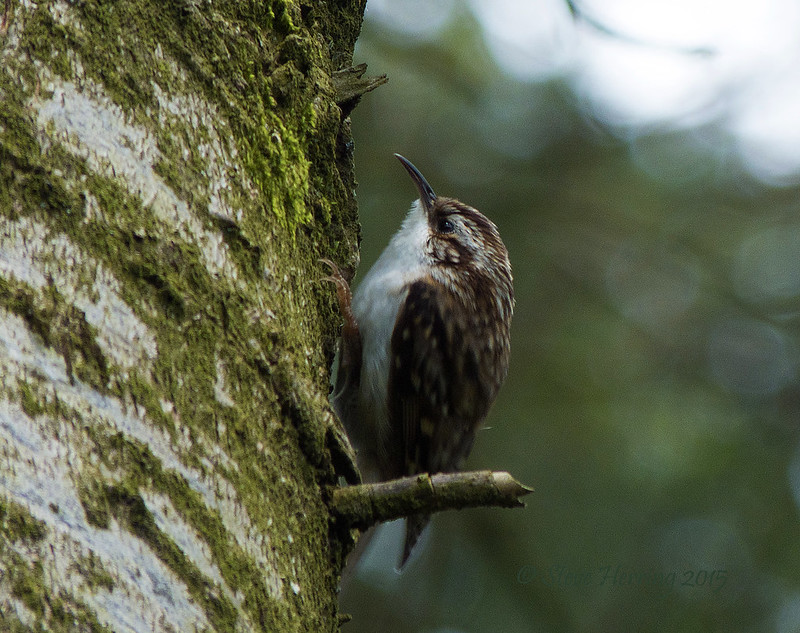
Treecreepers are small, speckled-brown perching birds with white breasts, found nearly everywhere in the lowland British Isles. They live in trees, where they cling on to trunks with their long, sharp claws, searching for insects under the bark. Treecreepers are often hard to spot because if they are disturbed, they freeze, with their feathers camouflaging them against the bark. Length: 12.5 cm (5 inches). Eats: insects, spiders, small seeds.

Woodpeckers
Picus viridis (green woodpecker), Dendrocopos major (great spotted woodpecker), Dendrocopos minor (lesser spotted woodpecker)
Three species of woodpecker breed in the British Isles. Instead of singing, woodpeckers make a drumming sound with their beaks on the trunks of trees. They do this to mark their territory to other birds. Woodpeckers also use their strong beaks to peck out nesting-holes in the wood.
The largest woodpecker found in the British Isles is the green woodpecker, distinguished by its bright green feathers, yellow rump and red cap. It spends most of its time on the ground, looking for ants’ nests in the grass. Length: 30–34 cm (12–13 inches). Eats: ants.
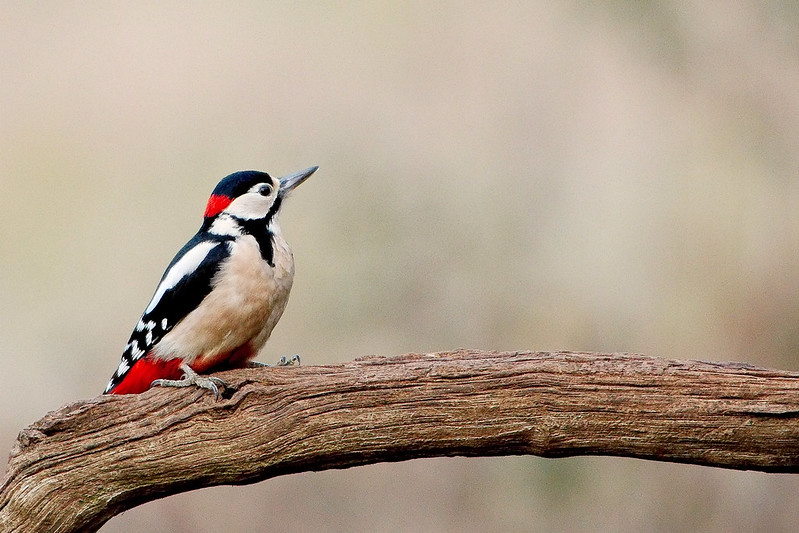
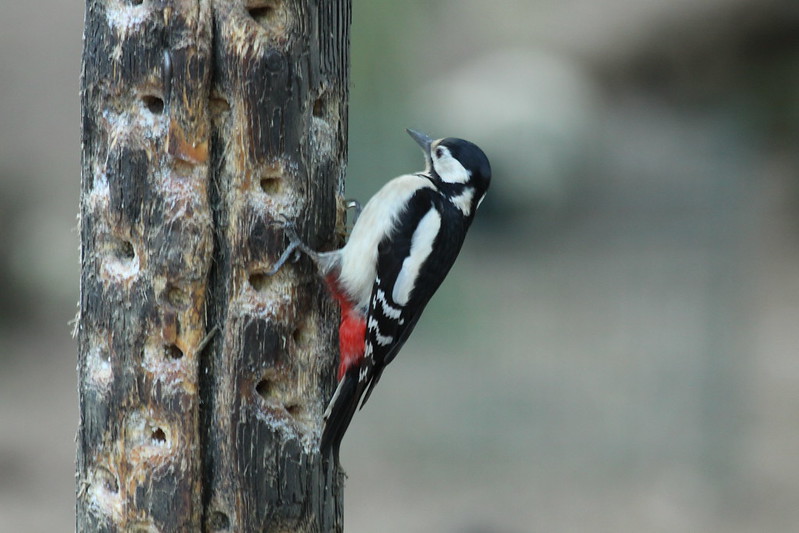
Great spotted woodpeckers are the most commonly seen in the southern British Isles. Their feathers are patterned black-and-white, and they live in woodlands and gardens with large trees. Length: 30–34 cm (12–13 inches). Eats: insects, nuts, seeds.
Lesser spotted woodpeckers look similar to their great spotted relatives, but they are smaller, and the male has a red cap. They are also much rarer. They live in the highest branches of trees, mainly in southern England. Length: 14–15 cm (5.5–6 inches). Eats: insects.
Wren
Troglodytes troglodytes
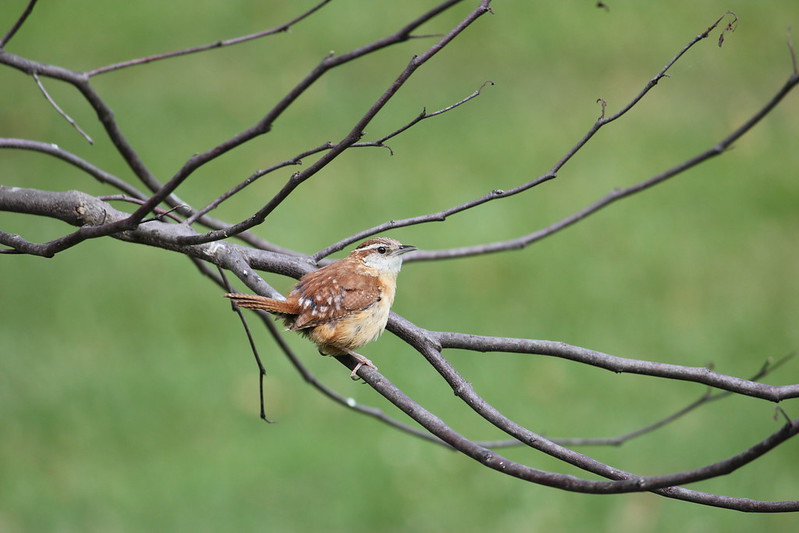
One of the British Isles’ smallest and commonest songbirds is the wren. This tiny brown bird has a rounded body and long, straight tail which it holds upright when perching. For such a small bird, it has a powerful song. Wrens are sociable birds; large groups of them share nests during the winter, huddling together to keep warm. Length: 9–10 cm (3.5–4 inches). Eats: insects, spiders.
Yellowhammer
Emberiza citrinella
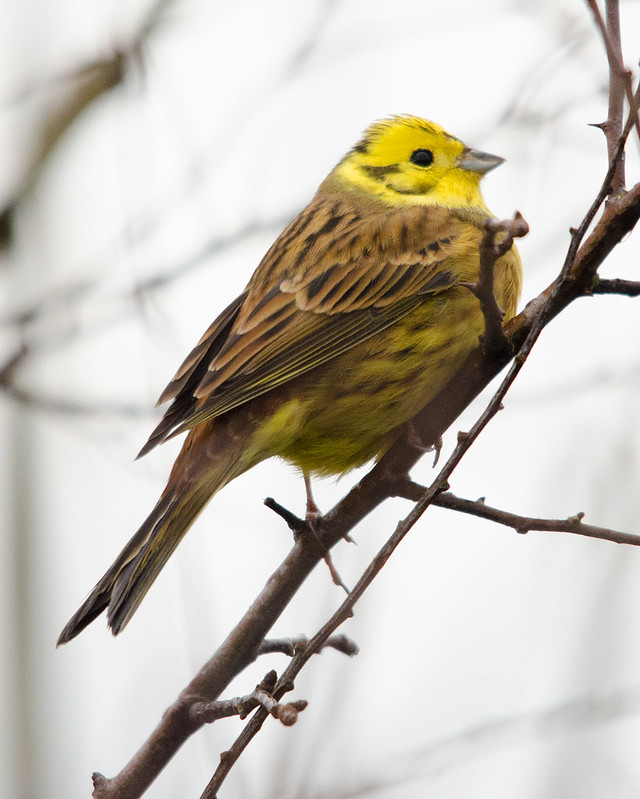
Yellowhammers live on farmland in most lowland areas of the British Isles. These small birds make their nests in ditches alongside hedgerows. Both male and female yellowhammers have bright yellow feathers on their breasts, but the male is especially striking, with its bright yellow head. Length: 16 cm (6 inches). Eats: insects, seeds.
Consultant: Chris Jarvis