
Chemistry
Kinetic theory
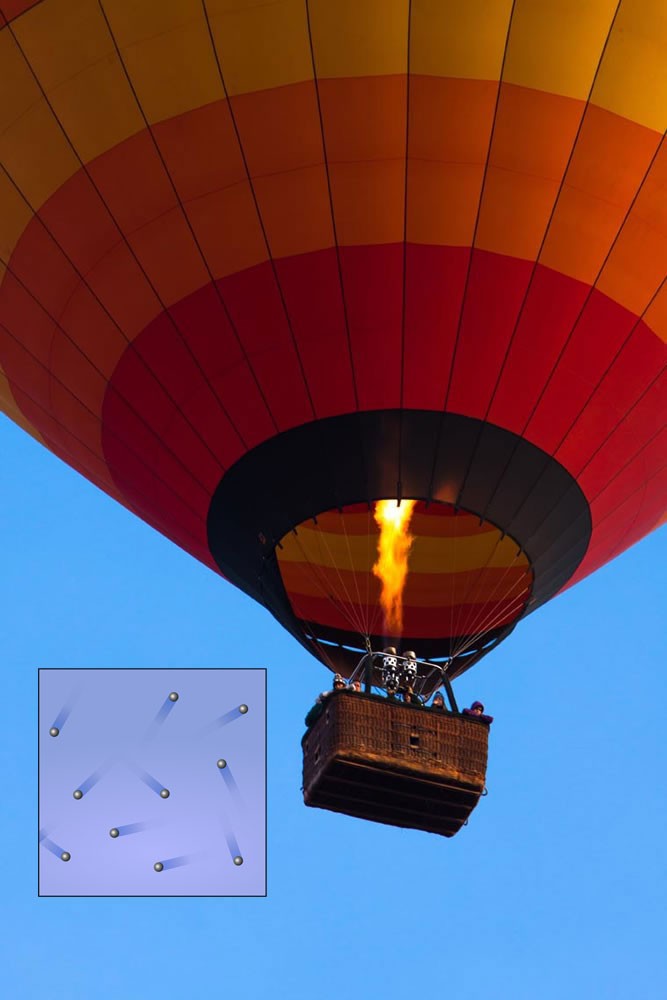
All matter is made up of molecules or atoms that are in constant motion. This view of the way matter behaves is called kinetic theory ("kinetic" means moving). Ever since the 17th century, scientists have made observations and devised laws that prove kinetic theory. The amount the molecules or atoms that make up matter can move around depends on the strength of the forces that hold them together. Temperature also has an effect. The molecules in solids, which are closely packed, can be made to vibrate and take up more space by heating. This is why metal objects expand at higher temperatures.
Behaviour of gases
The forces between the molecules in liquids are weaker than in solids, so the molecules can move about more freely on heating, even while still remaining close together. In gases, the molecules are more widely spaced, and so move about much more quickly. Because of this, dramatic effects may be produced if a gas's temperature, volume or pressure is changed in some way. Heating a gas inside a fixed space—a can or glass jar for example—causes its pressure to increase. This is because the gas's freely-moving molecules collide with one another and the walls of the container more frequently as the heat rises. The container may eventually explode if the pressure reaches a certain point.
Inside a bicycle pump, air is compressed in order to force it into a tyre. The air molecules collide frequently with the walls of the pump, which become hotter as a result.
Boyle's Law
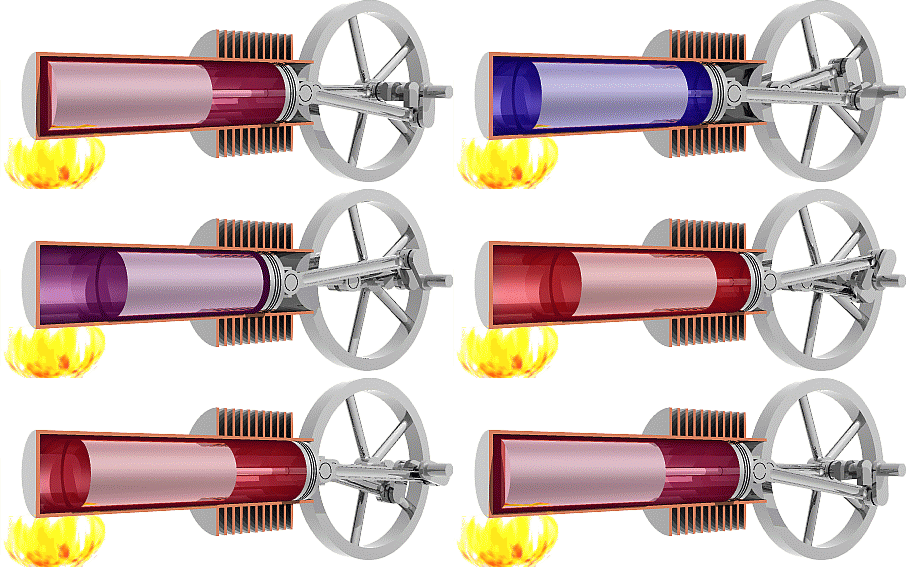
The Anglo-Irish scientist Robert Boyle (1627–91) devised a law to predict how a gas would behave at a certain temperature, volume and pressure. He said that if the temperature remains unchanged, the pressure exerted by a mass of gas would be inversely proportional to the volume it occupies: so if the volume decreases, the pressure increases. Or, if the volume remains the same and the temperature increases, the pressure also increases.

Avogadro's Law
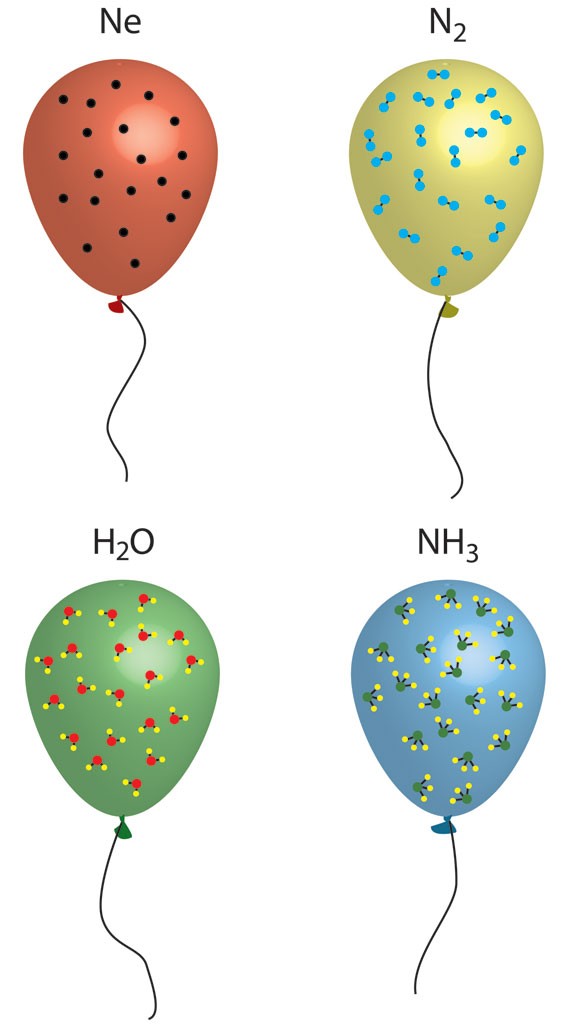
The Italian physicist Amedeo Avogadro (1776–1856) devised another law. This states that if the temperature and pressure are the same, equal volumes of all gases will contain the same number of molecules. So a litre of carbon dioxide will contain the same number of molecules as a litre of hydrogen, even though the carbon dioxide molecules have a much greater mass than the hydrogen ones.
Evaporation

Much more energy is required for a molecule to leave a liquid entirely and become a gas than to move about in a liquid. But a bowl of water will completely evaporate over a few days because the water slowly absorbs heat from its surroundings, eventually giving all the molecules sufficient energy to escape. Heating the liquid gives many more of the molecules the required energy and the water evaporates much faster.
Even when a liquid is heated to boiling point, the molecules have to overcome the pressure of the air to "jump" out of the liquid into the air. So if the air pressure is lower—for example, at higher altitudes—the boiling point is lower. At very high pressure, the boiling point is much higher.
Sublimation
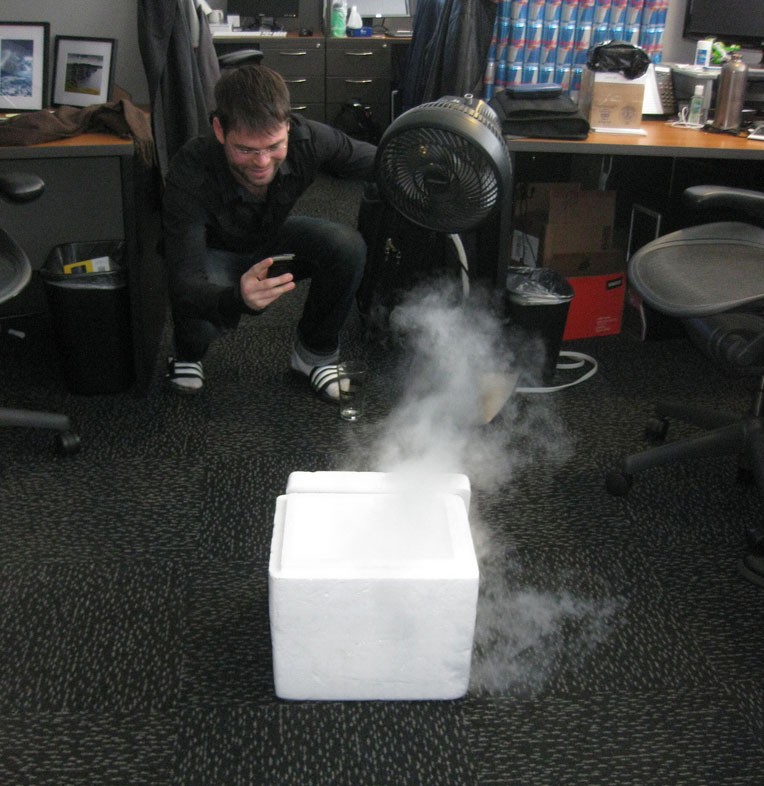
The energy required for a solid to evaporate directly into a gas is even greater than for a molecule in a liquid. But this can happen when a solid is suddenly exposed to relatively hot temperatures, such as when dry ice—a solid form of carbon dioxide, frozen at very low temperature—is thrown on a theatre stage to produce clouds of vapour looking like mist or fog. This is called sublimation.
Diffusion
Gases spread out and take up as much space as possible: the molecules spread out to fill any volume the gas enters. This called diffusion. The smell of food cooking spreads quickly throughout a house by the diffusion of the gas molecules from the hot food.
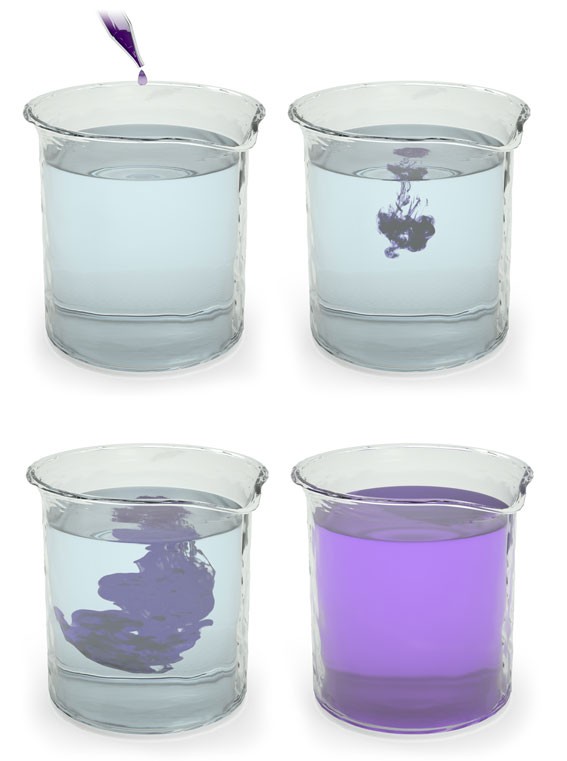
Substances also diffuse through liquids. The molecules of a substance dissolve into a liquid by moving into spaces between the molecules of that liquid. This process is speeded up when the liquid is heated, which widens the spaces between the molecules.
Refrigeration
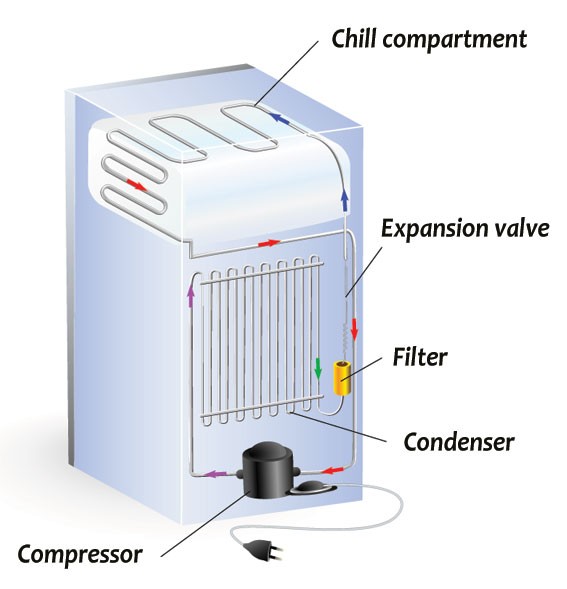
The way a gas behaves under pressure has a useful application: refrigeration. The refrigerant or coolant which runs through the pipes inside a fridge is a liquid with a very low boiling point, such as ammonia. It is compressed to a high pressure, then passed through a valve into a region of lower pressure. This causes the liquid to boil and it changes into a gas. The fast evaporation takes heat from inside the fridge, keeping the fridge's contents at a low temperature. The refrigerant is then passed through a compressor, which forces it to become a liquid once more. This process gives off heat—which is why the back of a fridge feels warm.
Brownian motion
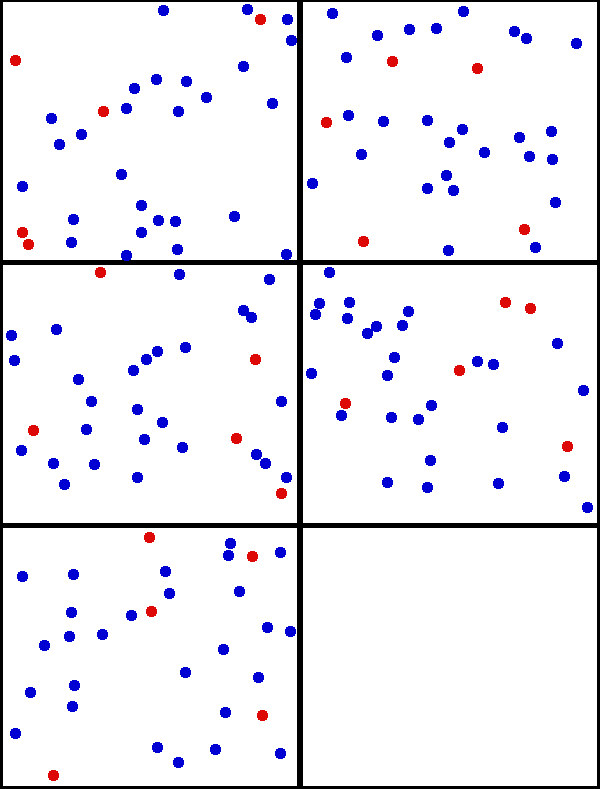
Molecules are too small for their high-speed movement to be seen directly. But their impact on other very small particles can sometimes be witnessed. The British botanist Robert Brown (1773–1858) was surprised to observe through a microscope the haphazard movement of pollen grains in water. The random jumps they made were caused by being bombarded by the invisible water molecules. The movement of the water molecules can be explained by kinetic theory.

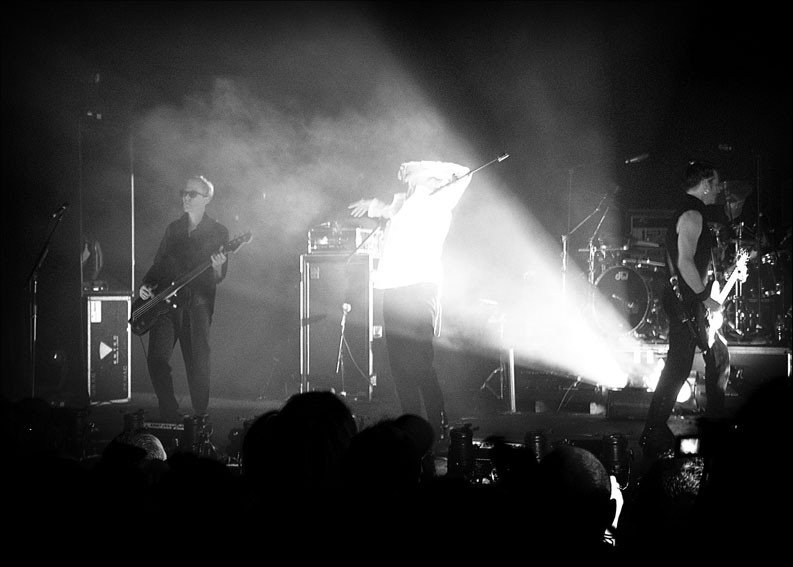
The same effect can be seen when smoke is seen in a beam of sunlight. The smoke particles are being bounced around by the air molecules, reflecting the light in different directions as they do so.
Consultant: Nina Notman