
Aircraft
Aircraft record-holders
The first aircraft to fly faster than sound in level flight was the rocket-powered aeroplane, Bell X-1, nicknamed "Glamorous Glennis". On 14th October 1947 Chuck Yeager (1923–2020) of the US Air Force flew the plane at a speed of 1126 km/h (699 mph) 13,700 metres (45,000 feet) above the Mojave Desert in California, USA. Although the speed of sound is 360.8 metres per second, or 1299 km/h (807 mph), at sea level, it is actually lower at high altitudes where the air is cooler.


Fastest aircraft
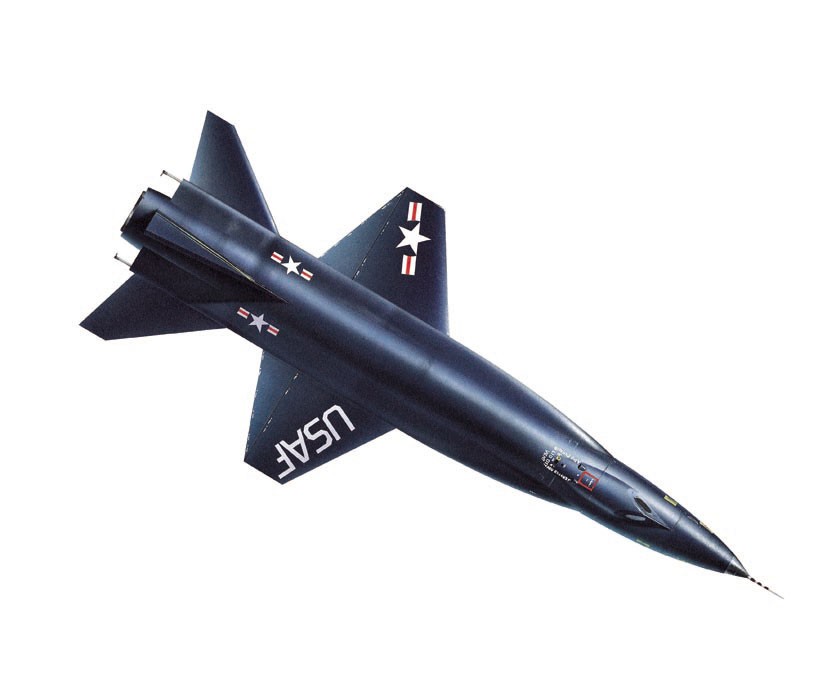
On 3rd October 1967 US pilot William Knight flew a rocket-powered plane at a speed of 7274 km/h (4518 mph)—nearly seven times the speed of sound. This aircraft, the X-15, could not take off from the ground and was carried aloft underneath a large transporter plane. When the transporter reached its maximum altitude, the X-15’s rocket engines ignited and it blasted away to the record.
The X-15 was built to withstand high temperatures generated at high speeds: its outer skin became 14 times hotter than boiling water during flight. The X-15 holds more than one record. Unlike jet engines, its rocket-powered engines did not need air to enable them to work. So the X-15 could fly much higher than jet aircraft, to levels of the atmosphere where the air is very thin indeed. On 22nd August 1963 the X-15 reached a height of 107,960 metres (354,109 feet), a record altitude for any aircraft.
Fastest crewed
jet aircraft
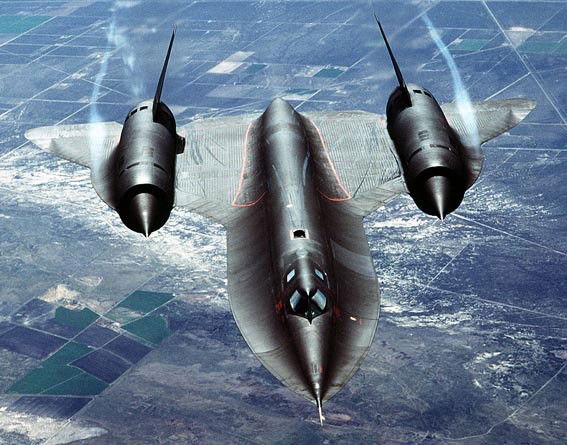
The fastest crewed jet aircraft ever to have flown was an American spyplane, the Lockheed SR-71. Known as "Blackbird" because of its sleek, black appearance, it was designed to fly fast and high over enemy territory photographing military bases on the ground. From a height of almost 25 kilometres (15.5 miles) Blackbird’s powerful cameras could take a clear shot of a car number plate. Blackbird’s top speed was 3911 km/h (2429 mph)—about three times the speed of sound.
Its two engines produced more power than those of a large ocean liner. On 1st September 1974 it made the fastest ever flight across the Atlantic Ocean, crossing from New York to London in just under 1 hour 55 minutes (a normal flight in an airliner takes around seven hours).
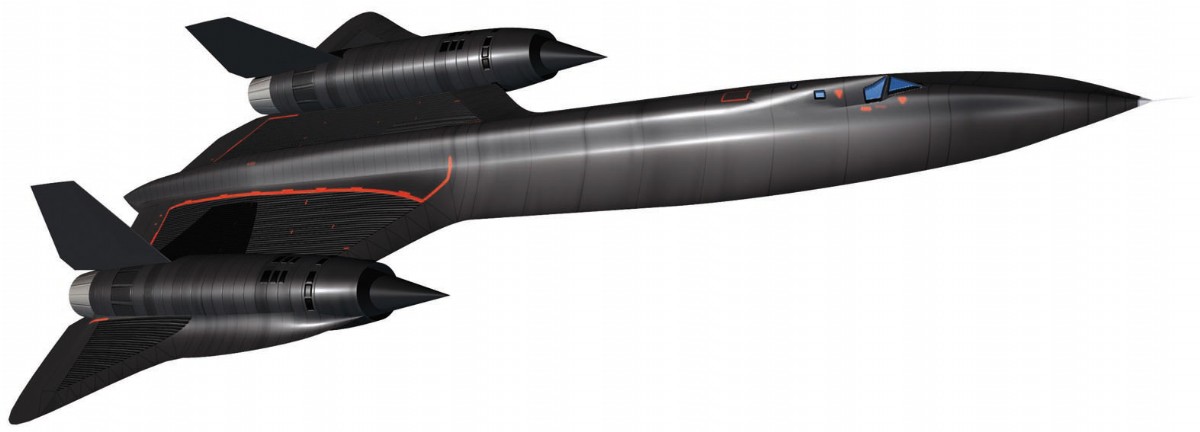
As thin as aluminium can be, Blackbird’s metal skin was painted with a special heat-radiating black paint that could withstand temperatures of over 300° C (570°F)—the sort of temperatures it experienced travelling at high speeds. As it sped along, it grew nearly 80 centimetres (31 inches) in length as the metal expanded. Blackbird was taken out of service in 1990.
Fastest uncrewed
jet aircraft
The NASA X-43A, an experimental unmanned hypersonic aircraft developed in the late 1990s, is the fastest jet-powered aircraft. On a flight in 2004, it reached Mach 9.68 (10,870 km/h or 6755 mph, nearly 10 times the speed of sound), having been boosted by a rocket launched from a B-52 bomber.

Fastest airliner

Concorde was not the first supersonic airliner to fly (this was the Soviet Tupolev-144, which completed its maiden flight in 1968) but it was the first to enter regular service. It incorporated a delta wing design and a distinctive "droop snoot", a needle-shaped nose that pivoted downwards on landing to enable the pilot to see the runway. It could fly from New York to London in under three hours. The last Concorde flew in November 2003.
Largest aircraft
The biggest flying machines ever to take to the skies were the airships built in the 1920s and 1930s. These flying giants were the airliners of their day. They flew across the Atlantic—sometimes all the way around the world—but they were slow: the fastest airship could only reach a speed of 131 km/h (81 mph). The first airship to cross the Atlantic Ocean was the British R-34. The trip took 90 hours.

First jet airliner
By the end of World War II in1945 there were a great many large, high capacity, long-range aeroplanes available, along with plenty of airfields with long runways. Airlines were quick to cater for the many people who were now quite accustomed to flying to all parts of the world. Bombers and transporters were converted to airliners, and airfields to airports. Soon, jet airliners were built and fast, comfortable long-distance flights became possible.
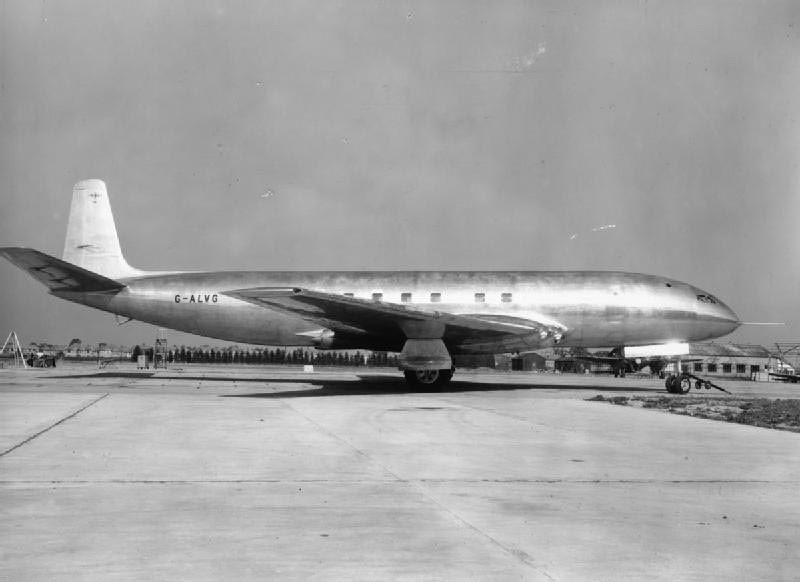
The Boeing 707 was not the first jet airliner (that record was claimed by the de Havilland Comet in 1949) but it was the first commercially successful one. It could fly non-stop across the Atlantic in half the speed of earlier, non-jet airliners. The planes could carry more than 200 passengers. The first commercial flight took place in 1958, but a number of 707s are still in service.

Largest airliner
In the 1960s and 70s, the demand for flights grew rapidly, so manufacturers started to build larger and larger aeroplanes. The Boeing 747 (1970) was the first "wide-body" and held the record for the largest airliner until the Airbus A380 came into service in 2007.
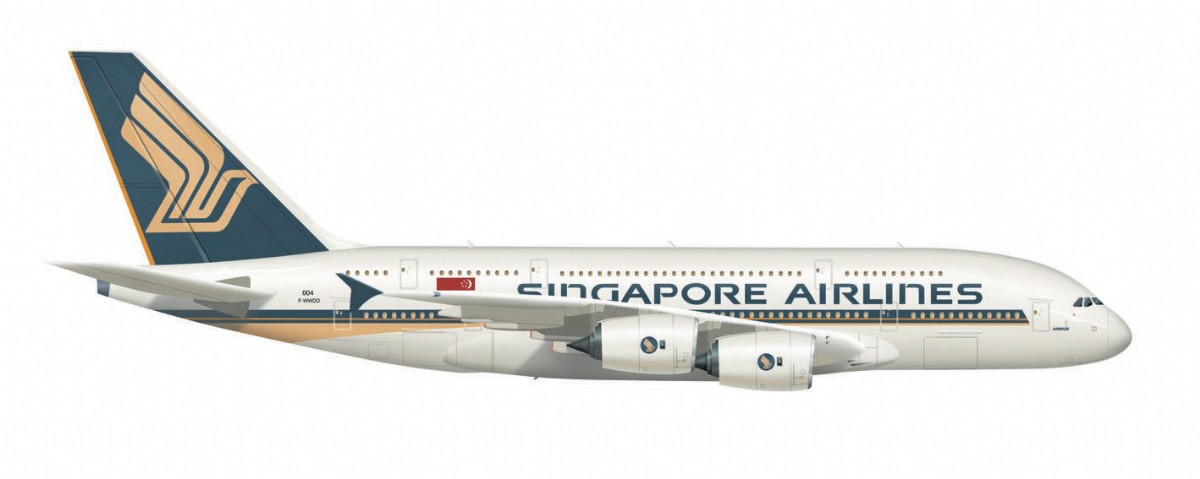
The Airbus A380 “Superjumbo” is 73 metres (240 feet) long, with a wingspan of 79 metres (260 feet). It made its first commercial flight in October 2007. This double-decker can fly from Chicago to Sydney non-stop. It can carry 555 passengers on normal flights (or up to 853 if all the seats are economy class). Despite its size, the aircraft is more fuel-efficient than a car. Since the A380 was not profitable, Airbus decided to end production. The last aircraft was delivered in December 2021.
Heaviest-ever aeroplane
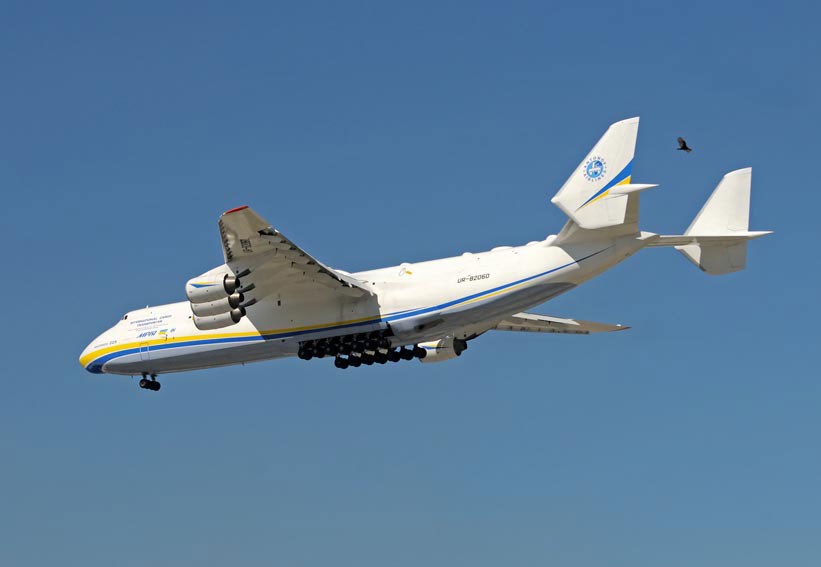
The largest and heaviest aeroplane ever built was the Russian Antonov An-225. First flown in 1988, this giant plane was about 600 times the weight of a car. Its wingspan was 73 metres (240 feet), nearly twice the distance of the Wright brothers’ first flight in Flyer in 1903. It was built to transport the Russian version of the Space Shuttle, known as Buran, to its launchpad. Buran was not successful so it was used by international relief organizations instead. The An-225 was pressed into service during the Gulf crisis of 1990-1, carrying refugees from Kuwait to safety, and again in Iraq from 2003. The only An-225 was destroyed during the Russian assault on Antonov Airport near Kyiv during the 2022 invasion of Ukraine.
Widest wingspan
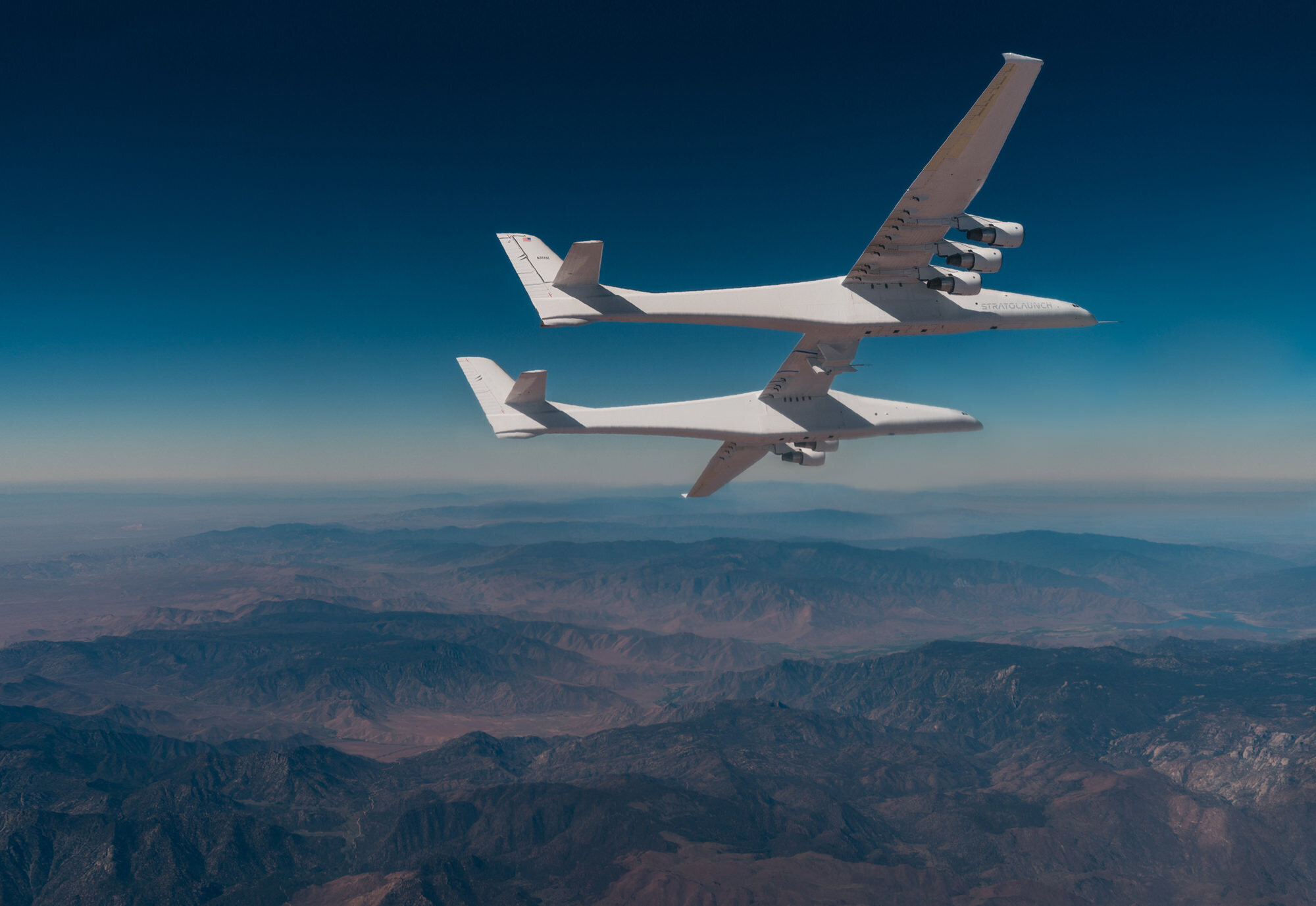
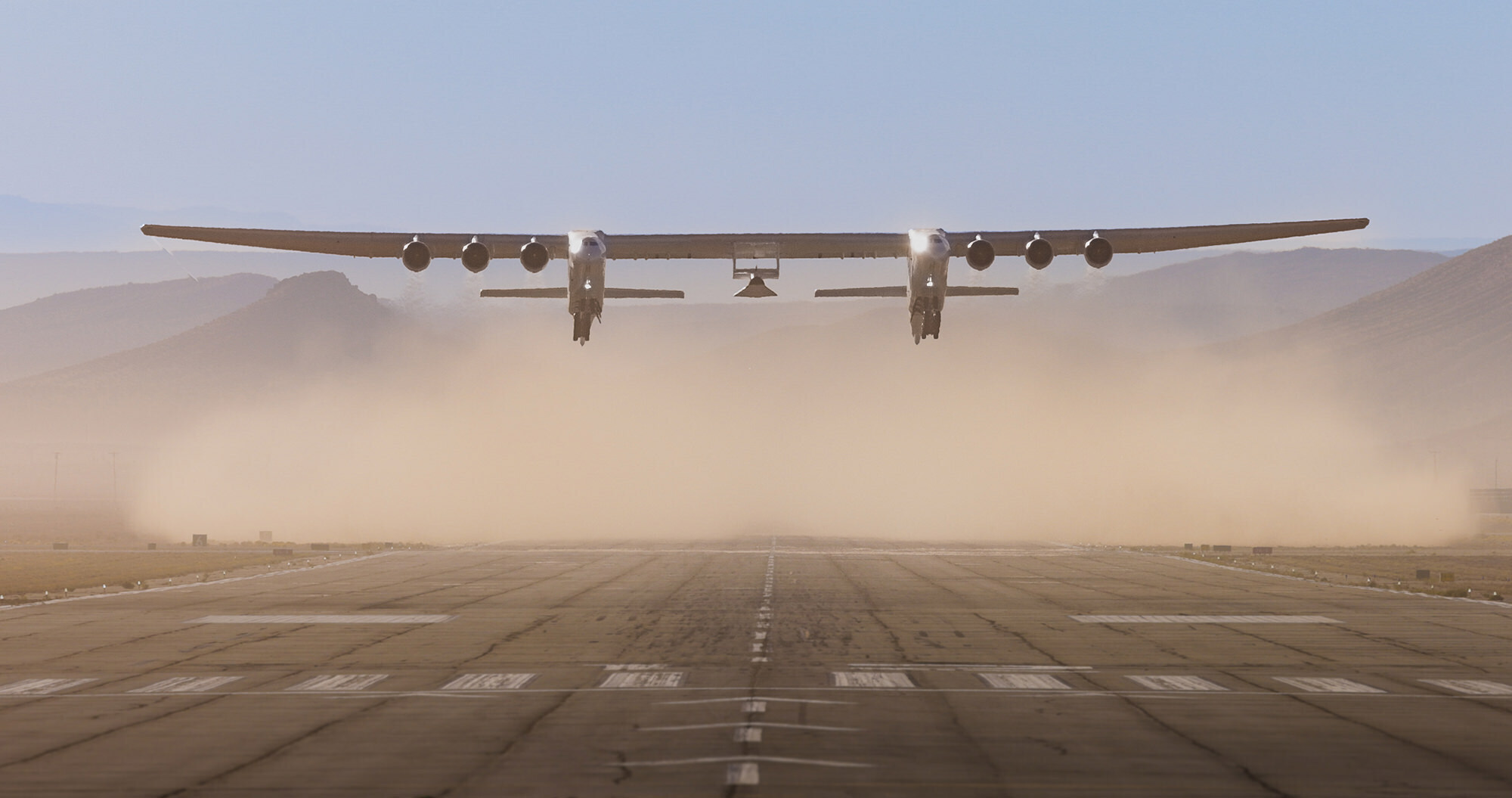
With a wingspan of 117 metres (385 feet), the Stratolaunch (nicknamed "Roc" after Sinbad's Roc, the mythical bird so huge it could carry an elephant) is the world's largest plane by wingspan. It surpasses the Hughes H-4 Hercules "Spruce Goose" flying boat of 321 feet (98 m), which held the record since 1947. Roc's span is twice that of a Boeing 747 and wider than an American football field is long (91 metres or 300 feet).
Constructed from carbon fibre , the twin-fuselage Roc is the biggest all-composite plane ever constructed. It is also currently the world's heaviest plane in existence: with a 590-tonne (1.3 million-pound) maximum weight, it needs at least 3700 metres (12,000 feet) of runway to take off from. Roc, which flew the first time on 13th April 2019, is a huge carrier plane designed to carry air-launch-to-orbit (ALTO) rockets, spaceplanes and satellites.
Longest non-stop passenger flight

Originally a military transporter plane, the Lockheed Constellation was converted to a passenger airliner in 1943. It was the first airliner to have a pressurized cabin: the air pressure was kept higher than in the surrounding air, allowing passengers to breathe normally. The Constellation still holds the record for the longest-duration, non-stop passenger flight—23 hours 19 minutes—which it achieved in 1957.
As of 2025, the world's longest active commercial flight today is between between Singapore and New York JFK airports. Since 9th November 2020, Singapore Airlines Flights 23 and 24, operated by an Airbus A350-900ULR, cover the distance of 15,349 kilometres (9537 miles) in around 18 hours and 40 minutes.
First non-stop flight
around the world
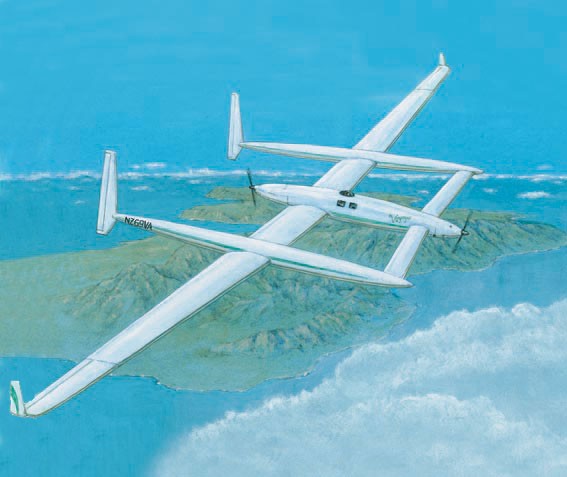
The Voyager was the first aircraft to fly non-stop around the world, in 1986. The flight took only nine days, starting and finishing at Edwards Airforce base, California. Its pilots Dick Rutan and Jeana Yeager, and Dick’s brother Burt, conceived the idea, believing it would take 18 months to build the aircraft. In fact, the aircraft took nearly six years to design, build and test.
The craft was made from fibreglass, carbon fibre and aramid, a kind of nylon. Voyager weighed only 426 kg (937 lb) before fuel but after its 17 fuel tanks had been filled—all of which were necessary to complete the flight—the weight rose to 4400 kg (9680 lb). The route was planned to maximize fuel economy, but diversions were sometimes necessary to avoid bad storms.
First solar-powered circumnavigation
The first circumnavigation of the Earth by a piloted fixed-wing aircraft using only solar power was successfully achieved in 2016. The flight was made by Bertrand Piccard (who co-piloted the first balloon to circle the world non-stop) and fellow Swiss, André Borschberg. Their aircraft, called Solar Impulse 2, took off from Abu Dhabi, United Arab Emirates, on 9th March 2015, flying eastwards.
On the leg between Japan and Hawaii, the plane's batteries were damaged. Repairs took several months to complete, after which the aircraft flew on to California in April 2016, returning to Abu Dhabi via Spain and Egypt in July. For the duration of the flight, the pilots were permitted only small periods of sleep lasting 20 minutes.
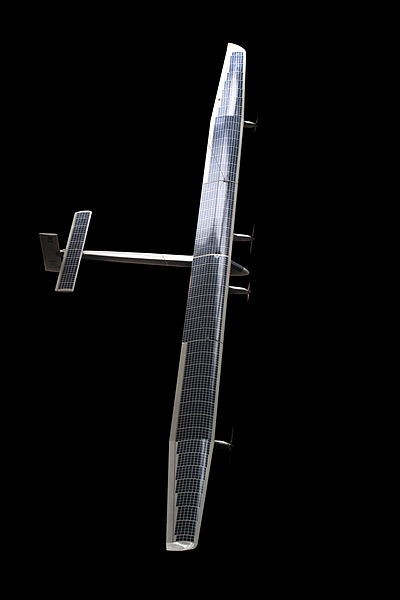
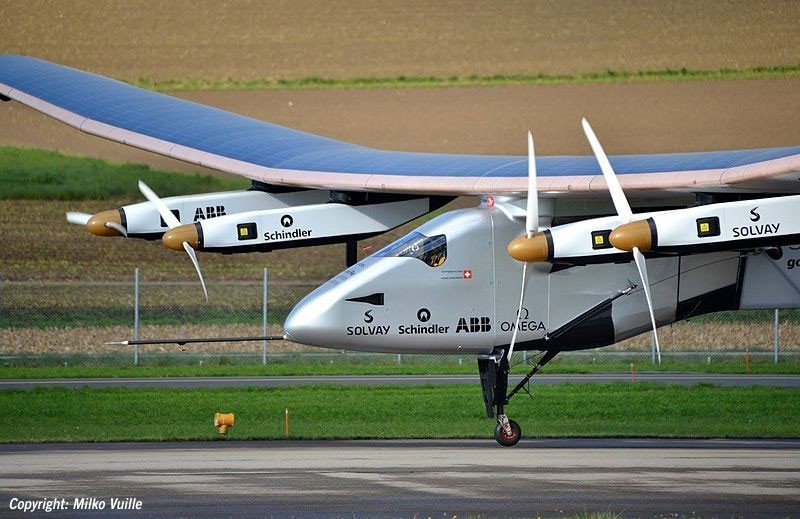
With a wingspan of 72 metres (236 feet—wider than that of a Jumbo Jet), Solar Impulse 2 was built and first flown in 2014. It was fitted with 17,000 solar cells, which line the top of its wings along with a set of lithium-ion batteries used to power night-time flying. Its motors generated about half the power of a racing motorbike, but, unlike normal aircraft engines, which lose around 70% of their energy through heat, Solar Impulse's motors lost only 3%.
First human-
powered flight
The first human-powered flight of any distance was achieved by US cyclist Bryan Allen on 12th June 1979. With a wing span of nearly 29 metres (95 feet, or rather longer than a tennis court)—but a weight, excluding the pilot, of just 25 kg (55 lb, that of a small child)—his plane, the Gossamer Albatross, crossed the English Channel, a distance of 35 kilometres (22 miles), in 2 hours 49 minutes. Its propeller was powered by the cyclist himself.
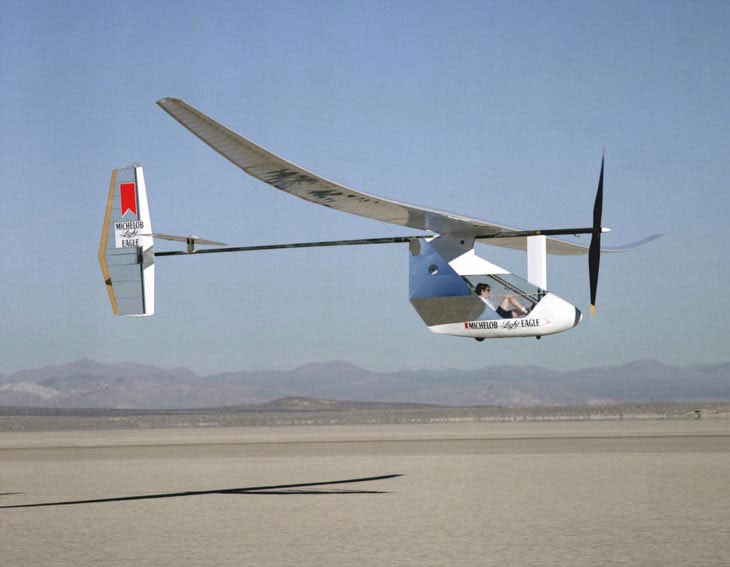
In 1988 a Greek cyclist, Kanellos Kanellopoulos, flew a similar craft, the MIT Daedalus, 119 kilometres (74 miles) across the sea near the island of Crete.
Consultant: Chris Oxlade