
Literature

CITE
We have made every effort to follow citation style rules, but there may be some minor differences. If in doubt, please refer to the appropriate citation style manual.
Books and libraries. (2026). In Q-files Encyclopedia, Culture, Literature. Retrieved from
https://www.q-files.com/culture/literature/books-and-libraries
"Books and libraries." Culture, Literature, Q-files Encyclopedia, 13 May. 2026.
https://www.q-files.com/culture/literature/books-and-libraries.
Accessed 22 Sep. 2026.
Books and libraries 2026. Culture, Literature. Retrieved 22 September 2026, from
https://www.q-files.com/culture/literature/books-and-libraries
Culture, Literature, s.v. "Books and libraries," accessed September 22, 2026.
https://www.q-files.com/culture/literature/books-and-libraries


Books and libraries
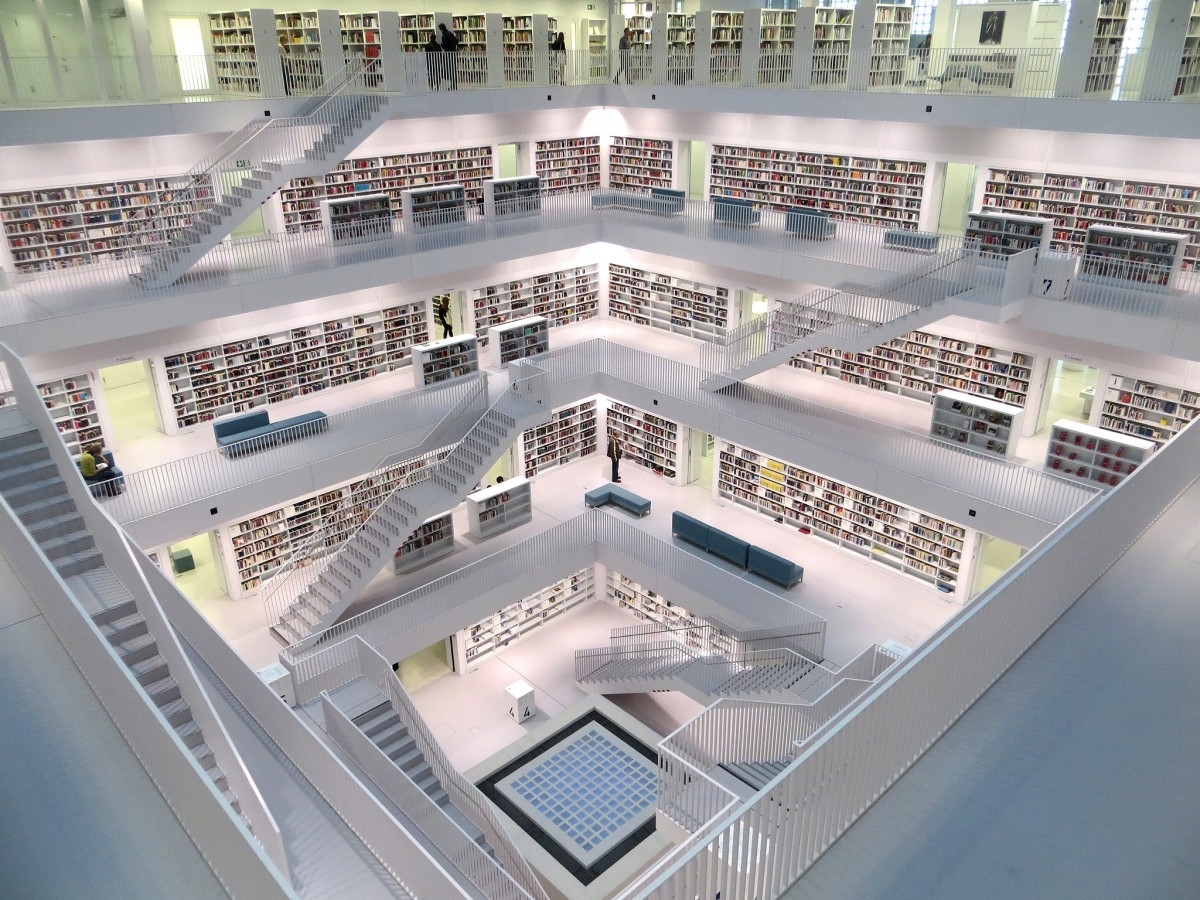
Public libraries are places where people go to find out information or read for pleasure. They hold collections of books, journals, audio books and sometimes films and music. On becoming members of the library, people can borrow books and other items. Nearly all of a library’s services can be used for free. Libraries in schools, universities, towns and cities are known as lending libraries. National libraries—such as the British Library in London—and research libraries contain rare and valuable books and other printed materials that only be consulted in the library itself. The first libraries were private collections, which were sometimes opened up so other people could browse them. Public libraries, open to everybody, appeared in the Western world in the late 1800s.
The first libraries
The first libraries consisted of collections of the earliest form of writing: cuneiform script on clay tablets, created in Sumer, a region of Mesopotamia. Some collections date back to 2600 BC; they mostly contain records of commercial transactions or lists of what someone owned. Papyrus scrolls containing similar records were housed in ancient Egyptian temples.

In the 7th century BC, the Assyrian king, Ashurbanipal, ordered the collection of thousands of ancient texts, including a Mesopotamian poem called the Epic of Gilgamesh, written between 1500 and 1000 BC and one of the world’s first works of literature. Assyrian scribes copied out these texts in cuneiform script on to clay tablets or wooden writing boards. Archaeologists working in the 19th century found some 30,000 tablets and writing boards at Nineveh, Ashurbanipal's capital. Most are fragments of larger tablets. They were classified according to shape: round tablets were about farming, while four-sided boards were about money and banking. The collection makes up what is called the Royal Library of Ashurbanipal.
Papyrus scrolls
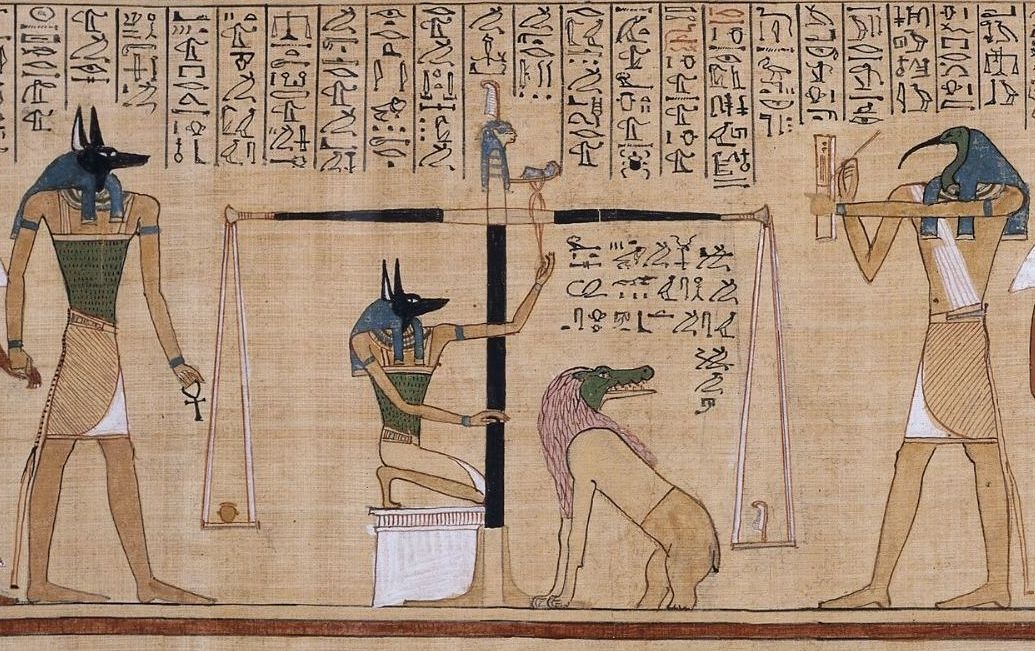
"Books" in ancient Egypt were in the form of a scroll of several sheets of papyrus pasted together. They rolled out horizontally, with text on one side only. Many scrolls measured 10 metres (33 feet) or more. Some scrolls, such as the history of the reign of Pharaoh Ramesses III, were over 40 metres (131 feet) long. The title of the book was written on a label attached to the cylinder containing the scroll. Many papyrus texts, such as the Book of the Dead, which contained a number of magic spells intended to assist a dead person's journey through the underworld into the Afterlife, were stored in tombs.

Library of Alexandria
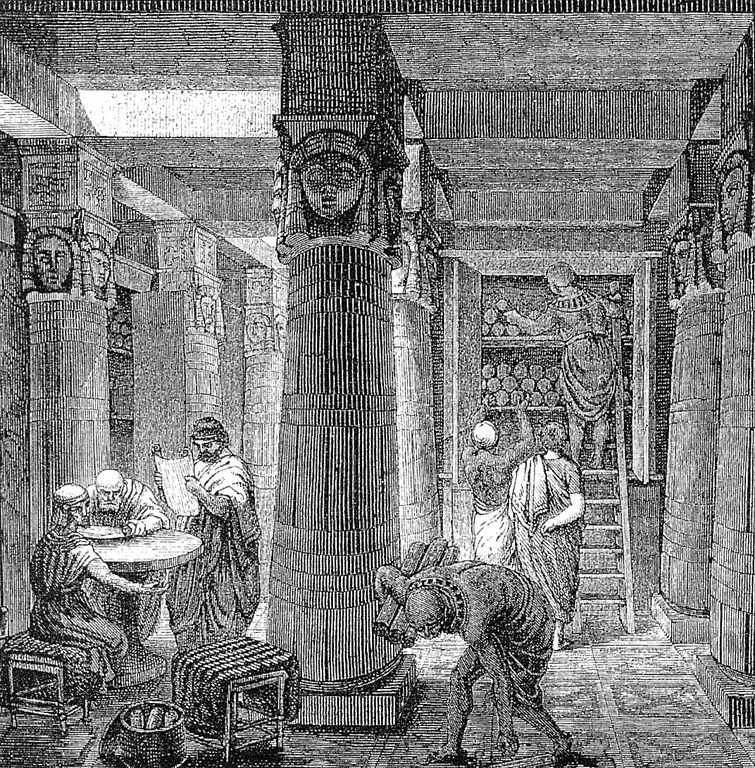
The Great Library of Alexandria in Egypt was one of the largest and most important libraries of the ancient world. It was built in the 3rd century BC, during the Ptolemaic dynasty (a period in which Egypt was ruled by a series of Greek kings all called Ptolemy). The library held a huge collection of papyrus scrolls, gathered on the king's orders from every corner of the ancient world. It was mainly because of its magnificent library that Alexandria became regarded as the world capital of learning and knowledge. Scholars came from far and wide to study there.
According to legend, the mathematician and inventor Archimedes (287–212 BC) invented the Archimedes' screw, a pump for transporting water, while studying at the Library of Alexandria. The library was probably destroyed in the 3rd century AD.
Parchment
Parchment is a writing material made from untanned skins of animals, usually sheep, cattle and goats. Vellum is a finer quality parchment made from the skins of young animals such as lambs and calves.
The word "parchment" came from the name of the Greek city of Pergamon (today, in western Turkey), which was a thriving centre of parchment production. In the 2nd century BC, a great library was set up in Pergamon to rival the Great Library of Alexandria. As prices rose for papyrus, Pergamon decided to use parchment for its collection instead. From then on, parchment began to replace papyrus as a writing material.
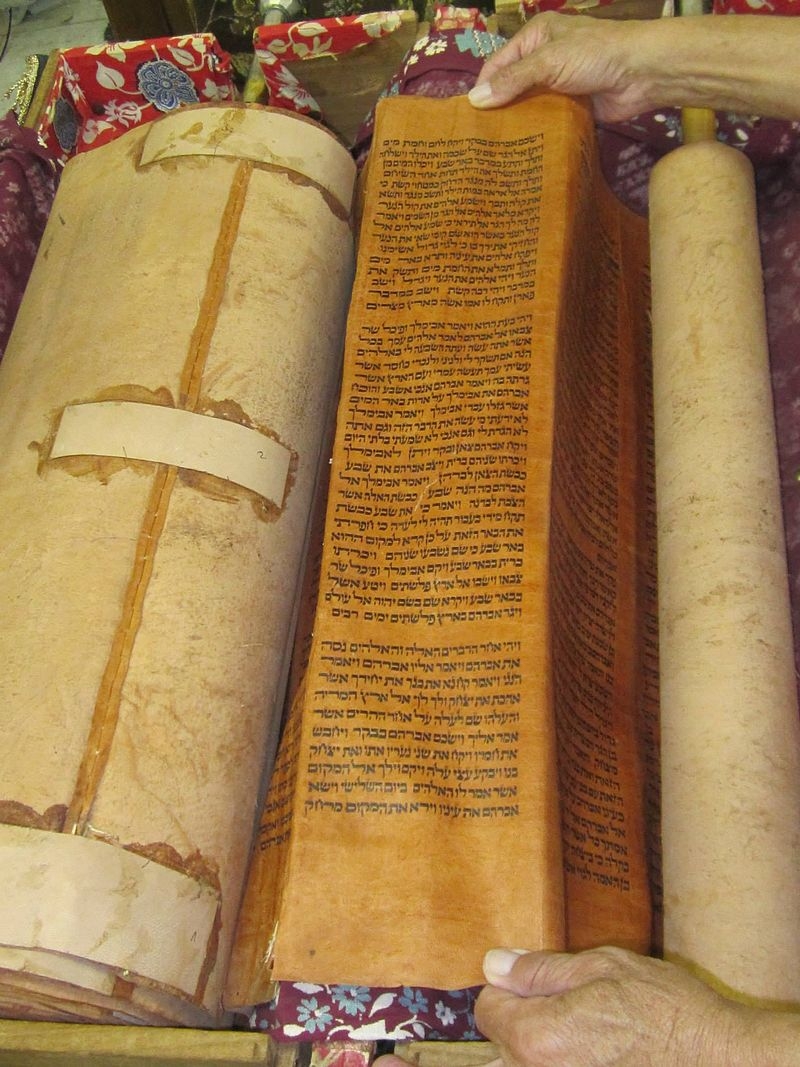

The first public libraries in the Western world appeared in Roman times. Readers had direct access to the parchment scrolls, which were kept on shelves built into the walls of a large room. Most of the large Roman baths contained a library.
Codex
The Romans invented the codex (Latin for a "block of wood") by folding a parchment scroll into pages. This made reading and handling the document much easier. (Scrolls were awkward to read, especially if a reader wanted to refer to opposite ends of the document. Scrolls were also written only on one side, while both sides of the codex page were used). Eventually, the folded pages were cut into sheets, or "leaves," and bound together along one edge. The bound pages were protected by stiff covers, usually made of leather and wood. Another advantage of the codex was that it could fit conveniently on library shelves. The spine, which displayed the book's title, faced outwards, making it easy to organize the collection.


After the collapse of the Roman Empire in the West in the 5th century AD, Christianity became a dominant force in Western Europe. Early Christian writers soon started producing their works in codex, rather than scroll, form; scrolls fell out of use by the 4th century AD. Meanwhile, many classical Greek and Roman works, written on scrolls, were left to decay as only Christian texts were thought worth preserving.
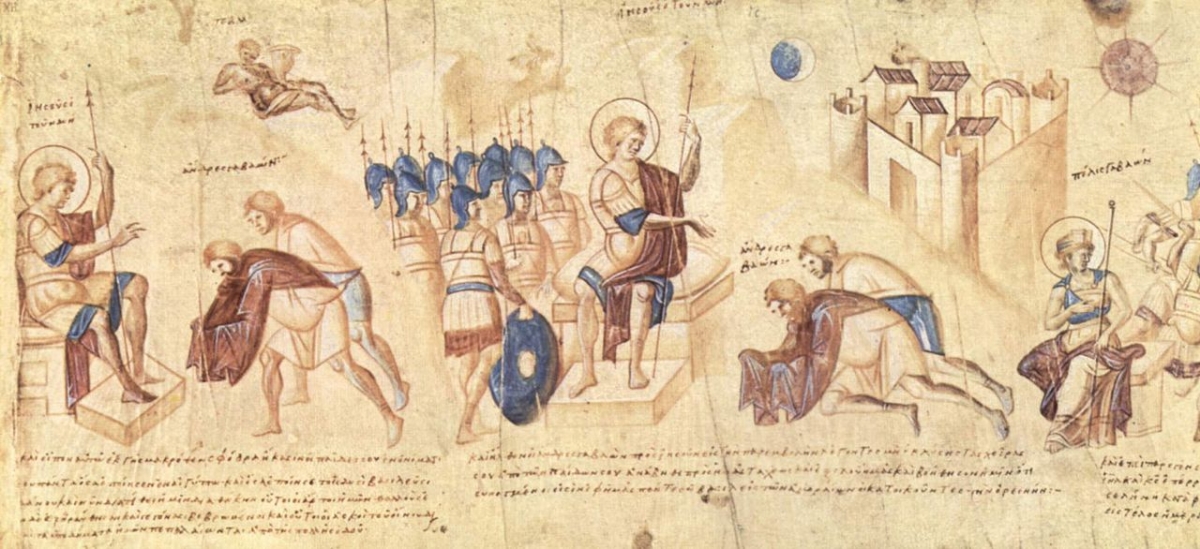
This was not the case in the East, however. Many of these classical texts were copied by scholars in the Byzantine Empire and kept at the Imperial Library of Constantinople, sometimes called the last great library of the ancient world.
Chinese books
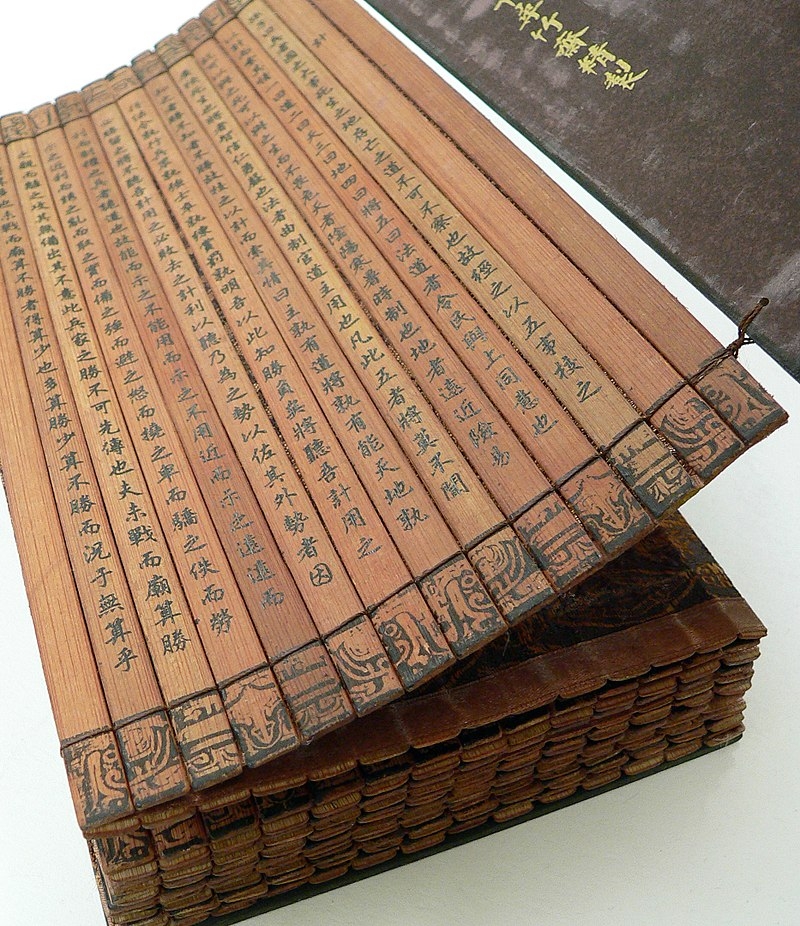
China's first books, called jiandu, were made of rolls of thin bamboo strips bound together with hemp, silk or leather. The earliest surviving examples date back to 5th century BC. Paper is said to have been invented by Cai Lun, an official at the Imperial court during the Han dynasty (202 BC–220 AD), in around 105 AD. He used plant fibres, such as from mulberry trees, mixed with rags.
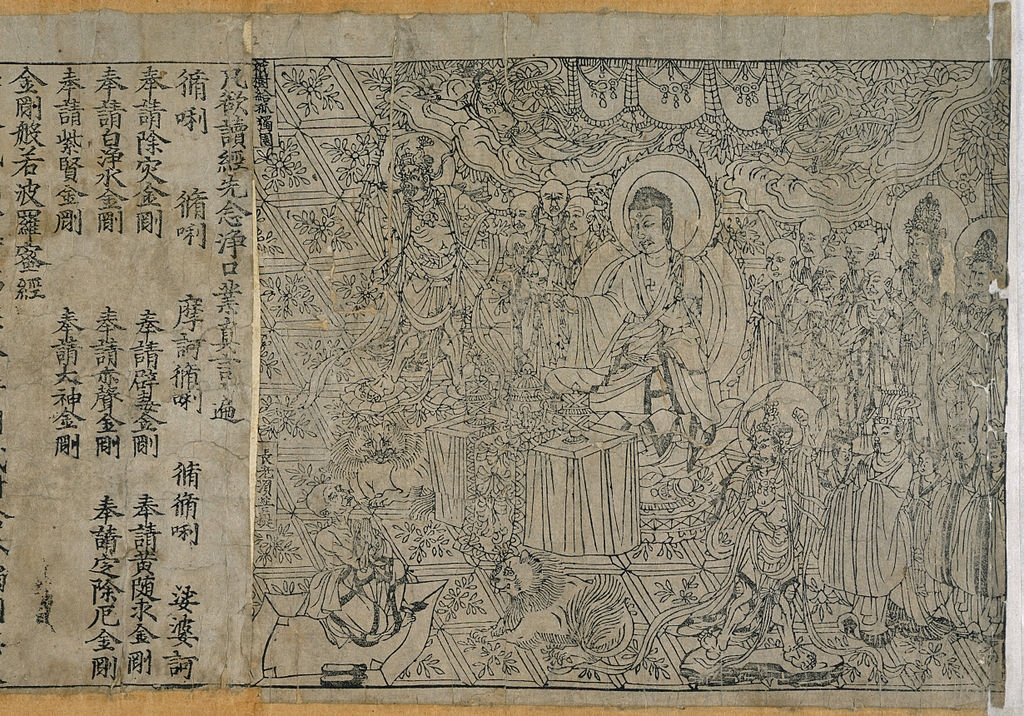
The first books were produced during the Tang dynasty (618–907), using woodblock printing. The original text was carved into the surface of the woodblock. This was then inked and used to stamp the words on to the paper. To begin with, Chinese books were long scrolls, folded concertina-style to make pages. Later, "butterfly books", folded scrolls bound along one edge, appeared. The oldest printed book in existence today is the Diamond Sutra, a Buddhist text, which dates from 868 AD.
Islamic libraries
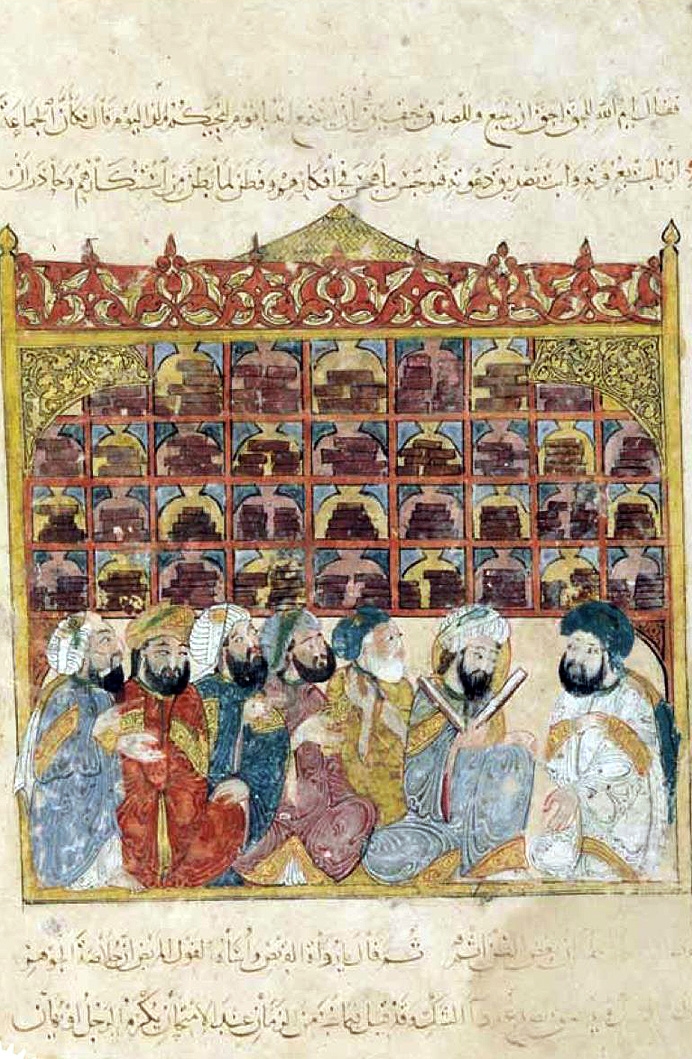
The rise of Islam, and the emphasis on science and learning amongst Muslim scholars, led to the foundation of libraries in the Arab Empire. By the 8th century, the Arabs had imported the craft of papermaking from China. In the 9th century, public libraries started to appear in many Arab cities. They were called Halls of Knowledge, or dar al-'ilm, and open for everyone to use. Library buildings were designed with the comfort of readers in mind: the floors of reading rooms were covered by carpets and doors and windows sealed to keep out cold drafts.
Maya
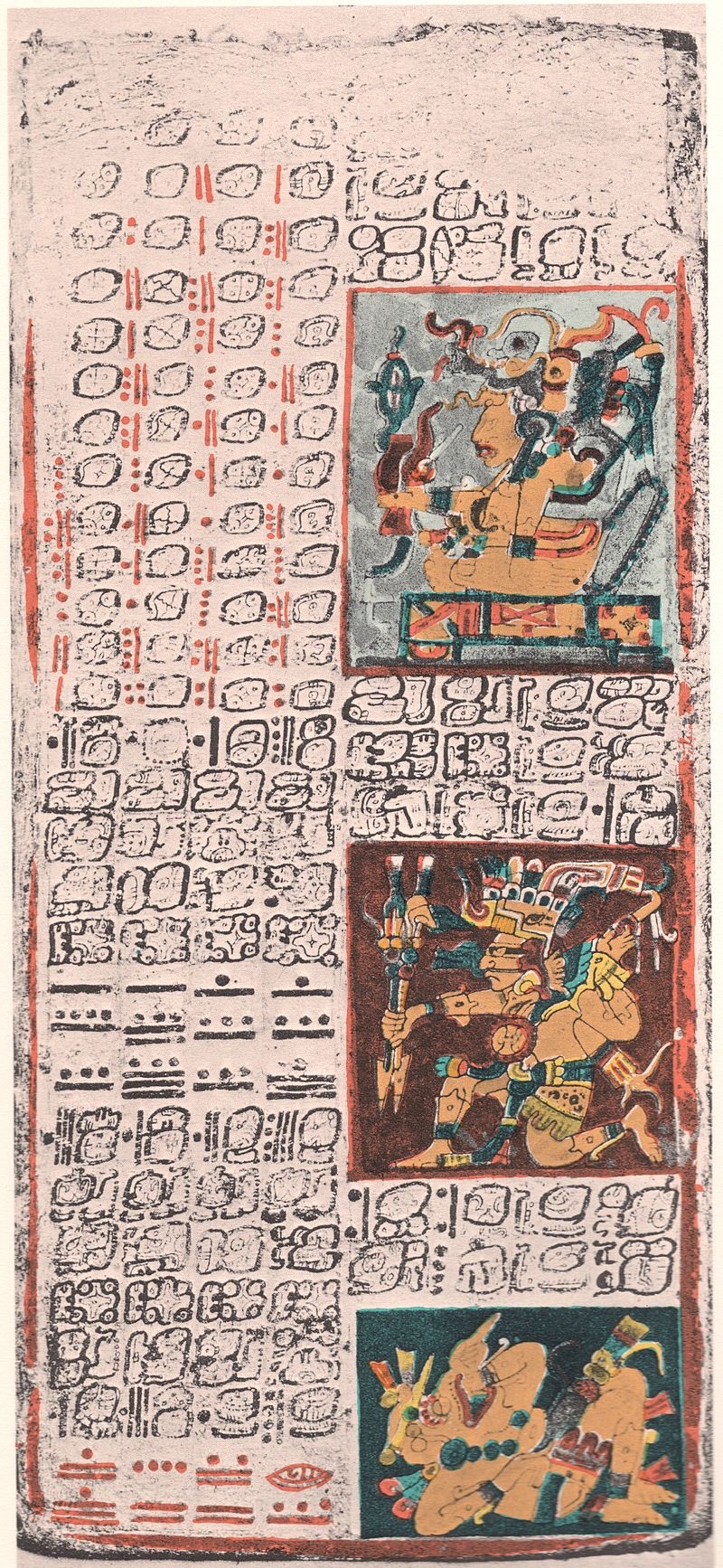
Books in codex form existed in Mesoamerica (ancient Mexico and Central America), first appearing some time between 3rd and 8th centuries AD, and stored in temple libraries. Most of these codices were destroyed by the Spanish explorers in the 16th century. Written on long strips of paper made from the bark of the amate tree and folded concertina-style, the texts probably contained information about the stars, gods and family histories of rulers.
Among the few surviving examples are the Maya scripts known today as the Dresden Codex, which dates to the 13th or 14th century. Its 78 pages contain astronomical tables and descriptions of religious rituals.
Medieval libraries

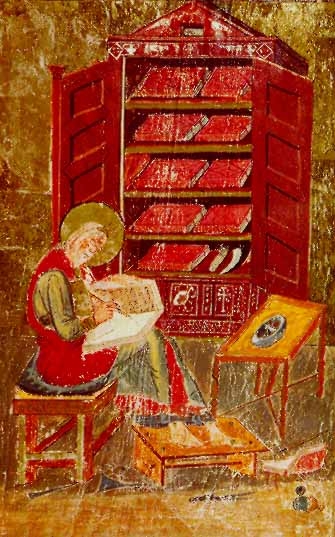
The contents of Islamic libraries were copied by Christian monks in areas bordering the Arab Empire, particularly in Spain and Sicily. From there they spread to other parts of Medieval Europe. These copies were added to those from Greek and Roman texts, many of them copied by scholars working in the Byzantine Empire.
During the early Middle Ages in Europe, sometimes called the Dark Ages (a period lasting roughly from the 5th to 11th centuries), collections of both religious and secular (non-religious) works were kept in monasteries. Monastic libraries, such as that of the Abbey of Monte Cassino in Italy in the 11th century and famous for its medical texts, became established across Europe.
Chained libraries
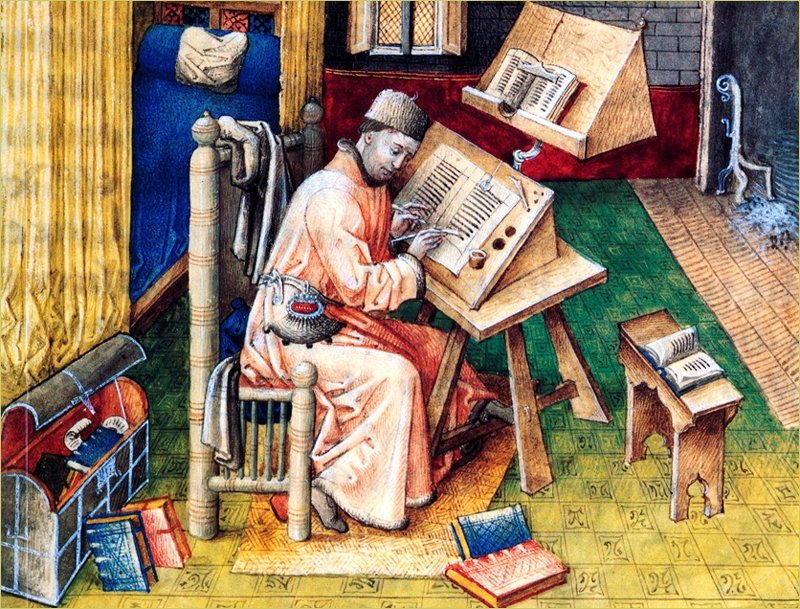
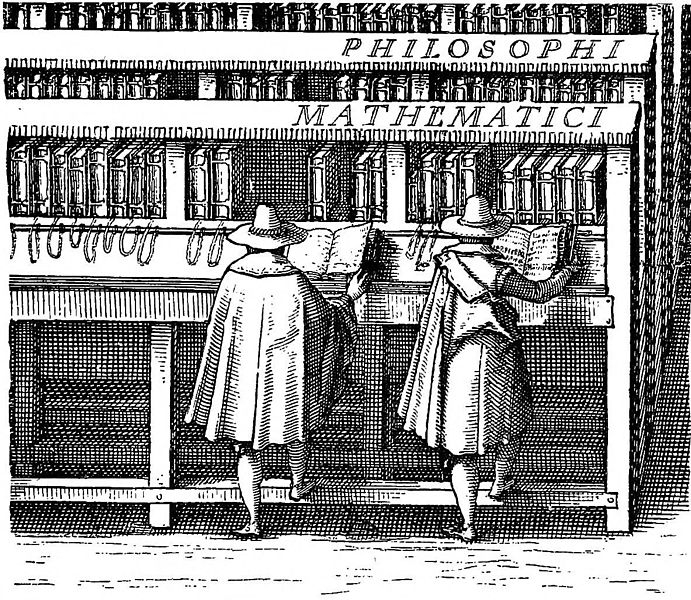
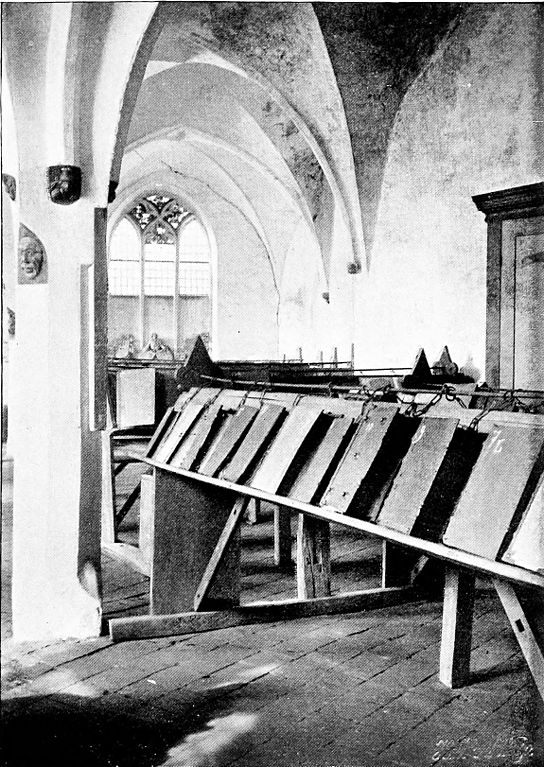
In the Middle Ages, books were created by the time-consuming process of being copied by hand, and so were valuable. Few people could read, but even fewer people could afford to own books. Many libraries in Europe chained their books to the shelves to prevent them being stolen. The chains were long enough to allow the books to be taken down and read while still attached. The practice was usual until the 18th century—even after the invention of the printing press made books much cheaper. However, since chaining was also expensive, only the more valuable books in a collection were chained.

Late Middle Ages
When universities started to be founded in the 11th and 12th centuries, reference manuscripts were needed by students and professors for learning and teaching theology (religious studies), the arts and other disciplines. It was at this time that writing in local languages (called the vernacular), instead of Latin, started to become more common. Royal libraries, as well as other private libraries, were founded from the 14th century onwards. The period of great monastic libraries was coming to an end.

Paper and printing
The use of paper spread through Europe in the late 13th century. This new material, much cheaper than parchment, came from the Arabs (originally from China) in earlier centuries. Using water-powered paper mills allowed production to expand quickly. By the early 15th century, paper had largely replaced parchment for most works except luxury editions.
An invention of great historical significance would soon greatly increase the demand for paper, far exceeding the supply of animal skins for parchment: the printing press.
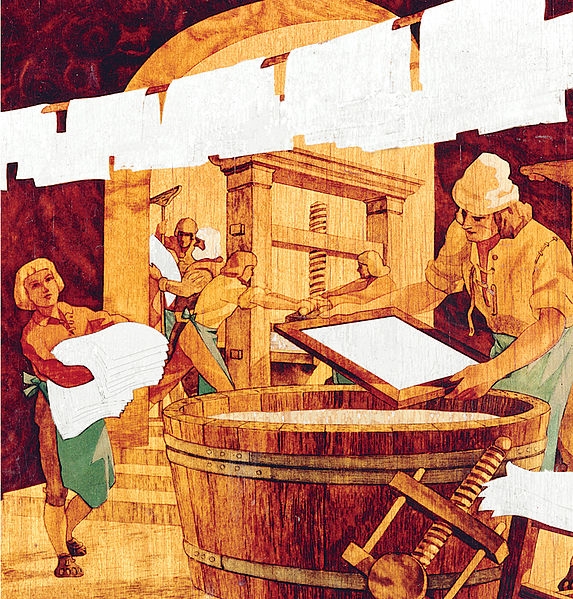
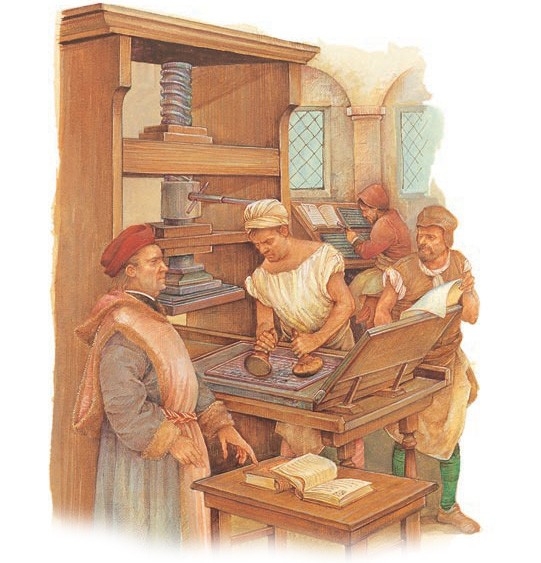
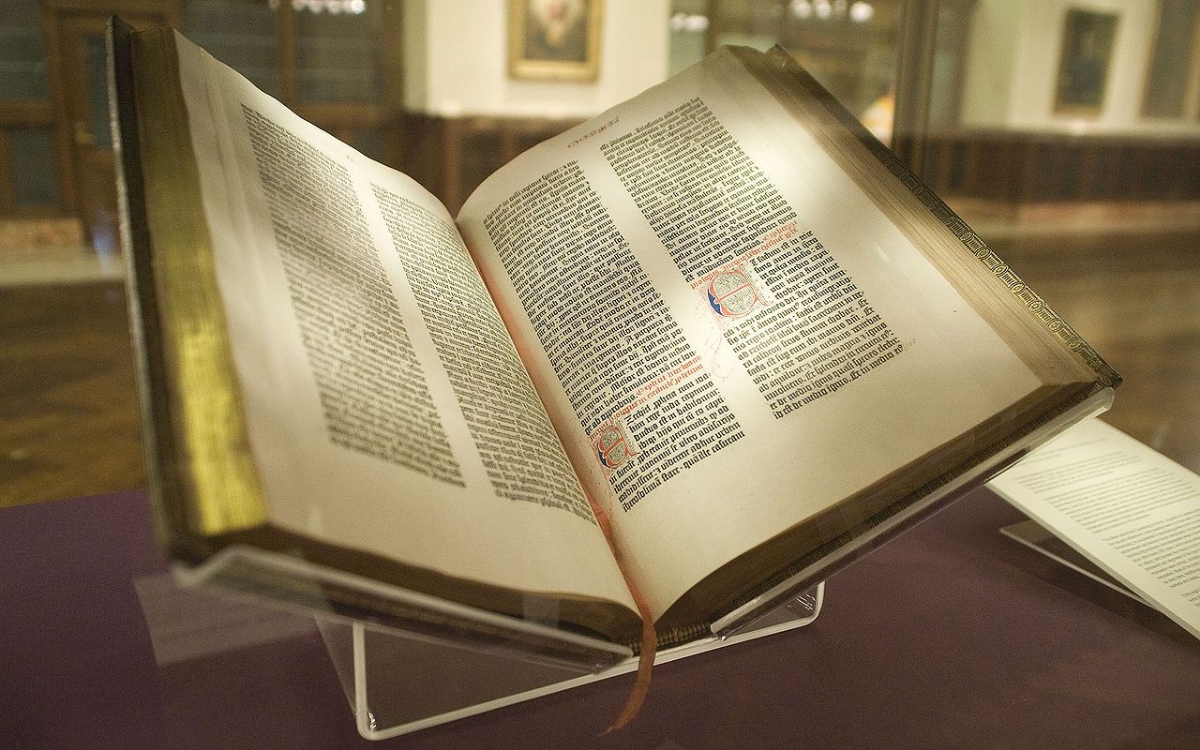
With the invention of the movable type on the printing press by Johannes Gutenberg around 1440, the book entered the modern age. Gutenberg's press allowed books to be produced in large quantities for the first time. The cost of each individual book (in a large edition) dropped dramatically, which in turn increased the number of books being printed and sold. Book printers began setting up all over Europe. Most books were still printed in Latin: printed books in the vernacular took longer to become popular.
There was a short period during which parchment (vellum) and paper were both used for printing books. Vellum was a more expensive luxury option, favoured by wealthy customers.
Golden Age
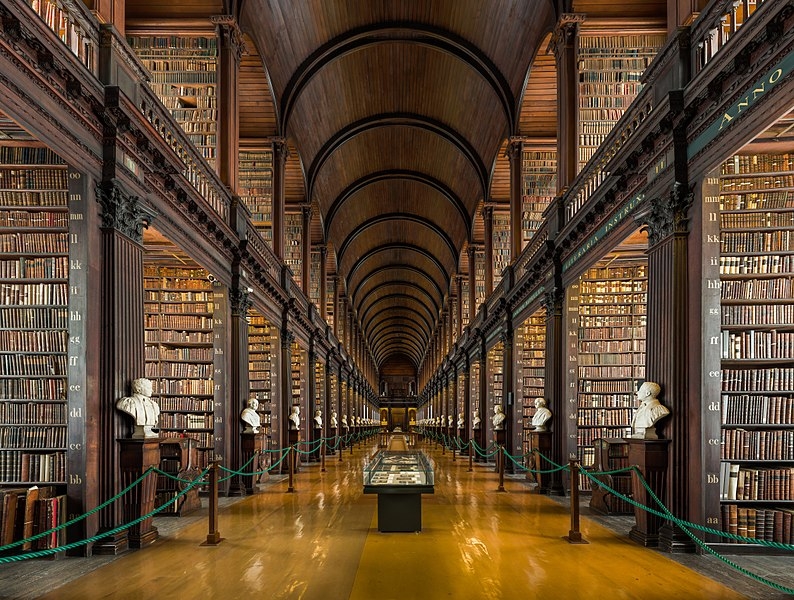
Some of the most famous libraries still around today were founded in the 17th and 18th centuries, during a period known as the Enlightenment. This was a time when many scientists and philosophers were putting forward new ideas, and libraries were becoming important places of research. In Britain, the Bodleian Library in Oxford was founded by Thomas Bodley in 1602. The British Library was established in London in 1753. Because of the growing importance of libraries during this time, it was known as the “Golden Age of Libraries”.
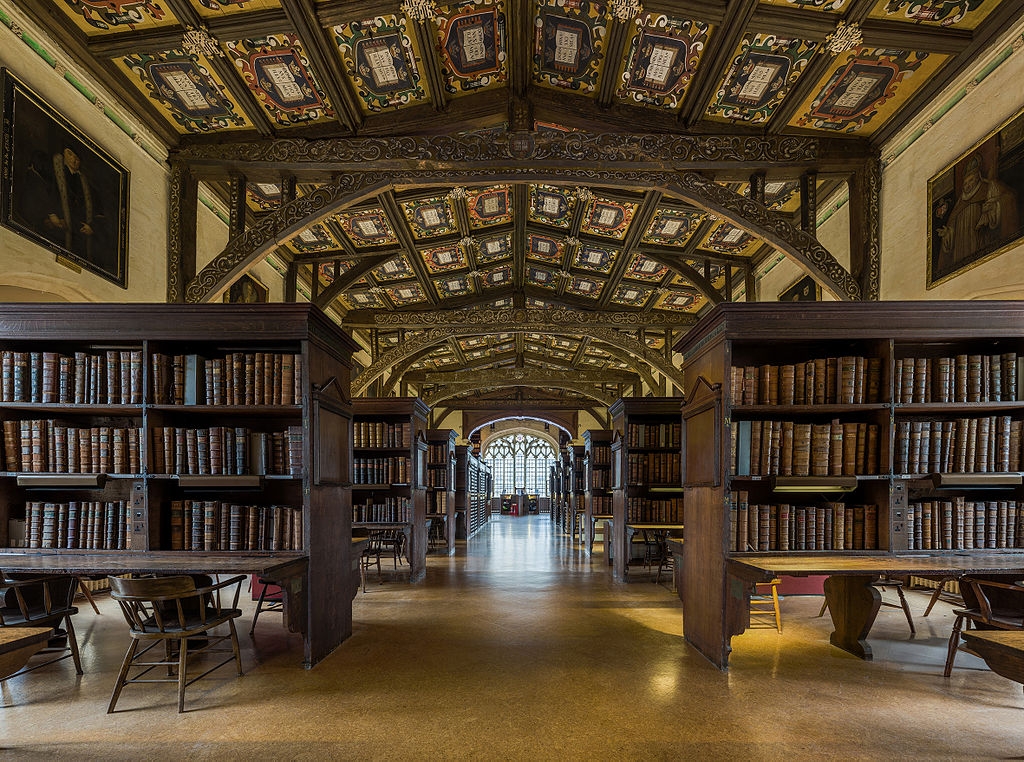
Until the beginning of the 18th century, people could only use a library if they were a member of the church or college to which it belonged. But during the 18th century, libraries began to open up to the public. People could visit the library by appointment and ask to see a specific book or piece of writing. These kinds of libraries still exist today and are known as research libraries.
Andrew Carnegie
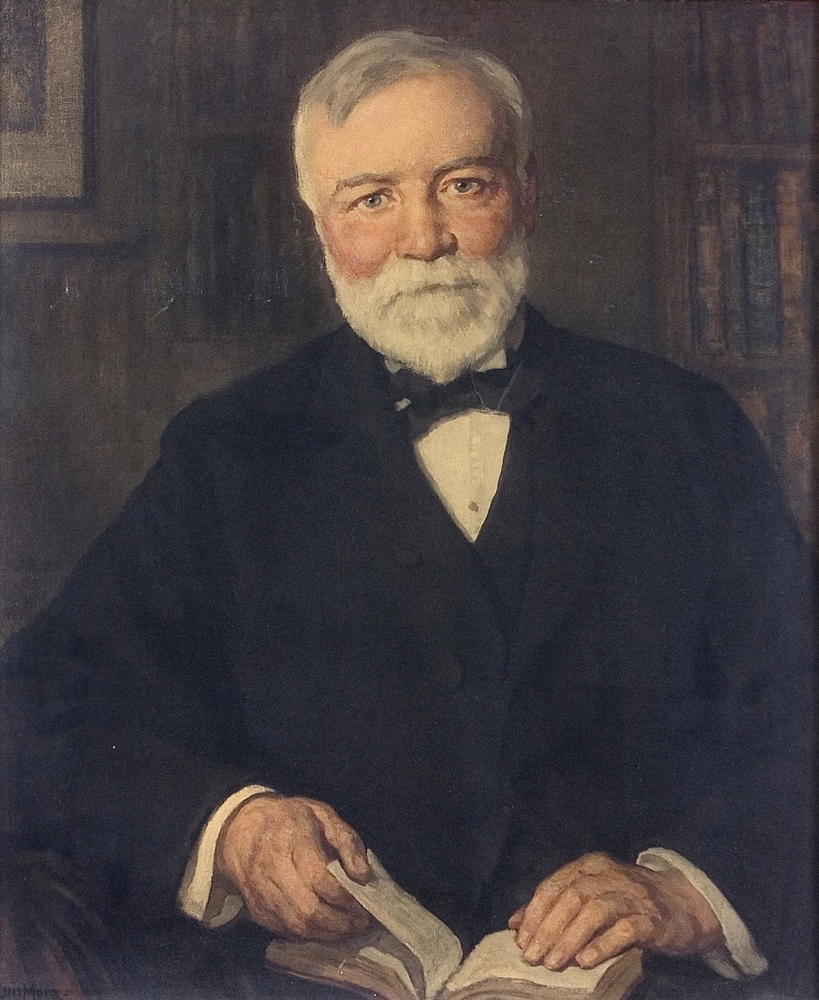
Scottish-American businessman Andrew Carnegie (1835–1919) is sometimes called the “Patron Saint of Libraries”. When Carnegie was a child, his family was poor. While working as telegraph messenger boy in the Pittsburgh office of the Ohio Telegraph Company, the young Carnegie educated himself by reading books at a library. He never forgot how important libraries had been to him. Later in his career, after he had made a lot of money in the steel industry, one of the things he did with his money was to set up a fund to build libraries.
Between 1883 and 1929, Carnegie’s fund helped to build 2509 libraries, mainly in the USA and the UK. The new libraries were free for everyone to use. For the first time, their shelves were designed to encourage people to browse. They were the forerunners of the public libraries we know today.
How libraries work
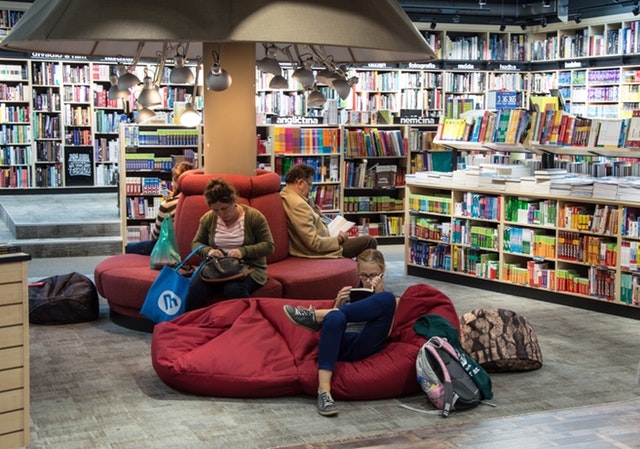
Public libraries are funded by a country’s government. People become members of a library by joining it and obtaining a library card. This allows them to borrow books and other materials—nearly always for free. Usually libraries have a limit on how many books can be borrowed and for how long. The people who work in libraries are called librarians. They organize and update the collections of books and help people to find what they are looking for.

Classification
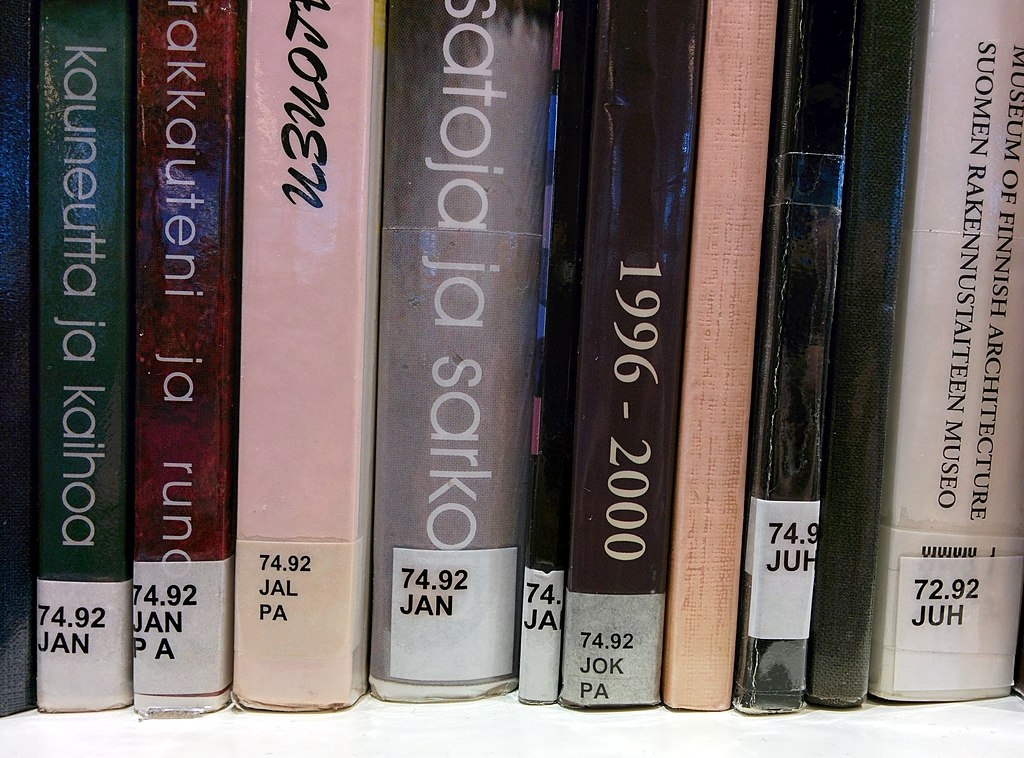
The owners of the first libraries arranged the books as they pleased, usually by subject or language. As more and more books were printed and libraries became bigger, they needed a way to sort their books into categories and help people find them on the shelves more easily.
In 1873 American librarian Melvil Dewey (1851–1931) invented a system that classified books into 10 subject groups. Each group is made up of 100 numbers. For example, books in the category “general works” can be found between 0–99, and “philosophy” 100–199. Each subject group is then divided into smaller groups of numbers, which contain the different subjects within it—areas of philosophy. Adding a decimal point and another number after it, for example 130.9, creates a sub-category: a category within a category. In this way, a library will always be able to add new books into its collection, even as new subjects emerge.
This classification system, called the Dewey Decimal system, is by far the most common way of organizing libraries today. It is used in 135 countries around the world.

Consultant: Philip Wilkinson
pics


Without in any way limiting Q-files Ltd’s exclusive rights under copyright, any use of this publication to “train” generative artificial intelligence (AI) technologies to generate text is expressly prohibited. Q-files Ltd reserves all rights to license use of this work for generative AI training and development of machine learning language models.