
China

CITE
We have made every effort to follow citation style rules, but there may be some minor differences. If in doubt, please refer to the appropriate citation style manual.
China in the Middle Ages. (2025). In Q-files Encyclopedia, History, China. Retrieved from
https://www.q-files.com/history/china/china-in-the-middle-ages
"China in the Middle Ages." History, China, Q-files Encyclopedia, 13 Sep. 2025.
https://www.q-files.com/history/china/china-in-the-middle-ages.
Accessed 6 Aug. 2026.
China in the Middle Ages 2025. History, China. Retrieved 6 August 2026, from
https://www.q-files.com/history/china/china-in-the-middle-ages
History, China, s.v. "China in the Middle Ages," accessed August 6, 2026.
https://www.q-files.com/history/china/china-in-the-middle-ages


China in the Middle Ages
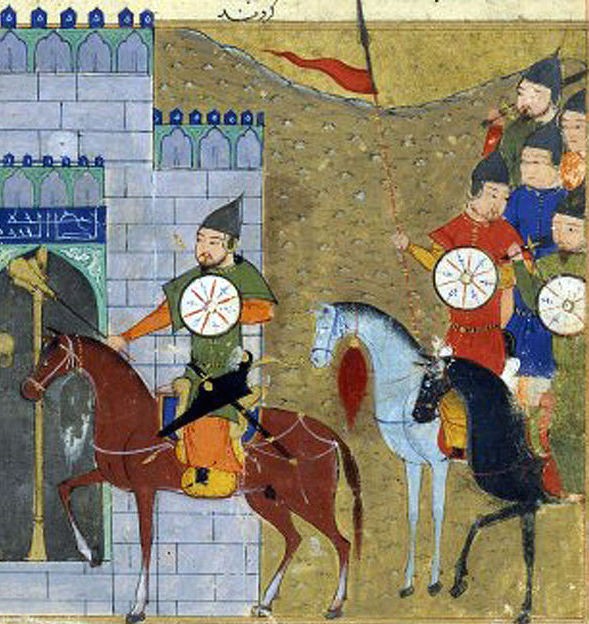
The end of the Han dynasty in AD 220 brought confusion to China, as nomads attacked from the north and the country split into three kingdoms. China was reunited again by the brief rule of the Sui dynasty (581-618) before the Tang and, later, the Song dynasties came to power. The Chinese Empire was constantly under threat from foreign enemies. The Mongols, a tribe of fierce nomadic warriors, invaded northern China in 1211. They were led by Genghis Khan. In 1279, his grandson Kublai Khan finally conquered all of China. He encouraged international trade and brought great wealth to the country.


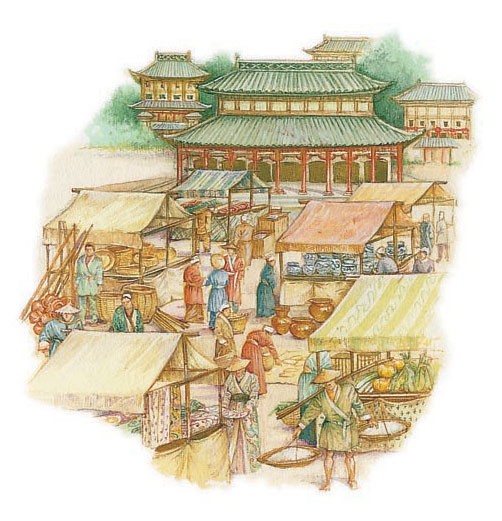
Tang dynasty
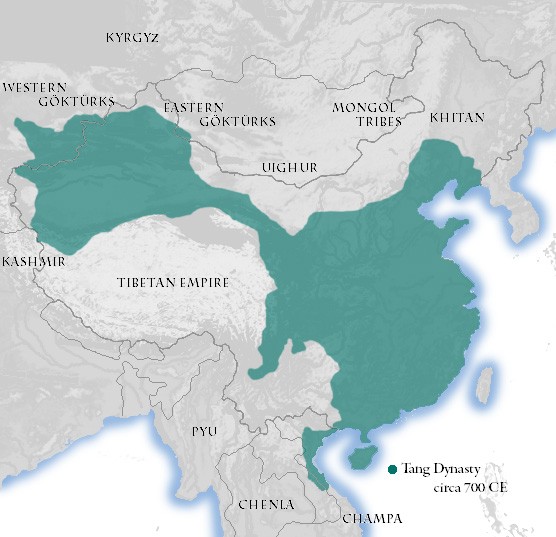
The Tang dynasty came to power when Li Yuan seized power in 618. This dynasty lasted until 907 during which peace and prosperity returned to China. Sea trade flourished, and many ports became bustling centres of commerce. Chang’an attracted scholars, artists and poets from all parts of Asia. The Buddhist religion became increasingly important, and many shrines and temples were built, including the Giant Buddha at Leshan.

An Lushan Rebellion
The An Lushan Rebellion began in 755, when General An Lushan declared himself emperor in Northern China. A favourite at the Tang court, General An Lushan had been entrusted with control of imperial troops in the north. He made his bid for power by capturing Luoyang, after which he declared himself emperor of the new Yan dynasty. He then led his forces on the capital, Chang’an the following year, causing the Tang emperor Xuanzong to flee to Sichuan. The new dynasty was soon plagued by internal dissent, however. An Lushan was killed by his son in 757. Yan army officers began to defect to the Tang side. The Yan rebel forces were eventually defeated in 763.
The rebellion resulted in a huge number of deaths, mostly from mass starvation and disease that set in during the turmoil. As many as 36 million people, about two-thirds of the population of the empire, may have died. This amounted to one sixth of the world's entire population at that time.
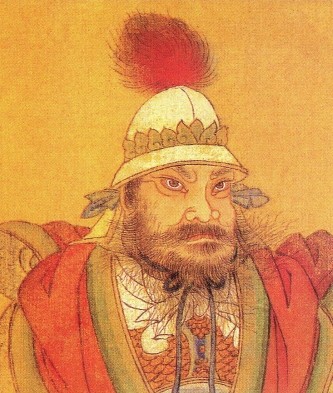
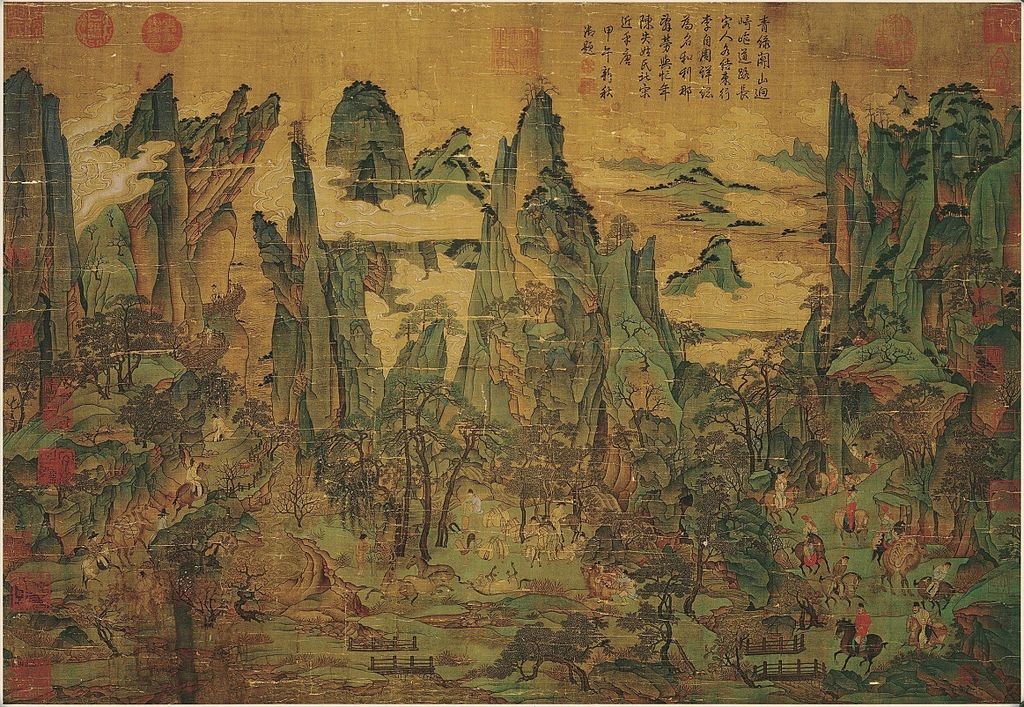
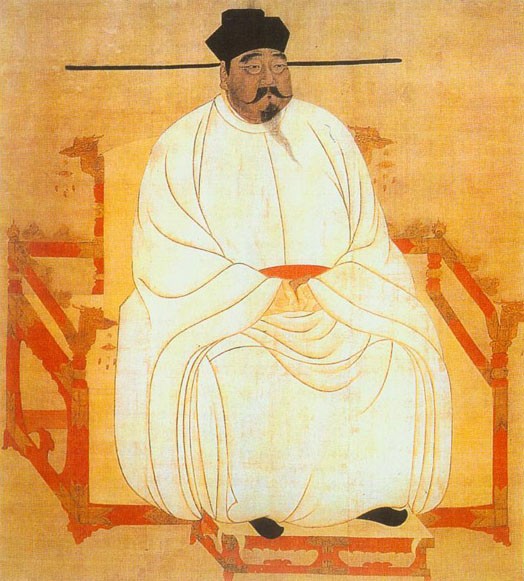
Song dynasty
After a period of civil war, the Song dynasty began in 960. Once again, this was a time of peace and prosperity in China, which became probably the wealthiest country in the world during the 11th and 12th centuries. The cultivation of an improved type of rice meant that food production increased, and the population of China topped 100 million.
Mongol invasion
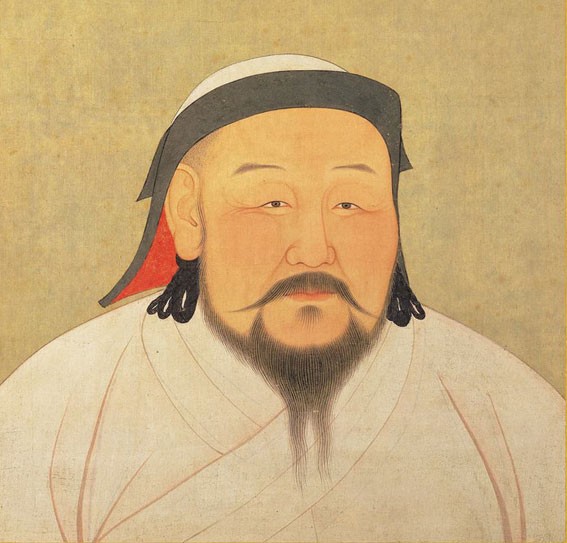
There was a constant threat from peoples to the north, and, during the 1200s, the Mongols swept into China, destroying the Song in 1279. Under their leader, Kublai Khan, they established the Mongol, or Yuan, dynasty. Kublai Khan established a new capital at Cambaluc (also known as Khanbaliq or Dadu, and as modern-day Beijing) and improved the road system in his new empire. But, after Kublai Khan’s death, later Mongol emperors ruled harshly and rebellions eventually drove the Mongols out of China.

Kublai Khan
Kublai Khan was a wise and tolerant ruler. He permitted the existence of various religions in China, including Buddhism, Islam and Christianity. Muslim scholars, astronomers, doctors, scientists and map-makers flourished in the Yuan court. Kublai organized food stores for times of famine, rebuilt the Grand Canal, repaired public buildings and improved the road system so that trade could increase. Chinese merchants travelled westwards across the Mongol Empire to the Middle East, while Europeans (including Marco Polo) made their way to China. Kublai also introduced a paper currency, called chao. This made collecting taxes much easier.
Kublai loved hunting and was a great horseman. He often hunted with a leopard that rode with him on the back of his horse. Kublai Khan’s summer palace at Shangdu (also called Xanadu, modern-day Dolon Nor) was the height of splendour. It had marble and gold walls and its golden ceilings were studded with rubies and diamonds.
Kublai Khan’s forces invaded neighbouring kingdoms, such as Vietnam, Burma and Champa in Southeast Asia, in a bid to extend Mongol power even further. He attempted to invade Japan, but his fleets were defeated in 1274 and 1281.

Fall of the Yuan dynasty
Haunted by the failure of the military campaigns in Japan and saddened by the death of both his heir and his wife, Kublai Khan sank into depression and suffered poor health in his later years. He died in 1294. His dynasty continued on, but the Yuan emperors gradually lost influence in China, which was increasingly torn apart by unrest. The last Yuan emperor Toghon Temür fled from his capital in 1368 as the forces of the Míng dynasty, founded by Zhu Yuanzhang, seized power.
Consultant: Philip Parker
pics


Without in any way limiting Q-files Ltd’s exclusive rights under copyright, any use of this publication to “train” generative artificial intelligence (AI) technologies to generate text is expressly prohibited. Q-files Ltd reserves all rights to license use of this work for generative AI training and development of machine learning language models.