
South America
Peru
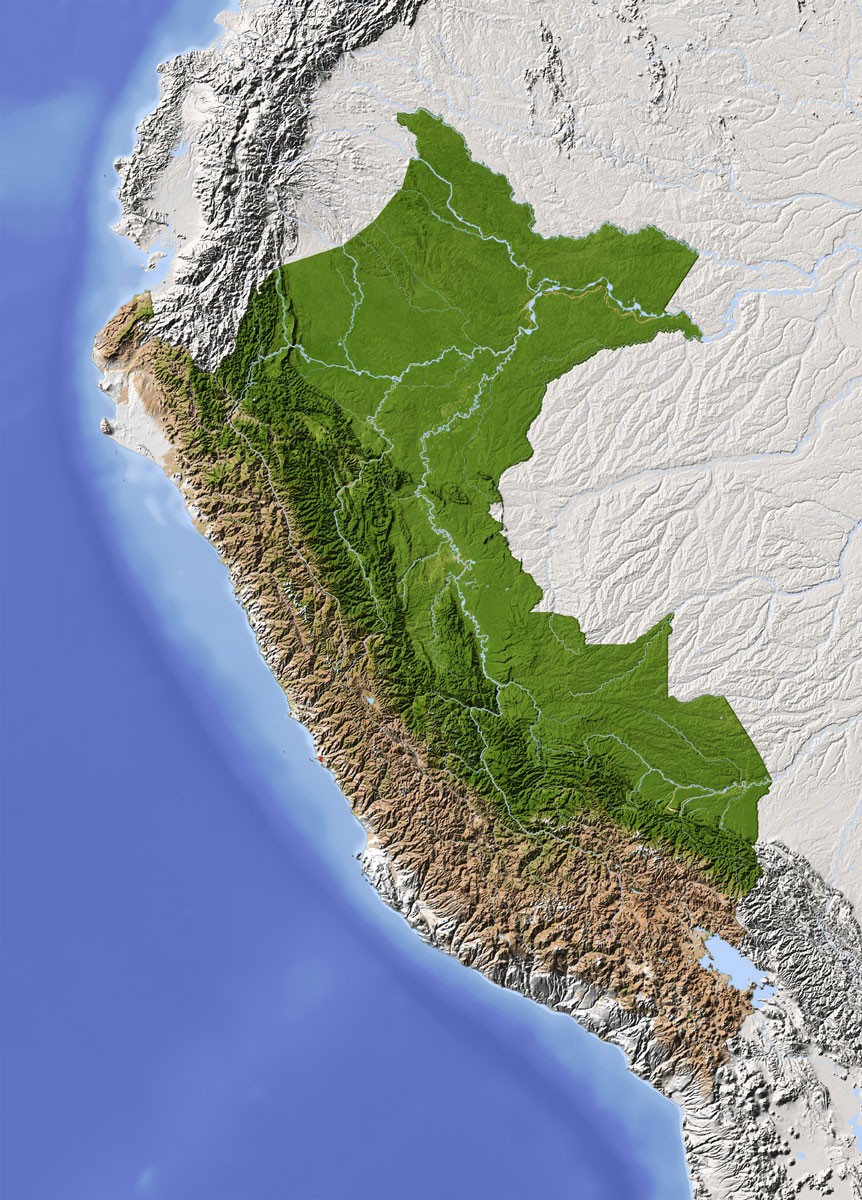
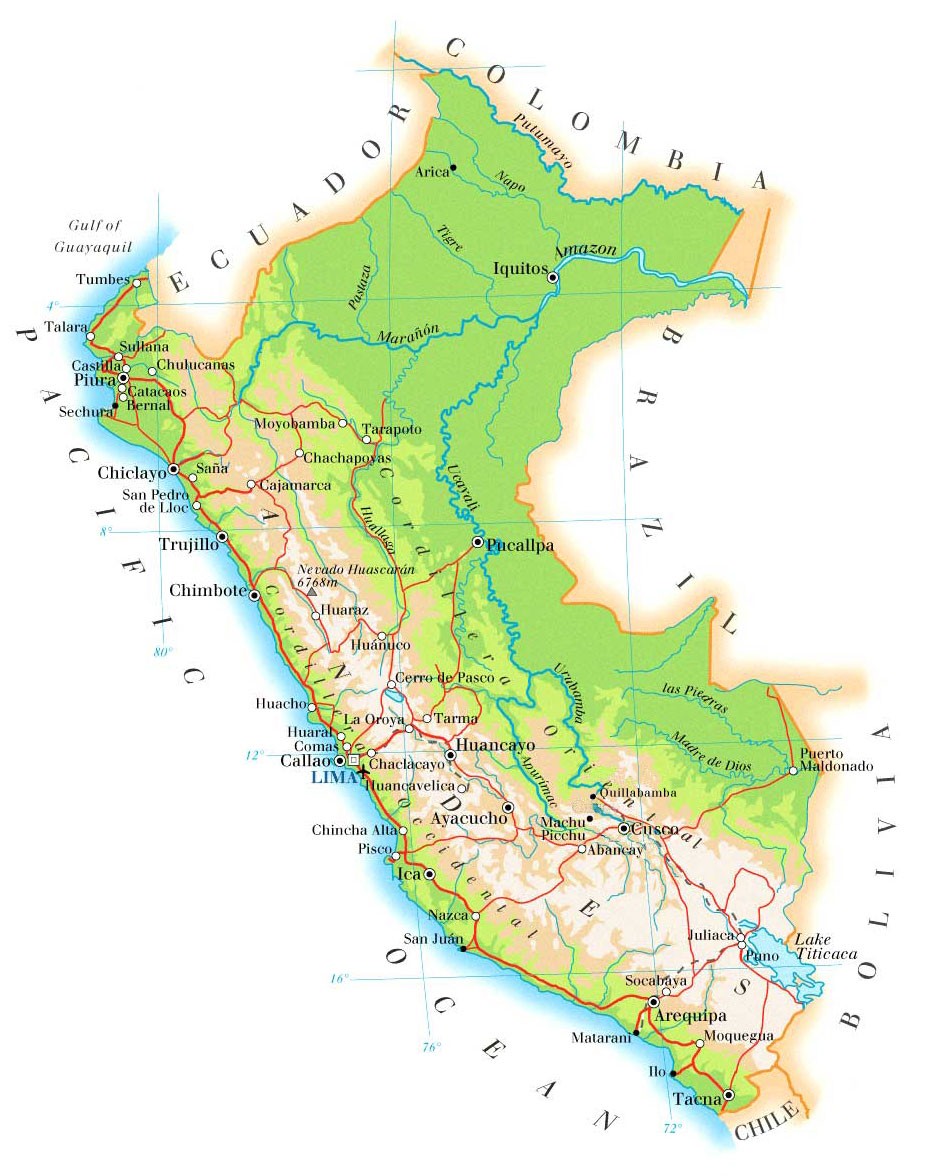
Once at the centre of the powerful Inca Empire, today Peru is, by area, the third largest country in South America. Its landscape is dominated by the Andes Mountains, which rise steeply from a narrow coastal plain to a region of rugged uplands called the sierra. In the south, a high plateau known as the Altiplano stretches into Bolivia and Argentina. The eastern slopes of the Andes merge into the Amazon rainforest. The coastal plain is mostly desert, except in the valleys created by seasonal rivers. Although Peru lies close to the Equator, its climate is cooled by the Humboldt ocean current, which flows from the south. The cooler air above above the current bars rainfall coming in from the ocean—except during El Niño events. In winter there is an almost permanent fog, called garua. The Andes have wet summers and dry winters. The eastern rainforest lowlands are hot and rainy throughout the year.
Lima
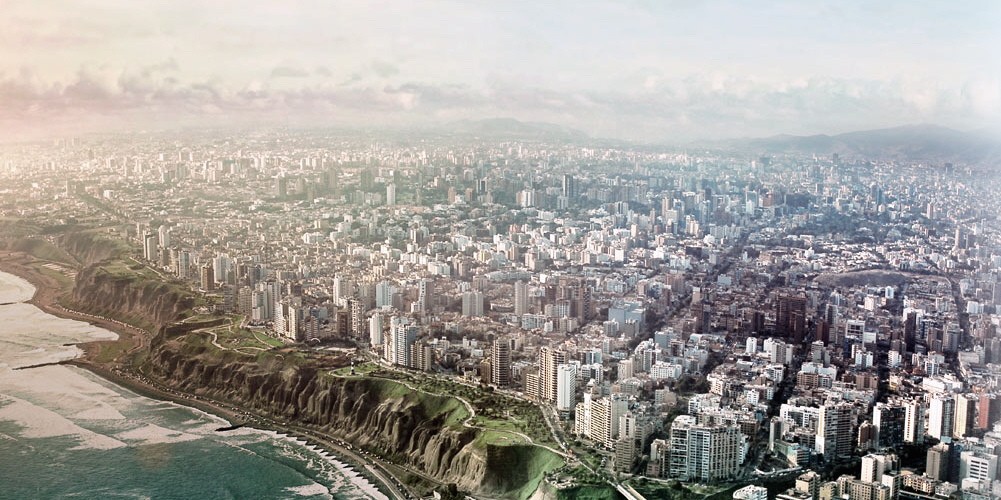
Together with the seaport of Callao, Lima forms a sprawling urban area with a population of more than 11 million. Around one third of the entire population of Peru lives there. Founded by the Spanish conquistador Francisco Pizarro in 1535 as Ciudad de los Reyes, it became the capital during Spanish colonial times.
Lima's population features a wide range of ethnic groups. Mestizos of mixed Amerindian and European (mostly Spanish and Italian) ancestry are the largest, with white Europeans, mostly of Spanish, Italian or German descent, the next largest. Minorities in Lima include Amerindians—mostly Aymara and Quechua—African Peruvians, descendants of those brought to Peru as slaves, Jews, Middle Easterners, Chinese (Cantonese) and Japanese. Lima's newest immigrants are from smaller towns and villages in Peru itself, seeking work in the city. A number of them live in shantytowns, known as pueblos jóvenes, clustered around the city’s edges.
Economy
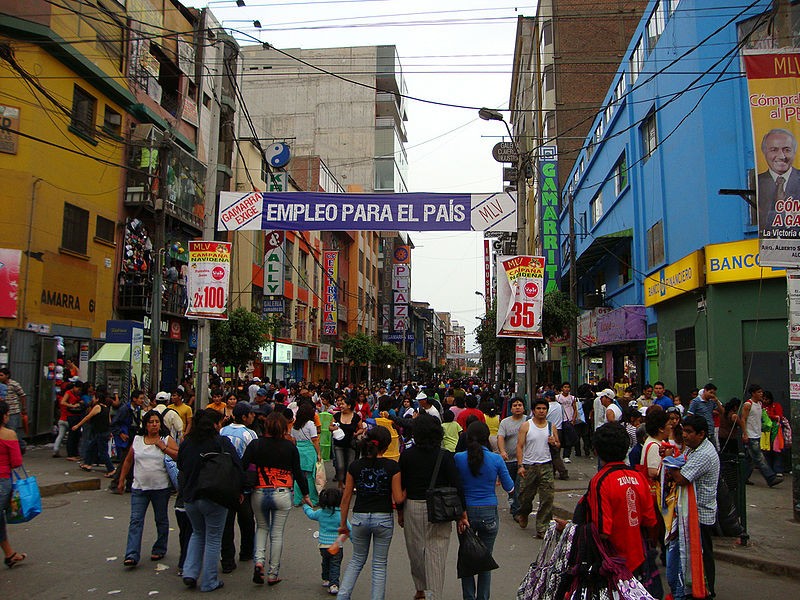
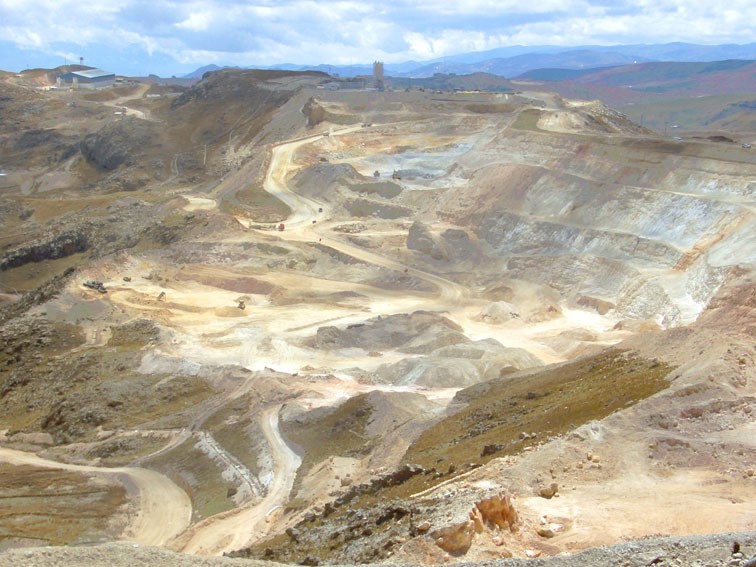
Peru has some of the richest natural resources on Earth. It has large reserves of oil and natural gas as well as minerals and metals. Gold is mined in the Amazon rainforest. Peru is the largest producer of gold in South America, and the eighth largest in the world. In and around the cities, factories make goods such as textiles, chemicals and machinery. Half of the population is employed in services such as tourism, banking and telecommunications.
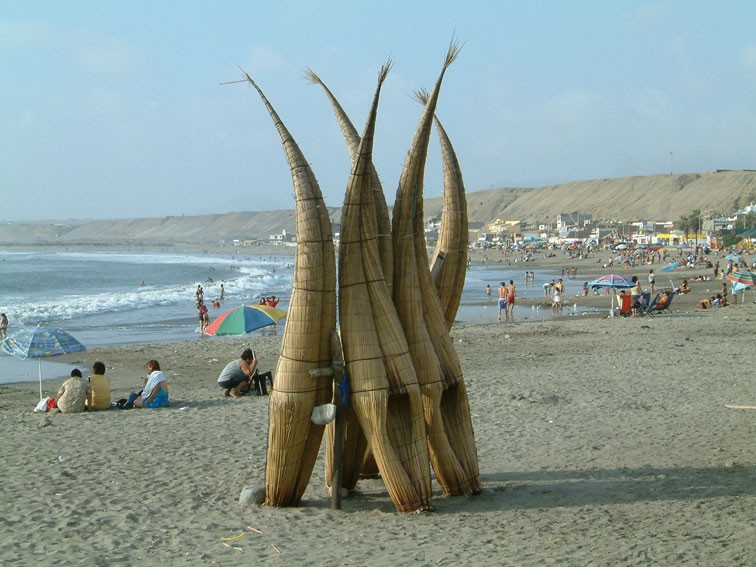
On the coast, Peruvian fishermen are responsible for around 10% of the world’s fish catch—second only to China. A natural abundance of Peruvian anchovy (known locally as anchoveta) off the Pacific coast makes Peru the world’s biggest producer of fishmeal, which is made from ground dried fish and used as livestock feed. The industry is centred on Chimbote.
In the mountains, many people are subsistence farmers. They raise sheep, llamas and alpacas for their meat and wool, and grow crops such as potatoes. Recently, the number of people living in poverty in Peru has dramatically reduced: from two-thirds to around a quarter of the population.

Amerindians
Just under half of Peruvians are Amerindians (almost as many Peruvians are of mixed Amerindian-European ancestry). The largest group, Quechua, are descended from the Inca. They speak the old Inca language of Quechua as well as Spanish, the language of the region’s 16th-century colonists.
Beyond the mountains, the rainforests of Peru are home to hundreds of indigenous tribes. A small number of these tribes have never been in contact with the rest of the world.
El Niño
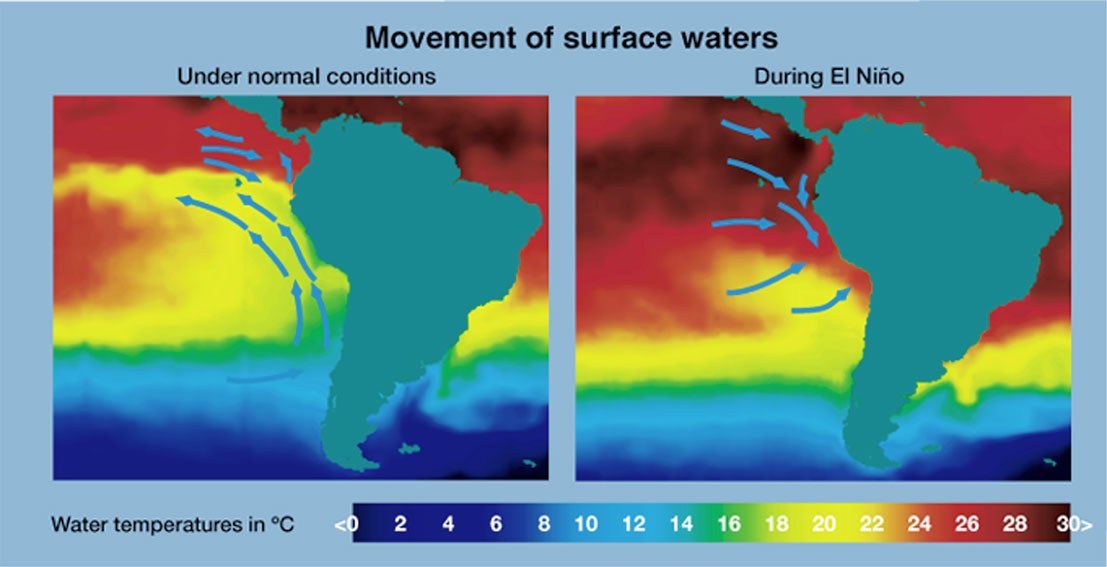
El Niño is the name given to an unusually warm ocean current that appears on average every seven years off the Pacific coast of South America. El Niño is Spanish for “the Christ child”, because the effects of the current are normally noticed around Christmas in South America. El Niño often has destructive consequences for Peru.
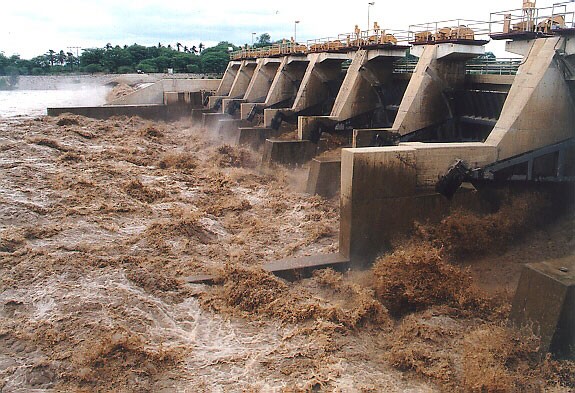
El Niño causes heavy rainfall along the coast, which often leads to flooding. The warmer water causes many fish native to the waters of Peru to die, or disappear in search of cooler waters. During the 1998 El Niño, Peru’s fishing industry was devastated: floods destroyed boats and jetties, and catches of fish fell by 80%.
Consultant: Nicholas Harris
Facts about Peru
Area 1,285,216 sq km (496,225 sq miles)
Population 34,352,720 (2023 estimate)
Highest point Nevado Huascarán 6768 m (22,205 ft)
Capital Lima (metro area, with Callao, population 11,283,787)
Other major cities Trujillo (pop. 1,048,800), Arequipa (1,177,200), Chiclayo (615,700)
Languages Spanish, Quechua, Aymara (official languages)
Religions Christian (Catholic) 81%, Christian (other) 16%, none and other 3%
Ethnicity Amerindian 45%, mestizo (mixed Amerindian and white) 37%, white 15%, other 3%
Currency Nuevo sol (PEN)
Chief exports Gold, copper and other metals, oil and petroleum products, coffee, vegetables, fishmeal
History of Peru
10,000 years ago
The first settlers arrive in Peru, having crossed the land bridge from Asia into North America thousands of years previously.
3000–1800 BC
The Norte Chico civilization grows up in Peru. A complex irrigation system is constructed, as well as stone pyramids.
200 BC–AD 600
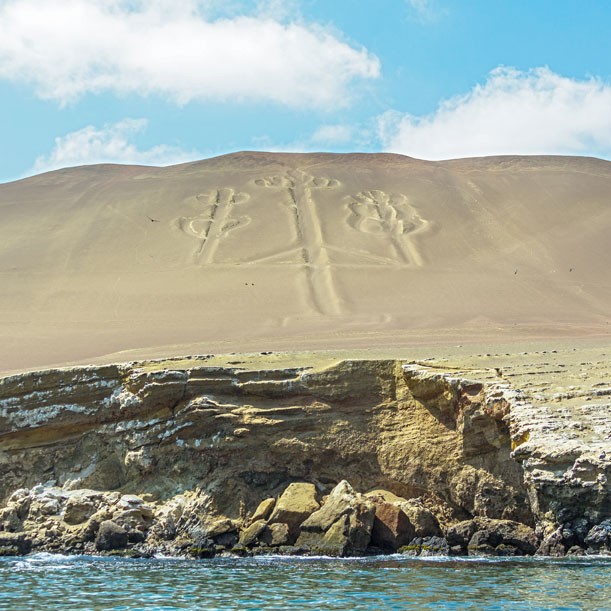
The Nazca culture flourishes in southern Peru, building some of the first aqueducts, and carving ceremonial patterns in the desert.
AD 100–800
The Moche civilization thrives in northern Peru.
1200
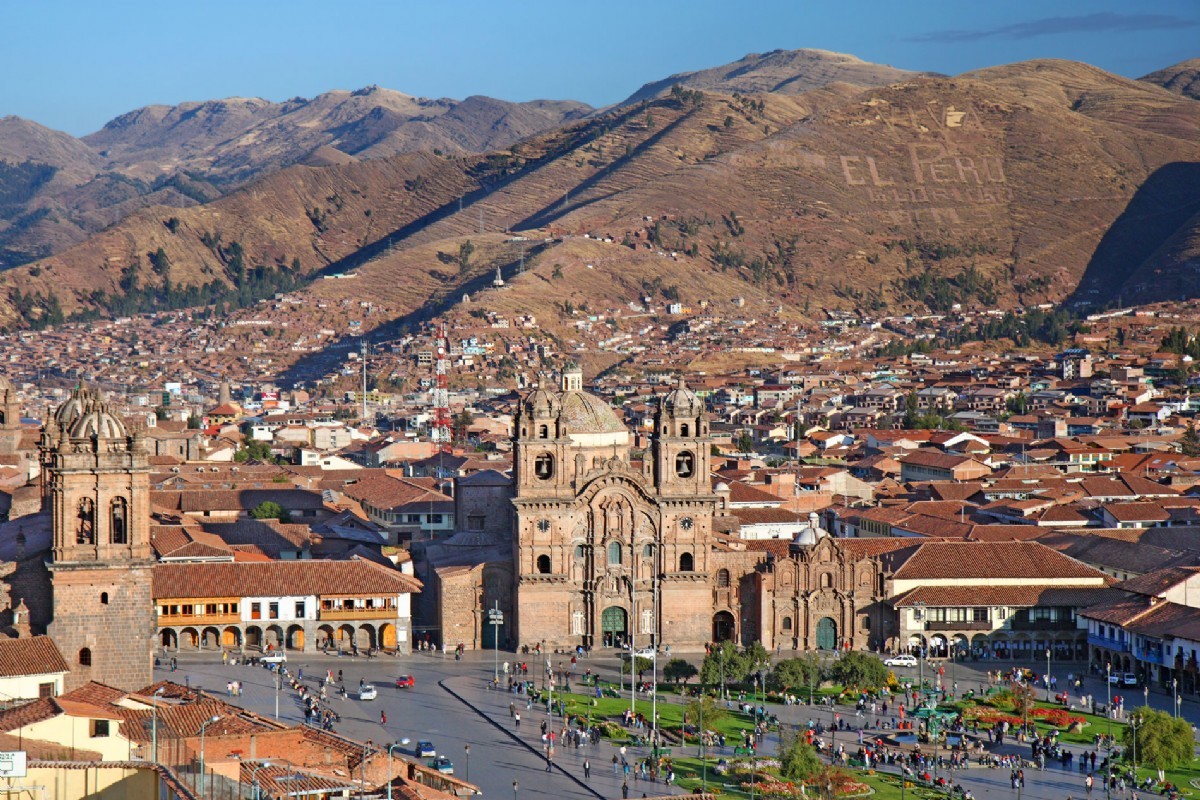
The Incas are the most powerful group in the mountains of Peru, ruling from their capital of Cusco.
1438
The Incas start to conquer surrounding territories. By 1493, they rule over 10 million people.
1532
The Incas, led by Emperor Atahualpa, are defeated by a party of Spanish conquistadors led by Francisco Pizarro in the Battle of Cajamarca
1542
The Spanish Crown establishes the Viceroyalty of Peru. Governed from Lima, it includes most of South America’s Spanish colonies.
1572
The final Inca resistance to Spanish invasion is crushed at Vilcabamba
1780–83
Uprising of indigenous and mestizo peoples led by Túpac Amaru II, aimed at overthrowing Spanish colonial rule in Peru. Amaru II is captured and executed by the Spanish, but the rebellion continues under other leaders, many of them women, until their surrender
1821
Lima is captured by General José de San Martin, who proclaims Peru independent from Spanish rule.
1824
Forces under Simón Bolívar and Antonio José de Sucre defeat the Spanish army in the battles of Junín and Ayacucho, consolidating the independence of Peru and Upper Peru (later Bolivia)
1864–66
Coastal and naval battles are fought between Spain and Peru over disputed territory.
1879–84
The War of the Pacific: Chile defeats Peru, winning part of its territory, including the provinces of Tacna and Arica in the Atacama region (Tacna is returned to Peru in a peace treaty signed in 1929)
1911
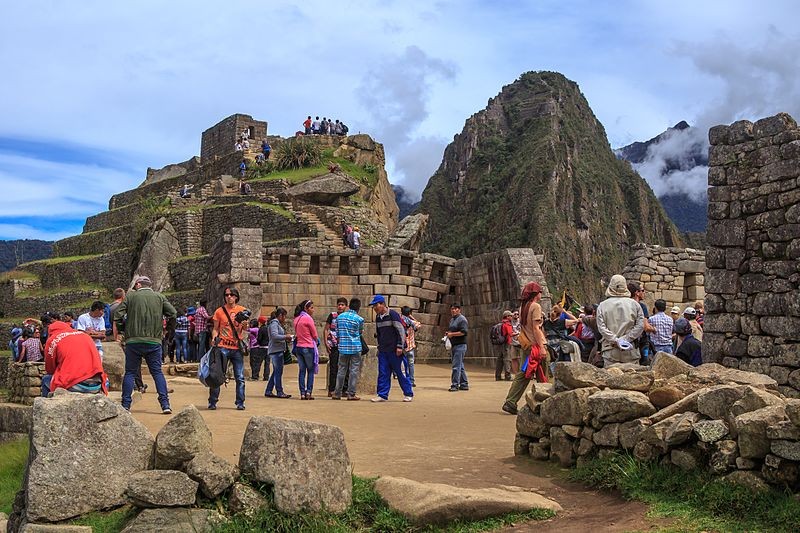
The “lost” Inca city of Machu Picchu is discovered in the Andes Mountains by the American explorer Hiram Bingham.
1932–33
War with Colombia over a territorial dispute involving the Amazon rainforest land and its capital Leticia
1940
An earthquake destroys most of the capital city of Lima.
1980
The Communist Party of Peru, known as the Shining Path (Sendero Luminoso), begins a guerrilla war, aiming to install a Communist government. After the capture of their leader in 1992, their activities start to decline. To date, around 70,000 people have died in the conflict, most of them ordinary civilians.
1998
Governments of Peru and Ecuador sign a peace treaty that clearly sets out the international boundary between them (disputed since 1821)
2007
Earthquake measuring 8.0 on the magnitude scale, hits the central coast of Peru; more than 500 people are killed
2009
Former president Alberto Fujimori (1990–2000) is sentenced to 25 years in prison for human rights violations committed during his government’s battle against the Shining Path.
2020
President Martín Vizcarra is removed in a coup and replaced as president by Manuel Merino. Protests against Vizcarra's removal erupt in several cities, leading to Merino's resignation after five days. Pedro Castillo is elected president in 2021.
2022
Rupture in an underwater pipeline causes a major oil leakage along the Pacific coast north of Lima. The oil slick covers an area of about 106 sq km (40 sq miles, about the size of Paris) and pollutes three protected marine reserves, causing the destruction of one of the world’s richest marine ecosystems and damaging the local fishing industry.
2022–23
Supporters of Pedro Castillo, ousted from presidency for attempting to dissolve Congress and rule by decree, carry out protests in Lima and other cities demanding the resignation of President Dina Boluarte and new elections. A state of emergency is declared, authorizing the army to intervene to maintain order.