
Exploration
Captain James Cook
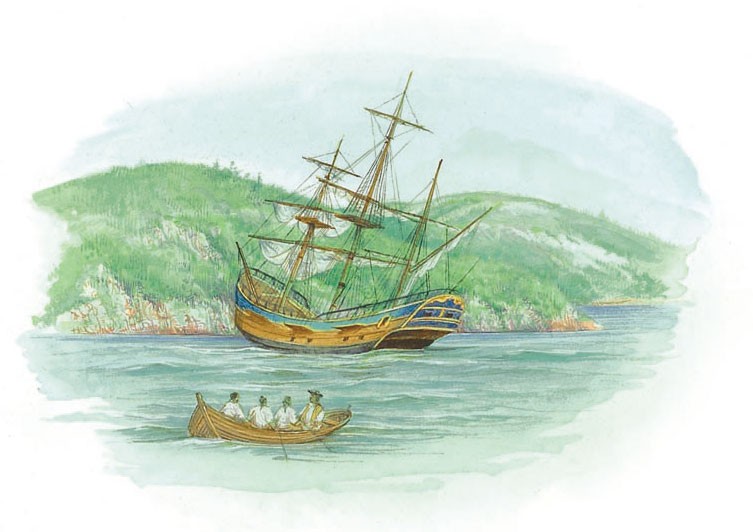
In 1768 a ship called the Endeavour sailed from England. It was commanded by Lieutenant (later Captain) James Cook (1728–79). The Endeavour was on a scientific voyage, bound for the island of Tahiti in the Pacific Ocean. But Cook had other instructions as well. At this time, European knowledge of the South Pacific was based on vague reports, mostly from Dutch sailors. Cook was to explore further. In fact, this was to be the first of three great voyages made by Cook, in which he charted much of the coastline of Australia and New Zealand, as well as many Pacific islands. During these voyages he sailed further south than anyone before him.

Cook's instructions
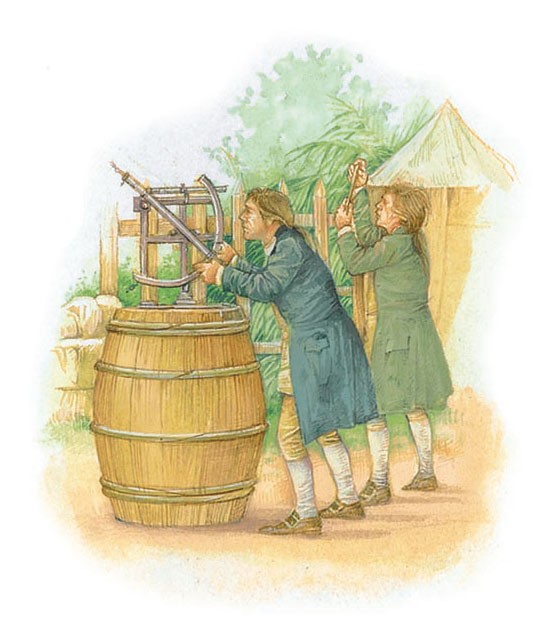
The Royal Society, an association of British scientists, had chosen Cook to captain a scientific expedition to Tahiti. Astronomers had predicted that Venus would pass in front of the Sun in June 1769. By observing this from different points around the globe, they hoped to measure the distance of the Sun from Earth accurately. Cook was also given an additional set of sealed instructions, which he was to read on arrival in Tahiti. These told him to locate a continent that was believed to lie far to the south, although no one had ever seen it: Terra Australis Incognita, or “Unknown Southern Land” (what we now call Antarctica), and to claim it for Great Britain.
First voyage
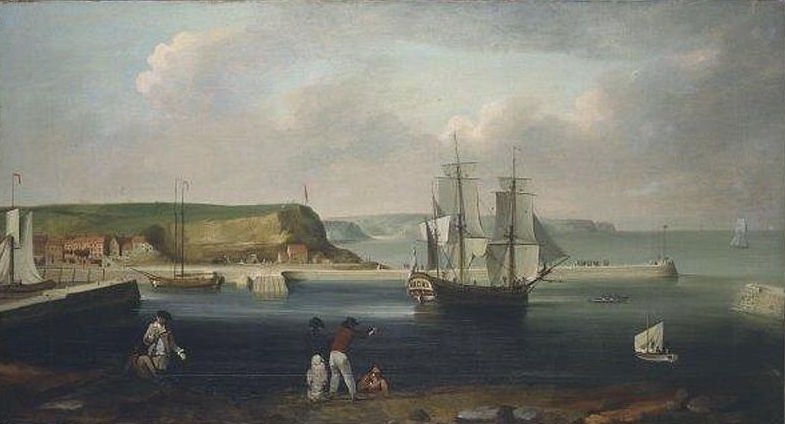
The Endeavour left England in August 1768. Cook was in command of a crew of 86 men and 11 scientists, including Joseph Banks, who was a naturalist (someone who studies plants and animals). In April 1769, they reached Tahiti. They built a small fort and observed the transit of Venus on 3rd June.
Cook then announced the second part of the mission. The party reluctantly left the beautiful island in August and headed south.

Finding no sign of Terra Australis, Cook then sailed to New Zealand, where he was met by hostile Maoris. He sailed around both the North and South islands of New Zealand, mapping the coast.
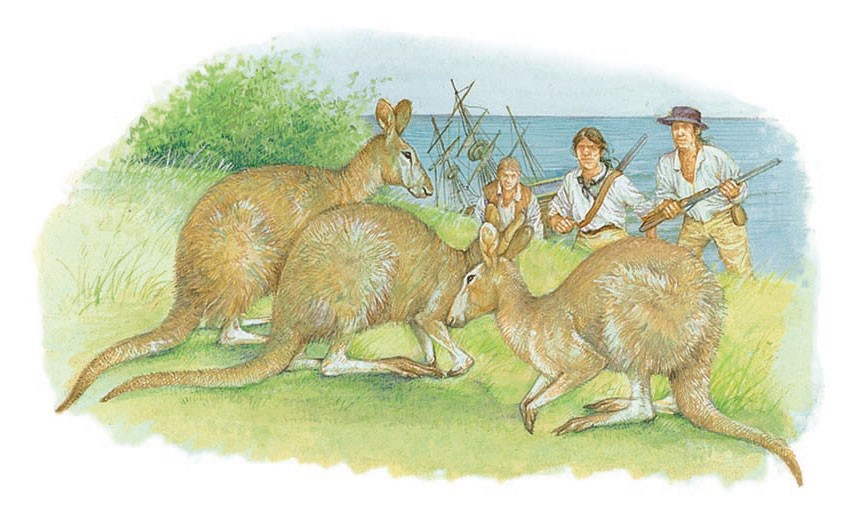
In April 1770, Cook headed north to the land that was later to be named Australia. They anchored at Stingray Bay, later renamed Botany Bay since Joseph Banks found so many new plant (botanical) species there. The explorers were amazed by the unusual local wildlife, including kangaroos, which they thought were as big as sheep and jumped like hares. They were also good to eat.
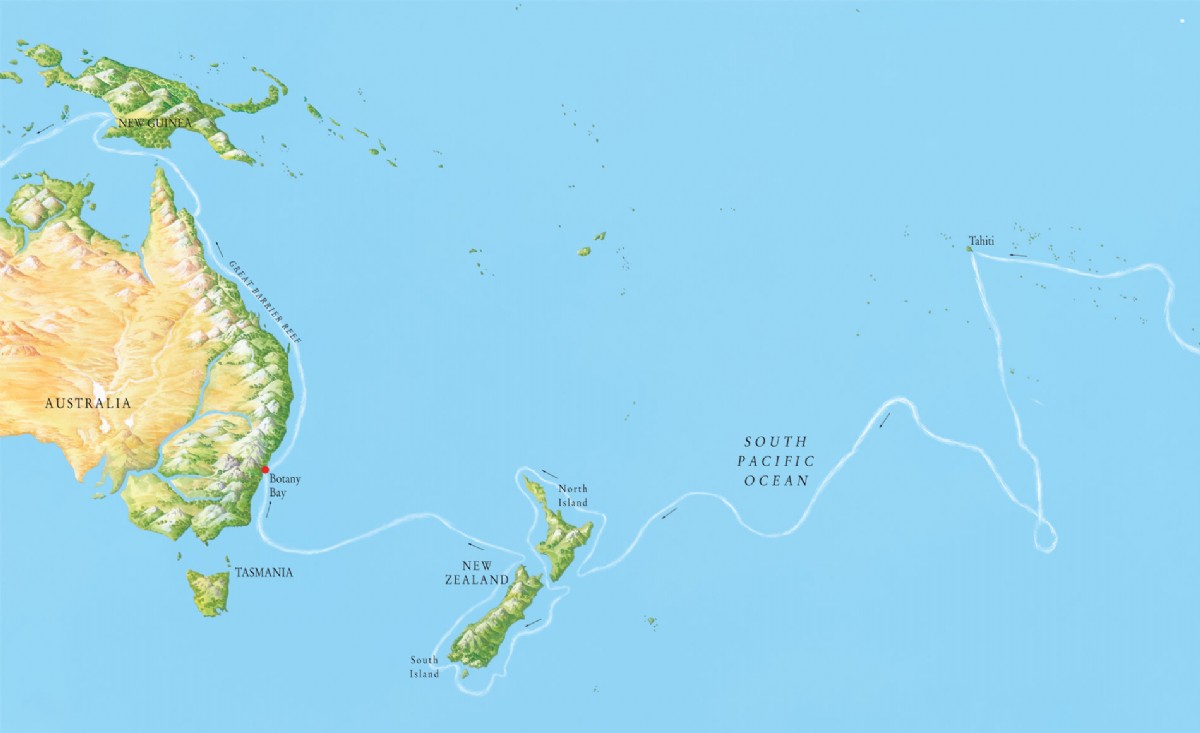
Cook sailed slowly up Australia’s east coast. In June 1770, the Endeavour ran aground on the Great Barrier Reef. It took months to repair the vessel. Cook then continued north. In August 1770, Cook claimed eastern Australia for Britain, naming it New South Wales. The Endeavour then headed home via the Cape of Good Hope in southern Africa. They arrived in England in July 1771. Not one member of the crew had died of scurvy, a disease that had previously killed many sailors. Cook had realised that eating citrus fruit helped prevent the illness.

Second voyage
Just one year after Endeavour returned, Cook set sail from Britain once more, this time aboard HMS Resolution. Again, he was in search of Terra Australis, or what we know call Antarctica, which Cook correctly believed to be the true southern continent.


In 1772, he sailed south of Africa, crossing the Antarctic Circle in January 1773. He came close to Antarctica, but, since his route was blocked by ice, he never actually set eyes on it. He landed briefly on New Zealand’s South Island, before returning to Tahiti and exploring nearby Tonga. He returned to Britain in 1775.
Third voyage
The following year, Cook set out on a third voyage, this time to find a western entrance to the Northwest Passage (a sea route through the Arctic Ocean, linking the Pacific and Atlantic oceans). Cook once again commanded HMS Resolution, while his companion ship was HMS Discovery. Once more he sailed to New Zealand, stopping briefly on Tahiti, before heading into the North Pacific. He explored the coast of North America.
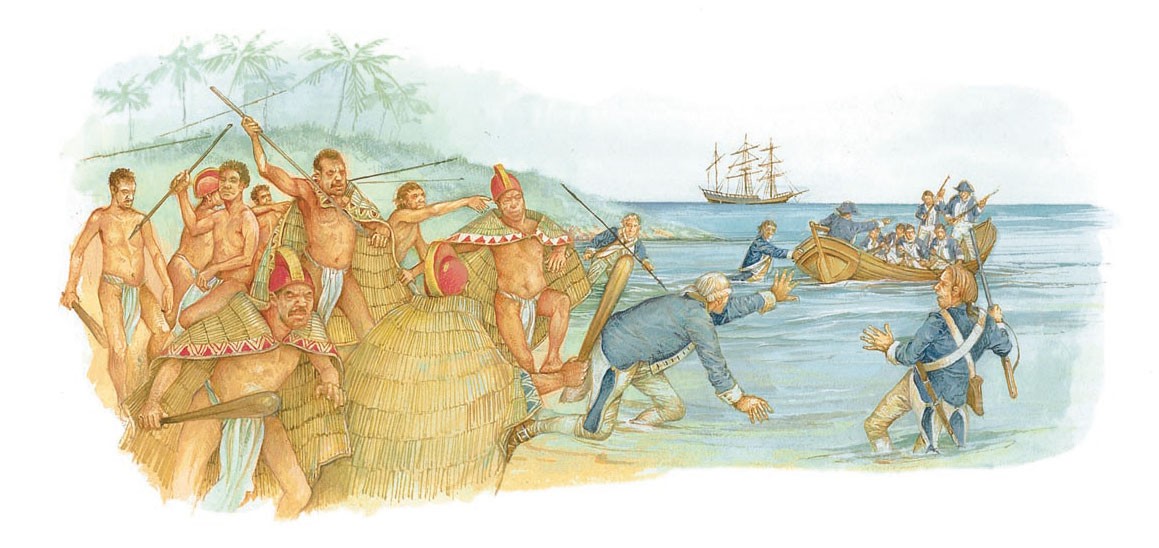
When Cook first arrived in Hawaii earlier in the voyage, the natives treated him like a god. However, when he returned to the island in 1779 to mend his ship’s broken mast, a fight broke out between the natives and the Europeans over a stolen boat. Cook was stabbed and killed in the confusion. His crew returned to Britain in 1780.
The Endeavour
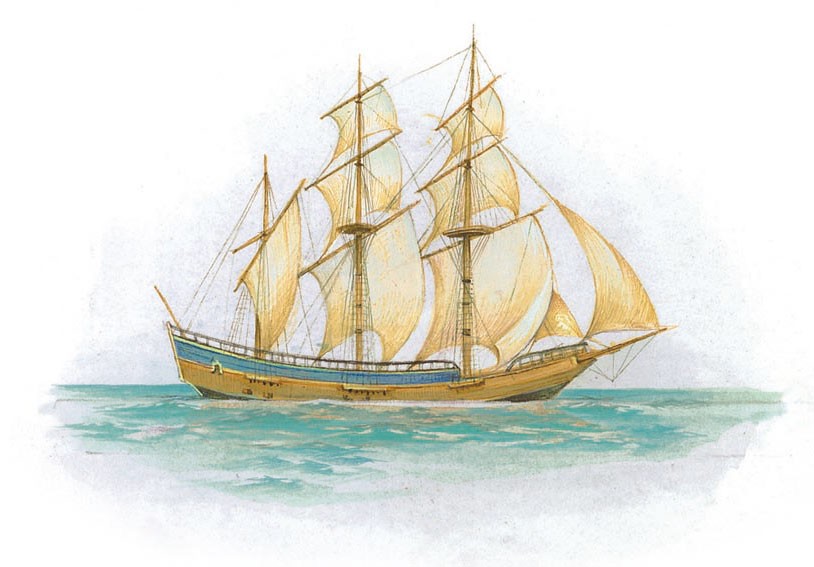
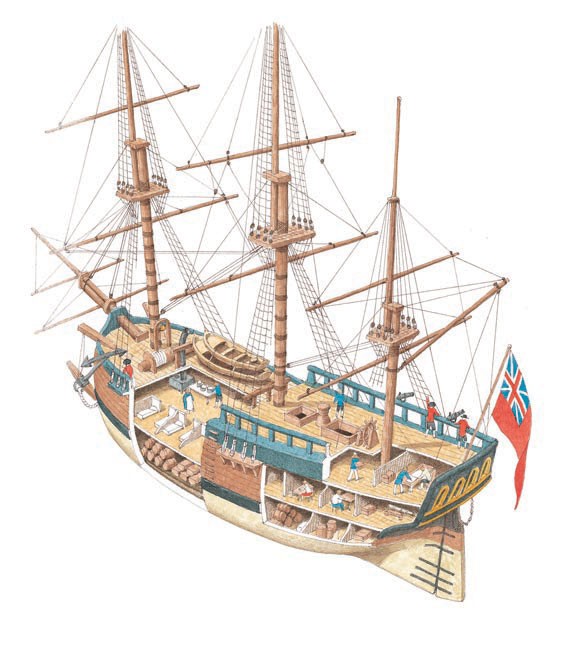
Cook chose an unusual vessel for his first voyage. The Endeavour was a converted collier, or coal ship, similiar to those he had worked on as a young man when he was in the merchant navy. It was a sturdy and slow-moving vessel that could carry a heavy cargo and a large crew. It also had storage space for scientific equipment. It was very cramped: the ceiling was so low below decks that the crew had to bend double.
The Endeavour had three masts and three decks. It was about 30 m (100 ft) long. The lower decks were packed full of stores for the long voyage. Cook wanted to stop his crew getting a disease called scurvy. This was caused by a lack of vitamin C (found in fresh fruit and vegetables), although people did not know that at the time. Cook gave his sailors pickled cabbage and a type of orange marmalade.
After its great voyage, the Endeavour was largely just used for shipping supplies. In 1778, she was deliberately scuttled (sunk) during the American Revolutionary War to block Narragansett Bay in a bid to stop the landing of French reinforcements for the Americans.
Consultant: Philip Parker