
Famous women
Malala Yousafzai
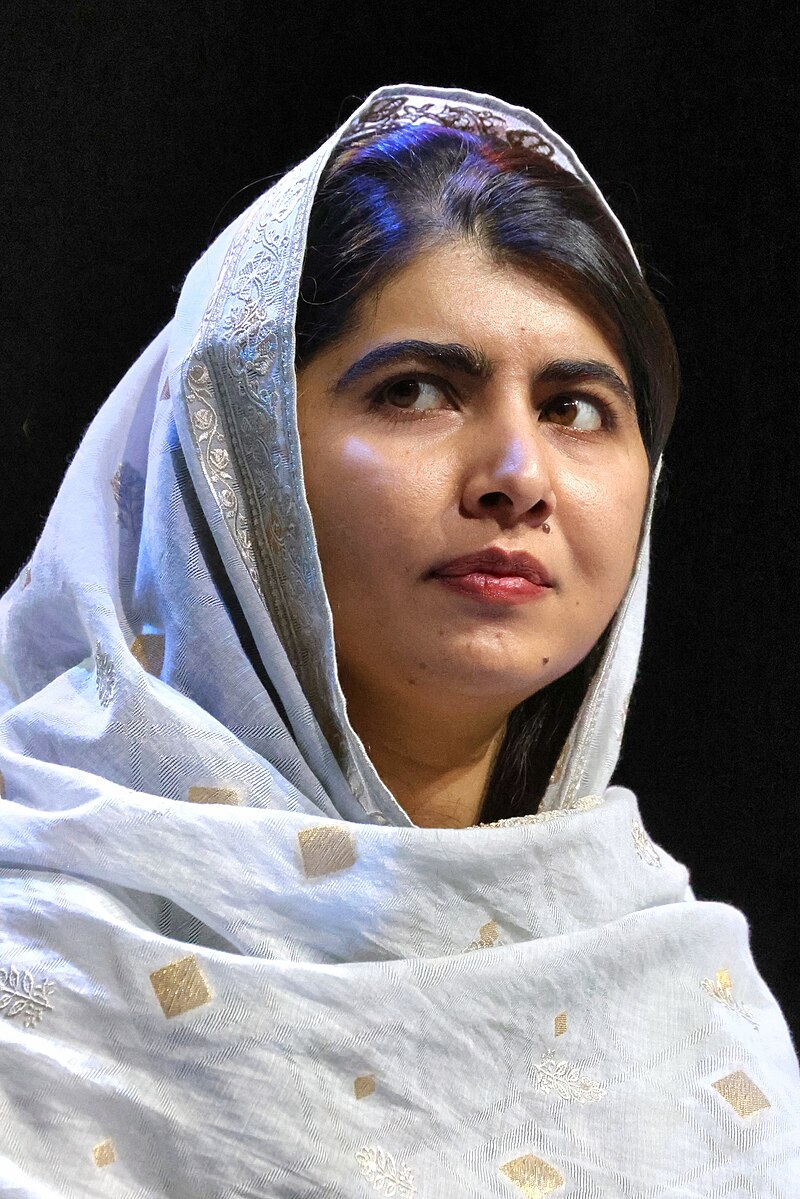
Malala Yousafzai (born 1997) is a Pakistani activist who from an early age spoke out publicly against the activities of the Taliban as they tried to suppress girls’ education in her homeland. She survived an assassination attempt at the age of 15, and has since received numerous prizes and accolades for her work promoting the rights of girls and women all over the world. On 10th October 2014, it was announced that Malala had been awarded the 2014 Nobel Peace Prize for her struggle against the suppression of children and young people, and for the right of all children to education. At the age of 17, Malala became the youngest-ever Nobel Peace Prize laureate. She shared the prize with Kailash Satyarthi, a children's rights activist from India.
18th July 2025

The Swat Valley
Malala Yousafzai was born on 12th July 1997 in Mingora, the largest city in the Swat Valley of Pakistan. For the first few years of Malala’s life, the spectacularly beautiful Swat Valley was a popular tourist destination. However, this all changed as the Pakistani Taliban (TTP), an extremist Islamic group allied to the Taliban in neighbouring Afghanistan, began to gain influence in the area.
"My right to education"
When she was old enough, Malala went to Khushal Girls High School and College in Mingora, a school that had been established by her father, Ziauddin Yousafzai. But after their takeover of the Swat Valley in 2007, the Taliban began to impose strict Islamic law, banning women from going out, banning music and television and shutting down girls’ schools. The following year, Malala spoke out publicly against the school closures for the first time when she gave a speech in Peshawar entitled: "How dare the Taliban take away my basic right to education?" Her speech received widespread coverage in Pakistan.

Speaking out
At the end of 2008, the Taliban announced that all the girls’ schools in the Swat Valley would close in January 2009. At the same time Malala began to write a blog for the BBC about life under the Taliban regime. In order to protect her identity she wrote under the name Gul Makai. In the same year Malala was interviewed for a well-known Pakistan TV show, and made two documentaries about the school shutdowns. But with her increasing profile in the media, it became clear that she was the BBC’s young blogger and her identity was revealed. In 2011 she was nominated for the International Children’s Peace Prize, and in December she was awarded Pakistan’s first National Youth Peace Prize.
Death threats
Malala’s efforts to protect girls’ education led the Pakistani Taliban to issue death threats against her and her family. On 9th October 2012, a masked gunman attacked the 15-year-old Malala, shooting her in the head. Two of her friends were also injured in the attack. Malala was flown to a military hospital in Peshawar for life-saving surgery, then transferred to a hospital in Birmingham, England. The Pakistani Taliban claimed responsibility for the attack on Malala.


The aftermath
The attack sparked worldwide sympathy and anger. A petition launched under Malala’s name and signed by more than 2 million people led to the ratification of Pakistan’s first Right to Education bill. In December 2012 the Malala Fund was established to support education for girls in countries all over the world. In 2013 Malala became the youngest person ever to be nominated for the Nobel Peace Prize.
Life after the attack
Malala was well enough to leave hospital in Birmingham in January 2013. She returned to her studies at her new home in the city. On her 16th birthday, 12th July 2013, she addressed an audience at the United Nations in New York. She told the 500 delegates: “The terrorists thought that they would change my aims and stop my ambitions, but nothing changed in my life, except this: weakness, fear and hopelessness died. Strength, power and courage was born.” In the same year her autobiography I Am Malala was published.
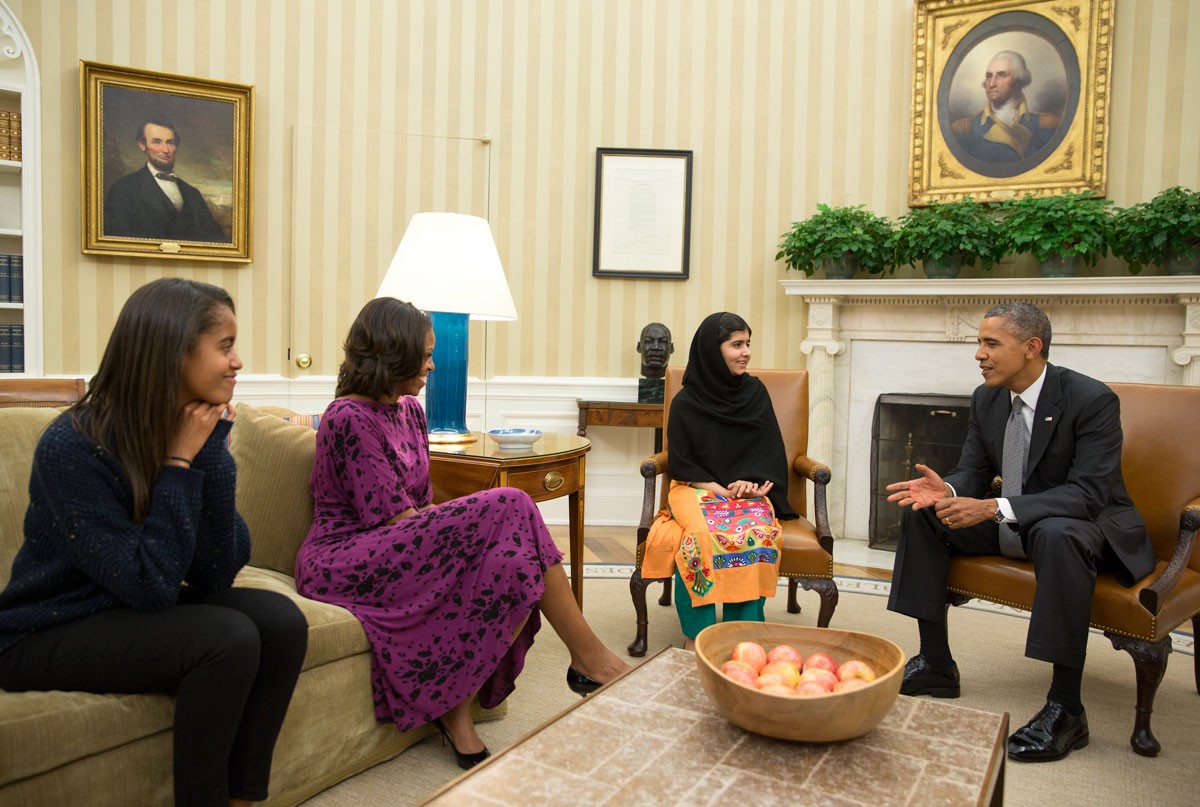
The arrest of the gunmen involved in the attack on Malala and other Taliban targets was announced in September 2014. Malala’s father welcomed the arrest as a "first step" towards real hope for the people of the Swat Valley. In the meantime Malala continues her work as an activist for girls and women all over the world.

Nobel Prize
On 10th October 2014, it was announced as that Malala Yousafzai had been awarded the 2014 Nobel Peace Prize for her struggle against the suppression of young people, and for the right of all children to education. At the age of 17, Malala became the youngest-ever Nobel Peace Prize laureate. She shared the prize with Kailash Satyarthi, a children's rights activist from India.
Malala was only the second Pakistani to receive a Nobel Prize, and the first to receive the Peace Prize. On her 18th birthday, 12th July 2015, she opened a school just across the Syrian border in Lebanon, for Syrian refugees. It is funded by the Malala Fund and offers education to girls aged 14 to 18 years. Malala said: "Today on my first day as an adult, on behalf of the world's children, I demand of leaders we must invest in books instead of bullets."

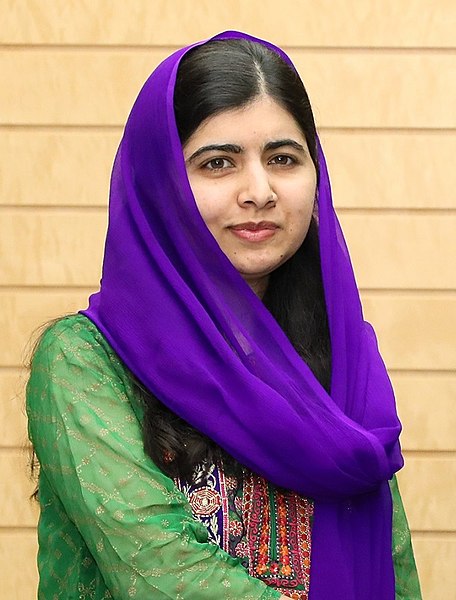
In August 2017, Malala gained admission to Lady Margaret Hall, Oxford University, to read Philosophy, Politics and Economics (PPE). She graduated in 2020.
In November 2021, Malala married her partner Asser Malik during a nikkah, an Islamic ceremony in which bride and groom consent to be married, in Birmingham. She said it was "a precious day" in her life.
In June 2025, Malala announced that she and Malik, a sports executive, were founding an investment firm for women’s sports, called Recess. It will channel funds into existing major women’s leagues, including the National Women’s Soccer League and the Women’s National Basketball Association in the US. She said: “My lifetime mission [is] to create an equal world for girls where they can learn and try. Sports can be a really powerful tool for that.”
Consultant: Philip Parker