
History of London

CITE
We have made every effort to follow citation style rules, but there may be some minor differences. If in doubt, please refer to the appropriate citation style manual.
London A-Z. (2026). In Q-files Encyclopedia, History, History of London. Retrieved from
https://www.q-files.com/history/history-of-london/london-a-z
"London A-Z." History, History of London, Q-files Encyclopedia, 24 Apr. 2026.
https://www.q-files.com/history/history-of-london/london-a-z.
Accessed 6 Aug. 2026.
London A-Z 2026. History, History of London. Retrieved 6 August 2026, from
https://www.q-files.com/history/history-of-london/london-a-z
History, History of London, s.v. "London A-Z," accessed August 6, 2026.
https://www.q-files.com/history/history-of-london/london-a-z


London A-Z
British Museum
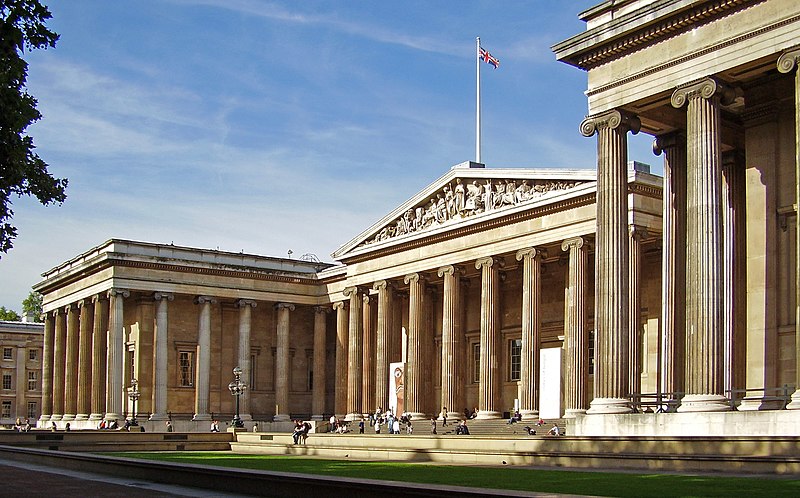
In 1753, a naturalist named Hans Sloane died, leaving his collection of more than 70,000 objects to the British nation. Collected over his lifetime, they included books and manuscripts as well as many objects collected on his travels around the world. Sloane’s collection became the foundation of the British Museum.
When it opened in 1759 it was the world’s first free national museum, open to “all studious and curious persons”. Over the centuries its collections have grown to around 8 million objects, among them an Olduvai stone tool, the Rosetta Stone and Anglo-Saxon treasures found at Sutton Hoo. These artefacts tell the story of more than two million years of human history.
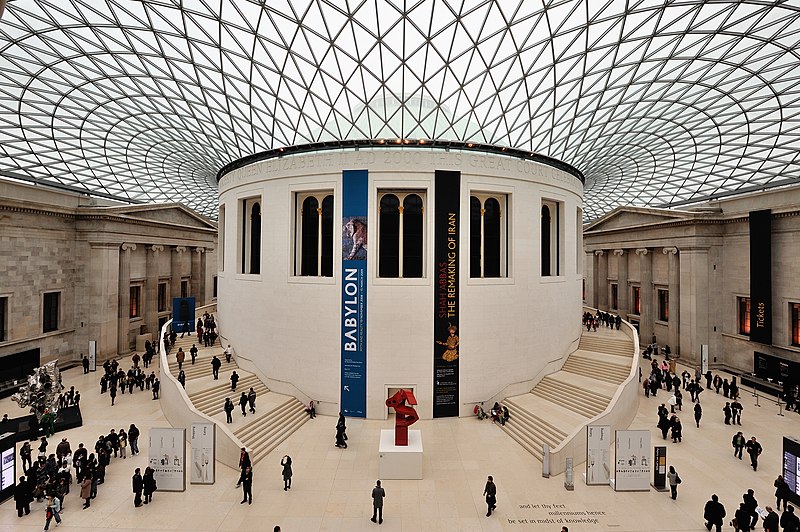
Along with its exhibits, the museum is famous for the design of its Great Court: a courtyard covered by an enormous glass roof. Once an enclosed garden, it was turned into a covered public space in the late 1990s when architects added a curving glass roof. At its highest point, the roof measures 26.3 metres (86 feet) tall—the height of six London double-decker buses.
Buckingham Palace
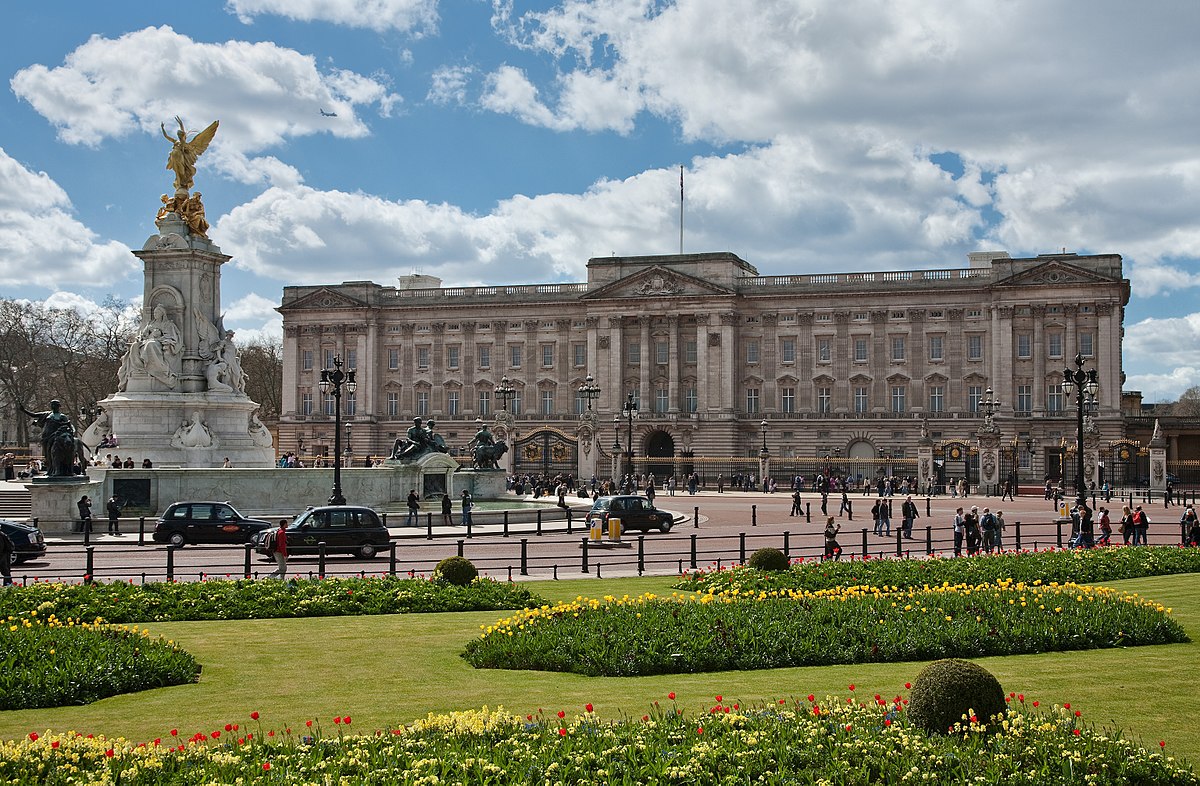
Buckingham Palace was first built in 1703 as a grand town house for the Duke of Buckingham. In the mid-19th century three new wings of the building were constructed around a central courtyard in a neoclassical style, turning it into the palace we recognize today. When Queen Victoria became queen in 1837 she was the first monarch to make Buckingham Palace her London residence, and since then it has been the London home of every reigning monarch.

When the monarch is in residence, a flag called the Royal Standard is flown from the top of the palace. To mark special occasions, members of the royal family appear on the central balcony, often to greet crowds below. The palace’s garden is the largest private garden in London—in total its grounds cover 16 hectares, about the area of 22 football pitches. For a few months each year, the gardens and parts of the Palace are open to the public, including the grand State Rooms where members of the royal family traditionally receive guests.
Houses of Parliament

The Palace of Westminster is the seat of the UK government, also known as the Houses of Parliament. A palace has stood on the site since the mid 1000s, when Edward the Confessor built a palace next to Westminster Abbey. A fire almost completely destroyed it in 1834, and the palace was rebuilt in a neo-Gothic style (a modern reconstruction of Gothic architecture) in the following years. Part of the palace, the Jewel Tower, survived the fire and still stands today. The clock tower, nicknamed Big Ben after its largest bell, was finished in 1858. In 2012 it was renamed the Elizabeth Tower to mark the Diamond Jubilee of Queen Elizabeth II. The Victoria Tower was built in 1860 as a specially fireproof tower to house valuable books and ancient documents.

Kew Gardens
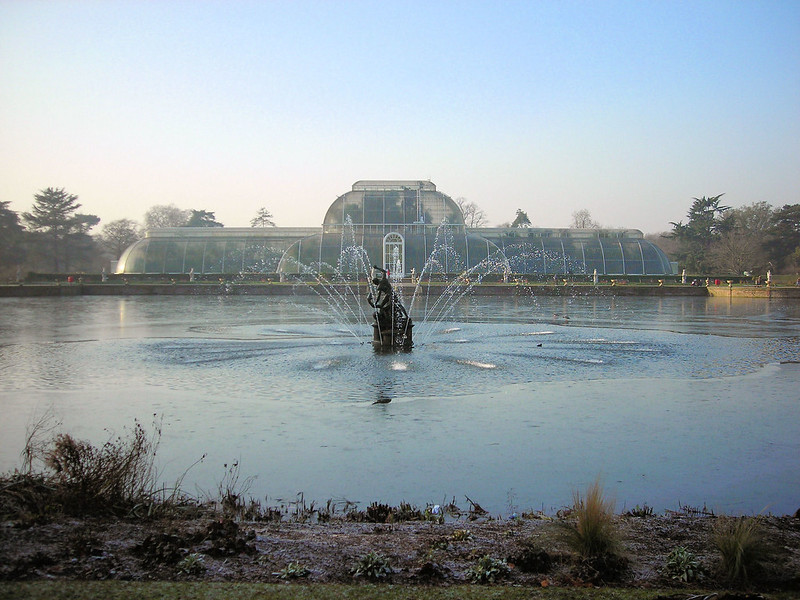

Kew Gardens is a botanic garden in southwest London, founded in 1840 to house a collection of plant species. Today it is home to more than 27,000 different living plants, some of which are extinct in the wild. It also houses the Herbarium, a collection of preserved plants organized like a library and which contains specimens from around 95% of the world’s plants. A similar collection, the Fungarium, holds fungi specimens from every continent dating back to the 18th century. Scientists from all over the world visit the collections to use them for research.
Kew Gardens is one of London’s four World Heritage Sites. Along with its plant specimens, it is famous for its ornate glasshouses which are some of the largest and oldest of their kind in the world. Every year around 2 million people visit Kew, making it one of Britain's top tourist attractions.
London Bridge
Work on the first London Bridge was completed in 1209. Its arches stretched across the river Thames, and it soon became built up with shops, houses and even a church. People, livestock and wagons carrying goods streamed across the bridge every day. The crowded conditions on the bridge meant that it was frequently blocked, however, with sometimes only a single metre-wide lane for traffic to pass through. Fires regularly broke out among the tightly-packed houses.


During an 18th-century period of improvements to the city, the houses on London Bridge were demolished in an effort to make it safer. In the 19th century, as ships became larger and taller, London Bridge’s arches became too narrow for river traffic, and a new bridge was built to replace it in 1831. The second London Bridge had five stone arches. By the 1920s it was found to be sinking slowly at one end, and it was eventually decided to replace it again. A new concrete bridge was completed in 1972 and still stands today, open to pedestrians and road traffic.
London Eye
The London Eye is an enormous Ferris wheel on the south bank of the Thames—the largest freestanding wheel in Europe. It was first designed in 1993 as an entry for a competition to design a millennium landmark. The judges did not select a winner, but the Eye’s architects sought permission to build the wheel anyway. During the wheel’s construction the separate parts were transported by barge along the River Thames. It was then constructed flat across eight platforms in the river, before being slowly lifted into place. The London Eye opened in 2000, offering rides in closed coaches known as pods. The highest point of the wheel is 135 metres (443 feet) above the ground—from here, riders can see views up to 40 kilometres (25 miles) away.

Piccadilly Circus

Piccadilly Circus is a major road junction and busy public space in London’s West End. The intersection of several busy roads including Regent Street and Piccadilly, it is known for its huge illuminated billboards, as well as for the Shaftesbury Memorial Fountain in its southwest corner. On top of the fountain is a statue of the Greek god Anteros, popularly believed to be Eros, the Greek god of love. Until Shaftesbury Avenue was built in the mid-1880s Piccadilly Circus was a complete roundabout—the word circus in its name comes from the Latin word for circle.
Royal Observatory, Greenwich
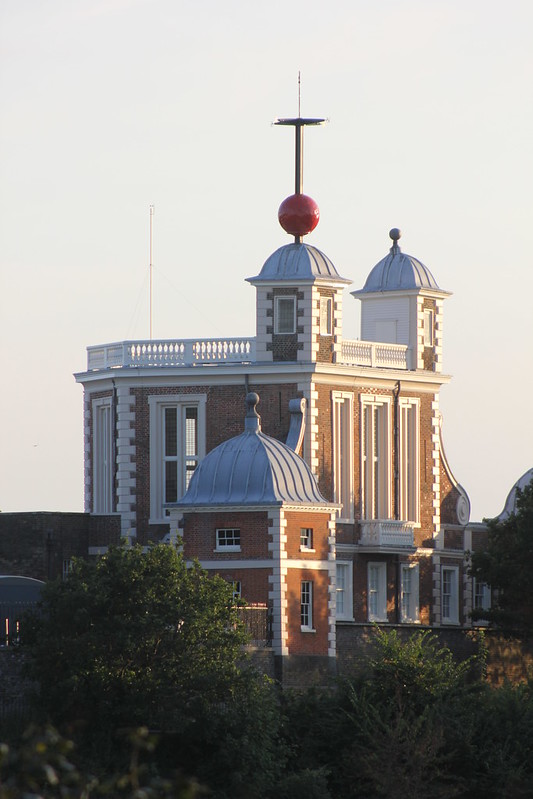
The Royal Observatory sits on a hill in Greenwich Park, southeast London. The observatory was commissioned by King Charles II in 1675 in order to solve the problem of calculating longitude at sea by astronomical observation. This made it Britain’s first purpose-built building for scientific research. It was designed by Sir Christopher Wren, who also designed St Paul's Cathedral.
From 1675, the solar time at the Royal Observatory was established as the one to which all ships set their clocks. In 1833, the popular "time ball" system was introduced: a red ball on the roof of the observatory was raised and then dropped from a post at 1 pm every day, enabling ships on the Thames and other observers to set their clocks to the correct time.
By the 1870s the Industrial Revolution was causing severe air pollution in London, making observing conditions increasingly difficult. In 1948 the observatory moved to a new site in east Sussex, and in 1990 it moved again to Cambridge. The original building in Greenwich is now a museum of astronomy and navigation.
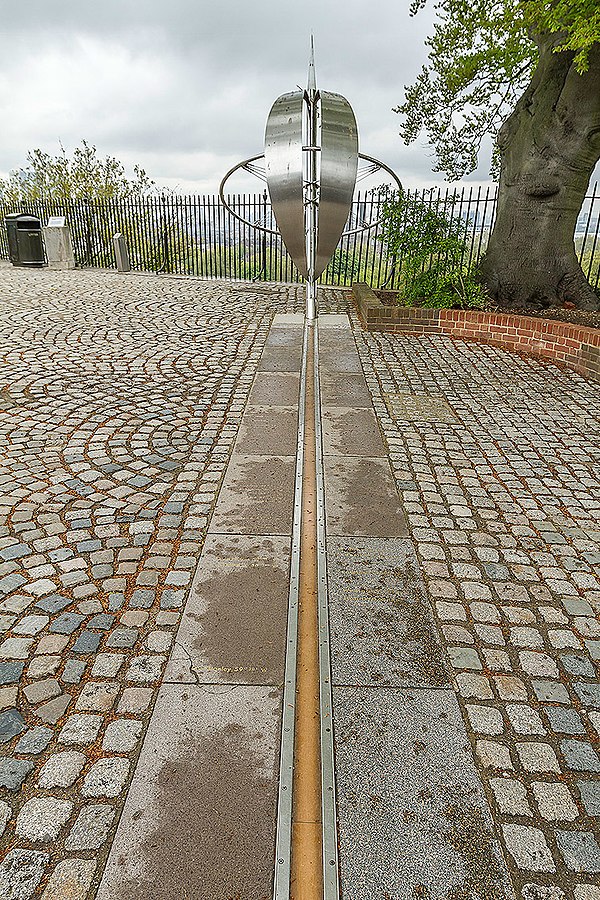
The Greenwich Royal Observatory is the home of the prime meridian (the Greenwich Meridian): a line by which longitude (position east-west) is measured.

Shakespeare's Globe
Shakespeare’s Globe is a modern reconstruction of a theatre built in 1599 by the playwright William Shakespeare and a group of actors known as the King’s Men. The group built the theatre using parts from an old theatre they had dismantled and carried piece-by-piece to the new site. The building was almost circular, and had no roof so the stage was open to the air. A flag flying from the top of the theatre signalled that a play was to be performed that afternoon. The cheapest tickets were in an area in front of the stage called the pit, where a jostling audience paid pennies to stand.

The original Globe burnt down in 1613 during a performance of Henry VIII, and was rebuilt the following year. In around 1645, it was closed along with all other theatres in London and later it was demolished entirely. Shakespeare's Globe, a modern reconstruction of the original theatre, opened next to the site of the original theatre in 1997.
The Shard
London’s tallest building is the Shard, a skyscraper in Southwark, on the south bank of the Thames. It stands 309.6 metres (1016 feet) tall. The Shard was designed by Italian architect Renzo Piano. Seeing his design, critics said it would "tear through historic London like a shard of glass"—a comment that lent the new skyscraper its name. Work began on the Shard in 2009, and took three years to complete. Today its 72 floors are occupied by offices, restaurants, apartments and a hotel. Visitors can take a lift to a viewing gallery at the top where 360-degree views of up to 64 kilometres (40 miles) can be seen on a clear day.


St Pancras Station
St Pancras Station was built in 1868 as a terminus for trains arriving into London from the Midlands and the north of England. The facade (the part of the building that faces the street) opened as the Midland Grand Hotel in 1873. St Pancras’ enormous train shed was designed by William Barlow, with a roof made from cast iron and glass. When it was completed, it became the largest enclosed space in the world. The metal rafters were painted sky blue so that when passengers looked upwards, the roof would appear to blend in with the sky.

The Midland Grand Hotel closed in 1935. In the late 1960s, plans were made to demolish it entirely and divert rail services to nearby King's Cross and Euston, but the station was saved when people campaigned to keep it. In the 1990s it was redeveloped as St Pancras International and today part of the station is home to the modern Eurostar terminal, where high-speed trains depart for mainland Europe.
St Paul's Cathedral
The famous dome of St Paul’s Cathedral has been part of the London skyline for more than 300 years, but a cathedral has stood on this site for many centuries longer. The first took more than 150 years to build. When it was finally completed in 1240, it had one of the tallest church spires (149 metres or 489 feet) in the world. The spire was destroyed by lightning in 1561, but the cathedral itself survived until it was burned to the ground during the Great Fire of London in 1666. It was rebuilt afterwards to a design by Sir Christopher Wren, and completed in 1710. Its enormous dome made it the tallest building in London until 1963, when it was overtaken by skyscrapers.

Tower Bridge

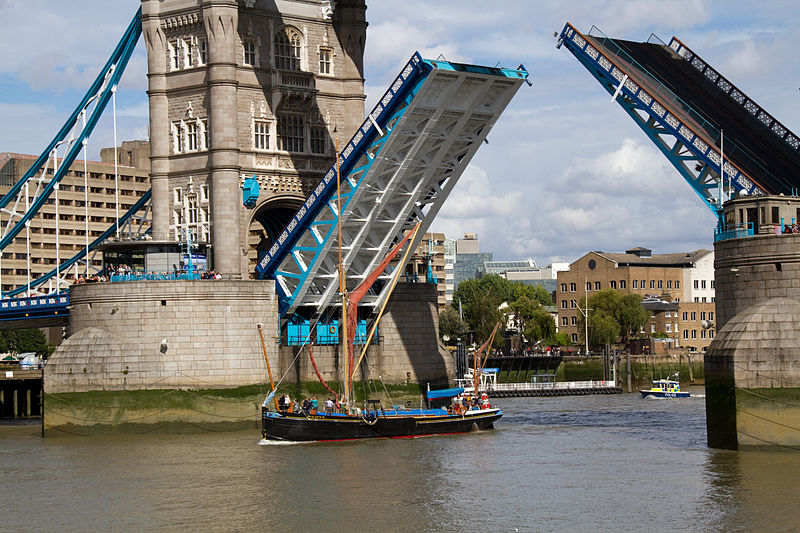
Tower Bridge is a bridge over the River Thames in London. It connects the boroughs of Southwark and Tower Hamlets. In the late 19th century, demand arose for a bridge in London’s East End as more and more shops and businesses opened up there. Work began on the Gothic-style bridge in 1886 and it was finished in 1894. Tower Bridge is a mixture of two types of bridge: a bascule and a suspension bridge. Between the towers, two "leaves" known as bascules can open up to allow ships to pass through. On either side, the crossings are supported by suspension cables. Today, more than 40,000 people cross the bridge every day. River traffic takes priority over road traffic, and every year, the bascules are raised around 800 times for ships to pass.
Tower of London
The Tower of London was built in 1066 by William the Conqueror. He ordered the building of a royal fort to protect the city and to show off his strength as a king. By the end of the 13th century, additions and expansions had made it into a huge castle. In the 15th century, King Henry VI was murdered at the Tower, along with Edward IV’s two sons (known as “the Princes in the Tower”). During Tudor times, it was used as a brutal prison where public figures were held and tortured. Tudor prisoners executed there included Thomas Cromwell (1540) and Lady Jane Grey (1554). Today, the White Tower is one of London’s oldest surviving buildings, a World Heritage site and major tourist attraction.


The Tower consists of several buildings, all set within two concentric rings of defensive walls and a moat. The castle is made up of three wards, or enclosures. The innermost enclosure contains the White Tower and is the earliest part of the castle. Encircling it is the inner ward, created during the reign of Richard I (1189–99). The outer ward surrounding the castle was built under Edward I. The general layout has remained the same since Edward I completed his rebuilding works in 1285.
Wembley Stadium
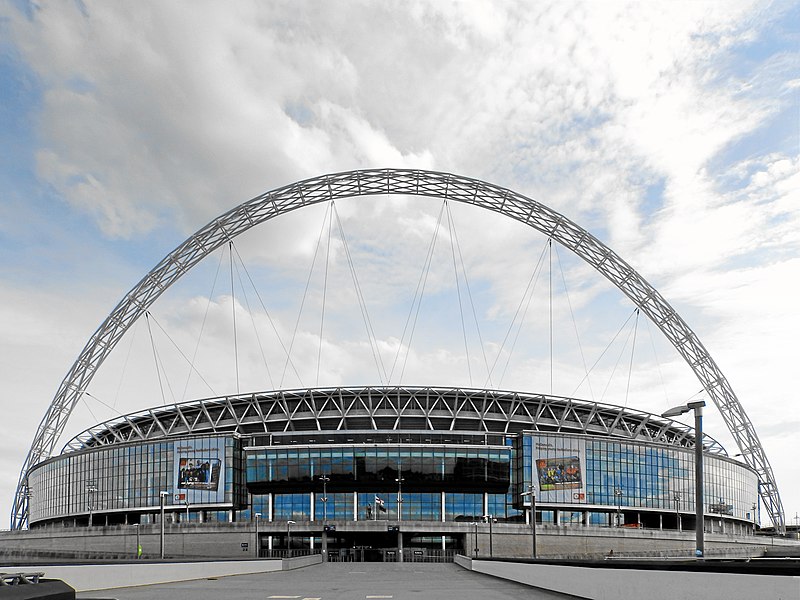
With 90,000 seats, Wembley Stadium is the largest stadium in the UK and the second-largest in Europe. The current stadium at Wembley opened in 2007, replacing an older stadium on the site which was built in 1923. It is used for major football matches such as the FA Cup Final and home matches of the England national team. Wembley Arch towers high above the stadium's roof, measuring 133 metres (436 feet) at its peak. As well as making the stadium a striking landmark, the arch supports more than three-quarters of the weight of the roof.
Westminster Abbey
Westminster Abbey is a large church in central London. This famous church is associated with royalty—coronations have taken place at the Abbey since William the Conqueror was crowned king in 1066, and monarchs are traditionally buried here.
In the mid-1000s Edward the Confessor built a monastery on the site, which was at that time an island in the marshes outside London. In 1265 most of the original monastery was demolished during the reign of King Henry III, and rebuilt in a Gothic style. Over the following centuries, parts of the church were rebuilt and added, in a similar architectural style. The western towers, completed in 1745, were the last part to be constructed. During World War II the Abbey suffered heavy damage from bombing, but it was restored in the years afterwards.

Consultant: Philip Parker
pics

Without in any way limiting Q-files Ltd’s exclusive rights under copyright, any use of this publication to “train” generative artificial intelligence (AI) technologies to generate text is expressly prohibited. Q-files Ltd reserves all rights to license use of this work for generative AI training and development of machine learning language models.