
Dinosaur species
Carnotaurus
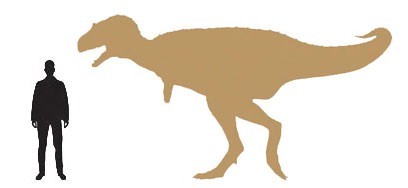
Carnotaurus was a large theropod that lived in South America during the Late Cretaceous Period. It is known from a single fossil, an almost complete skeleton, that was found in Patagonia in 1984. The name Carnotaurus means “flesh-eating bull”, after its bull-like appearance: it had a short, bull-like head with its thick horns above its forward-facing eyes. Carnotaurus had a slender lower jaw with long, thin teeth. Its arms were extremely short, with four immobile, claw-less fingers. The skin on its body was lined with rows of bony lumps. It had a long, thin tail.


Aucasaurus
Closely related to Carnotaurus was Aucasaurus, another Late Cretaceous South American theropod. A smaller animal than Carnotaurus, it, too, had tiny arms with useless hands. A fossil found of its skull was damaged, leading palaeontologists to think it might have been smashed during a clash with another Aucasaurus.
Ceratosaurus

More distantly related to Carnotaurus was a theropod that lived in North America, Europe and Africa in Jurassic times: Ceratosaurus. A 6-metre (20-foot) predator, it, too, had horns above it eyes as well as a large, blade-like horn on its snout. It had short arms, but, unlike those of Carnotaurus, they were powerfully built. Unusually for a theropod, Ceratosaurus had a row of bony spines running down its back. It preyed on a wide range of smaller dinosaurs and probably scavenged on whatever it came across.
Facts about Carnotaurus
Pronunciation: Car-noh-TAW-rus
Size: 7.5 m (25 ft) long and 2.2 m (7.2 ft) tall
Where and when: Plains of Patagonia, Argentina, South America 70 million years ago (Late Cretaceous).
Diet: Meat
Prey: Hadrosaurs such as Secernosaurus; the young of titanosaurs such as Argentinosaurus
Features: Forward-facing eyes gave Carnotaurus binocular vision, which was good for spotting prey; blade-like, saw-edged teeth—perfect for slicing up flesh; short, bull-like head could be used by males for butting rivals in mating contests
Relatives: Aucasaurus (Argentina), Majungasaurus (Madagascar) and Rajasaurus (India)

Consultant: Chris Jarvis