
Dinosaur species
Tyrannosaurus rex
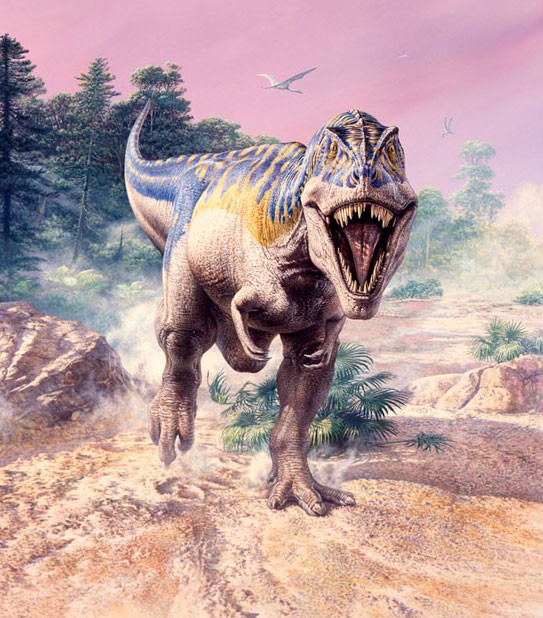
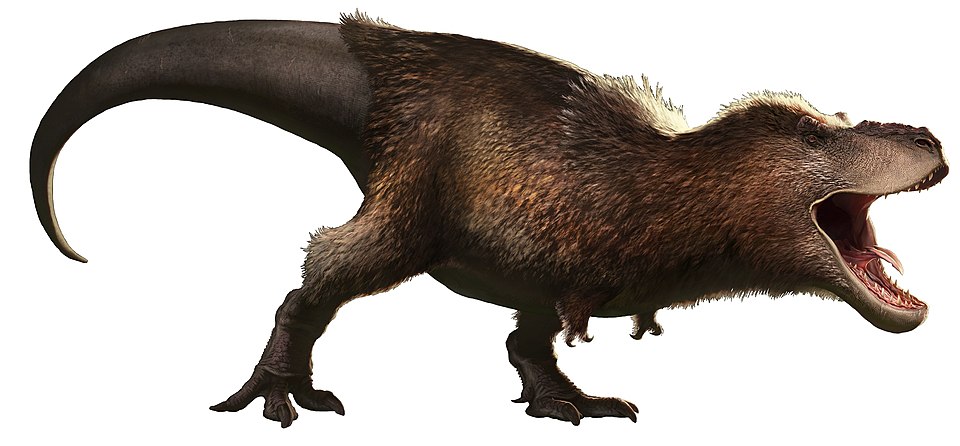
Tyrannosaurus rex was a giant theropod that lived in North America in the Late Cretaceous Period, during the very last years of the Age of Dinosaurs. Longer than the width of a doubles tennis court, it was one of the largest flesh-eating animals ever to walk on Earth. An eight-year old child could have stood in its gaping mouth, surrounded by rows of dagger-like, saw-edged teeth, some up to 18 centimetres (7 inches) long. Relying on its keen senses of sight, smell and hearing, T. rex hunted or scavenged for its food.

Hunting technique
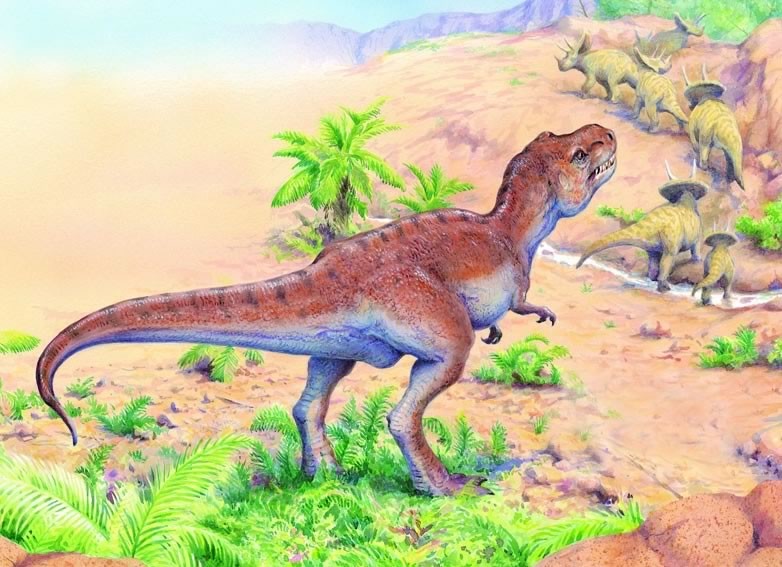
Using its excellent sense of smell, T. rex would pick up the scent of a herd of Triceratops. Following at a distance and out of sight, it would look out for stragglers: the young, old or injured. When one was spotted, it would get as close as possible before rushing at it, jaws gaping, overcoming its prey with the force of its attack. It would then hold it down with its arms or feet before delivering a fatal bite to its neck.
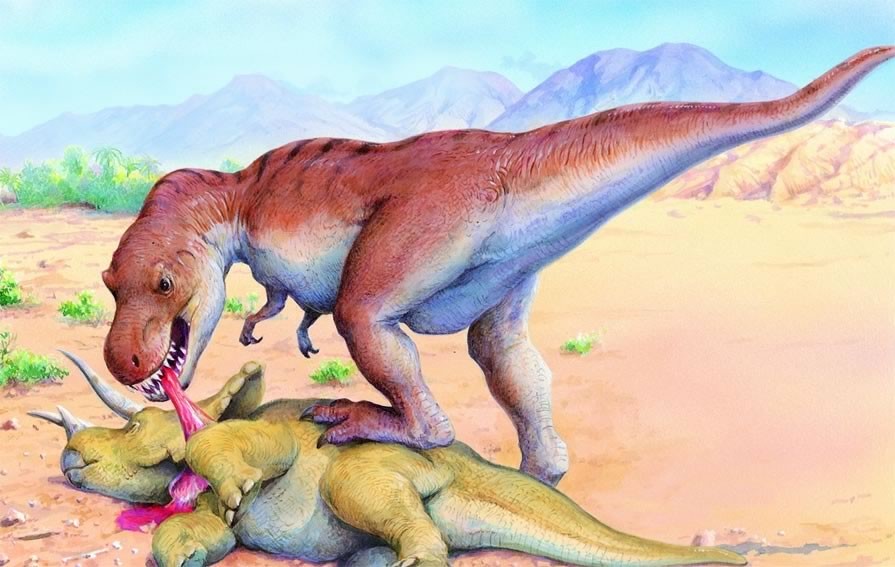
T. rex's teeth were perfect for slicing through flesh and bone. Their backwards-curving shape made it almost impossible for struggling victims to escape.
Arms
Tyrannosaurus rex had tiny, two-fingered arms. Had they been any larger, however, the giant predator would have toppled over, as its head was so heavy. Though its arms were too short to bring food to its mouth, they were strong and had sharp claws on each finger. Perhaps they were used to pin down its prey while the teeth and mighty toe-claws—three on each foot—did the rest. The arms might also have helped the giant predator get to its feet from a lying-down position.
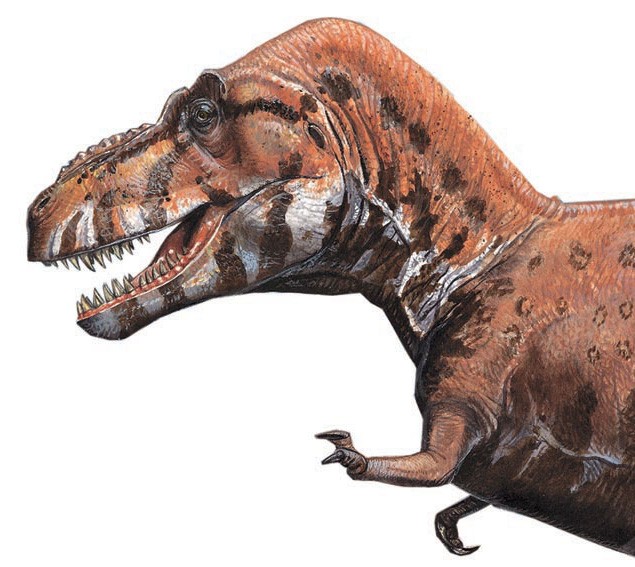
A younger Tyrannosaurus rex would have had proportionally much longer arms than an adult one: as the dinosaur's body grew into adulthood, its arms became smaller in proportion to its faster-growing body.

Hunter or scavenger?
Some palaeontologists believe that T. rex was a scavenger and did not engage in active hunting at all. But most think it was probably both a predator and a scavenger, taking whatever meat it could find depending on the opportunity. Lions and hyenas will often scavenge what other predators have killed, so it is quite likely T. rex would have done the same.
Was Tyrannosaurus rex feathered?
Studies of another tyrannosaur, Yutyrannus, from China, has revealed the existence of feathers, This has raised the possibility that Tyrannosaurus rex might also have been a feathered dinosaur, like other smaller theropods such as Velociraptor. Some palaeontologists think it possible that a juvenile T. rex had a feather coat, but lost most of it as it grew into adulthood. An adult might have had a crest and possibly some feathering on its back.
Skull
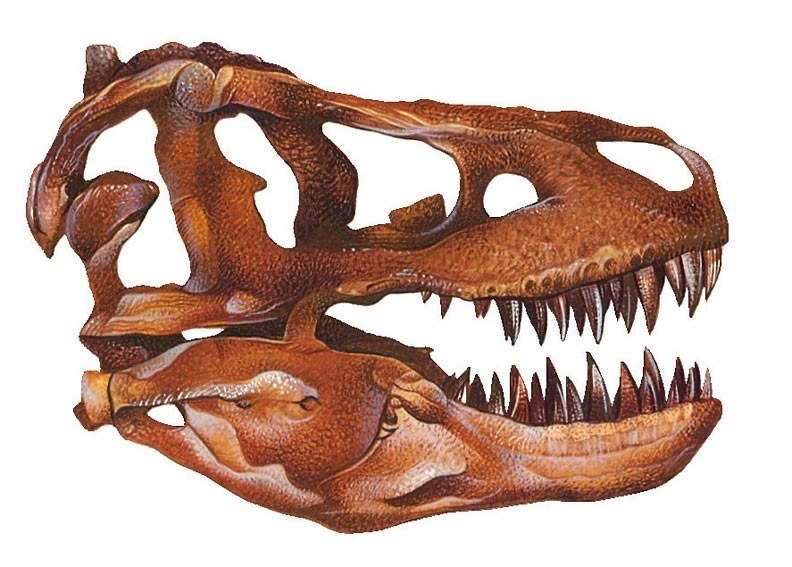

The large holes between the bones made Tyrannosaurus rex's vast skull lighter. It had an extra joint in its lower jaw so that it could open extremely wide. Its massive jaws were curved so that when they closed, all the teeth met at once. The teeth had saw-like edges, allowing them to slice through tough hide.
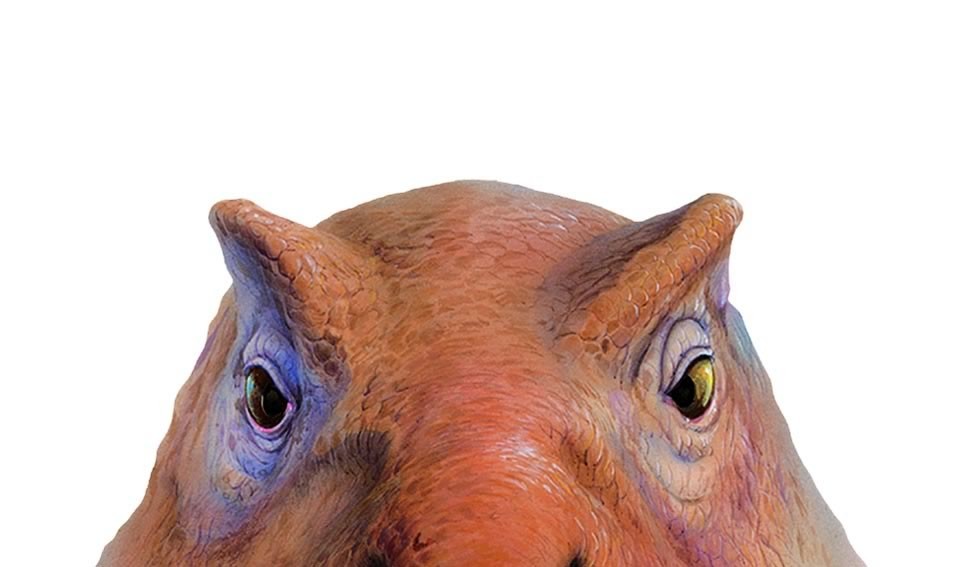
T. rex had large, forward-looking eyes and a spacious nasal cavity—giving it both excellent 3D vision and a keen sense of smell.
Facts about Tyrannosaurus rex
Pronunciation: Tie-RAN-oh-SAW-rus REX
Size: 12 m (40 ft) long and 4 m (13 ft) tall
Where and when: Open woodland in North America, 68–66 million years ago (Late Cretaceous)
Diet: Meat
Prey: Plant-eating dinosaurs such as Triceratops, Torosaurus, Pachycephalosaurus, Edmontosaurus
Features: Ability to see in 3D; well-developed sense of smell; sprinting speed of about 30 km/h (20 mph); long, heavy tail to balance the weight of its head and torso; enormous dagger-like teeth, capable of crushing bone.
Relatives: Albertosaurus, Daspletosaurus, Gorgosaurus (North America); Alioramus, Tarbosaurus (East Asia)


Consultant: Chris Jarvis