
The world in the 20th century
World War I
World War I broke out when Archduke Ferdinand, heir to the throne of Austria-Hungary, was assassinated by a Serbian protester in 1914. Austria-Hungary declared war on Serbia, prompting Russia to send troops to defend her ally. Soon, Germany, France, Britain, and later the USA, were drawn into the “Great War”, which later became known as World War I. Around 70 million people fought or worked on the battlefield. About 10 million of them were killed, plus about 7 million civilians. The war ended with the defeat of Germany, who agreed to an armistice (an agreement to stop fighting) on 11th November 1918.
Pre-war alliances
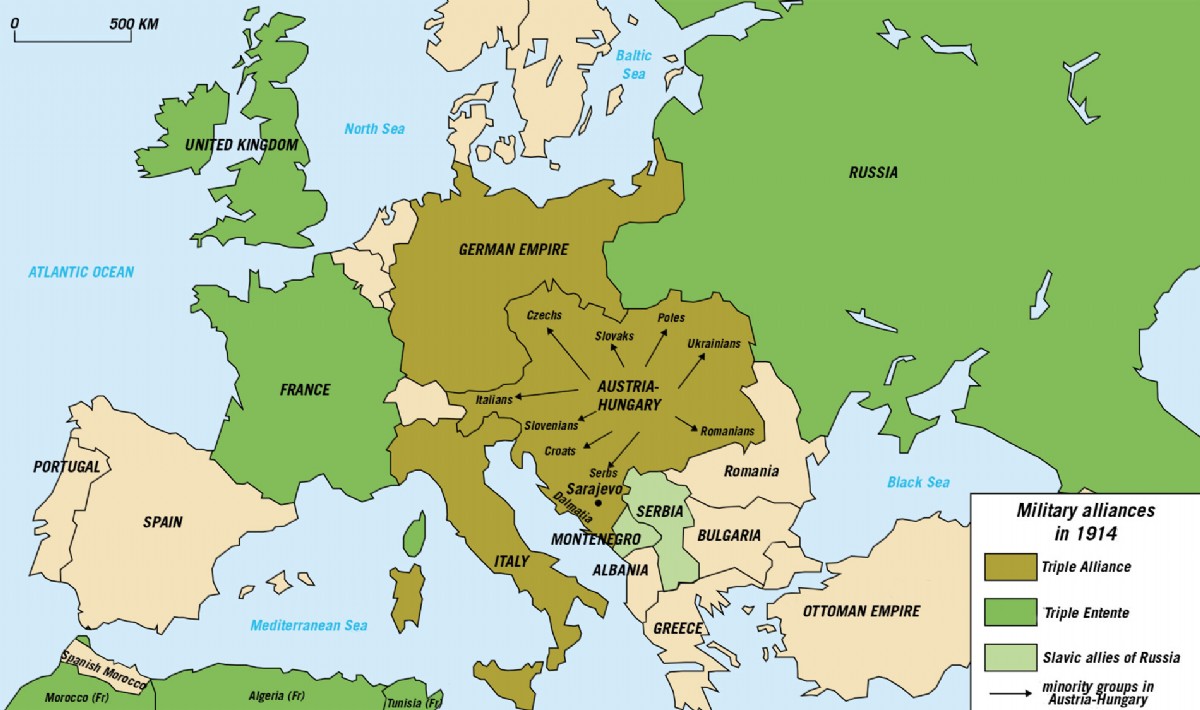
The beginning of the 20th century was a time of increasing rivalry between the European nations. Some nations joined together to form alliances, promising to help each other if they were attacked. Germany, Austria-Hungary and Italy formed the Triple Alliance (later, without Italy, known as the Central Powers). Britain, France and Russia formed the Triple Entente (later known as the Allies). Britain and Germany became locked in an arms race, in which each country strove to outdo the other in the production of better and better ships, weapons and military equipment.
Outbreak of war
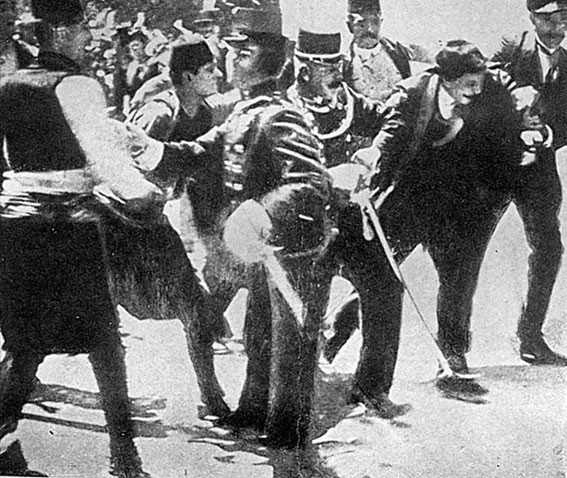
The event that sparked off war took place in Sarajevo, Bosnia, when Archduke Franz Ferdinand, heir to the throne of Austria-Hungary, was assassinated by a Serbian protester, named Gavrilo Princip, on 28th June 1914. Austria-Hungary declared war on Serbia, firing the first shots of the war on 28th July 1914. Russia sent troops to defend Serbia. France was an ally of Russia, so she was brought into the war. Fearing having to fight a war on two fronts, in the east against Russia and in the west against France, Germany quickly invaded neutral Belgium in an attempt to storm Paris and defeat France before concentrating on Russia. This caused Britain to declare war on Germany in support of its allies.
Schlieffen Plan
Germany planned to defeat France quickly, enabling it to turn its full forces against the Russians. The Schlieffen Plan, drawn up in 1905, called for invading Luxembourg and Belgium first, avoiding the strong fortifications along the French border. After conquering the Low Countries, the German army would continue on into northern France, before swinging south to attack the French capital of Paris. The German commander, General Helmuth von Moltke, however, decided to send his forces east of Paris to attack the French army.
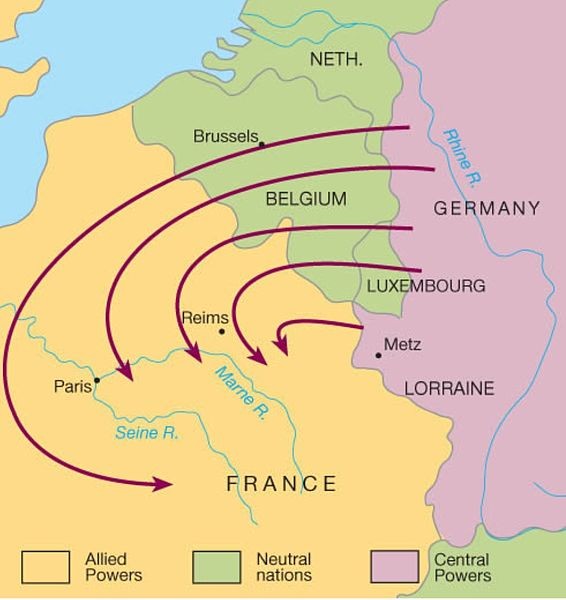
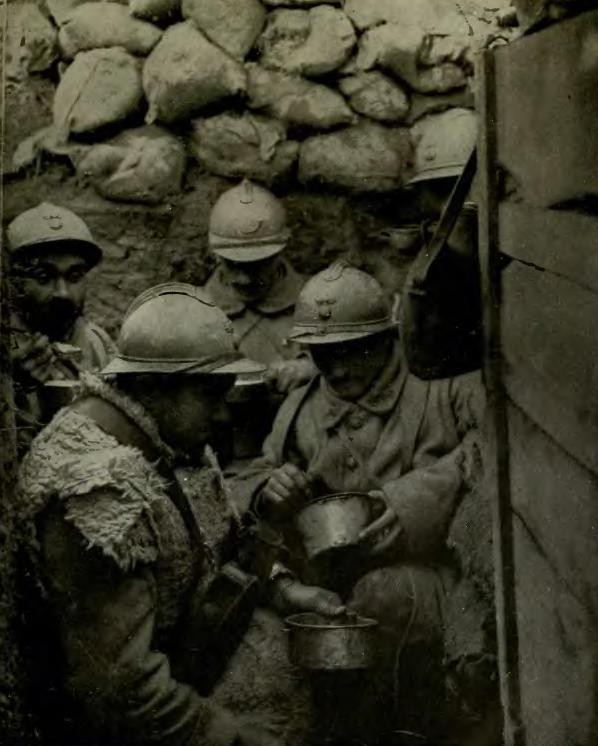
Together with the British Expeditionary Force, the French counter-attacked at the Battle of the Marne in September 1914. Despite casualties of hundreds of thousands of men, the battle ended in stalemate—but it did halt the German advance. Both sides began to dig a network of trenches that formed the Western Front.
The Fronts
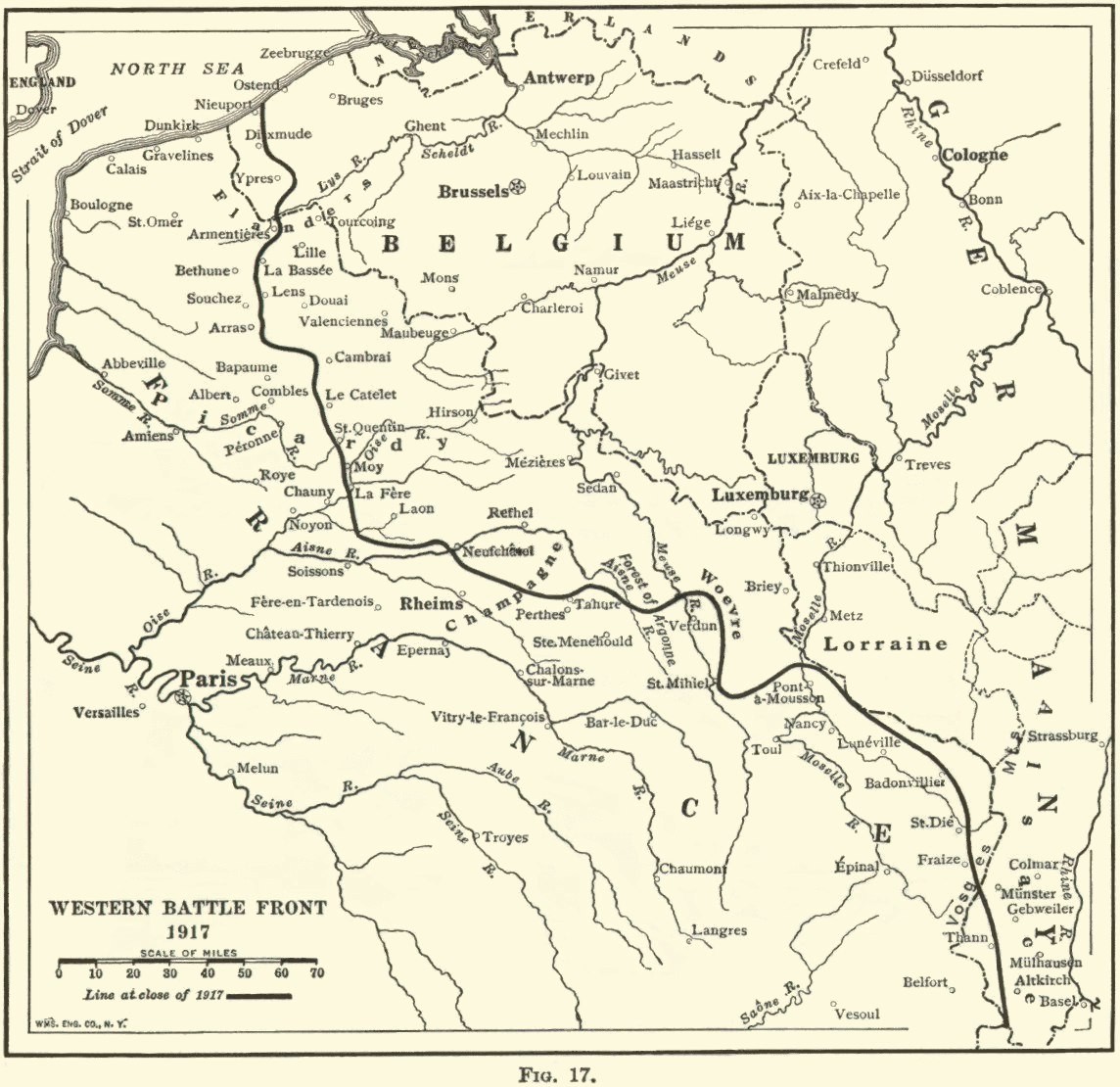
The war was fought mainly on two fronts, the Western Front and the Eastern Front. The Western Front stretched across Belgium and France, where major combatants were the German, French, British and Belgian armies. The Eastern Front, along the Russian border, was largely a battleground between Germany, Austria-Hungary and Russia. After initially remaining neutral, Italy entered the war in 1915 on the side of the Allies: the Italian Front was along the border between Austria and Italy.
Another major war zone was on the borders of the Ottoman Empire, which had entered the war on the side of the Central Powers. In Africa, Asia and the Pacific, conflicts took place between Allied forces and numerous German colonies (overseas territories).
Trench warfare

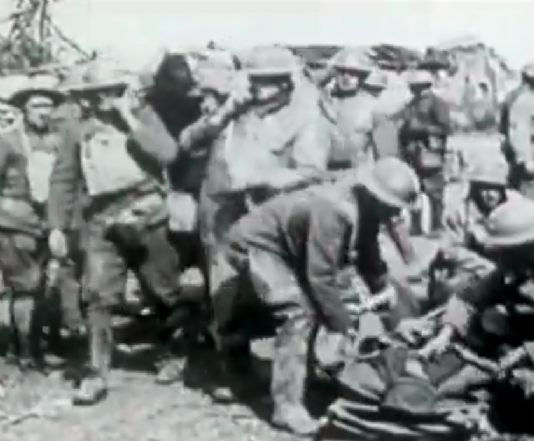
Along the Western Front, the fighting soon turned into stalemate, with neither side able to make headway. Recently developed weapons, such as machine guns, grenades and long-range artillery (field guns and mortars) proved devastatingly effective.
As a defence against such weapons, soldiers on both sides dug deep ditches in the ground, which expanded into a system of trenches that stretched from the English Channel to Switzerland. Barbed wire was erected in front of the trenches, and mines littered the “No Man’s Land” between the two sides. Over the course of the war, trench designs became more complicated. Each side usually dug three parallel lines of trenches, connected by communications ditches. The rear trench often featured dugouts, where soldiers and officers could be at less risk of shell fire.
Battle tactics
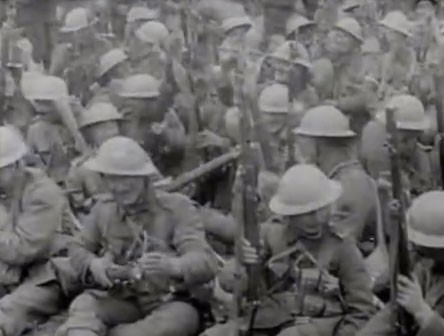
The generals, who were used to fighting wars without such sophisticated weapons, could not initially devise tactics to break through the trench lines. As in earlier wars, they ordered their men to march on the enemy in long rows, allowing them to be mown down. On the first day of the Battle of the Somme alone, 1st July 1916, 19,240 British
men died.
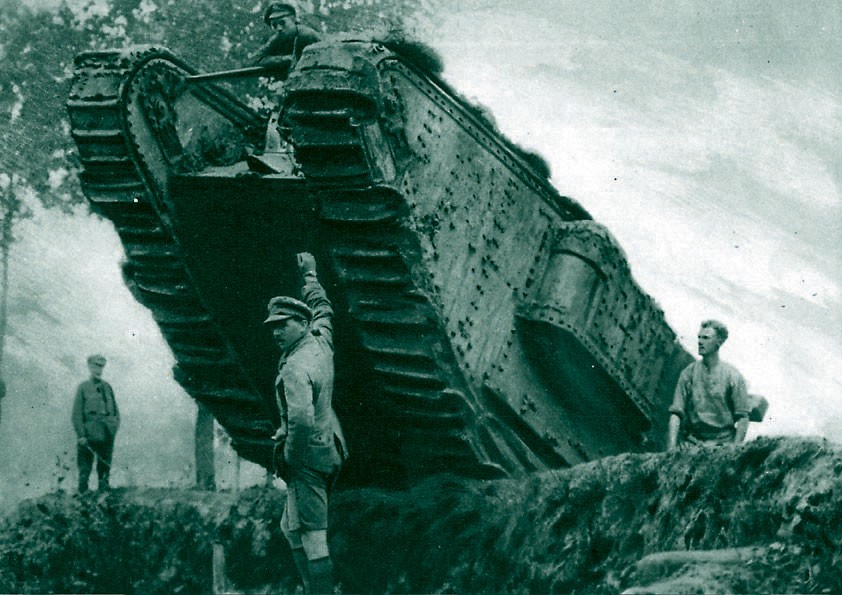
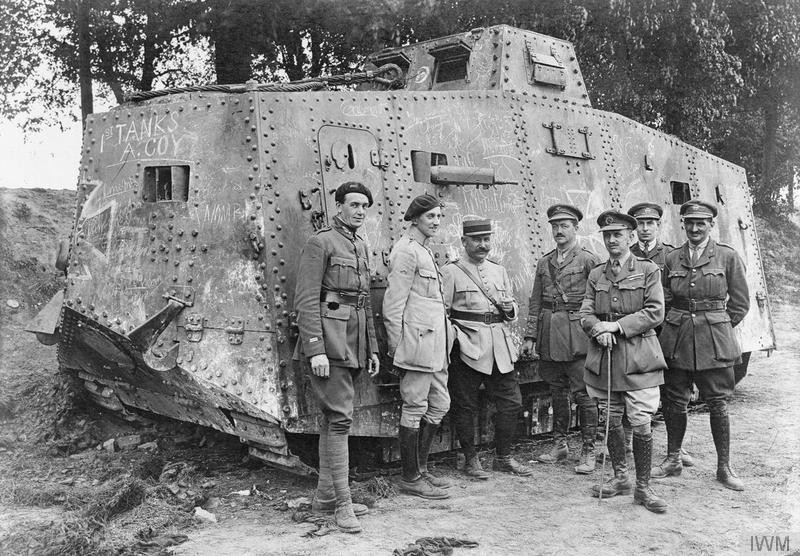
New kinds of weapons were introduced in an attempt to break the deadlock. Gas became a weapon of war for the first time: at first, chlorine (which was first used by the Germans in April 1915); later, more deadly phosgene and mustard gases were used by both sides. Gas masks were quickly developed as a protective measure. Tanks were used for the first time by the British on 15th September 1916, during the Battle of the Somme.
War in the mountains
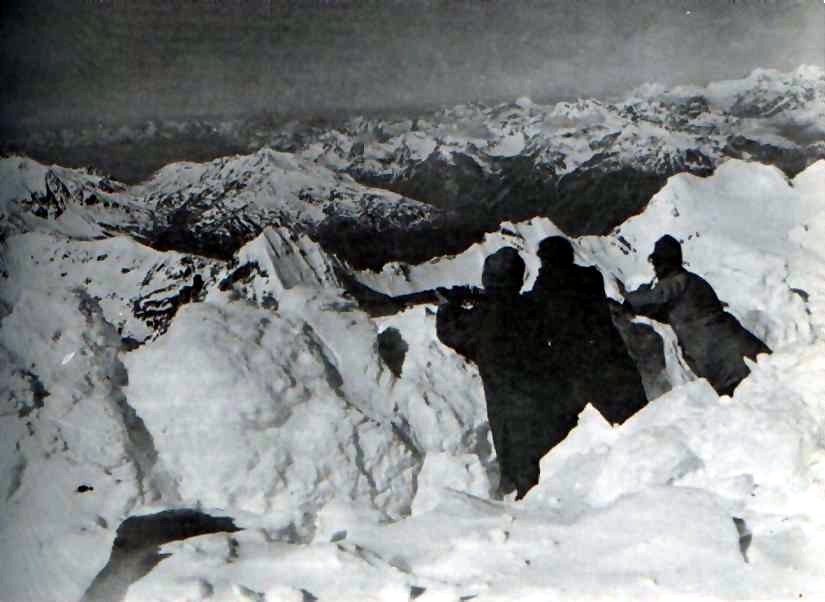
In southern and southeastern Europe, the war was fought in the mountains. The rugged terrain and bitter cold, especially in winter, created extra agony for the soldiers fighting there.
Serbia held off two invasion attempts by Austria-Hungary, but fell when German and Bulgarian forces joined the conflict. Romania remained neutral until August 1916, when it joined the Allies and declared war on Austria-Hungary in the hope of annexing Transylvania. But an alliance of Germans, Hungarians, Austrians, Bulgarians and Ottomans quickly conquered Romania and captured more than half of its soldiers.
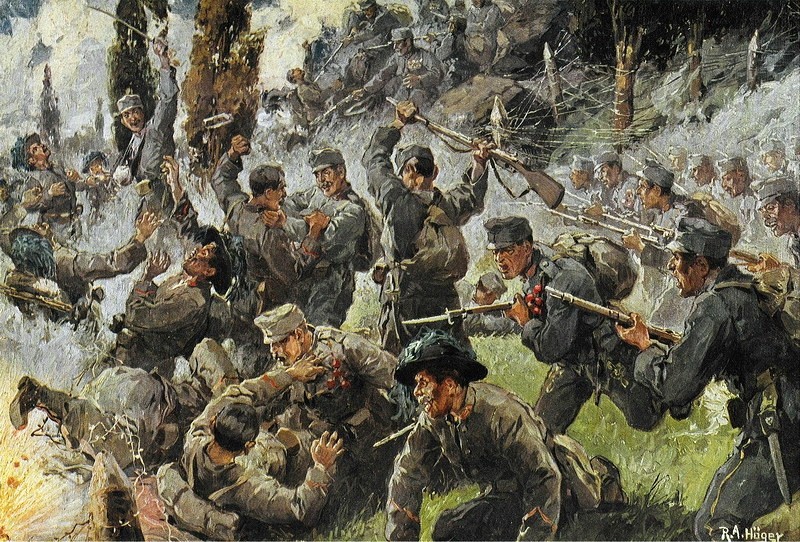
Italy entered the war on the Allied side in May 1915. Its forces attempted to break through Austria’s defences on the mountainous border between the two countries, but were unable to advance beyond the River Isonzo where the Austrians held the upper ground. The Italian forces were routed by Austria’s German allies at the Battle of Caporetto in October 1917, but recovered to defeat the Austrians at Vittorio Veneto in October 1918. Italy made territorial gains, including the Trieste, by the end of the war.
War in the Ottoman Empire
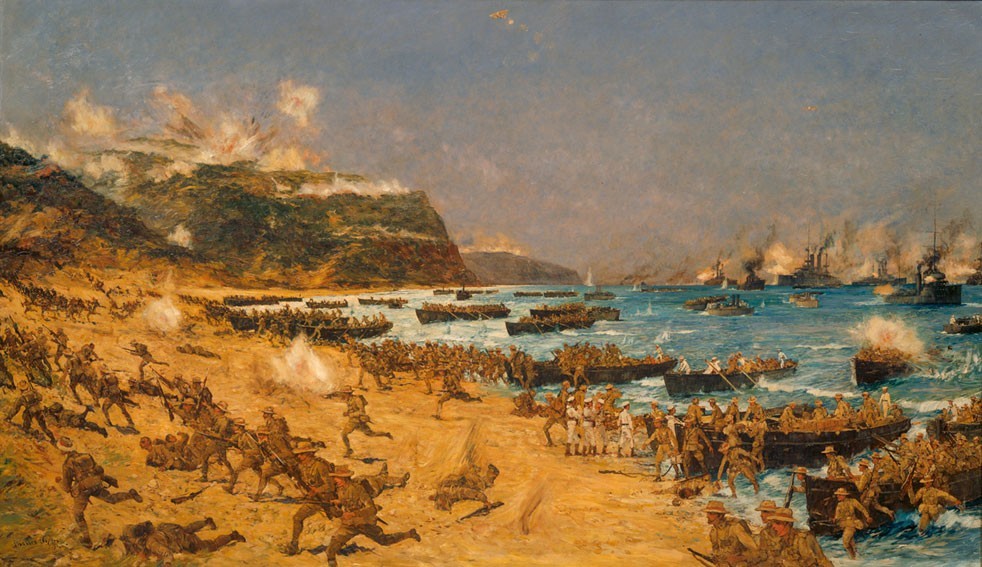
In February 1915, Britain launched an attack against the Ottoman Empire, the so-called "soft underbelly" of Europe. Britain wanted to open up a sea route for its ally, Russia, to draw German forces away from the Western Front, and, if possible, force Turkey out of the war. An attempted invasion on the Gallipoli Peninsula resulted in disastrous defeat for the Allies, however.
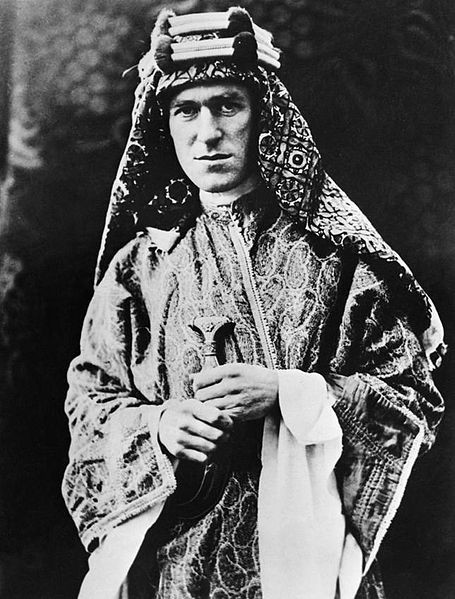
Attacks on the interior of the Ottoman Empire were more successful. British forces captured Baghdad in March 1917. When Ottoman forces invaded Persia, attempting to cut off the Allies’ access to oil wells in the Caspian Sea, British and Russian forces halted their advance. Arab groups, rising up against their Ottoman overlords, waged a guerrilla war in the Middle East, aided by British officer T.E. Lawrence, known as Lawrence of Arabia. It ended with the Ottoman surrender at Damascus and the Armistice of Mudros on 20th October 1918.
War at sea
Soon after the outbreak of war in 1914, Britain began a naval blockade of Germany: it prevented any ships leaving or arriving at German ports using mines. The Germans responded by attacking convoys of ships bringing supplies to Britain from North America using their deadly submarines which they called Unterseeboote, or U-boats. They could attack merchant or warships with torpedoes without being seen. Over the course of the war, U-boats sunk around 5000 Allied ships with the loss of just 199 submarines.
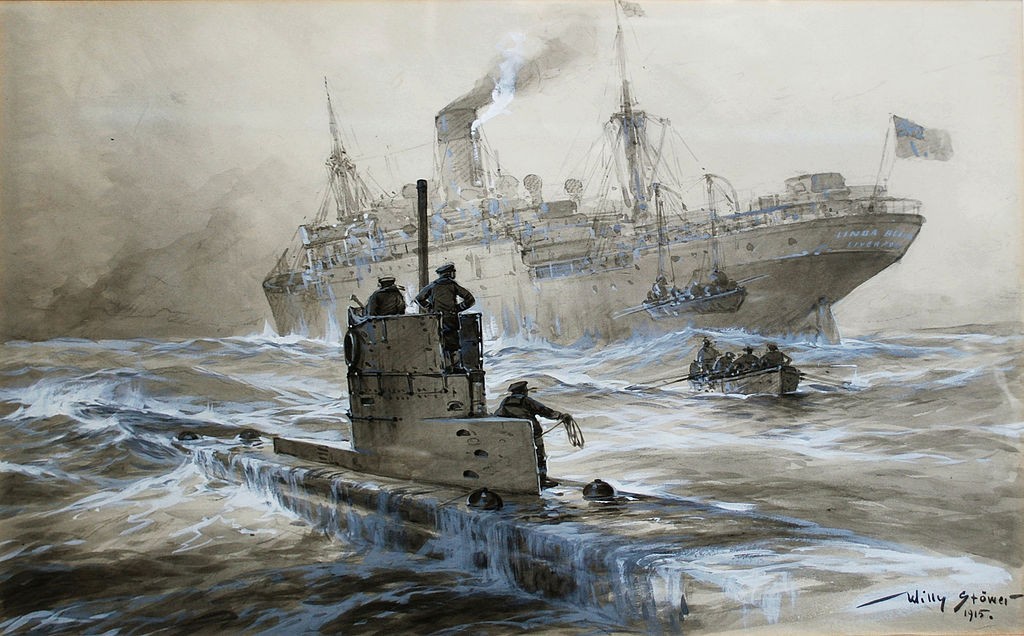

Before the war, Britain’s Royal Navy had introduced a special new kind of battleship, equipped with big guns and steam turbine propulsion. It was called a dreadnought. This started an arms race in which Germany competed with Britain to have the largest, most powerful navy. The Battle of Jutland (31st May–1st June 1916) was the only conflict between these dreadnought battleships during World War I. Neither side won, although the Germans managed to sink more British ships than the other way round. The Royal Navy did, however, stop the German fleet from putting to sea again during the war.
War in the air
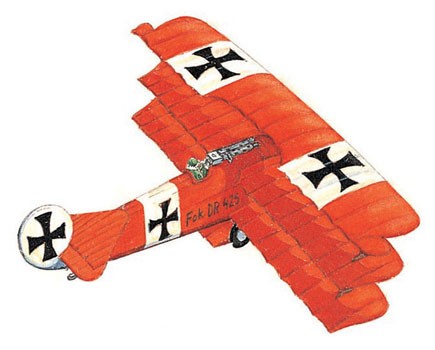
The first aircraft of the war were not armed; pilots shot at each other with pistols. Then in 1915 Dutch inventor Anthony Fokker developed a method to synchronize a machine gun’s fire with the rotation of the propeller on his aeroplane. Pilots could now engage enemy planes in one-on-one dogfights. The most skilful ones gained the status of ace fighter pilots. The most famous was the "Red Baron", Baron Manfred von Richthofen, the most successful German fighter pilot of World War I.
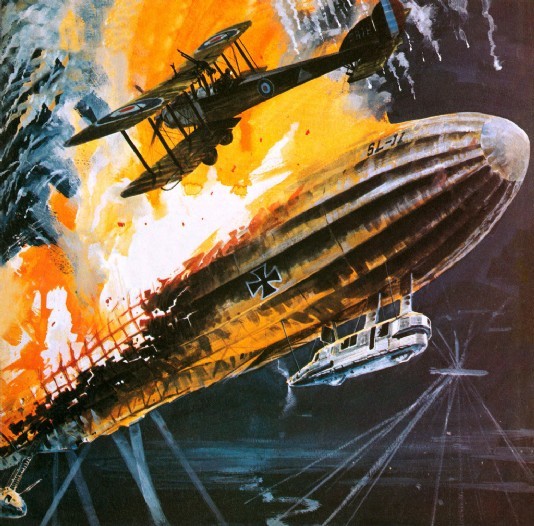
By the end of war, larger planes were being built and used by the Germans used to bomb British cities. Zeppelins, huge airships, were initially used just for reconnaissance (observing enemy positions), but later for bombing raids. The development of anti-aircraft guns was swift to follow.
The Russian Revolution
In Russia, the financial cost of fighting the war, severe food shortages and high casualties, deepened public distrust of the ruler, Tsar Nicholas II, a member of the Romanov dynasty, and his regime. Unhappiness was increased by some terrible defeats, such as at the Battle of Tannenberg in 1914, when German forces killed and wounded 50,000 and captured another 100,000 Russian soldiers. In 1917, the February Revolution in Petrograd (modern St Petersburg) led to the tsar being forced to give up his throne.
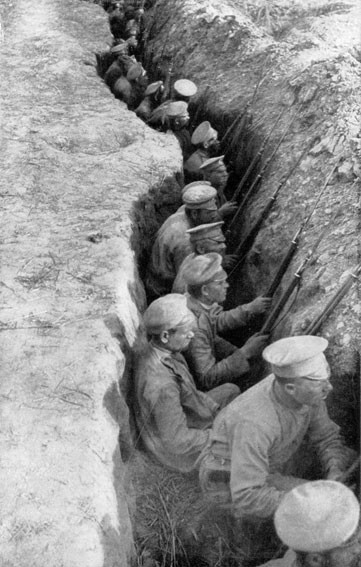
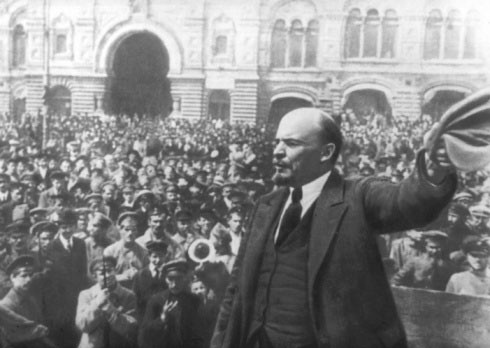
In a deliberate attempt to weaken Russia even further, Germany allowed a revolutionary called Vladimir Lenin (1870–1924) to return from exile in Switzerland. Lenin led another uprising in Russia in 1917, known as the October Revolution, seizing control of the government. He then opened peace talks with the Central Powers, signing a peace treaty on 3rd March 1918. Tsar Nicholas and his family were executed in July 1918.
An end to the conflict
Following the sinking of several US ships by German U-boats, the United States declared war on Germany on 6th April 1917. With American troops arriving in Europe soon afterwards, the advantage shifted in favour of the Allies. Germany launched its Spring Offensive in March 1918 in an attempt to win the war before the full might of the American army was in place, but it failed. They were pushed back to their own border by September.
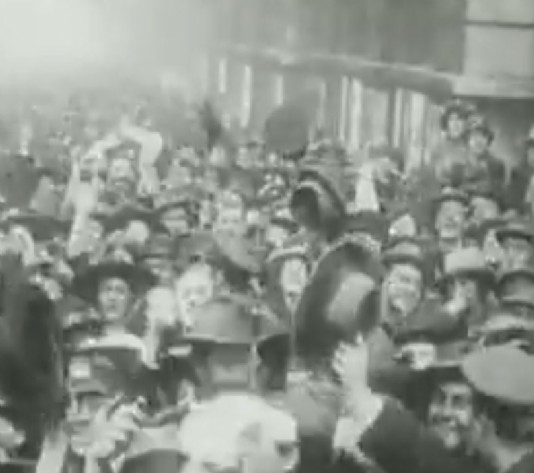
The German navy mutinied and riots broke out across the country. Prince Max of Baden, the German Chancellor, was forced to open peace negotiations. On 9th November 1918, the abdication of Kaiser Wilhelm II was announced and Germany was declared a republic. On 10th November, a provisional government of Germany was formed. At 11 a.m. on 11th November 1918 (the eleventh hour of the eleventh day of the eleventh month), the new government agreed a ceasefire, and the Armistice, came into effect.
Treaty of Versailles
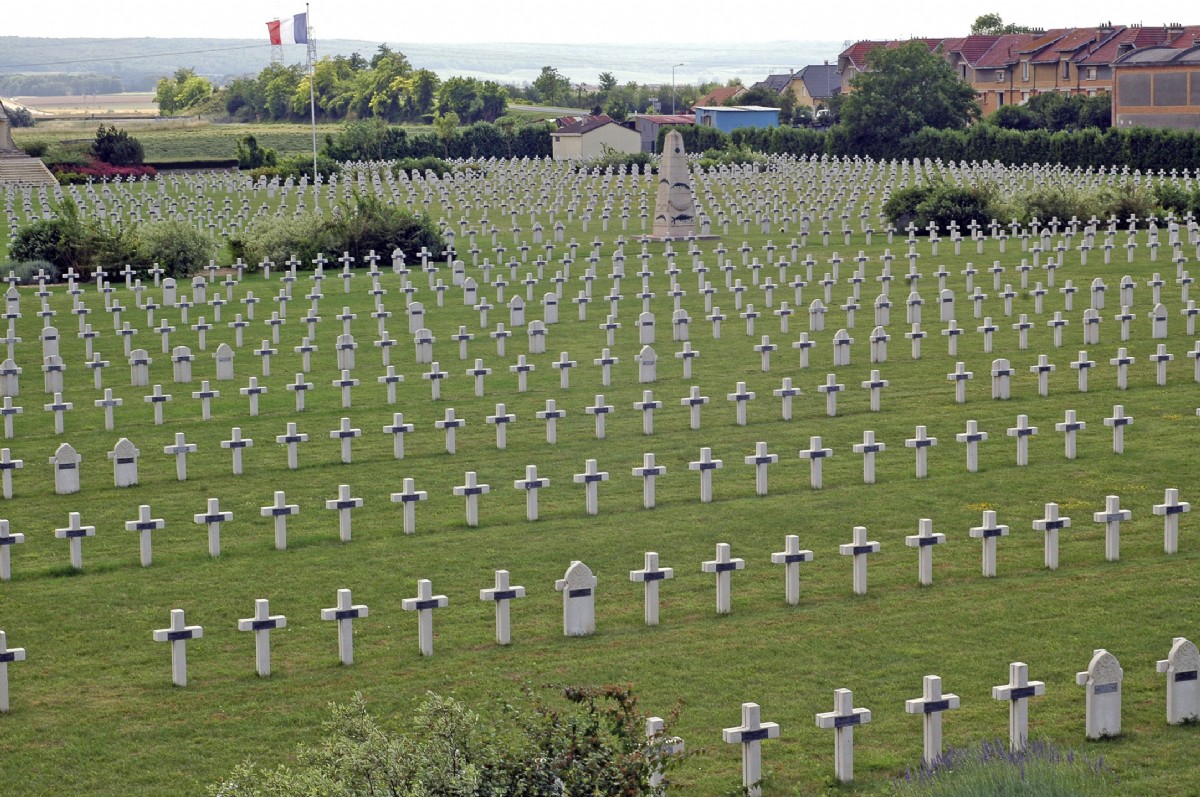
The Ottoman Empire, Austria, Hungary and other nations of the Central Powers all signed separate armistice agreements. As a result of the war, the German, Austro-Hungarian and Ottoman empires were broken up and their ruling dynasties overthrown. In 1919 Germany signed a peace treaty with the Allied powers, called the Treaty of Versailles. The treaty forced Germany to pay 132 billion marks (about £284 billion today) to other European nations. In Germany, bitterness about the treaty—and the economic and social chaos caused by the war—made it easier for Adolf Hitler and his Nazi Party to gather support and win power in 1933.
Consultant: Philip Parker
World War I timeline
28th June 1914
Archduke Franz Ferdinand, heir to the throne of Austria-Hungary, is assassinated by Serb nationalist Gavrilo Princip.
28th July 1914
Austria-Hungary declares war on Serbia.
1st August 1914
Germany declares war on Russia.
3rd August 1914
Germany declares war on France.
4th August 1914
Britain declares war on Germany, after Germany invades Belgium.
6th August 1914
Austria-Hungary declares war on Russia.
26th August 1914
The Battle of Tannenberg begins on the Eastern Front.
5th September 1914
The First Battle of the Marne takes place: trench warfare begins.
19th October 1914
The Battle of Ypres begins.
22nd April 1915
The Second Battle of Ypres: first use of poison gas.
25th April 1915
Battle of Gallipoli starts in the Ottoman Empire.
7th May 1915
British ocean liner Lusitania is sunk by a German U-boat.
21st February 1916
The Battle of Verdun begins.
31st May 1916
The Battle of Jutland: the major naval battle of the war.
1st July 1916
Battle of the Somme: tanks are first introduced in battle.
15th March 1917
Russian Tsar Nicholas II abdicates.
6th April 1917
The USA declares war on Germany.
31st July 1917
The Battle of Passchendaele (Third Battle of Ypres) starts.
3rd March 1918
Treaty of Brest Litovsk is signed, a peace treaty between Russia and the Central Powers.
21st March 1918
Germany launches its Spring Offensive.
15th July 1918
The Second Battle of the Marne begins.
11th November 1918
Germany signs the armistice at Compiègne, France.
28th June 1919
The Treaty of Versailles is signed. World War I officially ends.