
Famous inventors

CITE
We have made every effort to follow citation style rules, but there may be some minor differences. If in doubt, please refer to the appropriate citation style manual.
Ferdinand von Zeppelin. (2026). In Q-files Encyclopedia, Technology, Famous inventors. Retrieved from
https://www.q-files.com/technology/famous-inventors/ferdinand-von-zeppelin
"Ferdinand von Zeppelin." Technology, Famous inventors, Q-files Encyclopedia, 16 Mar. 2026.
https://www.q-files.com/technology/famous-inventors/ferdinand-von-zeppelin.
Accessed 6 Aug. 2026.
Ferdinand von Zeppelin 2026. Technology, Famous inventors. Retrieved 6 August 2026, from
https://www.q-files.com/technology/famous-inventors/ferdinand-von-zeppelin
Technology, Famous inventors, s.v. "Ferdinand von Zeppelin," accessed August 6, 2026.
https://www.q-files.com/technology/famous-inventors/ferdinand-von-zeppelin


Ferdinand von Zeppelin
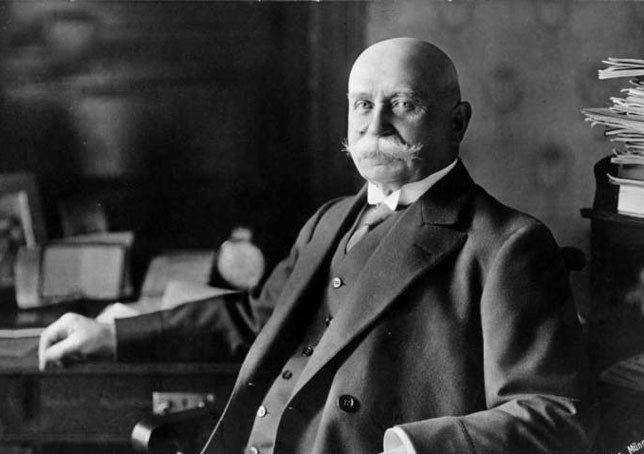
Count Ferdinand von Zeppelin (1838–1917) was a German general and the inventor of the rigid airship, or dirigible balloon. He joined the Prussian army in 1858 and travelled to Saint Paul, Minnesota, USA in 1863, where he made his first ascent by balloon. Perhaps inspired by this experience, he first came up with his ideas for an airship in 1874 and developed detailed plans for the aircraft from 1893.

Zeppelins
Zeppelin's design for an airship had a rigid aluminium framework covered in fabric, forming the envelope. Inside were separate internal gas cells containing hydrogen. The airship was powered by several internal combustion engines mounted in gondolas, or engine cars, hung beneath the driving propellers.
The first of these airships, called zeppelins after him, was completed and made its maiden flight in 1900. The first commercial air service for passengers was launched in 1910. They travelled in the gondola slung beneath the gas envelope. By the time of Zeppelin's death in 1917, a fleet of zeppelins had been built, some of which were used to bomb London during World War I. Large and slow, they were, however, vulnerable to anti-aircraft fire, and 40 were shot down.
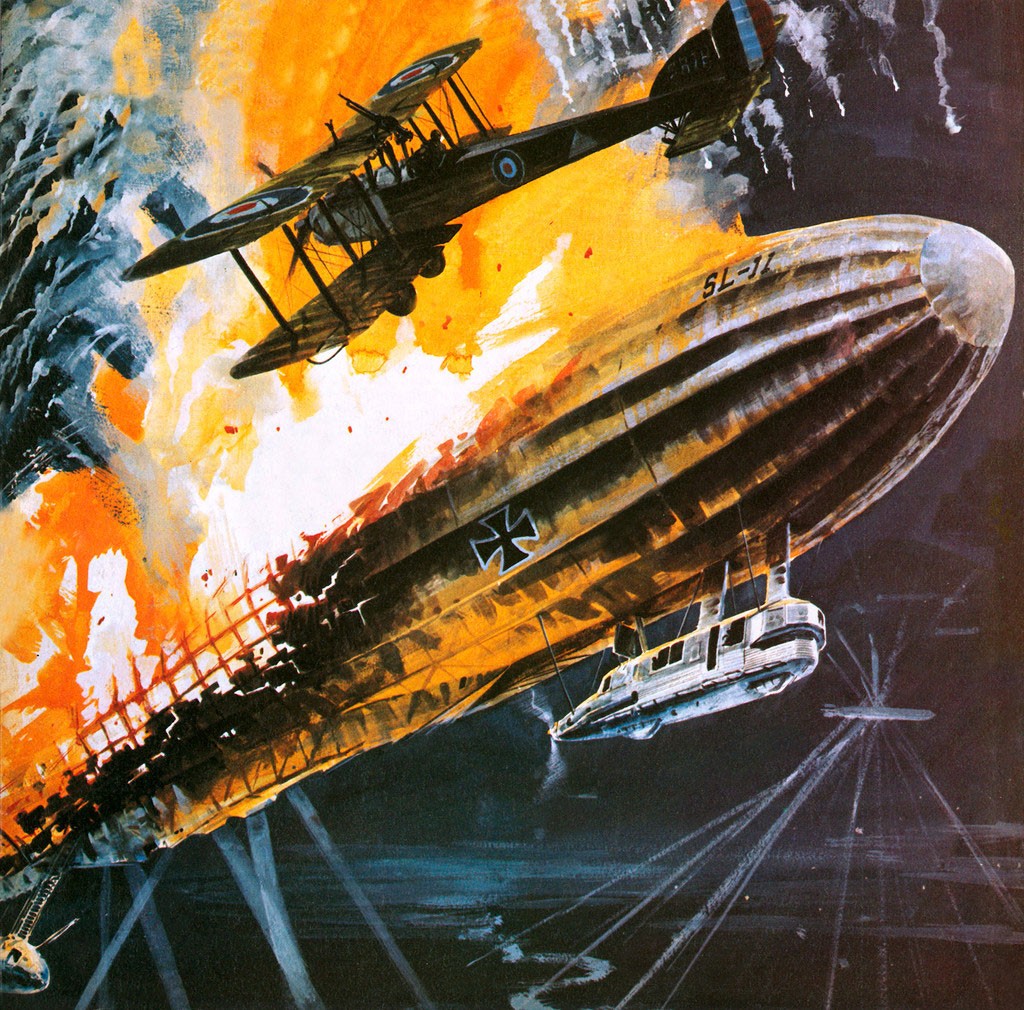

Zeppelins continued to be built after World War I for both military and passenger purposes. Airships achieved their greatest glory in the 1920s and 30s. The size of ocean liners, they toured the world with passengers enjoying luxurious accommodation. The colossal Hindenburg was launched in 1936. More than 245 metres (800 feet) long, this and its sister ship Graf Zeppelin II were the largest airships ever built, although they could only carry about 100 passengers. The Hindenburg exploded when landing at Lakehurst, New Jersey, in 1937, killing 35 people and bringing an end to the age of zeppelins.

Consultant: Dave Hawksett
pics
Without in any way limiting Q-files Ltd’s exclusive rights under copyright, any use of this publication to “train” generative artificial intelligence (AI) technologies to generate text is expressly prohibited. Q-files Ltd reserves all rights to license use of this work for generative AI training and development of machine learning language models.