
Human body
Skin, hair and nails
The body’s largest organ is the skin. It is a protective "overcoat" that covers the entire body. Tough, flexible and waterproof, skin protects the body from damage, filters out harmful rays in sunlight, prevents drying out, and stops micro-organisms that cause disease, such as bacteria, entering the body. The skin helps keep body temperature constant by reducing body temperature in hot conditions, through sweating and increased blood flow and raising it in cold conditions. The skin also contains millions of tiny nerve endings that provide the body’s sense of touch.
Inside the skin
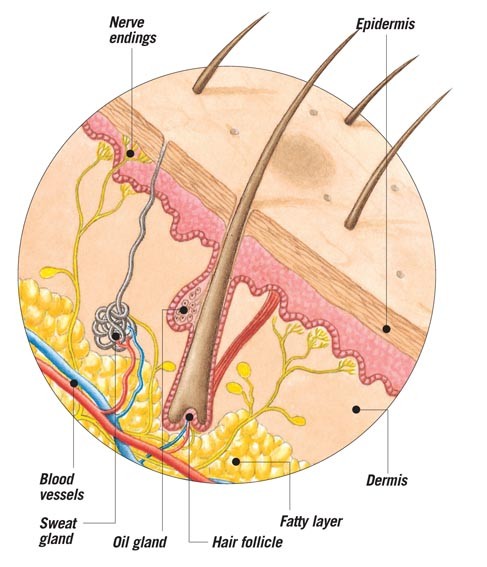
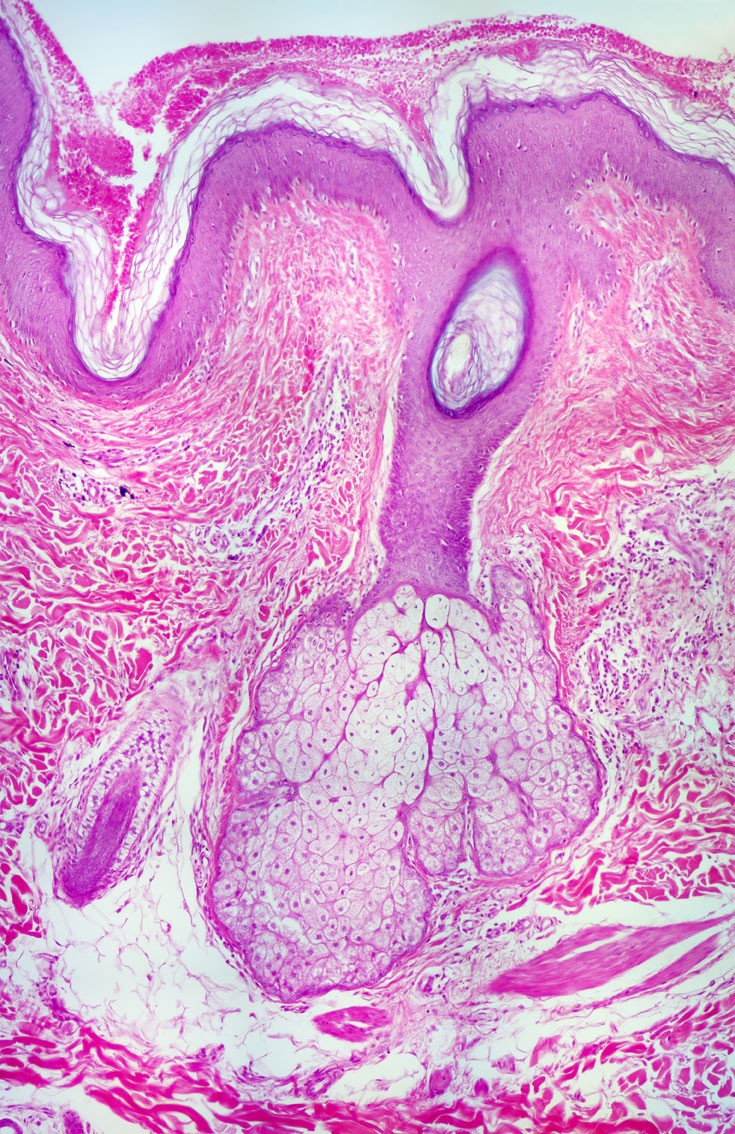
Skin has two layers. The upper layer, the epidermis, constantly renews itself. Dead skin flakes—flattened cells packed with tough, waterproof keratin—are worn away. Cells in the lower part of the epidermis divide constantly to produce new cells to replace lost skin flakes. Melanin, a dark pigment, colours the epidermis and filters out harmful rays in sunlight.
The thicker, lower skin layer, the dermis, contains blood vessels, oil and sweat glands, hair follicles, and nerve endings that detect touch, heat, cold and pain.
Hairs and the epidermis are kept soft by oil from sebaceous glands. In hot conditions, sweat, a salty liquid, is released by the sweat glands. The sweat takes heat away from your skin as it evaporates and cools the body.
Hair
Most of a hair, including the shaft that is visible above the skin, is made of dead cells packed with keratin. Keratin also forms fingernails, toenails and the tough upper surface of the epidermis. The living part of a hair is found at the base of its root, deep inside a pit in your skin, called a follicle. A tiny muscle is attached to each follicle. In cold weather, these muscles pull the hairs upright. This makes skin bunch up around the hairs to form goose pimples. For our very hairy ancestors, this may have helped to keep them warm.
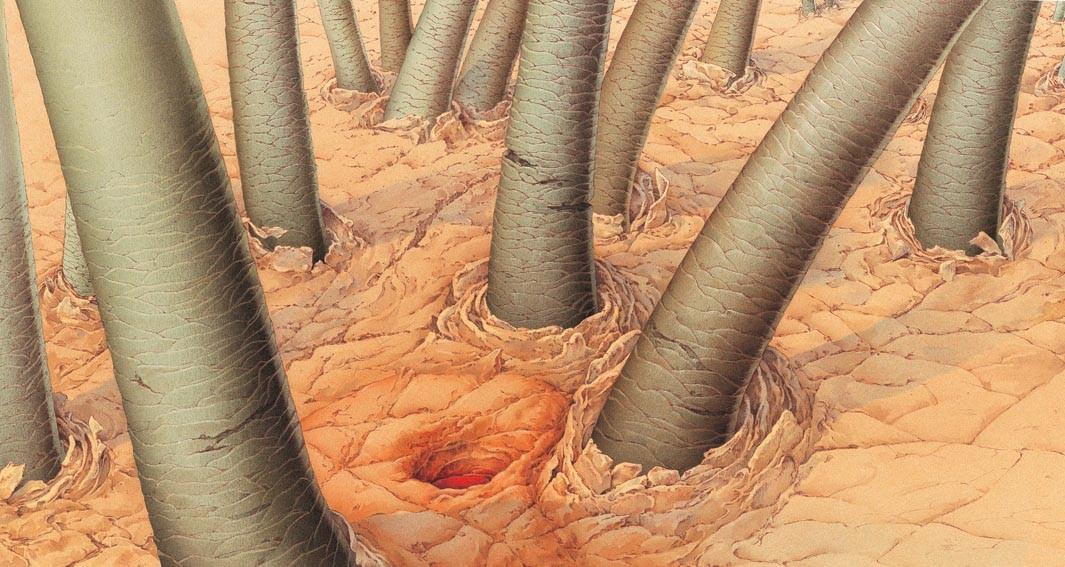
Hairs grow all over the body apart from on the lips, on the palms of the hands and soles of the feet. Thick, terminal hairs grow on the head, while finer downy hair is found elsewhere. There are about 120,000 terminal hairs on the scalp, and 4 million tiny hairs over the rest of the body.
Fingernails
and toenails
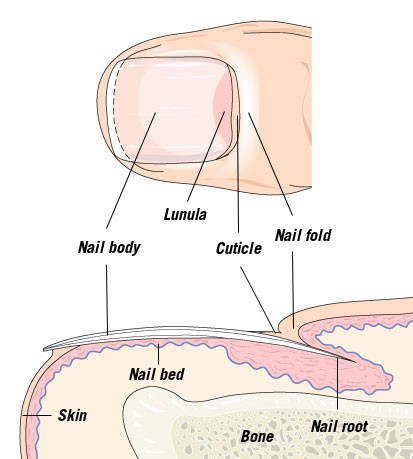
Like hairs, nails grow from the epidermis. Nails are made from dead cells packed with keratin, forming tough plates. The living cells grow in the nail root at the base of the nail. As it grows, a nail moves over the nail bed—the pinkish area that can be seen beneath the nail. Nails grow at an average rate of 3 millimetres (0.12 inches) a month. Fingernails grow four times faster than toenails. They also grow fastest during the day and during the summer.
Consultant: Richard Walker