
Asia
Lebanon
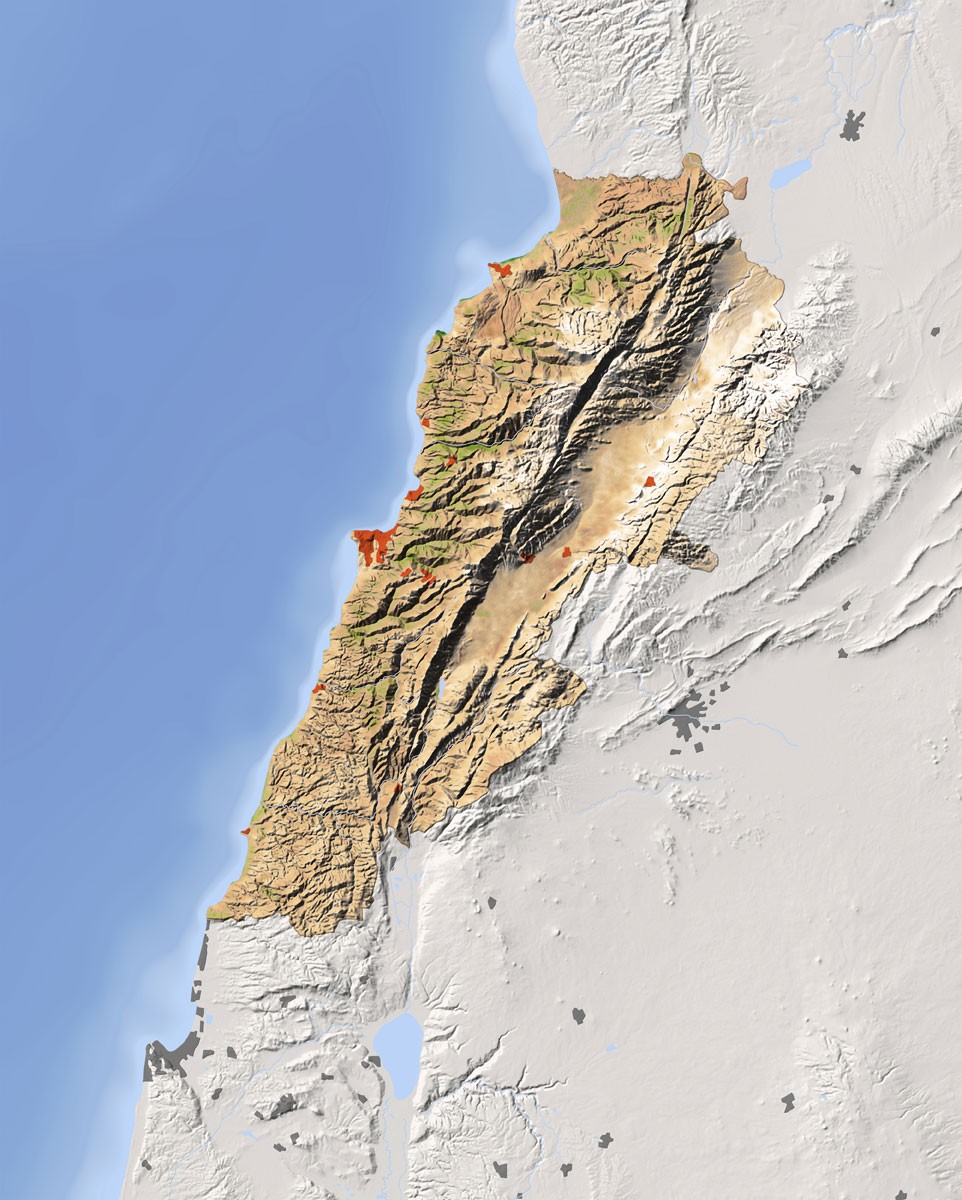
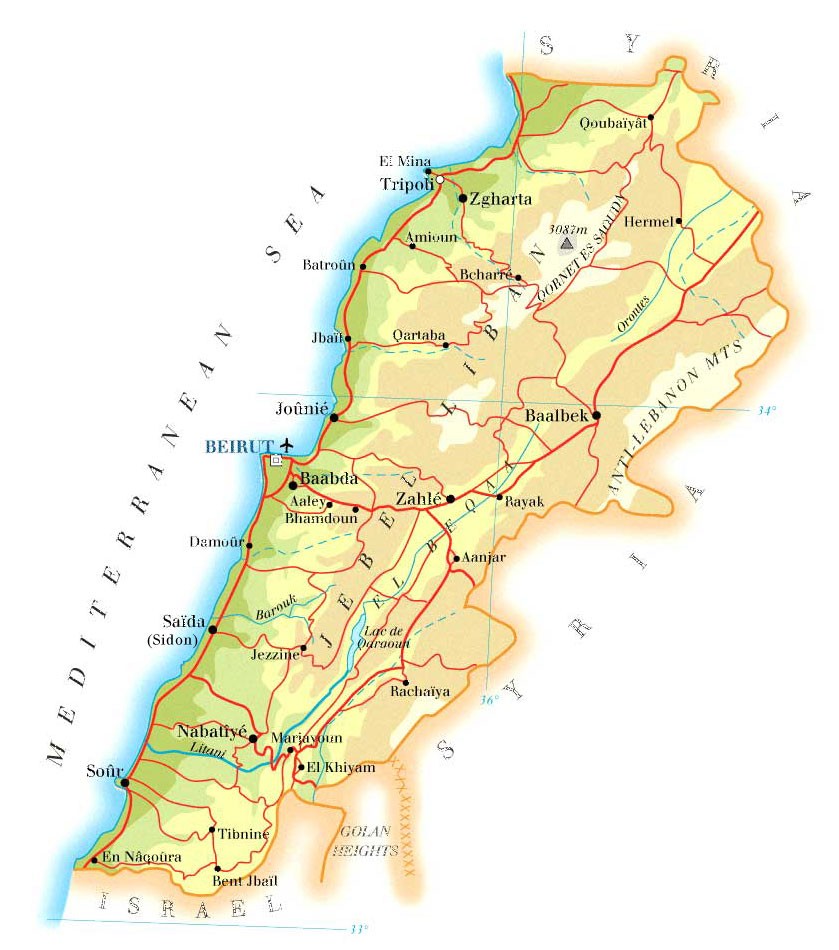
Once the centre of the ancient Phoenician civilization, Lebanon is a small, mountainous country bordering the Eastern Mediterranean. Along the coast is a wide, flat plain. Inland, the Lebanon Mountains (Jebel Liban) rise steeply from this plain. Running parallel to this range further east are the Anti-Lebanon mountains. They form part of the border with Syria. Between the two ranges lies the fertile, but dry Beqaa Valley (El Beqaa). Lebanon’s mountains were once heavily forested, but most of the trees have since been cut down or lost to wildfires. Today much of its land is Mediterranean-type scrubland. Summers are hot in Lebanon, while winters are wet and mild. The highest mountains are snow-capped in winter, and cooler all year round.
People
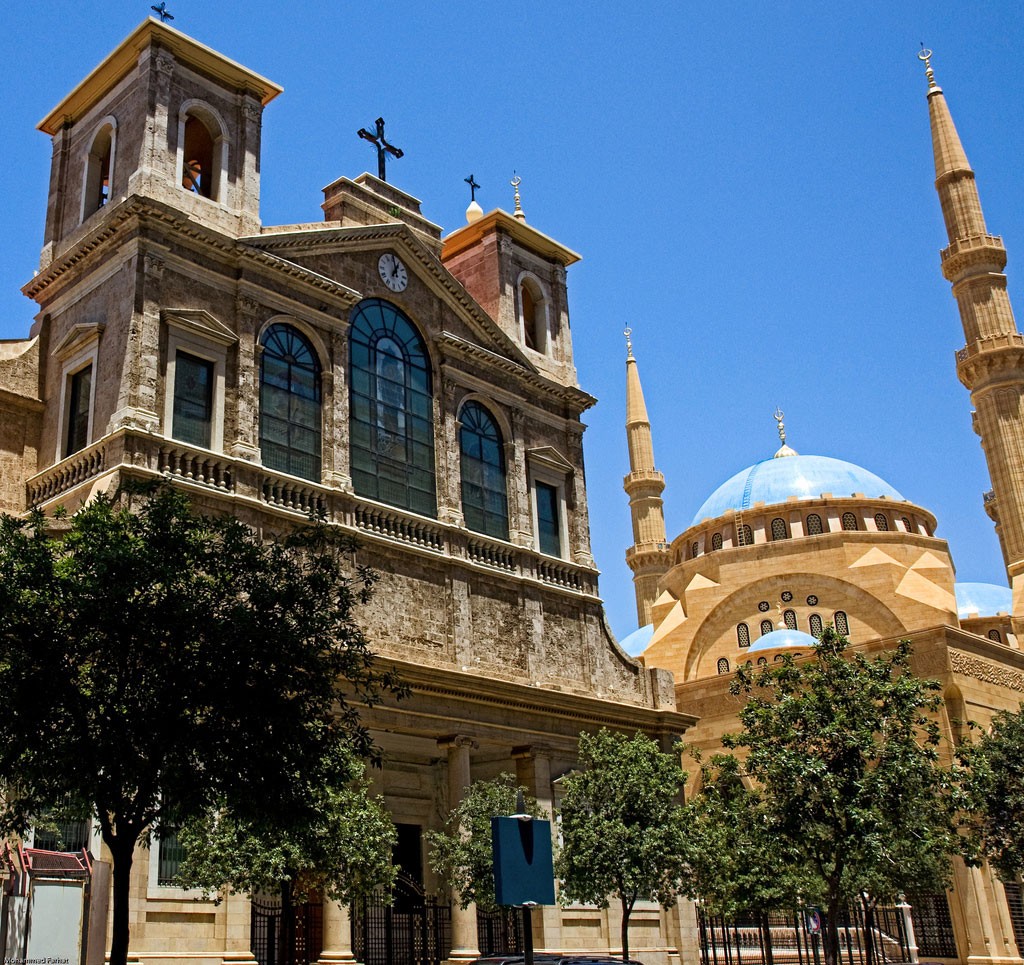
Lebanon is home to a people whose ancestors were from ancient Syria and Greece, as well as Phoenicia, the trading nation founded in Lebanon around 1500 BC. Religion is more important to the Lebanese than ethnic origins; strong divisions exist between the country’s Christians (mainly Maronites and Greek Orthodox) and Muslims (Sunni and Shia). Dating back to the rule of the Ottoman Empire, when different religious groups were given special privileges, these tensions remain among the different religious groups. Most Lebanese speak Arabic alongside French and English.
Economy

Lebanon’s sunny Mediterranean climate is ideal for growing citrus fruits such as oranges and lemons, as well as olives, apples and peaches. The country has a long tradition of wine-making—the slopes of the Beqaa Valley are home to Lebanon’s vineyards. Most people in Lebanon work in service sectors such as banking, education and tourism. Around 2 million tourists each year visit Lebanon, but in recent years, fighting between Lebanon, Israel and Syria has kept tourists away.

Beirut
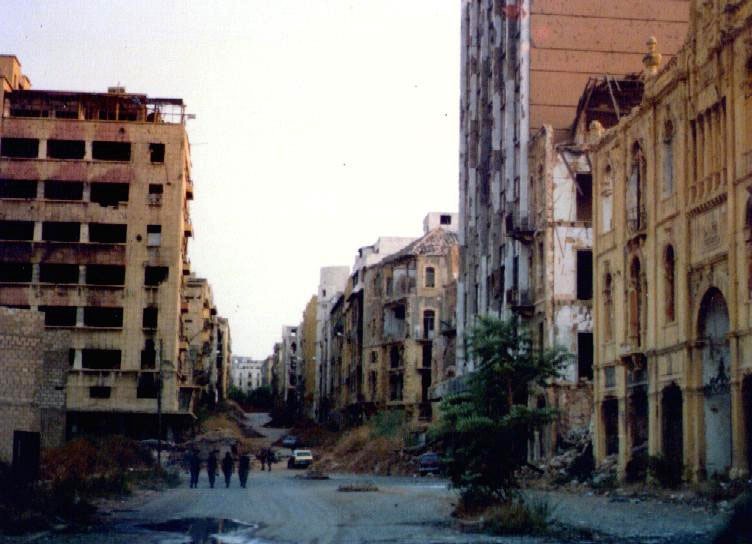
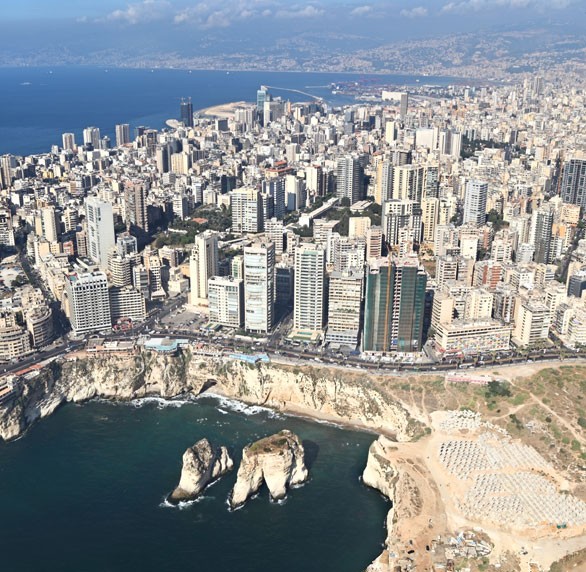
Beirut became the capital city of newly-independent Lebanon in 1943. It enjoyed over 30 years of wealth and attracted many tourists before civil war broke out in 1975. During the civil war, Beirut was divided: the west of the city was home to Muslims while the east was Christian. The city centre, once full of shops, cafés and theatres, became an empty battlefield zone. It was known as the Green Line, because of the trees and plants that grew up in the deserted ruins.
For 15 years, Beirut’s two sides bombed each other until the city was almost completely destroyed. Since the end of the war in 1990, Lebanese people have begun to rebuild their capital, especially the badly damaged central district. Scars from the war can still be seen on some of its buildings today.
Crisis
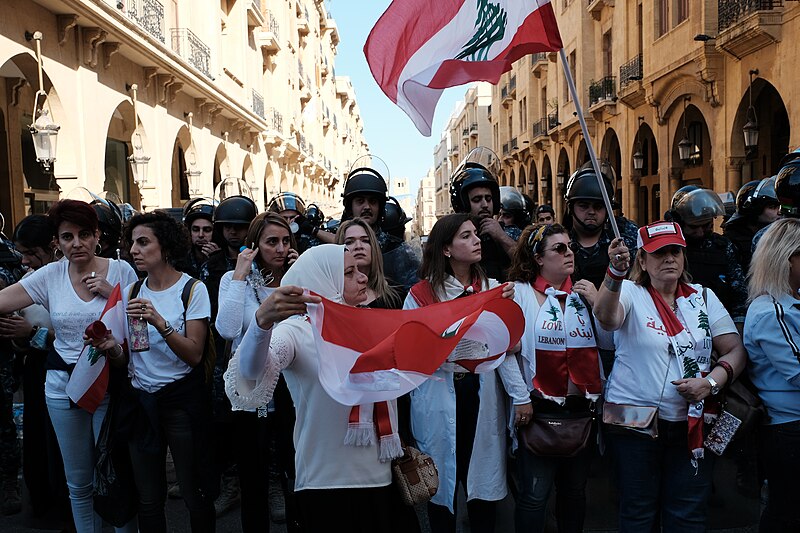
On 17th October 2019, the first of a series of protests across Lebanon broke out. They quickly expanded into nationwide demonstrations against government corruption and its failure to provide basic services such as electricity, water and sanitation. Lebanon is suffering the worst economic crisis in decades. In August 2020, an explosion at the port of Beirut, Lebanon's main port, destroyed the surrounding area, killing over 200 people and injuring thousands more. On 9th October 2021, the entire nation lost power for 24 hours after its two main power stations ran out of power. Lebanon's crisis has been so severe that more than 80% of the population is now considered poor by the United Nations.
Conflict between Israel and Hezbollah, an Islamist military group based in southern Lebanon and backed by Iran, erupted into open warfare in the 2000s. It broke out again in September 2024, with Israeli airstrikes followed by an invasion of Israeli troops. A ceasefire was declared in November of that year.
Consultant: Nicholas Harris
Facts about Lebanon
Area 10,230 sq km (3950 sq miles)
Population 5,364,482 (2024 estimate, including approx. 1.5 million Syrian refugees)
Highest point Qornet es Saouda 3087 m (10,125 ft)
Capital Beirut (metro area population 2.1 million)
Other major cities Tripoli (502,600), Sidon (266,000)
Languages Arabic (official language), French, English
Religions Muslim 54% (Sunni 27%, Shia 27%), Christian 40% (Maronite Catholic 21%, Greek Orthodox 8%, Greek Catholic 5%, other 6%), Druze 5.6%
Ethnicity Arab/Phoenician 95%, Armenian 4%, other 1%
Currency Lebanese pound (LBP)
Chief exports Jewellery, gold, chemicals, fruit and vegetables, tobacco, machinery, paper

History of Lebanon
1550–539 BC
Lebanon is at the centre of the seafaring Phoenician civilization.
539 BC
Cyrus the Great conquers Phoenicia and the region becomes part of the Achaemenid Empire.
64 BC
The Roman Empire takes control of the region
4th–5th centuries AD
A community of Christians is established in the mountains near Mount Lebanon; they are known as Maronites.
early 11th century
The Druze (a branch of Shia Islam) religious movement begins and is spread by a man named Ad-Darazi.
11th century
The Crusades: A series of battles are fought in the region as Western European Christians fight to claim land as Christian territory.
1516–1918
Lebanon is part of the Ottoman Empire.
1860
Fighting between the Druze and Christians claims the lives of about 10,000 people.
1920
Greater Lebanon, or Grand Liban, is officially established under French control as a League of Nations Mandate. It unites the regions of Mount Lebanon, North Lebanon, South Lebanon and the Beqaa Valley, with Beirut as the capital (this creates the boundaries of what will later become independent Lebanon)
1926
Lebanon becomes a republic with its own constitution and parliament.
1943
Lebanon gains independence from France.
1948
Around 100,000 Palestinians flee to Lebanon during the Arab–Israeli War and Israel does not permit their return after the ceasefire (they and their descendants, totalling an estimated 450,000 people, remain in Lebanon, about half of them living in refugee camps, to the present day).
1975
Civil war breaks about between several armed factions: Maronite Christians, Palestinians, Muslims and the Druze
1976
Syria sends troops to Lebanon to try to restore peace; Syrian troops remain in the country until 2005.
1978
Israel invades southern Lebanon. They occupy most of the area south of the Litani River, later withdrawing but establishing a 19-kilometre-wide (12-mile) security zone along the border.
1982
Israel invades southern Lebanon to expel the Palestinian Liberation Organization (PLO), which has been conducting attacks from Lebanon on Israel. Israeli forces lay siege to Beirut. Massacres of mostly Palestinians and Lebanese Shia muslims are carried out by Lebanese forces, supported by Israeli forces, in the Sabra neighbourhood and Shatila refugee camp.
1990
Lebanese civil war ends after 16 years. It is estimated that 150,000 people have been killed and another 200,000 wounded. Nearly a million people have been displaced by the war, and some never return. All the armed factions are dissolved, with the exception of Hezbollah, an Iran-backed Shia Islamist military group.
2000
(25th May) Liberation Day: Israeli forces fully withdraw from Lebanon
2005
Former Prime Minister Rafik Hariri is assassinated in a car bomb explosion (February); the assassination triggers the Cedar Revolution, a series of demonstrations which demand the withdrawal of Syrian troops from Lebanon; by 26th April all Syrian soldiers have returned to Syria
2006
Conflict between Israel and the Islamist group Hezbollah at the border between Israel and Lebanon.
2008
Hezbollah forces seize western Beirut; at least 62 people die in the resulting clashes between pro-government and opposition militias before signing of the Doha Agreement ends the fighting
2012
Civil war and conflict in Syria spreads to Lebanon; over 2.2 million Syrian refugees arrive in Lebanon (1 million are registered)
2019–21
National crisis: a series of civil protests break out in October (the "17 October Revolution") initially against introduction of taxes but quickly expanding into a condemnation of government policies and corruption. Amid a worsening economic crisis, Lebanon suffers from chronic poverty, economic mismanagement and a banking collapse.
2020
A huge stockpile of ammonium nitrate, stored in a warehouse at the port of Beirut for the previous six years, explodes following a fire. The explosion causes at least 190 deaths, 6500 injuries and widespread damage, leaving 300,000 people homeless. Protests erupt across the country against the government for their failure to prevent the disaster.
2024
(September) Major escalation of Israeli offensive against Hezbollah in Lebanon begins, including airstrikes across the country. Hezbollah's main headquarters in Beirut is destroyed. Hezbollah launch rocket and missile attacks on Israel in response. A 60-day ceasefire agreement between Israel and Hezbollah takes effect on 27th November. Hezbollah moves its fighters north of the Litani River, while Israel withdraws its forces from southern Lebanon.
2026
(March) In response to Israeli attacks in Iran and the assassination of Iranian Supreme Leader Ali Khamenei, Lebanon-based Hezbollah launch drone and missiles into Israel, targeting military bases and oil and gas installations. Israel responds by launching airstrikes at Beirut and invading southern Lebanon. The war causes the deaths of more than 820 people and the displacement of nearly 1 million people.