
Asia
Maldives
The Maldives are a double chain of 1192 coral islands. They are spread over a distance of 885 kilometres (550 miles) north to south. Many of the islands are grouped rings, called atolls. Just 200 of them are inhabited. The location of the Maldives on the Equator gives them a tropical climate with hot, breezy weather all year round and a stormy monsoon season between June and August. Fringed by white sandy beaches and shallow seas, the Maldives are among the lowest-lying islands in the world. Rising sea levels threaten to submerge them completely by the end of the century.


People and
economy
Just under a third of the population of 395,000 lives on the 1.6-kilometre-long (1-mile) island of Malé, making it one of the most densely populated islands on Earth. Nearly everyone in the Maldives is Muslim, and speaks Dhivehi.
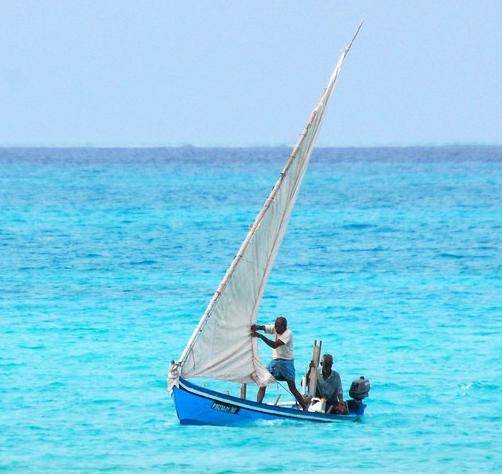
Tourism provides the Maldives with its greatest source of income. Each year, about 800,000 tourists visit the islands’ beaches and resorts. People can travel between the islands on small ferries. Fishing has always been important in the Maldives. As well as being a staple food in Maldivians’ diets, fish such as tuna is exported all over the world. Fishermen use small boats called dhonis, traditionally built from coconut wood.
Rising seas

The land in the Maldives is an average of 1.5 metres (4 feet 11 inches) above sea level. As global warming causes sea levels to rise, the Maldives face the challenge of protecting their low-lying islands from flooding. One answer is to build barriers, such as the massive concrete seawall which surrounds the island of Malé. Another option is to build brand-new islands in the sea. Close to Malé is the artificial “flood-resistant” island of Hulhumale, built in 2002 by sucking up sand from the ocean floor. The higher land on Hulhumale is home to nearly 3000 people as well as schools and a hospital.
Consultant: Nicholas Harris
Facts about the Maldives
Area 298 sq km (115 sq miles)
Population 525,994 (2023 estimate)
Highest point Island of Viligili 2.4 m (8 ft)
Capital Malé (population 262,925)
Other major cities Addu City (32,000)
Language Dhivehi
Religion Muslim 100%
Ethnicity Dhivehi, Sinhalese
Currency Maldivian rufiyaa (MVR)
Chief exports Fish
History of the Maldives
c.200 BC
Dravidian people from southern India are the first to settle on the islands.
11th century AD
The northern islands become part of the southern Indian Chola Empire.
12th century
Islam is brought to the islands by Arab traders. The last Buddhist king of the Maldives, Dhovemi, converts to Islam in either 1153 or 1193, adopting the title Sultan Muhammad al-Adil.
1558
Portugal occupies the islands, establishing a trading post. A local rebellion drives the Portuguese out in 1573, an event commemorated in the present day as Qaumee Dhuvas (National Day)
mid-17th century
The islands come under Dutch control.
1796
The Maldives come under British control.
1887
The Maldives officially become a British protectorate: they are self-governed, but remain under British control and protection.
1965
The Maldives gain independence from Britain; it becomes a sultanate outside the Commonwealth
1968
A republic is declared after a referendum in which 93% voted in favour, thus ending the 853-year-old monarchy
1978–2008
Maumoon Abd al-Gayoom is President of the Maldives
1982
Joins Commonwealth
2004
Indian Ocean tsunami causes devastation: scores of people are killed; 57 islands suffered serious damage, while six islands were destroyed
2012
President Mohamed Nasheed resigns after weeks of protests over the country’s poor economic situation.
2015
Former president and opposition leader Mohammed Nasheed is arrested and jailed on terrorism charges, sparking mass protests by his supporters
2016
The Maldives withdraws from the Commonwealth in protest of international criticism of its records in relation to corruption and human rights
2020
The Maldives is re-admitted to the Commonwealth after showing progress on democratic reform.