
Asia
Bahrain
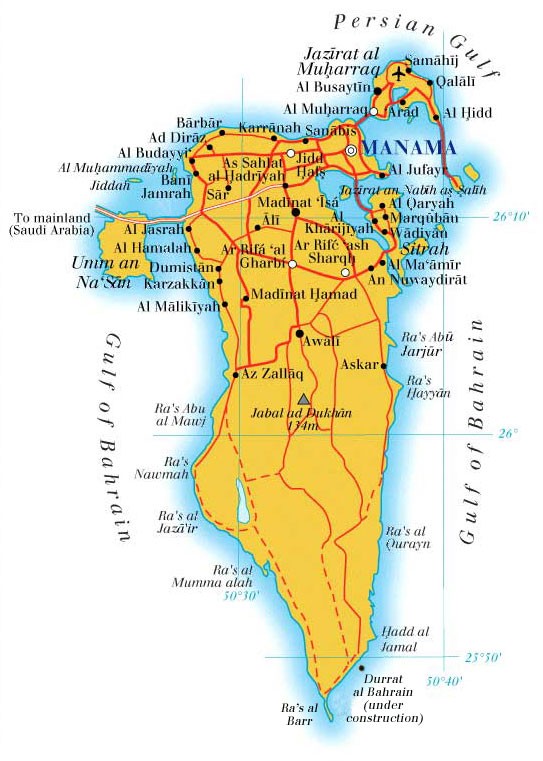
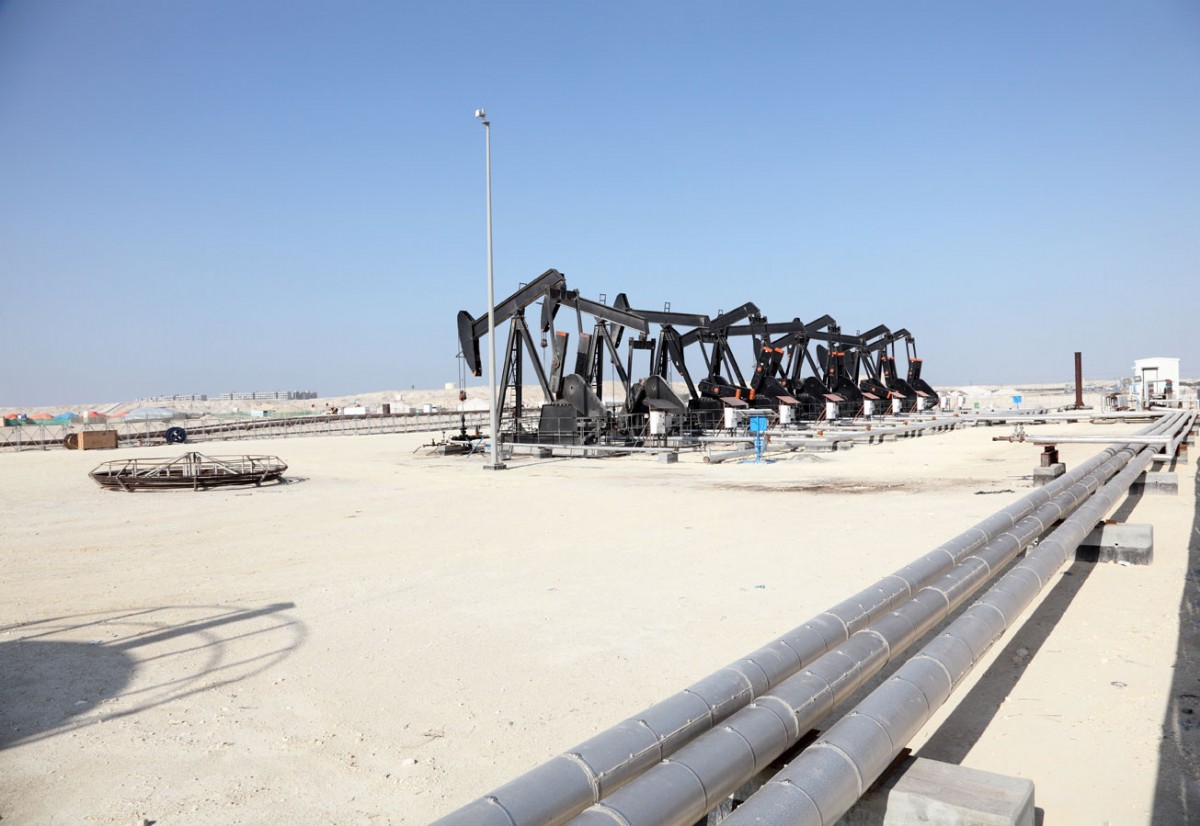
This tiny island country is made up of a main island—Bahrain—and a number of smaller ones, including Muharraq, Sitrah, Umm an Nasan and the Hawar Islands, close to the coast of Qatar. Causeways (embankments built across expanses of water) run between the main islands, linking them to each other and to neighbouring Saudi Arabia. Nearly all of Bahrain’s land consists of flat, sandy plains and salt marshes. It has an extremely hot, humid climate for much of the year, but temperatures are cooler in winter. In the 1930s, Bahrain was one of the first Arab states to discover oil. Wealth from oil has transformed it into a modern, well-developed country.

People
Bahrain’s population is almost evenly split between native Bahrainis and foreign workers from Southern Asia. As oil production took off, Bahrain suddenly needed a large number of extra people to work in the industry, and many came from India, Sri Lanka and the Philippines. Today, many of these workers are temporary, living in Bahrain for just a few months or years at a time. Bahrain is one of the most densely-populated states in the world: on average, there are over 1600 people for every square kilometre. Most of the population lives in the north of the main island. The souk, or marketplace, forms the centre of a Bahraini town or village, where people gather to shop, get their clothes made, drink coffee and socialize.
Economy
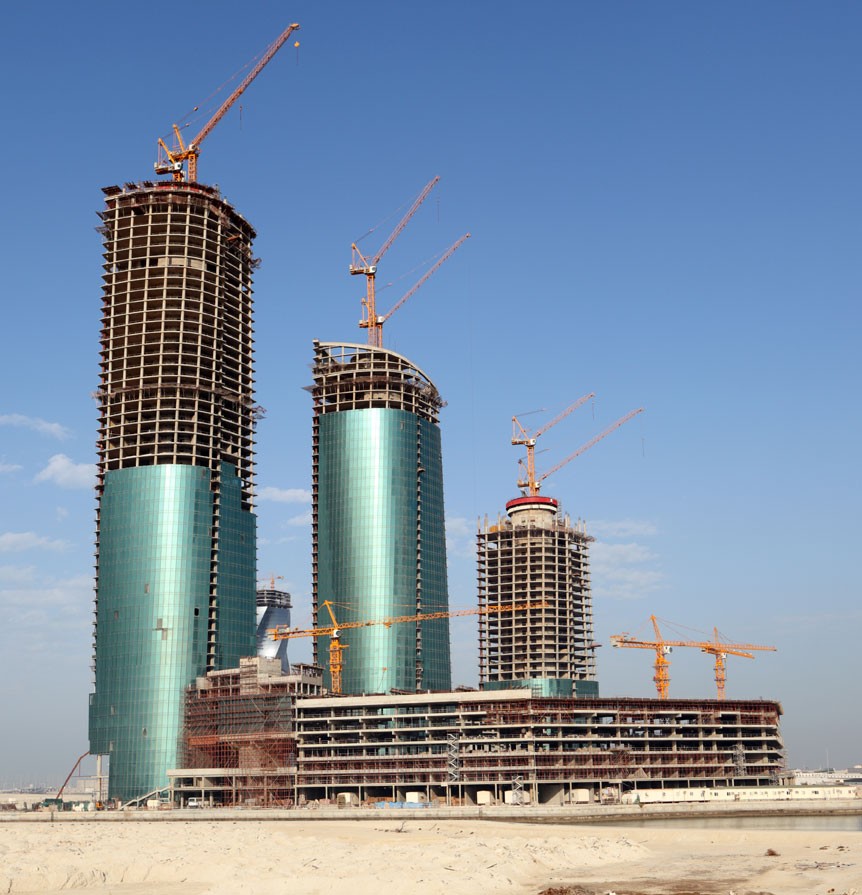
Oil and petroleum products still make up Bahrain’s largest exports, but as supplies begin to diminish, the country is turning to new industries, such as tourism and the production of aluminium, to keep the economy strong. Bahrain is a major financial centre, serving as bankers to the many businesses who work in the Persian Gulf. Hardly any of Bahrain’s land is suitable for use as farmland, because it is too sandy, salty or dry. Along the coast, farmers grow dates and keep cattle and chickens to sell at the market, but Bahrain still has to import nearly all of its food.
Artificial islands
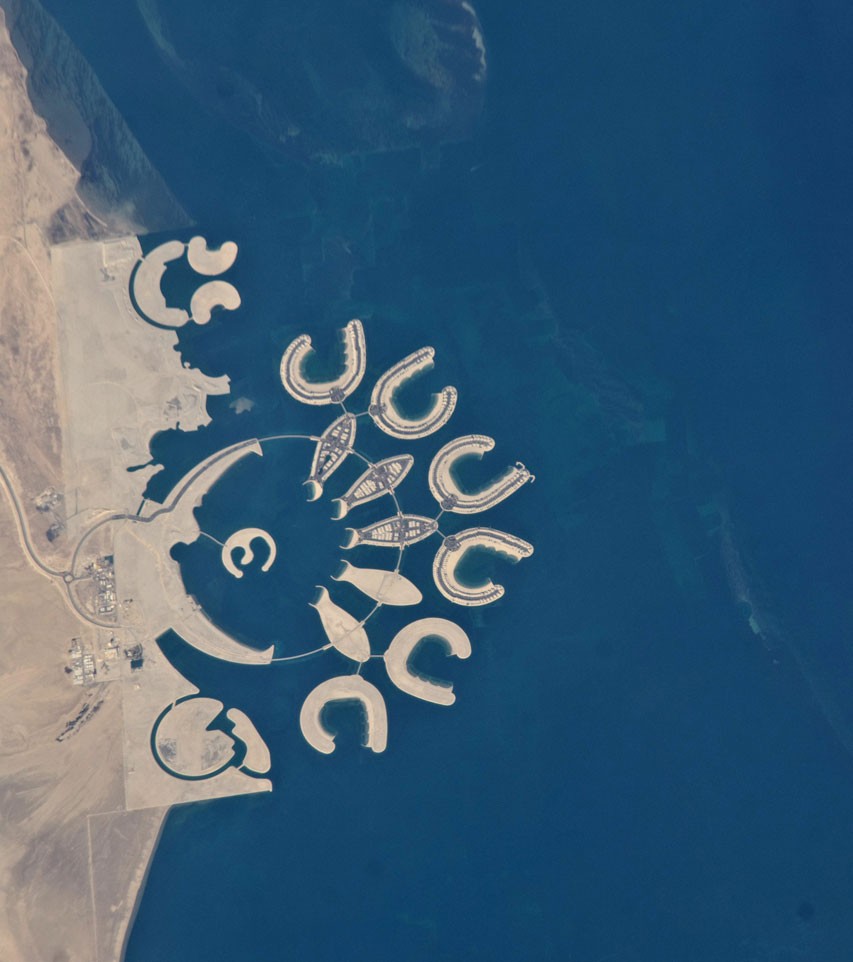
Artificial islands, such as the Amwaj Islands and the 15 islands of Durrat Al Bahrain (pictured), have been built to increase the amount of Bahrain's highly-prized seafront land. Artificial islands are expensive to build; the process involves taking sand, rock and other material from the sea bed and building it up until the new land is above sea level. Many artificial islands are bought by wealthy developers on which to build luxury hotels, golf courses and holiday resorts.
Consultant: Nicholas Harris
Facts about Bahrain
Area 760 sq km (290 sq miles)
Population 1,501,635 (2023 estimate)
Highest point Jabal ad Dukhan 134 m (440 ft)
Capital Manama (population 297,502)
Other major cities Muharraq (pop. 263,373), Riffa (115,495),
Language Arabic
Religions Muslim 70%, Christian 14.5%, Hindu 10%, others 5.5%
Ethnicity Arab (Bahraini) 46%, Asian (including Indian, Pakistani and Filipino) 45%, Arab (other) 5%, African 2%, European 1%, other 1%
Currency Bahraini dinar (BHD)
Chief exports Petroleum, aluminium, textiles
History of Bahrain
3200–330 BC
Bahrain is the home of a powerful trading civilization, the Dilmun.
6th–3rd century BC
Bahrain becomes part of the Persian Achaemenid Empire.
323 BC
Alexander the Great visits the island, by now famous for pearl-trading and cotton, and renames it Tylos.
250 BC
The Persian Parthian Empire takes Bahrain in order to control trade in the Gulf.
AD mid-7th century
Islamic messenger Al-Ala'a Al-Hadrami is sent by the Prophet Mohammed to convert Bahrain’s people to Islam.
1521
The Portuguese ally with Hormuz and seize Bahrain from the Jabrid dynasty ruler Muqrin ibn Zamil. They are expelled by Shah Abbas the Great of the Persian Safavid Empire in 1602.
17th–early 19th centuries
Bahrain is governed by Persian rulers.
1820
The Al Khalifa family become the official rulers of Bahrain.
1861–92
A series of treaties are signed by Al Khalifa and Britain, placing Bahrain under British rule as a protectorate.
1932
Oil is discovered in Bahrain.
1971
Bahrain becomes independent from Britain.
1994–96
Violent protests against the government take place.
2011
Bahraini uprising, inspired by the Arab Spring, ends in a bloody crackdown against the mainly Shia demonstrators, who were demanding an elected government, and so threatening the authority of the Sunni Al Khalifa monarchy
2023
Plans for the Qatar Bahrain Causeway (Qatar Bahrain Friendship Bridge) between Bahrain and Qatar are advanced during a meeting between Bahrain’s King Hamad bin Isa al-Khalifa and Qatar’s Prime Minister Sheikh Mohammed bin Abdulrahman al-Thani
2026
(28th February) In response to US-Israeli strikes against it, Iran carries out missile and drone strikes on Bahrain, hitting buildings in Manama, including Juffair district, home to a US Navy base.