
Ecosystems
Wetlands
Wetlands are formed at the edges of lakes, where rivers meet the sea, or where rainwater or rivers flood the land. They are areas saturated with water, either permanently or seasonally, where plant life has adapted to flooding. Potentially highly fertile, wetlands are one of the most threatened habitats, as they are often reclaimed for farming or for building land, especially in Southeast Asia. Wetlands are considered to be separate from freshwater ecosystems, since they tend to have higher salt concentrations.

Everglades
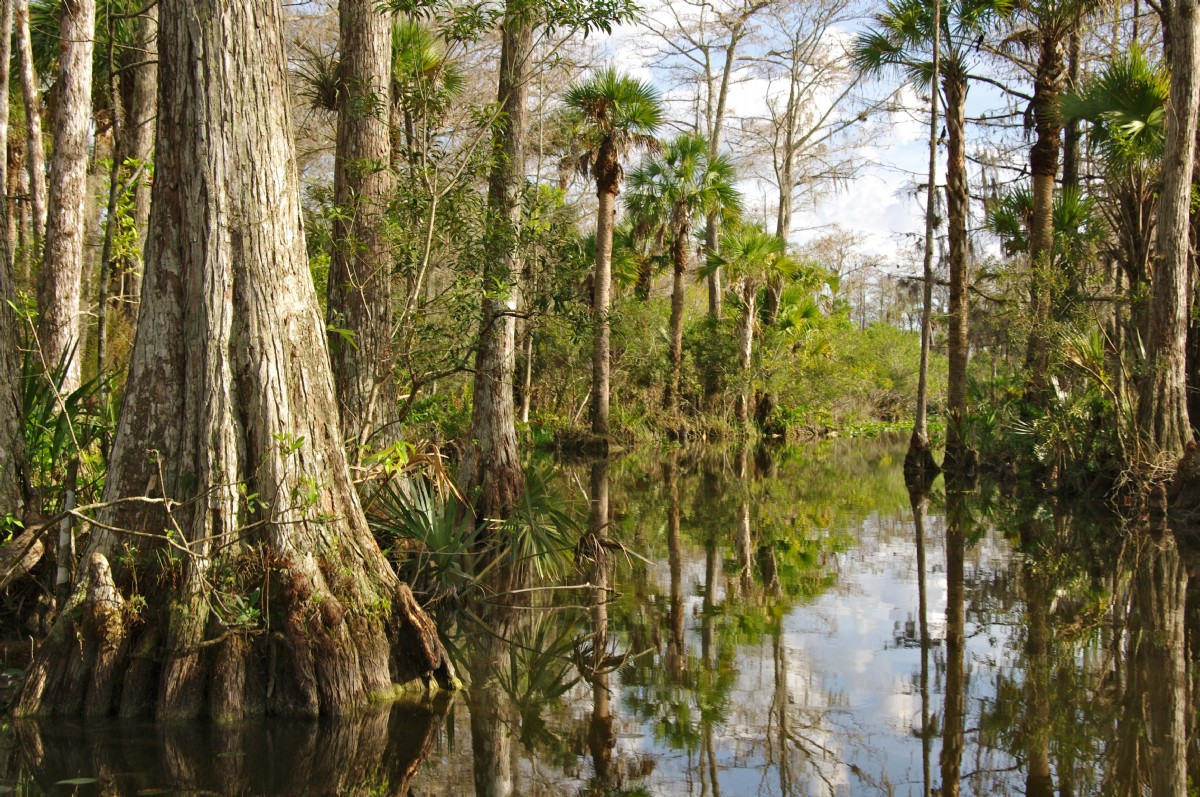

The Everglades of Florida, USA, is an area of marshes, swampland and slow-moving water. Much of the Everglades is covered by sawgrass marsh or prairies. There are also cypress swamps and mangrove forests of the river estuaries. Water channels, called sloughs, flow between the sawgrass prairies. The waters rise and fall according to the seasons. Wading birds, such as flamingos and spoonbills, feed in the shallows, while alligators roam in the deeper water.
Okavango swamp
Amid the savanna plains of Botswana, southern Africa, lie the swamplands of the Okavango Delta. The annual flooding, starting in May, draws a huge variety of animals to the region. Some live on the edges of the swamps all year round. The plant life is dominated by papyrus, the paper reed, which can grow to heights of 2.5 metres (8 feet) or more.
Hippos spend their days resting in the swampy water. They stir up the bottom mud, providing nutrients for other swamp life—which become prey for wading birds. Hippos come out at night to feed on grass and fallen fruit. A swamp-dwelling antelope, the sitatunga has splayed hooves to support its weight on boggy ground. It may take to the water to hide from leopards or wild dogs.


The Pantanal
The Pantanal, in central Brazil, extending into parts of Bolivia and Paraguay, deep in the heart of South America, is the largest wetland in the world. During the dry winter, the sprawling floodplain is no more than a string of shallow pools. But in the November-to-March rainy season, much of the area becomes submerged. The plants that thrive in these conditions help support an enormous range of animals, with at least 380 species of fish, 580 bird species and 2272 different plants.
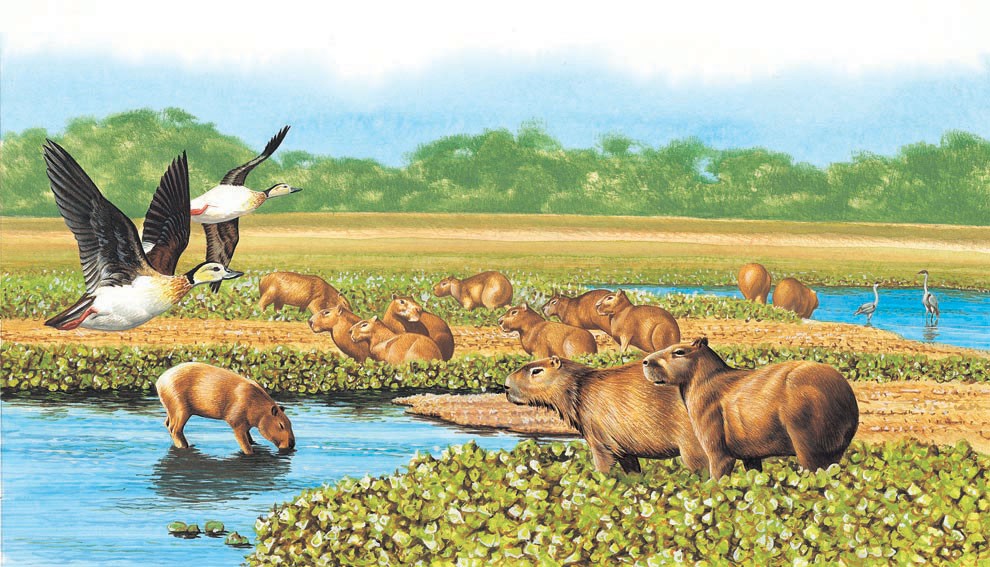
The Pantanal is home to a number of vulnerable and endangered species, including the giant river otter, giant anteater, marsh deer, maned wolf, South American tapir and hyacinth macaw. Common species include the capybara, ocelot, caiman and jaguar. There are 189 species of parrot, 13 species of heron and egret, six species of ibis and spoonbill and five species of kingfisher.
Today the Pantanal, is under threat. The Brazilian government wants to develop the upper reaches the Paraguay River into a shipping route for transporting the soya bean crop grown upstream. Scientists fear that large-scale dredging of the river would act as a drain on the Pantanal's waters. This would destroy aquatic habitats, fish populations and bird nesting areas. Other species in the Pantanal ecosystem would then be badly affected.

Consultant: Chris Jarvis