
Natural history of the British Isles
Trees of the British Isles A-Z

Alder
Alnus glutinosa
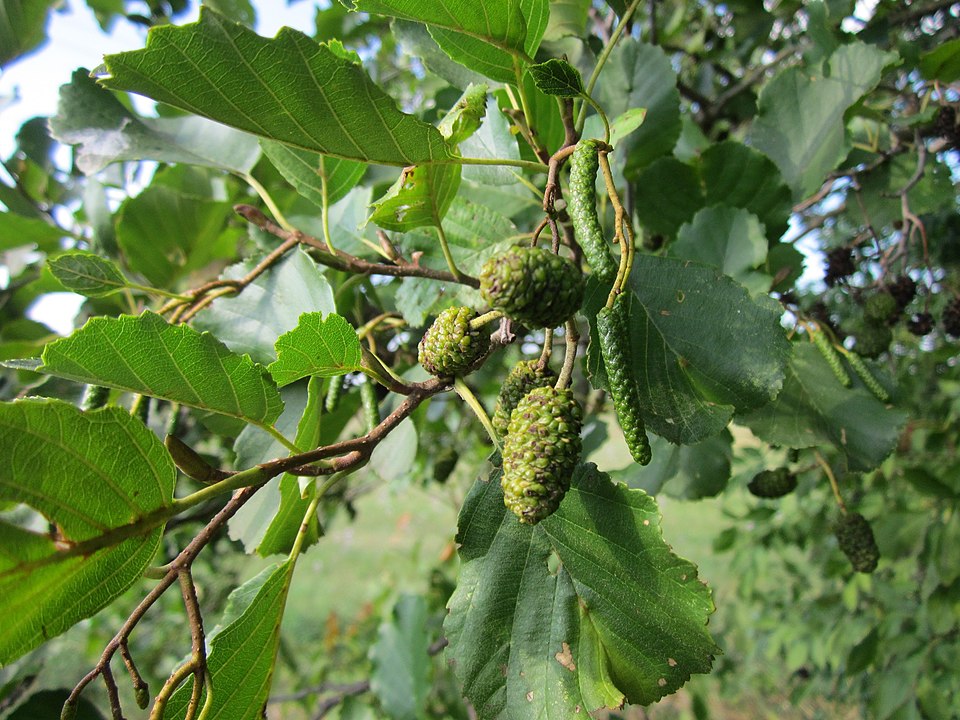
The alder is a large deciduous tree which grows near water. Its wood becomes harder and stronger when submerged in water, which makes it a good building material for underwater structures. Alders have heart-shaped, rounded leaves. They produce long, dangling flowers called catkins, which spread their seeds by falling into the water and being carried along. Height: 18–25 metres (60–80 feet).
Ash
Fraxinus excelsior
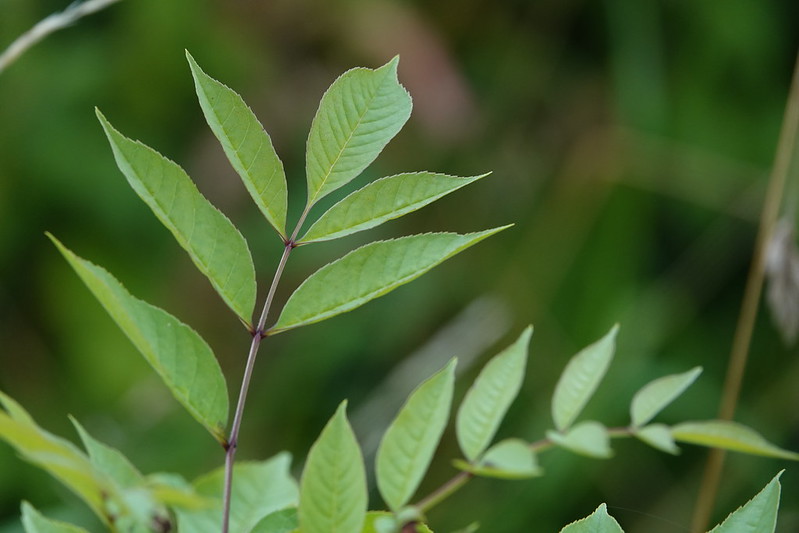
Ash trees are some of the tallest broadleaf trees in Europe. These huge trees grow all over the British Isles in all sorts of habitats, from woodlands to open hillsides. They have smooth, grey bark. In winter, they can be identified by the black buds on the end of their twigs. Ash trees have compound leaves, which are made up of several smaller leaflets on a single stem. They produce purple flowers in April, and winged fruits, called keys, in late summer. Many millions of ash trees are predicted to die from a fungal disease called ash dieback. Height: 15–35 metres (50–115 feet).
Aspen
Populus tremula
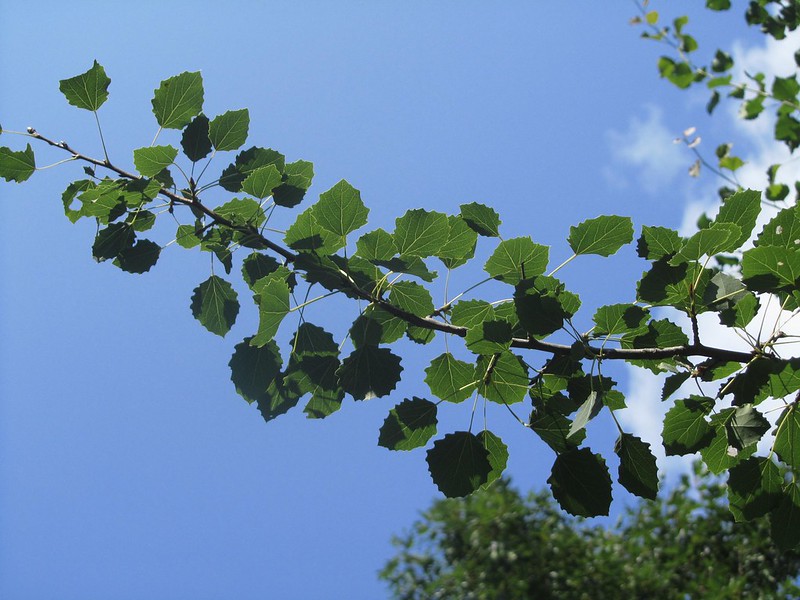
The aspen is a common sight in hedgerows, and often grows near water. It is also known as “quaking aspen” because of the rustling sound of its trembling leaves. The aspen’s golden-green leaves are almost round, with wavy edges. Its flowers, called catkins, develop into fruits with fluffy seeds that can float on the breeze. Height: 15–25 metres (50–80 feet).
Beech
Fagus sylvatica
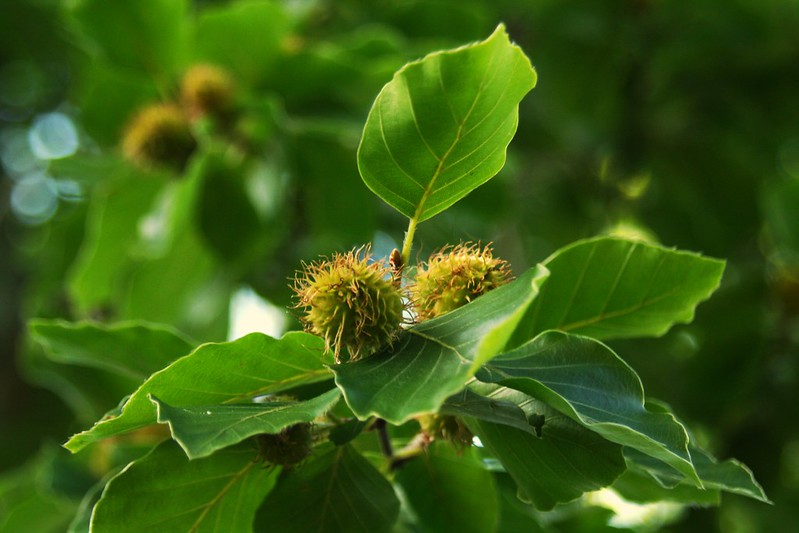
These majestic trees grow in areas with dry, free-draining soils, such as in areas with chalk or limestone bedrock. They often form a dense canopy with their branches as they grow alongside one another. Beech trees have smooth, grey bark and their leaves are oval-shaped with pointed tips. Although they are deciduous, beeches can keep many of their leaves through the winter. Their fruits, beech nuts, grow inside spiky cases. Beech wood has been used in the British Isles for centuries to make furniture because of its light colouring. Height: 10–40 metres (30–130 feet).
Blackthorn
Prunus spinosa
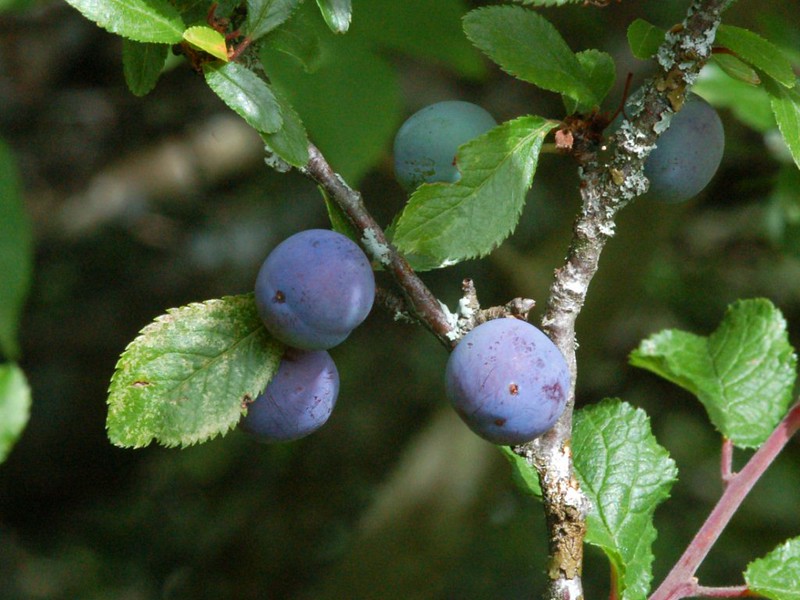
The blackthorn is one of the first trees to blossom in spring, with white sprays of tiny flowers. Its leaves are oval-shaped and narrow, with jagged edges. Blackthorns are similar in size and shape to hawthorns, with their dark brown bark and thin, thorny branches. In late summer they produce large blue sloe berries, which are bitter when eaten raw but used in cooking to make drinks and jam. Height: 6–7 metres (20–23 feet).
Cedar
Cedrus libani
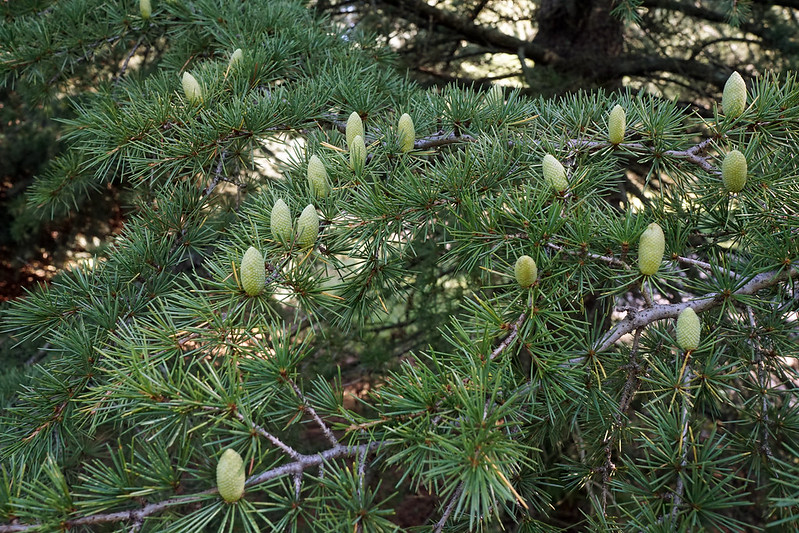
The huge, evergreen cedar tree is not native to the British Isles—it comes from the low mountain forests of the eastern Mediterranean and is sometimes known as the “Cedar of Lebanon”. Cedars are most often found in large gardens, parks and churchyards. Their branches form a wide, spreading canopy. Cedar needles are dark greyish-green, and grow in small clumps along the twigs like tufts. They produce large seed cones in autumn. Height: 8–35 metres (25–115 feet).
Cherry
Prunus padus (Bird cherry), Prunus avium (Wild cherry)
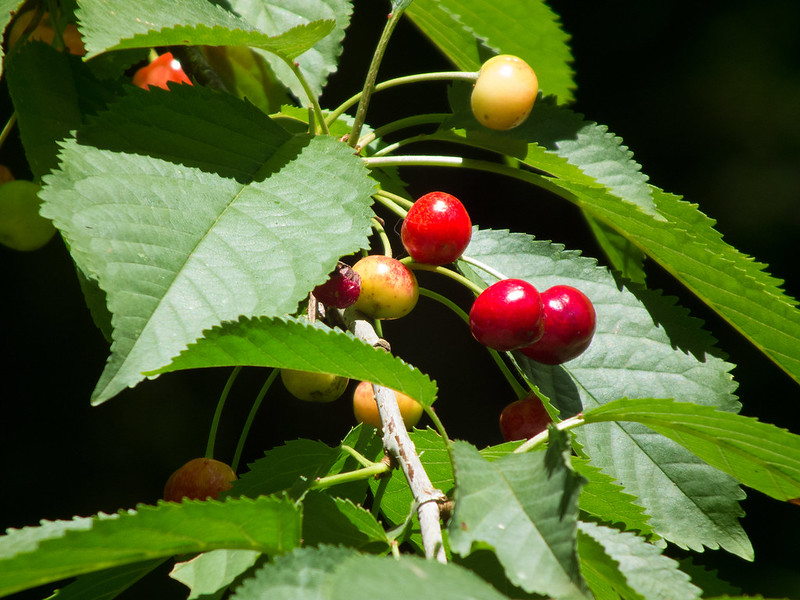
Wild cherry trees are popular with birds because of their bright red and yellow fruits. They grow in woodlands and parks everywhere in the British Isles except the far north. The wild cherry has oval-shaped leaves with toothed edges and a long, pointed tip. The bird cherry tree looks very similar, but produces clusters of small, black berries. Height: 18–25 metres (60–80 feet).
Dogwood
Cornus sanguinea
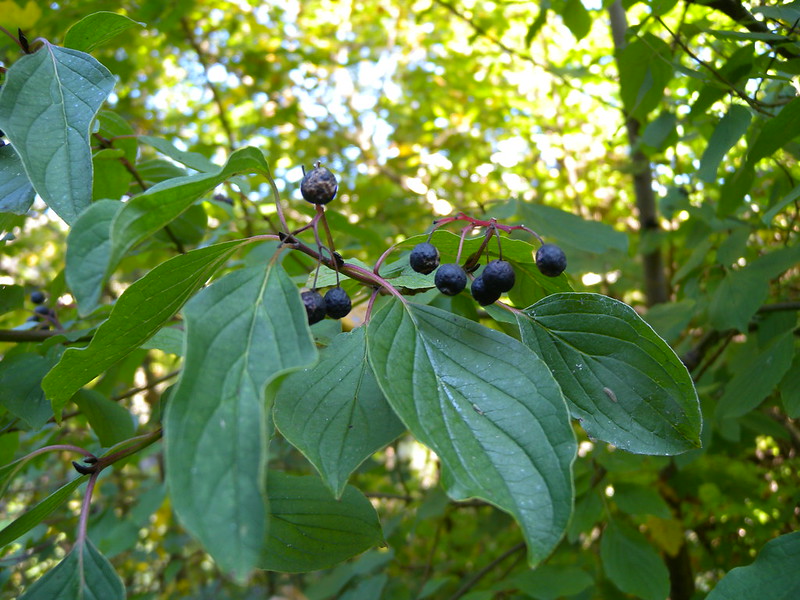
The dogwood tree’s red stems and branches make it easy to spot in winter. In the past, people used dogwood stems to make sharp skewers called dags, which gave the tree its original name: “dagswood”. Dogwood is most commonly found in southern England where it grows in hedgerows and on the edge of woodlands. Its leaves are teardrop-shaped with smooth edges. It produces clusters of dark, bitter berries in autumn known as dogberries. Height: 2–10 metres (6–30 feet).
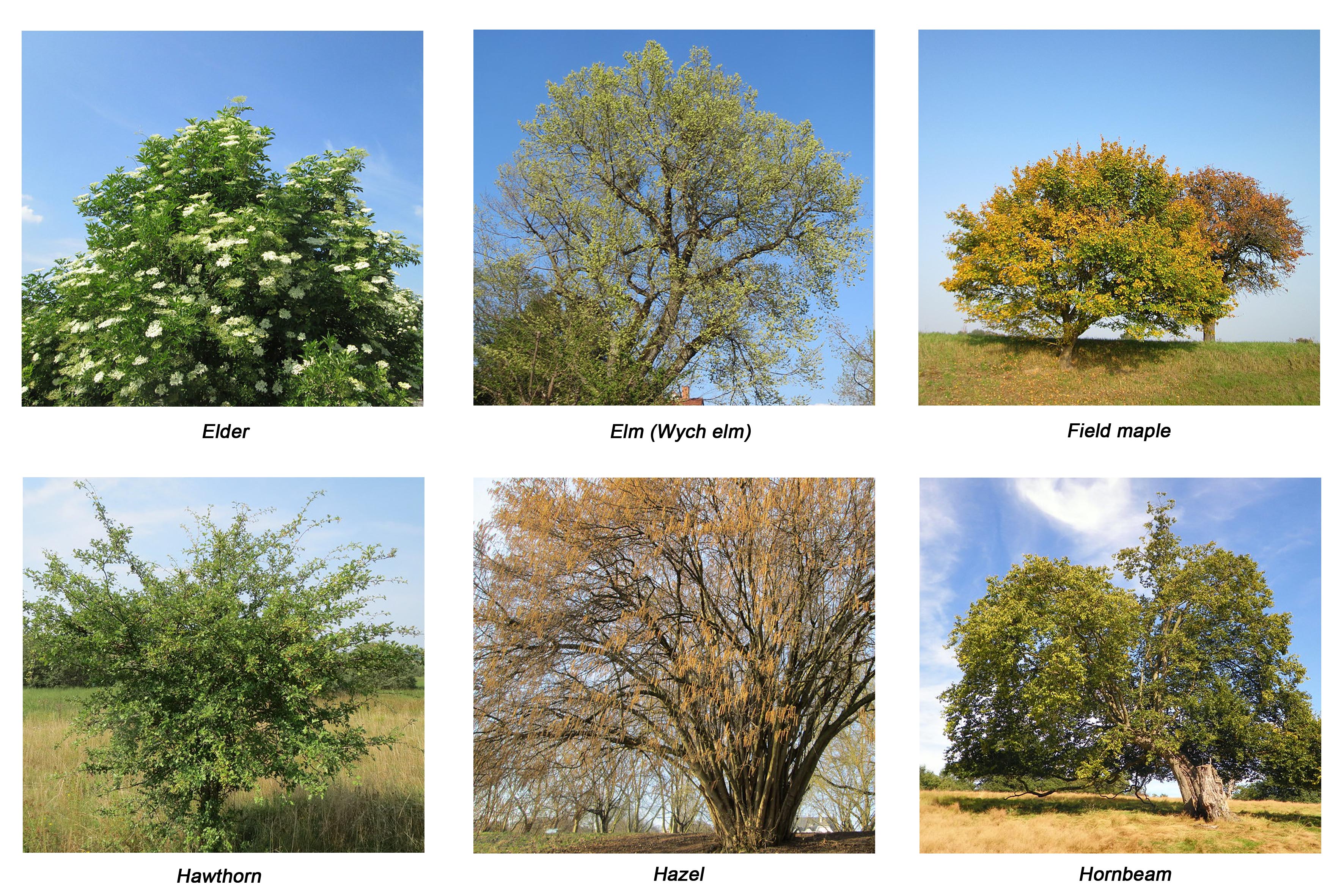
Elder
Sambucus nigra
This small tree is found all over the British Isles, especially in hedgerows and scrubland. Its leaves are made up of five to seven smaller leaflets with toothed edges. Elder trees’ thinnest branches have hollow stems, which were once used as straws to blow air into fires to kindle them. In early summer, elders produce white blossoms which are traditionally used to make elderflower cordial, a sweet, syrupy drink. Later in the summer, the flowers turn into clusters of dark, round berries which are poisonous when raw, but popular for making wine and jam. Height: 10–15 metres (30–50 feet).

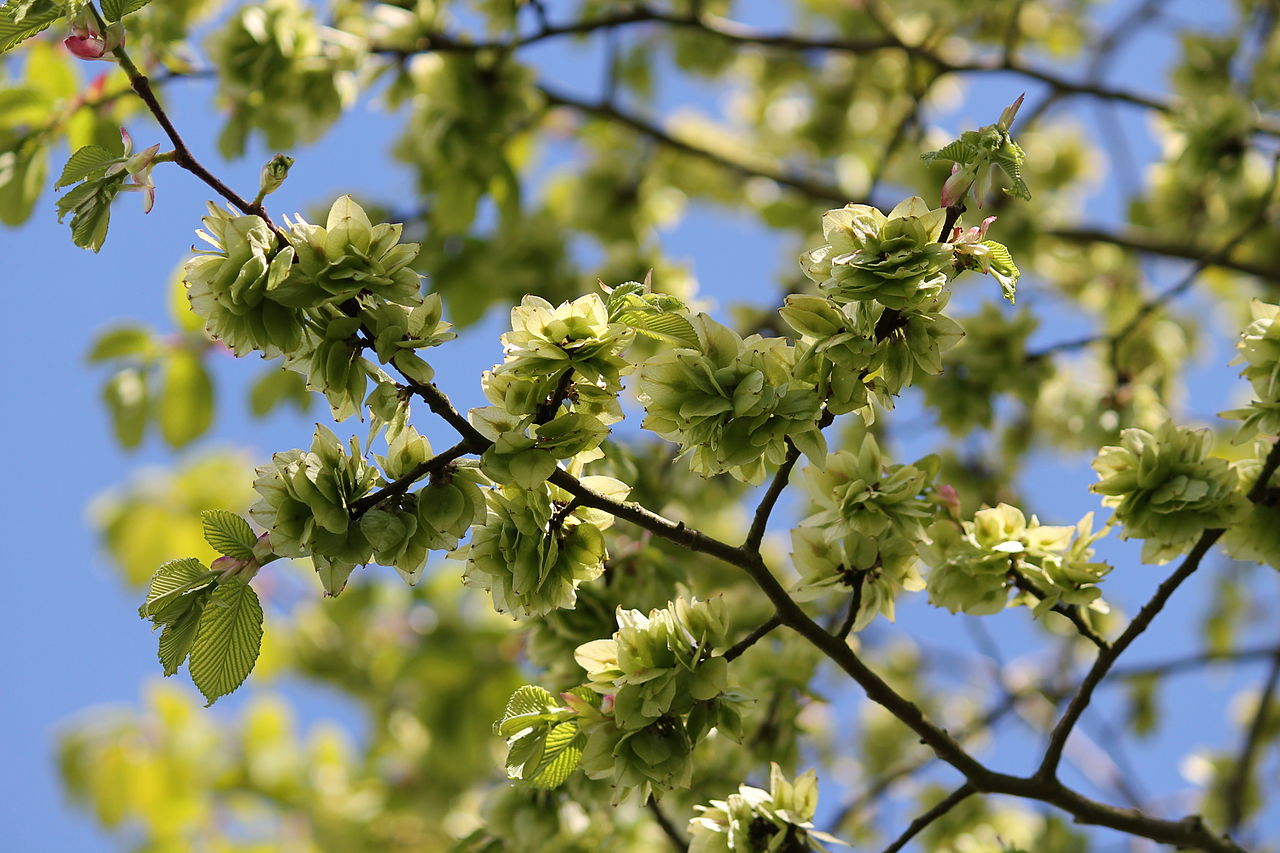
Elm
Ulmus procera (English elm), Ulmus glabra (Wych elm).
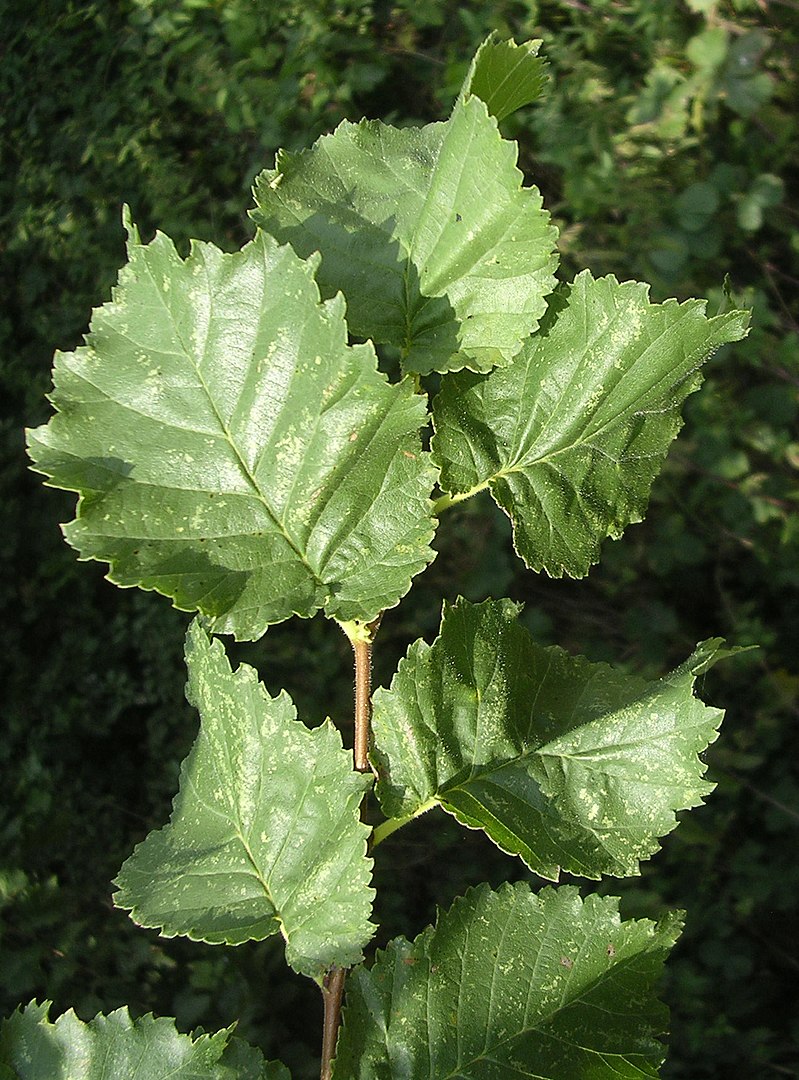
English elms were one of the British Isles’ most common trees until the 1970s, when Dutch elm disease killed around 25 million of them. Now rare, the ones that remain are usually found in hedgerows. Elms have unusually-shaped leaves: one side is longer than the other, which gives them a bent shape.
Wych elms suffered badly from the disease too, and are also rare today. Their leaves are much larger than the English elm's, and can measure up to 18 centimetres (7 inches) long. Both types of elm produce papery seed-cases as fruits, which each contain a single seed and are light enough to travel on the wind. Height, English elm: 16–30 metres (50–100 feet); Wych elm: 16–40 metres (50–130 feet)
Field maple
Acer campestre
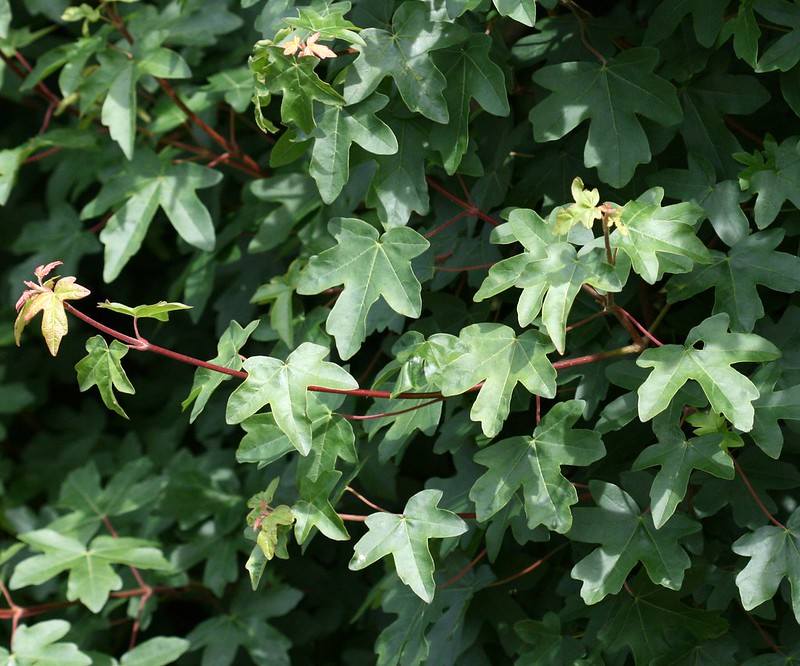
Field maples have some of the brightest leaves in autumn, when they turn fiery shades of yellow and gold. These medium-sized trees are common in woodland and hedgerows all over the British Isles, especially in the south. Their leaves are small and split into three pointed lobes (parts that stick out). In autumn they produce fruits with papery wings that help them travel on the wind. Height: 8–14 metres (30–50 feet).
Hawthorn
Crataegus monogyna
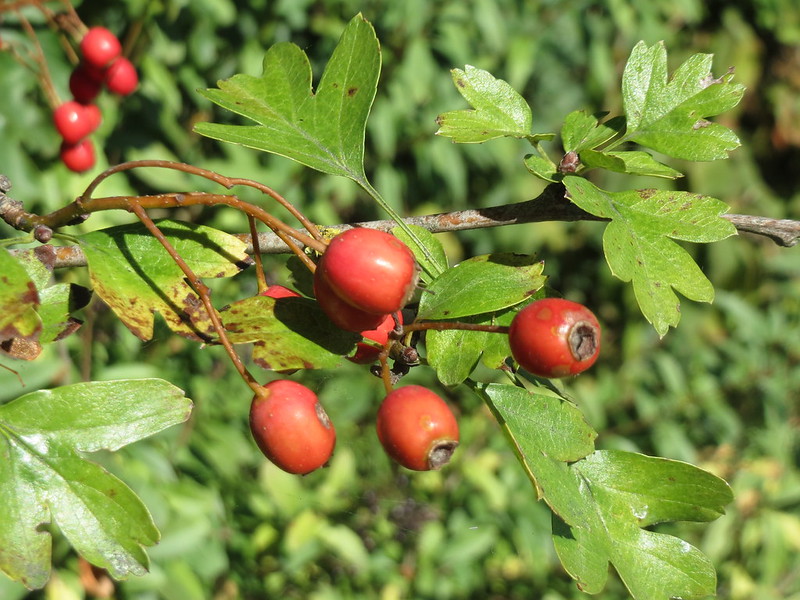
The spiky hawthorn tree looks similar to the blackthorn, but can grow much larger. It is a common sight in hedgerows all over the British Isles, but can also stand alone. Hawthorns produce white, sweet-smelling blossoms in early spring and red berries in late summer. Their leaves are dark green and fan-shaped, with pointed lobes (parts that stick out). Height: 12–15 metres (40–50 feet).
Hazel
Corylus avellana
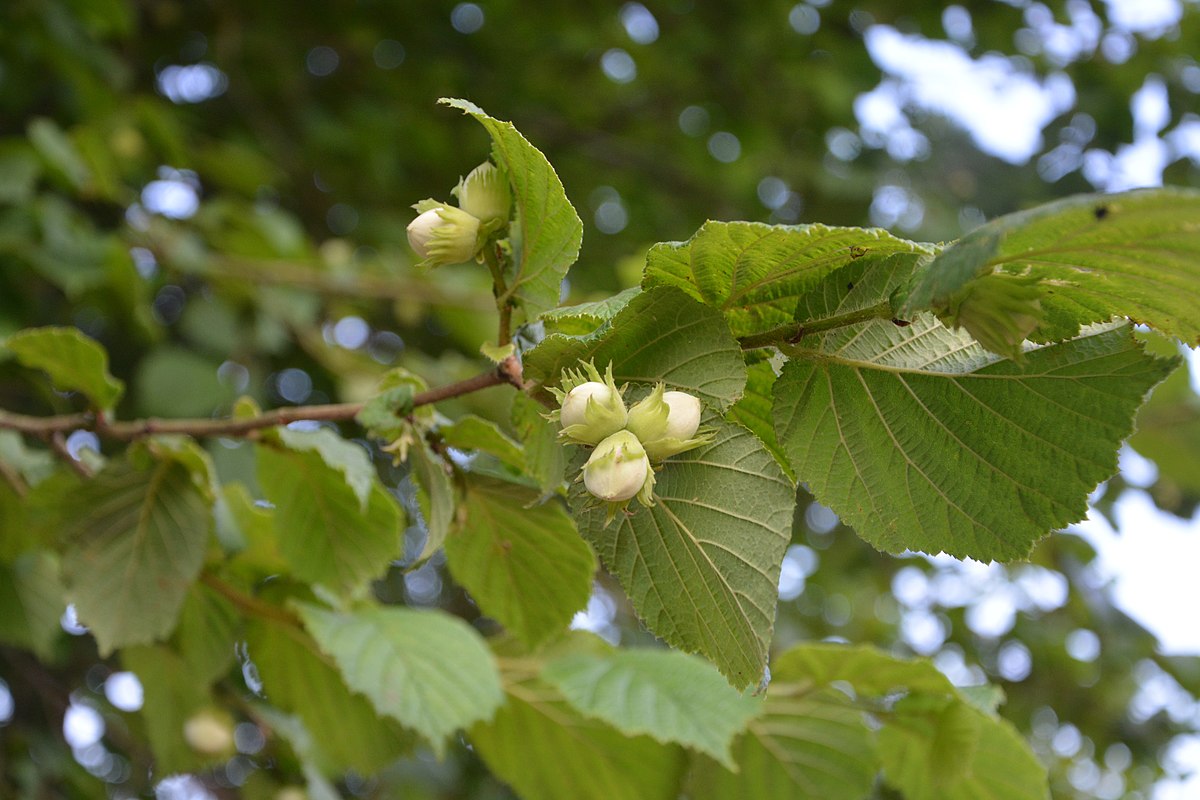
Instead of having a single, large trunk, hazel trees usually have clusters of thin trunks or stems. These medium-sized trees have rounded leaves with slightly toothed edges. In early spring they produce long, furry flowers called catkins, which are sometimes nicknamed “lambs’ tails”. Their fruits, hazelnuts, grow in spiky cases called husks. They are a popular food with many types of wildlife, especially squirrels and dormice, as well as with people. Height: 12–15 metres (40–50 feet).
Holly
Ilex aquifolium
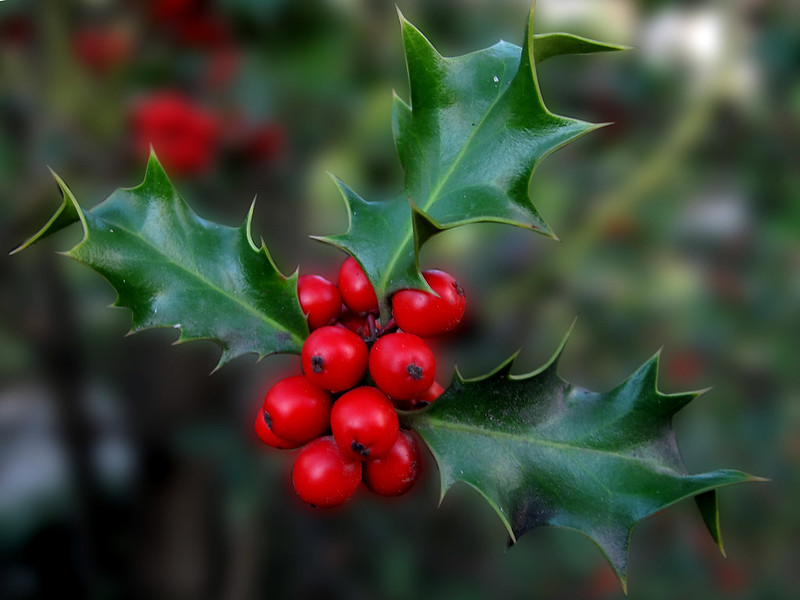
Holly trees are easy to recognise by their shiny, spiky lower leaves (leaves on upper branches are smooth) and bright red berries. These small trees grow in hedgerows and woodlands all over the British Isles. They are evergreen, so keep their leaves all year round, sheltering birds and other wildlife under their branches. In winter their berries are an important source of food for birds. Height: 8–15 metres (25–50 feet).
Hornbeam
Carpinus betulus
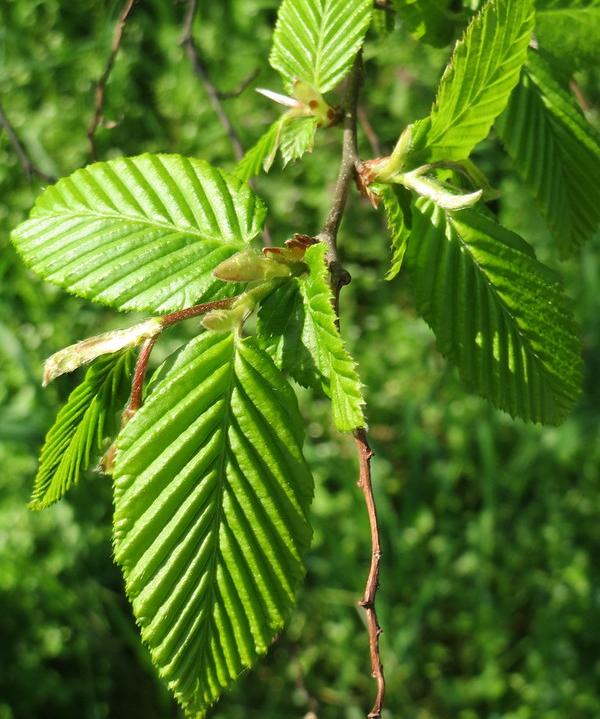
The hornbeam is a large tree found in southern England. Its wood is strong, useful for wooden parts in machinery and tool handles. Hornbeams have silvery-grey bark and their leaves are oval-shaped with toothed edges. In early spring, the trees produce long tail-like flowers called catkins. In late summer these develop into hard nuts that float to the ground on papery wings. Hornbeams can live for up to 300 years. Height: 10–20 metres (30–65 feet).
Horse chestnut
Aesculus hippocastanum
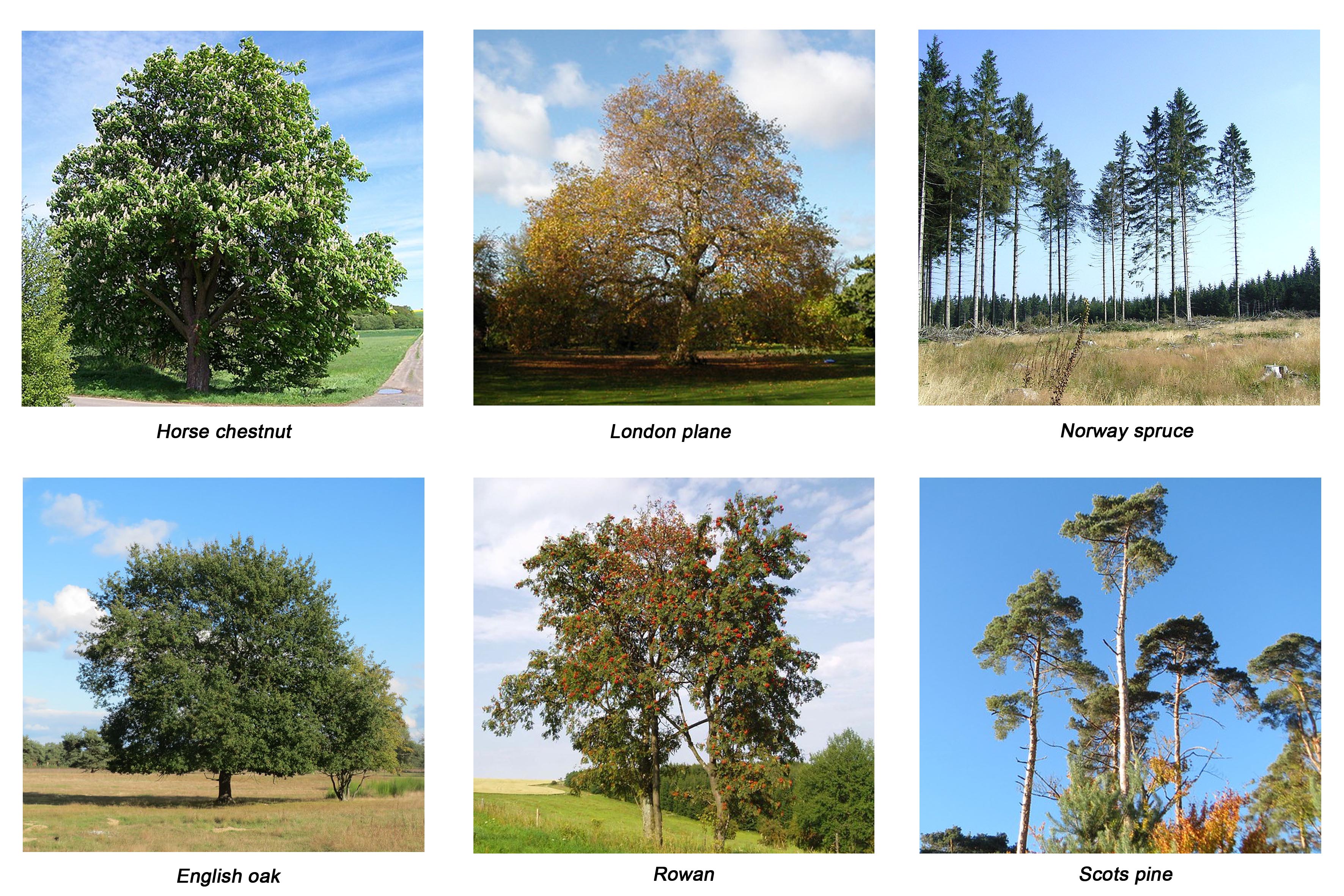
Introduced to Britain from Turkey in the late 16th century, the horse chestnut is one of the British Isles’ largest broadleaf trees. Horse chestnuts are well known for their hard, shiny brown fruits, known as conkers. Conkers appear in autumn, encased in fleshy, spiky green shells. As they ripen, the cases break open and the conkers fall to the ground. Horse chestnuts grow in woodlands, hedgerows and parks. Their leaves are made up of five smaller leaflets radiating from a central stem. In spring horse chestnut trees are covered with white blossoms which stand upright, like candles. Height: 14–40 metres (45–130 feet).

Lime
Tilla X Europaea (Common lime), Tiliaplatyphyllos (Large-leaved lime), Tilia cordata (Small-leaved lime)
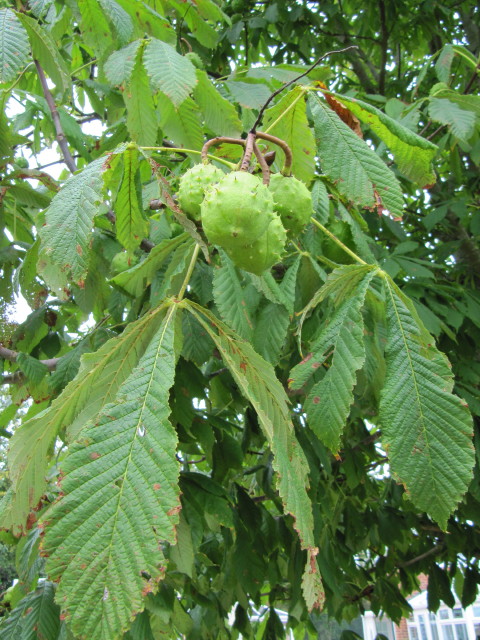
Lime trees, sometimes known as linden trees, have heart-shaped leaves with pointed tips. Their small, round fruits are attached to a long single leaf called a bract, which acts as a parachute to help them travel on the wind. Small-leaved limes grow in woodlands of southern England and Wales. As they age, they send up shoots called "suckers" from the base of their trunks. Large-leaved limes look similar, but do not have these shoots.
The common lime is a cross between the two which is mostly planted in parks and gardens. Lime trees are known for their sticky leaves, caused by a substance called honeydew, which is produced by insects called aphids which feed on the tree’s sap. The honeydew drips down on to the tree’s leaves—also coating anything underneath the tree. Height, Common lime: 20–40 metres (65–130 feet); Small-leaved lime: 10–25 metres (30–80 feet); Large-leaved lime 20–30 metres (65–100 feet).
London plane
Platanus x hispanica
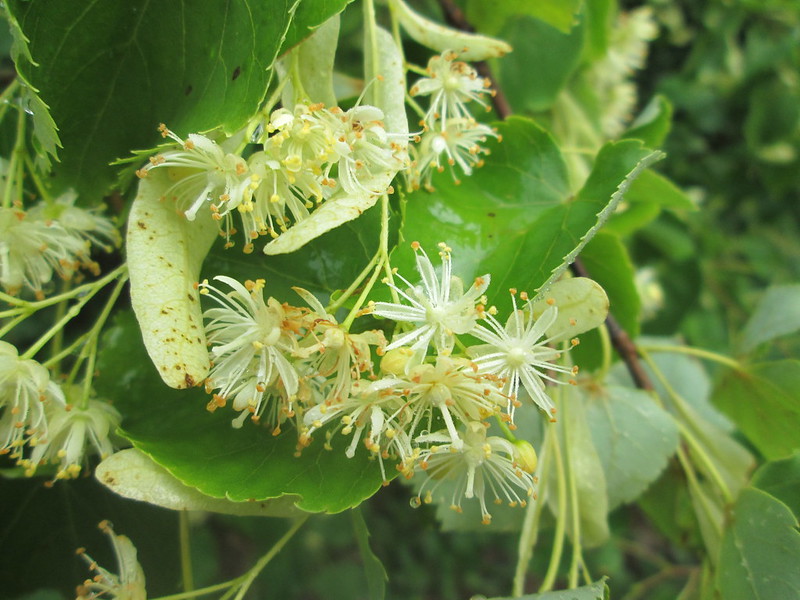
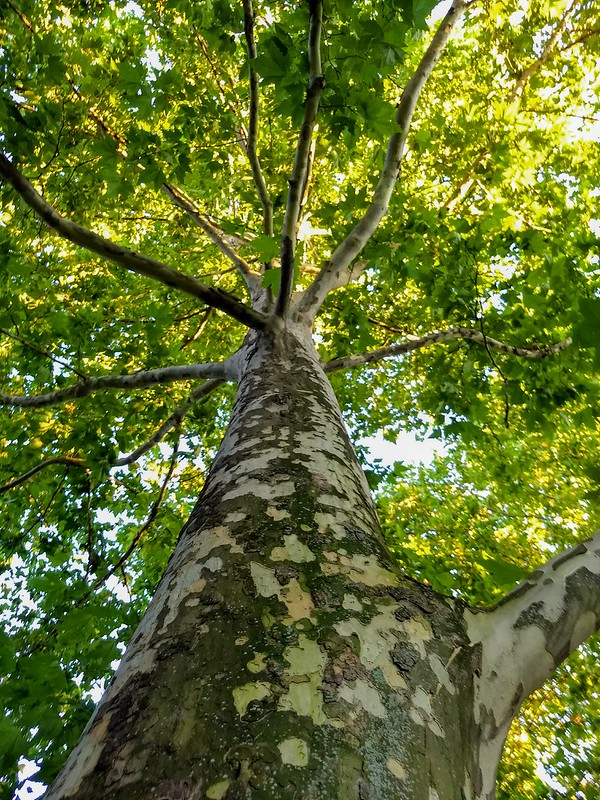
London plane trees are common in cities and towns. Bred in the 17th century, they are a cross between Oriental plane trees and American sycamores. For centuries they have been planted in cities because they can withstand pollution well: they absorb particles polluting the air in their bark, which then flakes off, a piece at a time. This creates a patchy “camouflage” pattern on their trunks. London planes have hard, ball-shaped fruits which can stay on the tree all through winter, slowly breaking up as they release their seeds. Their leaves have between three to five lobes (sections) and pointed triangular tips. They look similar to sycamore leaves, but they do not have toothed edges. Height: 13–35 metres (40–115 feet).
Norway spruce
Picea abies
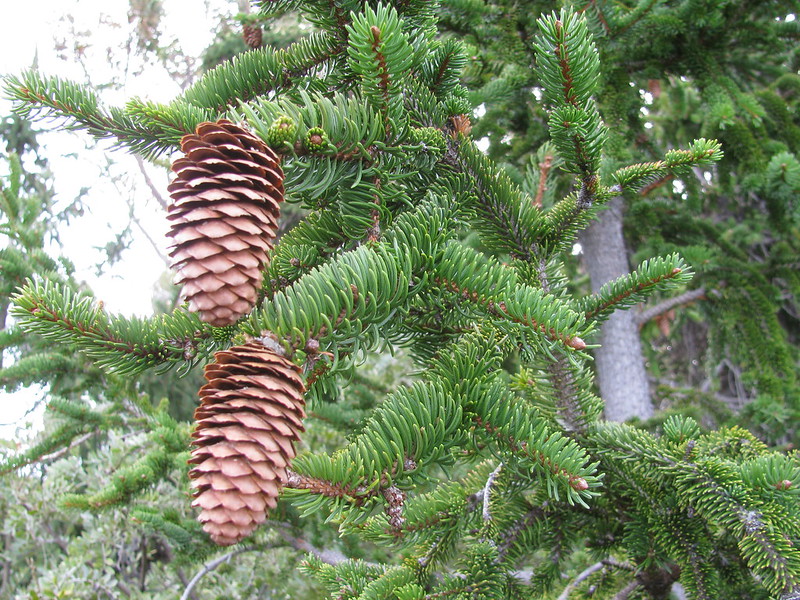
This evergreen tree is one of the British Isles' tallest—it can reach heights of up to 40 metres (130 feet). The Norway spruce has a triangular profile and dark, tough needles. In spring, it grows pinkish-brown cones which gradually turn darker as they mature through the summer. It is likely that Norway spruces were growing in Britain thousands of years ago, before disappearing during the most recent Ice Age. They were re-introduced from continental Europe during the 16th century. Young Norway spruces are used to decorate homes in winter as Christmas trees. Height: 18–40 metres (60–130 feet).
Oak
Quercus robur (English or pedunculate oak), Quercus petraea (Sessile oak)
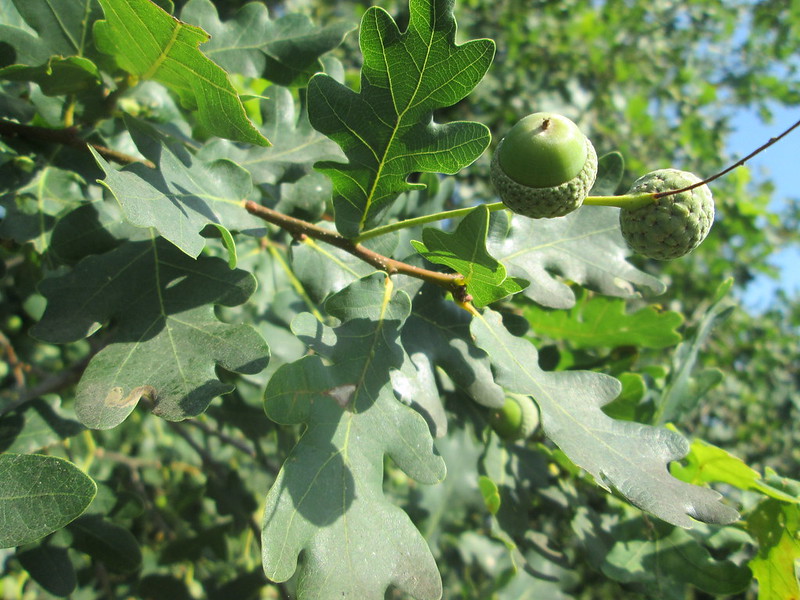
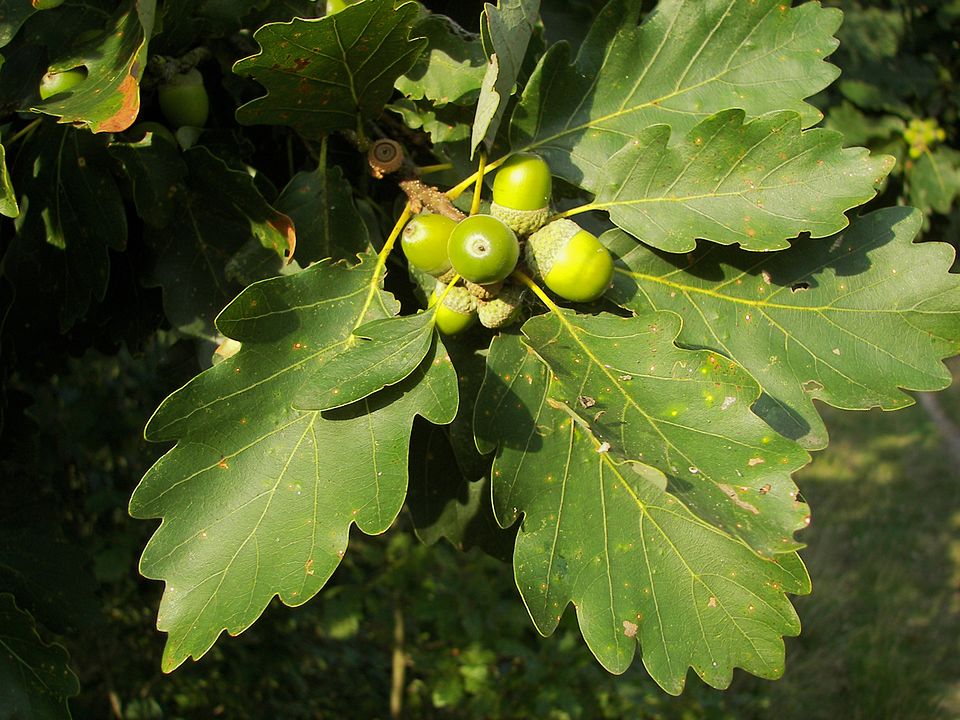
English or pedunculate oak trees are found all over the British Isles, but are especially common in woodlands and farmland. A single oak tree can support hundreds of wildlife species, from tiny insects that live in its bark, to squirrels and deer that feed on its acorns. Its distinctive leaves, with rounded toothed edges, have short stems and grow in bunches. Its flowers are long, yellow catkins. In autumn, oaks produce small, egg-shaped fruits called acorns. They sit in cups, which grow on the end of long stalks.
The sessile oak is another type of oak native to the British Isles. It looks very similar to the English oak, but is more likely to grow in hilly areas and in Ireland. Sessile oaks can be told apart from English oaks by their longer leaves and by their acorns, which do not have stalks—the name "sessile" means "stalkless". Height, for both kinds of oak: 20–40 metres (65–130 feet)
Rowan
Sorbus aucuparia
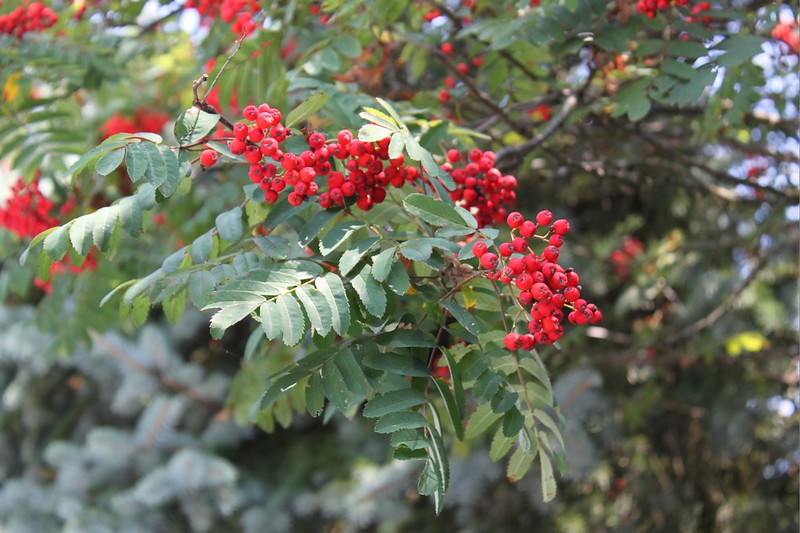
The rowan is a medium-sized tree that grows all over the British Isles, from mountains to woodlands, parks and gardens. It is also known as the mountain ash. In autumn, its clumps of bright red berries makes it easy to spot. Rowans have compound leaves, made up of five to eight pairs of smaller leaves, or leaflets, on a single stem. They turn golden in autumn. For centuries people have associated rowan trees with magic: druids (religious leaders in Celtic times) used its wood to make wands, and, in British folklore, rowans traditionally offer protection against witchcraft. Height: 8–15 metres (25–50 feet).
Scots pine
Pinus sylvestris
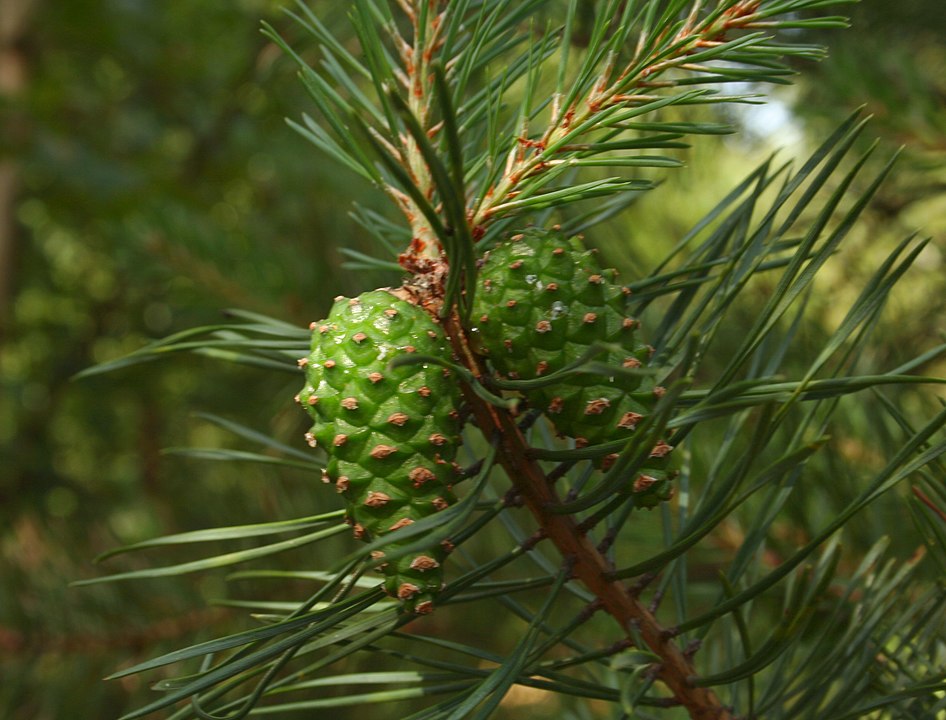
The tall, majestic Scots pine is the only pine tree native to the British Isles, and one of the tallest. Scots pines are evergreen, so their branches are covered with long, bluish-green needles all year round. They produce seed cones, which stay green for up to two years and eventually ripen to a woody brown. Scots pines flourish in wild woodlands, such as Scotland’s ancient Caledonian forest. But they are also grown in plantations for timber: their tall, straight trunks are perfect for making telegraph poles. Height: 12–36 metres (40–120 feet)
Sea buckthorn
Hippophae rhamnoides
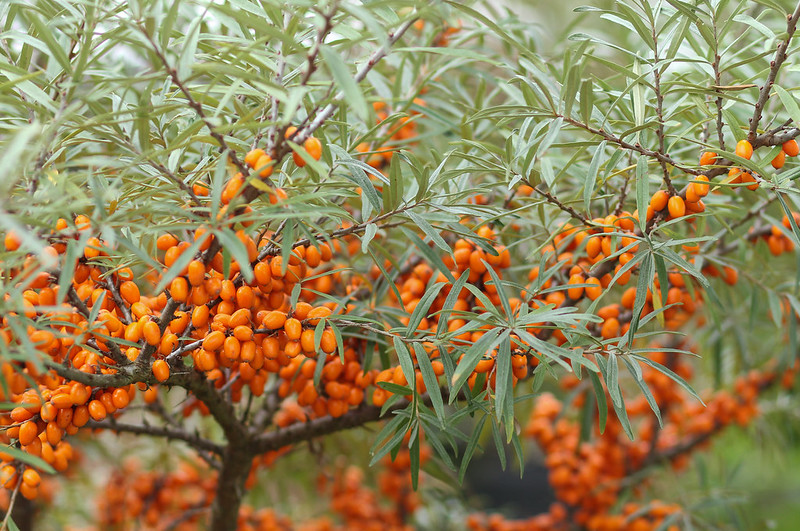
Sea buckthorn is a small, tough tree that can live in windy, exposed conditions along the coast such as sand dunes and cliff tops. It is especially common along England’s east coast. Its spiky branches are covered with small thorns, and its leaves are long and silvery-green. In early autumn sea buckthorns are covered with bright orange berries: rich in vitamin C, they have been used in medicines for centuries. Height: 1–7 metres (3–25 feet).
Silver birch
Betula pendula
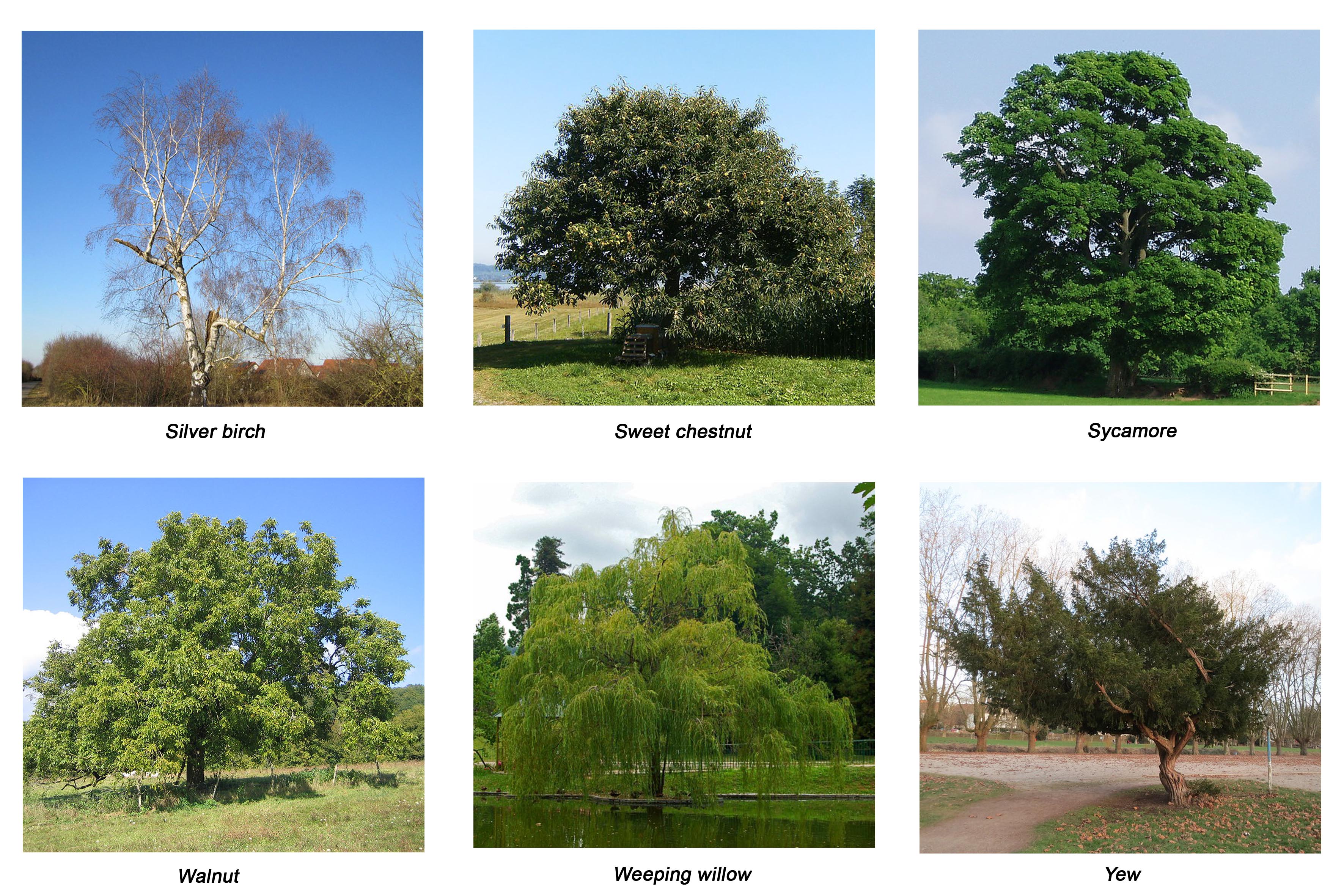
This delicate tree is easily recognized by its white, silvery bark, which often peels away in papery layers. Silver birch trees have been growing in the British Isles since the end of the most recent Ice Age 10,000 years ago. Their leaves are triangular with toothed edges. In the spring silver birch trees grow long, drooping flowers called catkins. In autumn, their leaves turn golden. Height: 18–30 metres (60–100 feet).

Sweet chestnut
Castanea sativa
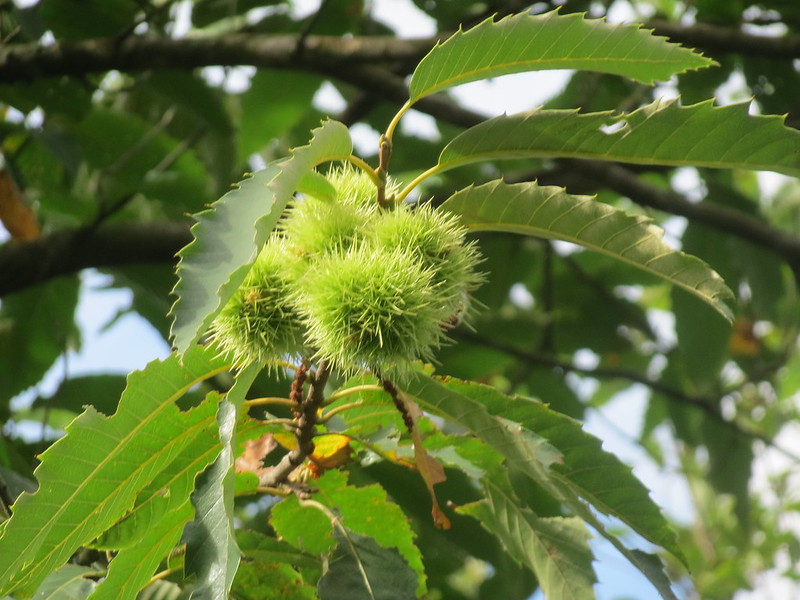
These huge trees belong to the same family as beeches and oaks (but not horse chestnuts), and can live for up to 700 years. Introduced to Britain by the Romans, they produce sweet chestnuts, edible nuts which can be roasted and eaten. Mature sweet chestnut trees have wide trunks with smooth, greyish-purple bark. Their leaves, long and sharply-toothed, are covered in deep ridges. In autumn, clusters of spiky, pale green seed-cases appear on their branches, each containing up to three nuts. Height: 20–35 metres (65–115 feet).
Sycamore
Acer pseudoplatanus
A relative of the maple, the sycamore is a non-native species. It may have been introduced by the Romans, but other evidence suggests it arrived in the 16th century. Sycamores are now common in woodlands all over the British Isles. In autumn, they produce winged fruits called keys, each holding two seeds. With their papery wings, they look like helicopters as they spin down to the ground. Sycamore leaves have five lobes (parts that stick out), and red stalks. The tree’s bark is smooth and greyish-purple when young, and develops long cracks down the trunk as it gets older. Height: 16–35 metres (50–115 feet).

Walnut
Juglans regia
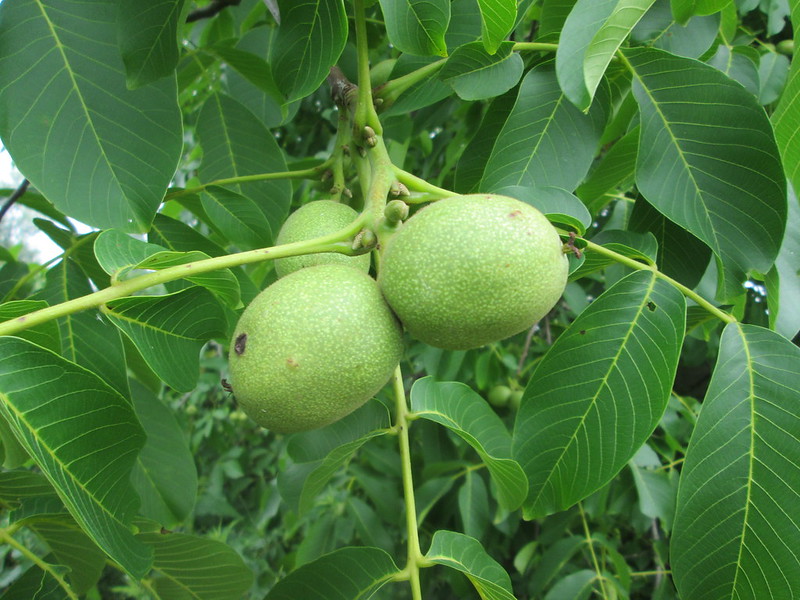
Walnut trees are known for their edible nuts and for the dark, marbled appearance of their wood when it is cut for timber. First introduced by the Romans, they are mainly found in southern England. Young walnut trees have smooth, green-grey bark, which becomes silvery as the trees grow older. Their shiny, feather-like leaves are made up of five to seven pairs of leaflets on a single stem. Their fruit is a green, fleshy husk encasing a wrinkled walnut. They ripen in early autumn, when the case splits open to reveal the hard-shelled walnut. Height: 10–30 metres (30–100 ft).
Willow
Salix alba (white willow), Salix babylonica (weeping willow), Salix caprea (goat willow)
White willow trees grow near water everywhere in the British Isles. These large trees have golden-yellow branches and long, narrow leaves with pointed tips. In spring they produce fluffy flowers called catkins, filled with seeds. The weeping willow has long, drooping branches. Willow bark was once used to make natural painkillers.

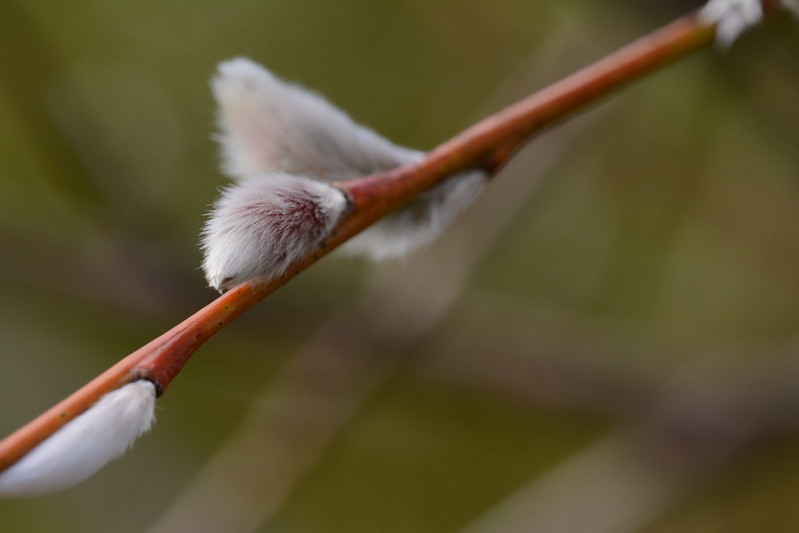
Goat willow is a much smaller tree that grows in woodlands and hedgerows. It is sometimes nicknamed “pussy willow” because its soft catkins look like cats’ furry paws. Its stems are used to make artists’ charcoal for drawing. Height, goat willow: 4–10 metres (10–30 feet); weeping willow: 20–25 metres (65–80 feet); white willow 10–25 metres (30–80 feet).
Yew
Taxus baccata
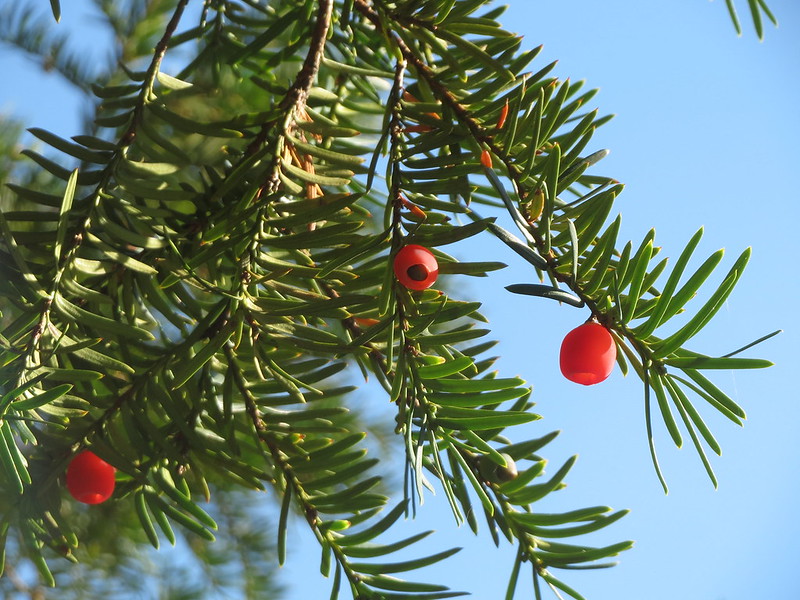
Yews can live for many hundreds of years. They are often planted in churchyards, most commonly in southern England. (Yews may have been planted on the graves of plague victims to purify the dead, or to stop peasants from grazing their cattle on church grounds as all parts of the yew are extremely poisonous to livestock—and humans.) Yews have dark, glossy, green needles that grow in opposite rows on flat stems. Unlike other conifers, a yew does not bear cones as its fruit. Instead, the seeds grow inside bright red berry-like cases called arils, which have holes at the tips. An evergreen, the yew tree keeps its leaves in winter, and so can shelter wildlife beneath its green branches all year round. Yew needles contain a chemical that is used in the treatment of breast cancer. Height: 4–20 metres (10–65 feet).
Consultant: Chris Jarvis