
Famous inventors
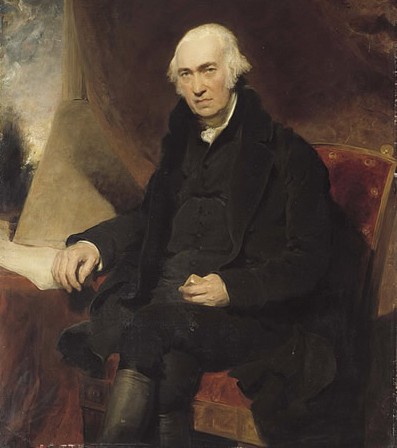
James Watt
Steam engine design was greatly improved in the 1770s by Scottish engineer and inventor James Watt (1736–1819). In his early career, Watt was a maker of mathematical instruments, but he soon developed an interest in steam engines. In those days, Thomas Newcomen’s engines were being used for pumping water out of mines. When given one to repair in around 1763, Watt was struck by how inefficient it was: the engine's cylinder was heated and cooled on every cycle. He began work to improve the design. In partnership with the manufacturer Matthew Boulton (1728–1809), Watt's steam engine would make possible the mechanization of factories and mills—triggering the Industrial Revolution.

Watt's steam engine
James Watt’s first steam engine, patented in 1769, included many improvements over Newcomen’s. It had a separate chamber (the condenser) where the steam was condensed (turned back to liquid), allowing the main cylinder to remain hot all the time. Watt also used steam pressure to force the piston down, rather than relying on atmospheric pressure. This increased the power of the engine. An automatic governor controlled the flow of steam to the cylinder, and so regulated its speed.
The diagram shows how Watt's steam engine worked. Valve A opens to release steam from the boiler. Steam enters the cylinder from above, pushing the piston down, along with the beam it is connected to. Valve C opens to release steam from the cylinder to the condenser. Valves A and C then close, while B opens, so steam then enters the cylinder from below. The piston moves up, pushing the beam back up.

Rotary motion
In 1775, Watt went into business with Matthew Boulton, who owned an iron foundry near Birmingham. Together, they began to manufacture steam engines following Watt's design. Initial purchases came from mine owners, but Watt's engine, unlike Newcomen's, could easily be adapted for other purposes. in 1781, Watt added sun-and-planet gears, which converted the up-and-down movement of the cylinder into a turning movement, called rotary motion. Wheels and belts could now link the engine to grinding, spinning and weaving machines. Soon, Boulton and Watt engines were installed in factories and mills.

Consultant: Dave Hawksett