
Famous inventors
Thomas Edison
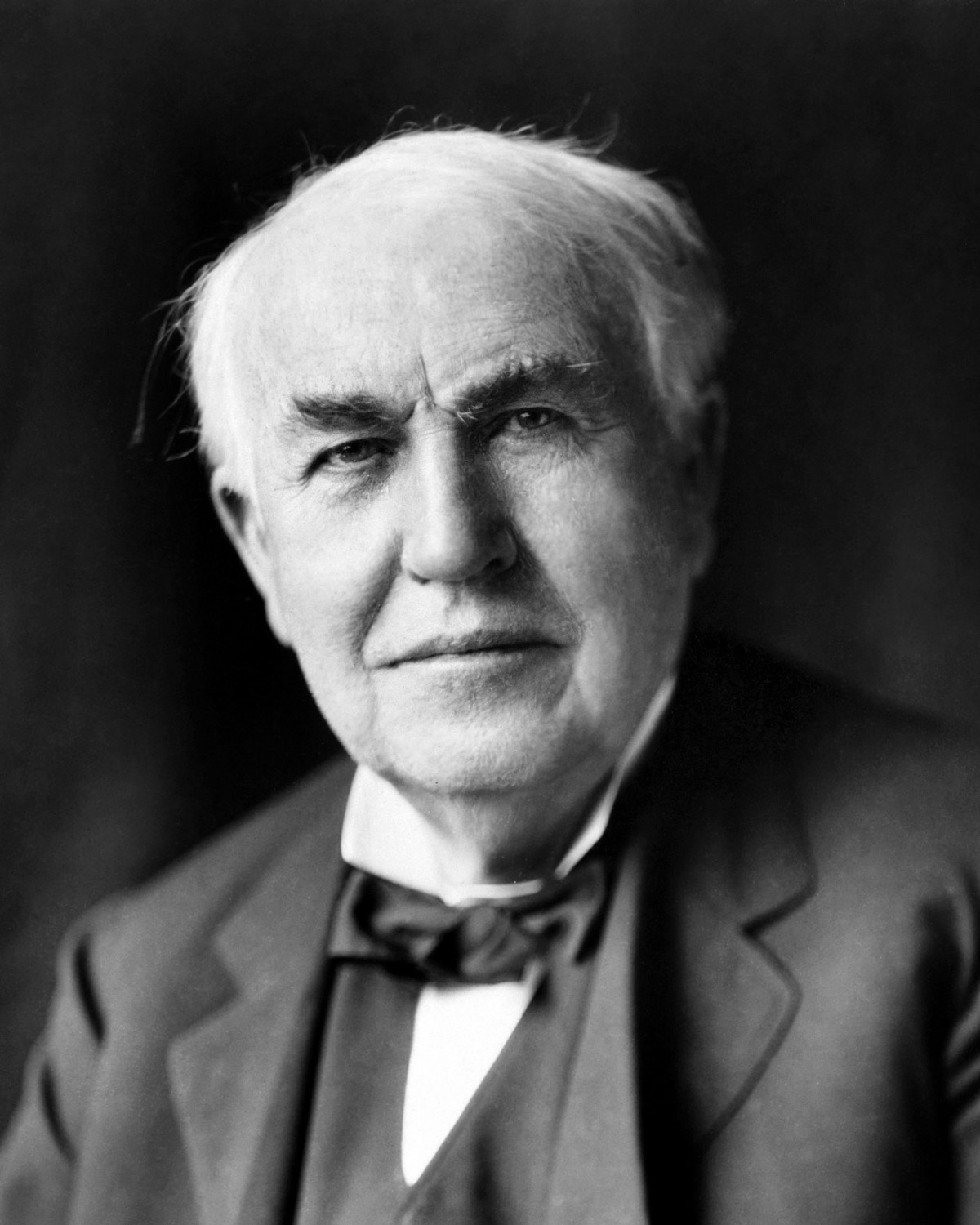
Thomas Alva Edison (1847–1931) was an American inventor. Some of his inventions were improvements on those that already existed, but he turned them into versions that could be widely used. His achievements included the phonograph, the earliest sound recording device, a vastly improved telephone and an electric light bulb that worked better than anything that had gone before. Edison also founded 14 commercial companies, including what is now General Electric, one of the largest public limited companies in the world.
Early career
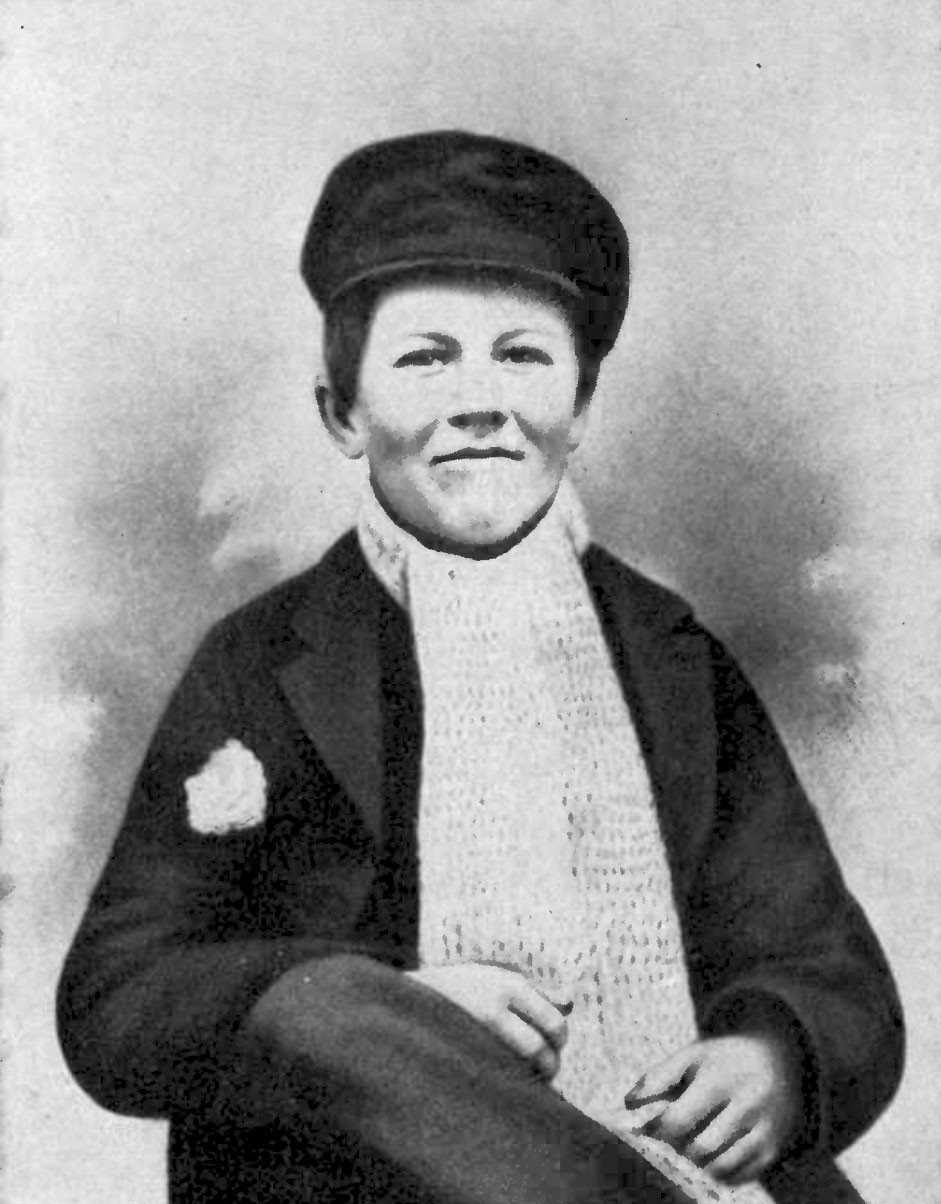
Thomas Alva Edison was born in Ohio in 1847, and grew up in Michigan. He did badly at school, so his mother, a qualified teacher, taught him at home.
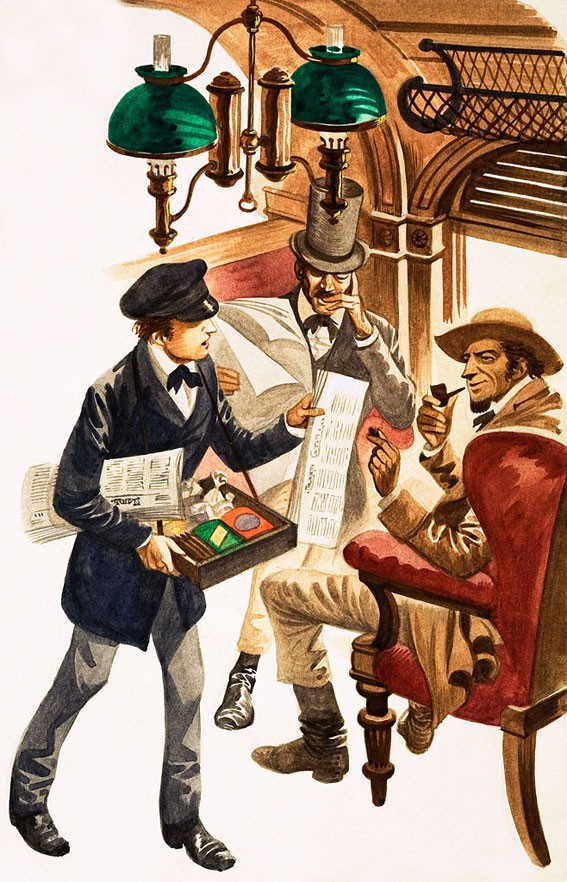
Edison was a businessman almost from the start. At the age of 12 he was selling snacks and sweets on the railway. By the age of 14, he was producing and selling his own newspaper, the Grand Trunk Herald, on a train. With the money he made, he set up a chemical laboratory in the basement of his home.
After his mother complained, he moved some of his chemicals to his locker room on the train where he was working—and almost set the train alight when a stick of phosphorus fell on the floor, for which the train’s conductor hit him hard on the side of the head. Edison blamed this (probably wrongly) for the deafness in his left ear in later life.
Edison married twice. His first wife, Mary, died in 1884, leaving him with three children. His second wife, Mina, with whom he also had three children, lived until 1947.
Telegraph operator
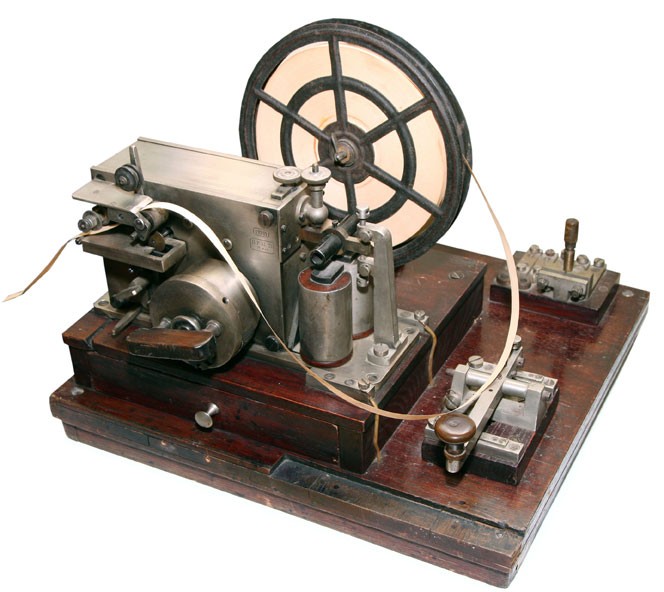
In 1862, aged 15, Edison worked full-time as a telegraph operator, a job which took him all over the United States. At that time, the telegraph was the fastest way to send messages. It worked by sending electrical pulses representing letters in Morse Code, along wires. In 1868, Edison went to work for the Western Union telegraph company in Boston, where made his first invention: an automatic vote-counting machine—which did not turn out to be a success.
Telephone
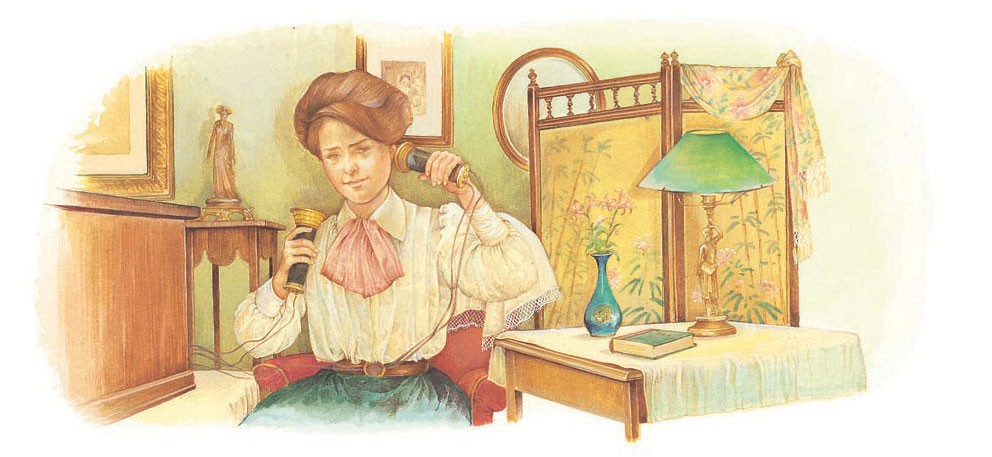
Edison’s early success as an inventor meant he was able to set up his own industrial research laboratory in Menlo Park, New Jersey in 1876. There Edison worked out a way to improve the sound of Alexander Graham Bell’s great invention, the telephone.
Bell’s telephone worked using a parchment (a kind of paper) membrane that vibrated in response to sound. This caused an attached steel strip to vibrate in turn, and these vibrations were converted into electric signals that travelled along a wire. At the receiving end the signals were converted back into sound. But these were not very clear; users of the first telephones had to shout to make themselves heard.
Edison found that a carbon disc set between metal plates worked much better than parchment. Later, he replaced the solid carbon with carbon granules, an idea first used by the British inventor David Hughes (1831–1900) in his design for a microphone. This worked much better than the anything used before, and remained a basic part of a telephone for the next 100 years.
Phonograph
Edison adapted the parts of the improved telephone he had invented to produce the first recording machine. His phonograph was like a telephone, only with the vibrating parts connected to a steel needle.
As Edison spoke into a horn, the needle "wrote" (etched) the pattern of vibrations on a piece of tinfoil wrapped round a drum, which was turned at the same time. When the needle was returned to the beginning of its written message and the drum turned again, the pattern cut in the foil made it vibrate in the same way. The telephone parts also vibrated and the sound came back out of the horn.
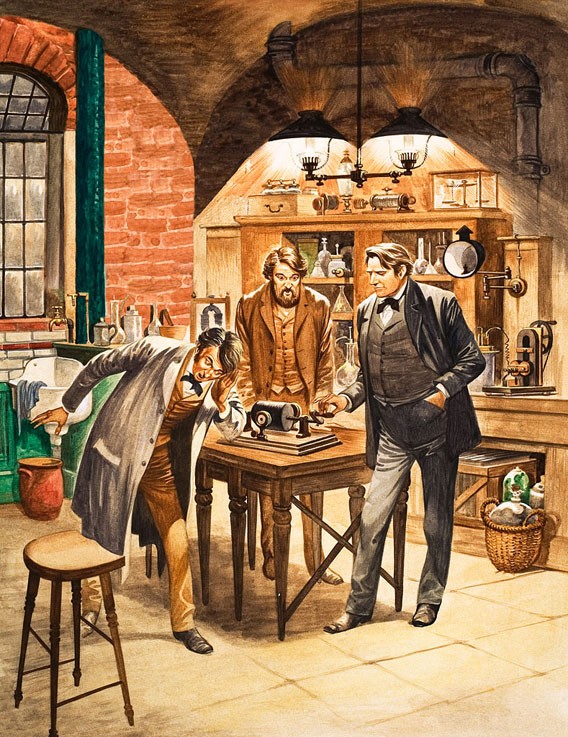
Edison called his new invention, which was patented in 1877, the phonograph. The first recorded sound he made on it was heard in 1878, when Edison recited the nursery rhyme “Mary had a little lamb”.
Electric light
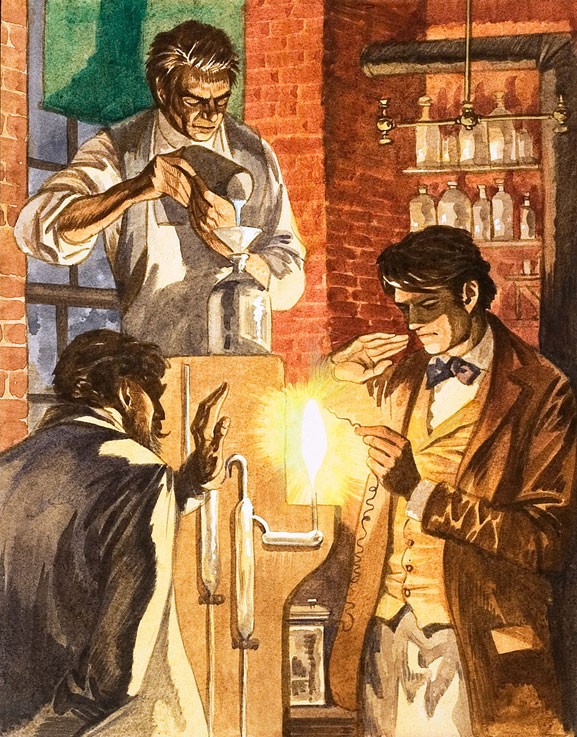
Edison did not invent electric lighting, but the improvements he introduced made his version a commercial success. About the same time as Edison was working on his version, the British inventor Joseph Swan (1828–1914) produced a working electric light bulb. Swan’s light was made by passing an electric current through a carbon filament inside a glass vacuum. The carbon filament became so hot it glowed (known as incandescence)—although it needed a large amount of electricity to make it do so. Edison's version, which he demostrated in 1879, used a very fine filament (actually made of bamboo). This required much less electricity. He also perfected the vaccuum.
Power station
Edison went on to use Michael Faraday’s discovery of how to generate electricity to build a powerful generator. In 1882, the Pearl Street Station, the first power station in the US, began supplying electricity to light nearly 100 buildings in Manhattan. All the machinery, including six huge generators, was designed and installed by Edison and his team at the Menlo Park laboratory.
Other inventions
Edison then set up a larger laboratory in West Orange, New Jersey in 1887, and continued to work on a host of inventions almost until his death in 1931. He improved the phonograph, invented the first practical dictaphone, a mimeograph, a type of battery and even early form of motion picture, the Kinetoscope. By the end of his life, he had submitted over 1000 patents (exclusive rights granted by the government for inventors to develop
their inventions).
Consultant: Dave Hawksett