
Asia
Uzbekistan
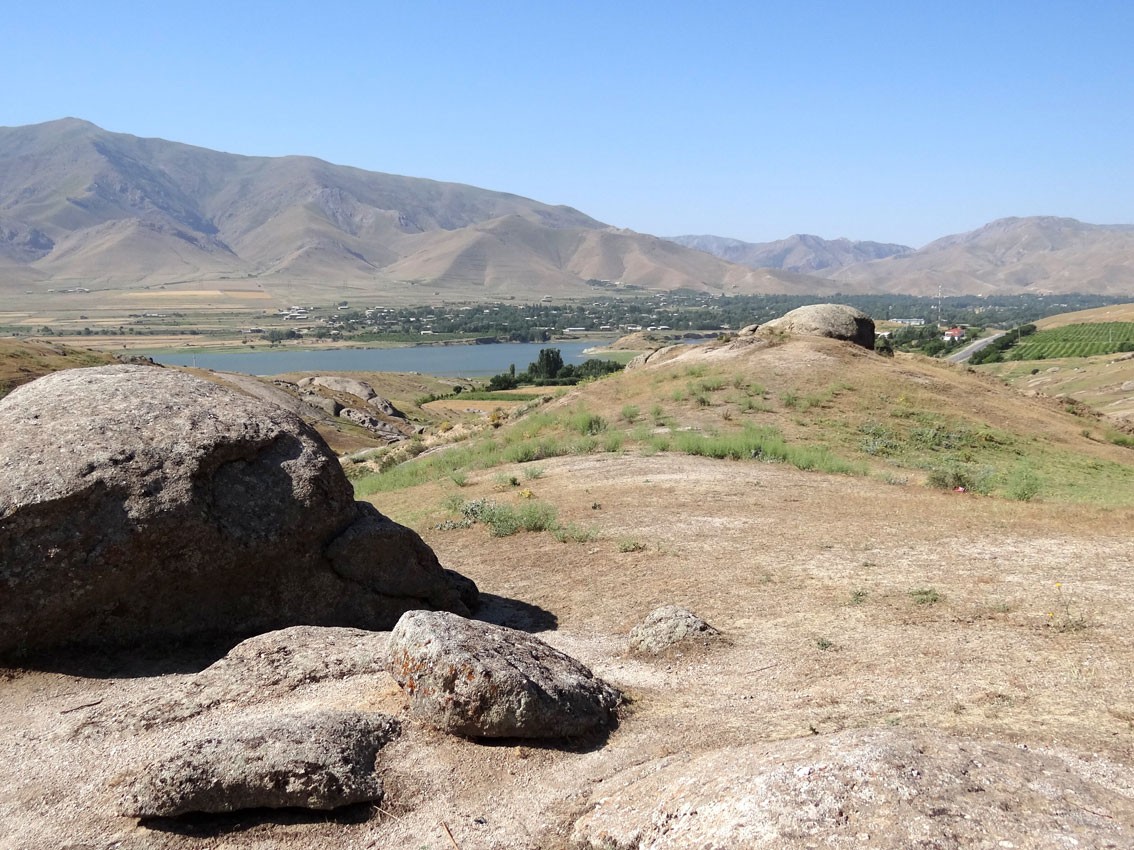
Most of Uzbekistan is made up of a dry desert called the Kyzyl Kum. Its vast, sandy plains stretch into neighbouring Kazakhstan and Turkmenistan as well. The high, snow-capped mountains of the Gissar Range rise in the southeast of the country. In the northwest, Uzbekistan shares the Aral Sea with Kazakhstan. Once an enormous inland sea, today most of its waters have dried up with the result that it is now a fraction of its original size. During summer, Uzbekistan’s climate is extremely hot and dry. Winters are very cold; temperatures can fall to as low as -38°C (-36°F).


People
Uzbekistan is by far the most populous Central Asian country. About 80% of the population are ethnic Uzbeks, descended from Turkic peoples who were among the first inhabitants of Central Asia. The rest are mainly Russians and Tajiks. Although Uzbek is the main language, many people can also speak Russian. Most of Uzbekistan’s people live in towns and villages in the country’s northeastern corner, near the capital Tashkent. In the mountains, farmers grow pomegranates and almonds as well as raise sheep and cattle.

A people called the Karakalpaks live on the southern shores of the Aral Sea. There are around 726,000 of them. Their homeland, known as Karakalpakstan, is an autonomous (self-ruling) republic within Uzbekistan.
Cotton
Uzbekistan has an important cotton industry: it is the world’s second largest exporter of cotton. In Uzbekistan, cotton is known as “white gold”. Each year, thousands of students, workers and soldiers work in the fields and help to pick the cotton harvest. Many of them work as unpaid labourers, and some are too young to work. Much of the cotton is exported to textile producers in China, Bangladesh and Korea, where it is spun into fabric.

Mining is also a major industry: Uzbekistan has large reserves of gold, copper and natural gas. A large percentage of its natural gas is exported to China

Aral Sea
The Aral Sea was once one of the world’s largest inland seas, but today, it is rapidly shrinking—it holds just 10% of its original volume. This is because water from the Amu Darya river, which flows into it, was diverted in the 1950s to provide water to the cotton-growing industry. As the waters have dried up, thousands of people who once made a living from fishing have lost their jobs, and many towns and villages have suffered severe water shortages. Wind whips across the salty, dried-up plains left behind, causing harmful dust storms.
In 2014, NASA took new photographs from space in which showed that most of the eastern basin has completely dried out since 2000. Photos taken in 2024 show further area reductions to the western portion of the lake, but otherwise little change.

Consultant: Nicholas Harris
Facts about Uzbekistan
Population 37,535,605 (2024 estimate)
Area 425,400 sq km
Highest point Khazret Sultan 4643 m (15,233 ft)
Capital Tashkent, population 3,040,800
Other major cities Namangan (pop. 696,500), Samarkand (595,800), Andijan (481,800), Nukus (341,000)
Languages Uzbek, Russian
Religions Muslim 88%, Christian (Eastern Orthodox) 9%, others 3%
Ethnicity Uzbek 80%, Russian 6%, Tajik 5%, Kazakh 3%, others 6%
Currency Uzbekistani som (UZS)
Chief exports energy, cotton, gold, fertilizers, metals, textiles, machinery, vehicles


History of Uzbekistan
327 BC
Macedonian ruler Alexander the Great conquers the Persian Empire provinces of Sogdiana and Bactria, which contain the territories of present-day Uzbekistan
1st century BC
The Silk Road, a major overland trading route between Europe and China, passes through Uzbekistan; a number of trading posts are founded in the region
8th century
Transoxiana, the territory between the Amu Darya and Syr Darya rivers, is conquered by the Arabs, who introduce Islam. Uzbekistan becomes a centre of Islamic scholarship
13th century
Mongols under Genghis Khan conquer the region and it becomes part of the Mongol Empire. Following Genghis Khan's death in 1227, Transoxiana, the region that is now Uzbekistan, becomes part of the Chagatai Khanate.
1380s
Mongol Empire starts to weaken; Tamerlane, a Mongol-Turkic chieftain, conquers all of western Central Asia, including Transoxiana, for his Timurid Empire. Samarkand, Tamerlane's capital, becomes a great centre of art and learning during what is known as the Timurid Renaissance (which spans the 15th and 16th centuries).
1501
Uzbek nomadic tribes launch an invasion of Transoxiana. They found the khanates of Bukhara (1501) and Khiva (1512).
18th century
Powerful states emerge, including the Khanate of Kokand (1709) and the Emirate of Bukhara (1785).
1876
Russia completes the incorporation of all three Uzbek khanates, Bukhara, Khiva and Kokand (the entire area of present-day Uzbekistan), into its empire.
1918–22
Uzbekistan’s mosques are closed down by its new communist rulers, to try and make it a secular (non-religious) country
1920
Uzbekistan and the rest of Central Asia become part of the Soviet Union (USSR). The Uzbek Soviet Socialist Republic is created in 1924.
1941–45
During World War II, over a million Uzbeks fight against Nazi Germany in the Soviet Union’s Red Army
1950s
Cotton industry grows rapidly; major irrigation projects are set up, draining the Aral Sea
1966
The capital, Tashkent, is devastated by an earthquake
1990
The USSR collapses and in 1991 Uzbekistan declares its independence. Islam Karimov becomes president
1999
Several people are killed in bomb attacks in Tashkent, linked to an extremist Islamic group
2005
190 people die when protesters, government troops and escaped prisoners clash violently in the eastern city of Andijan
2016
Death of Islam Karimov, President of Uzbekistan since its official independence on 1st September 1991