
Famous women

CITE
We have made every effort to follow citation style rules, but there may be some minor differences. If in doubt, please refer to the appropriate citation style manual.
Aung San Suu Kyi. (2026). In Q-files Encyclopedia, History, Famous women. Retrieved from
https://www.q-files.com/history/famous-women/aung-san-suu-kyi
"Aung San Suu Kyi." History, Famous women, Q-files Encyclopedia, 15 May. 2026.
https://www.q-files.com/history/famous-women/aung-san-suu-kyi.
Accessed 6 Aug. 2026.
Aung San Suu Kyi 2026. History, Famous women. Retrieved 6 August 2026, from
https://www.q-files.com/history/famous-women/aung-san-suu-kyi
History, Famous women, s.v. "Aung San Suu Kyi," accessed August 6, 2026.
https://www.q-files.com/history/famous-women/aung-san-suu-kyi


Aung San Suu Kyi
Aung San Suu Kyi (born 1945) is a human rights activist who has become an international symbol of peaceful protest in the face of political oppression. Winner of the Nobel Peace Prize in 1991, she spent large periods of time between 1989 and 2010 under house arrest in her home country of Myanmar (Burma). After her release in 2010, Aung San Suu Kyi was elected a member of parliament and, until she was re-arrested in 2021, had been actively involved in politics in Myanmar.
Updated 15th May 2026


Family background
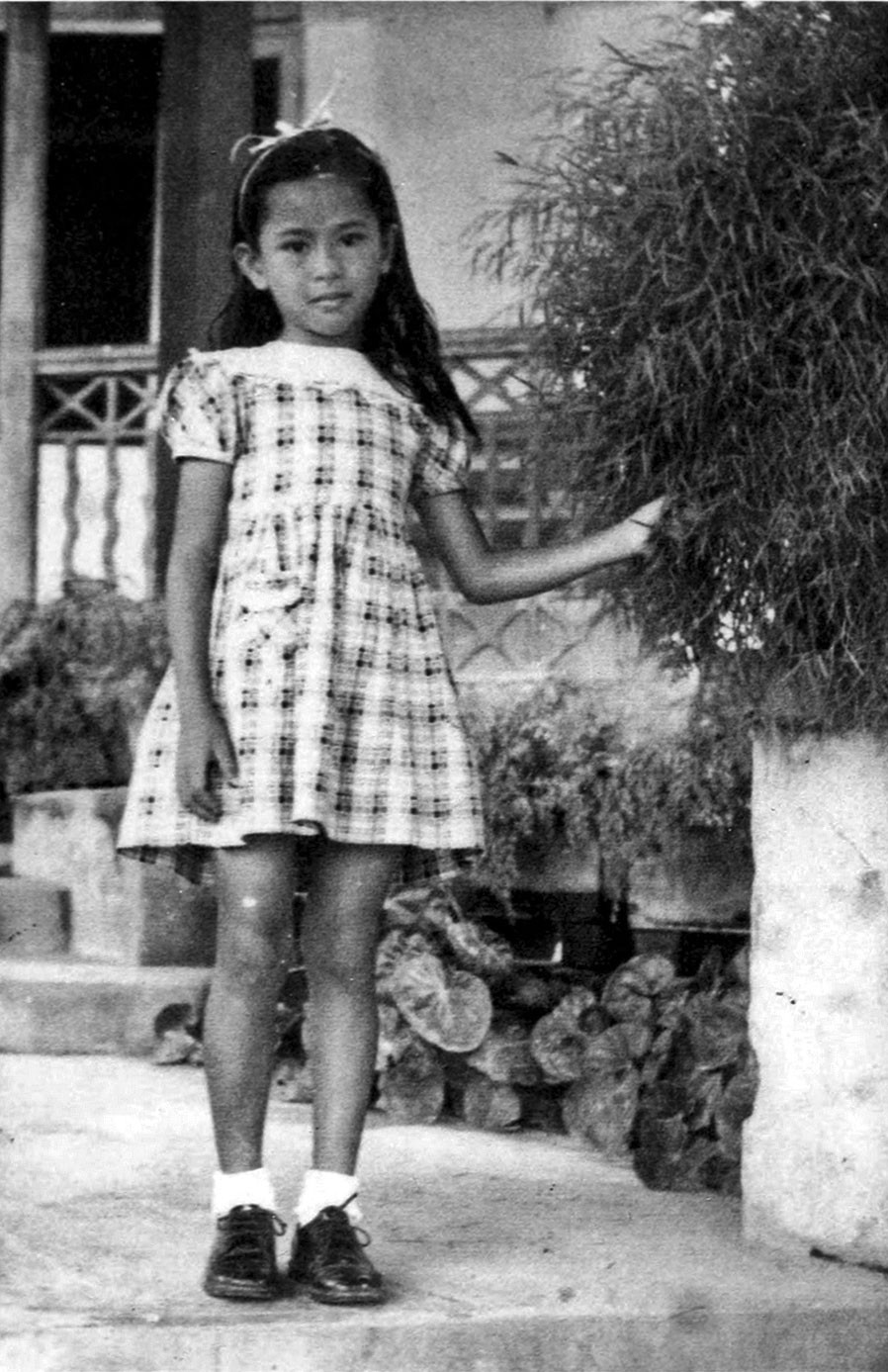
Aung San Suu Kyi was born in Rangoon (now Yangon), Burma, in 1945. Her father was General Aung San, a nationalist leader who fought for Burma’s independence from Britain. In the aftermath of World War II, Aung San was a central figure in negotiations over Burmese independence, which were concluded in January 1947. But many people were dissatisfied with the agreement, and in July 1947 General Aung San was assassinated alongside six of his colleagues in the government council chamber in Rangoon. His daughter, Suu Kyi, was just two years old.
India and England
In 1960, Aung San Suu Kyi moved with her mother, Khin Kyi, to India where her mother took up the position as Burma’s ambassador. Four years later Suu Kyi went to the UK to study at Oxford University. It was there that she met her future husband, the British academic Michael Aris. The couple went on to have two sons, Alexander and Kim, and Suu Kyi settled in the UK with her family.

Return to Burma
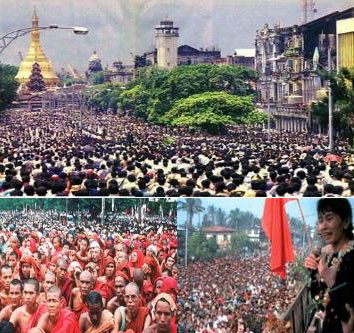
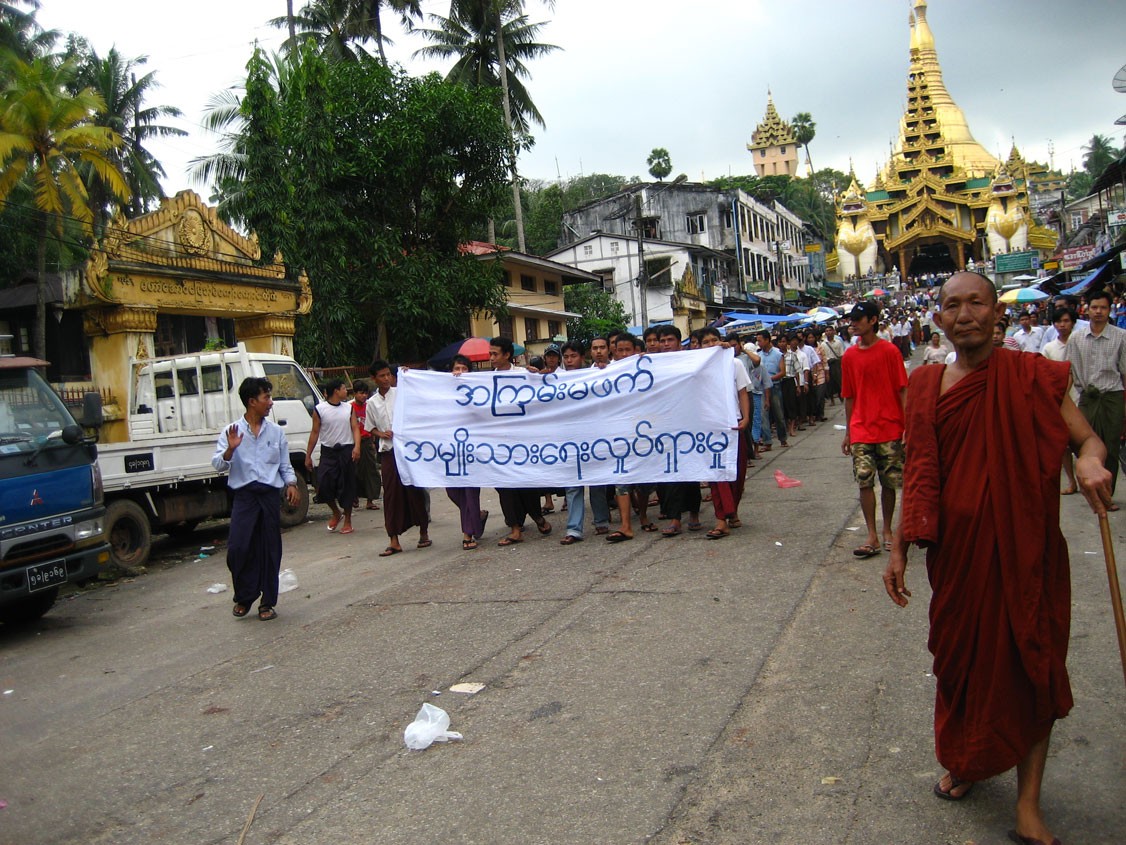
In 1988, Suu Kyi returned to Burma to nurse her dying mother, leaving her husband and sons in the UK. But Burma was in turmoil, and Suu Kyi soon became involved in the political upheaval. Thousands of students, monks and workers had taken to the streets to protest against the rule of the military dictator General Ne Win. Inspired by the non-violent campaigns of civil rights leaders Martin Luther King and Mahatma Gandhi, Suu Kyi organized rallies all over the country, calling for reform. In September 1988 there was a military coup, and the army moved to suppress the demonstrations, killing thousands of protesters.
Myanmar
In 1989 Burma’s military government changed the name of the country to the Republic of Myanmar. Suu Kyi was placed under house arrest (she was not allowed to leave her house) in Yangon (the new name for Rangoon). The government offered to release her if she would leave the country, but she refused until reforms had been introduced and political prisoners released.

In national elections in 1990, the newly formed National League for Democracy (NLD), with which Suu Kyi was closely associated, won more than 80% of the parliamentary seats. However, the military government refused to recognize the results or to hand over power.
Nobel Peace Prize
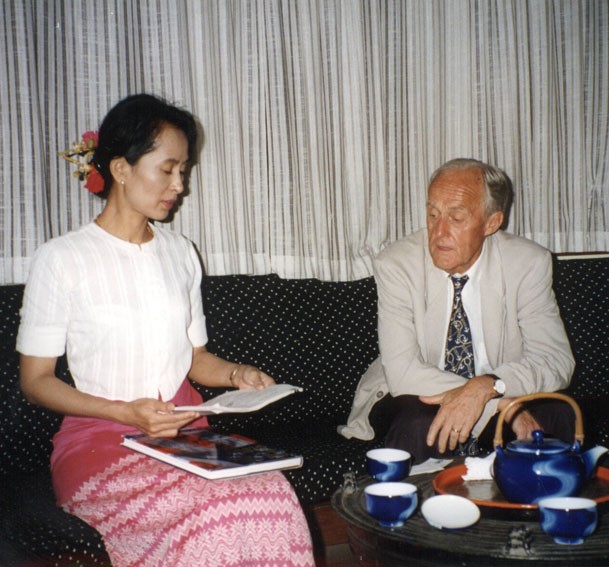
In 1991, Aung San Suu Kyi was awarded the Nobel Peace Prize. As she was still being detained, her prize was collected on her behalf by her son, Alexander. The government freed Suu Kyi from house arrest in July 1995, although she was allowed only restricted travel within Myanmar and was constantly harassed by the military authorities. In 1999 her husband, Michael Aris, died from cancer. The government had refused to give Aris permission to travel to Myanmar for one last visit, and Suu Kyi knew that she would not be permitted to come back into the country if she left to be with him. She stayed in Myanmar, and in 2000 was put under house arrest once more.
House arrest
From 2000 until 2010, Suu Kyi endured long periods of house arrest. She was not allowed to see her sons, and she spent some time in solitary confinement. In 2009, an American activist swam to her house and spent two nights there, breaking the terms of her house arrest. Suu Kyi was convicted and sentenced to three years imprisonment—although she was allowed to serve the sentence while remaining under house arrest. When the government called national elections in 2010, new laws prohibited anyone convicted of a crime, or married to a foreign national, from standing. In support of Suu Kyi, the NLD refused to participate in the elections. Against little opposition and widespread allegations of fraud, the military government won a landslide victory.
Member of parliament
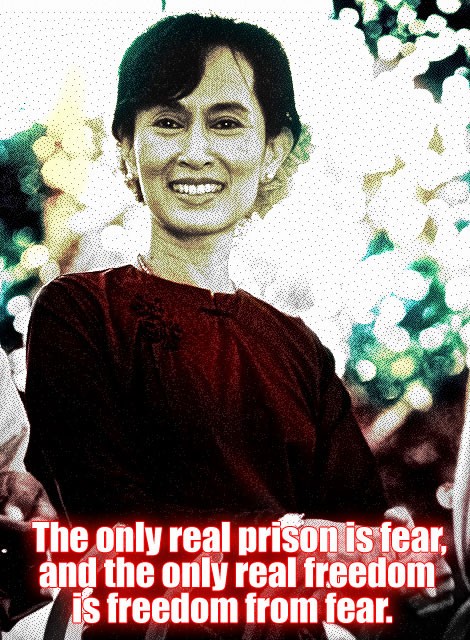
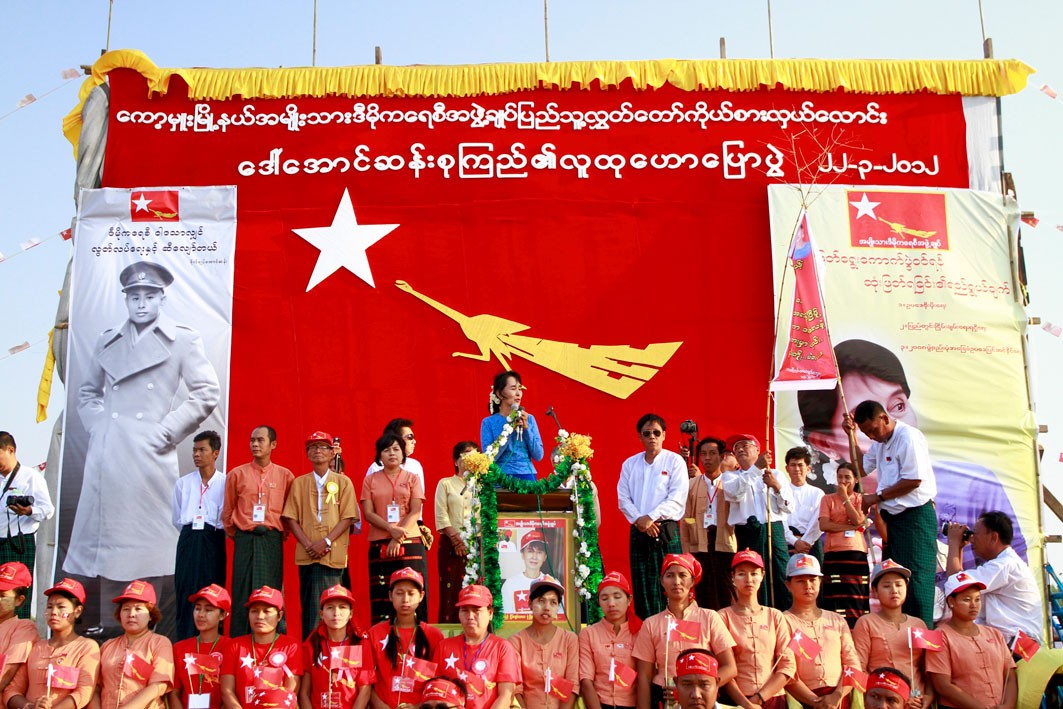
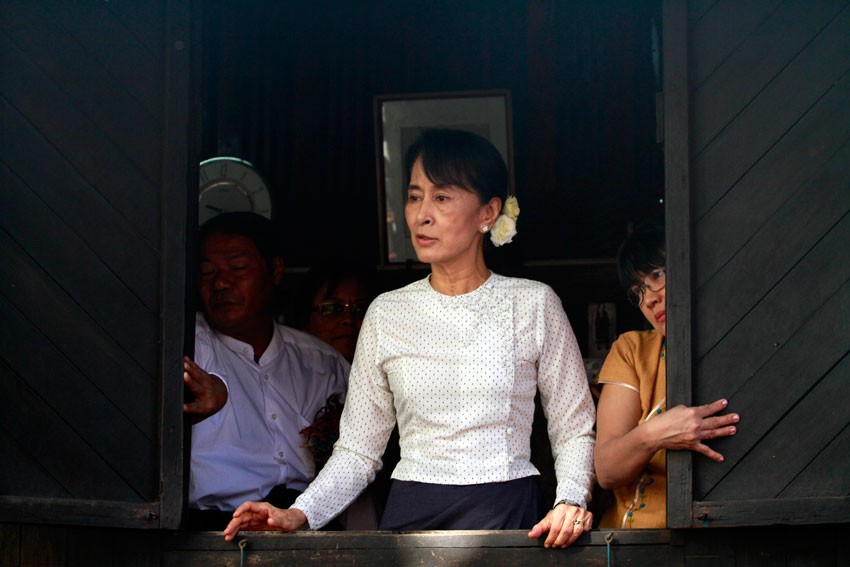
Suu Kyi was released from house arrest in 2010, six days after the election. As the new government started a period of reform, Suu Kyi began a series of high-profile political meetings. She was also allowed a visit from her son Kim for the first time in a decade. In 2012, the NLD took part in parliamentary by-elections, winning 43 out of 45 seats. Suu Kyi herself won a constituency seat in Yangon and entered parliament. In the same year, Suu Kyi visited Thailand and later in the same year travelled to Europe, where she gave a long-delayed acceptance speech for her Nobel Prize in Oslo, Norway.
Taking power
After their 2012 win, the government of Myanmar released almost all political prisoners and introduced many democratic reforms. Aung San Suu Kyi announced her intention to stand for president, but, as the law stood, anyone who was married to, or has had children with a foreigner, was banned from running for that post. Despite a petition for change signed by 5 million people, the ban was not lifted before the general election, which was held on 8th November 2015.
The NLD, of which Suu Kyi became leader, won a sweeping victory at the election, and was therefore elected to power in Myanmar. The army had a guaranteed 25% of the seats in parliament, and kept control of some of the most important government positions.
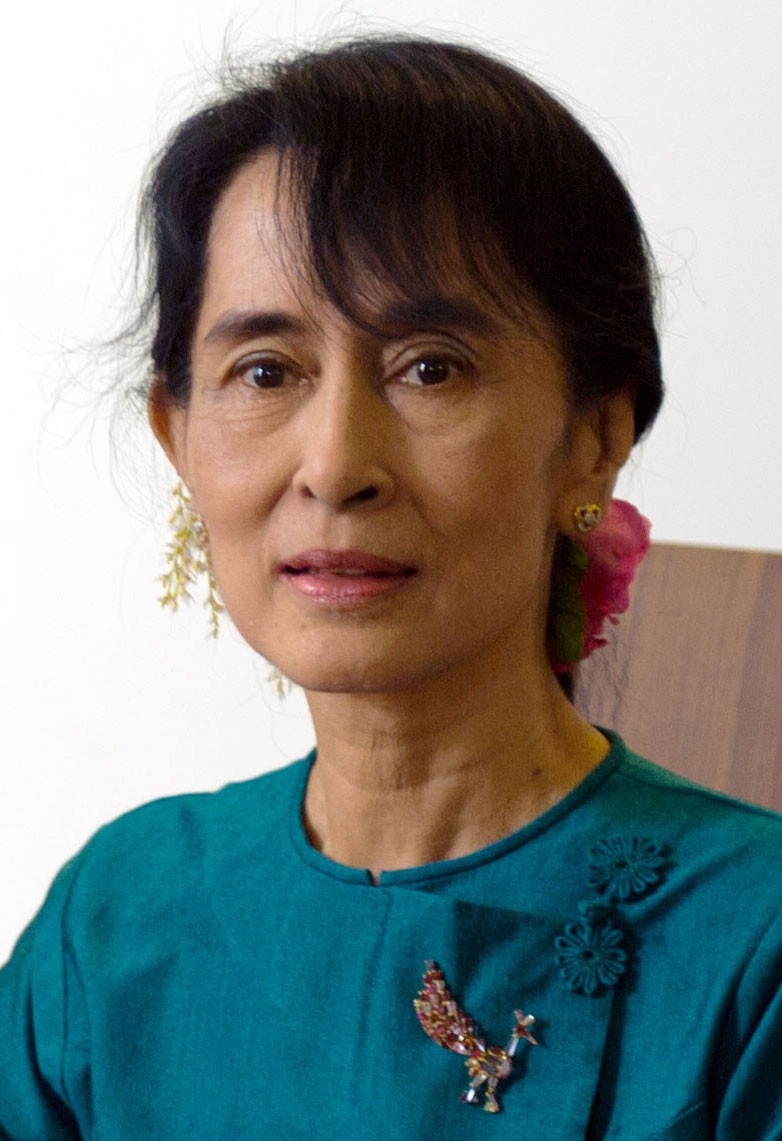
Htin Kyaw, of the NLD, became President of Myanmar, while Suu Kyi, who boldly announced that she would be "above the president", took over a number of roles, including that of State Counsellor (effectively Prime Minister), which she became on 6th April 2016.

Rohingya crisis
By autumn 2017, more than half a million Rohingya people, Muslims from Rakhine state in western Myanmar, had fled to the Cox’s Bazar district in neighbouring Bangladesh. They were escaping persecution in Myanmar, where they have long been denied citizenship and faced restrictions on their movements. The Myanmar army were reported to have carried out a brutal campaign of violent attacks, murder and destruction of Rohingya villages. Critics accused Aung San Suu Kyi of silence on the issue, failing to admit—let alone trying to prevent—the persecution of Rohingya Muslims. They even called for her Nobel Prize to be withdrawn.
In October 2017 Suu Kyi announced plans to set up an agency, with foreign assistance, to deliver aid and help resettle Rohingya Muslims in Rakhine state. In a speech, she said: “No one can desire peace and development for our country more than us…Rather than rebutting criticisms and allegations with words, we will show the world by our actions and our deeds.”
A UN report published in 2018 was critical of her. It described the violent acts against the Rohingya as genocide, adding that Suu Kyi did as little as possible to prevent it. In 2019, she appeared in the International Court of Justice, where she defended the Burmese military against allegations of genocide against the Rohingya.
Military coup
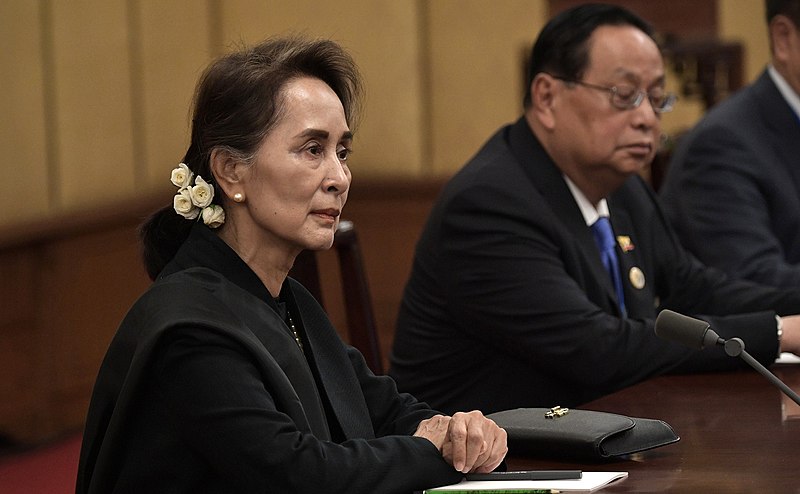
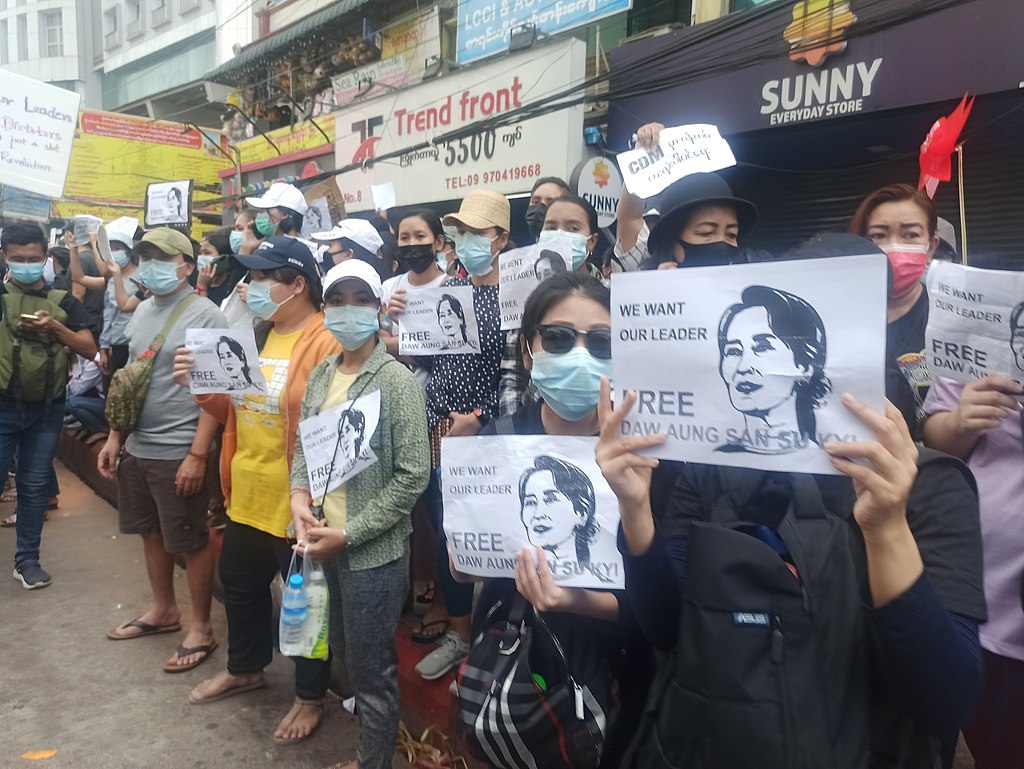
On 1st February 2021, Aung San Suu Kyi was arrested by the military during the Myanmar coup d'état after it declared the November 2020 general election results fraudulent. In December, she was found guilty in a closed military court on charges of "inciting dissent" and sentenced to four years in prison. By January 2023, she had been convicted to 33 years' imprisonment on 11 charges in total. The charges, which include alleged corruption, have been widely condemned as unjust by the United Nations and world leaders.
In May 2026, Suu Kyi, now 80 years old, was moved to house arrest in the Myanmar capital, Naypyidaw. Her sentence was also reduced as part of a wider amnesty of all prisoners in Myanmar’s jails. This meant she had more than 13 years left to serve of her sentence.
Consultant: Philip Parker
pics
Without in any way limiting Q-files Ltd’s exclusive rights under copyright, any use of this publication to “train” generative artificial intelligence (AI) technologies to generate text is expressly prohibited. Q-files Ltd reserves all rights to license use of this work for generative AI training and development of machine learning language models.