
Europe
Bosnia and Herzegovina
Bosnia and Herzegovina (often shortened to just Bosnia, or, in writing, BiH) is almost landlocked—it has a tiny strip of coastline measuring just 20 kilometres (12 miles) long. The northern part of the country is a mixture of rolling hills and wooded lowlands. Further south, the land rises to rugged mountains, the Dinaric Alps, which are often snow-capped in winter. Nearly all of the country has a continental climate with hot, dry summers and freezing winters. Right at the southern tip, the climate is Mediterranean, with warm, sunny weather nearly all year round. For much of the 20th century Bosnia was part of a larger country called Yugoslavia. It became independent in 1992. For the last two decades it has been rebuilding the damage done by a violent civil war (1992–95) that followed the declaration of independence.


People
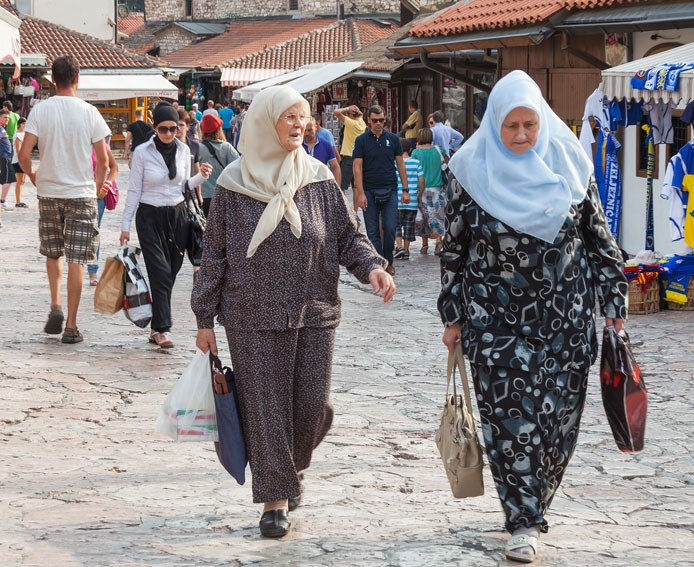
Bosnia is home to three main ethnic groups: Bosniaks, Serbs and Croats. The largest group, Bosniaks, who are nearly all Muslim, are descended from Slavic people who converted to Islam when the region was under the rule of the Ottoman Empire. The next largest group are the Serbs, who are Orthodox Christians. The Croats, the third group, are mainly followers of Catholicism. The country’s three official languages, Bosnian, Croatian and Serbian, are all virtually identical. Their speakers can understand each other easily.
Economy
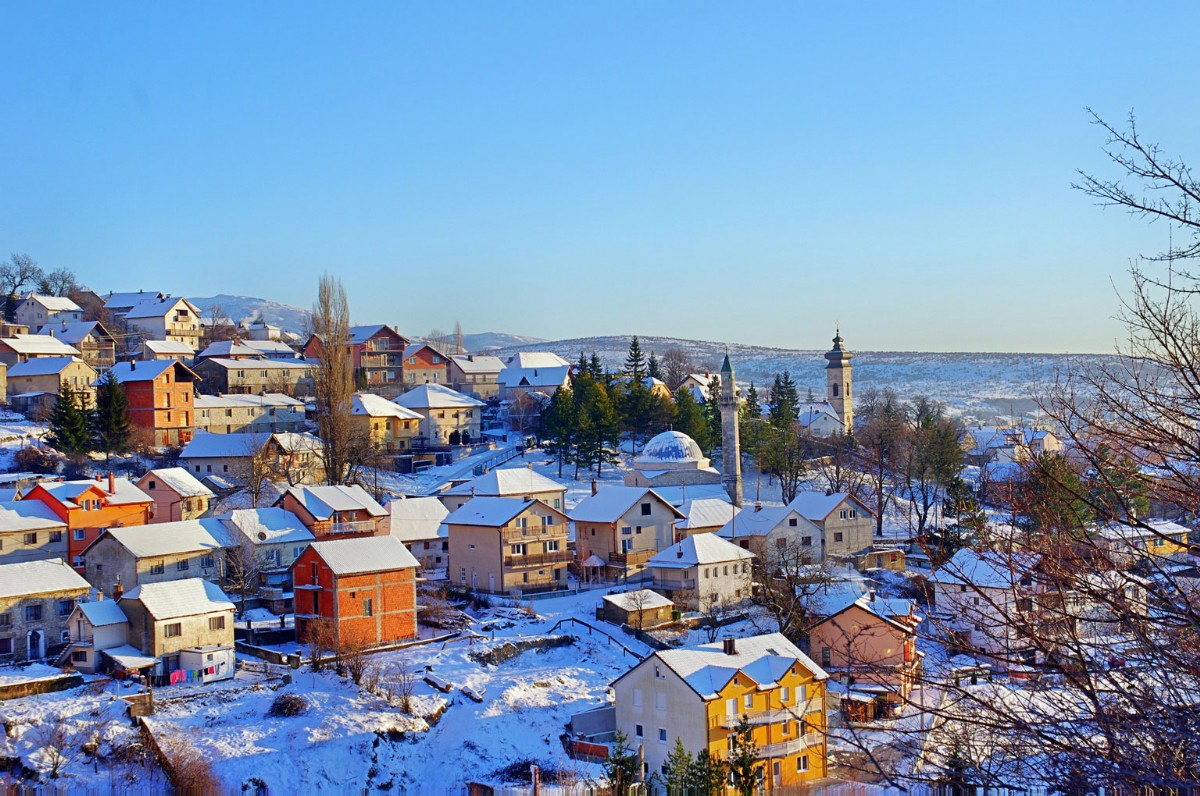
Bosnia’s economy was severely damaged during the Civil War (1992–95). Many of the country’s roads, railways and factories were destroyed, causing industrial production to drop by 80%. As a result thousands of people became unemployed in the years that followed; many are still out of work. Today, Bosnia’s main industries are the production of metals, car parts, textiles and furniture.
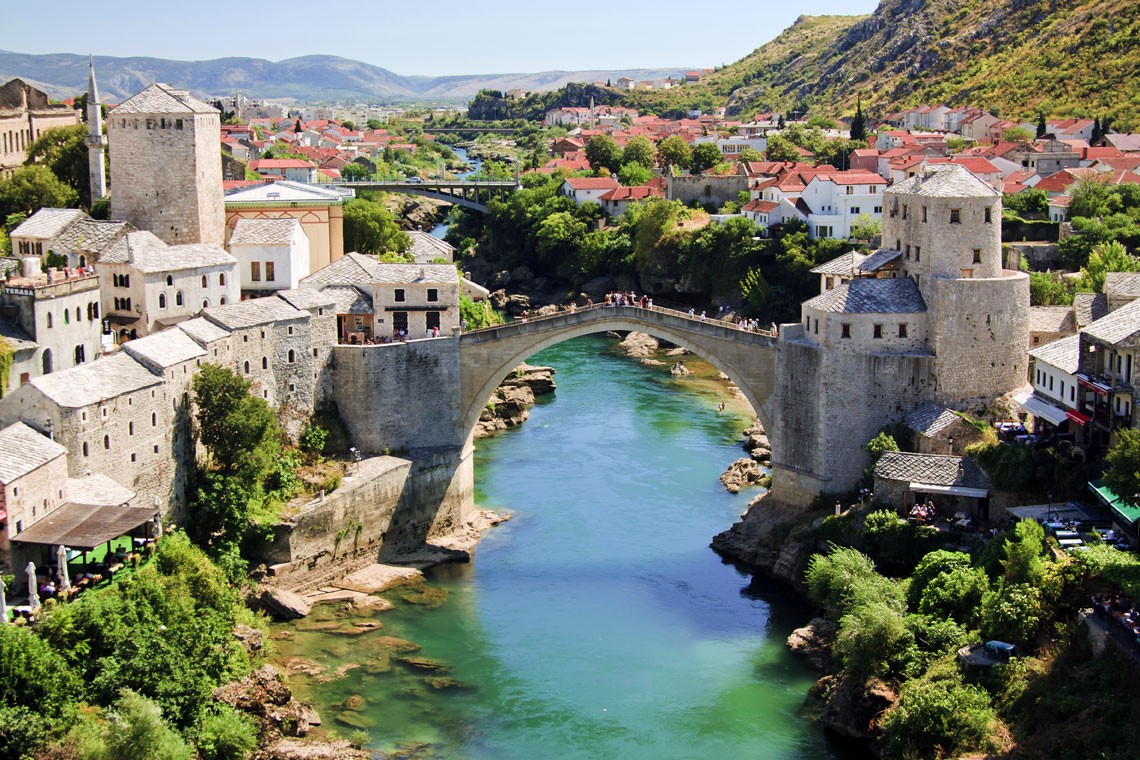
The country relies heavily both on international aid to help with rebuilding and money sent home by Bosnians living abroad. The tourist industry is also growing quickly. Places such as Sarajevo and Mostar are once again becoming a popular tourist destinations.


Civil War
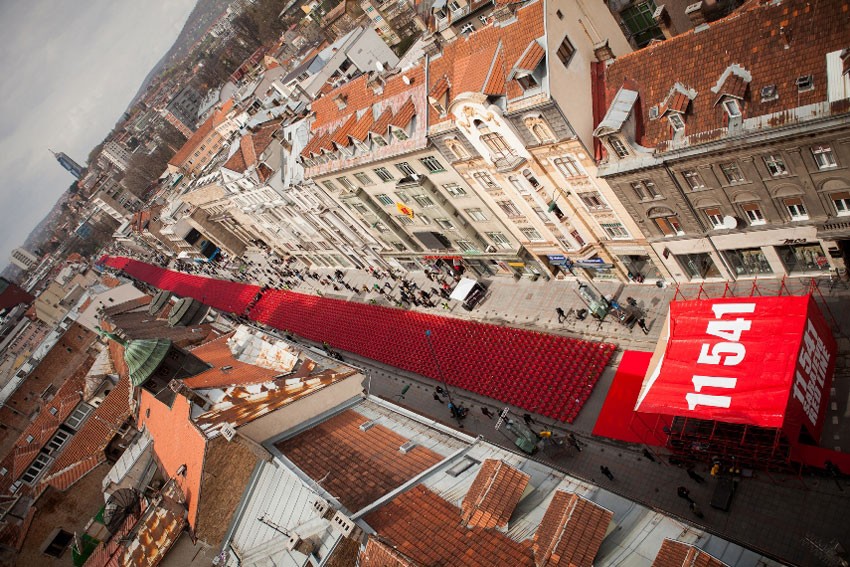
After Bosnia became independent from Yugoslavia in 1992, civil war broke out between the new country’s different ethnic groups, all of whom desired a different future for their country. The Muslim Bosniaks wanted an independent Bosnia, the Croats wanted the country to join an independent Croatian state, while the Serbs insisted it should remain part of Yugoslavia. Over 100,000 civilians and soldiers were killed in the bloody three-year war.
When the war ended in 1995, the country was split into two: the Republika Srpska (itself divided into two regions), which is largely populated by Serbs and Bosniaks, and the Federation of Bosnia and Herzegovina, where Bosniaks and Croats form the majority. Today, each state has its own president. A national government unites the two states and has representatives from each.
Consultant: Nicholas Harris
Facts about Bosnia and Herzegovina
Population 3,434,000 (2022 estimate)
Area 51,187 sq km
Highest point Maglic 2386 m (7828 ft)
Capital Sarajevo, population 696,731
Other major cities Banja Luka (pop. 221,106), Zenica (164,423), Tuzla (142,486)
Languages Bosnian, Croatian, Serbian
Religions Muslim 40%, Christian (Orthodox) 31%, Christian (Roman Catholic) 15%, others 14%
Ethnicity Bosniak 48%, Serb 37%, Croat 14%, others 1%
Currency Bosnian convertible mark (BAM)
Chief exports aluminium, clothing and shoes, furniture, electricity, wood products

History of Bosnia and Herzegovina
8th century BC
Illyrian tribes living in the area now known as Bosnia start to found kingdoms
168 BC
The land of the Illyrians becomes the Roman province of Illyricum. Rome completes its annexation of the region in 9 AD
553 AD
Emperor Justinian I re-conquers the area for the Byzantine Empire
6th–9th centuries
Slavic peoples settle in the region
1154
Slavic peoples establish a state called the Banate of Bosnia
1377
Stephen Tvrtko I is crowned the state’s King and it becomes known as the Kingdom of Bosnia
1463
Ottomans conquer the Kingdom of Bosnia and make it a province of their vast empire
1697
During the Great Turkish War, Habsburg forces attack the Ottoman city of Sarajevo, razing nearly the entire city to the ground
1831–32
Bosnian uprising: a rebel Bosnian army fights against Ottoman rule but Ottoman forces crush the revolt
1875
Herzegovinian rebellion, a widespread peasant uprising
1878
Following the Treaty of Berlin, the Austro-Hungarian Empire occupies Bosnia
1908
Austria-Hungary officially takes control of the region
1914
Archduke Franz Ferdinand of Austria is shot dead in Sarajevo by Gavrilo Princip, a Bosnian Serb student, sparking the beginning of World War I
1918
At the end of World War I, the Austro-Hungarian Empire disintegrates and Bosnia becomes part of the Kingdom of Serbs, Croats and Slovenes (becoming the Kingdom of Yugoslavia in 1929)
1941–45
During World War II Bosnia is captured by Nazi forces and is ceded to the Nazi puppet regime, the Independent State of Croatia (NDH) led by the Ustaše. The Ustaše carry out a campaign of extermination of Serbs, Jews and Romani. More than 200,000 Serbs are killed or forced into exile. Many Serbs join the Chetniks, a Serb nationalist movement, and retaliate by massacring Muslims and Croats.
1943–45
Yugoslav communists under the leadership of Josip Broz Tito, the Partisans, fight against both Axis and Chetnik forces. Bosnia and Herzegovina is reestablished as a republic within the Yugoslav federation. Partisans conduct a series of military offensives against the Nazis in Bosnian territory
1945
Along with Slovenia, Croatia, Macedonia, Serbia and Montenegro, Bosnia becomes a republic within the Federal Republic of Yugoslavia, led by Josep Tito
1984
Winter Olympics are held in Sarajevo
1991
Communism collapses and Yugoslavia’s republics separate from each other; conflicts erupt between Bosnia’s Serbs, Muslims and Croats over its independence
1992–95
Bosnian Civil War: following Bosnia and Herzegovina's declaration of independence (March 1992), the Bosnian Serbs, led by Radovan Karadžić and supported by the Yugoslavian government, mobilize their forces to secure ethnic Serb territory and establish the Republika Srpska. Bosniaks and Croats ally against the Serbs in 1994
1995
(July) Bosnian Serbs' "ethnic cleansing" of Bosniaks and Bosnian Croats culminates in the Srebrenica massacre of more than 8000 Bosniak men and boys, later ruled by International Criminal Tribunal for the former Yugoslavia to have been an act of genocide
1995
(November) Bosnian Civil War comes to an end with the signing of the Dayton Accords. Around 100,000 people have been killed in the conflict
2001
Tensions bubble up to the surface again as fighting breaks out between Bosnian Serbs and Muslim refugees
2006
Trials begin for those charged with committing war crimes during the Bosnian Civil War
2014
(February) Bosnian Spring: protests against the government of the Federation of Bosnia and Herzegovina (one of the country's two governing bodies), by factory workers demanding action over jobs, unpaid salaries and pensions
2014
(May) Half a million people are evacuated as the country is hit by severe flooding
2016
Ex-Bosnian Serb leader Radovan Karadžic is sentenced to 40 years in prison after being found guilty of genocide during the Bosnian Civil War
2022
Bosnia and Herzegovina is recognized by the EU as a candidate country for accession