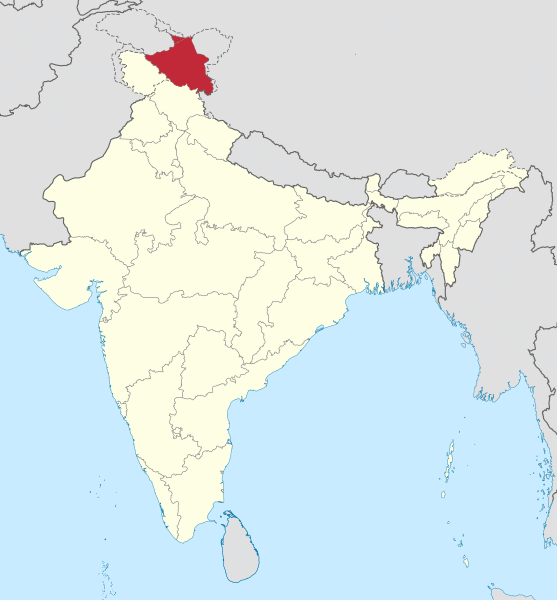
States and territories of India
Ladakh
Ladakh, in northern India, is administered as a union territory. It makes up the southeastern portion of the larger Kashmir region that has been the subject of a dispute between India and Pakistan since 1947 and India and China since 1959. Ladakh is one of the most sparsely populated parts of India and its culture and history are closely linked to those of Tibet. Its two main languages, Ladakhi and Purgi, are related to the Tibetan language. Under the Jammu and Kashmir Reorganization Act of 2019, the former state of Jammu and Kashmir was divided into two union territories: Jammu and Kashmir in the west and Ladakh in the east, with effect from 31st October 2019.

Geography
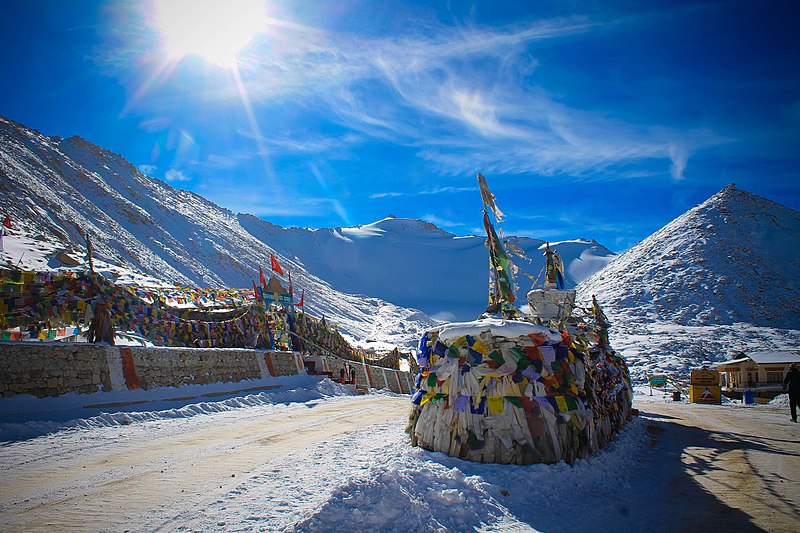
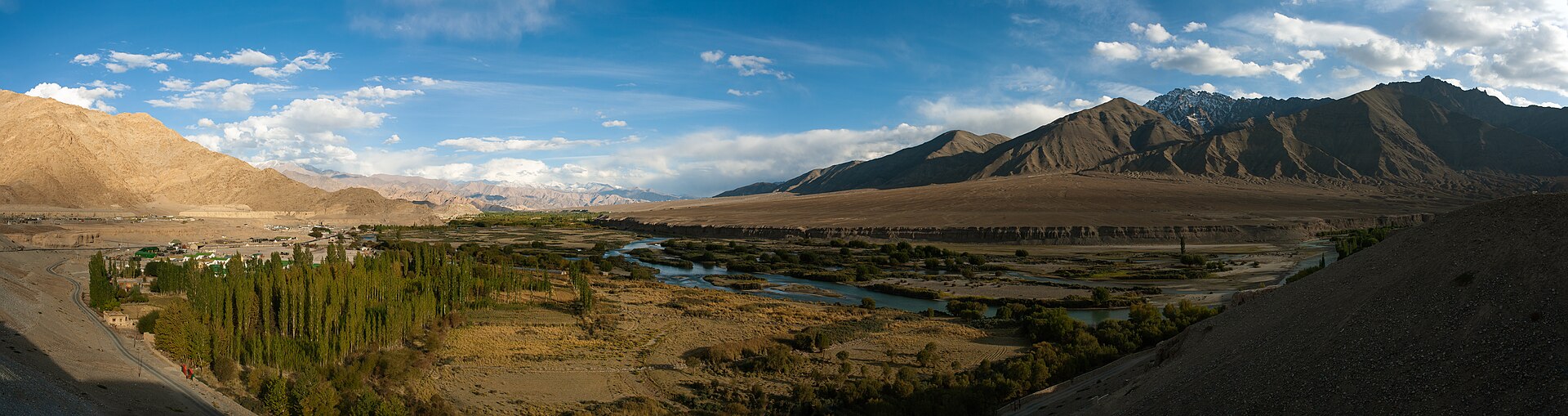
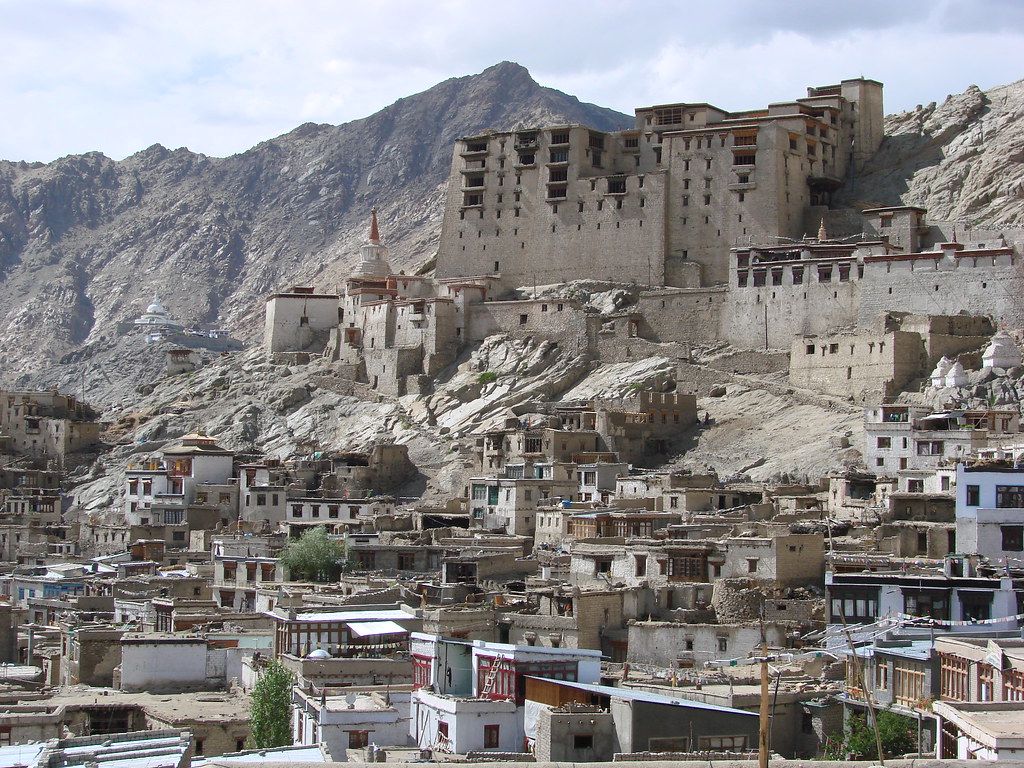
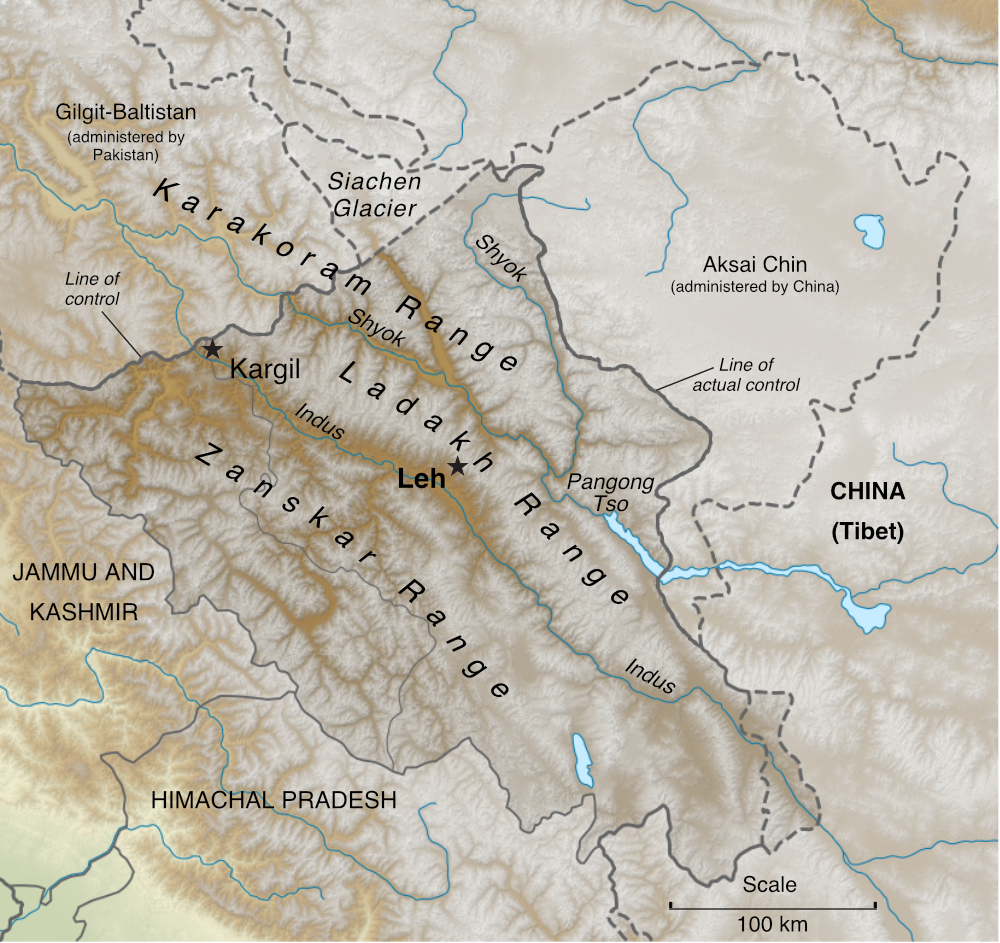
Ladakh's terrain is mostly mountainous. Within its borders are the Ladakh Range, an extension of the Karakoram, and the Zanskar Range, part of the Great Himalayas. Cutting through the mountains are deep valleys, including those of the Suru, Zanskar, Shyok and upper Indus rivers. The Indus valley, where Leh, the largest city and joint capital is located, forms the central region of Ladakh. The Siachen Glacier, at 76 kilometres (47 miles) long, the second longest glacier in the world outside the polar regions, flows through the Karakoram near the disputed India-Pakistan border.
Climate
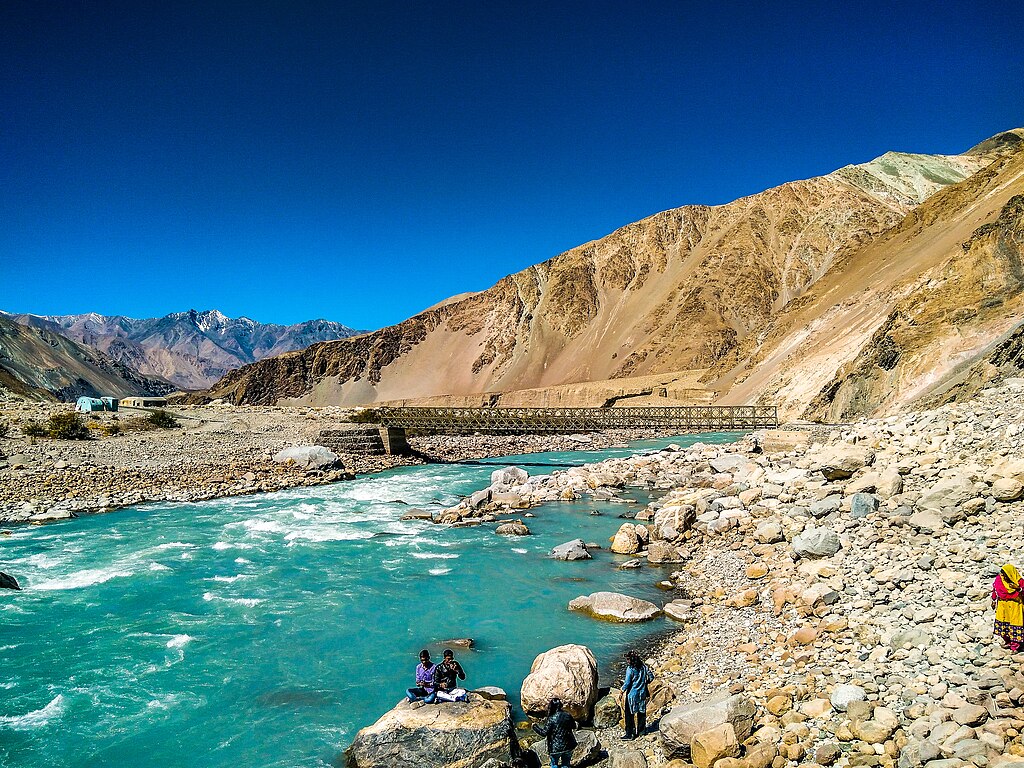
Ladakh is a high-altitude desert: the peaks of the Great Himalayas create a wall which prevents the moist winds of the southwest monsoon reaching the area. The Himalaya and Karakoram mountains experience heavy snowfall in winter, however. Summers are short and temperate, but with highs sometimes reaching 35°C (95°F). Temperatures may drop to -35°C (-31°F) in winter.
Economy
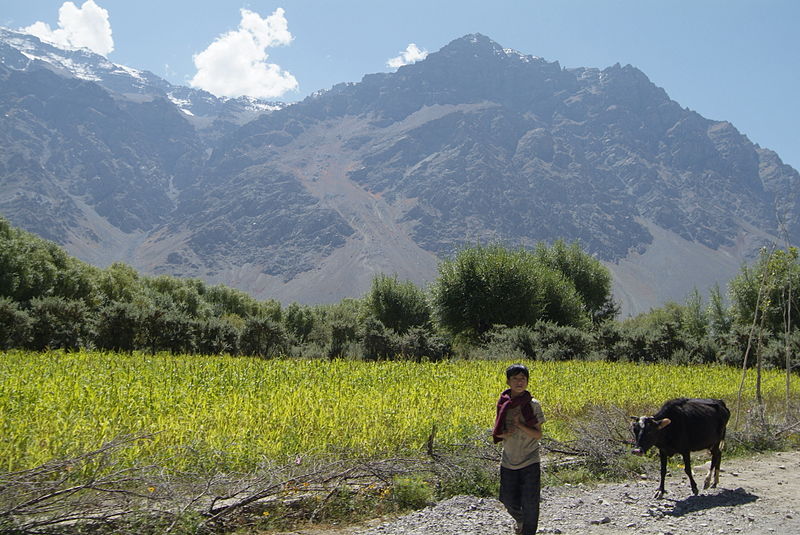
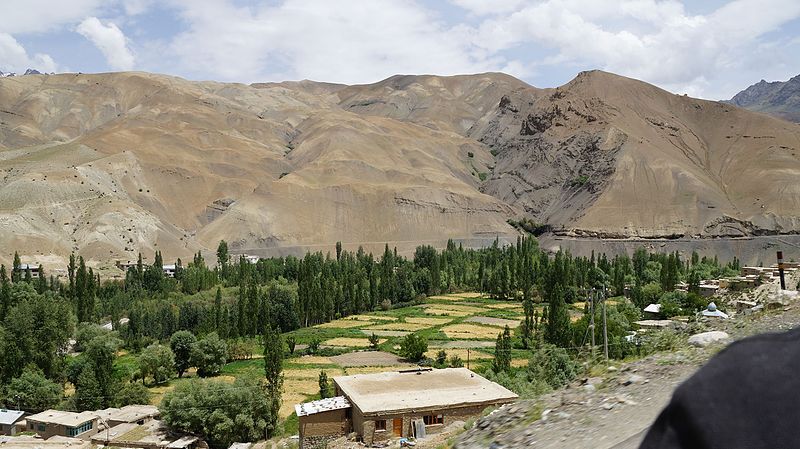
Ladakh's cultivated land is irrigated by a system of channels, which convey water from the ice and snow of the mountains to the fields. The principal crops are barley and wheat. Grapes, apricots, walnuts and apples also grow well in the temperate climate. Relatively unaffected by the tensions experienced in Jammu and Kashmir, Ladakh welcomes many visitors to explore its spectacular scenery. Tourism now accounts for 50% of the region's income.
History
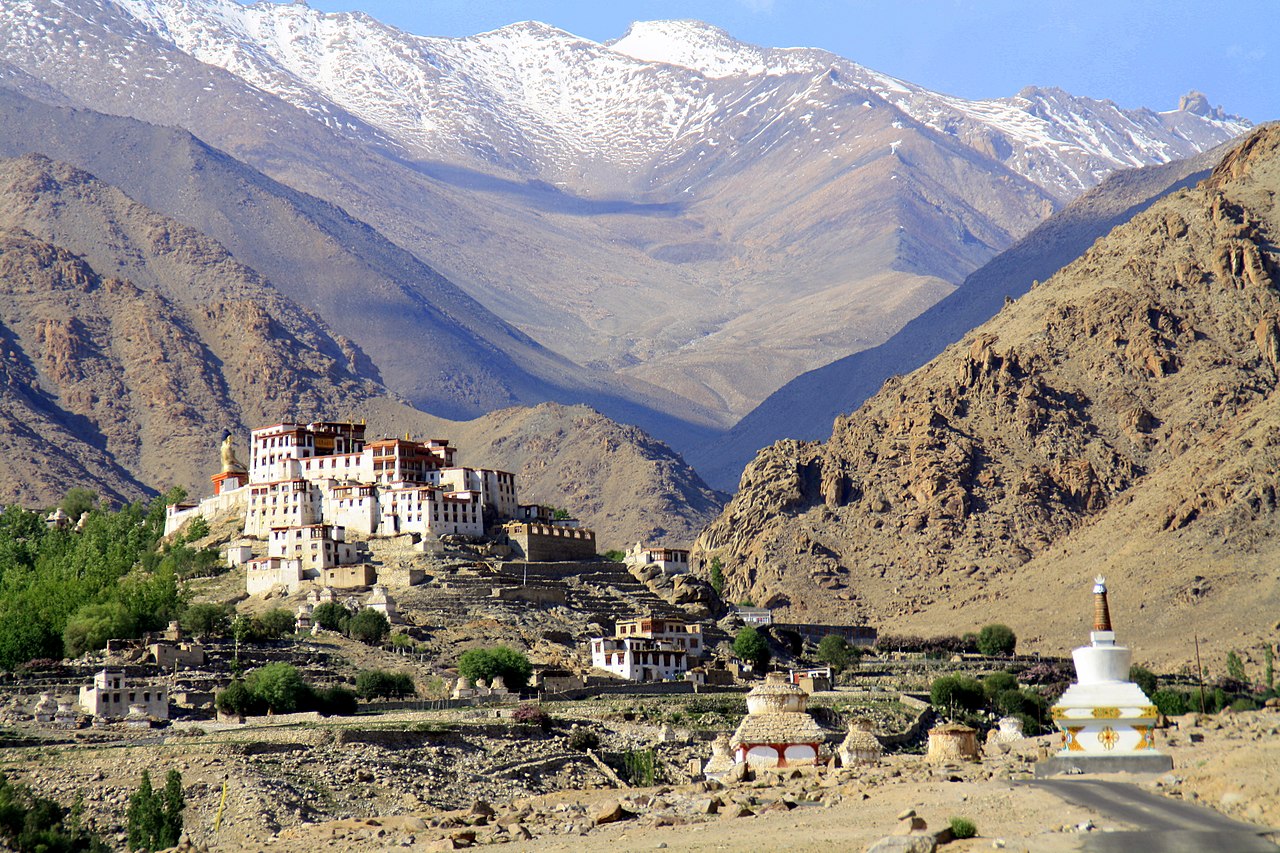
Around the 1st century CE, Ladakh was a part of the Kushan Empire. Buddhism spread into western Ladakh from Kashmir in the 2nd century. Kashmir and Zhangzhung, an ancient Tibetan kingdom, vied for control of Ladakh through the Middle Ages. The Tibetan Buddhist Namgyal dynasty ruled the kingdom of Ladakh from 1460 to 1842.
In 1834, the forces of Gulab Singh, Raja of Jammu, invaded and annexed Ladakh, bringing the territory into the Sikh Empire. After the defeat of the Sikhs by the British in the First Anglo-Sikh War in 1846, the state of Jammu and Kashmir—including Ladakh—was established as a princely state within British India.
Although agreements over the northern borders of Kashmir were made between Britain, Afghanistan and Russia, China never accepted them. By the mid-1950s the Chinese army were in occupation of Aksai Chin, a barren, high-altitude and almost uninhabited region making up the northeast portion of Ladakh and claimed by India. This led to the Sino-Indian War of October 1962.
Aksai Chin remains under Chinese administration today. There is a heavy presence of Indian forces in Ladakh and there have been occasional clashes between them and Chinese forces along the Ladakh portion of the Line of Actual Control.
Facts about Ladakh
Area 59,146 sq km (22,836 sq miles)
Highest point Saltoro Kangri 7742 m (25,400 ft)
Population 304,000
Capitals Leh (pop. 30,870), Kargil (pop. 16,338)
Main languages Ladakhi (38%), Purgi (34%), Hindi (9%), Shina (5%), Balti (4%), Tibetan (2%)
Main religions Shia Islam (46%), Buddhism (40%), Hinduism (12%).