States and territories of India
Sikkim
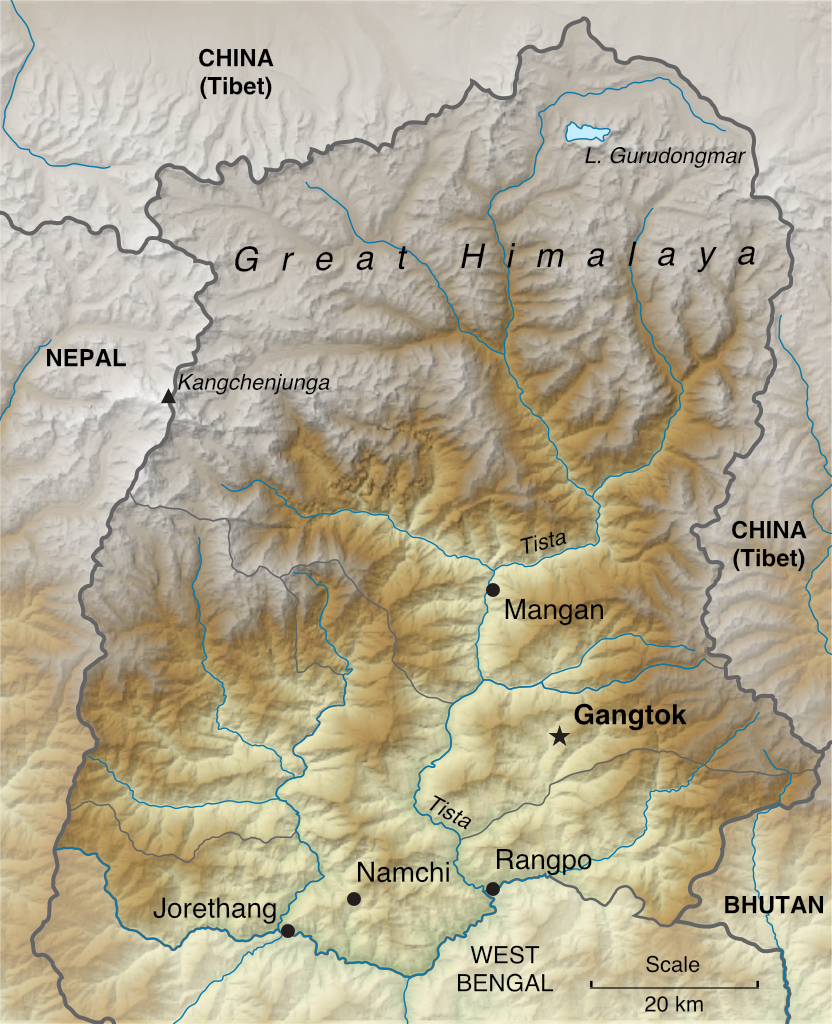
Sikkim is a state in northeast India. The second smallest Indian state by area, it is the least populous. Sikkim occupies a basin in the Himalayas. Its mountainous terrain is dominated by Kangchenjunga, a peak on the border with Nepal. At 8586 metres (28,169 feet), it is the highest mountain in India and the third highest on Earth. From the Great Himalayas, the headstreams of the River Tista flow south through deep valleys. Founded by the Namgyal dynasty in the 17th century, the Kingdom of Sikkim was ruled by Buddhist priest-kings known as the Chogyal. Under British rule, the kingdom became a princely state in 1861. Sikkim held protectorate status with India after independence. In a 1975 referendum the people of Sikkim voted for union with India. Sikkim became a state and its monarchy abolished.

Economy
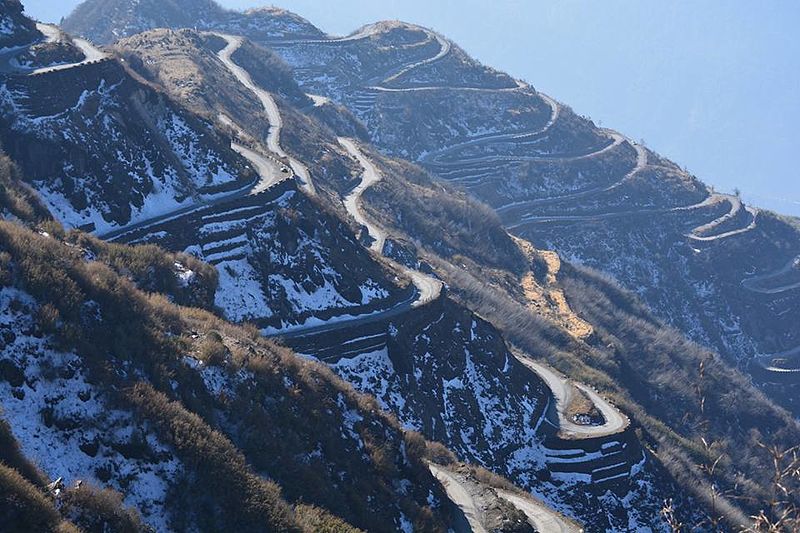
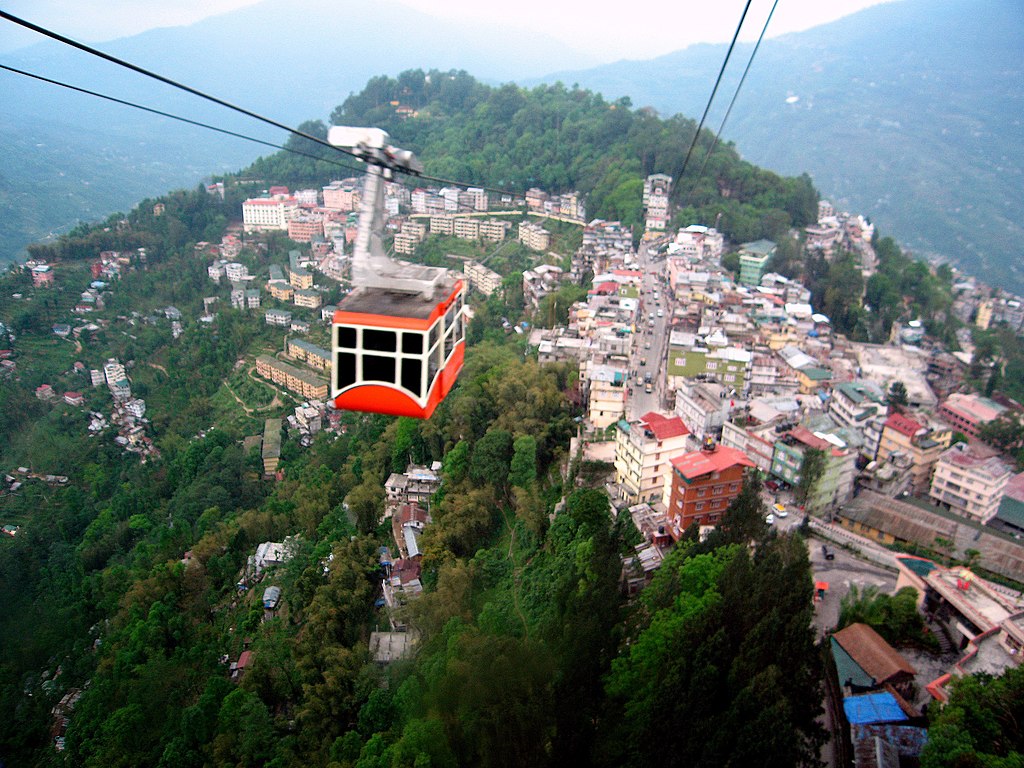
Around 75% of Sikkim's population depends on farming. Rice is grown on terraces formed on the mountain slopes. Oranges, tea and cardamom (a spice) are the main cash crops. Many of Sikkim’s farmers also herd livestock such as yaks and sheep. Distilling and watchmaking are the main industries, with tourism growing in importance.

Consultant: Nicholas Harris
Facts about Sikkim
Area 7096 sq km (2740 sq miles) Rank: 30th
Highest point Kangchenjunga 8586 m (28,169 ft)
Population 703,000 Rank: 28th
Capital and largest city Gangtok (pop. 100,290)
Main languages Nepali (63%), Sikkimese (7%), Limbu (6%), Lepcha (6%), Hindi (6%)
Main religions Hinduism (68%), Buddhism (27%), Christianity (3%)
State bird Blood pheasant
State flower Noble dendrobium
State mammal Red panda
State tree Rhododendron