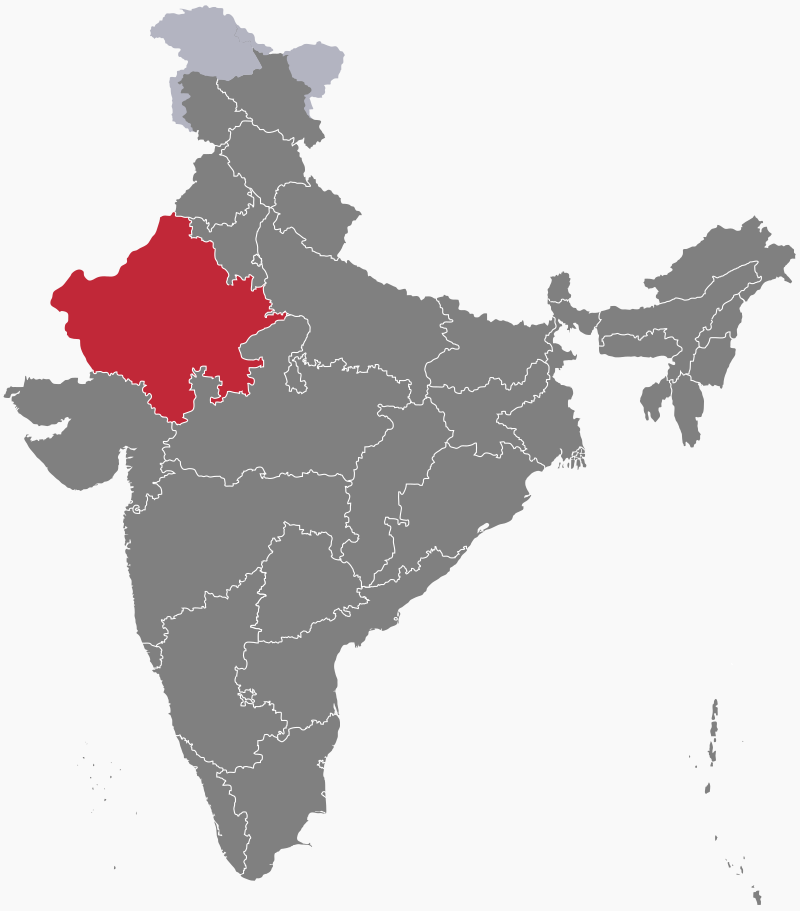
States and territories of India
Rajasthan
Rajasthan, India's largest state by area, is located in northwestern India. It was formed in 1949 when the various states overseen by the British Rajputana Agency, a collection of princely states making up Rajputana (the old name for the region), were merged into newly-independent India. Modern Rajasthan includes most of Rajputana. Its capital and largest city is Jaipur.

Geography
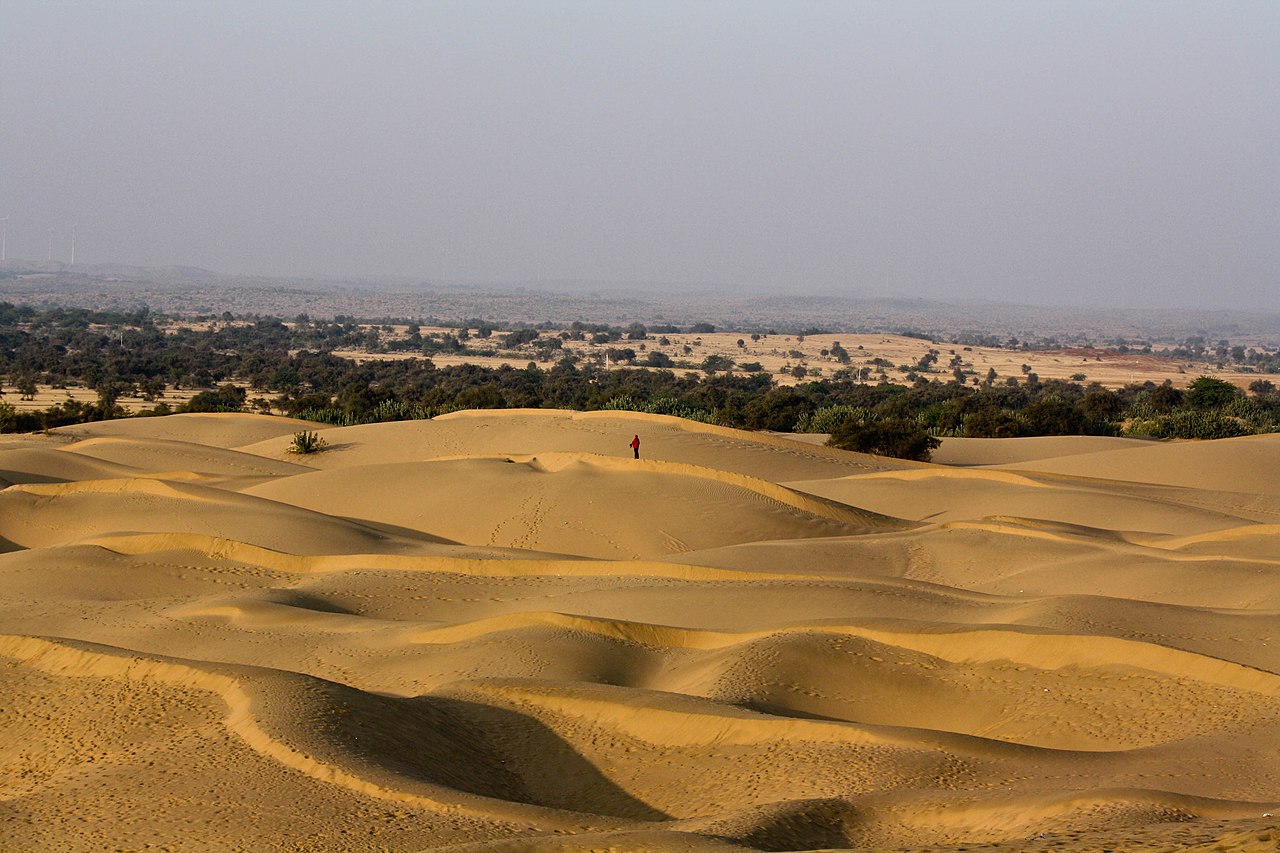
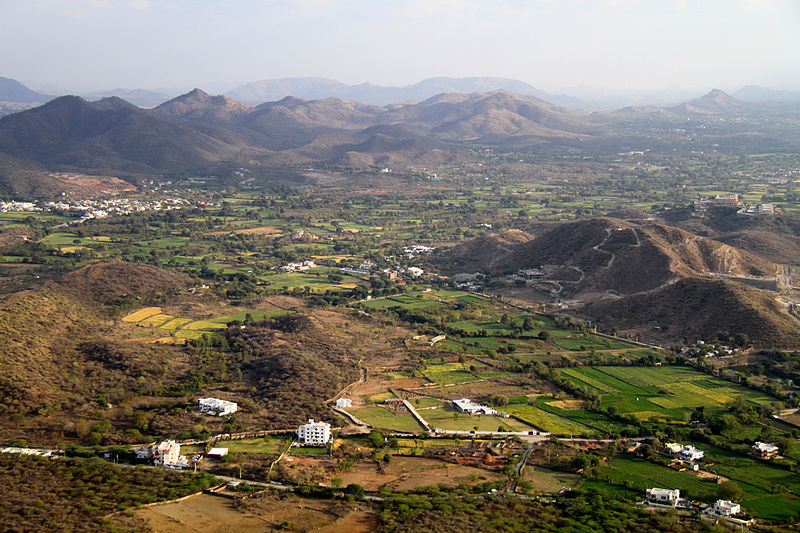
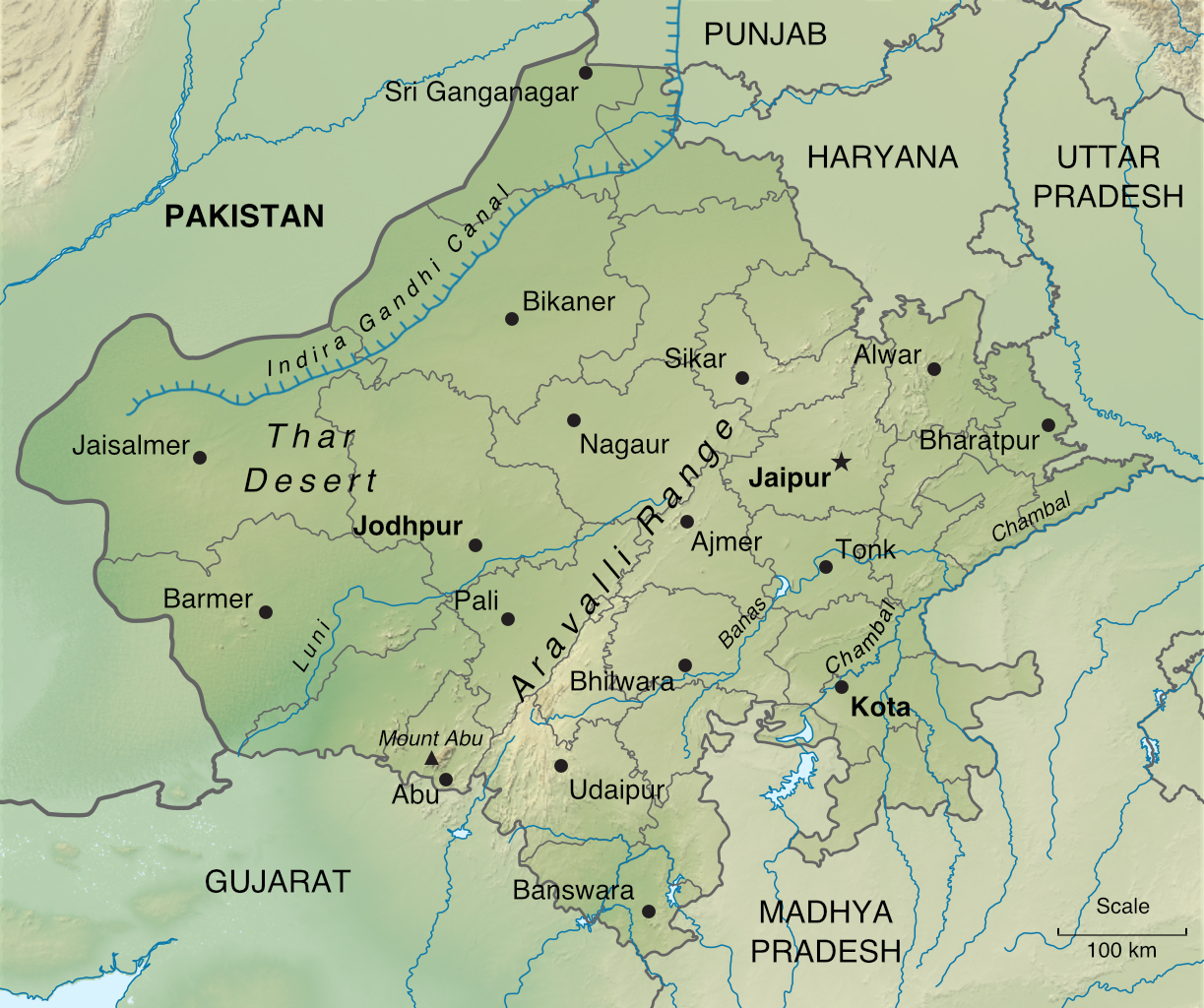
Most of the Thar Desert (also known as the Great Indian Desert) lies within the borders of Rajasthan. The Aravalli Range runs through the state from southwest to northeast. To the west of the mountains, scrub forests and dry grassland plains gradually merge into the barren Thar Desert. The desert extends across the border into Pakistan and south into northern Gujarat. To the east of the Aravallis, the land becomes a mixture of low hills and plains, and is more lush and fertile.
Climate
Western Rajasthan has a hot arid climate, with low rainfall (average annual totals are less than 25 centimetres or 10 inches), hot summer temperatures, ranging between 45° and 49°C (113–120°F), and cold winter temperatures of between 0° and 8°C (32–46°F). Dust storms, known as Kali Andhi (meaning "black storms"), are common during summer. Rainfall is unpredictable, often coming in short cloudbursts.


Much of the region to the east of the Aravallis has a semi-arid climate, with average annual precipitation ranging between 25 to 45 centimetres (10–18 inches). Summer temperatures are cooler (36–42°C or 97–108°F) and winter temperatures are milder (10–17°C or 50–63°F) than in the west. In the southeast, the climate is more humid, with annual rainfall—mostly received during the monsoon season from June to September—averaging up to 75 centimetres (30 inches) per year or higher.
Economy
Rajasthan's economy is dominated by agriculture, with wheat and barley, the main staple crops, cultivated over a wide area. Cotton, tobacco, oilseeds and sugar cane are the chief cash crops. The Indira Gandhi Canal delivers water for irrigation to dry northwestern areas, while wells are the main supplier of precious water elsewhere. Rajasthan is the biggest wool-producing state in India. Rajasthan's main industries are mining, textiles, chemical and engineering.

Jaipur
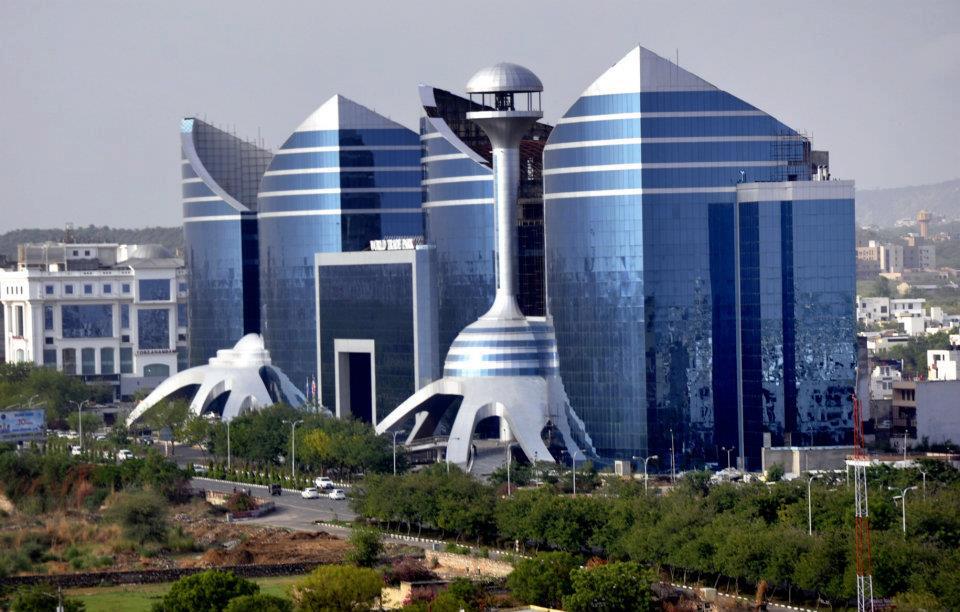
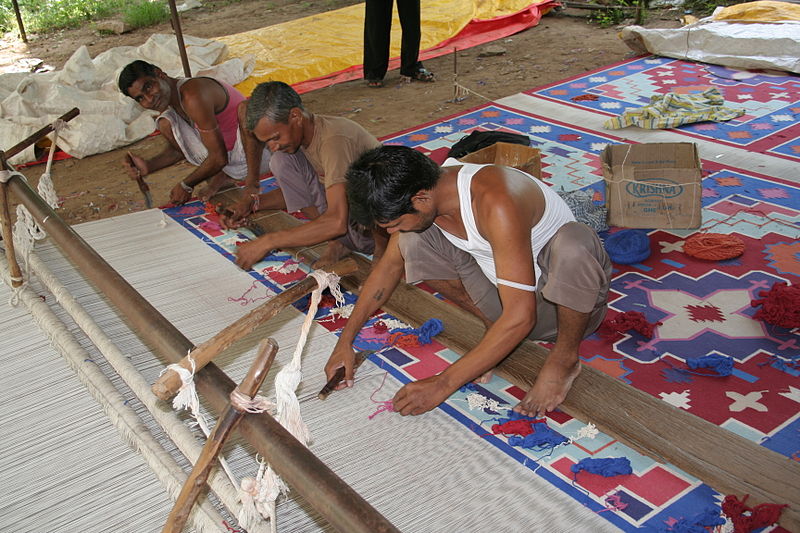
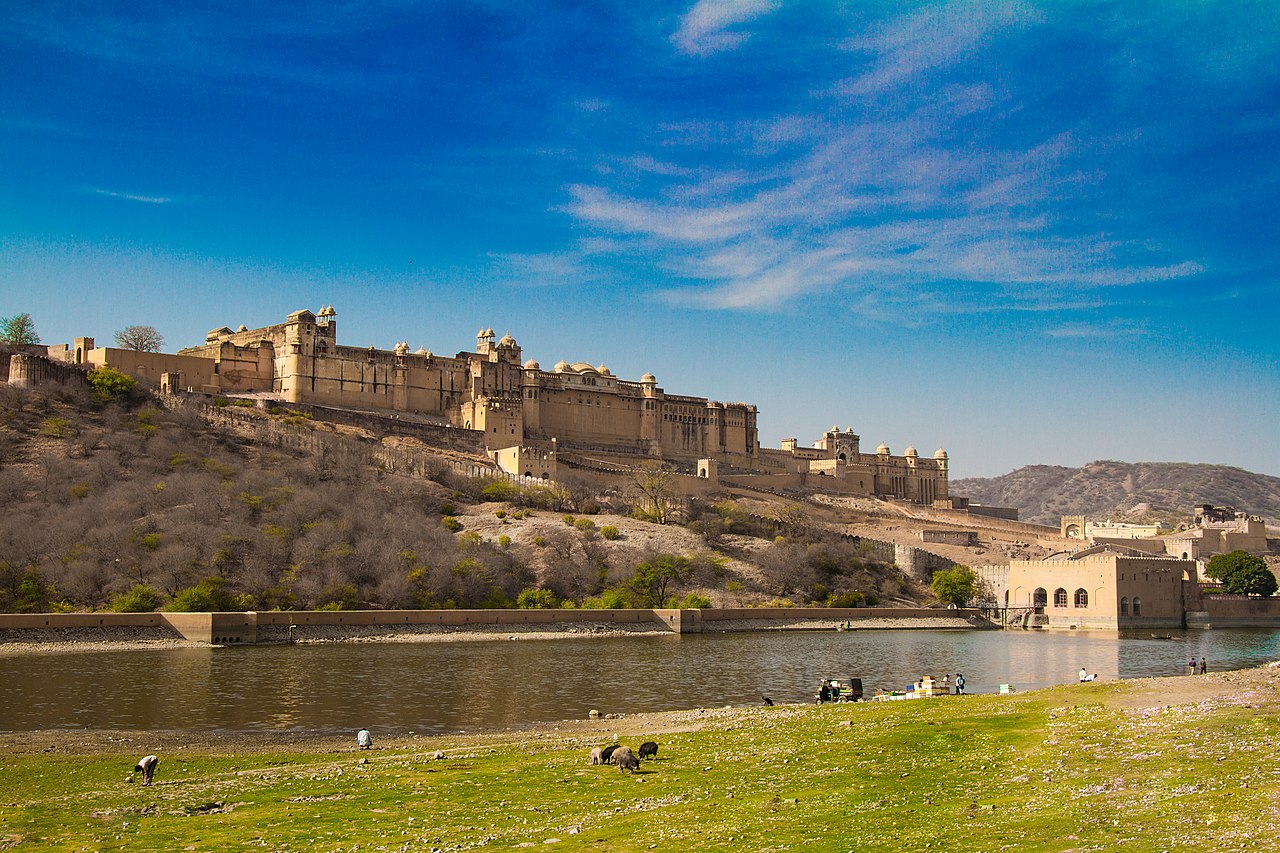
Jaipur takes its name from Sawai Jai Singh (1693-1744), the maharaja (ruler) who founded the city in 1727. Jaipur means "The City of Jai". Known as the Pink City, because many of its buildings were painted pink to welcome Queen Victoria’s son, Edward Prince of Wales in 1876, Jaipur is today India's 10th largest city. A centre of jewellery, the production of luxury textiles and information technology, it is also a major draw for tourists: the city forms a leg on the Golden Triangle, a tourist circuit in India that also links New Delhi and Agra.
History of Rajasthan
During the Middle Ages, a number of kingdoms emerged in what is today Rajasthan. They were ruled by a warrior class known as Rajputs and their lands were together known as Rajputana. One Rajput kingdom, the powerful Gurjara-Pratihara kingdom, grew into an empire, dominating northern India for centuries. Between the 8th to the 11th centuries, it successfully held back Arab invaders. Later Rajput kingdoms fought to maintain their independence. They even resisted the rule of the Mughals when Maharana Pratap reconquered lands taken by Akbar in the 1570s.
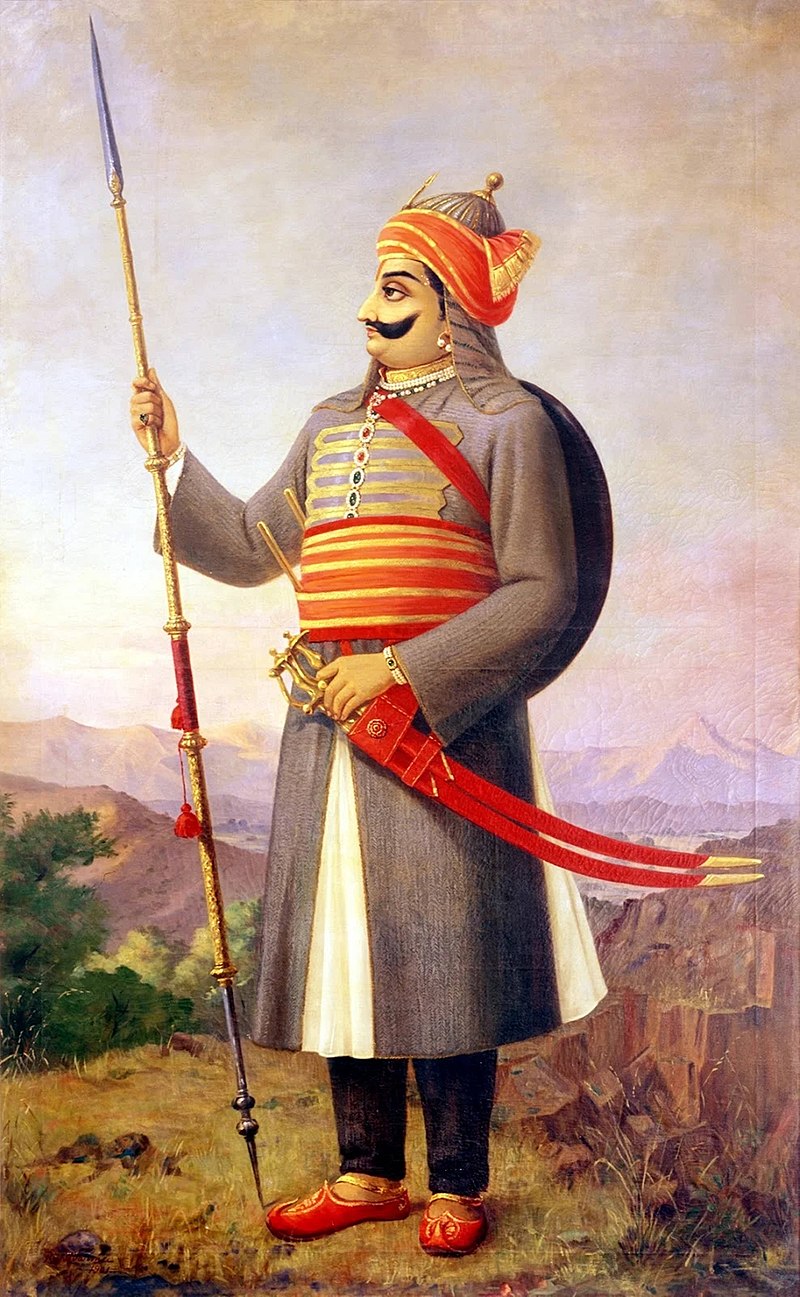
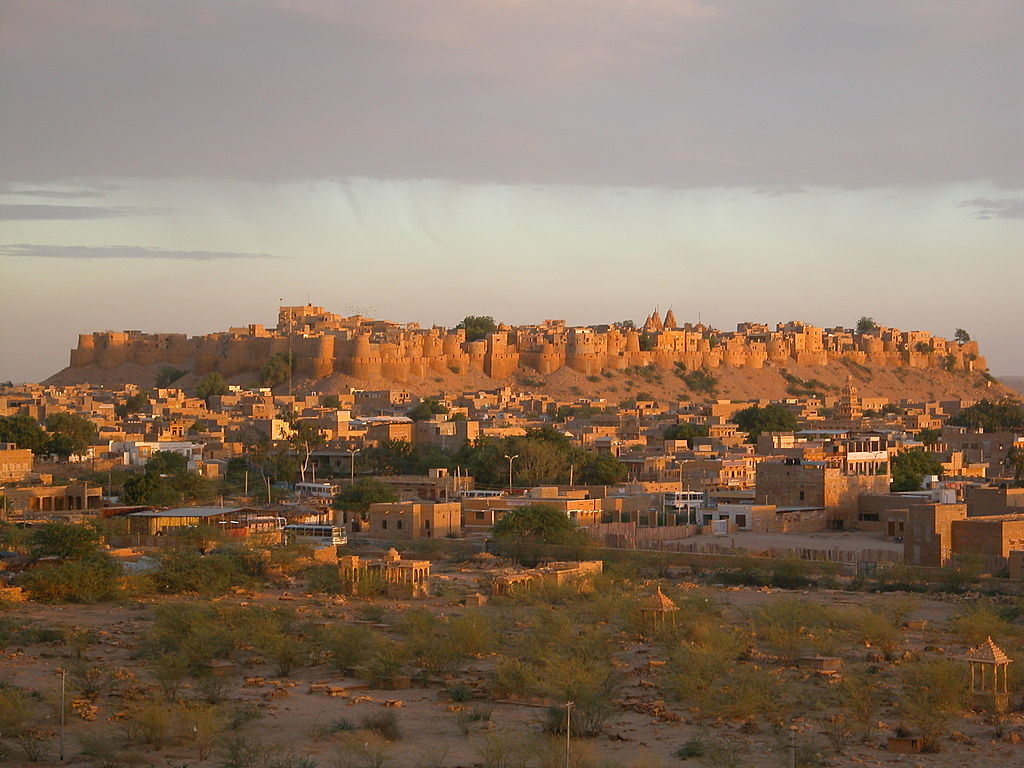
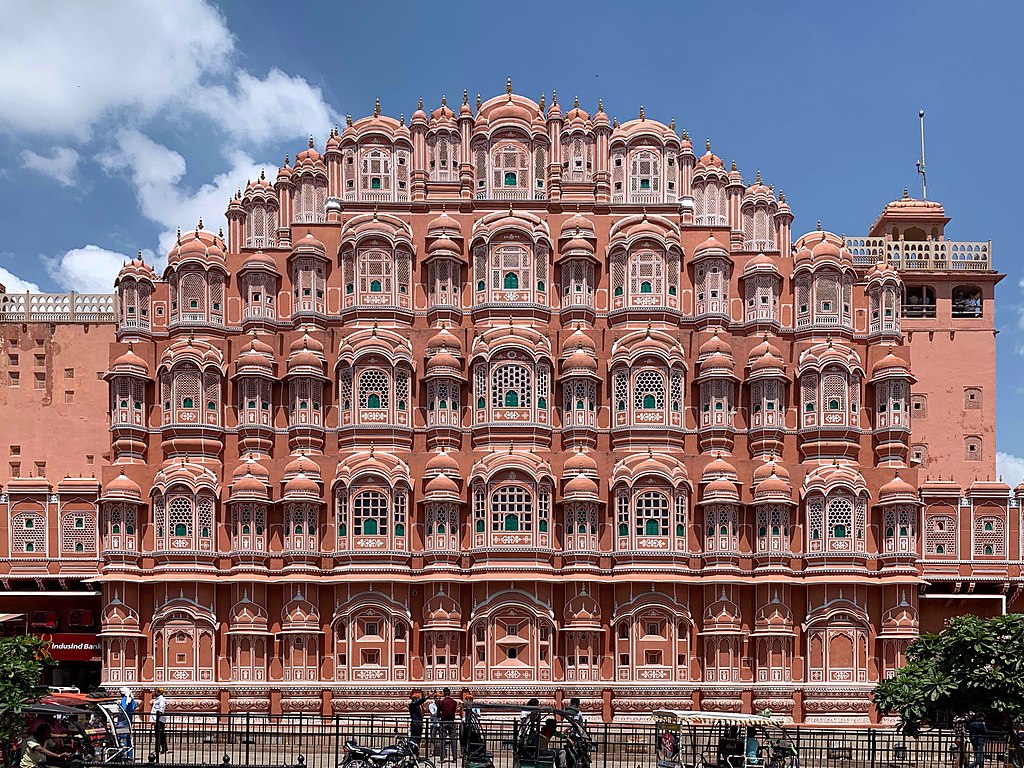
Rajput armies also fought long wars against the Marathas, successors to the Mughals. When the British East India Company took control in 1818, the rulers of Rajputana made treaties with them, allowing their kingdoms to keep some degree of self-rule. In the years following the independence of India in 1947, the princely states of Rajputana were integrated into the new state of Rajasthan.
Consultant: Nicholas Harris
Facts about Rajasthan
Area 342,239 sq km (132,139 sq miles) Rank: 1st
Highest point Guru Shikhar (Mount Abu) 1722 m (5650 ft)
Population 83,060,000 Rank: 6th
Capital and largest city Jaipur (pop. 3,073,349)
Other large cities Jodhpur (pop. 1,138,300), Kota (1,001,694), Bikaner (647,804), Ajmer (551,101), Udaipur (474,531)
Main languages Rajasthani (37%), Hindi (27%), Marwari (9%), Mewari (6%), Wagdi (5.5%), Hadauti (4%)
Main religions Hinduism (88%), Islam (9%)
State bird Godawan
State flower Rohida
State mammal Camel and chinkara
State tree Khejri