
British history
Napoleonic Wars
The Napoleonic Wars (1803–15) were a series of major conflicts between, on one side, France and its allies under Napoleon Bonaparte, and on the other, several European powers, including Britain, Austria, Prussia and Russia. Britain was suspicious of Napoleon’s desire to expand the French Empire across Europe and overseas. But it represented little threat to France—Britain's army of just 220,000 men was dwarfed by Napoleon's army of a million men. However, the British Royal Navy controlled the seas. If Napoleon was to invade and defeat Britain, he needed to ensure that the Royal Navy could not disrupt his invasion force sailing across the English Channel.
Threat of invasion
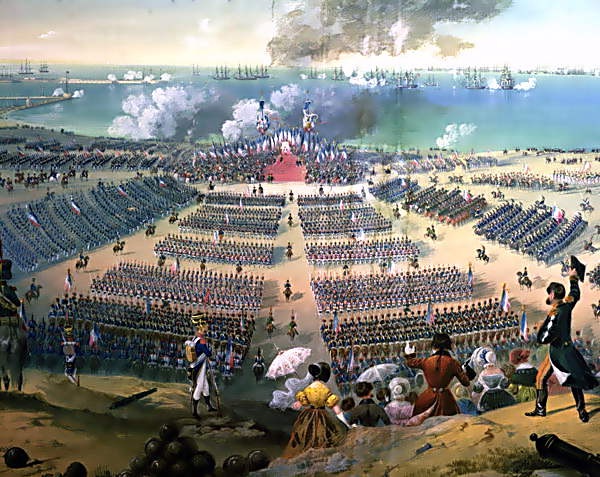
By the end of 1803, Napoleon had stationed his Grand Army on the northern coast of France in preparation for an invasion of Britain. A force of 130,000 men, along with a flotilla of 2000 boats, stood ready. Napoleon calculated that if he could get his men ashore and to London before Britain could mobilize its forces against him, then victory would be his.

The Royal Navy, meanwhile, had imposed a blockade on French ports (preventing ships entering or leaving) and those of France's ally, Spain. Napoleon's plan was for the French and Spanish fleets to break out these blockades and combine forces in the Caribbean Sea. They would then sail back across the Atlantic Ocean and together drive the Royal Navy out of the English Channel. This would then ensure a safe passage for his invasion force.
Coastal defences
Expecting a French invasion at any time, Britain hurried to construct a network of coastal defences, concentrating on the three prime invasion sites: Dover, Chatham and Romney Marsh. New fortifications were built at Dover and Chatham, while the Royal Military Canal was created along the northern edge of Romney Marsh, to act as a defensive moat against the advance of French forces. In addition, more than 100 round, brick towers, called Martello towers (after Mortella in Corsica), were built at close intervals around the English coast.

Preparing for battle
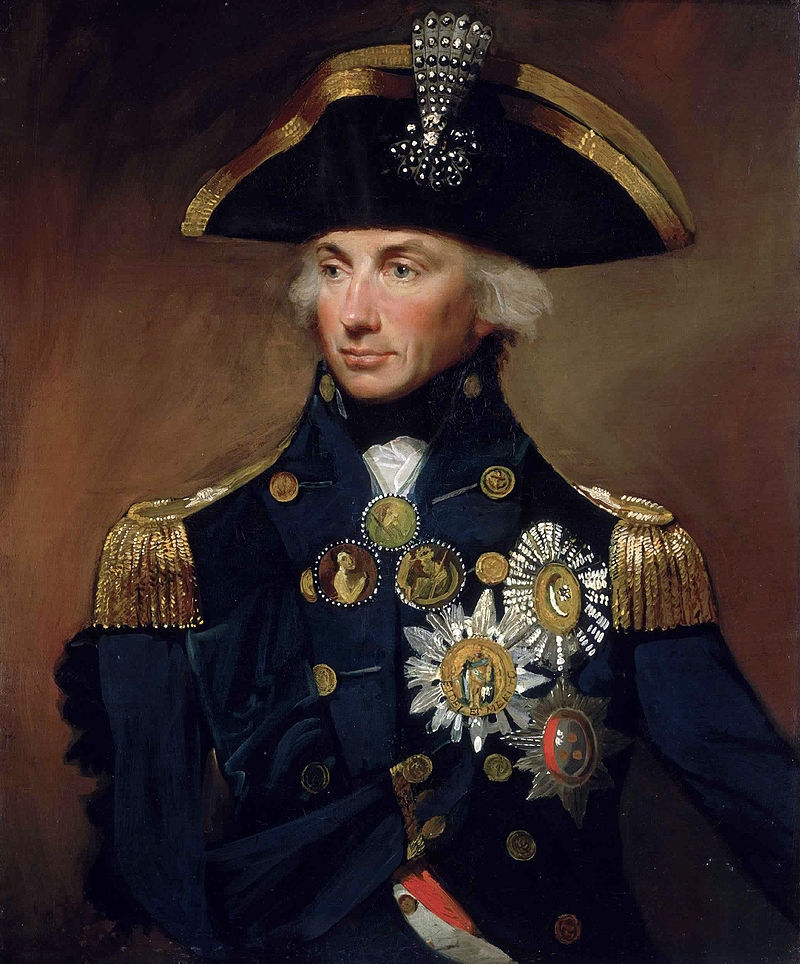
The French and Spanish fleets succeeded in breaking the British blockade early in 1805 and sailed out into the Atlantic Ocean. Word reached Britain on 2nd September that the French and Spanish fleet had assembled in the harbour of Cadiz, southern Spain. Later that month, the British fleet took up their positions off the coast under the command of Admiral Horatio Nelson in his ship, HMS Victory. Nelson's hope was to lure the combined Franco-Spanish fleet out of the harbour and engage it in a decisive battle.
Napoleon wanted his fleet to support an attack on Naples. Under pressure from Napoleon and believing Nelson's fleet to be weaker than his own, Admiral Villeneuve, the commander of the Franco-Spanish fleet, put to sea on 19th October.
Battle of Trafalgar
The Battle of Trafalgar was fought by 27 ships of the British Royal Navy against 33 ships of the combined fleets of the French and Spanish navies. The battle took place in the Atlantic Ocean off the southwest coast of Spain, just west of Cape Trafalgar, on 21st October 1805.


In his battle plan, Nelson departed from usual naval warfare practice. Instead of forming a single line facing the enemy fleet, Nelson positioned his ships into two columns, which then sailed directly towards the line of enemy ships. It was a risky ploy, exposing the unarmed bows of his leading ships to the full force of enemy broadsides (the firing of all the guns from one side of a warship).
Nelson's objective was to lead the first column into the attack and destroy the enemy flagship, the Bucentaure. This would leave the remaining ships leaderless and confused. They would then be attacked by his second column.
As his vessels approached their enemy, Nelson sent a signal to all the fleet: "England expects that every man will do his duty". Victory bore down on the enemy. She took heavy fire before firing a broadside herself at the Bucentaure. Much as Nelson had hoped, Villeneuve was soon trapped on a crippled ship and the Franco-Spanish fleet was reduced to chaos.

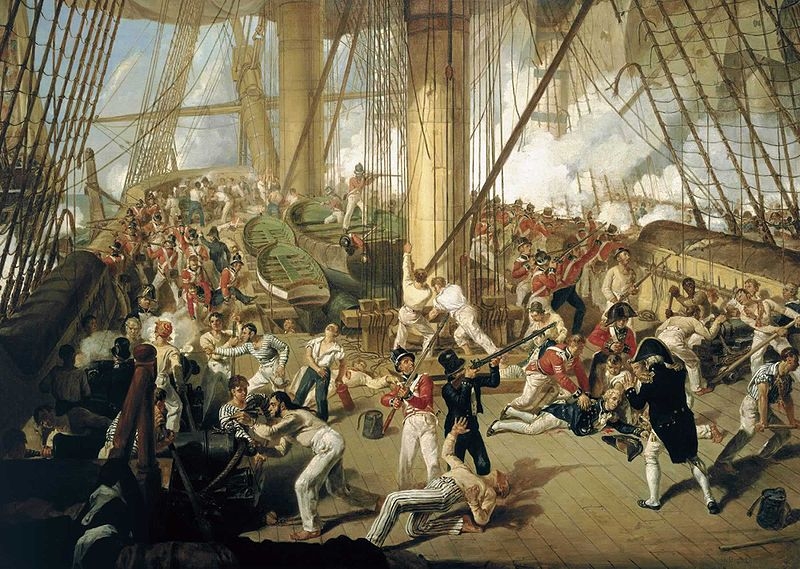
However, during the battle, Nelson was hit by a lead ball, which knocked him to the deck at about 1.15 p.m. Meanwhile, the battle raged on, with the British steadily wearing down the enemy. At 2.15 p.m. Villeneuve surrendered. As Nelson struggled to breathe, he uttered: "Thank God I have done my duty." Nelson died shortly before 4.30 p.m., as the battle died down.
The cost of victory was high. Some 1700 British were killed or wounded, with 6000 enemy casualties. Many of those lives were lost in the storm that followed the battle. The Franco-Spanish fleet lost 22 ships, but the British lost none.
Defeat of Austria
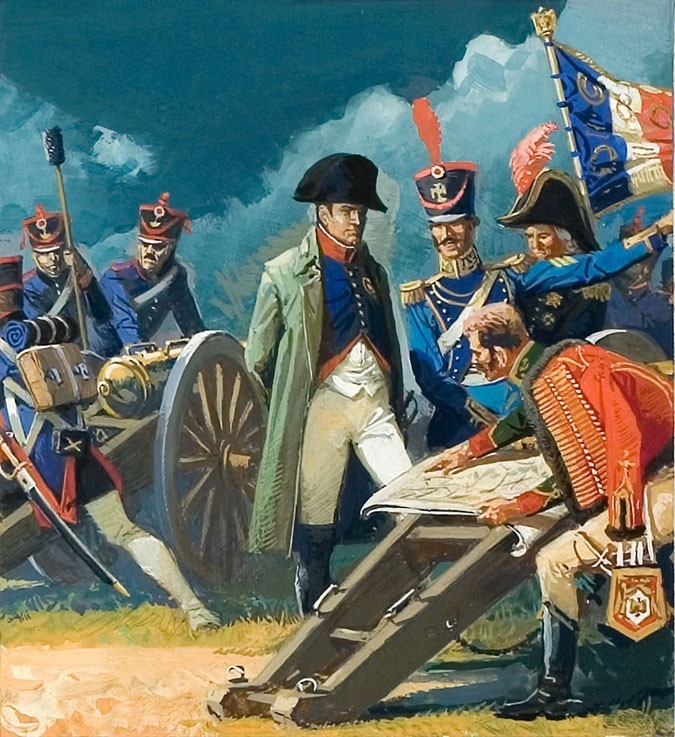
Meanwhile, also in 1805, Napoleon turned his attention to Austria and Russia. He marched his Grand Army inland, defeating the Austrians at Ulm in October 1805, and a combined Austrian and Russian force at the Battle of Austerlitz in December. By the Treaty of Pressburg, large amounts of Austrian territory were given over to France.
Continental System
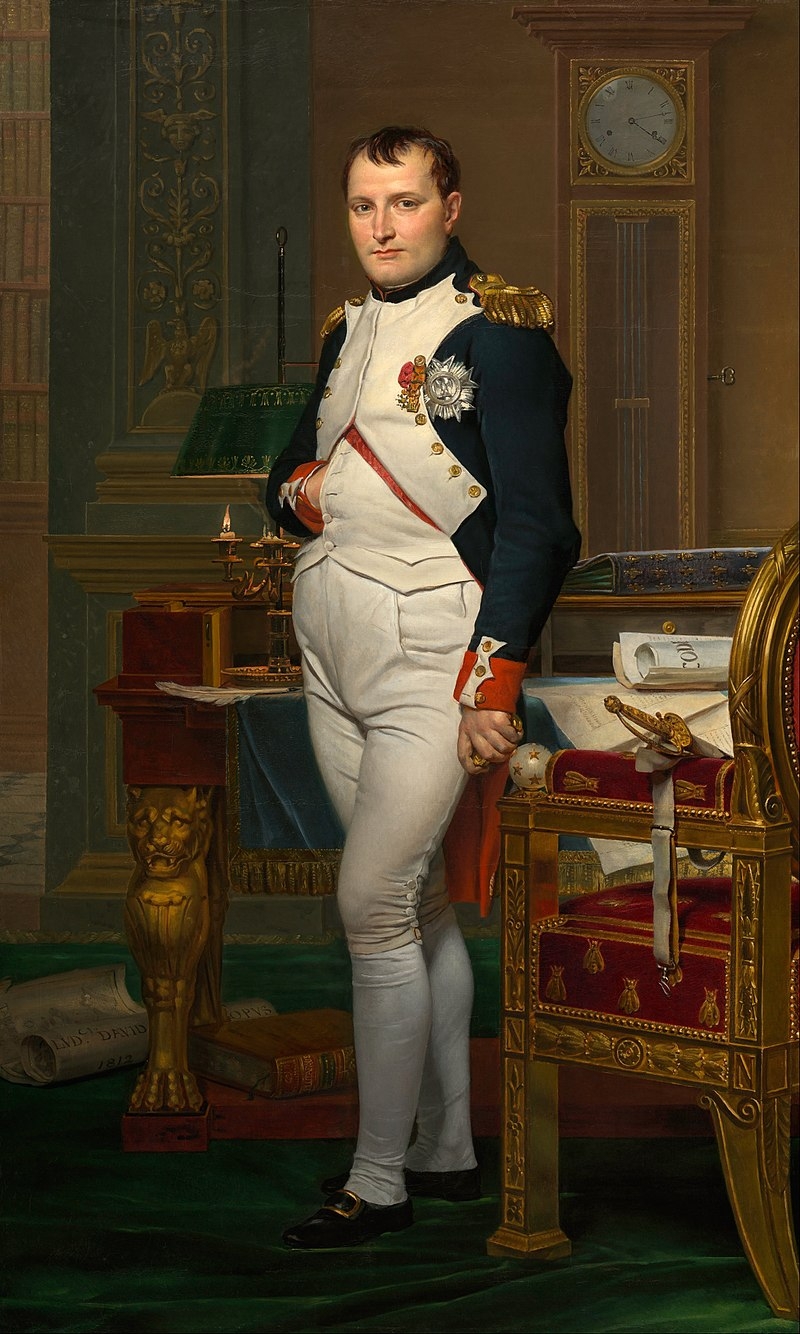
Having accepted invasion of Britain was now impossible, Napoleon attempted to gain power over Britain by destroying her overseas trade. Under what was called the Continental System, set up following the Berlin Decree of 1806, European countries were forbidden to trade with Britain. Thanks to the Industrial Revolution, Britain was already Europe's greatest industrial power in Europe. Its mastery of the seas allowed it to build up economic strength through trade with its rapidly expanding new Empire. Napoleon's measure had little impact on Britain.
Peninsular War
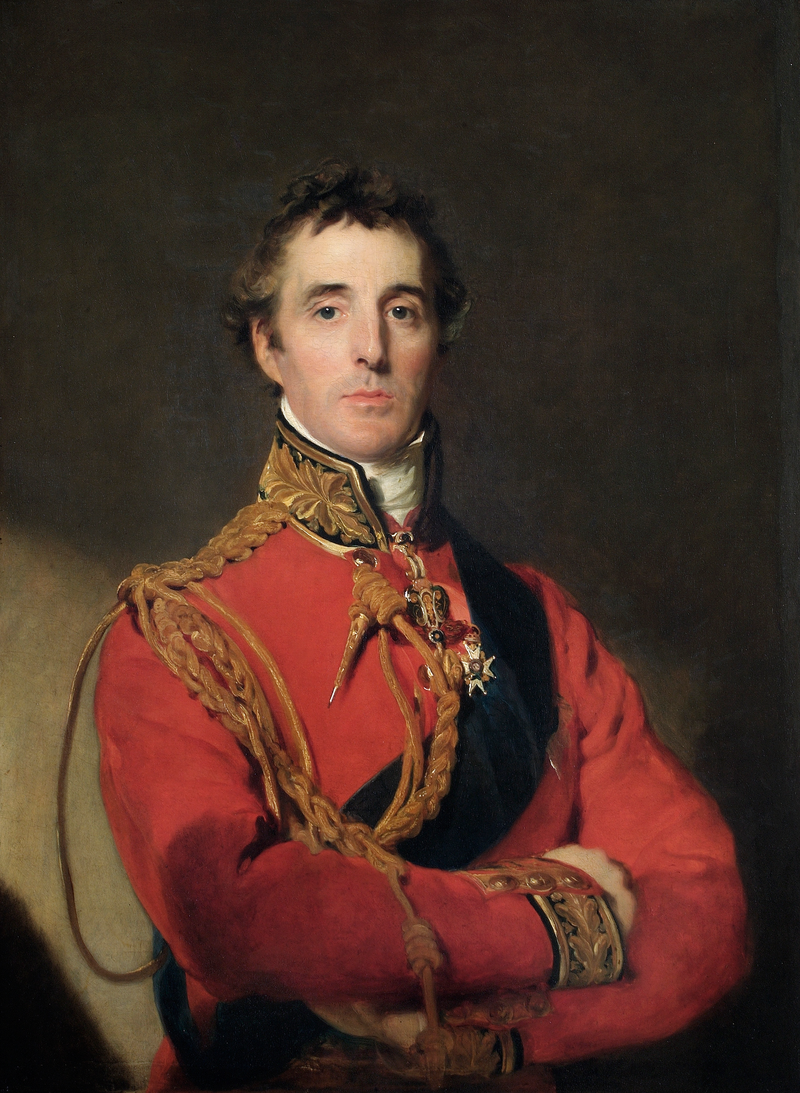
When Portugal failed to comply with the Continental System, Napoleon invaded it in 1807. He also sent troops into Spain, once its ally, and declared his brother Joseph as its new king in 1808. Following the occupation of Madrid by the French, the Spanish rebelled, beginning with the Dos de Mayo uprising on 2nd May 1808. This gave Britain, ally of Portugal, the opportunity to make advances against France. Arthur Wellesley (later the Duke of Wellington) and his army of British and Portuguese soldiers gradually pushed the French out of Spain in what was known as the Peninsular War, named after the Iberian Peninsula.
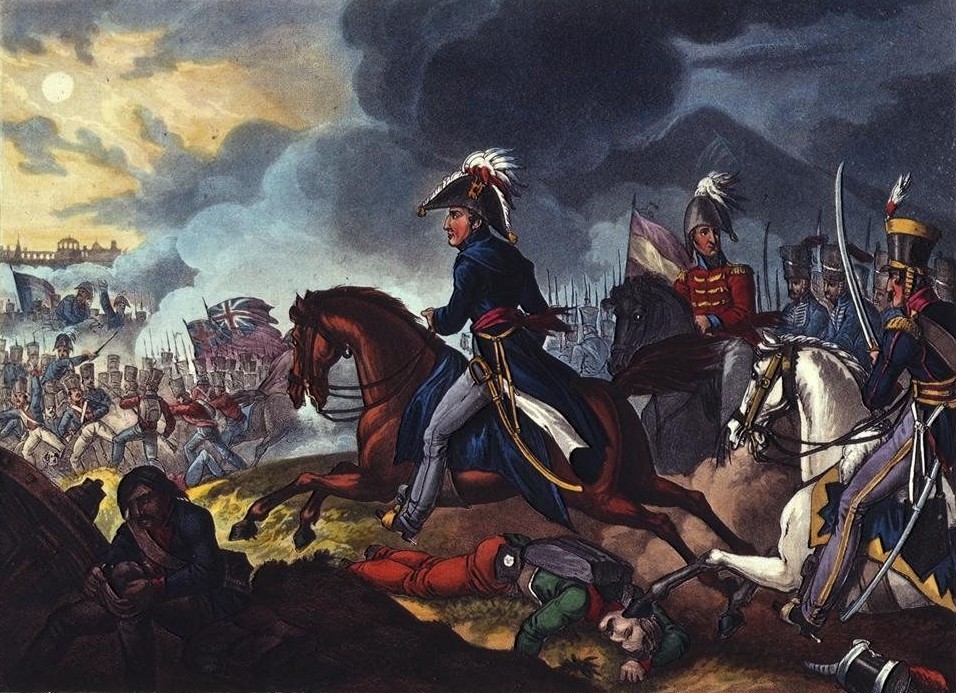
In 1812, while Napoleon's army was engaged in the disastrous invasion of Russia, Wellesley defeated the French at Salamanca and took Madrid. In the following year, he scored a decisive victory over King Joseph Bonaparte's army at the Battle of Vitoria. The French forces withdrew across the Pyrenees during the winter of 1813–14.
The Peninsular War involved about 60 major battles and 30 major sieges, the longest and fiercest of all the Napoleonic wars.
Hundred Days
The retreat from Moscow, together with defeat in the Peninsular War, were major setbacks for Napoleon. In March 1814, Paris fell to a coalition of European forces, including Britain, Spain, Portugal, Prussia and Russia. Napoleon was forced to give up power on 11th April of that year, and went into exile on the Mediterranean island of Elba, off the west coast of Italy. Peace appeared to have returned to Europe.
However, Napoleon refused to accept the loss of his power. In March 1815, he escaped from Elba and, for the brief period of time known as the Hundred Days, he dreamed once again of glory. He decided to aim for a quick victory against the armies of enemy powers ranged against him. He mustered an army and marched into Belgium.


Battle of Waterloo
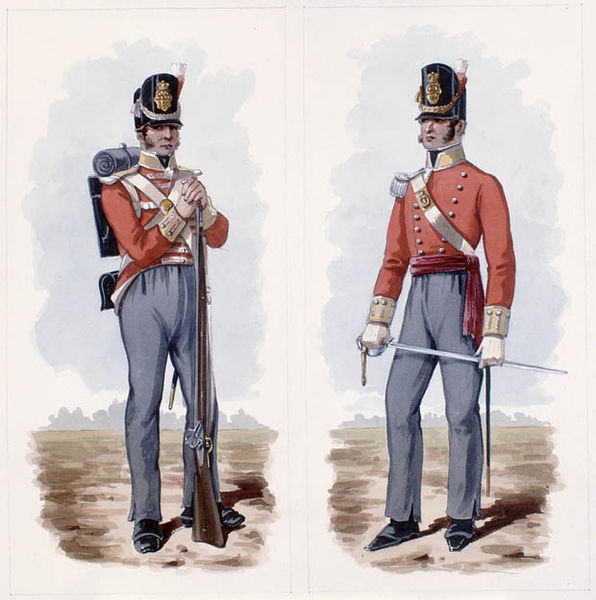
The Battle of Waterloo was fought on 18th June 1815 between Napoleon’s French Army of 72,000 men and a coalition of British, Dutch and Hanoverian forces led by the Duke of Wellington and Prussian forces under Marshal Gebhard von Blücher, totalling 68,000 men.
Napoleon’s plan was to keep the British and Prussian forces apart and defeat each separately. On 15th June, entering Belgium, part of the French army fought against the Prussians at Ligny. Suffering losses of over 20,000 men, the Prussians were driven into retreat. That same day, Wellington beat off a separate French attack at Quatre Bras. But the Prussian defeat at Ligny meant he had to retreat, too, or risk being overwhelmed. Pursued by Napoleon’s main force, Wellington fell back towards the village of Waterloo. Unknown to the French, the Prussians had managed to reorganize and were heading for Waterloo. Emboldened by the promise of reinforcements, on 18th June Wellington decided to stand and fight.
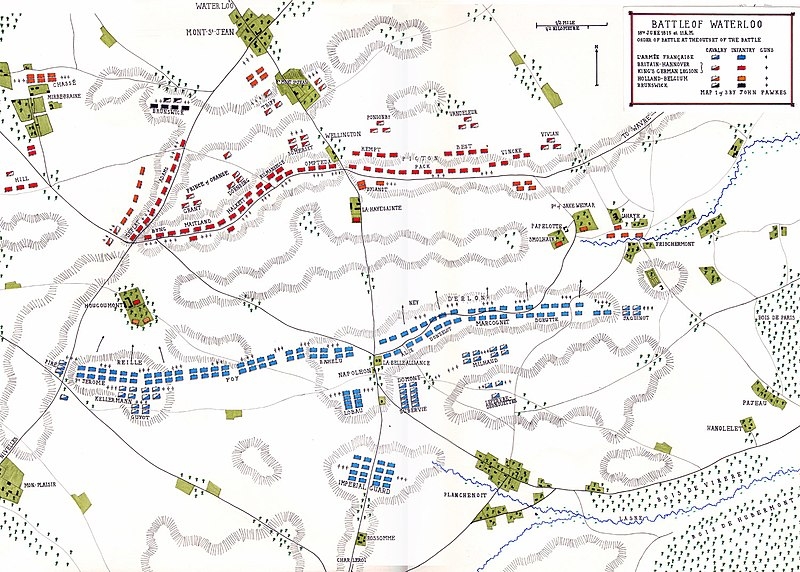
Wellington drew up his army along the ridge of Mount St Jean. He positioned most of his forces behind the ridge, out of sight and sheltered from artillery fire. Napoleon’s plan was to mount a diversionary attack against the Chateau of Hougoumont at the western end of the ridge. When Wellington sent reinforcements there, he would strike against the main part of Wellington's army.
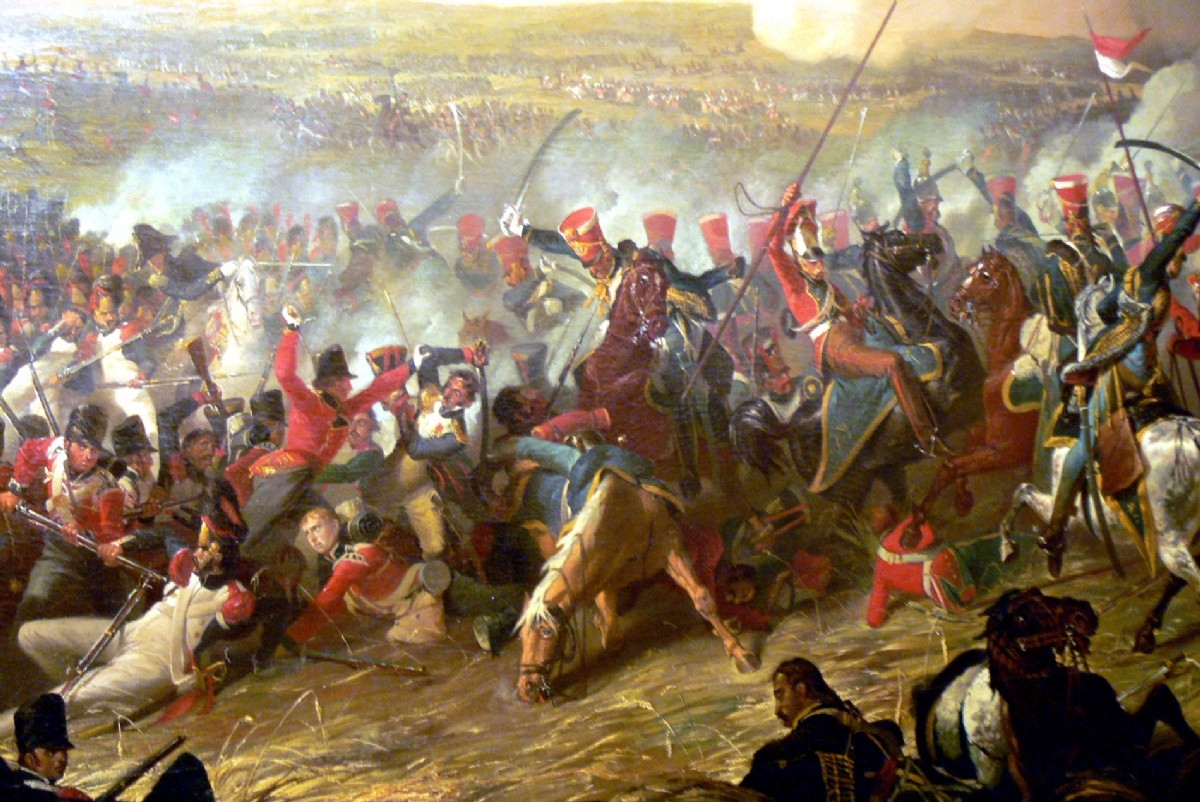
At 11.30 am, Napoleon launched his attack on Hougoumont, but its defenders held firm. Two hours later, the French attacked the Allies' main positions, but they were driven back by the British cavalry. The British carried their charge too far, however, and were themselves routed by the French cavalry.
As the battle continued, and Prussian reinforcements arrived, neither side could gain a decisive advantage. At about 7 pm, Napoleon made a last bid for victory. He ordered his crack troops, the Imperial Guard, into battle—but they, too, were beaten back by the Allies. Wellington's army counter-attacked, and, with the Prussians breaking through, the French were routed.
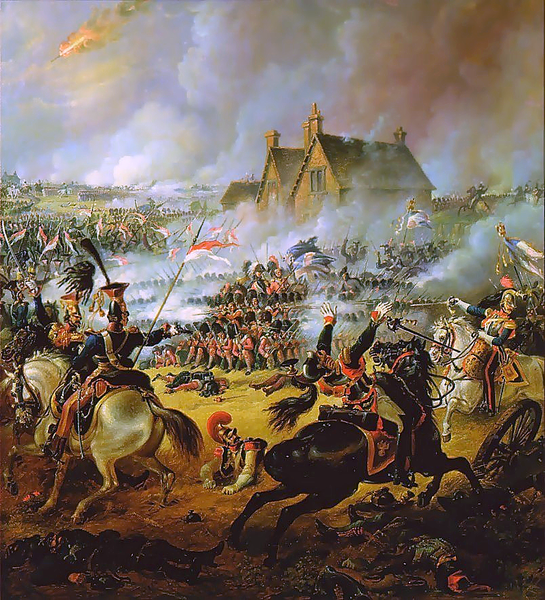
The French had lost the battle. Napoleon lost nearly 40,000 men killed, wounded or captured, while the Allies suffered 22,000 casualties.
Napoleon's exile and death
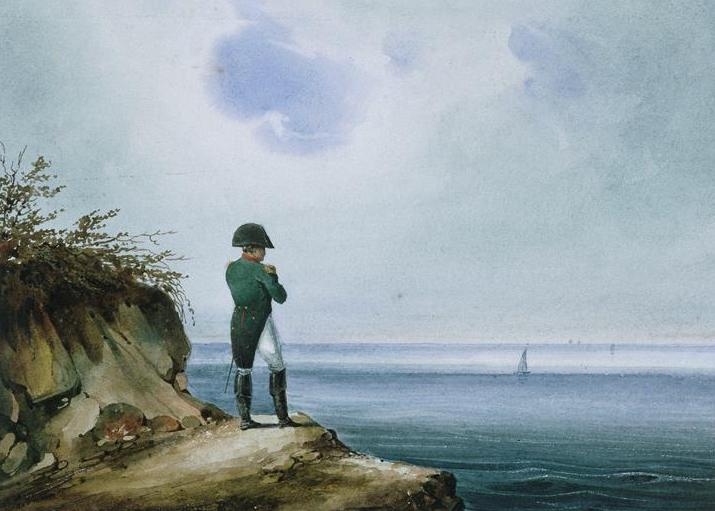
This time there was no way back for Napoleon. He returned to Paris and abdicated (gave up his throne) on 22nd June 1815. He was captured by the British on 15th July, who, taking no chances, exiled him to the island of St Helena in the South Atlantic Ocean, under the protection of a British garrison. Napoleon died there on 5th May 1821.
Consultant: Philip Parker