
British history
Norman Conquest
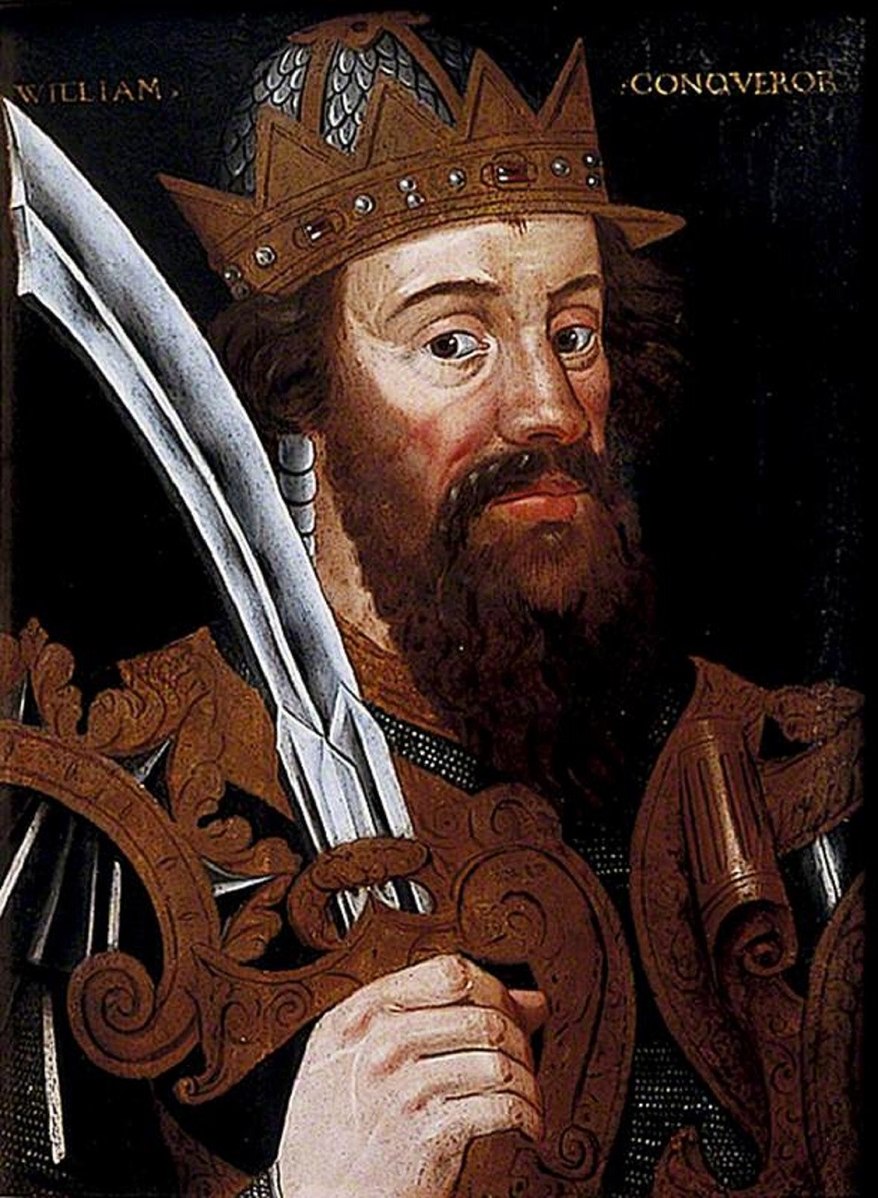
The Normans (from Nordmann, or "Northman") were originally Vikings from Scandinavia who settled in northern France in the early 900s. They built up a powerful duchy known as Normandy. In 1035, possession of the duchy passed to a young boy called William. He grew up to become a skilled military commander who never lost a battle in his life. In 1051, the childless Saxon king of England, Edward the Confessor, son of Aethelred the Unready and his Norman second wife, Emma, seemed to promise the crown of England to William. But on his deathbed in 1066, Edward apparently changed his mind and gave the crown to his brother-in-law, Harold Godwinson. William launched an invasion of England to gain the crown by force.

The Battle of Hastings
When William and his Norman army landed at Pevensey Bay on the south coast of England, Harold and his English army were in Yorkshire in the north of England. They had just defeated an invading Viking army led by Harold Hardrada, who also claimed the English crown, at the Battle of Stamford Bridge on 25th September 1066. Harold rushed south and prepared to face William. The two armies met 10 kilometres (6 miles) north of Hastings in southern England on 14th October.
The English army, also consisting of around 7000 men, lined up on top of a ridge at Senlac near Hastings, protected by a wall of shields. Although battle-weary, their position gave them an advantage: the Norman army would have to fight up the hill towards them. William could call on some 2000–3000 cavalrymen, soldiers on horseback, which the English army lacked. Harold's best infantrymen, known as housecarls, were equipped with fearsome, twin-bladed battle-axes. But most of his men, the fyrd, were peasants, armed with whatever weapons they could find, including spears, swords and even pitchforks.
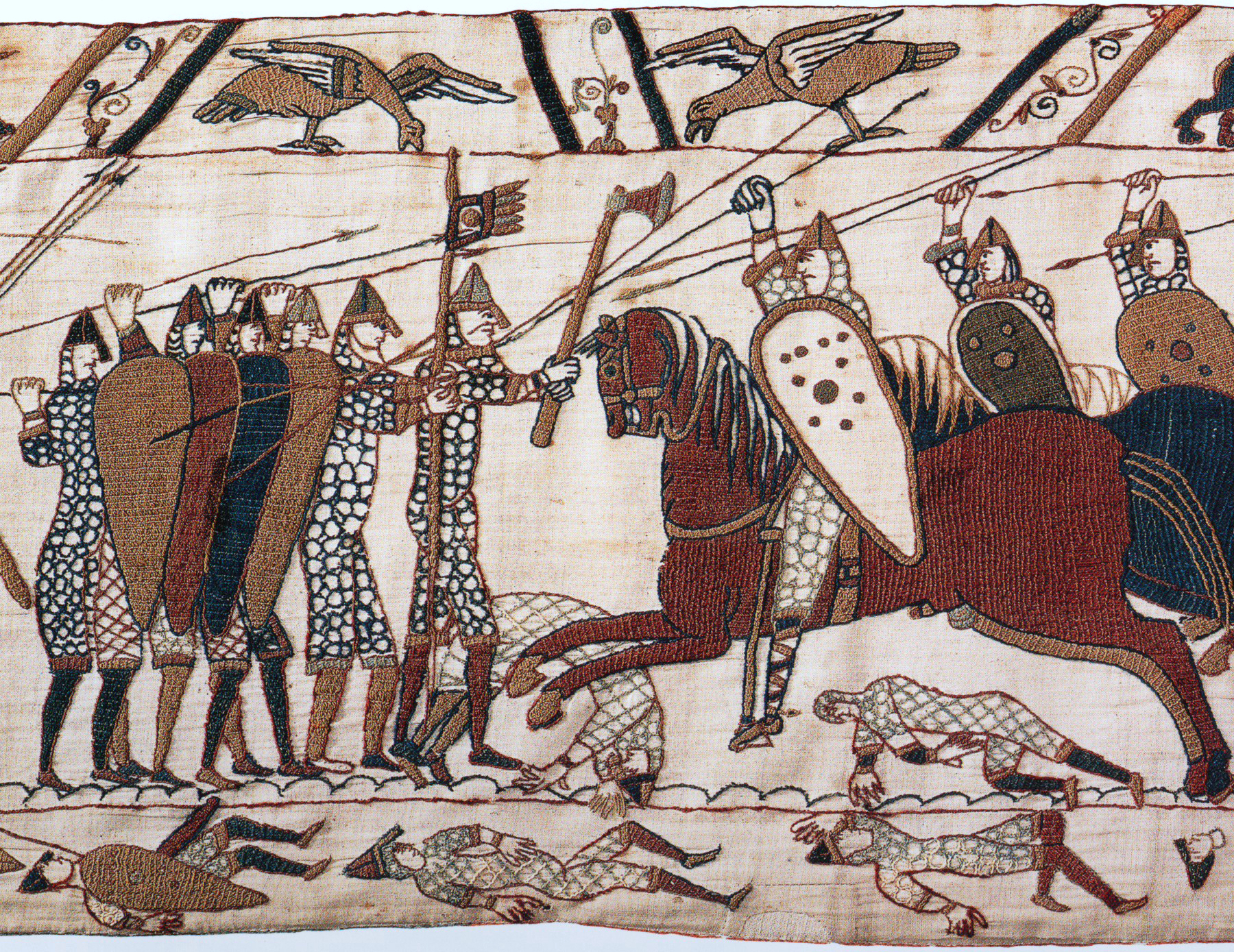
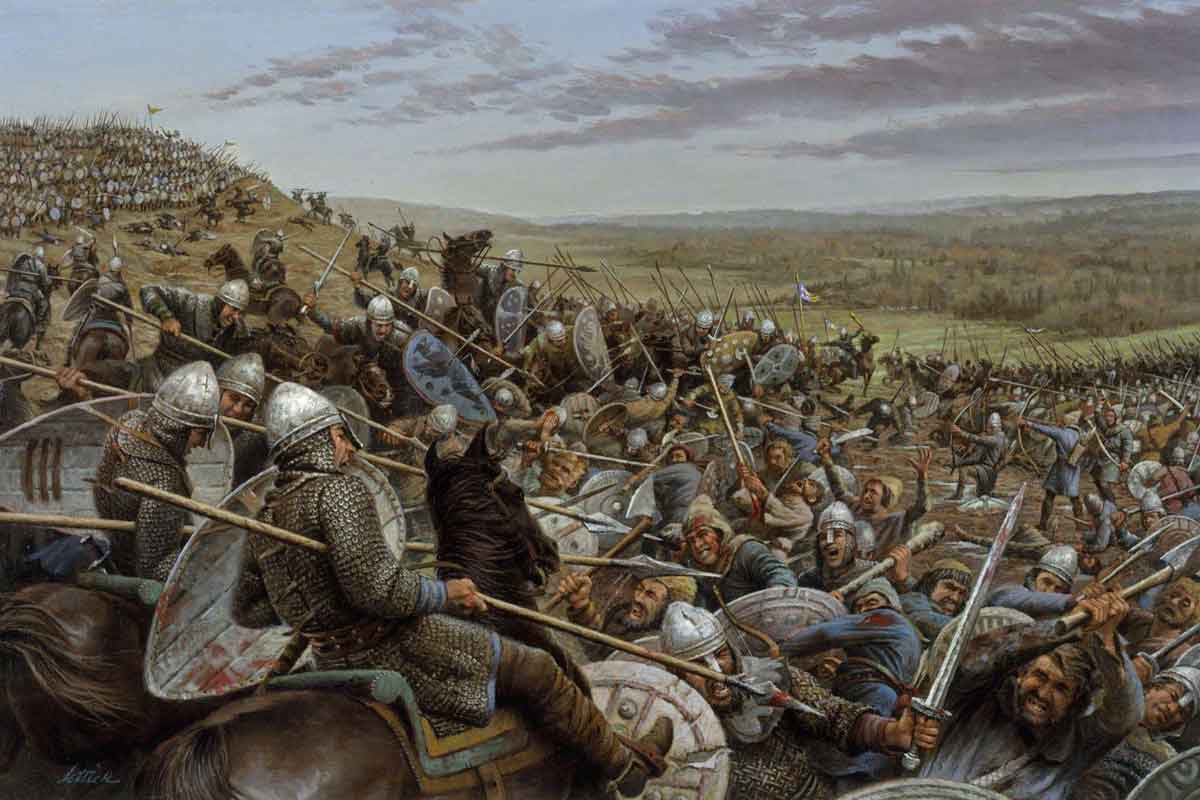
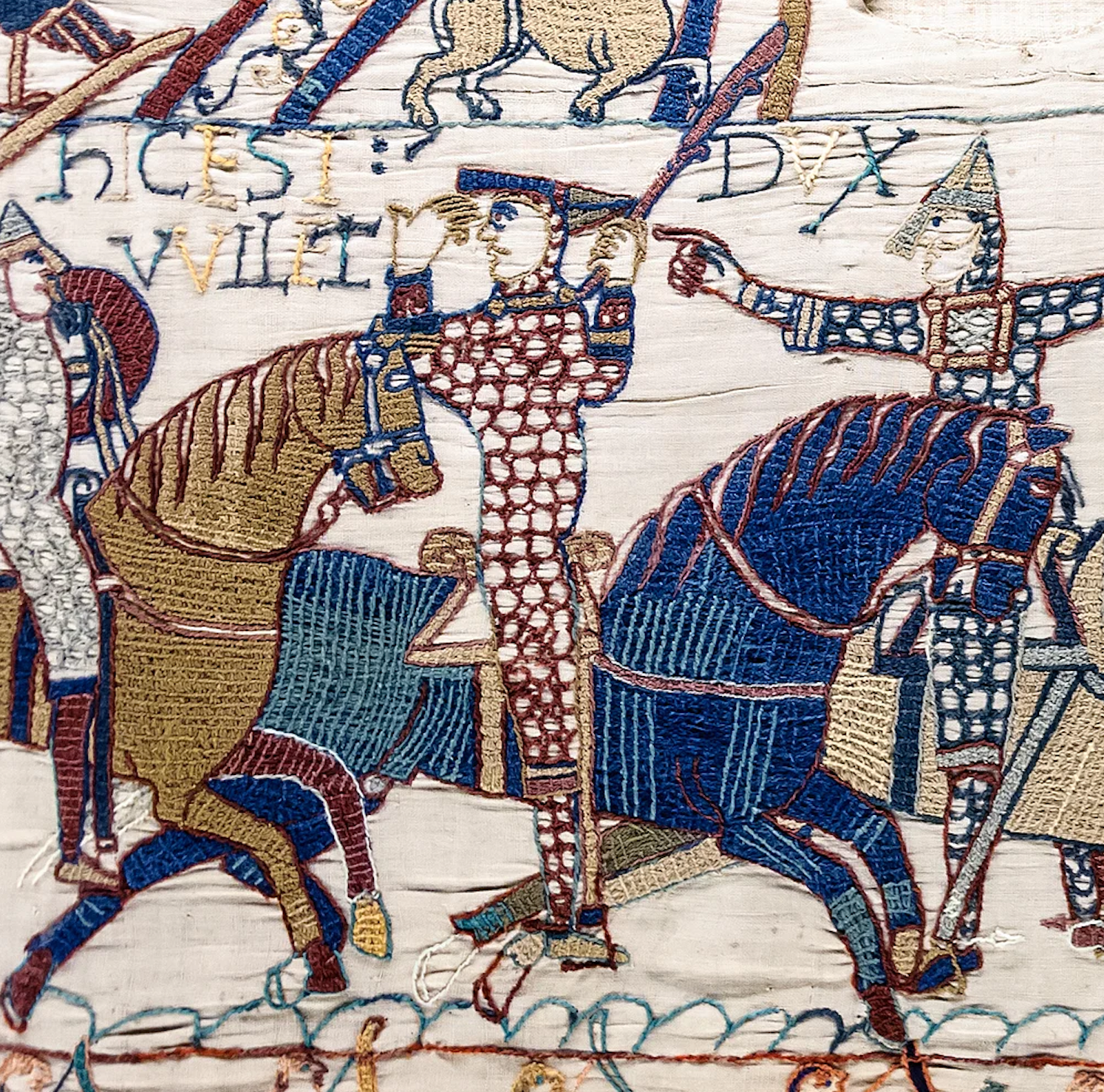
The Norman forces were arranged in three ranks: archers and crossbowmen at the front, then the infantry, and finally behind them the mounted knights. Harold’s troops repulsed the first Norman attacks. William’s men regrouped, but then some on the left flank, hearing a rumour that William had been killed, began to flee in panic. William rode out in front of them raising his helmet to show his face, shouting: "Look at me. I'm alive, and with God’s help I shall conquer!" In a counter-attack, his troops surrounded and overwhelmed the English forces who had pursued the fleeing men on a hillock.
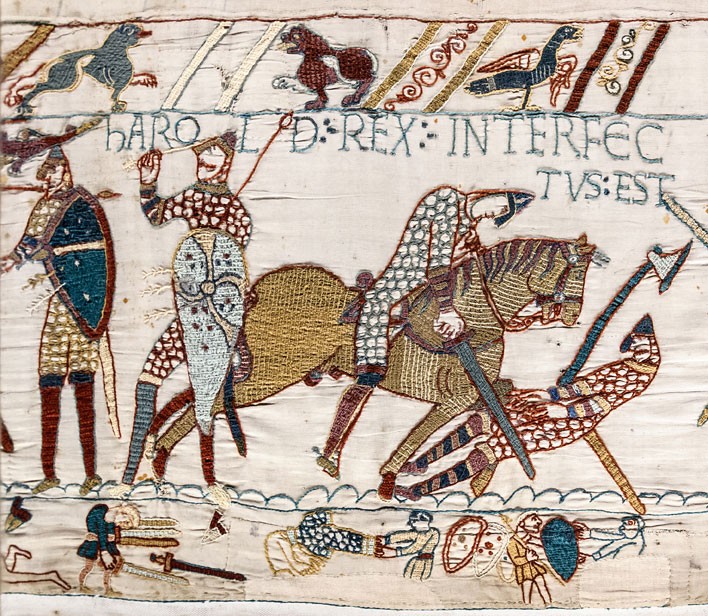
After two unsuccessful advances, in the late afternoon the Normans pretended to flee the battlefield. The English army rushed after them, but were trapped when William's men turned to attack them. The English troops stood no chance against the Norman knights on horseback. In desperation, the housecarls formed a ring around their king—but failed to protect him. Harold was (possibly) hit in the eye by an arrow, then slain by the sword of a mounted knight. William the Conqueror, as William came to be known, had won a decisive victory.
March on London
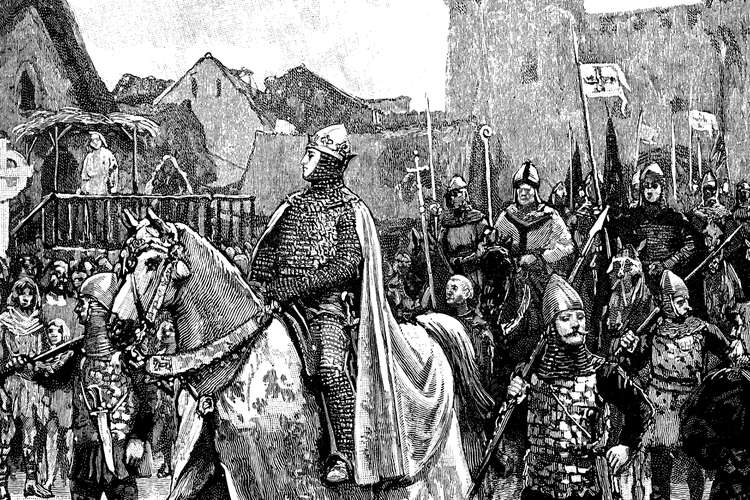
After his victory at Hastings, William expected the surviving English leaders to submit to him. Instead, they proclaimed Edgar Aetheling, grandson of King Edmund Ironside, the new king of England. So William advanced on London, defeating a force that attacked him at Southwark. Unable to storm London Bridge however, he marched his men westwards to cross the River Thames at Wallingford, where he received the submission of Stigand, Archbishop of Canterbury. Having encircled London in a wide sweep, William's forces now approached the city from the northwest. The English leaders surrendered to him at Berkhamsted.

Harrying of the North
William was crowned on Christmas Day 1066 in Westminster Abbey. But it took the new Norman king six years to consolidate his conquest with some English nobles continuing to resist Norman rule. William appointed earls to guard England’s frontiers. In 1068, they withstood raids by Harold’s sons along the southwest coast as well as uprisings in the Welsh Marches, Devon and Cornwall. The following year, the Danes in alliance with the Scots, Edgar Aetheling and other English nobles, invaded the north. The alliance defeated the Norman garrison at York and took control of Northumbria—then a region encompassing the whole of the north of England, including present-day Yorkshire.
William drove the Danes back to their ships on the River Humber. To crush any future resistance, he then proceeded to devastate Northumbria in what came to be known as the "Harrying of the North". During the winter of 1069–70, his forces burned down whole villages and slaughtered the inhabitants. Crops and livestock were destroyed, so that anyone surviving the massacre would starve, resulting in a famine. Some three-quarters of the entire population either died or fled. It would take over a century for the region to recover.


Hereward the Wake
Hereward the Wake was a leader of the English resistance to the Norman conquest of England. His base was in the Isle of Ely in East Anglia. According to legend, Hereward roamed the Fens, stirring up opposition to William. The Danish king, Sweyn Estrithson, made an alliance with Hereward, sending an army to support his rebellion. But William bribed Sweyn to withdraw his forces, and defeated Hereward in 1071, forcing him to live the life of an outlaw.
A year later, William made a peace treaty with Scotland after driving the army of King Malcolm III back over the border in 1072.
Castle building
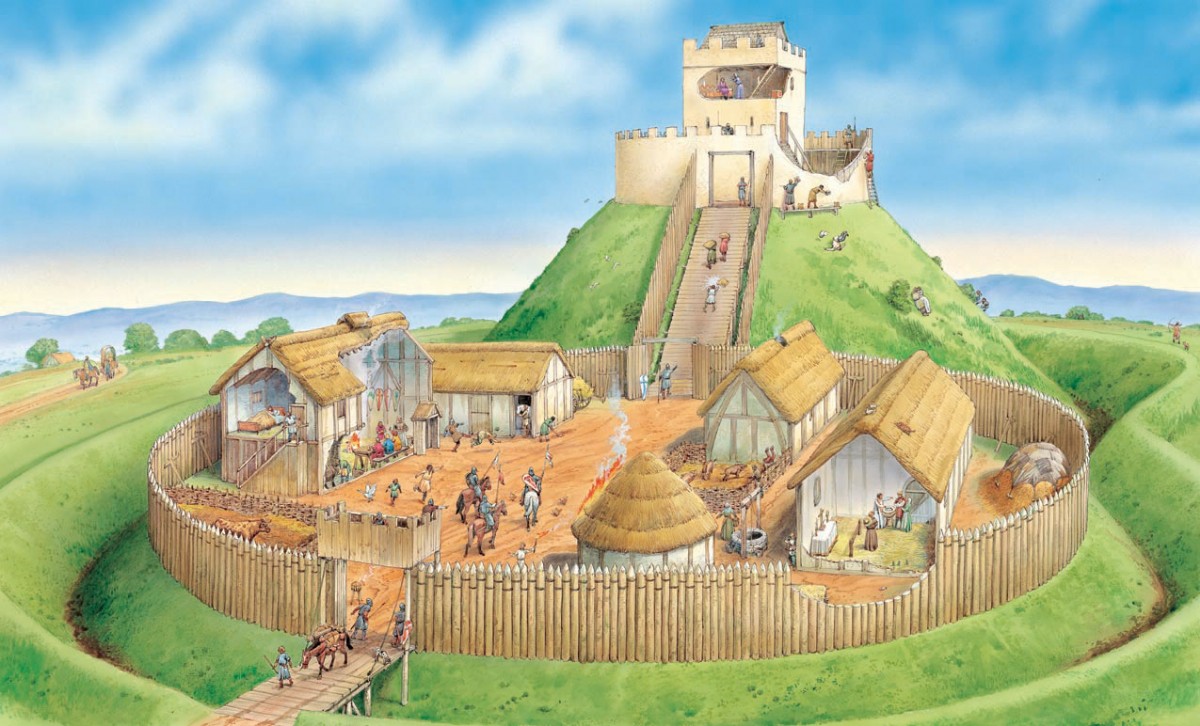
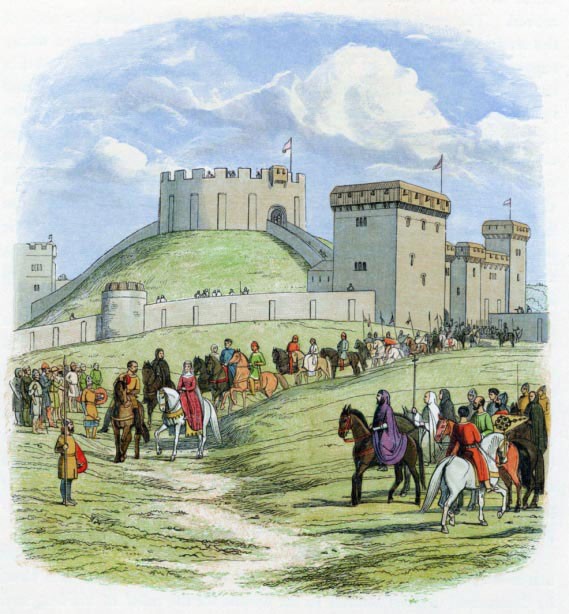
William quickly launched a castle-building programme both to protect Norman nobles from attack by the native English and to control the surrounding countryside. These first castles, around 100 of them, needed to be built quickly. Called motte-and-baileys, each consisted of a simple wooden tower on top of an earth mound surrounded by wooden walls and ditches. From the 1070s onwards, the more important ones were rebuilt using stone. The construction of these much stronger buildings each took several years to complete.
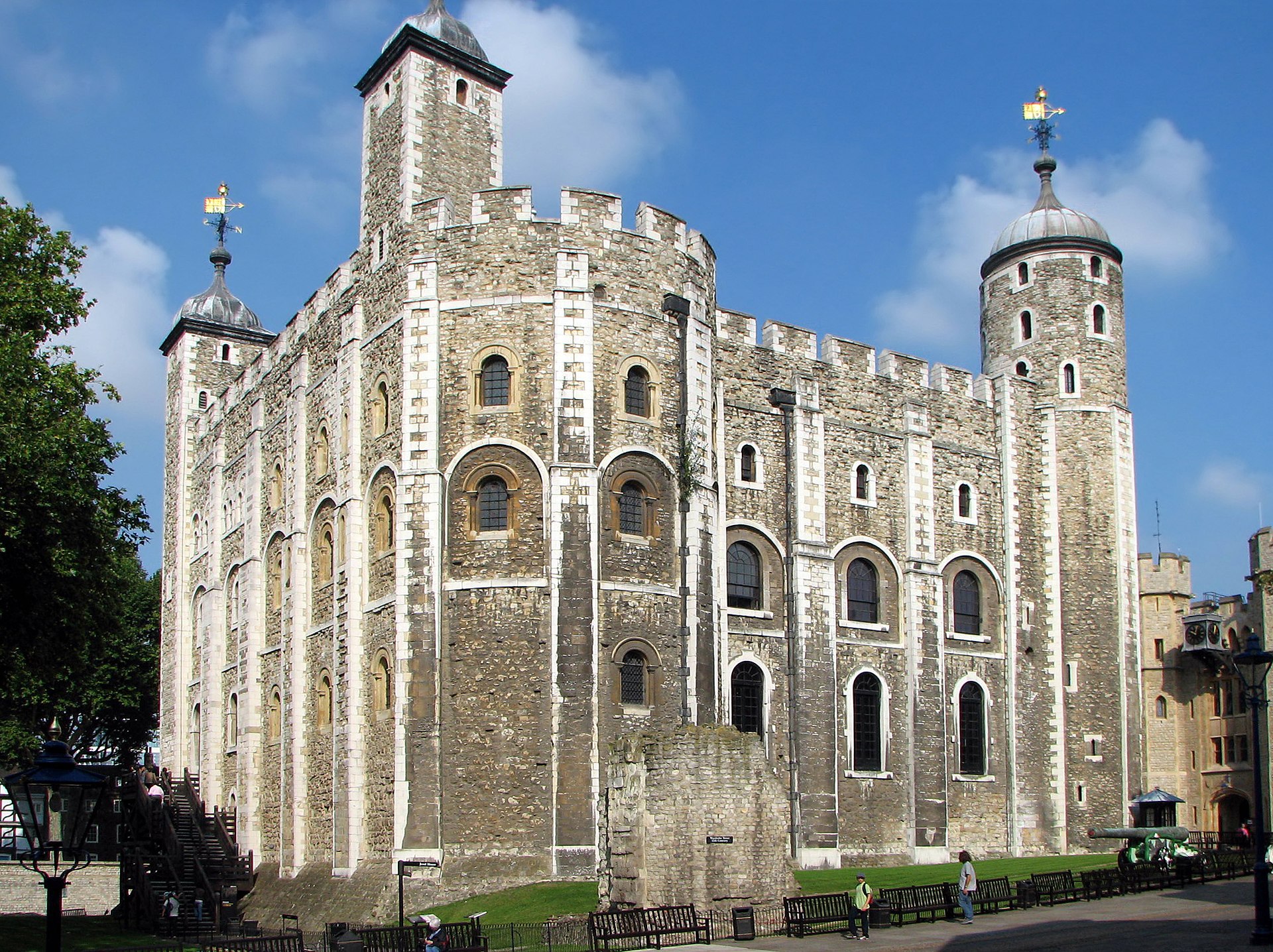
A castle served as a home for the lord and his family. It was also used both as a military headquarters and a place where taxes were collected and justice handed down. One of the most famous Norman castles in England is the Tower of London. Its White Tower (begun 1078) is the earliest stone keep (fortified tower) in England.
By the end of William's reign, more than 80 castles had been built throughout his kingdom. They stood as a permanent reminder of Norman power to the conquered people of England.
Feudalism
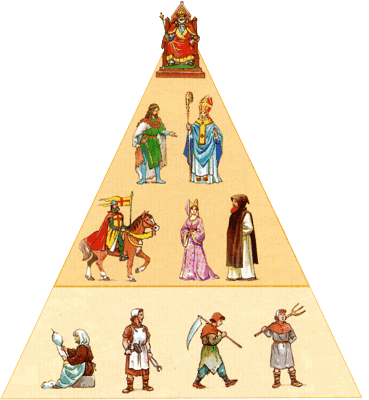
During the early years of his reign, William steadily transferred the estates of English lords to his Norman followers as a reward for their support in the conquest. The king had ultimate possession of all the lands, or fiefs, in his new kingdom, so the Norman lords, known as barons, held their fiefdoms in return for military service to the crown when it was required. The barons, in turn, granted possession of some of their land to vassals in return for military service to their lord. Peasants worked the land for the vassals. This new social structure introduced by the Normans to England was known as feudalism.
The feudal system also helped keep powerful barons in check. If they betrayed William, they would lose their land and the wealth that came with it. This happened when the Revolt of the Earls was put down in 1075, after which Ralph, Earl of East Anglia, and Roger, Earl of Hereford, had their lands forfeited.
For William and his successors, the feudal system allowed them to spend most of their time not in England but back in the Duchy of Normandy, over which they still ruled. Their personal presence was often necessary to defend Normandy from foreign invasion and to put down internal revolts.
Norman rule
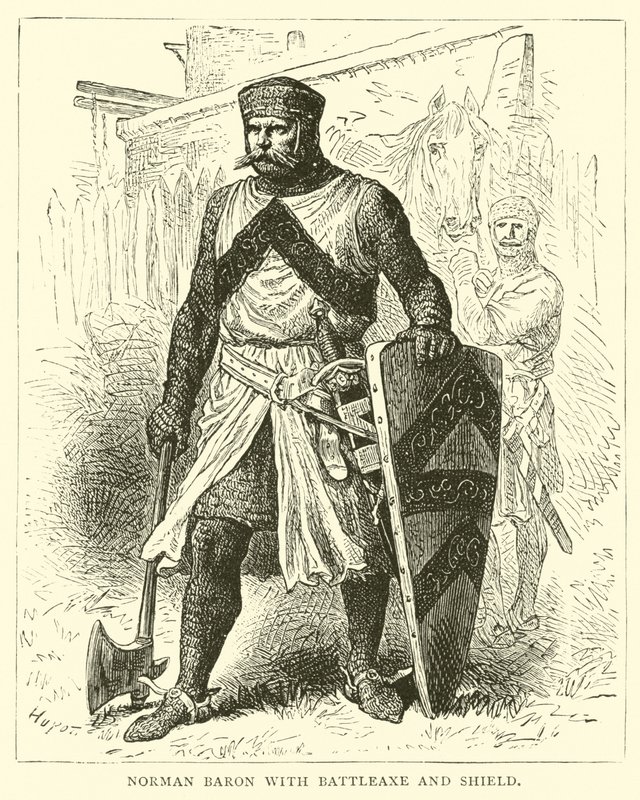
By around 1072, William the Conqueror had firmly established Norman rule over the kingdom of England. Norman French had become the language of government; Normans controlled most of the major positions within the Church, including the key archbishops of Canterbury and York; almost all the major landowners were Normans. After 1075, all earls were Normans; Englishmen were only occasionally appointed as sheriffs (officials in charge of shires, or counties).
Domesday Book
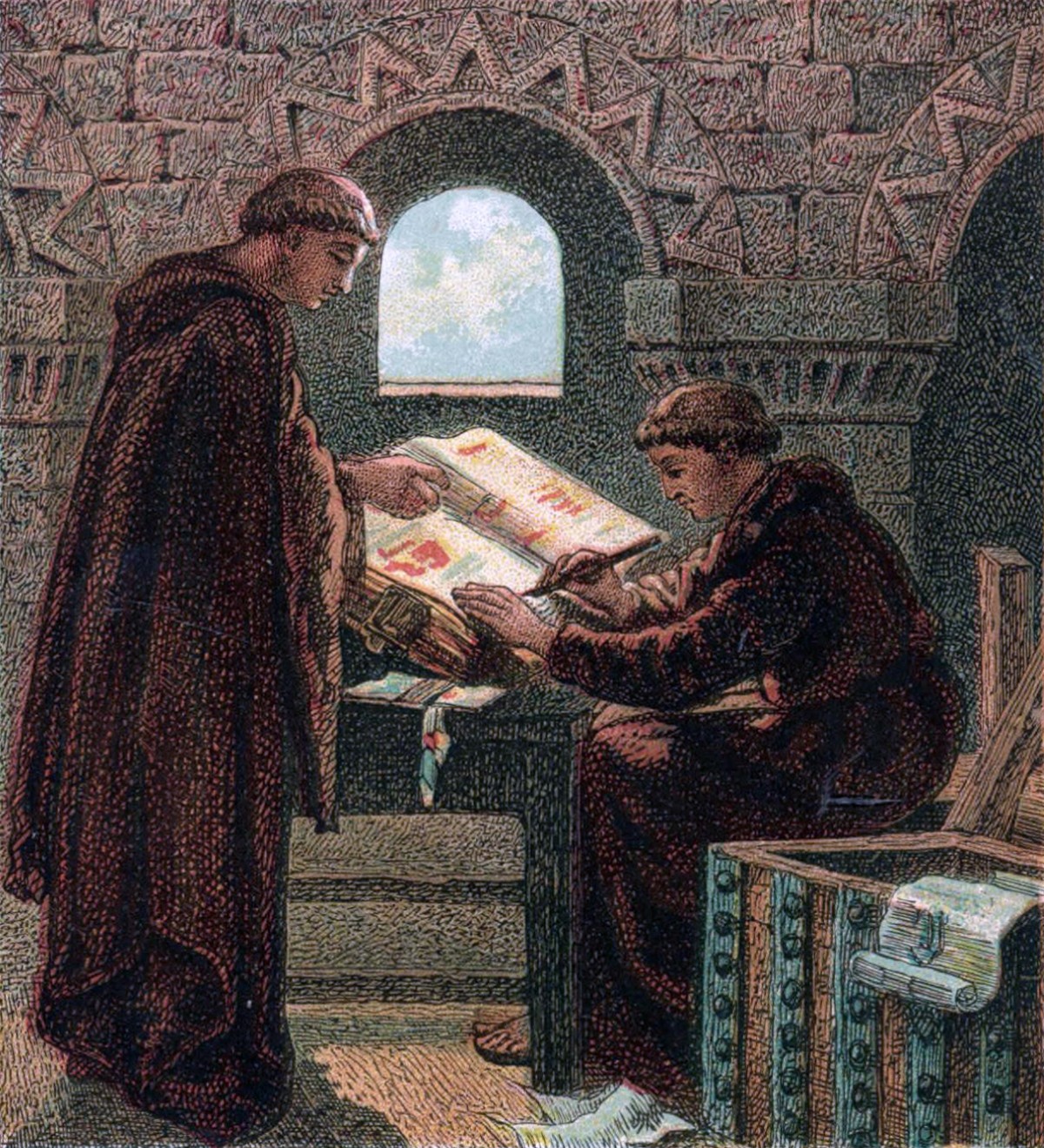
The Domesday Book was a record of landholders' estates throughout England. In 1085 William sent out commissioners to record the total population, the size, ownership and value of all the land in the kingdom, and the amount of livestock each landowner possessed. This information would reveal how much his new kingdom was worth and what taxes should be paid. The results were written down in 1086 in two books, one covering Norfolk, Suffolk and Essex, the other the rest of the country (except the far north, which had been devastated and so was catalogued as worthless). The books were legal documents against which there was no appeal, and so became known as Domesday, or the Day of Judgement.

The Domesday Book documented the vast territories acquired from the native English by the new Norman owners. It revealed that only about 5% of the land covered by the survey was still left in English hands. And even this tiny proportion would be further diminished in the following years.

Cathedrals
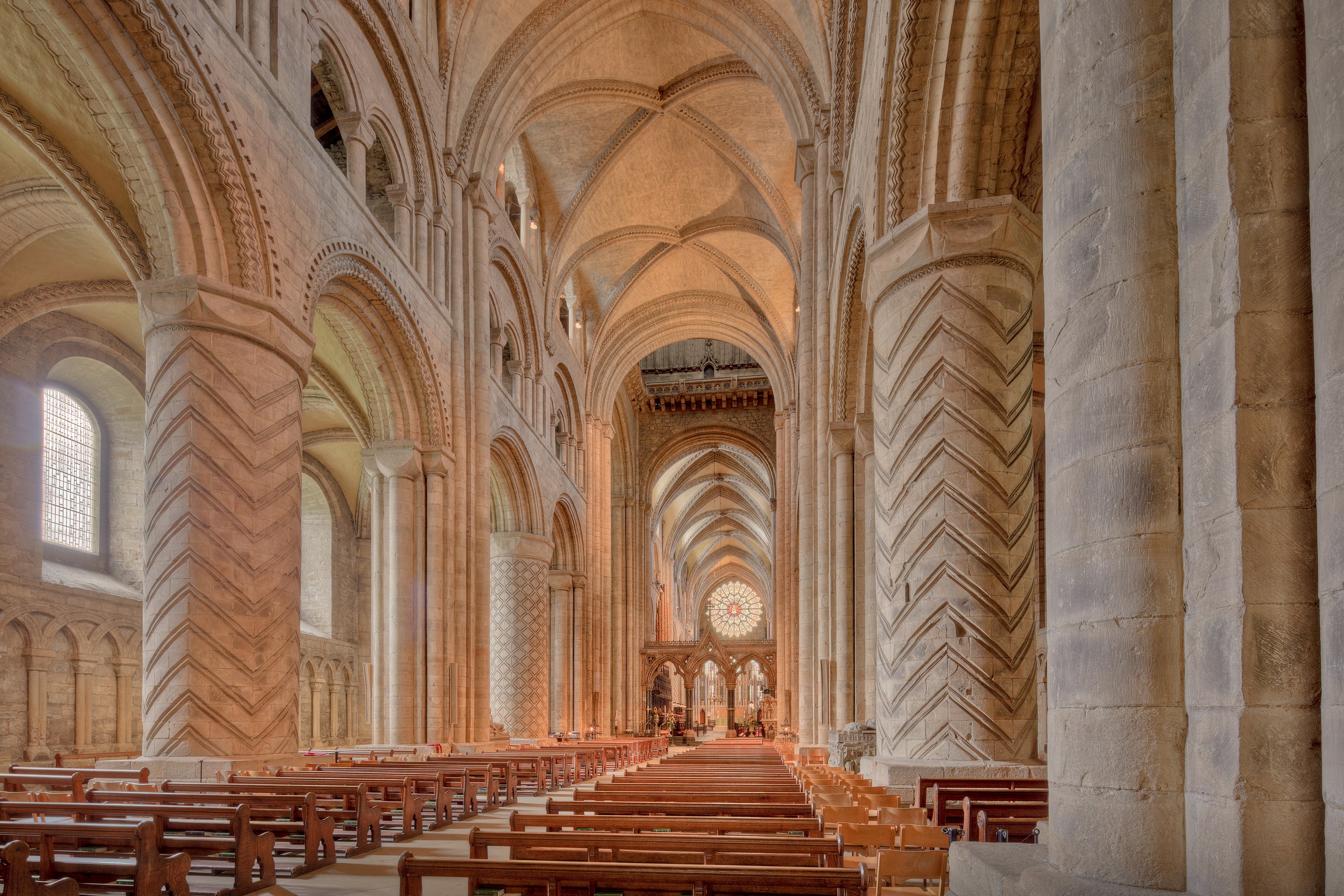
The Norman kings set about demolishing Anglo-Saxon places of worship and replacing them with far grander churches and cathedrals built in the Norman (also known as Romanesque) style. During the first decades of Norman rule construction commenced on at least 15 great cathedrals—at Canterbury, Durham, York, Lincoln, Ely, Gloucester, Chichester and other places across England—and all but two survive to this day. The great cathedrals became instant landmarks and were a clear sign of the power and wealth of the country's new masters.
Norman cathedrals are characterized by massive stone construction, rounded arches (often decorated with chevrons or zig-zag designs) and thick, cylindrical columns. Ceilings were vaulted, allowing the interior to be much higher than in earlier buildings.
William Rufus
William the Conqueror died in 1087 and was succeeded by his third son, William II (his elder brother Robert inherited the Duchy of Normandy). William was known as Rufus, perhaps because of his red face or because he had red hair. Outspoken, cruel and unpopular, he extended Norman rule to the far north of England and repulsed another invasion by King Malcolm III of Scotland in 1091. William took over the revenues from the Church and was in constant dispute with Archbishop Anselm, whom he had appointed in 1093, eventually causing Anselm to go into exile.
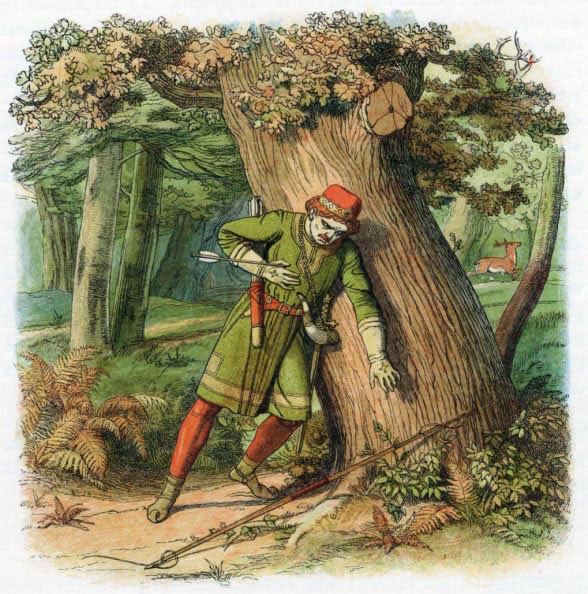
William Rufus was killed supposedly in a hunting accident in the New Forest (although he may have been shot on the orders of his younger brother Henry, who succeeded him as king). Walter Tirel, one of the hunting party, was blamed for the deed. The Rufus Stone in the New Forest, Hampshire, marks the spot where William Rufus fell.
Henry I
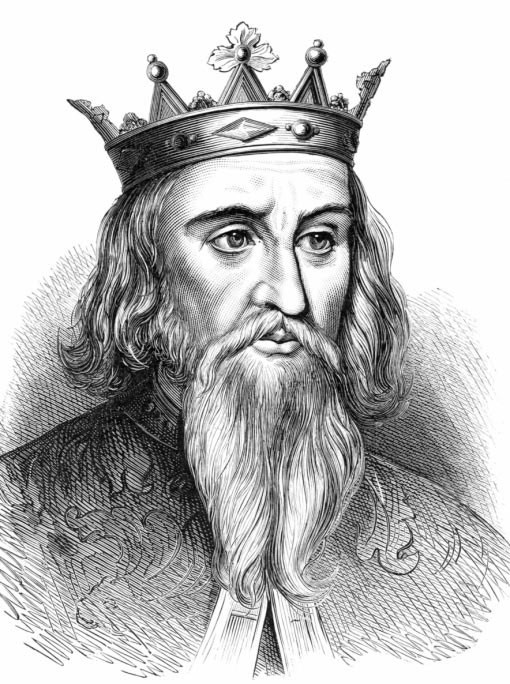
Henry I was the fourth son of William the Conqueror and became king after the death of his brother, William II, in 1100. His elder brother Robert Duke of Normany disputed Henry's accession and invaded from Normandy in 1101. A negotiated settlement confirmed Henry as king. Henry invaded the Duchy of Normandy, defeating Robert at the Battle of Tinchebray in 1106. Robert was kept in prison for the rest of his life.
Henry was an able king who introduced a number of important administrative reforms, including setting up the Curia Regis (King’s Council) to settle disputes between the crown and its subjects. During his long reign, England remained at peace.
Henry’s heir, William, died while crossing the English Channel, where his boat, called the White Ship, was wrecked in 1120. As a result, the crown passed instead to Henry’s daughter, Matilda, on Henry's death in 1135. However, her cousin Stephen seized it for himself. Civil war broke out between the two rivals and lasted until Stephen’s death in 1154. For this reason, Stephen's reign is described as “nineteen long winters”.
Consultant: Philip Parker