
British history
Stonehenge
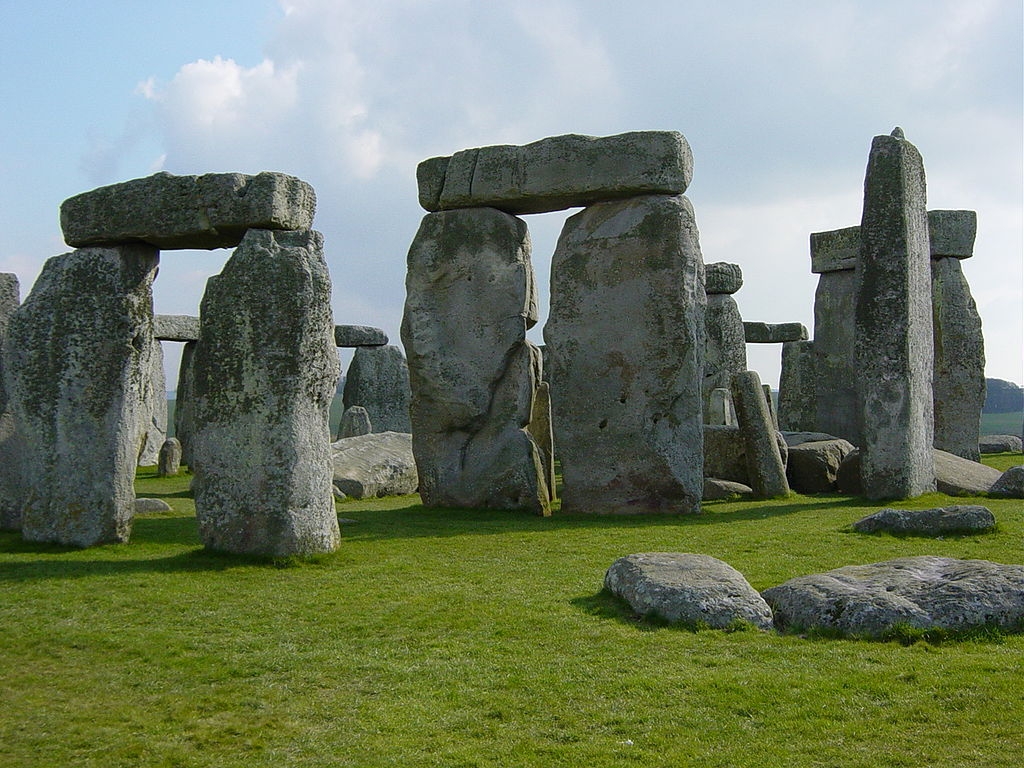
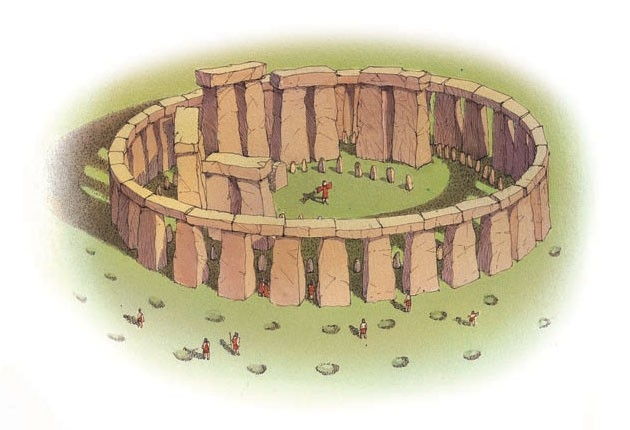
Stonehenge was built about 4500 years ago on Salisbury Plain in southern England. It originally consisted of two circles of 82 standing stones, one circle inside another. Large capping stones, called lintels, rest on top of them. The outer circle of standing stones are each around 4.1 metres (13 feet) high, 2.1 metres (7 feet) wide and weigh around 25 tonnes. Surrounding the stone circles are a circular ditch and banks. Many of the stones at Stonehenge, sometimes called megaliths, still stand today.
Earlier structures
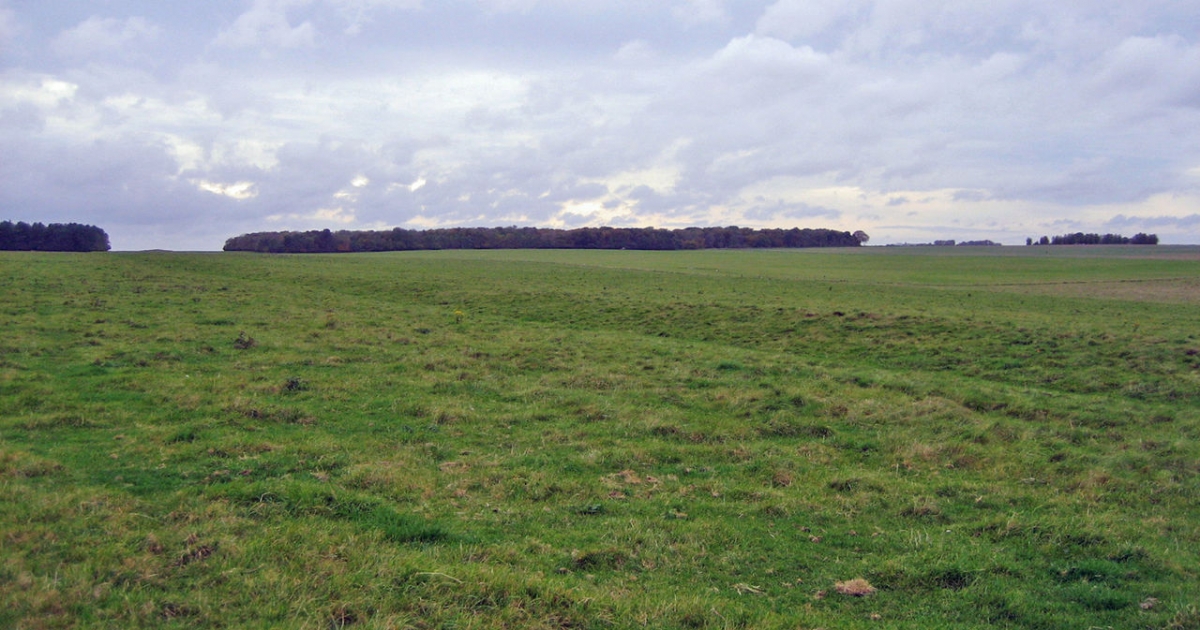
The earliest structures at Stonehenge—pits in the ground, some of which once held large wooden posts—date back to between 8500 and 7000 BC. At that time, when much of the rest of southern England was covered by woodland, the chalk downland around Stonehenge may have been an open, grassy landscape. This might explain why the location was chosen as a sacred site. Earthworks, including several long barrows (mounds of earth or stone, probably built as tombs), and enclosures, were built in the area around 3500 BC.
Circular ditch
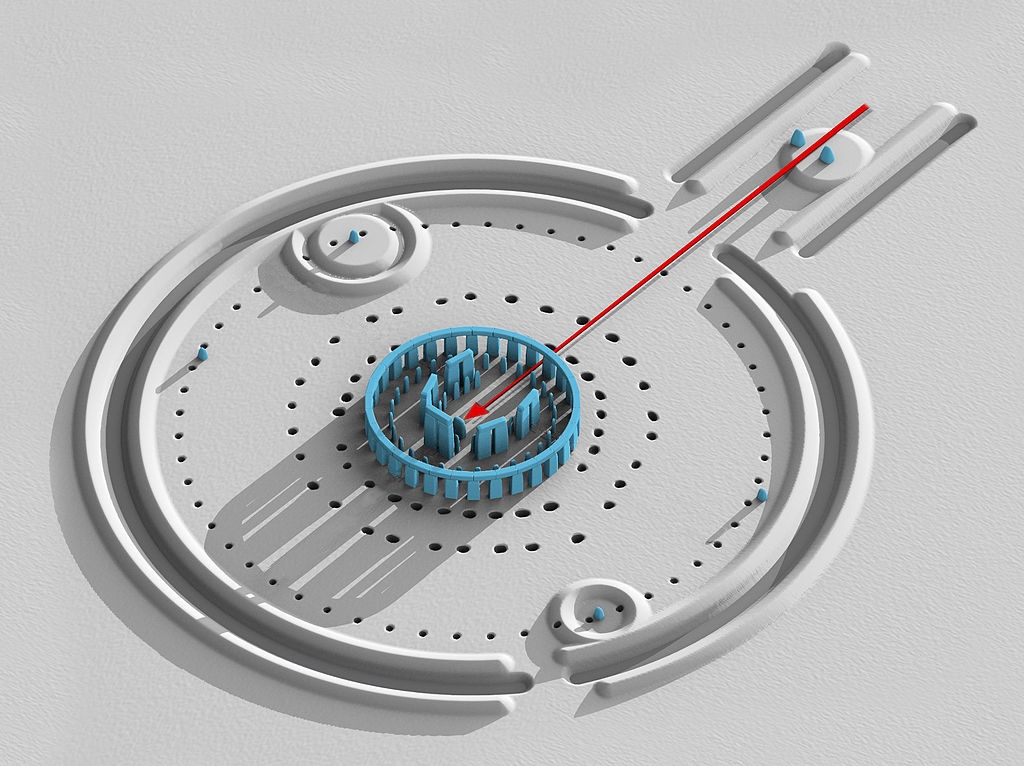
In about 3000 BC, a circular ditch, surrounded by both an inner and outer bank of earth, was dug at the site of Stonehenge. The earthworks enclosed an area about 110 metres (360 feet) in diameter and had two entrances. This formed a monument called a henge. Here, people buried the ashes of family members who had been cremated after they had died.

How it was built
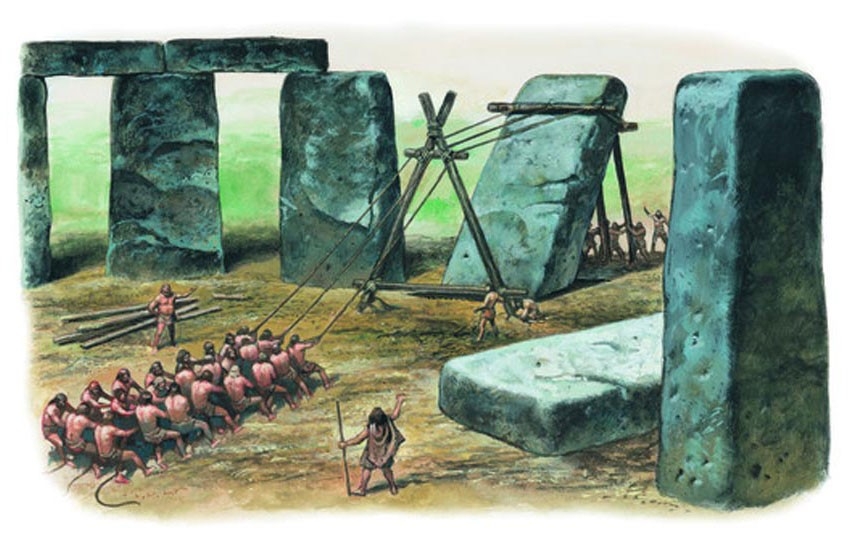
In about 2500 BC, a number of large stones were set in position at the centre of the henge. Two types of stone were used at Stonehenge: the larger sarsens (sandstone) and the smaller bluestones. The massive stones had to be dragged across the plain on rollers. They were each slid into deep pits, then hauled upright by teams of workers.
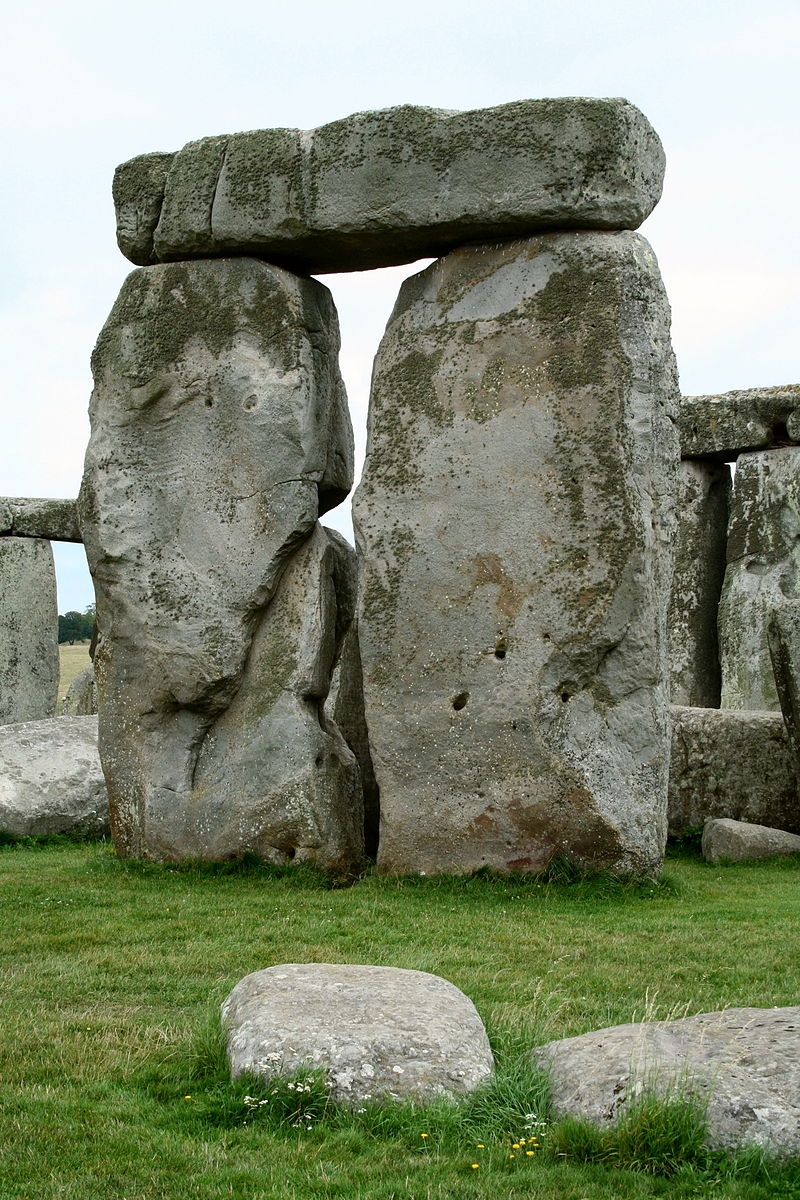
Ten of the largest sarsens, measuring between 6 and 7.5 metres (20–25 feet) high and weighing up to 50 tonnes each, were erected in shape of a horseshoe, with its open end facing northeast. The stones were capped by lintel stones, each one resting across a pair of standing stones. This inner arc was surrounded by an outer circle of 30 smaller sarsens. These were also capped by lintels, forming a continuous ring.
A circle of bluestones were erected between the horsehoe and outer circle. Another arc of bluestones were placed inside the sarsen horseshoe.
At the same time, the stones close to the entrance were raised, together with the four Station Stones around the edge of the monument.
The stones
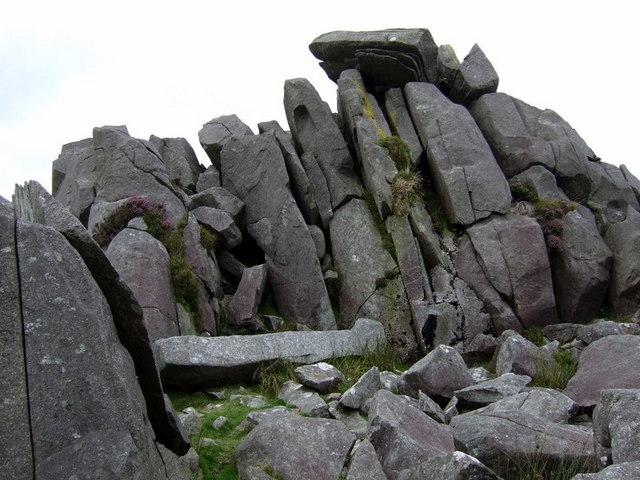
The sarsens came from a quarry around 40 kilometres (25 miles) north of Stonehenge on the Marlborough Downs. The bluestones (a term for all of the "foreign" stones at Stonehenge, covering more than 20 different types including dolerite, a volcanic, or igneous, rock) were not quarried locally. All but one were brought all the way from the Preseli Mountains in Pembrokeshire in southwest Wales, 240 kilometres (150 miles) away. It is not known exactly how these heavy stones, weighing up to 4 tonnes each, were transported over such a long distance.
A study published in August 2024 found that one of the bluestones, known as the altar stone, came not from Wales but from northeast Scotland, a distance of at least 750 kilometres (466 miles). The 5-metre-long (16-foot) block, which lies flat and semi-buried in the centre of the monument, is made of old red sandstone, exactly matching the rocks from that distant part of Britain. Experts think it is likely it was dragged overland from Scotland to Salisbury Plain.
Why was Stonehenge built?
It is not known who ordered Stonehenge to be built or what exactly it was built for. We do know that it was a major burial site, so it is likely that the site was a place of ancestor worship, too. Some archaeologists think that Stonehenge could also have been a place of healing.
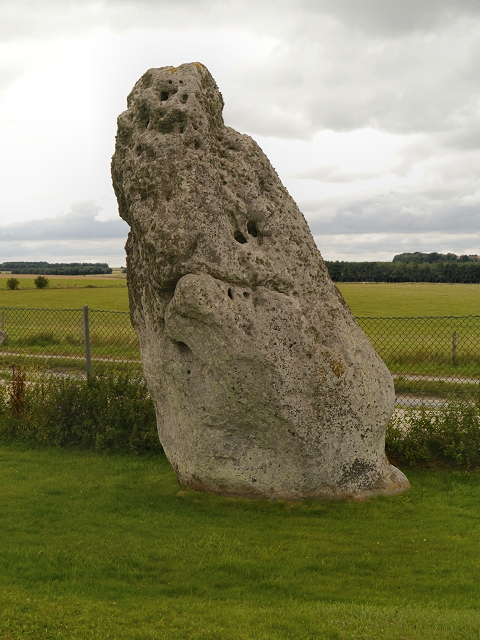
It is possible that Stonehenge may have acted as a gigantic calendar. The sun rises above a stone outside the main entrance to the stone circle, The Heel Stone, at the summer solstice. The first rays shine directly into the horseshoe-shaped group of sarsen stones at the centre. By observing when this happened, a record of the days passing throughout the year could be made. This knowledge was vital for an ancient people with no other means of knowing exactly when to sow or harvest their crops.
The first Stonehenge
In 2021 it was announced that researchers have found evidence that the earliest stone circle at Stonehenge was first built in the west of Wales, near where the bluestones were quarried, about 5400 years ago. Most of its stones were later dug up and dragged to the present site when local families left the area to live far away in the east.
This supports the legend, first recorded by Geoffrey of Monmouth 900 years ago, that the mythical wizard Merlin ordered giants to move Stonehenge from Ireland (that region of Wales was considered part of Irish territory at the time) and rebuild it on Salisbury Plain. The research could explain why Stonehenge's builders made such huge efforts to transport the massive stones almost halfway across Britain.
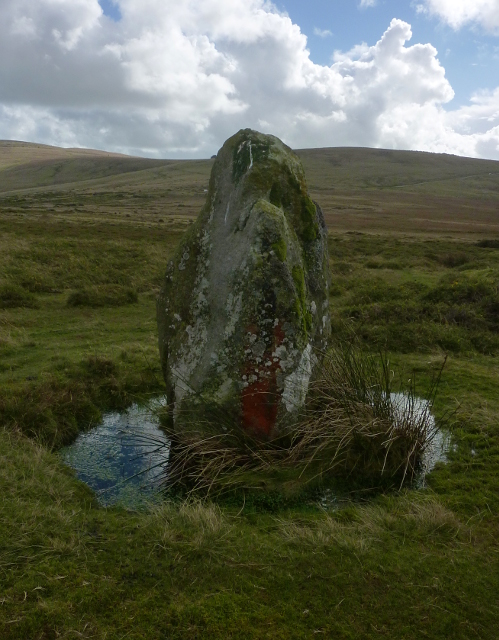

Archaeologists found that four stones at a site called Waun Mawn ("peaty moorland" in Welsh) are the remains of a much larger circle of up to 60 stones that exactly matched the layout of the original 110-metre (360-foot) circle of bluestones at Stonehenge. Scientific dating of charcoal and sediments from some of the now-empty stone holes suggest Waun Mawn was built about 5400 years ago, around 400 years before the earliest stage of Stonehenge. One of the stone holes has an unusual five-sided cross section that precisely fits (“like a key in a lock”) one of the bluestones at Stonehenge.
Consultant: Philip Parker