
Mammals
Lion
The lion is a tawny-coloured big cat that lives in Africa and a small part of India. Unlike other big cats, lions live together in groups called prides. A pride consists of females, who are related to each other, their offspring and a small number of adult males. Groups of lionesses hunt together, preying mostly on large herbivores, such as zebra, wildebeest, impalas, buffaloes and warthogs in Africa, and deer in India. Lions are also scavengers of other predators' kills. Sleeping during the day, they are nocturnal hunters. Lions are often described as the "king of beasts" and are a popular symbol of royalty and bravery.

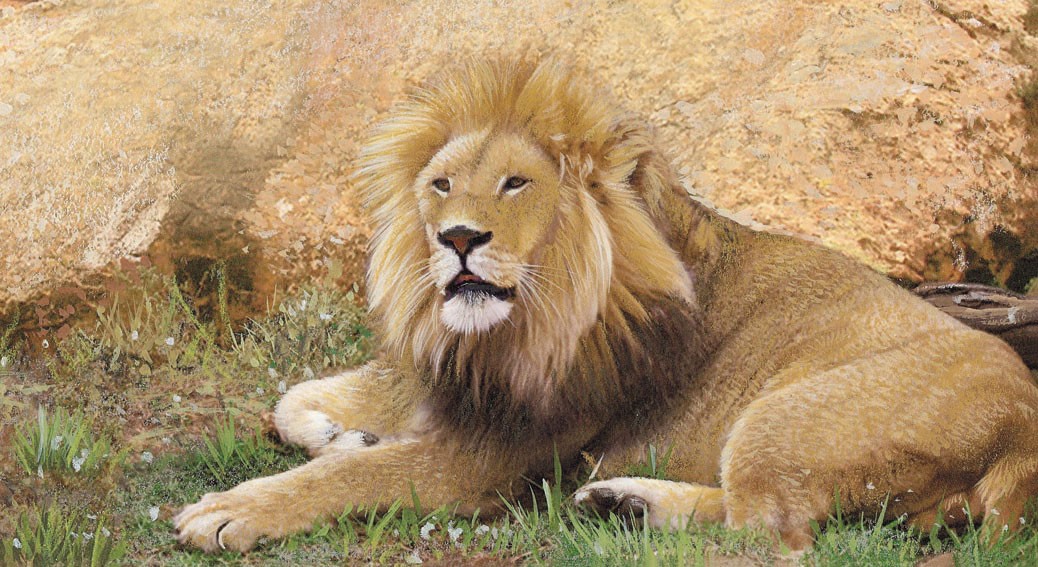
Males
Male lions are larger than females, and have shaggy manes. Their job is to defend the pride, the family group, and its territory from other male lions. The mane of the adult male is their most distinctive feature. It makes them appear larger and more intimidating both to competing males or their rival predators on the African savanna, spotted hyenas. When selecting mates, lionesses favour males with the thickest, darkest manes—that is, those that are stronger and healthier.
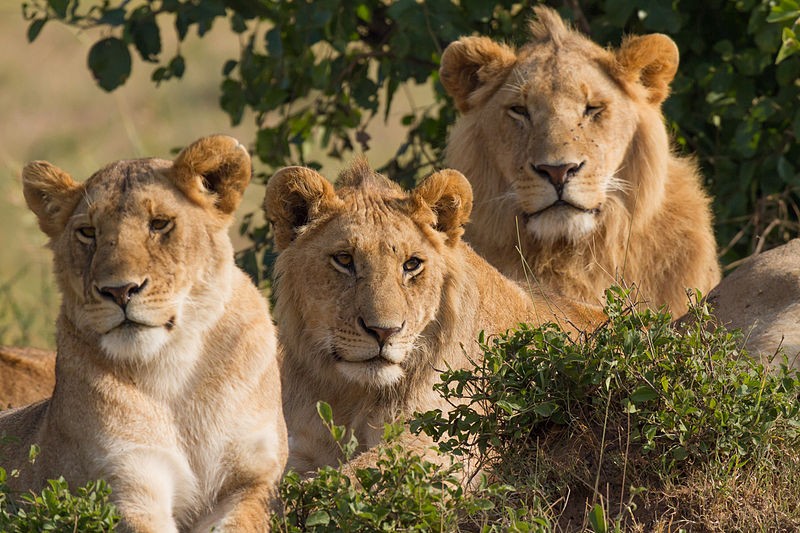
Prides and nomads
The pride usually consists of five or six females who are related to one another, along with their cubs and one or two males. There are also nomad lions, those which move about singly or in pairs. All males become nomads as they become adults and leave the pride. Many will join a new pride when they successfully mate with a lioness, but some are never able to do so. A female who becomes a nomad has even greater difficulty joining a new pride, as the females will usually prevent an unrelated female from joining their group.
Hunting
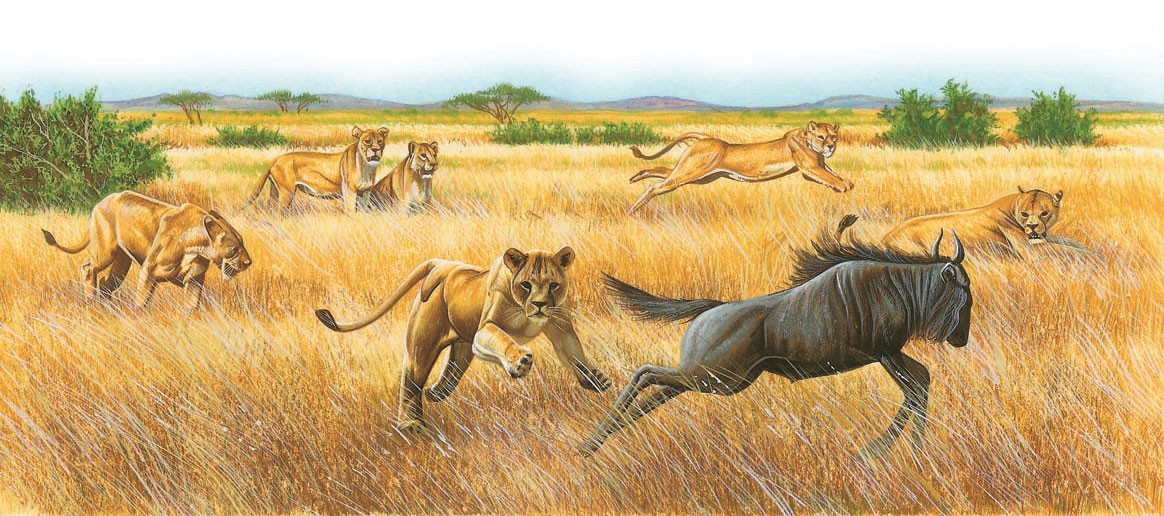
Lions hunt and kill large animals: zebra, wildebeest, buffalo, impala—even elephants. Most hunting is actually carried out by the lionesses: they are smaller, swifter and more agile than the males. They hunt in packs in order to bring down prey even larger than themselves. Most attacks take place near cover—long grass or bushes—or at night.
Having stalked their target to within 30 metres (100 feet) or less, the lionesses surround it. Then one or two move in for the kill. They only run fast in short bursts. With all escape routes blocked, their prey cannot escape the deadly trap. The lionesses attempt to catch the victim with a fast rush and final leap, killing it by strangulation. If the prey is relatively small, a swipe of the paw is usually enough.
Lions often scavenge the kills of spotted hyenas or other predators such as cheetahs and leopards. If lions approach, the hyenas will either run off or wait at a safe distance until the lions have finished feeding.

Consultant: Chris Jarvis