
British history
Victorian Britain
Queen Victoria ruled Britain from 1837 until 1901. During her long reign, Britain became the richest nation in the world, and an industrial, urban society (with many large cities and factories). Britain also gained a huge empire in India and elsewhere that covered almost a quarter of the world’s land area. Victorian Britain was a time of great change. Parliament was reformed. Legislation was introduced to control working conditions in factories and mines and to improve public health in the cities. Education was provided for every child for the first time. Railways connected every town and city in the land.


Queen Victoria
Victoria was born in 1819. She was the daughter of the fourth son of George III and so she was unlikely to inherit the throne. After her uncles George IV, Prince Frederick and William IV died, leaving no surviving children, and her own father died while she was a baby, Victoria unexpectedly ascended the throne in 1837, aged 18. In 1840, she married her cousin, Albert of Saxe-Coburg-Gotha, a small German duchy. It was a happy marriage, producing nine children. When Albert died in 1861, Victoria was stricken with grief. She retired from public life for years and wore black for the rest of her life. Some people called for the end of the monarchy. But she gradually returned to her duties and became a much-loved monarch until her death in 1901. Her children and grandchildren married into all the major royal houses of Europe, giving her the name "grandmother of Europe".
Parliamentary reform
In the 1700s and early 1800s, the House of Commons was unrepresentative of the people. Only some men who owned property could vote: about 1 in 8 men in England. Far fewer men had the right to vote in Scotland and Ireland, and no women had the vote anywhere. The industrial midlands and north of England had few Members of Parliament (MPs), with the large cities of Manchester, Birmingham, Leeds and Sheffield having no MPs at all. Dunwich in Suffolk was now largely under the sea and had 2 MPs with just 32 electors, while Old Sarum outside Salisbury had 2 MPs with even fewer electors: just 11.
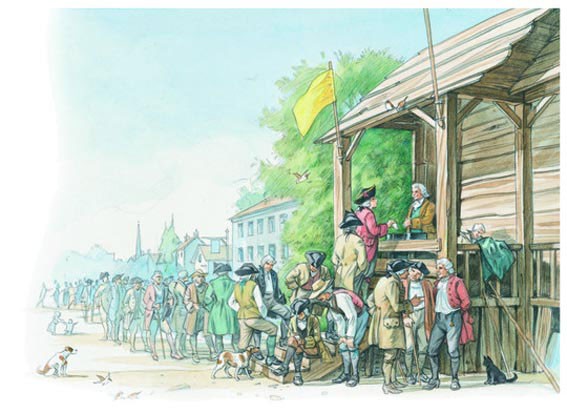
After a huge parliamentary debate that lasted for 18 months, the Great Reform Act of 1832 redistributed 143 parliamentary seats from small towns to the English and Welsh counties and the larger industrial towns and cities. Scotland and Ireland both gained more MPs. The qualifications to vote were simplified and made fairer. Despite these changes, the total electorate only rose from around 440,000 voters to 652,000 voters, or around 1 in 5 men.
The Chartists

The Great Reform Act did not satisfy many people. In 1838, the Chartists began to campaign for the vote for every man aged 21 or over; secret ballots to avoid corruption; no property qualification for MPs; payment of MPs; equal-sized constituencies; and annual parliaments. Huge petitions were presented to parliament in 1839 and again in 1842 and 1848, but failed to obtain any changes. Parliament, however, did eventually reform the electoral system in both 1867 and 1884–85. By then, about 3 out of 5 adult males could vote in roughly equal-sized constituencies. Women, however, could still not vote, although by the end of the Victorian age, they could vote in local elections.

The coming of the railways
The world’s first railway journey took place in Merthyr Tydfil in South Wales in 1804. A steam locomotive designed by Richard Trevithick pulled five wagons carrying 10 tons of iron ore plus 70 men a distance of 15.7 kilometres (9.75 miles). At first steam locomotives were used only in industry to haul coal and iron, but in 1825 the world’s first passenger railway opened between Stockton and Darlington in England. A second line opened in 1830 between Liverpool and Manchester.
A massive railway-building boom now began that lasted until the late 1840s. By the early 1850s, almost all British towns and cities were linked with more than 11,000 kilometres (7000 miles) of track. The network covered the whole country except the remoter areas of Wales and Scotland.
Victorian cities

The population of Great Britain grew from 18.5 million in 1841 to 40 million in 1901. Only around one-third of people lived in cities at the start of the period, but that figure grew to around four-fifths by the end. Many cities had fine town halls, public museums and art galleries. Richer people lived in villas or streets of fine terraced housing.
The poor, however, often lived in overcrowded slums that lacked proper sanitation, causing outbreaks of fatal diseases such as cholera. A series of Public Health Acts after 1848 improved living conditions. Clean drinking water was piped to each house, sewers were built, streets cleaned and street lighting installed.
The Great Exhibition
Prince Albert thought up the idea of having an international exhibition in London to celebrate Britain’s industrial achievements. The event—the world’s first international exhibition—was housed in a glass hall known as the Crystal Palace in Hyde Park and was opened by Queen Victoria on 1st May 1851. It was a huge success and attracted more than 6 million visitors. Over 13,000 exhibitors displayed a range of industrial products. After the exhibition closed, the hall was moved to a district of South London that became known as Crystal Palace. It remained there until it burned down
in 1936.

Social reforms
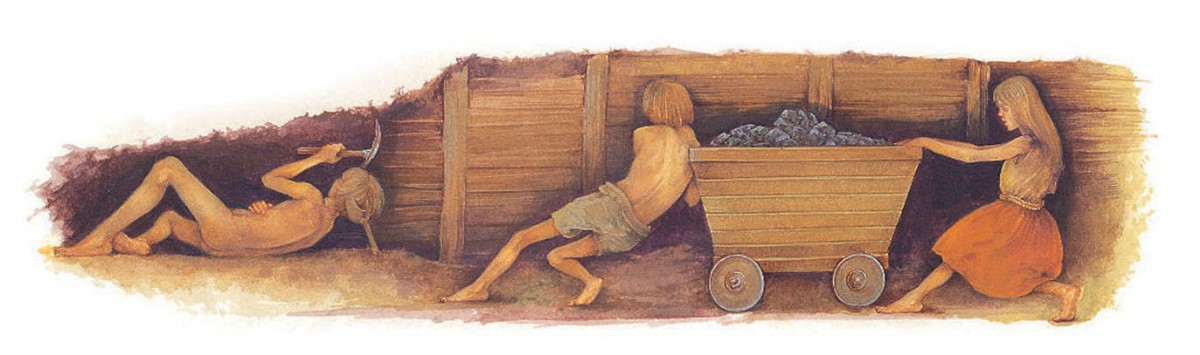
The factories and mills set up during the Industrial Revolution employed men, women and children, who all worked long hours for little money. The Ten Hour Movement led by the Earl of Shaftesbury campaigned to reduce the working hours of women and children. A series of Factory Acts after 1833 excluded children aged under 9 years from work and limited the hours that women and children could work. Basic safety measures were also introduced to make the workplace safer. The Mines Act of 1842 forbade the employment of women, and children aged under 10, underground.
Through the first decades of the Victorian period, many poor children received little or no education. The 1880 Education Act made education compulsory up to 10 years old. The leaving age was raised to 11 in 1893 and 12 in 1899.
Disraeli and Gladstone
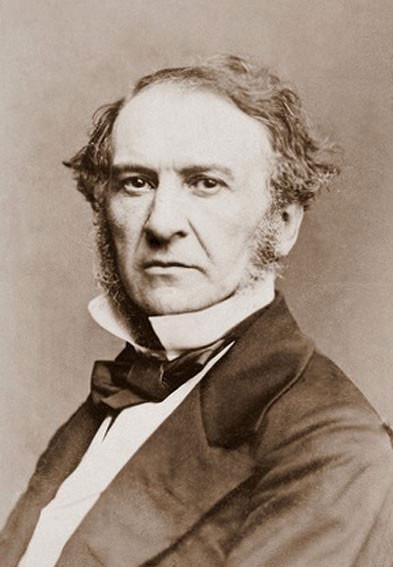
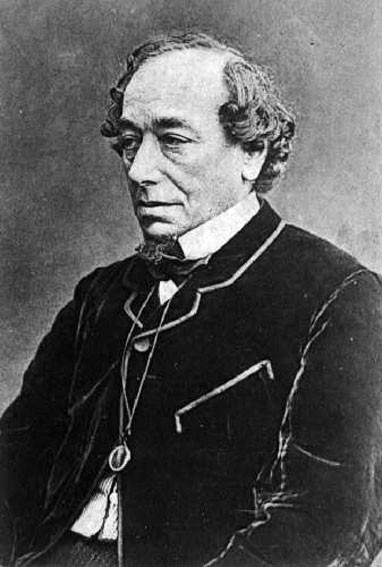
Two politicians dominated politics in Victorian Britain. The Conservative leader Benjamin Disraeli was prime minister in 1868 and again from 1874 to 1880, while the Liberal leader William Gladstone was prime minister four times between 1868 and 1894. Great rivals, both men introduced social and political reforms that changed Britain forever.
Disraeli was clever, witty and much loved by Queen Victoria, whom he helped to draw out of retirement after the death of Prince Albert. He was, to date, the only British prime minister of Jewish birth. In contrast, Gladstone was serious, long-winded and unpopular with the Queen. She apparently once complained: "He always addresses me as if I were a public meeting." Gladstone was Britain's oldest prime minister when he resigned for the last time at the age of 84. Gladstone was known to his supporters as "G.O.M.", for "Grand Old Man"—but Disraeli claimed the letters stood for "God's Only Mistake".
British India

The British East India Company was set up in 1600 to trade with South and Southeast Asia, and began to trade with India itself later in the same century. The company acquired trading bases in Bombay, Madras and Calcutta and slowly extended its control. Under Robert Clive (1725–74), British troops drove out the French from India, then defeated the Nawab of Bengal at the Battle of Plassey in 1757, a victory which gave the British control over Bengal. Over the following decades the East India Company became the most important political force in India, ruling many Indian kingdoms and influencing others.
In 1857, mutiny broke out among the East India Company's Indian troops, known as sepoys. Order was eventually restored in 1858. The administration of British India was then passed to the British Government, and the East India Company was eventually closed down. In 1876, Victoria was created Empress of India—India was described as the "jewel in the British crown". Every later British monarch was given the title Emperor of India until the country gained independence in 1947.

The British Empire
Under Queen Victoria, the British Empire reached almost its greatest extent (which it finally reached in 1922). Territory in India was massively expanded, while the "Scramble for Africa" after the 1870s brought huge new lands, from Egypt in the north to the Cape of Good Hope in the south. Almost one-quarter of the word’s land area was ruled from London.
Not all the British Empire was acquired peacefully. In 1899–1902, Britain fought two vicious wars against the Boers of South Africa before their republics were captured and taken under British rule. In 1867, Canada became an independent dominion, or country within the empire, followed by Australia in 1901. New Zealand and South Africa were soon to follow. Britain then began to grant self-rule to its leading colonies.
Victoria’s Jubilees
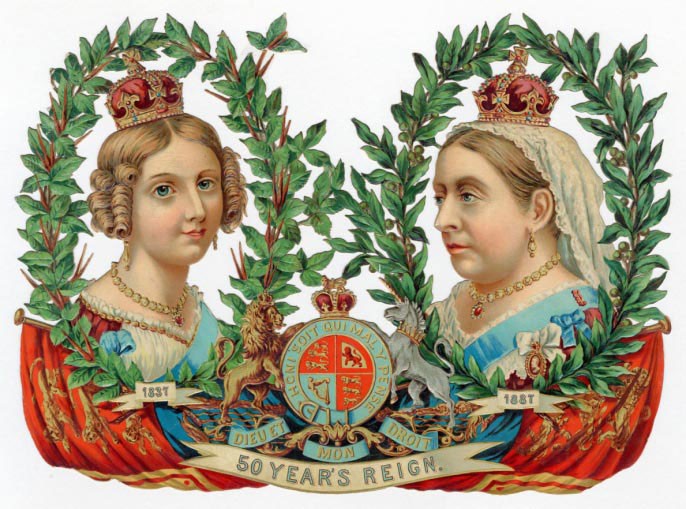
In 1887, Victoria celebrated her Golden Jubilee after reigning for 50 years. A 60th anniversary Diamond Jubilee followed in 1897. Both events were marked with great public celebrations, as Victoria had increasingly come to be seen as the mother of her nation. Her death in January 1901 aged 81, after more than 63 years on the throne, marked the end of a great era in British history.
Consultant: Philip Parker