
Mammals
Giraffe
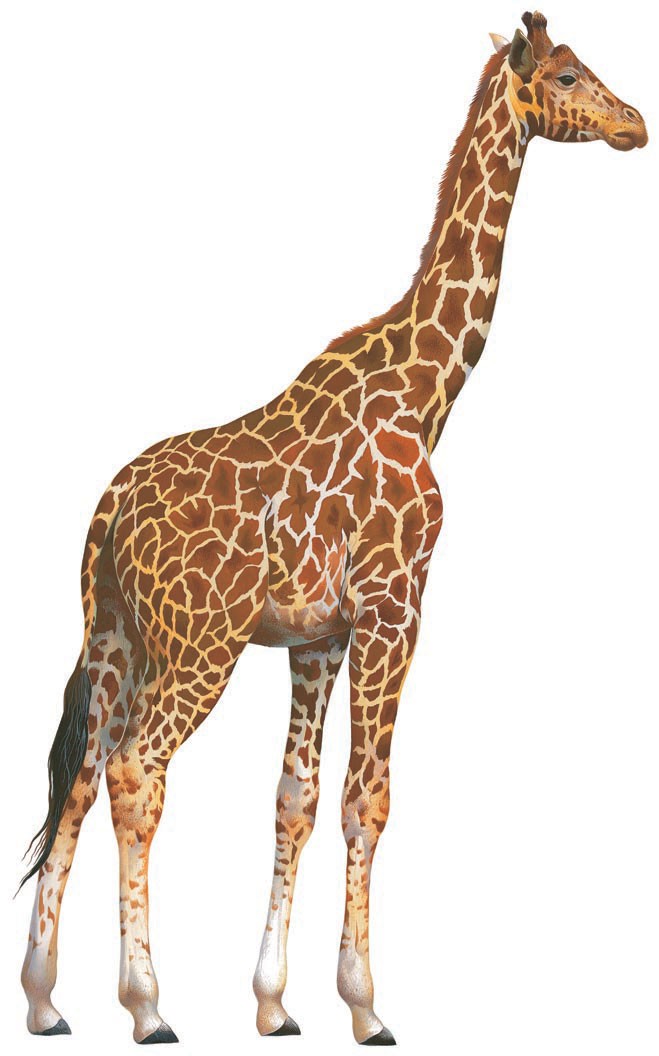
Standing over 5 metres (16 feet) tall, the giraffe is the world's tallest animal and the largest ruminant. It has long legs, a sloping back and an extremely long neck. This means it can feed on leaves from trees, usually acacia trees, higher up than any other animal can reach. Its distinctive coat pattern acts as camouflage, enabling it to blend in with the light and shade of its savanna surroundings. Giraffes wander across large home ranges, joining together in constantly changing groups of up to 30 individuals for protection. Adult giraffes are preyed on by lions, and their calves are hunted by leopards, hyenas and wild dogs. There are several subspecies of giraffe, found in different parts of Africa. They are distinguished by the patterns on their coats: the reticulated giraffe of East Africa, for example, has thin lines between its patches, while the West African has thicker lines between them.
Defence
Giraffes have excellent eyesight and can spot predators several several kilometres away. They are also able to run at over 50 km/h (about 30 mph) over long distances. They run with a strange lopsided gait, both legs on the same side moving at once. Females will lash out with their huge, powerful feet if a predator threatens their calves.
Eating and drinking
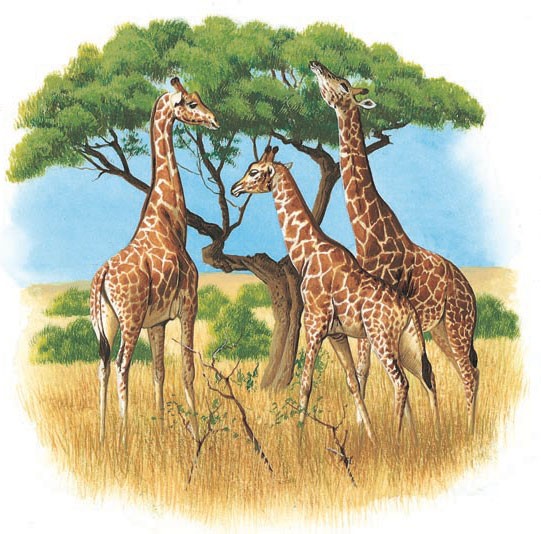
Giraffes can reach higher into the trees than any other animal on the African savanna. This means that they can eat the tenderest new leaves and shoots from the treetops, as well as twigs and fruit. Giraffes have long black tongues (50 centimetres / 20 inches long), which they use to strip leaves from branches.
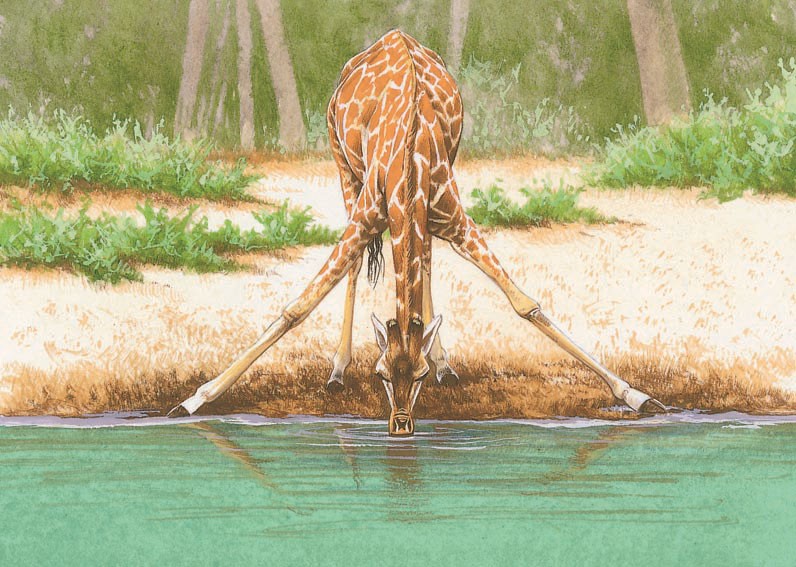
Because their legs are so long, giraffes have to splay them wide, or bend their knees, to reach down far enough to take a drink. The giraffe's blood vessels do not permit excess blood flow to the brain when the head is lowered.
Necking
A long neck is a real advantage in the fights male giraffes have for dominance and the right to mate with females. A "necking" contest can be a fairly gentle affair: the two competing males lean against one another, rubbing their necks together. The one who holds his neck up straighter wins the bout. But fiercer contests sometimes take place, resulting in injury or death. Over the course of 30 minutes or so, the combatants swing their heads and attempt to hit each other hard in the neck. After the duel, the two males "make up" to one another by caressing.


Babies
Giraffes time the birth of their young to the end of the dry season in Africa. The rains bring lush vegetation that the mother can make into milk for her baby. The mother gives birth standing up. She grooms the newborn and helps it to its feet. A newborn calf is already about 1.8 metres (6 feet) tall. Within a few hours it can run around, but will spend most of its time with its mother as the risk of being attacked by predators is high.
Mothers with calves will gather together, sometimes leaving their calf with another female while they feed and drink. Giraffe babies rely on their mothers until they are at least one year old. Even once a giraffe has reached maturity, its neck will keep on growing.
Okapi
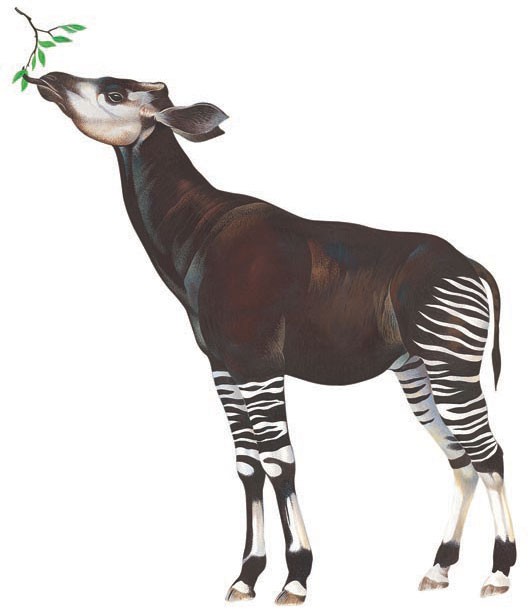
Okapis are related to the giraffes, although with their black-and-white striped legs they also resemble zebras. Like giraffes, they have small, skin-covered horns and an extremely long tongue (35 centimetres / 14 inches long) that they also use to clean their eyelids and ears. Secretive creatures, okapis live in the African rainforest, feeding on young shoots and leaves. Unlike giraffes, their sense of sight is not good and they rely on smell and hearing.
Consultant: Chris Jarvis