
British history
Anglo-Saxon and Viking England
The long period in English history between the departure of the Romans in 410 and the arrival of the Normans in 1066 saw frequent invasions and conquests. Angles, Saxons and other peoples from Germany and Denmark arrived first. They gradually pushed the native Britons northwards and westwards towards Scotland and Wales, gaining control of most of England by 613. The Anglo-Saxons established settled kingdoms and England eventually became united as a single kingdom under their rule. After 793, Viking raiders arrived from Scandinavia. They terrorized England, raiding monasteries and plundering the countryside. They eventually ruled the whole country as part of a vast Scandinavian empire.
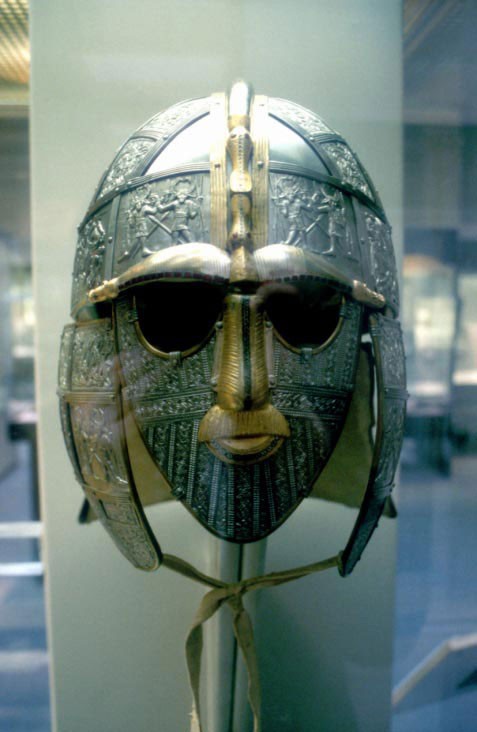

The Anglo-Saxon invaders
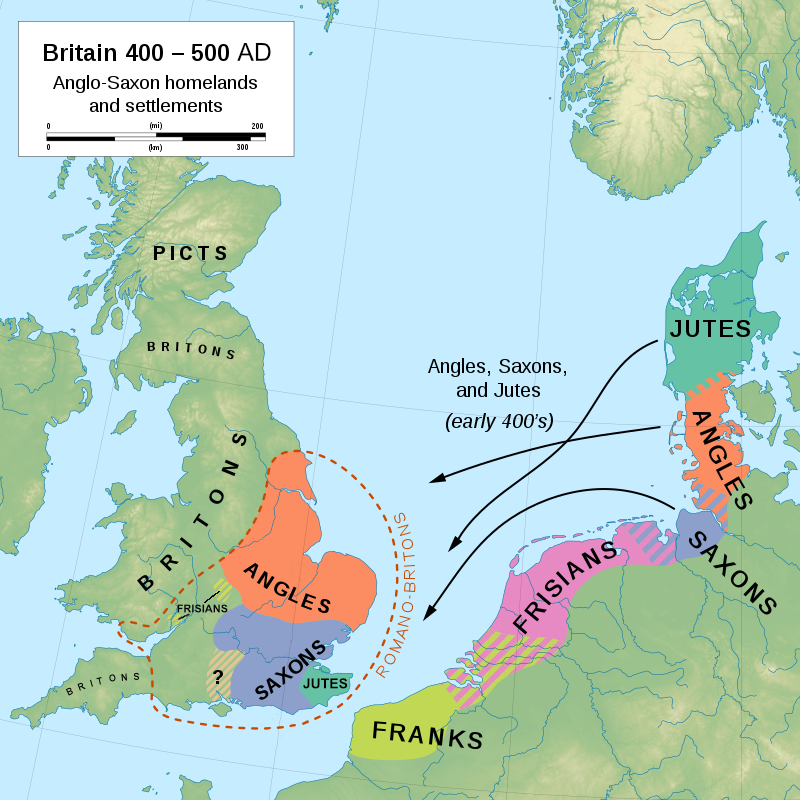
The people we call Anglo-Saxons were immigrants from what is today northeastern Netherlands, northern Germany and Denmark. Bede, a monk from Northumbria writing some centuries later (see below), names three of the tribes—the Angles, Saxons and Jutes—but there were probably many other peoples, including the Batavians, Franks and Frisians, who set out across the North Sea to settle in Britain during the fifth century.
Britain had been the Roman province of Britannia, for centuries but the far north of the country, the land of the Picts, what the Romans called Caledonia, remained unconquered. When Roman power began to wane in the mid-4th century, the Picts began to smash through Hadrian's Wall, Britannia's northern defences. According to the historian Gildas (a 6th-century monk and a Briton), in an attempt to repel the invaders after the Romans left in 410, Vortigern, leader of the Britons (his name means "Great King" and he may have been a legendary rather than a real person), hired Anglo-Saxon soldiers to help defend the country.
By around 460, the Anglo-Saxons had gained enough power to force Vortigern to cede large parts of southeastern Britain to them.
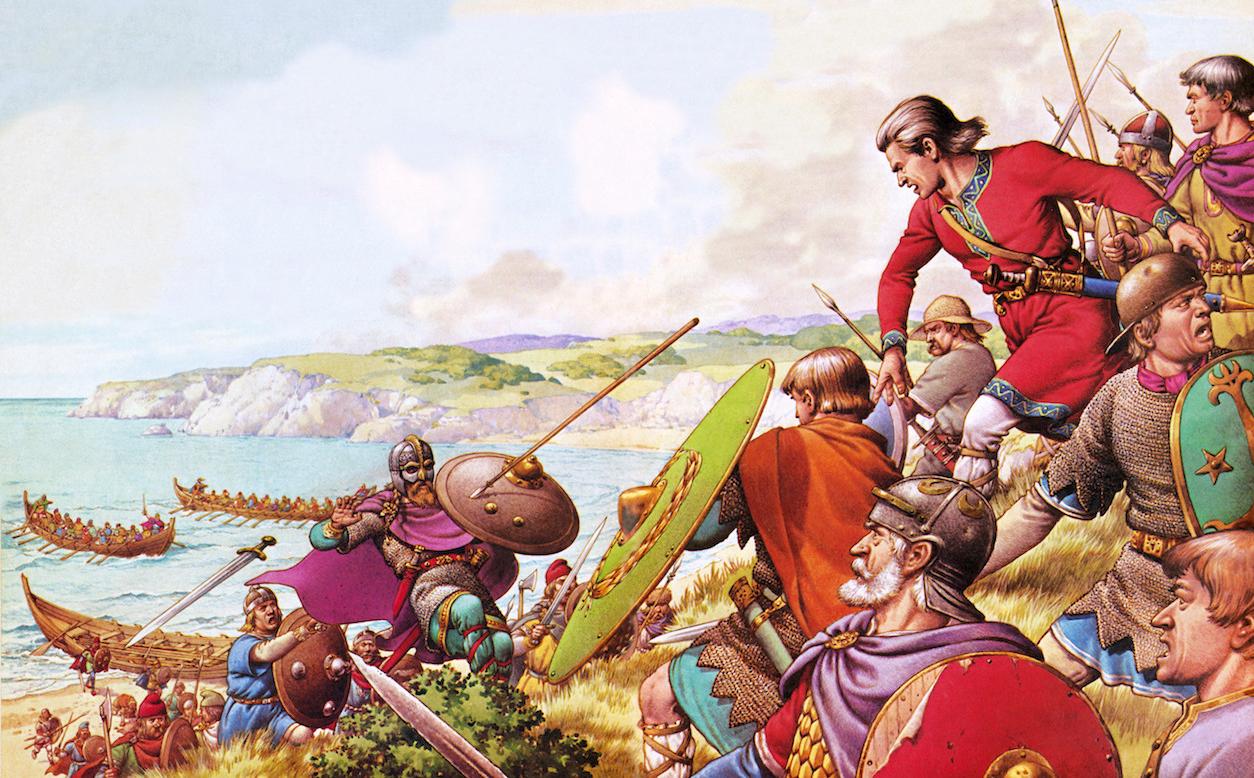
Meanwhile, Angles, Saxons, Jutes and Frisians had begun arriving on British shores. At first they came in small invading parties, but later travelled in increasing numbers. To begin with, these Germanic-speaking tribes settled originally in eastern England: the Angles to the north (Lincolnshire, east Yorkshire, the Midlands and East Anglia), the Saxons to the south, and the Jutes in Kent, the Isle of Wight and Hampshire. Soon, the Anglo-Saxons began to move westwards and northwards, occupying more and more territories inhabited by the Britons, tand so triggering many battles between the native populations and the invaders
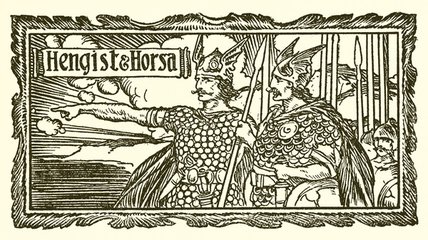
Hengist and Horsa
According to legend, Hengist and Horsa were brothers who led the Angles, Saxons and Jutes in their invasion of Britain in the 5th century. Arriving in Britain at Ebbsfleet on the Isle of Thanet in 449, they served as mercenaries (paid soldiers) for Vortigern in his battles against the Picts.
They later they turned against him, and encouraged their fellow Anglo-Saxons from across the North Sea to join them, describing "the worthlessness of the Britons, and the richness of the land". So many answered the call that Angeln, the homeland of the Angles in northern Germany, was left deserted. Horsa was later killed fighting the Britons, but Hengist successfully conquered Kent, and became its first king.
Defeat of the Britons
In around 500 AD, the invaders met fierce resistance from the Britons at the Battle of Mount Badon (thought to be near Bath). The British forces, who scored a famous victory, were led by a man called Ambrosius Aurelianus, who, according to some historians, might have been King Arthur, of whom centuries later many legends were told.

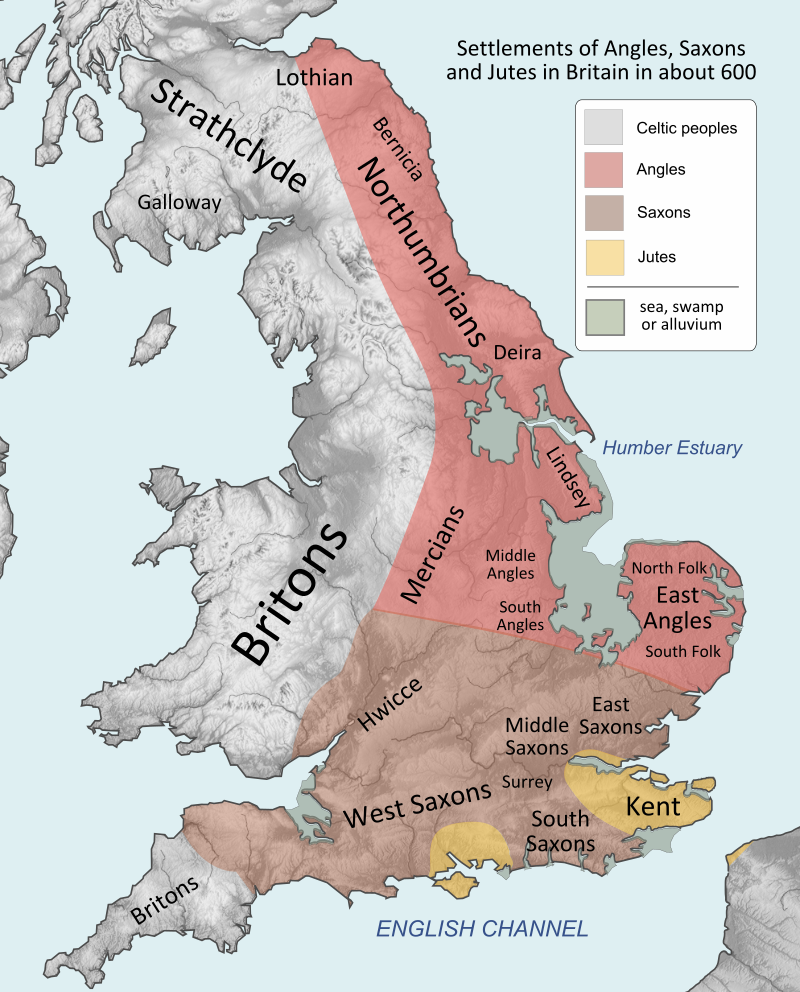
For a time, the Anglo-Saxon advance had been checked. Strathclyde (southern Scotland) Wales, Cumbria (the name comes from the same origin as Cymru, the Welsh name for Wales) and Cornwall remained British strongholds, while the Anglo-Saxons occupied southern and eastern Britain. Then in 613, the Anglo-Saxon king Aethelfrith of Northumbria won a major victory over the Britons at Chester, finally ending their power in the country.
The names of the different Anglo-Saxon tribes were preserved in the names of some the kingdoms. Saxon kingdoms emerged in southern and western England (Wessex or West Saxons, Sussex or South Saxons, Middlesex or Middle Saxons and Essex or East Saxons). The Angles established their kingdoms in the North, East and Midlands (Northumbria, Mercia and East Anglia—divided between the "North folk" and "South Folk", today's counties of Norfolk and Suffolk).
The Heptarchy
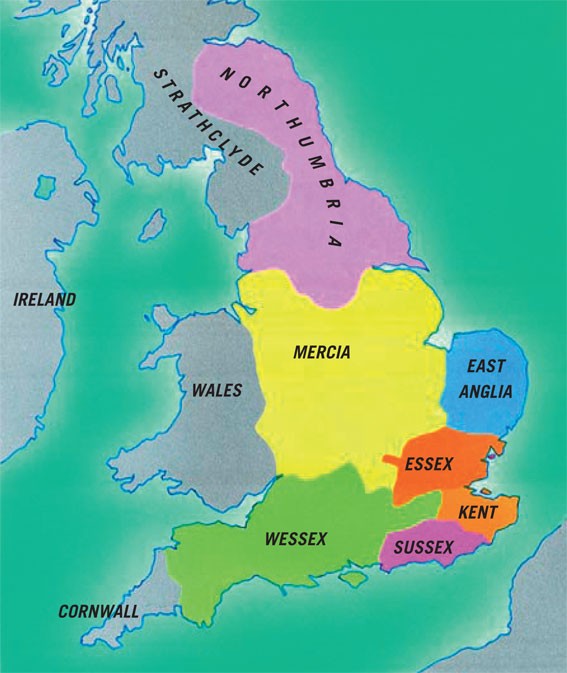
By the early 600s, the invading Anglo-Saxons had established seven main independent, warlike kingdoms in England, called the Heptarchy by historians. The seven kingdoms—Kent, Sussex, Wessex, Essex, East Anglia, Northumbria and Mercia—continually fought each other for power.
Northumbria dominated at first, then from the mid 7th century to the end of the 8th century, Mercia. One of the most powerful of the Anglo-Saxon warrior-kings (or cyning in Old English) was Penda, who ruled Mercia from 626 until 655. He personally killed many of his rivals in battle, amassing vast and exquisite treasure he stole from them.

Offa
King Offa of Mercia (ruled 757–96) extended Mercian supremacy over most of southern England, allying with Beorhtric of Wessex, who married Offa's daughter Eadburh. The overlord of East Anglia, Offa ordered the beheading of its king, Aethelbert, for rebelling against him. Offa was frequently in conflict with the Welsh kingdoms, and ordered the building of what we know today as Offa's Dyke, a great earthen defensive barrier that runs approximately along the border between Mercia and the Welsh kingdom of Powys.
After Offa's death, Wessex became the most important kingdom and gave a united England its first kings, ruling the country until 1013.
Pagan worship
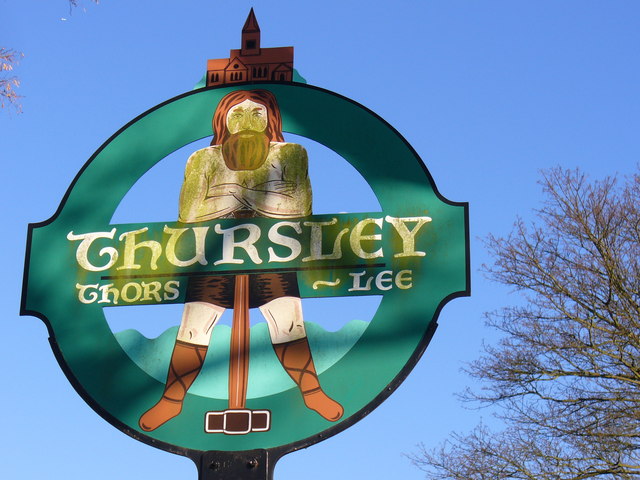
Until they converted to Christianity (see below), the Anglo-Saxons were pagans. They believed in many gods, including Tiw (or Tyr in the closely-related Norse mythology), the chief god, Woden (or Odin), Thunor (or Thor) and Frigg (or Frigga), wife of Woden. The days of the week in the modern English language are named after them (respectively Tuesday, Wednesday, Thursday and Friday). In Anglo-Saxon mythology, the rulers of the various kingdoms were all descended from Woden. Worship involved sacrifices and other rituals at certain religious festivals during the year. The honoured dead were buried with treasures, including weapons, helmets and ornaments.
The coming of Christianity
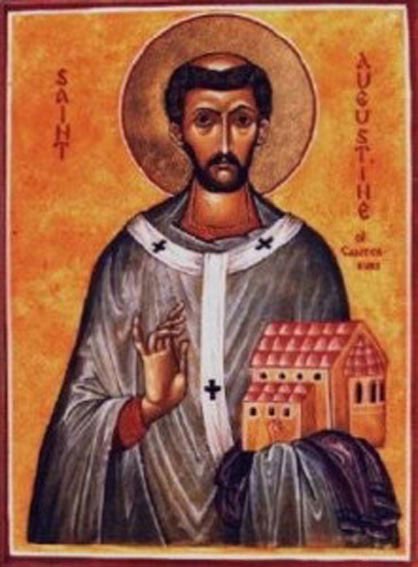
The Britons had adopted the religion of the Roman Empire and so were Christians. With the successful invasion of their homeland by the pagan Anglo-Saxons, the Britons were now cut off from Rome. So in 597, Pope Gregory I decided to persuade the Anglo-Saxon kings of England to convert to Christianity. He sent a monk called Augustine and 50 missionaries to Kent. King Aethelbert received the missionaries kindly but did not at first change his mind. But he did allow the monks to build a church at Canterbury, which has been the centre of Christianity in England ever since. In 627, one of Augustine’s assistants converted Edwin, King of Northumbria to Christianity and established a church in York. Gradually, the whole of England converted to Christianity.
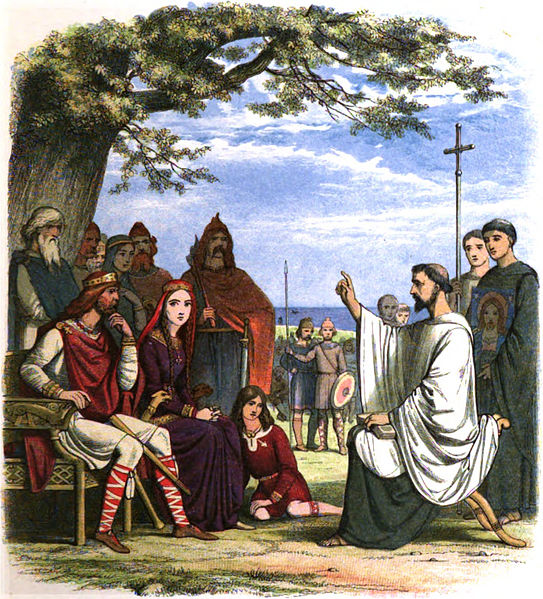
The arrival of Theodore of Tarsus as Archbishop of Canterbury and his friend, the north African scholar Hadrian, in England in 669, brought organization to the English church. Stone churches were built and monasteries were established in which learning and scholarship flourished.
Bede
One of the most reliable sources for the history of the Anglo-Saxon people and their conversion to Christianity comes from the pen of the Northumbrian monk Bede (c. 672–735), sometimes called the Venerable Bede. While Bede spent most of his life in the monastery at Jarrow, he travelled to several abbeys and monasteries across England, even visiting the Bishop (later the Archbishop) of York.

One of the greatest teachers of the Early Middle Ages, he is best known as author of the Ecclesiastical History of the English People, gaining him the title "The Father of English History". His translation of Latin and Greek writings made them accessible to his fellow Anglo-Saxons.
Beowulf
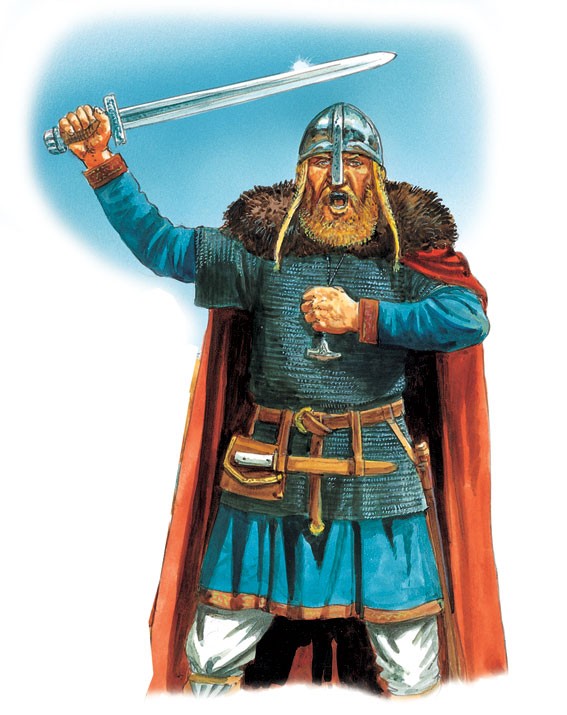
Beowulf is a poem dating from between 700 and 1050 AD. The author is unknown, but the poem was probably written down by a monk (monks and scholars were among the few people who were able to read and write in those days). Written in Old English, the language of the Anglo-Saxons, it is probably the oldest surviving long poem in that language. The epic poem tells the story of a Norse, or Viking, warrior, Beowulf, who slew several monsters that had been terrorizing the Viking homeland of Scandinavia. The long poem, known as an epic, celebrates the fighting spirit of the Norse warriors, their courage and loyalty.
England unified
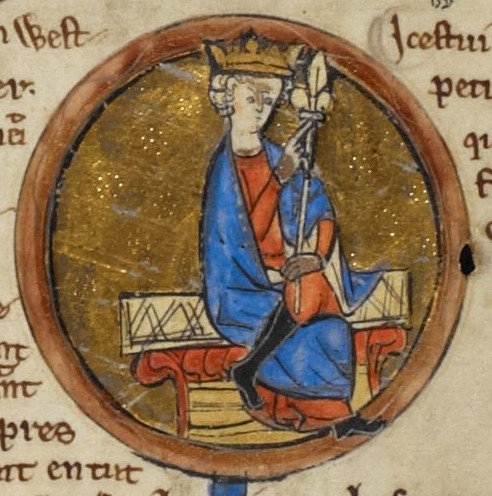
In 802, Egbert (Ecgberht) became king of Wessex. He expanded the power of Wessex, defeating Wiglaf, king of Mercia, at Ellandun in 825 and then receiving the submission of the Northumbrians in 829. Egbert was recognized by the Heptarchy kings as the Bretwalda, overlord of all England.
Egbert was unable to maintain his dominance for long, however; within a year Wiglaf had regained the Mercian throne. But Egbert did keep control of Kent, Sussex and Surrey, which were absorbed into Wessex in 860 (Ecgbert died in 839).
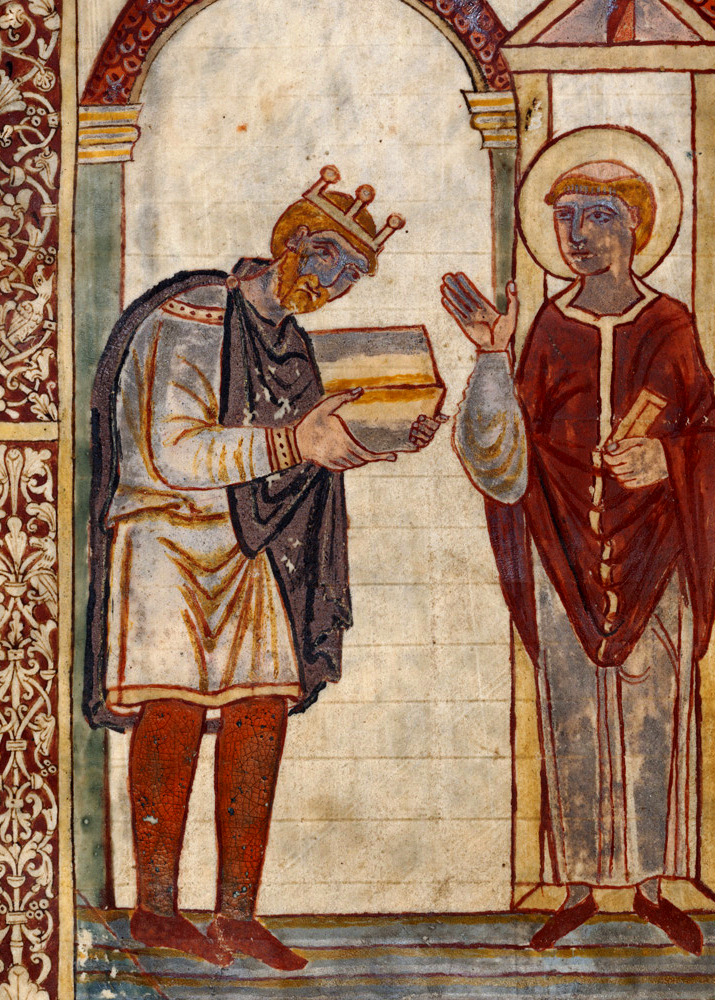
One of Egbert's descendants, Aethelstan, has a better claim to be the first king of England. In 924, he was accepted by the Mercians as their king following the death of Edward the Elder, his father. Three years later in 927 Aethelstan conquered the Viking kingdom of York (once the southern Northumbrian kingdom of Deira), making him the first Anglo-Saxon ruler of the whole of England.
When the kings of Scotland and Wales accepted Athelstan's overlordship a few months later, he became, in effect, the first overlord of Britain.
The Viking invasions
In 793, Viking longboats from Scandinavia made their first raids on the English coast in search of wealth to plunder. Large invading armies soon followed, seeking to conquer land and establish permanent Viking settlements in England. The Vikings were fierce warriors and presented a major threat to the English kingdoms. In 876 they established themselves in northern England in a territory that came to be known as the Danelaw. They remained a great threat to Anglo-Saxon rule throughout the 900s, until the kings of Wessex managed to expel most of them by 954.
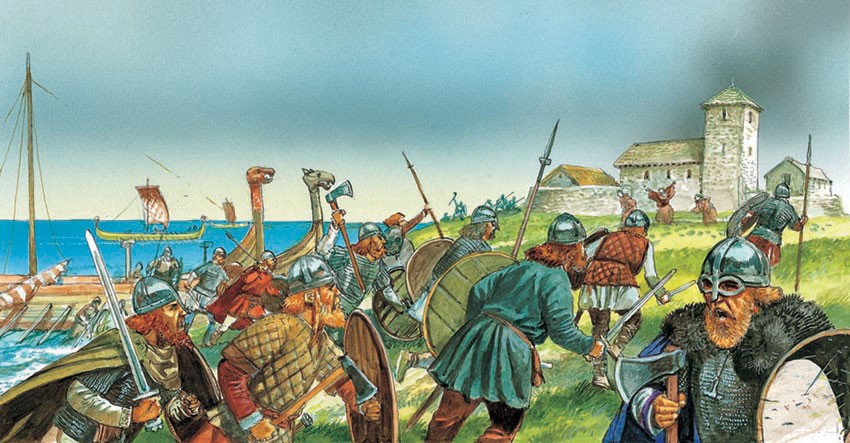
However, during the long reign of King Aethelred (978–1016), Danish Vikings gained power. Following the Anglo-Saxon defeat at the Battle of Maldon in 991, Aethelred tried to buy them off by paying a a sum of money, called Danegeld, amounting to 3300 kilos of silver. The plan failed. In 994 and again in 1003, King Sweyn Forkbeard of Denmark invaded England and pillaged the country. In 1013 Aethelred fled to France and Sweyn became the Danish king of England until his death the following year.
Alfred the Great
The only English king who bears the title "the Great" was Alfred. Alfred became king of Wessex in 871 and spent the first years of his reign fighting the Vikings. After Alfred defeated the Vikings in 878, he signed a treaty with their leader, Guthrum, dividing England in two along a line from London to Chester. Alfred ruled the land to the south but was recognized as overlord of the Viking-run territory, later known as the Danelaw, to the north. Alfred was a great scholar, translating important historical works in Latin into Anglo-Saxon and supporting schools and monasteries. Alfred reformed the law and brought it all together into one set of documents, supported the arts and crafts, and ordered the construction of England’s first navy.
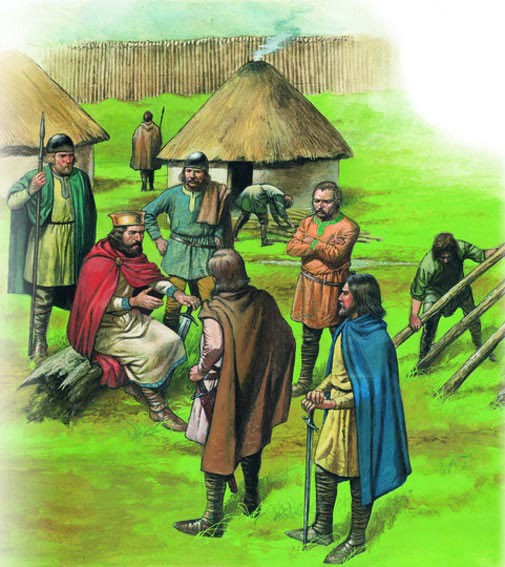
In 891, Alfred ordered that work begin on compiling the Anglo-Saxon Chronicle, a yearly account of political, social and economic events in England that continued into the 1100s.
Cnut
In 1014 the Danish king of England, Sweyn Forkbeard, died and was succeeded by his son Cnut (Canute). The Saxon king Aethelred returned to England to claim his throne, drove out Cnut and ruled until his death in 1016. His son, Edmund Ironside, was chosen to succeed him while the Danes supported Cnut. The two men's armies met at the Battle of Ashingdon in Essex, where Edmund was defeated. He agreed to divide the kingdom, with Cnut ruling the north and Edmund the south. However, Edmund suddenly died, leaving the whole country to Cnut. Cnut was a wise ruler, treating Dane and Saxon with equal respect. He created a large empire, including Denmark, Norway and parts of Sweden, that lasted until his death in 1035.
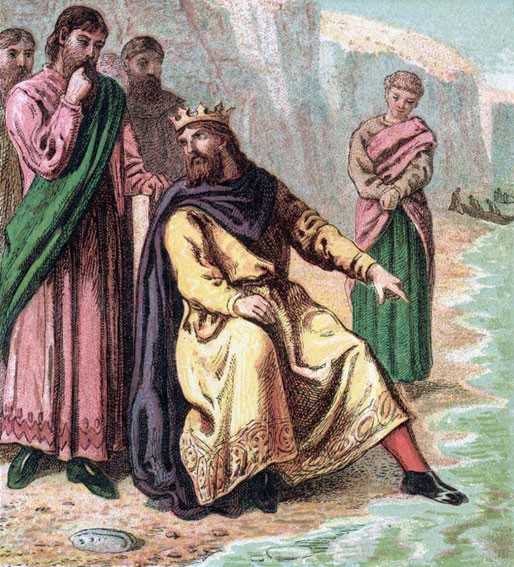
Cnut is famous for an event, which may or may not have happened, when he set his throne by the seashore and commanded the tide to halt. When the sea continued to rise as usual and the waves washed over his feet, Cnut leapt backwards and declared that a king's power was worthless: the sea obeyed only the law of God.
The last Saxon kings
Following a period of rule by Cnut and his heirs, the throne of England returned to Anglo-Saxon hands in 1042. Edward, son of Aethelred and his second wife, Emma of Normandy, was a deeply religious man—hence his nickname, “the Confessor”—and he left the running of the country to Godwin, Earl of Wessex, while he devoted himself to the rebuilding of St Peter's Abbey (which we know today as Westminster Abbey).
Godwin's son Harold, who became Earl of Wessex on his father's death in 1053, was loyal to Edward, serving as a skilled and powerful commander of the king's army. When Edward died childless in January 1066, the Witan, a council of high-ranking nobles and religious leaders, decided to elect Harold Godwinson as king, despite his not being of royal descent. This decision infuriated William, Duke of Normandy, who claimed that both Edward, to whom he was related, and later Harold himself, had promised the English throne to him several years earlier. William decided to launch an invasion of England to gain the crown by force and made preparations to send an army of 7000 men across the English Channel.
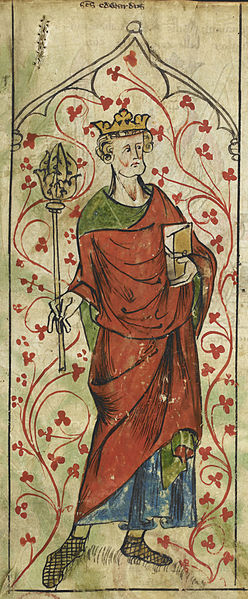
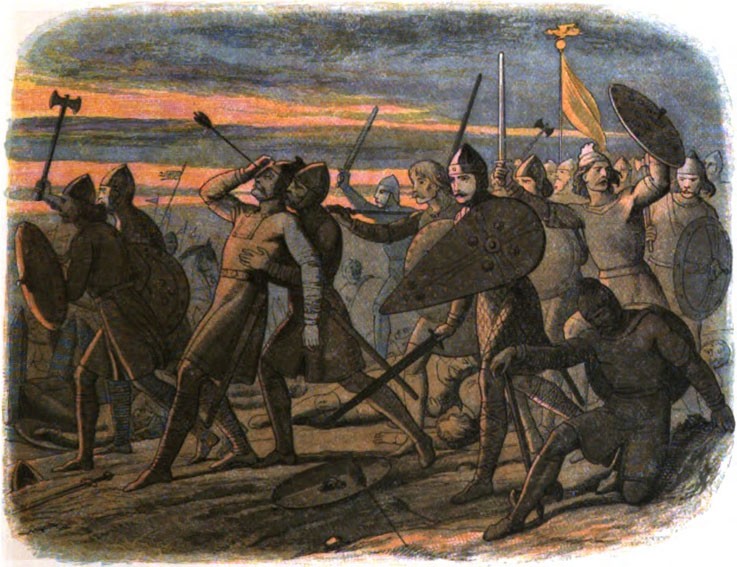
Meanwhile, Harold's claim to the throne was also challenged by the Norwegian king Harald Hadrada. In September 1066, Harold defeated him at the Battle of Stamford Bridge in Yorkshire, before marching south to confront William of Normandy, who had landed his forces in Pevensey Bay on the Sussex coast. The defeat and death of Harold at the Battle of Hastings in October 1066 brought to an end the line of Anglo-Saxon kings of England and the beginning of Norman rule.
Consultant: Philip Parker