
British history

CITE
We have made every effort to follow citation style rules, but there may be some minor differences. If in doubt, please refer to the appropriate citation style manual.
Britain 1901–1945. (2026). In Q-files Encyclopedia, History, British history. Retrieved from
https://www.q-files.com/history/british-history/britain-1901-1945
"Britain 1901–1945." History, British history, Q-files Encyclopedia, 30 Mar. 2026.
https://www.q-files.com/history/british-history/britain-1901-1945.
Accessed 6 Aug. 2026.
Britain 1901–1945 2026. History, British history. Retrieved 6 August 2026, from
https://www.q-files.com/history/british-history/britain-1901-1945
History, British history, s.v. "Britain 1901–1945," accessed August 6, 2026.
https://www.q-files.com/history/british-history/britain-1901-1945


Britain 1901–1945
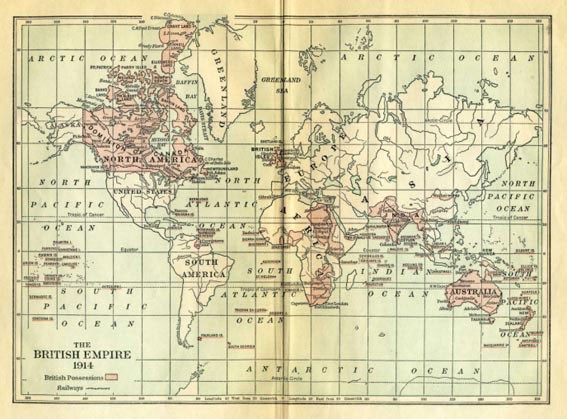
Britain entered the 20th century as the most powerful and richest country in the world. It had a huge worldwide empire defended by a large, powerful navy. Over the next 45 years, Britain faced major changes in the way it was governed and the way its people were represented. There was also to be a catastrophic downturn in the economy and total involvement in two world wars, which changed the world—and life in Britain—for good.
The Suffragettes

At the start of the 20th century, women could not vote in parliamentary elections or stand as an MP. Campaigners for women’s suffrage—the right to vote—had set up groups in most major towns that combined to form the National Union of Women’s Suffrage Societies. Many women, however, thought that its peaceful methods were failing. In 1903 a new militant organization, the Women’s Social and Political Union, was set up in Manchester and led by Emmeline Pankhurst and her daughter Christabel. Members of this new group were called suffragettes and would use any means necessary, including violence, to get the vote.

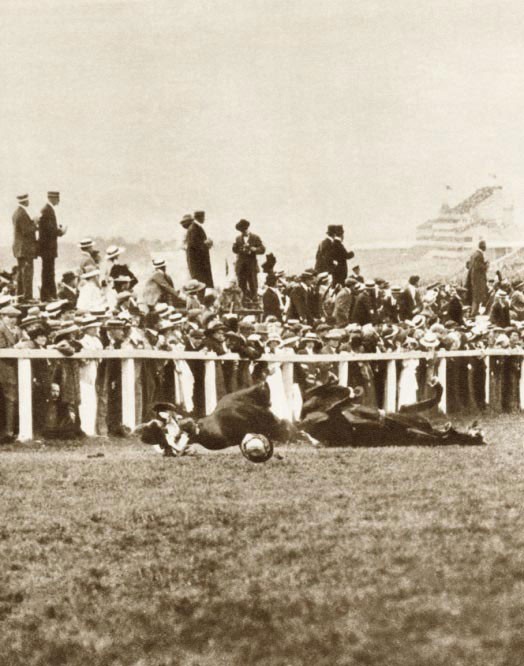
Women chained themselves to railings, broke shop windows and attacked paintings in the National Gallery in London. Emily Davison was killed when she fell under the king’s horse on Derby Day. Many women went to prison, where they went on hunger strike and were force-fed. The suffragettes’ campaign was suspended during World War I.
In 1918, as a result of their contribution to the war effort, women over the age of 30 who paid local taxes or were wives of local taxpayers were given the vote, along with all men over 21. Women could also stand for parliament. Only one woman was elected in the 1918 general election, but she represented Sinn Fein in Ireland and did not take her seat. The next year, Nancy Astor became the first woman elected to serve as an MP in the House of Commons. In 1928 every man and woman over 21 got the vote.
The Parliament Act
In 1909 the Liberal Chancellor of the Exchequer, David Lloyd George, introduced a radical budget (a set of proposals for how to collect taxes on income and land). The budget was known as the People’s Budget, as it was designed to pay for old age pensions and other popular measures. The House of Lords rejected the budget, so the government called a general election in 1910 to force the budget through. When the budget was passed, the government called another general election the same year to gain support for its proposals and prevent the House of Lords throwing out government business.
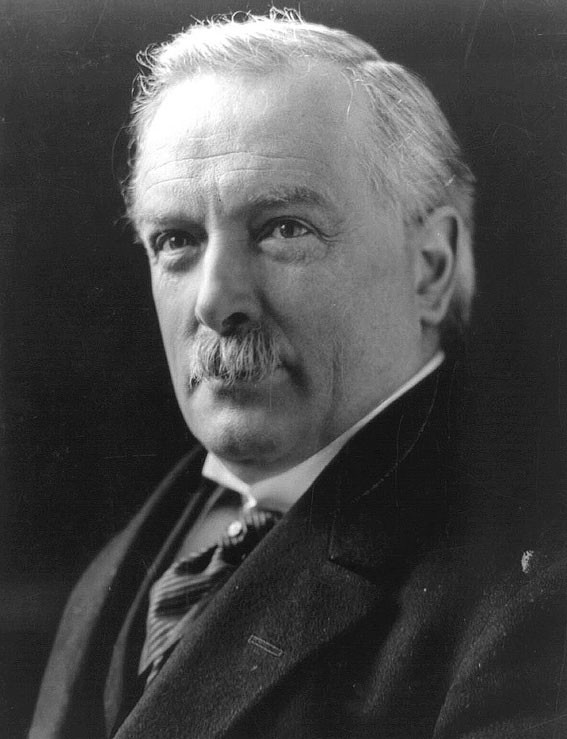
After a second victory, the government introduced the Parliament Act of 1911. This prevented the Lords from delaying money bills, although it allowed them to delay other government bills for two years (reduced to one year in 1949). The Act also reduced the length of parliaments from seven years to five, and established once and for all the supremacy of the House of Commons over the House of Lords.
The Great War
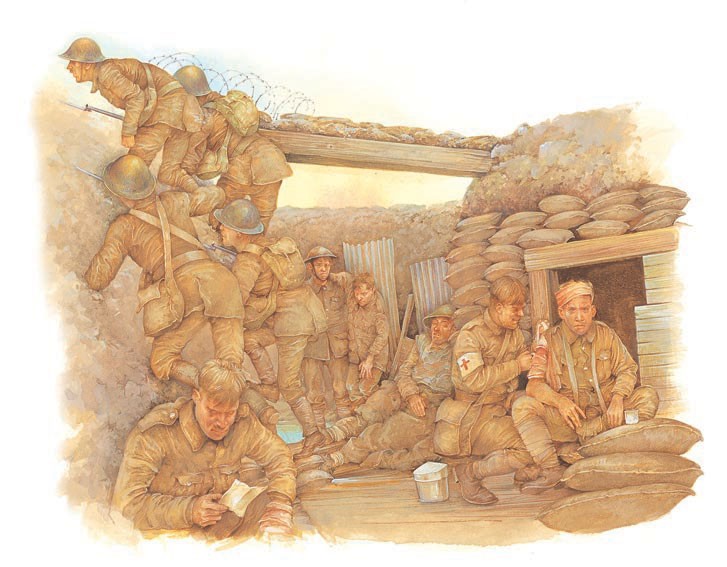
In August 1914, German armies invaded Belgium on their way to attacking France. Britain was committed to defend the neutrality of Belgium and was an ally of France, so it declared war on Germany. The whole of Europe was soon engulfed in the war, called the Great War at the time, later World War I. Thousands of young men volunteered to fight. The death toll was high, so in 1916 conscription, or compulsory military service, was introduced to boost army numbers.

The war required a massive effort on the home front. All the country's factories and workers were turned over to producing the weapons required. As the men went off to fight, many women took their places in armaments factories and on the land.
The war had broken out when the Liberal government of Herbert Asquith was in power, but in May 1915 a combined government of all political parties was formed. In December 1916 Asquith was replaced as prime minister by Lloyd George, who led the country to victory in November 1918. Around 743,000 British men died in the war, with another 1,663,000 seriously wounded.

The General Strike
In 1925, the Trades Union Congress (TUC), the main organisation representing the labour unions, agreed to support the coal miners in their lengthy pay dispute with the mine owners. After negotiations broke down and the miners were locked out of work on 1st May 1926, the TUC called a general strike for 4th May. The country ground to a halt as workers across the country went on strike. The government was prepared for the strike and used volunteers to move essential goods. It produced its own newspaper, the British Gazette, to bring people news about the strike, as all the usual newspapers were not being printed. Although the strike had enormous support, the TUC felt it was losing control over the situation and on 12th May called the strike off. The miners stayed out on strike until they were forced back to work for longer hours and lower pay in November. The government had won a great victory and declared general strikes illegal the following year.
The Great Depression
In October 1929 the New York Stock Exchange on Wall Street crashed, bringing to an end an economic boom that had lasted throughout the 1920s. The slump that followed spread to Britain in 1930. Unemployed soared, reaching three million (one in four workers) by 1933. The Labour government elected in 1929 failed to tackle the crisis and was replaced by a Conservative-led National government in 1931. The new government cut its spending by reducing government wages and unemployment benefits and introduced a means test that assessed an unemployed worker’s total household income before he could get any state benefits. Only limited help was given to the most depressed areas of the country.
The Thirties
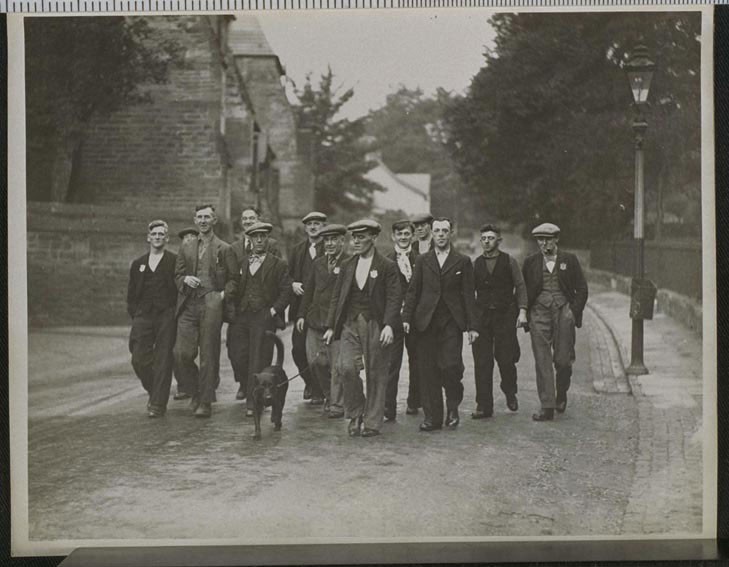
The depression lasted throughout the 1930s. Many people demonstrated against their harsh conditions. In 1936, unemployed workers from Jarrow in the northeast of England marched to London to protest against their lack of work. Unemployment began to fall after 1935 as new jobs were created building houses and manufacturing cars and electrical goods. As the threat of war with Nazi Germany grew larger, new workers were also required to work in armament factories. When war broke out in 1939 and men were called up to fight, unemployment finally fell below 1 million for the first time since 1921.

The Abdication of Edward VIII
In January 1936, George V died and his son, Prince Edward, became king as Edward VIII. Edward wanted to marry Wallis Simpson, a twice-divorced American, but the government objected, saying that the country would not accept a divorcee as queen. This provoked a major political crisis until Edward chose to abdicate, or give up the throne, after less than 11 months as king. He went into exile in France, where he was created Duke of Windsor and soon married Wallis. His brother Prince Albert became king in his place as George VI.
World War II
When Germany, under the leadership of the Nazi leader Adolf Hitler, invaded Poland in 1939, Britain went to war with Germany for the second time in 25 years. People prepared bomb shelters in their houses and gardens, as they feared attacks from German bomber aircraft. Buildings and streets were blacked out at night so that there were no lights visible to guide enemy planes. Many children were evacuated from the main cities and send to the countryside for safety. Food, clothes and petrol were rationed. Men joined the armed services while women went to work in factories or on the land.


In 1940 British troops withdrew from mainland Europe and Britain came under attack from the German air force (the Luftwaffe) during the Battle of Britain. A massive German bombing campaign, called the Blitz, then flattened many cities, destroying houses and factories and wrecking docks and airports. Thousands of people were killed.
Winston Churchill
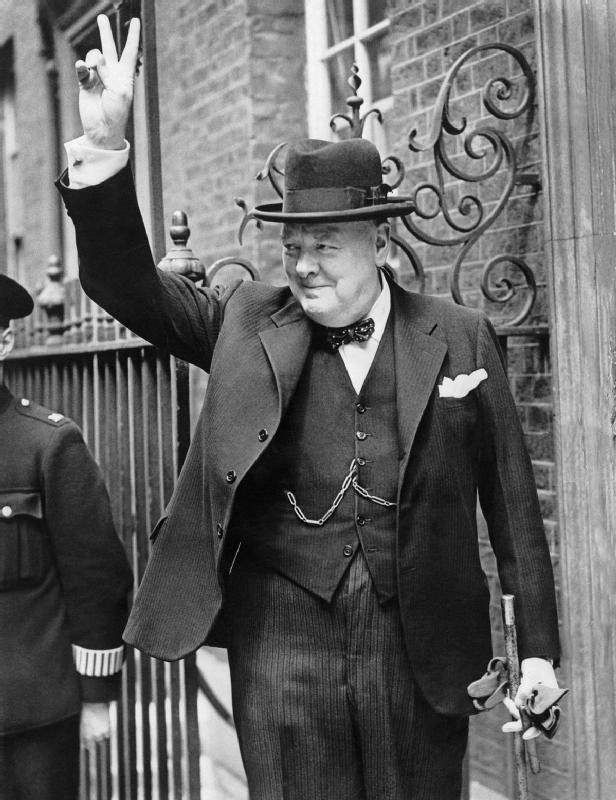
At the start of the war, the Conservative prime minister Neville Chamberlain led the government. In 1940, MPs lost confidence in him and he resigned. His replacement was Winston Churchill, who led a government of all political parties. Churchill rallied the country with his inspired speeches and strong leadership. In June 1944, British troops joined American and Canadian soldiers on D-Day in a huge invasion of France. In May 1945, the war ended as Germany was defeated. A few months later, the war in the Far East against Japan also ended when Japan was hit with two atomic bombs. World War II had lasted for six years and was the bloodiest conflict in human history.
Consultant: Philip Parker
pics
Without in any way limiting Q-files Ltd’s exclusive rights under copyright, any use of this publication to “train” generative artificial intelligence (AI) technologies to generate text is expressly prohibited. Q-files Ltd reserves all rights to license use of this work for generative AI training and development of machine learning language models.