
Mammals
Bats
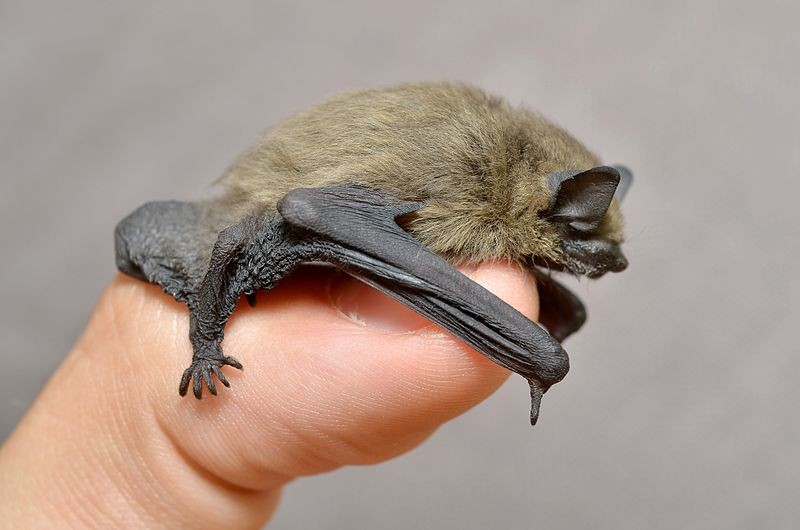
Several kinds of mammals can glide through the air for short distances, but bats are the only mammals that can truly fly. Their wings are made of skin stretched tightly between the long fingers of their hands and their ankles. Most bats eat insects or small mammals, but a few feed on pollen, nectar and fruit. There are two main groups of bats: one is the megabats, also called fruit bats or flying foxes; the second, the microbats, includes all the other bat families. The megabats eat fruit, nectar and pollen, while most microbats eat insects or other animals and use echolocation to hunt their prey.

Flying foxes
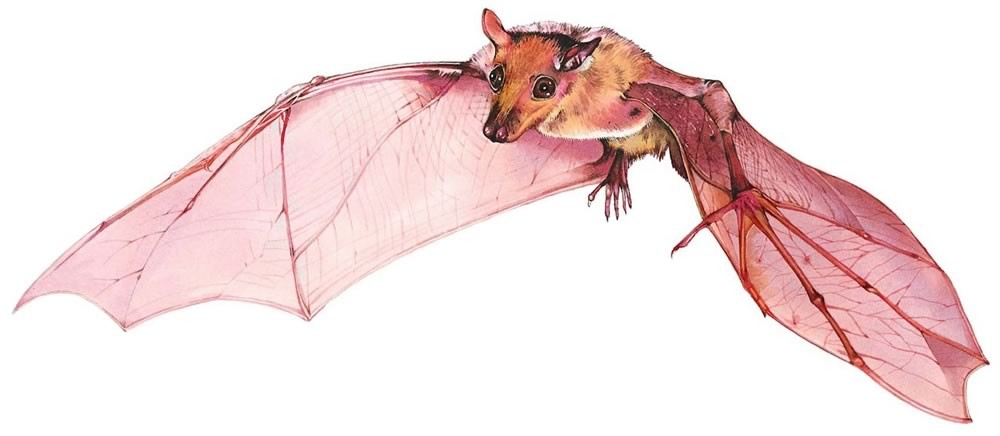
The flying foxes live in the tropics of Asia, Africa and Australia. They have fox-like heads, and feed mostly on plant material, including fruits, flowers, nectar and pollen. They use their large eyes and keen sense of smell to find their food.
Flying foxes have long, jointed thumb-claws which they use to hold fruit while they are feeding. Their thumb-claws and feet also enable them to be expert tree-climbers; they can move nimbly through the branches in their search for fruit. Their wings are fragile, but they are strong and quick to heal if torn.
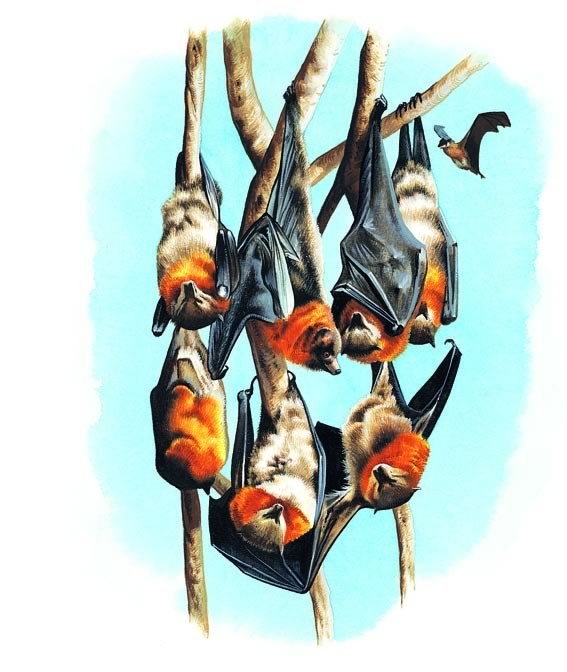

During the day, flying foxes roost together in camps of up to 1.7 million individuals. Male flying foxes establish territories with “harems” of about five females. Males aggressively defend their territory from intruders.
A flying fox gives birth to its single pup while hanging upside down in a high treetop. The infant instinctively crawls down its mother’s body to find a teat. At birth, its wings are too small to be used for flight. It will not fly for four months, so it clings to its mother wherever she goes.
Echolocation
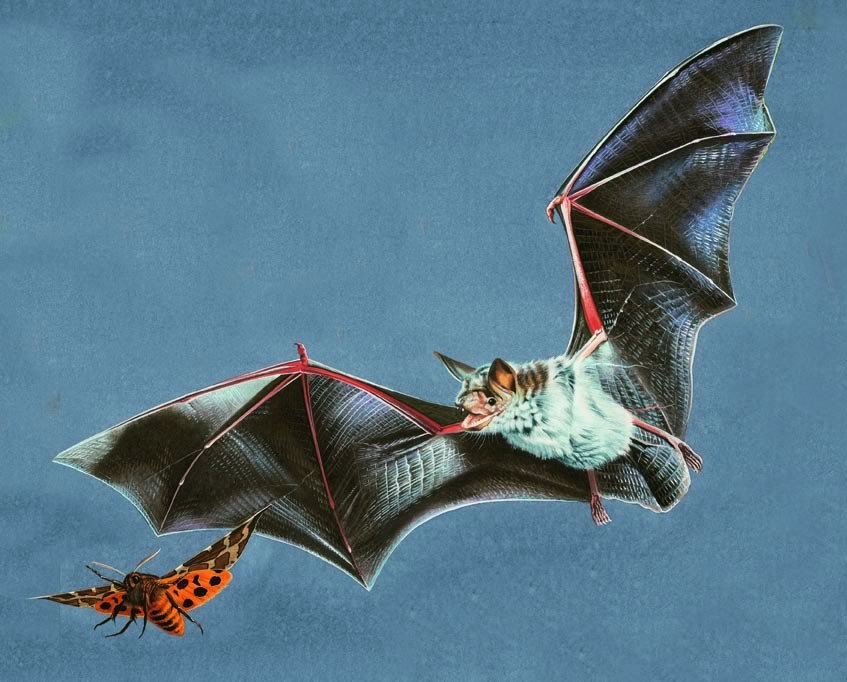
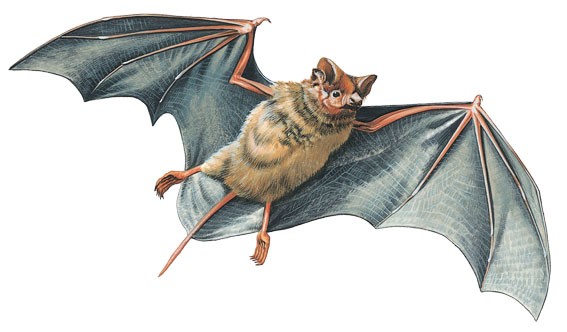
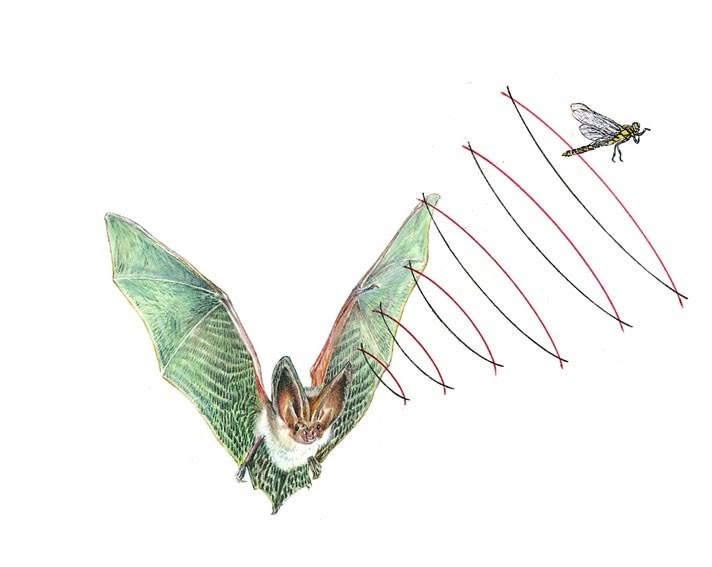
Bats generally hunt at night, using echolocation to find their prey. They produce very high-pitched squeaking sounds through their noses or mouths, and then use their large ears to listen to the echoes that bounce back. The bats are then able to build up a picture of their surroundings so that they can fly at top speed and catch insects in flight even in pitch darkness. Some species of moth are able to hear the high squeaks and make their escape.
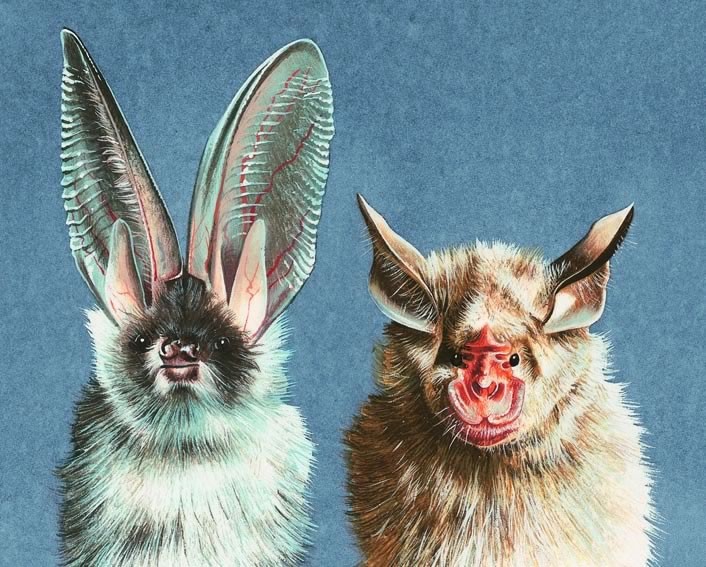
In addition to echolocating prey, a bat's ears are incredibly sensitive to the quietest of sounds. The huge ears of the long-eared bat can, for example, detect the fluttering of moth wings or the movement of centipedes and earwigs along the ground below. The leaf-nosed bat has ridges on its nose and around its mouth that help to channel the sounds to its ears.
Roosting

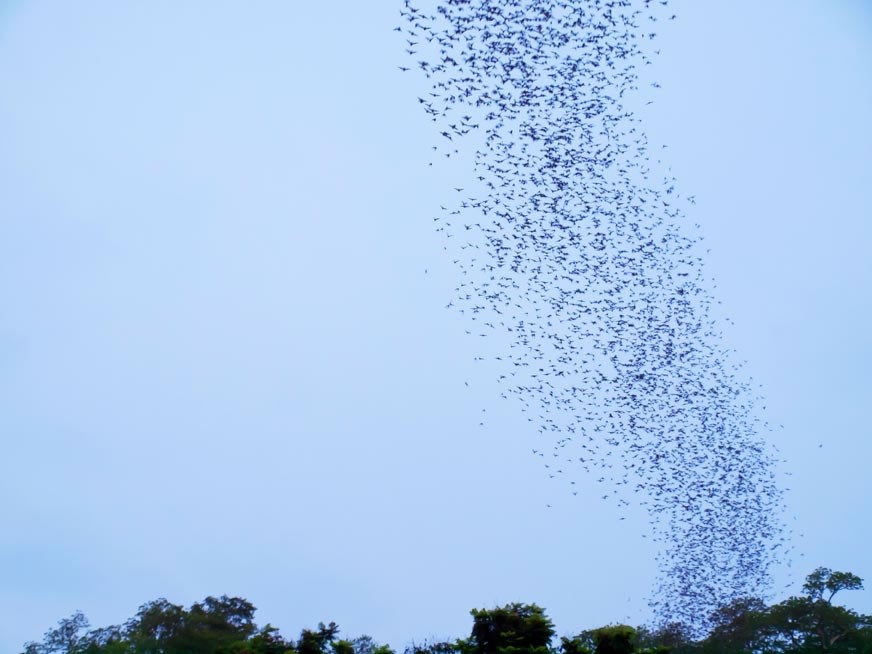
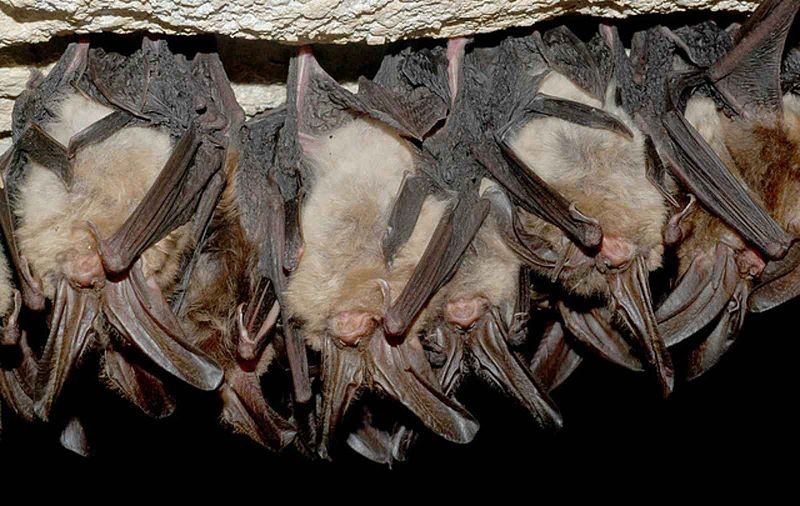
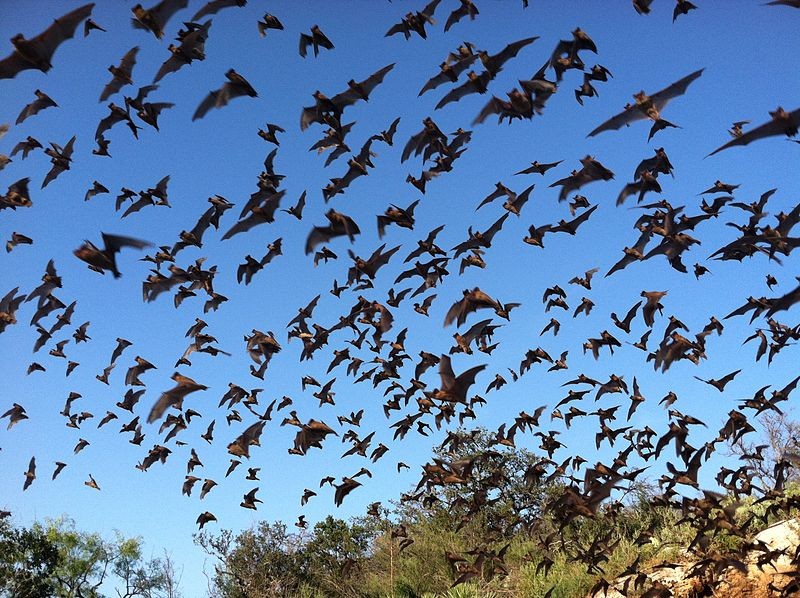
Bats usually hunt at night and rest during the day, hanging upside down in caves, hollow trees or even buildings. Some kinds of bats roost singly while others will gather together in their thousands or even millions. Many female bats will roost together in “nursery” colonies where they leave their babies clustering together for warmth while they go out to hunt.
Hibernation
Most bats hibernate over winter. To conserve energy, the bats’ breathing and heart rate are greatly reduced and their body temperature drops to near freezing. But the hibernating bats do not sleep all winter long. They may awake if the cave warms up a little, or just to stretch their wings and have a drink.

Noctule bats
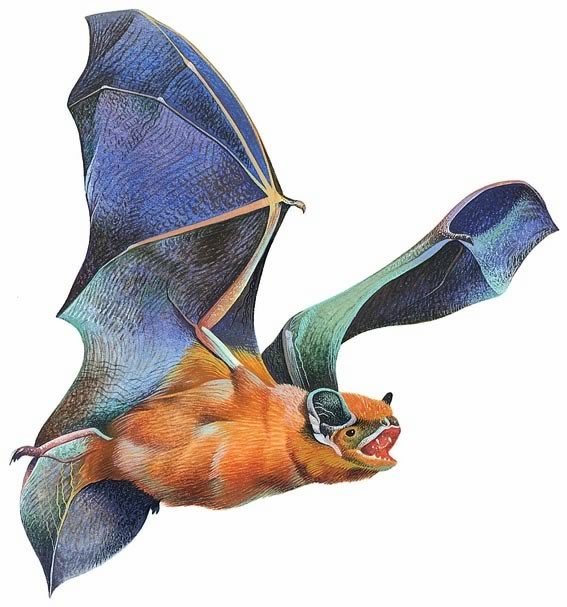
The greater noctule bat is one of the largest microbats, measuring about 10 centimetres (4 inches) long, with a wingspan of up to 46 centimetres (18 inches). It flies high and fast, preying on insects most of the year but targetting songbirds during its spring and summer migrations. Its wings are thin, but this allows it to manoeuvre quickly in mid-air. Delicate and tending to rip easily, the wings regrow if damaged.
Its relative, the common noctule bat, flies up to 1600 kilometres (1000 miles) across eastern Europe each year during its migration.
Pollinating bats
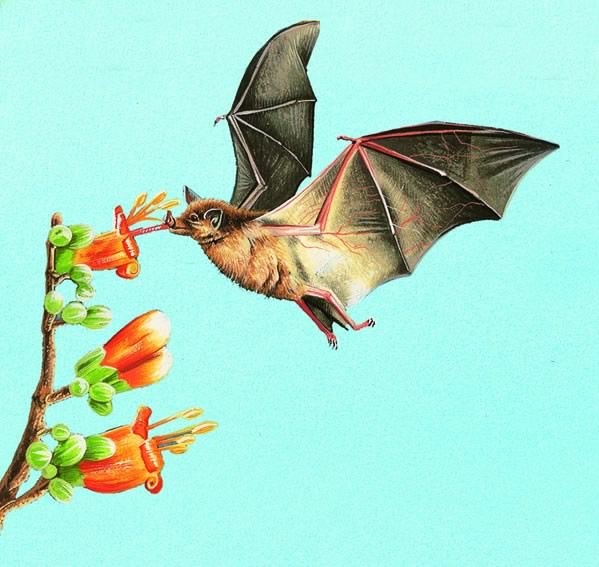
Pollinating bats, such as the Mexican long-tongued bat, feed on the sweet nectar in flowers. It has a very long bristly tongue for reaching the nectar. Pollen from the flower brushes on to the bat as it feeds. When it visits the next flower, the pollen brushes off again, fertilizing the flower.
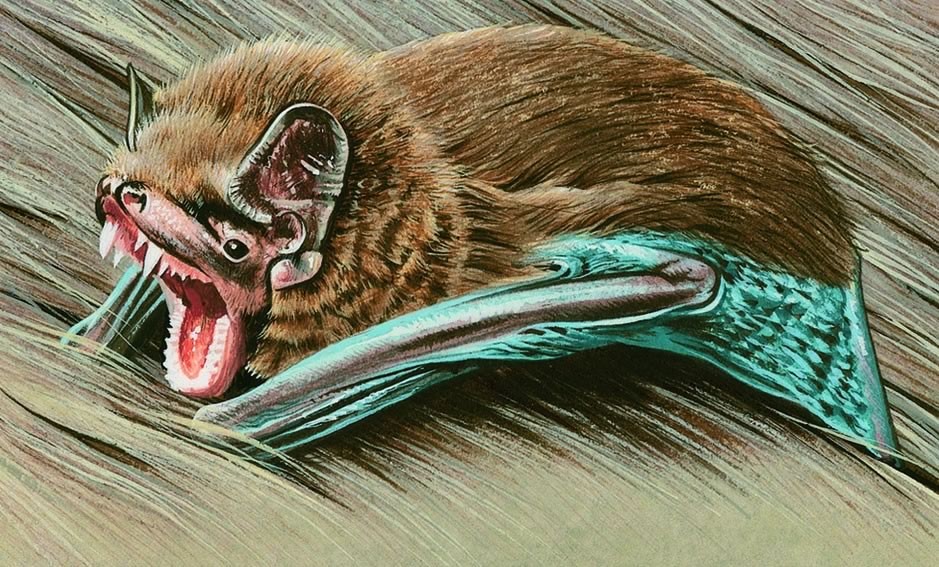
Vampire bat
The vampire bat preys on large animals, such as cattle and pigs. It attacks at night. The bat nips an animal’s skin with its razor-sharp teeth, then laps up the blood that oozes out of the wound. Its spit contains chemicals that stop the blood from clotting so it flows freely. Vampires take only about two teaspoons of blood—not enough to kill their prey, but they can spread diseases, such as rabies.
Fisherman bat
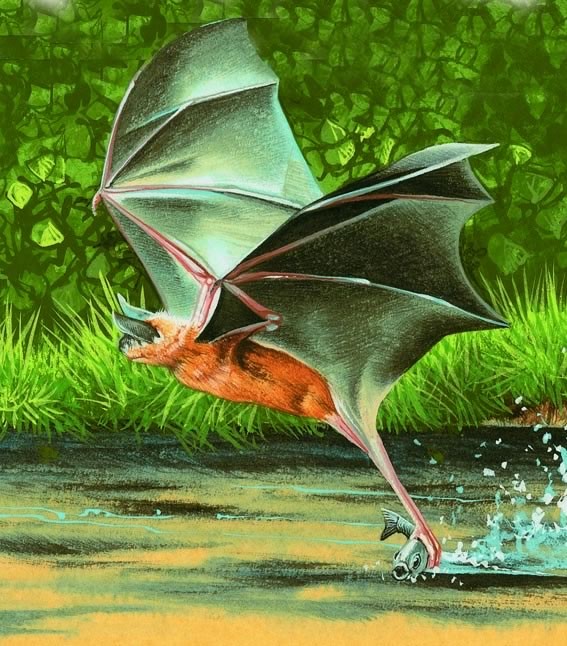
Fisherman bats catch fish that swim just below the water in lakes and rivers. They have long legs, which they dangle over the surface, dragging their clawed feet through the water until they grasp prey. The tiny sounds of the ripples the fish make as they move tell the bat where they are.
Consultant: Chris Jarvis