
Mammals
Antelopes
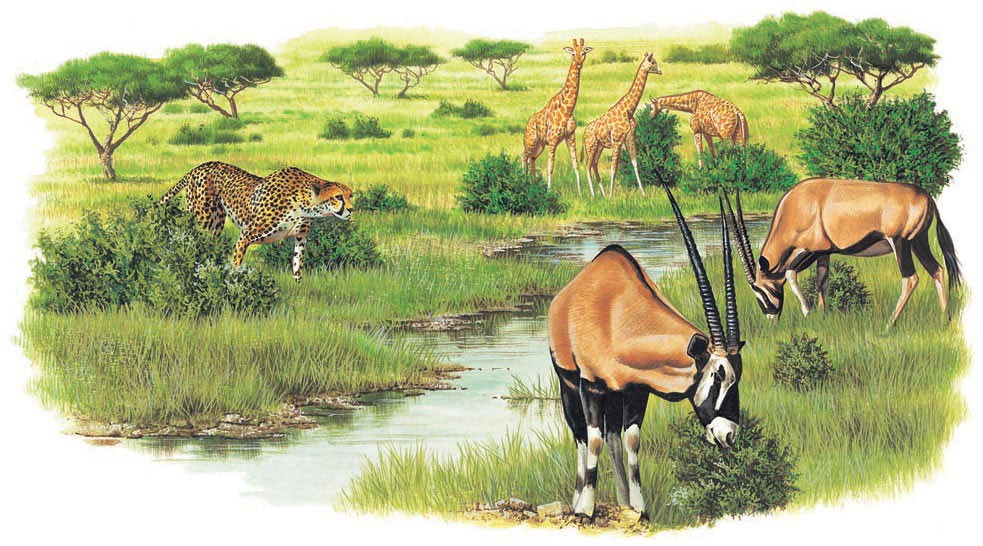
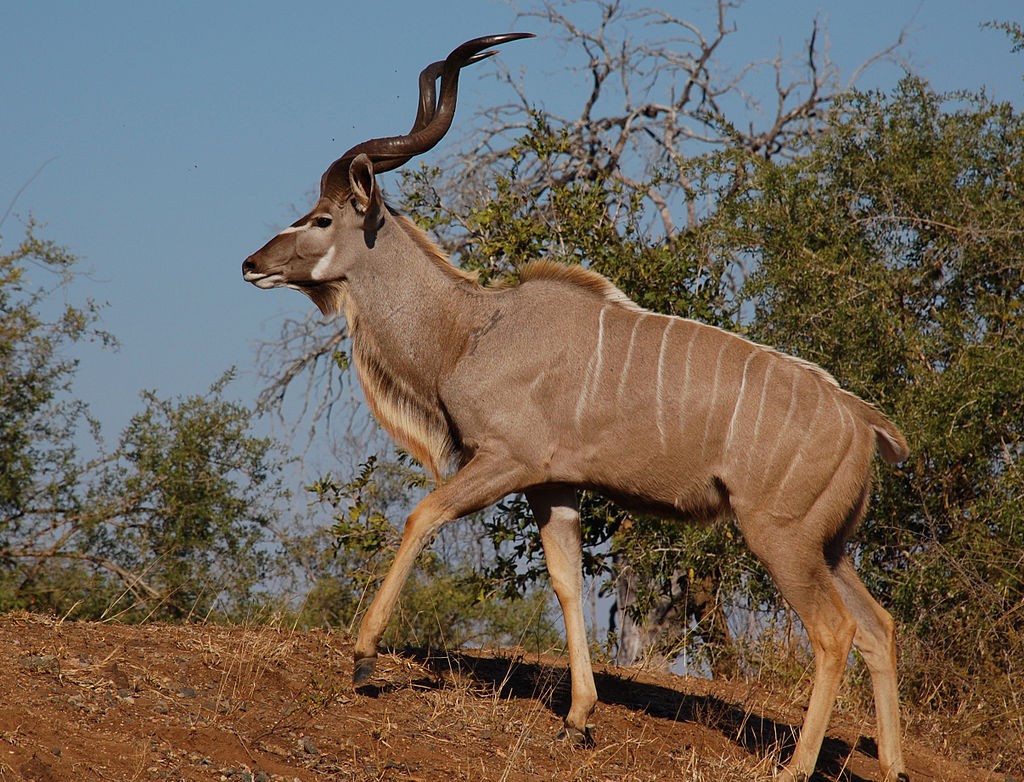
Antelopes are fast-running bovids with long legs. They have hooves that are split into two toes and feed on grasses and other plants. The group includes gazelles, impalas, kudus and wildebeest. Living in herds gives them some protection, although young and sick animals make easy targets for predators such as big cats or wild dogs. They may escape from danger by running at top speed. Like other bovids, the antelopes are ruminants: their stomachs are divided into compartments that break down grasses, a tough food to digest, in stages. All males, and some females, have horns.
Impala
The impala is a medium-sized antelope with spiral-shaped horns that lives on the savanna grasslands of East and southern Africa. Running from danger, it can leap high into the air, covering distances of 10 metres (33 feet) or more with a single jump. Over short distances, it can clock 60 km/h (about 40 mph).
The impala adapts well to the changing seasons: when dry, it is able to go for weeks without drinking and switches from eating grasses to shoots and leaves.
Autumn is the main mating season for impala. Males aim to establish a territory that will attract females, where the young can be reared safely. Most territories can only be won by defeating its owner in battle. Male impalas lock horns and try to throw their opponents off balance.


Gazelles
Gazelles are small antelopes, usually standing no more than a metre (3.3 feet) at the shoulder. They live in the desert and savanna of East Africa, although some also live in Asia. They graze on tender shoots.
With their long legs, they are built for speed. They can sprint for short distances at nearly 100 km/h (60 mph), or run long distances at a steady 50 km/h (30 mph).
Springbok
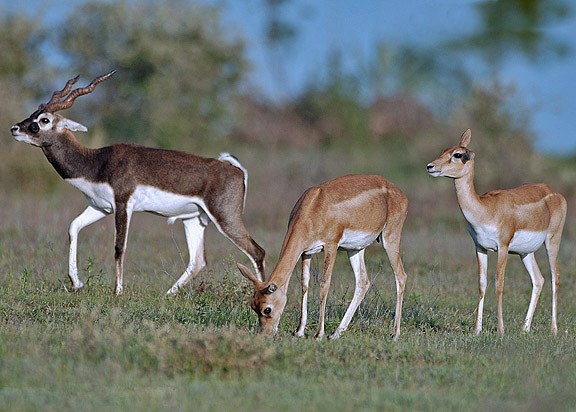
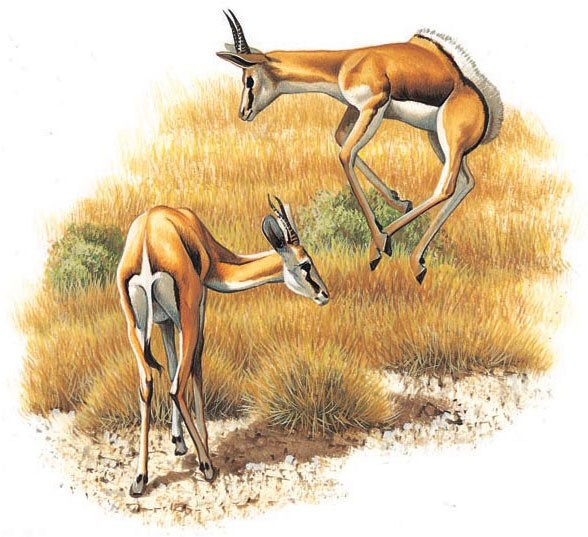
Springboks are closely related to gazelles. As they run from predators, they will suddenly leap stiff-legged into the air. This is known as "stotting" or "pronking", Afrikaans for “showing off”. Male springboks also pronk in the spring to impress females. They may jump more than 3 metres (10 feet) off the ground.
Gerenuk
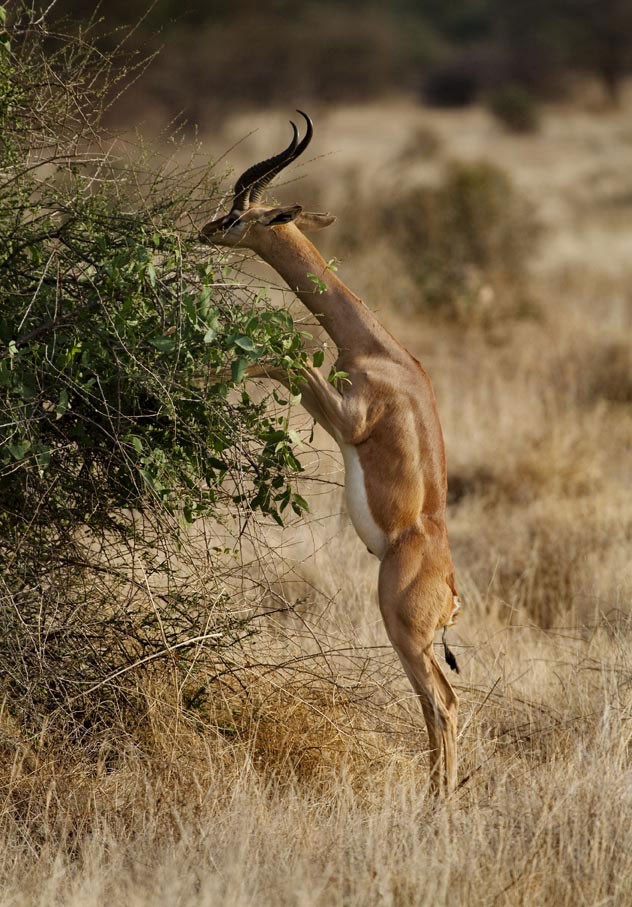
Gerenuks are tall, long-necked antelopes that live in the scrublands and desert in East Africa. Their name means "giraffe-necked" in Somali. They browse on prickly bushes and trees such as acacias, reaching up to high branches to eat tender leaves and shoots by standing on their rear legs and stretching their necks. Gerenuks rarely drink; they get enough water from the plants they eat—hence their ability to survive in dry habitats.
Royal antelope
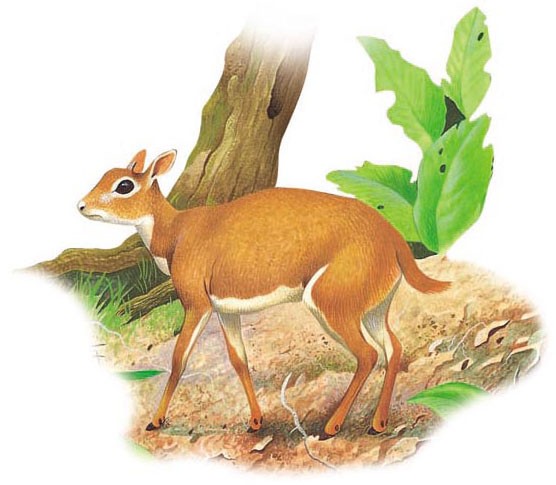
The royal antelope is the world's smallest antelope, standing just 25 centimetres (9.5 inches) at the shoulder. It lives a secretive life in the lowland rainforests of west Africa, emerging at night to feed on shrubs and other plants. If alarmed, it flees instantly, using its well-muscled hind legs—twice as long as its forelegs—to leap long and high as it streaks through the undergrowth.
Wildebeest
Wildebeest, also called gnu, live on the plains of Africa. They spend the year trekking across East Africa, following the rains in order to feed on the lushest grasses. When the rains move south in September, the wildebeest follow them, forcing them to cross the dangerous Mara River.
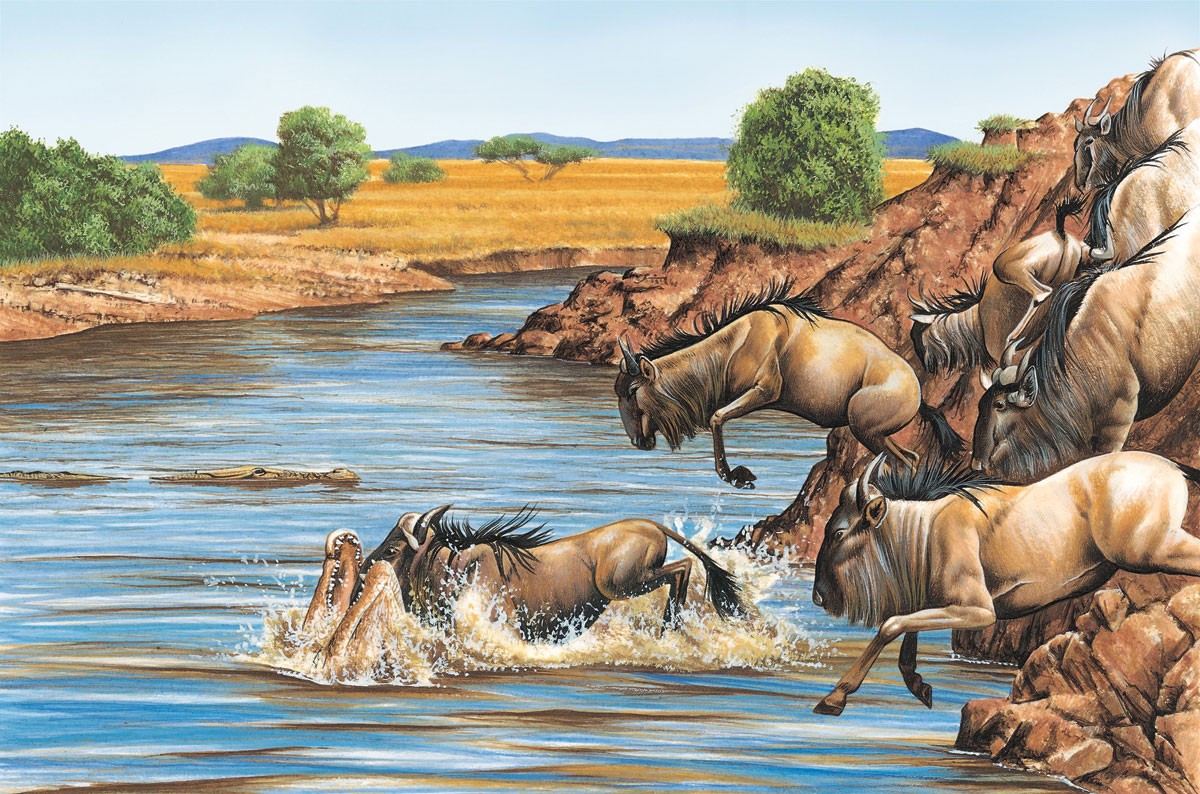
The animals slide down the river bank and into the water. Some are swept away by the strong waters and drown. Others are pulled under by crocodiles, lurking just beneath the water’s surface. Most, however, reach the other side to continue their journey.
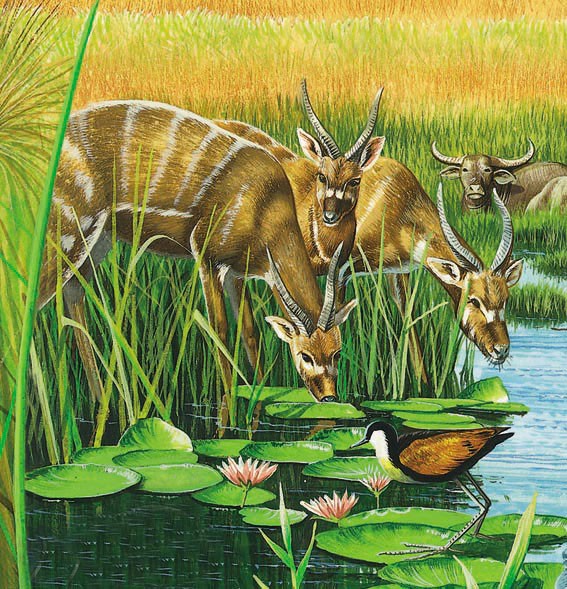
Sitatunga
A swamp-dwelling antelope from Africa south of the Sahara, the sitatunga has splayed hooves to support its weight on the boggy ground of papyrus swamps, where it feeds on the water plants.
It may take to the water to hide from leopards or wild dogs, ducking under the surface completely to hide from these predators, or swimming away at speed. It has a long, shaggy, water-repellent coat.
Addax
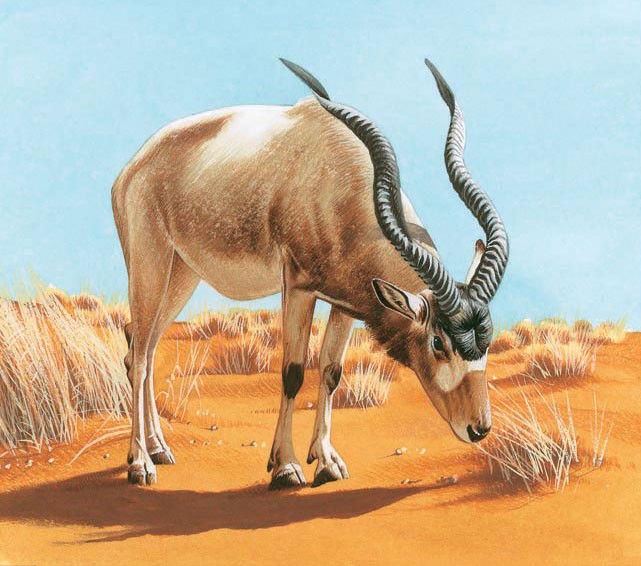
The addax is a large antelope that lives on the edges of the Sahara Desert. It has large, widely spread hooves that allow it to walk easily on soft sand. Roaming in herds of up to 200 animals, the addax never drinks. It gets all the water it needs from the grasses it eats. It always knows exactly where to find vegetation that sprouts just after a downpour.
Saiga
The saiga lives on the vast steppe, or grassland, which stretches across the central plains of Asia. Its bulging nose makes it easy to recognize. Its nose is thought to help filter out sand and dust in the dry summer, and to warm the cold air it breathes in during the winter months.


Pronghorn
Also known the American antelope, the pronghorn's closest living relative is, however, the giraffe, not the antelope, although it closely resembles true antelopes. Each of its "horns”—including the forward-pointing “prongs”—is in fact a blade of bone that grows out of its skull.
The pronghorn, which grazes the grasslands of the American West, is the fastest land mammal in the Western Hemisphere, able to top 80 km/h (50 mph) over a kilometre or so, when escaping predators.
Consultant: Chris Jarvis