
Mammals
Blue whale
The blue whale is a rorqual, a group of baleen whales that includes the Bryde's, humpback, fin, minke and sei whales. The largest living animal on Earth—probably the largest animal that has ever lived—the blue can grow up to 30 metres (100 feet) long and weigh 170 tonnes or more. However, this huge creature feeds mostly on krill, tiny kinds of shrimps only a few centimetres in length. A blue whale must eat enormous amounts of krill every day, so it usually lives in cold waters where there are plentiful supplies.

Lifestyle
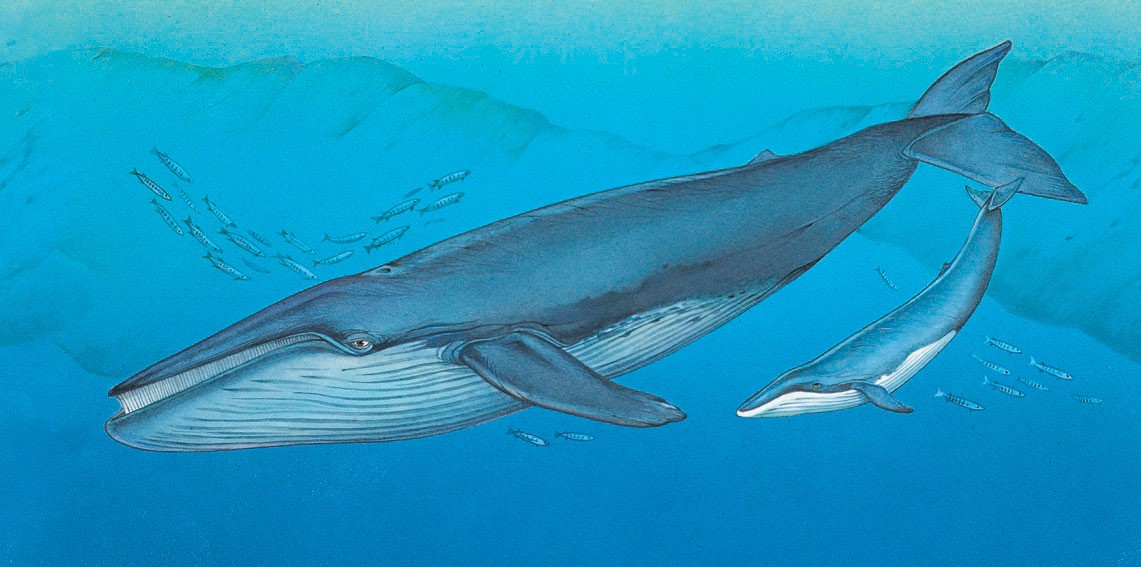
The blue whale spends its summers in the cold waters of the Arctic Ocean or the Southern Ocean surrounding Antarctica. It feeds on huge quantities of krill. To satisfy its huge appetite, it engulfs about 40 million of them each day. In winter, the blue whale heads for tropical, less food-rich waters, where it mates. Females give birth to a single calf once every two or three years.
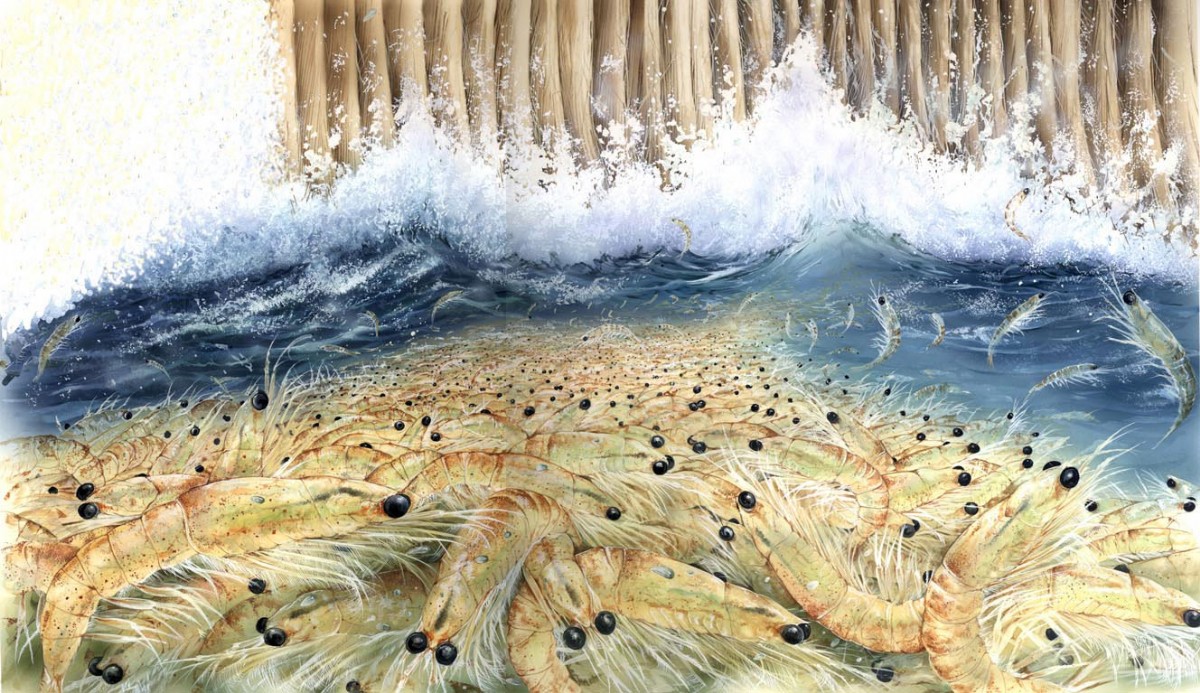
Like all baleen whales, the blue whale has hundreds of baleen plates, each fringed with stiff hairs hanging from its upper jaw. It uses them as a kind of sieve, trapping the krill from great gulps of seawater.
Danger of extinction
The blue whale's huge size once made it a prime target for whale hunters. Once abundant, with around 300,000 individuals in the Southern Ocean alone, by 1967, blue whale numbers had dropped so low (to approximately 500) that hunting them was banned. Even today, their numbers remain very low, perhaps no more than 12,000 worldwide, and they are still in danger of extinction.

Consultant: Chris Jarvis