
Mammals
Orca
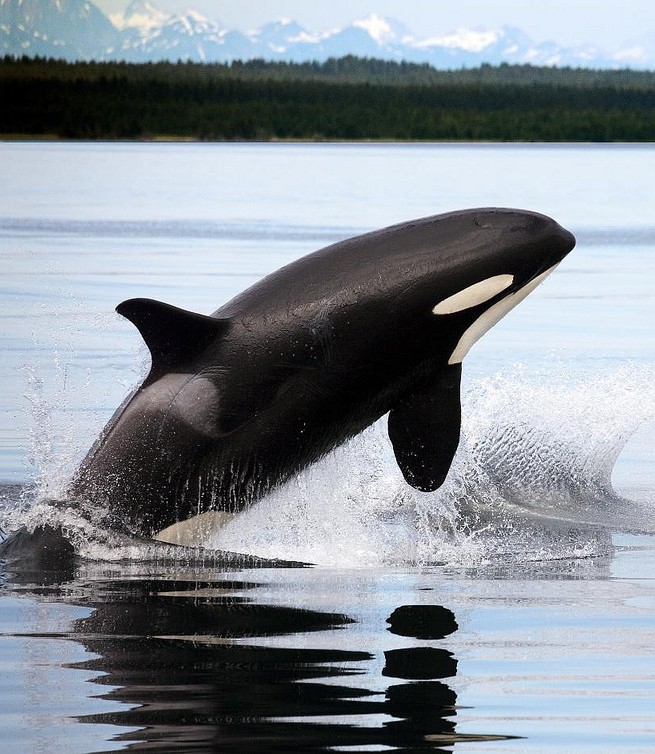
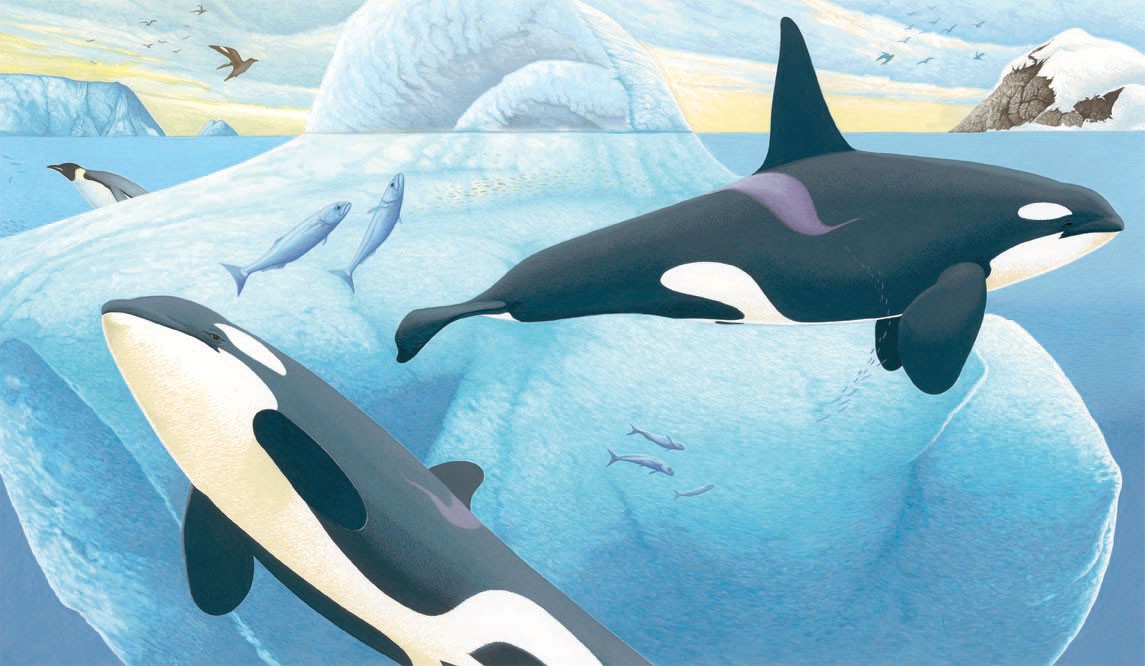
The orca, or killer whale, is the largest member of the dolphin family, found in all oceans of the world. It has distinctive black and white colouring and grows up to 10 metres (33 feet) long, although it is usually 6–8 metres (20–26 feet) in length. The orca feeds on fish, penguins, seals, sea lions, other dolphins and even whales larger than itself, depending on where it lives. A fearsome hunter with no predators, the orca is also a highly intelligent animal, peaceful towards humans. The social bonds shown by family groups are as close as those of elephants, great apes and humans.
Types of orcas
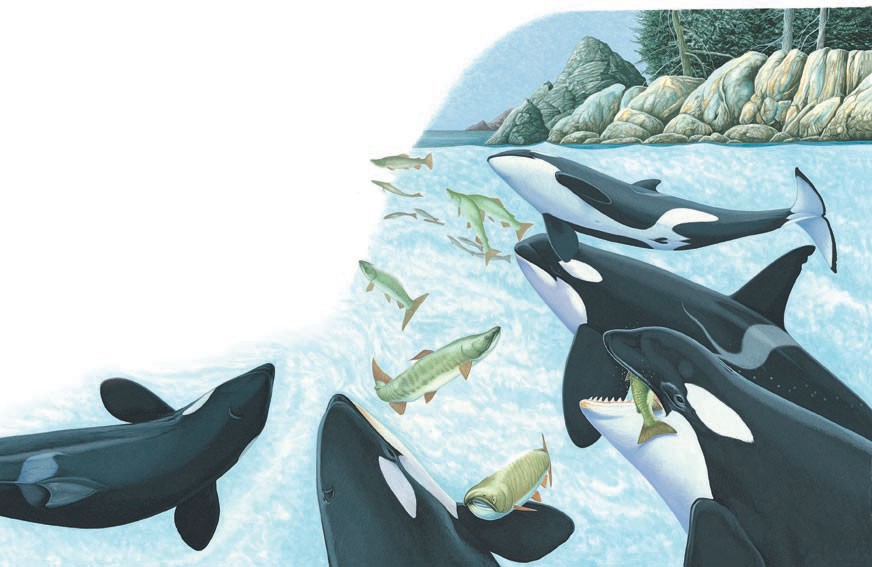
Three types of orcas have been identified. One type, called residents, live in family units called pods, and feed on fish and squid. They stay in the same area of coastal water. The second type, called transients, do not mix with the residents. They travel in small groups, without any strong family bonding, and roam more widely along the coast. They feed only on marine mammals: seals, sea lions, other dolphins and whales. A third group, the offshores, travel far from shore and feed mostly on schooling fish.
Lifestyle
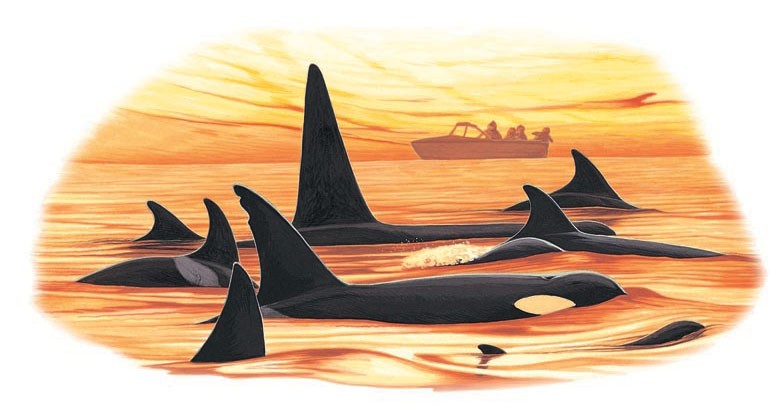
Orcas of the resident type live in family groups called pods in which the leader is usually the mother. They all stay together for life—often up to 80 years for females. Sometimes, a large number of pods come together to form groups of over 100 individuals.
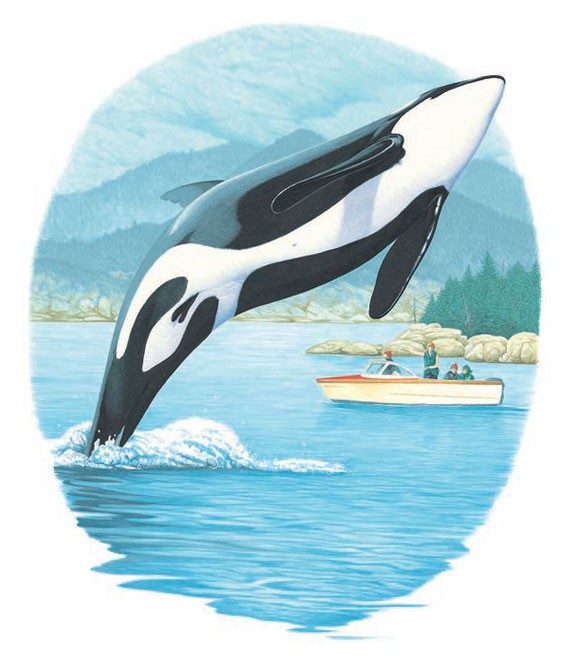
Orcas often jump right out of the water, an action called "breaching", or lift their heads and upper bodies out of the water for a while, a movement known as "spyhopping", to look around.
Teamwork
Members of the pod communicate with each other using sounds, body postures and actions such as slapping the water with their flippers and tails. They spread out and surround prey such as a shoal of fish. The whales then herd the shoal into shallow water or into a cove where they can be caught more easily, one by one. These highly intelligent hunters can even chase and trap sea birds on the water’s surface in this way.
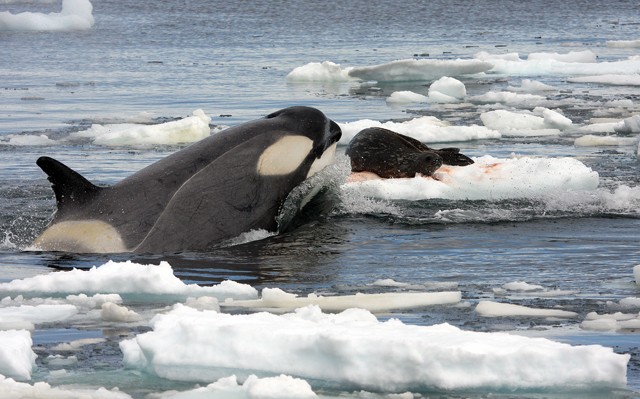
Transient orcas sometimes practise a technique known as "wave-hunting". They look out for seals resting on ice floes, then create waves that tip up or wash over the floe. The seal is knocked into the water, where the predators lie in wait.
Surprise attack
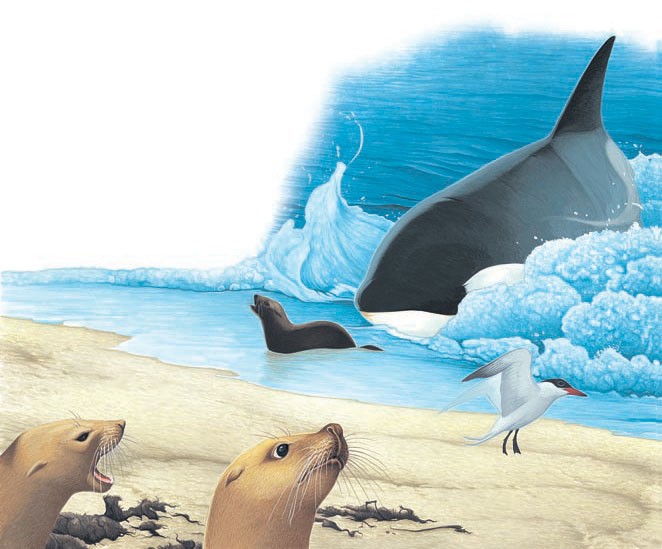
On the shores of southern Argentina, a group of sea lion pups are playing. They are unaware that lurking in the shallows a few metres out to sea is an orca, an enormous, ferocious predator. One pup strays a little too close to the water’s edge. Suddenly, the orca launches itself on to the beach, grabs its squealing prey in its jaws and slides back into the ocean—all in the flash of an eye. Orcas will often play with their prey, tossing them into the air, before catching them again in their jaws.
Consultant: Chris Jarvis