
Mammals
Polar bear
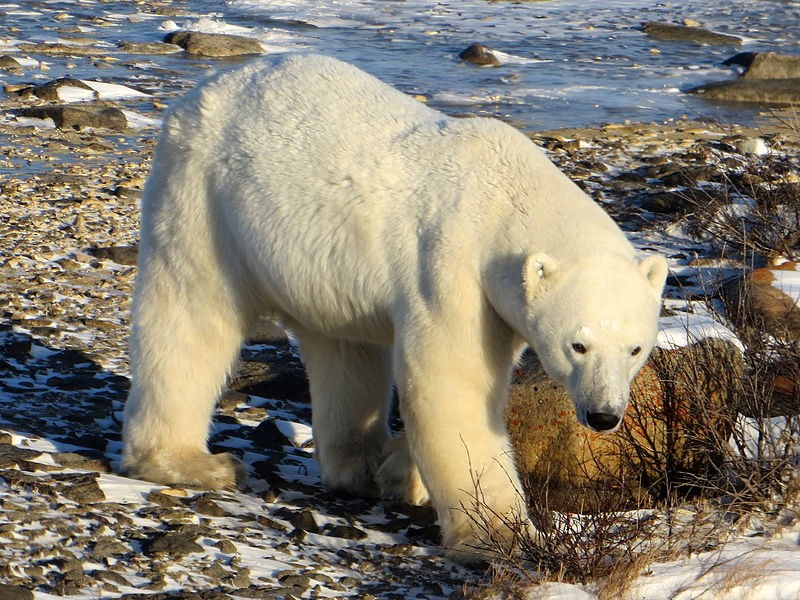
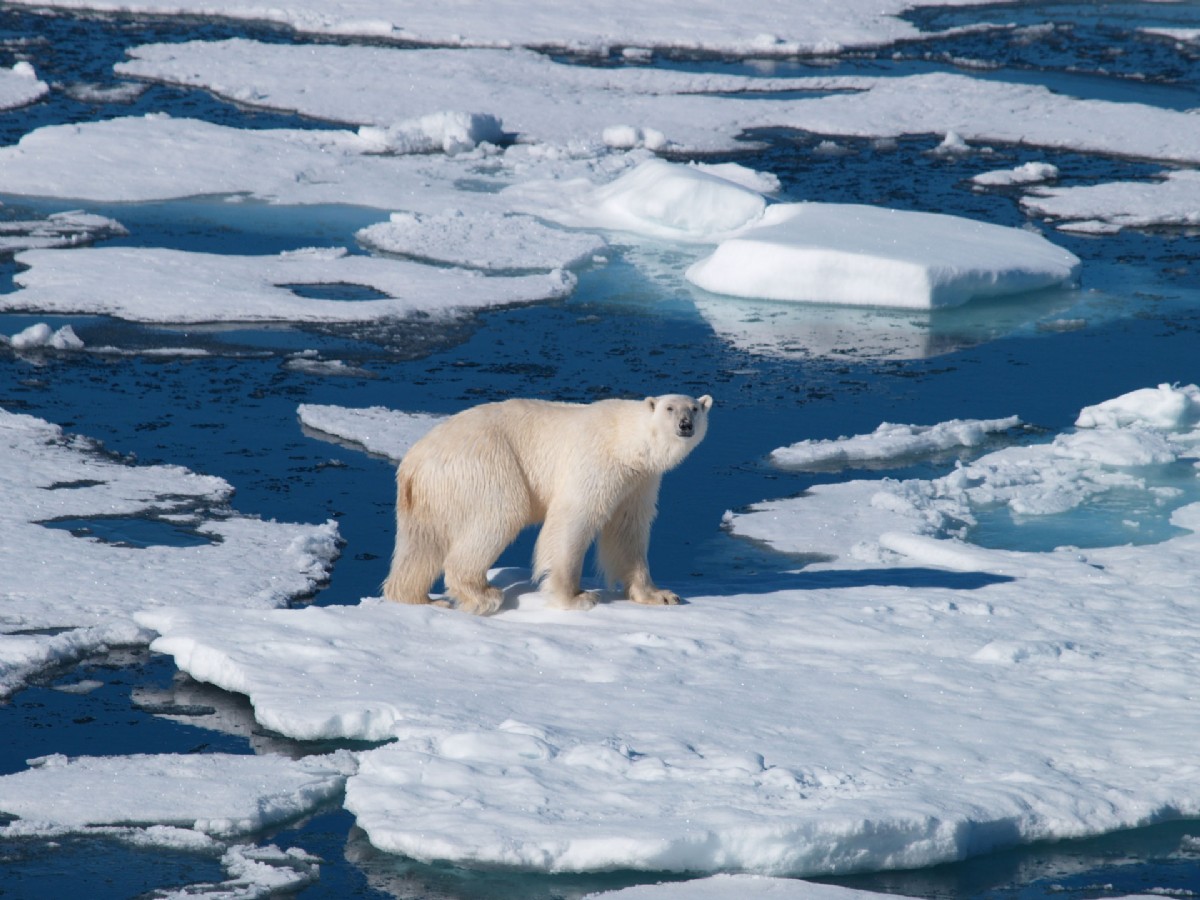
The polar bear has a thick, white, waterproof coat. Underneath its skin there is a 10-centimetre (4-inch) thick, insulating layer of blubber. Its claws and hairs on the soles of its feet give it a grip on the ice. It is also an expert swimmer. The polar bear lives a solitary existence in the Arctic, where it feeds mainly on seals. Hungry polar bears are unpredictable animals and have been known to kill humans.


Catching seals
Polar bears spend most of the year on floating ice in the Arctic, where they hunt seals. Their white fur provides perfect camouflage as they hunt. The bears use their excellent sense of smell to sniff out breathing holes in the ice, where seals rise for air. As soon as a seal appears, a bear grabs it with a paw and drags it up on to the ice, killing it with a bite to the head to crush its skull.
Maternity dens
Courtship between males and females takes place in the spring. In the following winter, females dig dens in the snow to protect them from the extreme cold while they give birth to their young. As winter sets in, pregnant females search for a suitable place to dig a den—usually a snowdrift on land just a few kilometres from the coast.
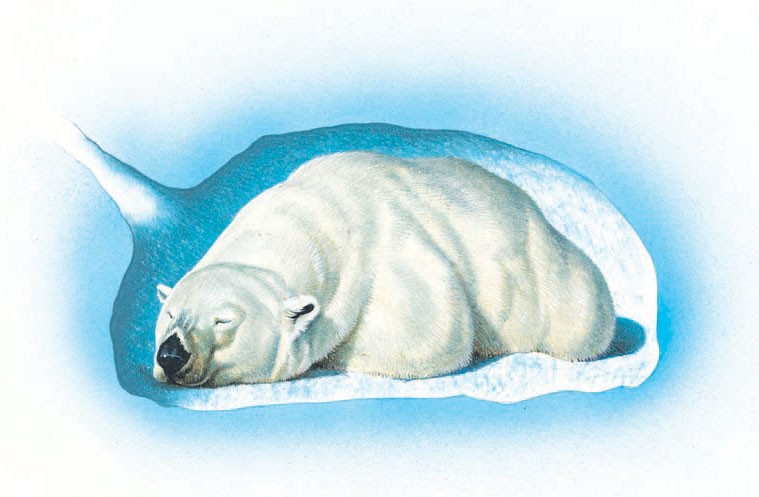
The female rests, asleep most of the time. Her heartbeat is low, but, unlike true hibernators, her body temperature does not decrease. It is important that pregnant females eat enough food during the spring and summer, since they will not eat or drink again until they leaves the den with their cubs in March.
Cubs
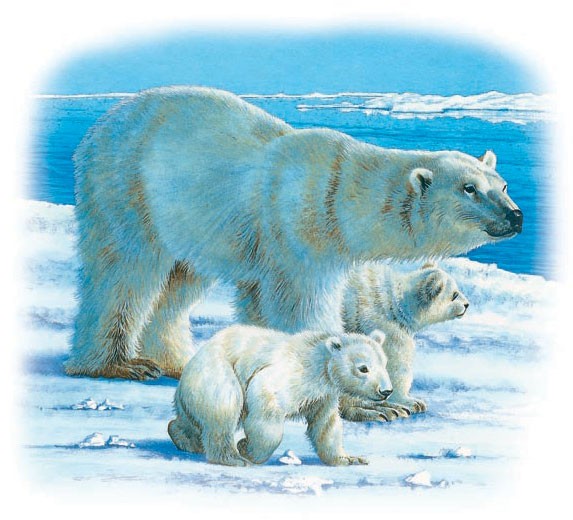
In mid-winter, the female polar bear gives birth to two tiny cubs. Little larger than guinea pigs, the newborn cubs are blind, deaf and helpless. They stay in the maternity den for three months, feeding on their mother's rich milk and nestling in her fur for warmth.

Growing up
When they are one month old, the cubs open their eyes. Not long after that, they take their first steps. After just two months, cubs weigh 25 times more than they did at birth. By this time they have started to grow their own thick coats of fur and rows of small, sharp teeth. When the cubs are three months old, they leave the den for the first time. Their mother must keep a constant look out for danger. Hungry adult males are known to attack cubs when other food is scarce.
Adult bears usually eat only the skin and blubber of the seal, while their cubs devour the red meat, which is rich in protein and helps them grow quickly.
Summer swimming
In summer, as temperatures rise, the ice cap starts to melt and the sea ice breaks up. Polar bears follow the receding ice in pursuit of their main prey: seals. They may swim long distances between ice floes, but though the bears are strong swimmers, they cannot match a seal for speed in the water.
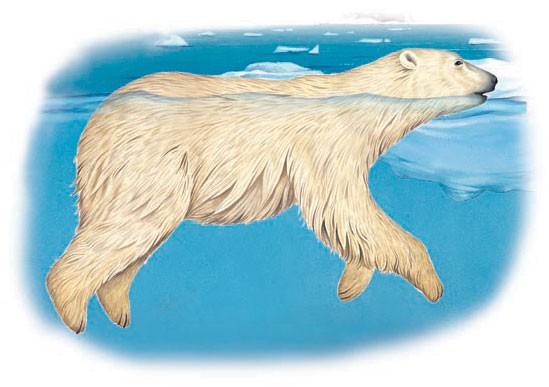
When the sea ice melts in the summer, bears either head further north, where the ice never melts, or swim to land until the sea freezes again in the autumn. Many polar bears spend the summer on the shores bordering the Arctic Ocean. Away from the ice they cannot hunt seals, so they feed on other mammals, birds, berries, seaweed and whatever meat or other food they can scavenge. They even take waste food left out by humans living in settlements in the far north.
A threatened species
The global population of 20,000 to 25,000 polar bears is declining. As a result of climate change, their sea ice habitat is diminishing. Rising temperatures cause the ice to melt earlier in the year, meaning the bears have to swim to shore before they have built up sufficient fat reserves to survive the summer, when food is scarce. Reduction in sea ice also means the bears have to swim longer distances, further reducing their energy stores. Many scientists fear the species could disappear altogether by the end of the 21st century.
Drilling for oil and gas in the Arctic may also have bad consequences for the bears. A major oil spill in would very likely concentrate in the areas polar bears and their prey of seals inhabit, threatening the lives of the animals directly.
Consultant: Chris Jarvis