
Europe
France
France is the largest country in Western Europe. Its landscapes vary enormously, from the gently rolling farmland of the north to the dramatic peaks of the Alps in the southeast and Pyrenees in the south. A rugged highland region, the Massif Central, lies in the centre of the country. France started building an overseas empire in the 17th century; by the end of 19th century it was second only to the British Empire in size. Today, France is made up of “Metropolitan France” (European France and the island of Corsica) and five overseas territories: French Guiana, Guadeloupe, Martinique, Réunion and Mayotte.


Northern France
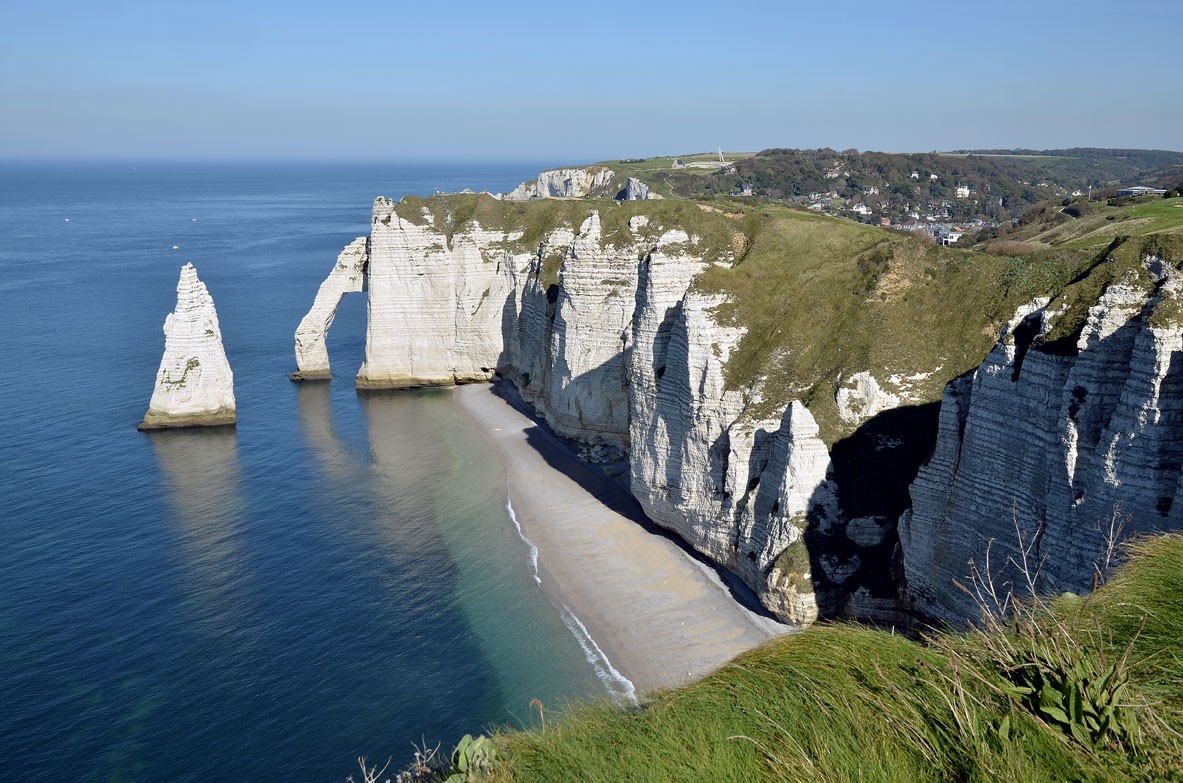
Apart from the hills of Brittany, most of northern and western France is flat or gently undulating. Winding across this rich agricultural land are the Seine and Loire rivers and their tributaries. The temperate climate, with warm summers and cool, rainy winters, is good for the lush pastures and orchards of Brittany and Normandy. France’s capital, Paris, is situated in north-central France, astride the River Seine.
Central and southwestern France
Rising in the centre of France is a range of mountains, ancient volcanoes and forested plateaus called the Massif Central. At its edges, the land falls away sharply in steep cliffs, or escarpments, to the plains below. The valley of France’s fourth great river, the Rhône and its tributary, the Saône, separates the Massif Central from the Alps to the east. In the far southwest, the high mountains of the Pyrenees form a rugged natural border between France and Spain. Central and southern France have a continental climate: here, far inland, winters are cold and summers hot and dry.


Southeastern France
France’s Mediterranean coast is known as the Côte d'Azur, or the Riviera. The year-round warm climate allows citrus fruit and olive trees to grow, and makes it a popular destination for tourists.
Close to border with Italy are the snow-capped peaks of the Alps; they include Western Europe’s highest mountain, Mont Blanc. Glaciers, such as the Mer de Glace (“Sea of Ice”), cling to its slopes. The stunning scenery attract millions of skiers and snowboarders each year. Further north, near the Swiss border, lie the Jura Mountains, a lower range with rounded summits.

People
Throughout its history, France has been invaded and settled by waves of different peoples, including Celtic, Roman and Germanic peoples. Most French people are descended from a mixture of these groups. Many living in the northern region of Normandy are descendants of Vikings (Norsemen), who arrived in the 9th century.
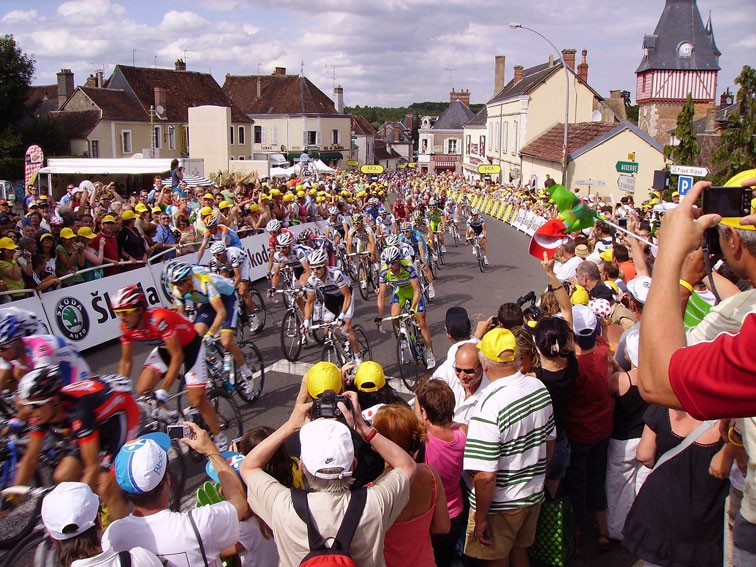

The Basque people of the far southwest corner of France speak a language completely different to French. The ancient language of Britanny, Breton, still survives, while Occitan is spoken in southwest France and Alsatian, a dialect (spoken variety) of German, in Alsace-Lorraine in the east. Elsewhere, most people speak French, although different dialects are spoken from one part of the country to the other.
For much of the 20th century, France had one of the largest proportion of its population living in rural areas in Western Europe. Now around three-quarters of its inhabitants live in cities, towns and suburbs.
Ethnic diversity
France is one of Europe’s most ethnically diverse countries, home to more than 5 million Arab and African peoples. Many of these immigrants were born in countries that were once ruled by France as colonies, including its former North African territories of Morocco, Tunisia and Algeria, and its former colonies in West Africa.

As France's principal Mediterranean port, Marseille has attracted many immigrants over the years. Today a significant proportion of its inhabitants are have foreign ancestry, with Italy, Armenia, Vietnam, North Africa, Subsaharan Africa (Africa south of the Sahara Desert) and the Comoros, the chief countries or regions of origin.
Industry
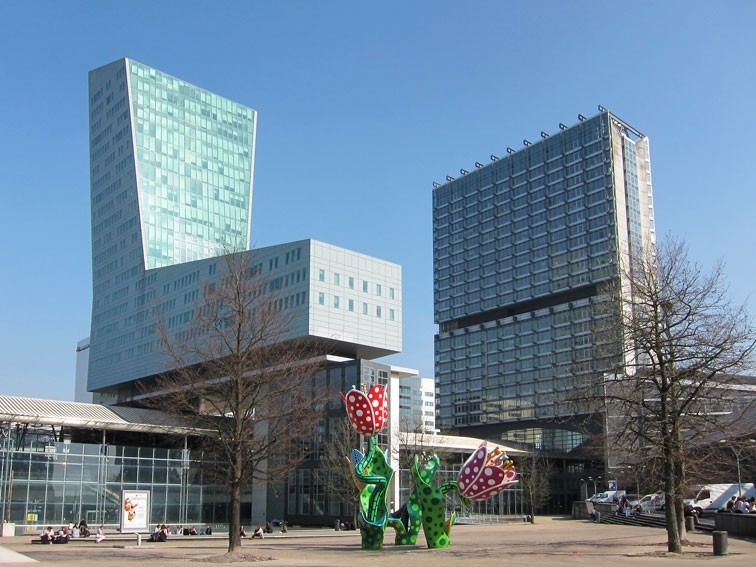
France has one of the largest economies in the world. It is a leading industrial nation, known for manufacturing, including cars, trains, planes, spacecraft, electronics, chemicals, food and wine. The Ile-de-France, the region around and including Paris, is one of the world's most important industrial centres. In the past, the region of northeastern France around Lille was dominated by heavy industries such as coal, textiles and iron and steel. France’s clothing and fashion industries have long been important, with Lyon once famous for the production of silk.

France is one of the world's largest producers of electricity. About 75% of its electricity is produced by nuclear power stations.
Tourism
Most French people now work in services, such as business, finance and tourism. France is the most popular tourist destination in the world: more than 100 million people visit the country each year, supporting a huge tourist trade. Paris, the Riviera, the Alps, and attractions such as Mont Saint-Michel are major tourist destinations.


Agriculture
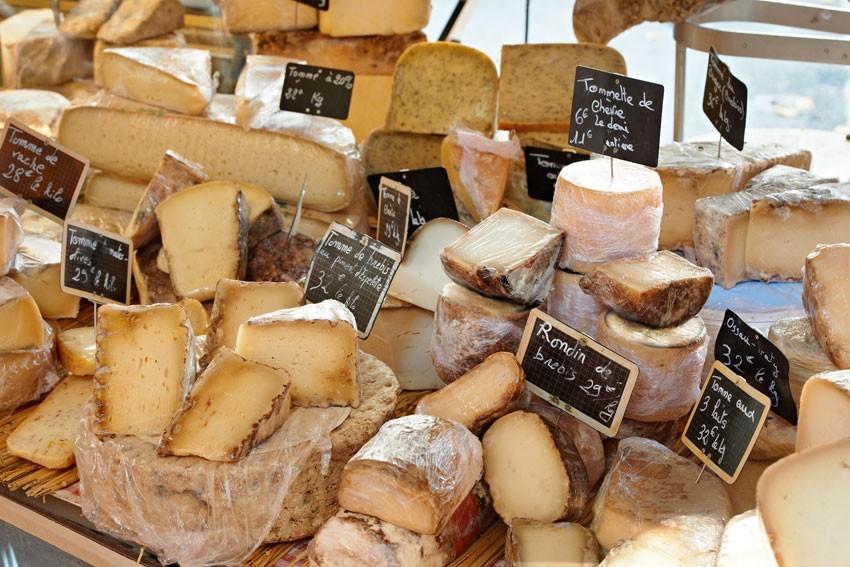
Northern France has some of Western Europe’s most productive farmland; the fertile plains here are planted with wheat, maize and sugar beet. Near the sunny Mediterranean coast, farmers grow tomatoes, apples, melons and peaches. France’s farms and food industries supply nearly all the food the country needs, as well as supplying a wide range of products, including wines and cheeses, for export.

Winemaking
France is famous for the many fine wines it produces, especially those made from grapes grown in Burgundy, the region near Bordeaux, and in Champagne. About one-fifth of all the world’s wine is produced in France. After the grapes are picked, they are pressed for their juice using a pneumatic press, a machine that churns the grapes inside a huge revolving barrel. The grape juice is then fermented over a period of time (often years) to make wine. Grapes grown in the Languedoc region in the south are generally used to make cheaper, lower-quality wine.

Government
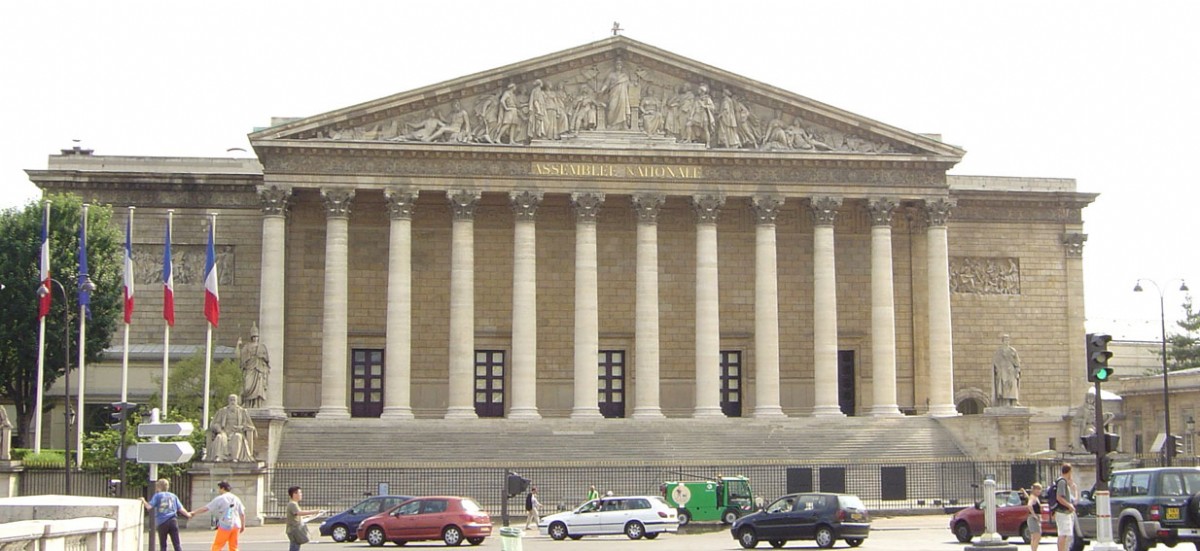
France, a republic, is led by a president, who is head of state, and a prime minister, chosen by the president. Although the prime minister is the head of government, the president has the more powerful position. Ministers and the president work together to pass laws. Since 2001, the law requires political parties to nominate equal numbers of men and women to be candidates for election.
Paris
With a population of its urban area of 13,171,056 France’s capital Paris is one of the largest cities in Europe. It was named after a Gaulish people, the Parisii, who founded the city in the 3rd century. For centuries, Paris has been recognized as a world centre for art, fashion, literature and education. Museums and galleries such as the Louvre hold some of the world’s largest and finest art collections. Paris is also famous for its architecture; landmark buildings such as the cathedral of Nôtre Dame and the Eiffel Tower attract around 50 million visitors each year. Income from tourism is a major part of Paris’s economy: around a fifth of the city’s workforce is involved in the tourist industry.


Canal du Midi
The Canal du Midi is a 241-kilometre (150-mile) canal in southwestern France, a region known to the French as le Midi. It was one of the greatest construction works of its time—and is still in use today. The canal was built to connect the River Garonne (which flows into the Atlantic Ocean) with the Mediterranean Sea. It would mean that merchant vessels did not have to pass through the Strait of Gibraltar, then under the control of Spain. Wheat, wine and cloth from the Languedoc region near the Mediterranean would be shipped overseas more easily.
Under the supervision of Pierre-Paul Riquet (1609–80), the construction took place between 1666 and 1681, during the reign of Louis XIV. Riquet solved the problem of building a waterway over high ground between two valleys by bringing water from the nearby mountains to feed into the newly-built channel.
Vital to the canal's engineering were women labourers who came from nearby Pyrenean villages. They understood how Roman aqueducts worked, and helped to perfect the water supply to canal, and decide where and how to build locks. The Malpas Tunnel on the Canal du Midi was the first canal tunnel ever built.

Corsica
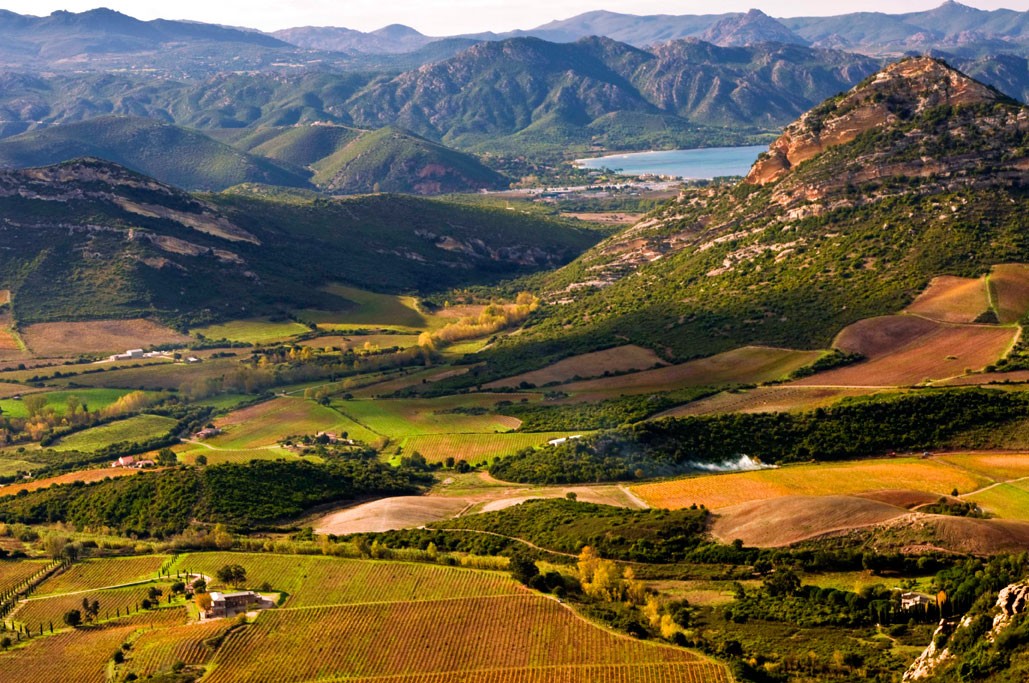
Corsica is a mountainous island in the Mediterranean Sea that belongs to France. It lies southeast of the mainland (actually closer to Italy than to France). The interior is rugged, while nearer the coast there are wooded slopes, scrubland and sandy beaches. Corsica has a hot, sunny Mediterranean climate—temperatures are warm, even in winter. Just over 50% of the people are native Corsicans, while most of the rest are from mainland France. Corsica has its own language, Corsican, but only about 10% of people speak it: French is the first language. The island’s main industry is tourism; its warm climate, scenic mountains and beaches are popular with visitors.
Consultant: Nicholas Harris
Facts about France
Population 68,605,616 (2025 estimate)
Area 549,970 sq km
Highest point Mont Blanc 4807 m (15,771 ft)
Capital Paris (metro area population 13,171,056; city proper 2,048,472)
Other major cities Lyon (2,308,818), Marseille (pop. 1,888,788), Lille (1,521,660), Toulouse (1,490,640), Bordeaux (1,393,764), Nantes (1,031,953)
Language French
Religions Christian (Roman Catholic) 83%, Muslim 5%, Christian (Protestant) 2%, others and none 10%
Ethnicity Celtic / Latin 85%, North African 10%, others 5%
Currency Euro (EUR)
Chief exports machinery, vehicles, plastics, chemicals, medicines, iron, wine


History of France
5th–3rd centuries BC
Celtic peoples spread across France
51 BC
Roman emperor Julius Caesar conquers France, then known as Gaul
486–511
Clovis I conquers most of northern and central France for the Franks; the kingdom falls apart after his death
771
Charlemagne reunites the Frankish kingdom and extends it to a huge empire that includes parts of modern Germany and Spain
800
Charlemagne is crowned Roman Emperor in the West
843
After the death of Louis the Pious (Charlemagne's son) and a three-year civil war between his three sons, the Frankish empire is divided up between them: East Francia, Middle Francia and West Francia (West Francia is roughly the area of modern France).
9th century
Vikings invade and gain control of a northern region: modern-day Normandy
1066
William Duke of Normandy conquers England at the Battle of Hastings, and becomes a powerful rival to the King of France
1154–1214
Angevin Empire: English Plantagenet kings gain extensive territories in western present-day France through inheritance and royal marriages.
1204
After a century of fighting, Normandy is conquered by Philip II, King of France
1209
Albigensian Crusade is launched to eliminate the heretical Cathars in the southwest of present-day France
1337–1453
Edward III of England claims the French crown, sparking the Hundred Years’ War
1348
The Black Death, or bubonic plague, spreads throughout France, wiping out 40% of the population
1429
Joan of Arc leads French troops against the English during the Hundred Years’ War
1453
Battle of Castillon: in what is regarded as the last battle of the Hundred Years' War, the French win a decisive victory against the English, eventually regaining all English-held lands in France
1562
Massacre of Vassy begins the French Wars of Religion between Catholics and Protestants
1572
St Bartholomew’s Day Massacre: thousands of French Huguenots (Protestants) are murdered by Catholics
1598
Henry IV issues the Edict of Nantes, granting certain rights to the Huguenots, ending the French Wars of Religion
1618–48
Thirty Years’ War: France supports the Protestant side against the Habsburg rulers of Austria and Spain
1643
Louis XIV becomes king of France. He rules until 1715
1648
Peace of Westphalia ends the Thirty Years' War, with France gaining territories in the east
1659–84
France gains further territories from both Spain and the Netherlands, confirming France as Europe's dominant power
1685
Louis XIV revokes (cancels) the Edict of Nantes, forcing thousands of Huguenots into exile. He publishes the Code Noir providing the legal framework for slavery and expelling Jews from French colonies.
1713
The Treaty of Utrecht, signed by France and Britain, ends the War of the Spanish Succession. Philip V of Spain renounces any right to the French throne, while the French crown renounces all claims to the Spanish throne
1756–63
Seven Years' War, a global conflict involving several powers, but chiefly a struggle between France and Britain, results in a major loss of French colonial possessions to its rivals
1768
The Republic of Genoa cedes Corsica to France
1778–83
France supports the American colonies in its War of Independence from Britain
1789
Storming of the Bastille (14th July). The French Revolution begins when a large crowd besieges the Bastille prison in Paris
1792
The new French government, known as the Convention, proclaims the abolition of royalty and the First French Republic
1793
Former king Louis XVI is executed by guillotine (January).
The Convention, under its president Maximilien Robespierre, adopts a new law permitting the arrest of anyone suspected of opposing the Revolution, marking the beginning of the Reign of Terror (September). This lasts until Robespierre is himself executed the following July
1799
Napoleon Bonaparte overthrows government and seizes control of the republic
1802
French troops are sent to Saint-Domingue (present-day Haiti) to suppress Toussaint L'Ouverture and the rebellion of the black population. The expedition fails and Haiti's independence is declared in 1804
1803
Louisiana Purchase: France sells the vast region of Louisiana, the lands lying between the Mississippi River and the Rocky Mountains, to the United States of America
1804
Napoleon crowns himself emperor, marking the beginning of the First French Empire
1805
Forces of the French Empire under Napoleon are victorious at the Battle of Austerlitz, marking the end of the Third Coalition (Austria, Russia, United Kingdom, Sweden and others) against France
1812
French forces led by Napoleon invade Russia, but are forced to make a disastrous retreat after occupying Moscow
1813
French forces are routed by those of the Sixth Coalition (Austria, Russia and Prussia) at the Battle of Leipzig
1814
Napoleon is forced to abdicate and go into exile on the island of Elba, from where he escapes the following year
1815
Battle of Waterloo: Napoleon is defeated and the French monarchy, the House of Bourbon, is restored, with Louis XVIII becoming king
1830
July Revolution: the House of Bourbon is overthrown and replaced by the Orleans Monarchy. Louis-Philippe becomes king of France
1848
February Revolution: riots force King Louis-Philippe to abdicate and flee France. Louis-Napoléon Bonaparte becomes the first president of France, marking the beginning of the Second Republic
1851
Louis-Napoléon masterminds a coup (an armed seizure of power), ending the Second Republic and creating the Second Empire led by him as Emperor Napoleon III
1870
War breaks out between France and Prussia
1871
France is defeated by Prussia and loses the region of Alsace-Lorraine in the east. France's loss leads to the downfall of Napoleon III, the end of the Second Empire and the declaration of the Third Republic. Napoleon III goes into exile in England.
The Paris Commune, a revolutionary socialist city council, is proclaimed after the army attempts to disbands its National Guard. The council, run by the Communards, lasts two months before being violently suppressed by the French army, with many thousands of people killed and exiled
1889
The Eiffel Tower is completed
1904
The Entente Cordiale, an agreement between France and the Britain, is signed. With the Anglo-Russian Entente of 1907, France, Britain and Russia become known as the Triple Entente in opposition to the Triple Alliance of Germany, Austria and Italy
1914–18
World War I: Over 1.3 million French soldiers are killed fighting in trenches in northeast France
1919
Treaty of Versailles. France regains Alsace-Lorraine from Germany
1939–45
During World War II, Nazi Germany defeats France; Germany occupies northern France, while the unoccupied south, known as Vichy France, is ruled by a government collaborating with the the Germans. It was later (1942) occupied by the Germans, and the government reduced to a status of puppet government
1944
Allied forces land at Normandy, beginning the process of liberating France from German control. Charles de Gaulle sets up a wartime government and becomes the country’s temporary president
1954
French defeated at Battle of Dien Bien Phu in northwest Vietnam, ending First Indochina War
1956
France ends its rule in Morocco and Tunisia
1957
France is a founder member of the European Community, later to become the European Union (EU)
1958
Charles De Gaulle gains presidency following Algerian crisis; he leaves office in 1969
1968
Student revolts against government policies escalate into a national strike
1995
France receives international condemnation for conducting nuclear tests in the Pacific
2002
France adopts the Euro as its currency, replacing the franc
2006–07
Mass protests in cities all over France at changes to employment laws and pensions, pay cuts and job losses
2014
Unemployment reaches a record high: 3,488,300 people are out of work
2015
(January) Islamist gunmen shoot dead 17 people in Paris, most of them staff at the satirical magazine Charlie Hebdo, before being killed by security forces; (November) gunmen and suicide bombers carry out attacks on a concert hall, stadium, restaurants and bars in Paris, leaving 130 people dead and hundreds wounded
2016
An Islamist terrorist drives a truck through a crowded promenade in Nice, killing 87 people
2017
Emmanuel Macron beats the National Front's Marine Le Pen in the election to become President of France
2019
A fire breaks out in the cathedral of Notre-Dame de Paris ("Our Lady of Paris") on 15th April destroying the building's spire and most of its roof. After major restoration work, the cathedral re-opens in December 2024.
2024
Paris hosts the Summer Olympic Games