
Mammals
Cattle, sheep and goats
Cattle, bison, buffalo, sheep and goats are all bovids, a family of hooved animals (ungulates) with bony horns encased in tough keratin and hooves that are split into two toes. Antelopes and gazelles are also bovids. Most live in herds for protection, although young and sick animals make easy targets for predators such as big cats or wild dogs. Bovids graze on grass or other plants. All bovids are ruminants: their stomachs are divided into compartments that break down grasses, a tough food to digest, in stages. In cattle, the food is sent back to the mouth to be chewed again after the first stage of digestion. This is known as chewing the cud (partially digested food).
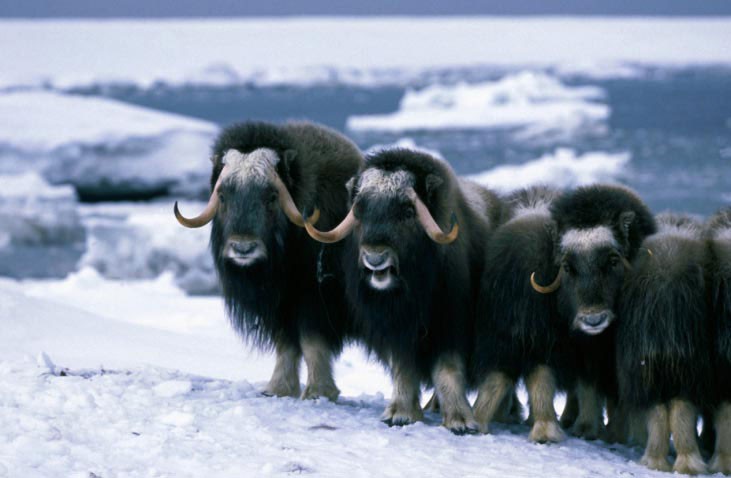

Cattle
Cattle is the term generally given to bovids that are kept by humans for milk and meat: beef, or veal in young cows and calves. Some cattle are raised as working animals, to pull carts or ploughs. The skin of cattle is used for leather goods.
Domestic cows are descended from the wild aurochs, a species of bovid which once roamed across Europe, Asia and North Africa and finally went extinct in the 17th century.
Water buffalo
Related to cattle, water buffalo are domestic animals found in South and Southeast Asia. They are raised for their meat and milk, and are used as working animals for tilling rice fields, ploughing, hauling carts or pumping water. Their dung is an important fuel, and their hide makes useful leather. Water buffalo spend long periods wallowing in deep water and mudholes, where they coat their bodies in mud to protect themselves from the heat. They graze on water plants as well as on a range of fodder crops.

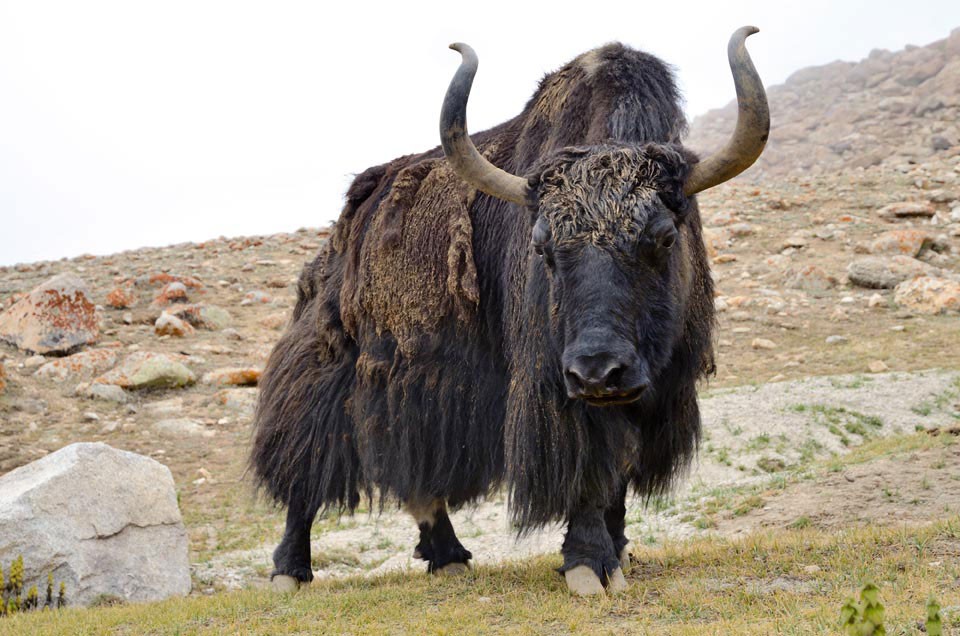
Yaks
Yaks, also relatives to cattle, live in herds in the Himalayas, Tibet and the grasslands of China, Mongolia and Russia, where they feed on grasses. Most are domesticated, but a few wild yaks still survive in remote areas. They have long, shaggy hair with a dense, woolly undercoat to insulate them from the cold. Their hair may reach the ground. Domestic yaks are used for their milk, meat and to draw ploughs. Their dung is used a fuel, essential in high, treeless areas of Tibet.
Bison
Bison are also related to domestic cattle. There are two species, the North American bison, sometimes called buffalo, and European wisent. North American bison were hunted close to extinction during the 19th and 20th centuries on their habitat, the dry open grasslands of the prairies and mountains of the American West.

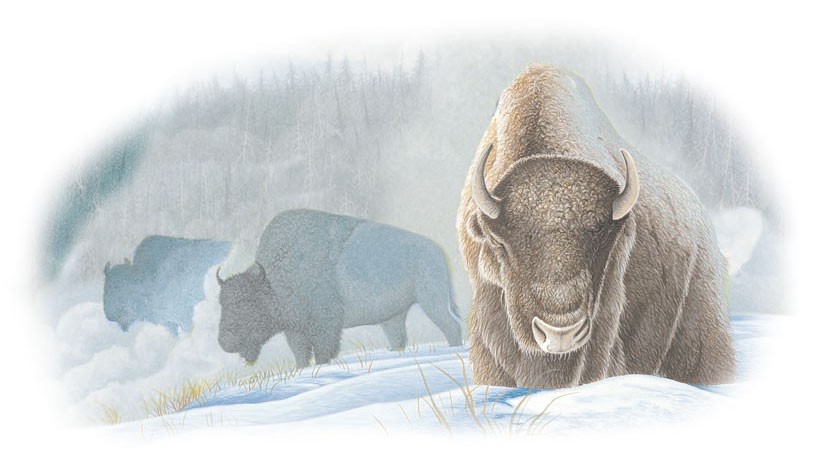
Bison are often seen rolling in the ground, covering themselves in mud and dust. Huge animals (they measure 2 metres / 6.5 feet at the shoulder), they are usually peaceful, but can charge at high speed, using their massive heads or powerful back legs to kill or maim attackers.
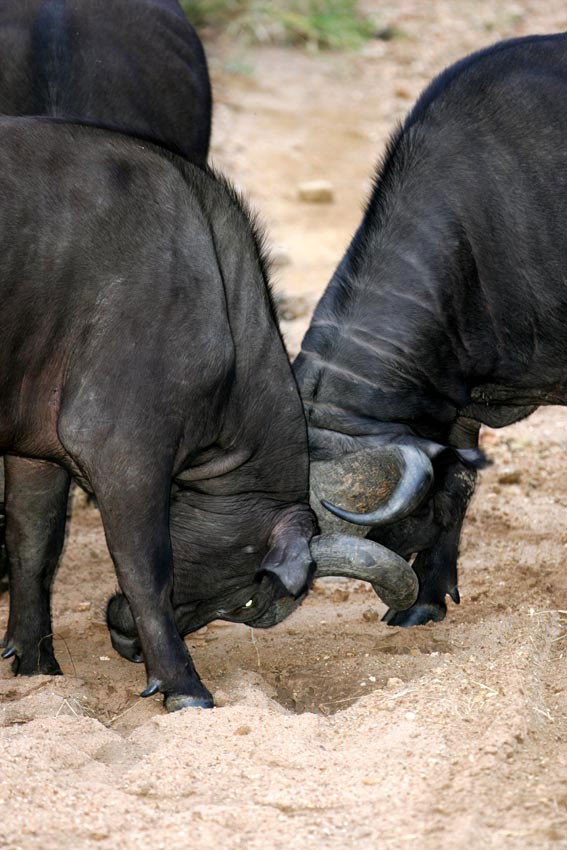
Cape buffalo
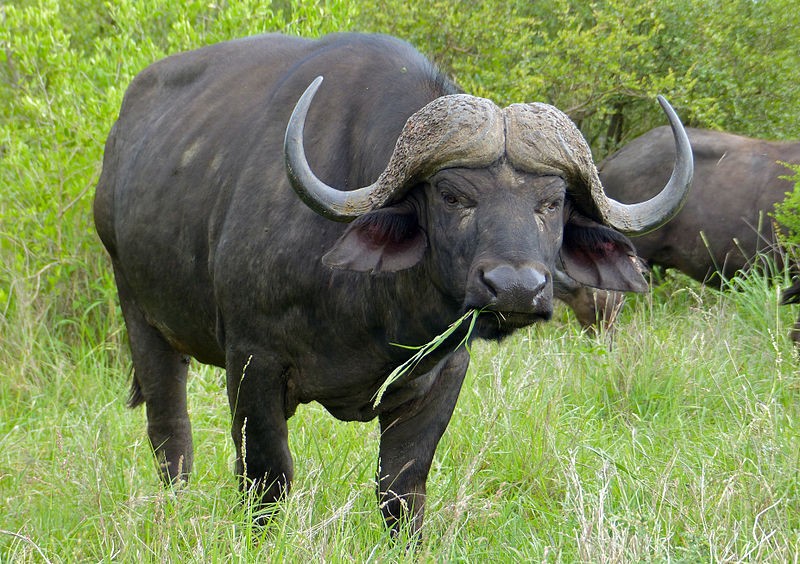
The Cape buffalo, or African buffalo, which is not closely related to the water buffalo, grazes the savanna grasslands, swamps and forests of Africa. It is never far from water. Its horns are fused together at the base, forming a bone shield across the top of its head called a boss.
Large and stocky, the buffalo is capable of defending itself from predators, such as lions. Living in herds gives it additional protection. Aggressive towards humans, the African buffalo kills more than 200 people each year.
Sheep
A few wild sheep are solitary and will fight fiercely for territory, but most group together in herds, called flocks. Wild sheep are hardy animals and live in upland or mountain habitats, feeding on grass and lichen. Domestic sheep are probably descended from a species of wild sheep from Asia and Europe called the mouflon.
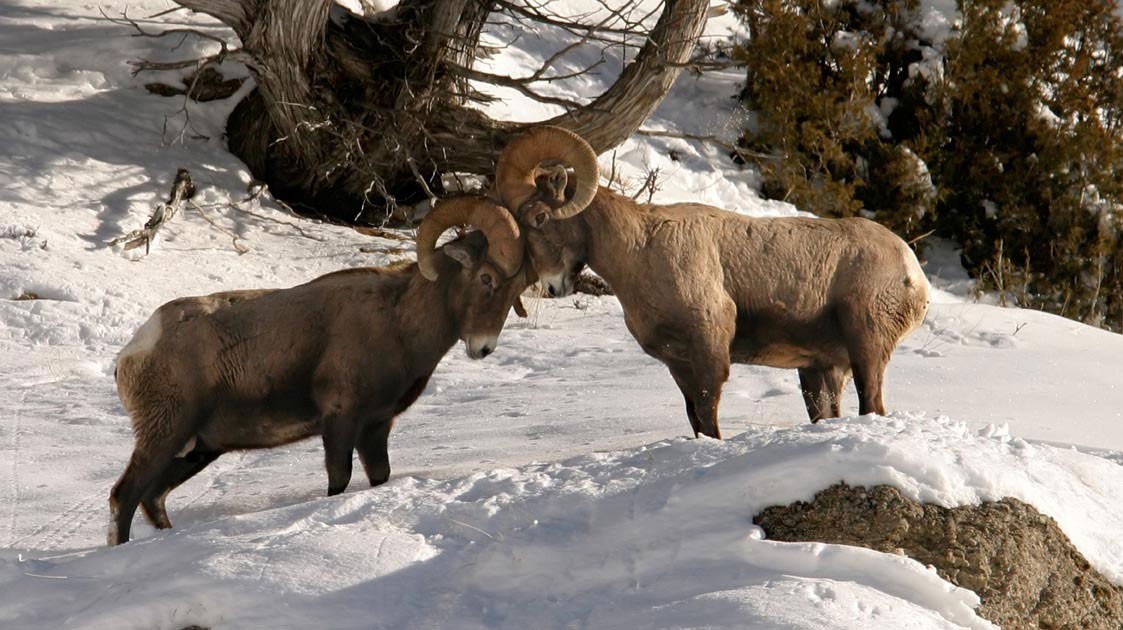
Male sheep are called rams and females are called ewes. Young sheep are called lambs. All males and some females have horns. During fights for dominance of the flock, males bang their heads together forcefully. They do not usually hurt each other, because their curved horns do not strike each other's bodies. Their thick skins and thick-boned skulls cushion the impact of a head-to-head collision.
Goats
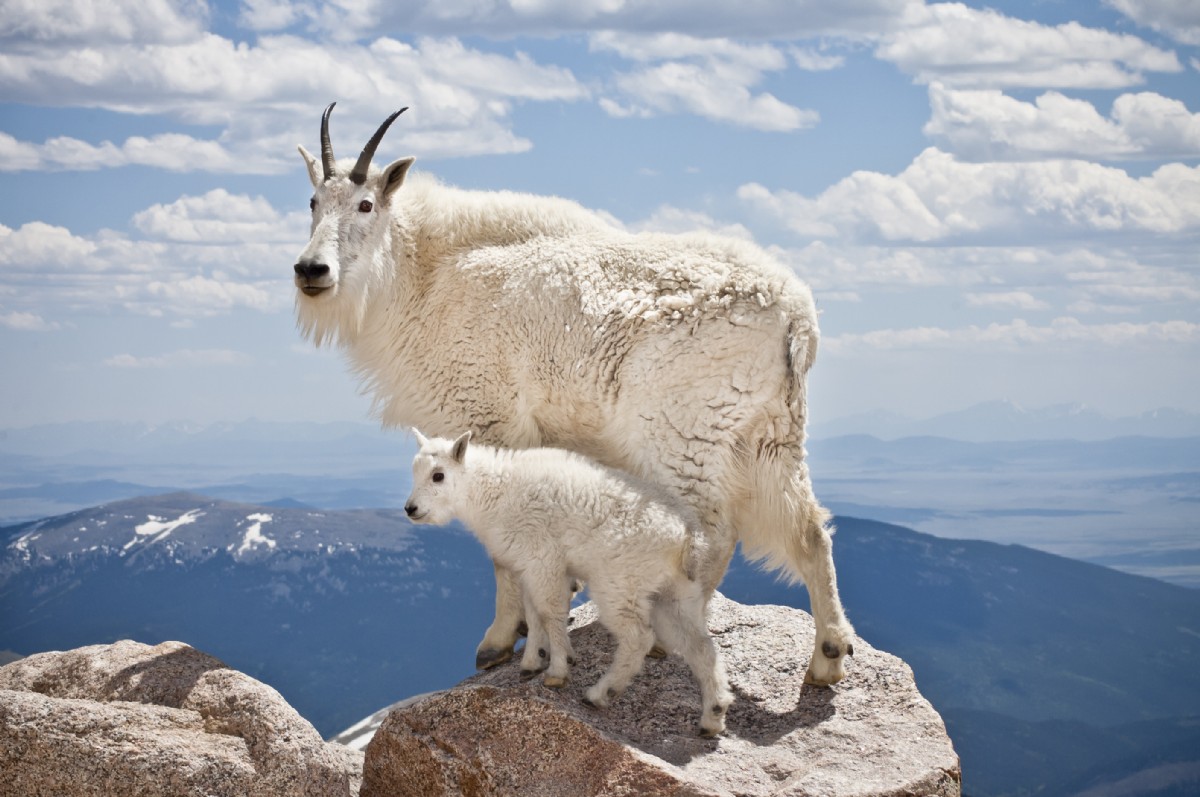
Goats live in rocky, mountain environments. They have stocky but agile bodies, and are able to run and leap over dangerous terrain without falling.
Males and females both usually have horns, though those of the male are larger. During fights the males clash their horns with great force.
Goats feed on a wide range of plant material. A male goat is a billy or busk, while a female is a nanny or doe. Young goats are called kids.
Along with sheep, goats are closely related to ibexes, tahrs, serows, gorals, chamois and the musk ox. Domestic goats are probably descended from a species of wild goat of Central Asia and the Middle East.
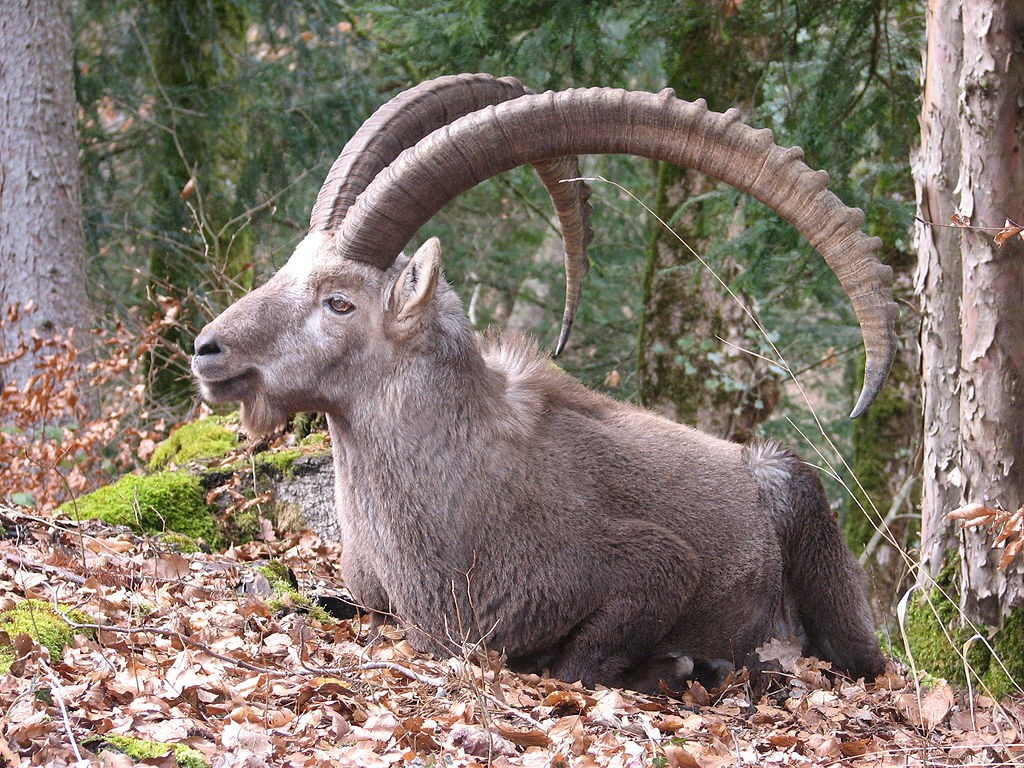
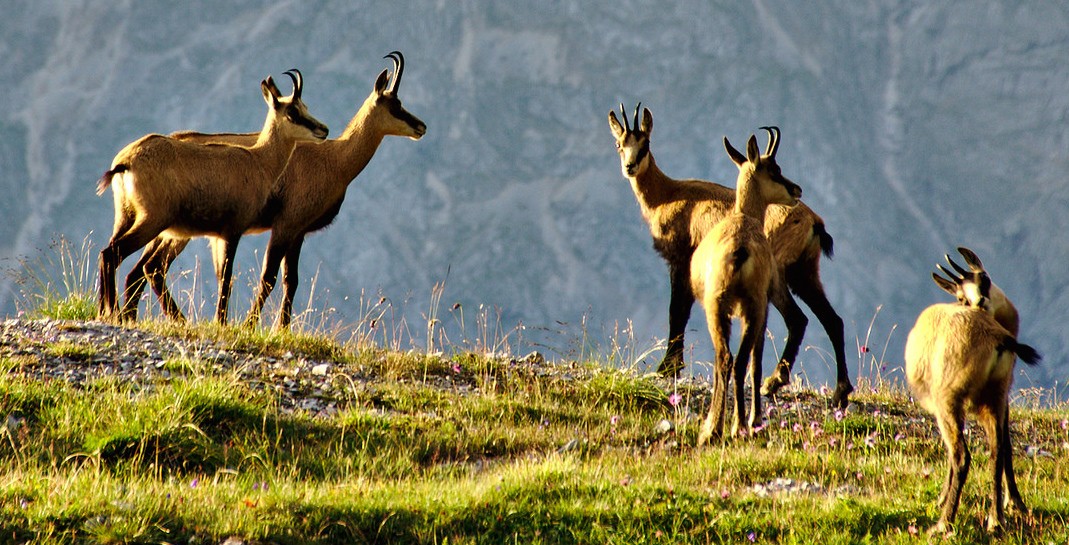
Chamois live in the mountains of southern Europe and the Caucasus. They escape predators, such as lynxes and wolves, using their speed—up to 50 km/h (30 mph)—and jumping ability. They eat grasses and herbs during the summer and conifer needles and bark from trees in the winter.
Consultant: Chris Jarvis